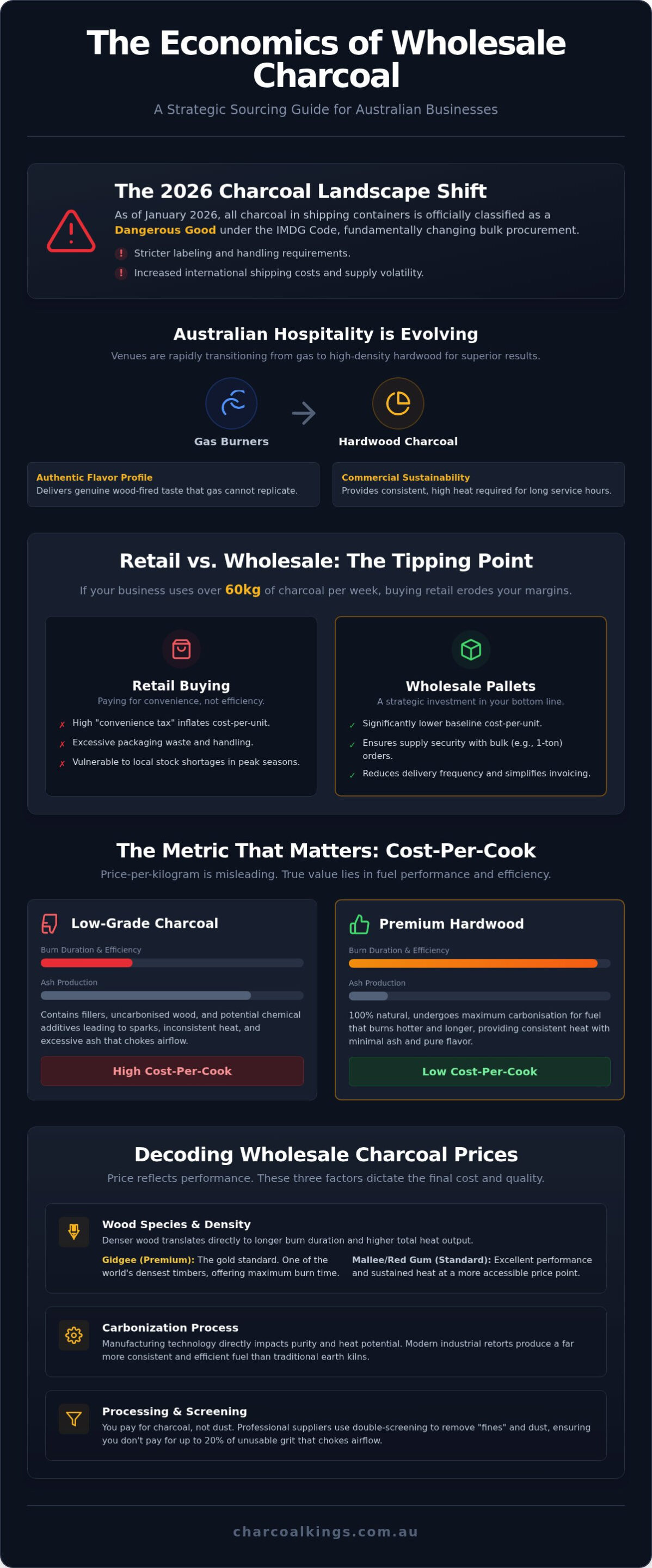
As of January 2026, every bag of charcoal sitting in a shipping container is officially classified as a Dangerous Good under the IMDG Code, fundamentally changing the landscape of bulk fuel procurement. You’ve likely noticed that chasing the lowest wholesale charcoal prices often leads to a pallet of sparking, fast-burning waste that ruins your margins and your cook times. It’s a frustrating cycle of inconsistent heat and hidden additives that costs more in the long run. High shipping costs and stricter labeling requirements mean that simply looking at the sticker price is no longer a viable business strategy for commercial kitchens or retailers.
We’ll help you master the economics of bulk charcoal sourcing to maximize your margins without sacrificing fuel quality. This guide provides a clear understanding of current price-to-quality ratios and the supply chain shifts affecting the Australian market this year. You’ll learn how to secure a reliable supply of premium Hardwood Lump and Binchotan while achieving a lower cost-per-cook through better fuel efficiency. We’re breaking down the regulatory changes and sourcing strategies you need to keep your grills hot and your overheads low.
Key Takeaways
- Discover why Australian hospitality venues are transitioning from gas to high-density hardwood to achieve authentic flavour and better commercial sustainability.
- Identify the critical factors, from wood density to carbonisation techniques, that dictate wholesale charcoal prices and overall fuel efficiency.
- Master the ROI differences between Hardwood Lump Charcoal for searing and premium Binchotan for specialized high-end grilling.
- Learn how to evaluate technical data sheets and burn tests to secure a reliable supply of 100% natural charcoal without chemical additives.
- Gain direct insights into sourcing high-performance fuels that lower your cost-per-cook while maintaining the highest standards of purity and heat.
Understanding the Wholesale Charcoal Market in Australia
The Australian hospitality sector has reached a critical tipping point in 2026. Commercial kitchens are rapidly abandoning gas burners in favour of authentic, wood-fired flavour profiles. This shift isn’t just about culinary trends; it’s a strategic move toward commercial sustainability. High-density hardwood has become the benchmark for professional operations. Unlike the softwoods often found in hardware store aisles, professional-grade fuel provides the sustained, intense heat required for 12-hour shifts. Commodity charcoal often contains fillers or uncarbonised wood that creates unpredictable cold spots. In contrast, professional fuel offers the consistency needed to maintain strict service standards. Local sourcing from Australian suppliers, particularly those based in regions like Holden Hill, SA, has become vital for supply chain reliability. Relying on local stockists helps businesses bypass the logistical volatility caused by the 2026 Dangerous Goods reclassifications that have complicated international shipping.
Retail vs. Wholesale: When to Make the Switch
Operating a commercial kitchen on retail-sourced fuel is a fast track to eroded margins. If your venue consumes more than 60kg of fuel per week, you’ve already passed the threshold where retail purchasing makes sense. Buying by the bag includes a significant “convenience tax” and excessive packaging waste that adds up over a financial quarter. Transitioning to pallet-sized ordering directly impacts your bottom line by lowering the baseline cost per unit. A standard one-ton pallet ensures your kitchen isn’t vulnerable to local stock shortages during peak seasons. You’ll also find that wholesale charcoal prices become far more manageable when you factor in the reduced frequency of deliveries and the administrative simplicity of bulk invoicing.
The Economic Impact of Fuel Quality
Smart operators know that price-per-kilogram is a misleading metric. The real value lies in the cost-per-cook. High-quality hardwood charcoal undergoes rigorous charcoal production methods to ensure maximum carbonisation and minimal moisture. This results in a fuel that burns hotter and longer, meaning you use less product to achieve the same result. Low-grade alternatives often produce excessive ash, which chokes airflow and forces chefs to spend more time cleaning and refuelling. Consistent heat output reduces labour costs because your team isn’t constantly fighting to stabilize grill temperatures. When you invest in premium fuel, you’re paying for purity and performance, not just weight. Pure hardwood lump with no additives ensures your food tastes like the wood it was cooked over, not the chemicals used to bind a cheap briquette together. Authentic smoke is a business asset; don’t compromise it for a lower sticker price.
Factors Influencing Wholesale Charcoal Prices
Price reflects performance. In the commercial world, cheap fuel is a liability. Multiple factors like wood species, moisture levels, and carbonisation efficiency dictate the final invoice. Understanding an economic analysis of charcoal reveals that production costs are heavily influenced by the technology used during manufacturing. Whether a supplier uses traditional earth kilns or sophisticated industrial retorts changes the purity and heat potential of the finished product. These operational variables are the primary drivers behind wholesale charcoal prices across the Australian market.
Hardwood Species and Their Market Value
Australian Gidgee is the gold standard for commercial kitchens. It is one of the world’s densest timbers. This density translates directly to burn duration and total heat output. A single load of Gidgee lump can outlast standard hardwoods by several hours. This reduces the total volume of fuel needed for a full service, which justifies the higher upfront wholesale charcoal prices. Standard hardwoods like Mallee or Red Gum offer excellent performance at a more accessible price point, but Gidgee remains the premium choice for high-volume searing. Sustainability also plays a role. Ethically sourced, dead-finish timbers often command a premium due to the labour-intensive harvesting process required to maintain ecological balance without clearing live forests.
Processing and Packaging Standards
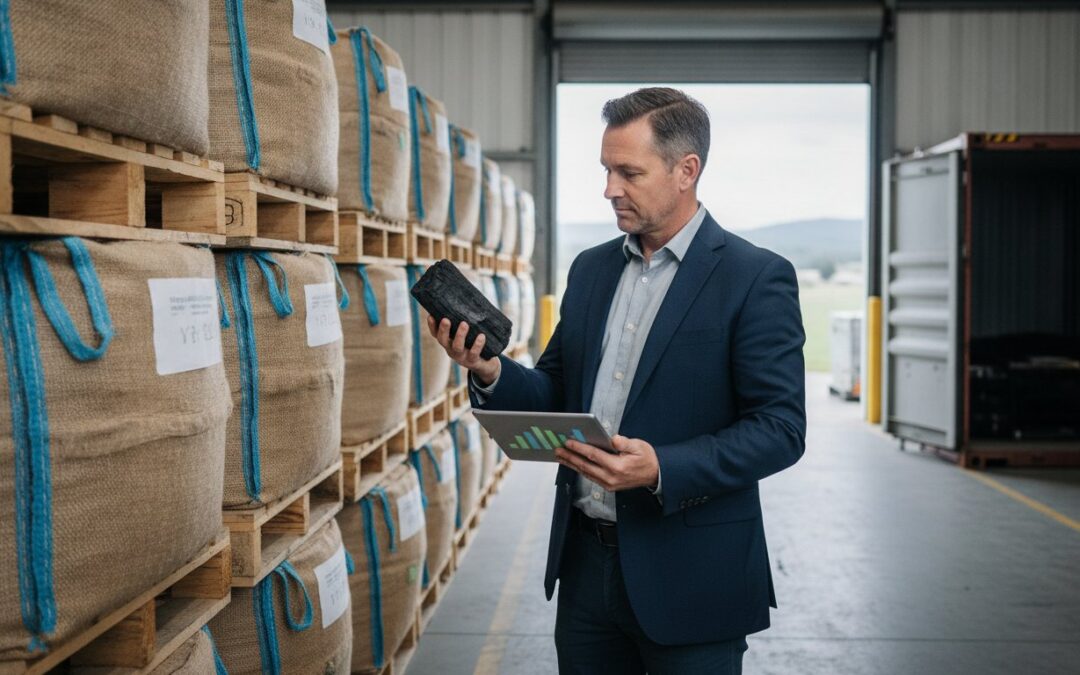
What happens after carbonisation is just as important as the wood itself. Professional suppliers use double-screening processes to remove “fines” and dust. You don’t want to pay for a bag filled with 20% unusable grit that chokes your air intake. Large, uniform lump sizes allow for better airflow and more precise temperature control. Packaging also impacts the landed cost. While 10kg bags are easier for staff to handle, 20kg commercial sacks are the industry standard for bulk palletisation. Efficient palletisation reduces shipping damage and optimises storage space in cramped commercial environments.
Moisture content is a hidden profit killer. “Wet” charcoal is heavy. You end up paying to ship water instead of fuel. High moisture also causes sparking and excessive smoke, which can ruin the flavour of delicate proteins. We focus on 100% natural purity with no chemical binders or hidden additives. This ensures a clean burn and authentic wood aroma every time you light the grill. If you’re looking for consistent, high-performance fuel for your kitchen, you can explore our range of hardwood lump and Binchotan to find the right fit for your equipment.
Comparing Bulk Fuel Types for Commercial ROI
Return on investment in a professional kitchen is measured by burn time and heat consistency. While wholesale charcoal prices vary significantly between fuel types, the cheapest option rarely delivers the best value. Hardwood Lump Charcoal is the industry standard for high-heat searing. It reaches cooking temperatures quickly and provides an authentic smoky aroma that gas simply cannot replicate. In contrast, premium Charcoal Briquettes offer a predictable, steady burn ideal for long smoking sessions. Choosing the right fuel requires balancing your menu’s technical demands with your operational budget. Under commercial stress, the longevity of your fuel determines how many covers you can serve per load. High-density lump charcoal can sustain searing temperatures for three to four hours, whereas low-grade alternatives may collapse within sixty minutes.
Lump Charcoal vs. Briquettes for High-Volume Venues
High-volume kitchens must account for ash management. Natural Hardwood Lump produces minimal ash. This keeps air vents clear and maintains oxygen flow for intense heat throughout the shift. Cheap briquettes often contain clay fillers or chemical binders that leave behind piles of grey waste. This requires frequent mid-service cleanups that distract your staff and cool down the grill. Premium, additive-free briquettes provide a neutral flavour profile and consistent shape. This is essential when you want the natural taste of the protein to shine without heavy smoke interference. Evaluating your heat intensity requirements is the first step in determining which fuel type justifies its share of your wholesale charcoal prices expenditure.
Binchotan: The Premium Choice for Specialist Grilling
Binchotan, or white charcoal, represents the pinnacle of fuel performance. It is the most expensive wholesale option, yet its efficiency is unmatched in specialist environments like Hibachi or Yakitori bars. Binchotan burns for four to six hours at a consistent, high temperature, emitting powerful infrared heat. This heat penetrates deep into proteins, retaining moisture better than the convective heat of standard lump. Professional chefs often reuse Binchotan by extinguishing it in water or a ceramic pot after service. This practice significantly extends the life of the fuel and lowers the long-term cost per service. For a deeper look at this specialized fuel, explore our Binchotan charcoal guide to see how it transforms high-end grilling.
How to Source Wholesale Charcoal for Your Business
Sourcing fuel for a commercial kitchen is a strategic partnership, not a simple transaction. Much like how a high-end cafe relies on a specialist like Romeo Coffee Roaster for consistent bean quality, finding a specialist Australian charcoal supplier ensures you aren’t left stranded when international shipments are delayed by the mandatory 2026 Class 4.2 Dangerous Goods requirements. These new regulations mean all charcoal forms are now classified as substances liable to spontaneous combustion, making local stock availability more critical than ever. You need a partner who maintains consistent inventory levels and understands the technical performance of their products. Don’t rely on generic wholesalers who can’t provide specific burn test results or technical data sheets. Demand transparency regarding carbonisation levels and moisture content. These metrics directly impact wholesale charcoal prices and your overall kitchen efficiency. Setting up a recurring order schedule is the only way to avoid the panic of kitchen downtime during peak holiday periods.
Negotiating Minimum Order Quantities (MOQs) requires a clear understanding of your storage capacity and weekly burn rate. While larger orders typically lower the unit price, they also increase your storage liability. Evaluate your usage over a standard month to determine if pallet-sized deliveries are viable for your floor plan. A reliable supplier will work with you to find a balance between volume discounts and manageable stock levels.
Storage and Safety Requirements for Bulk Sourcing
Charcoal is highly porous and will absorb atmospheric moisture if left exposed. Managing moisture is vital for protecting your investment; damp charcoal sparks, smokes, and burns inefficiently. Store your pallets in a cool, dry area away from direct ignition sources. Fire safety protocols for high-volume storage are mandatory. Ensure your storage zone complies with local council regulations for solid fuels. Space optimisation is equally important. Palletised fuel deliveries require a clear, level surface and enough overhead clearance for easy access. Keeping your stock organised by delivery date ensures you follow a first-in, first-out inventory system, maintaining fuel freshness across your entire operation.
Logistics and Delivery: Minimising the Freight Gap
Sourcing from a South Australian hub like Holden Hill provides significant logistical advantages for local businesses. Local sourcing reduces the “freight gap” that often inflates wholesale charcoal prices when shipping across state lines. Metro delivery timelines are typically faster and more predictable than regional routes. Understanding “tailgate delivery” is essential for a smooth arrival. Most bulk carriers provide a truck with a hydraulic lift to lower pallets to ground level, but you’re responsible for moving the stock from the kerb into your facility. Confirm these requirements before your first pallet arrives to avoid unexpected redelivery fees. If you’re ready to secure a consistent supply of premium fuel, you can set up a wholesale account with our team today.
The Charcoal Kings Advantage: Premium Bulk Solutions
Charcoal Kings is not a generic marketplace. We are direct specialists who understand that commercial kitchens operate on the thin margins of consistency and performance. Our headquarters in Holden Hill, South Australia, serves as a central hub for the national food service industry. By sourcing directly from us, you bypass middlemen who lack technical knowledge of the products they sell. We provide direct access to premium Hardwood Lump and Binchotan, ensuring your wholesale charcoal prices reflect the actual quality of the fuel rather than unnecessary distributor markups. Our team lives and breathes the Australian BBQ scene. We don’t just shift pallets; we provide expert advice on which wood species best suits your specific grill or smoker setup. For venues looking to maintain a professional image beyond the kitchen, kiltedsquirrel.com offers high-performance apparel and clubhouse supplies that reflect the same commitment to quality as your fuel choice.
Purity is our signature. We refuse to stock products containing chemical binders, fillers, or hidden additives. When you burn our charcoal, you get 100% natural hardwood heat. This ensures that the flavour of your ingredients remains untainted by industrial chemicals. Supporting a local Australian business means you get faster response times and a partner who understands the local regulatory environment. We take pride in our Holden Hill roots and our ability to supply the retail, wholesale, and food service sectors with reliable, high-performance fuel that performs under pressure. Our commitment to quality means we only provide fuels that meet our rigorous standards for density and carbonisation.
Customised Wholesale Accounts for Hospitality
Every restaurant has different needs. A high-volume steakhouse requires different fuel density than a small cafe using a portable hibachi. We offer tailored supply solutions for restaurants, cafes, and professional caterers. Our grading process is strict. Every bag in your pallet will perform exactly like the last one. This consistency allows your chefs to master their temperature control without worrying about fuel fluctuations. It’s about predictable results during a busy service. For teams looking to refine their skills or train new staff, you can read more about mastering the art of barbecuing with charcoal to ensure you’re getting the most out of every burn.
Beyond the Fuel: Grills and Accessories
A master craftsman needs the right tools. We provide a complete solution by equipping your commercial kitchen with heavy-duty smokers, grills, and essential hardware. Our range extends to professional-grade rubs, sauces, and BBQ accessories designed for the rigours of a commercial environment. Consolidating your fuel and equipment sourcing simplifies your logistics and ensures all your hardware is compatible with the high-intensity heat of our charcoal. We are here to support your growth from a single grill to a multi-venue operation. Contact us today for a wholesale charcoal quote and experience the difference that professional-grade purity makes to your bottom line.
Secure Your Fuel Strategy for 2026
Mastering the variables that drive wholesale charcoal prices is the difference between a profitable service and a struggling kitchen. You now understand that the true value of fuel isn’t found in the sticker price but in the cost-per-cook and the absence of performance-killing additives. Prioritizing high-density Hardwood Lump and Binchotan ensures your equipment runs at peak efficiency while delivering the authentic flavour your customers demand. As global logistics become more complex, partnering with a local supply chain is the only way to safeguard your operation against downtime. Take control of your fire.
Charcoal Kings is your SA-based specialist supplier. We focus on 100% natural purity with no chemical additives or fillers. We’re already supplying Australia’s top BBQ venues with the high-performance fuel they need to lead the market. Don’t settle for inconsistent retail stock or commodity-grade waste that chokes your grills.
Get a Custom Wholesale Quote for Your Business
Build your fire on a foundation of quality and watch your commercial success grow.
Frequently Asked Questions
What is the average price difference between lump charcoal and briquettes for wholesale?
Lump charcoal typically commands a higher price point than briquettes because it consists of 100% natural timber without fillers. Briquettes provide a more uniform shape and density which can lower production costs in bulk. While lump is the choice for high-heat searing, briquettes offer a cost-effective alternative for low-and-slow smoking. Choosing between them depends on your specific menu requirements and desired flavour profile.
Do you offer bulk discounts for pallet-sized orders of hardwood charcoal?
We provide scaled pricing structures for pallet-sized orders to ensure the best value for high-volume commercial users. Ordering by the pallet reduces the individual bag cost and streamlines your logistics. This approach is essential for restaurants and retailers looking to stabilize their wholesale charcoal prices and maintain consistent inventory levels. Contact our Holden Hill team to discuss a supply schedule that fits your venue’s storage capacity.
How long can I store wholesale charcoal before it loses its quality?
Charcoal does not have an expiry date and will maintain its quality indefinitely if stored in a moisture-free environment. Because it is highly porous, it will absorb humidity from the air; this leads to sparking and poor ignition. Keep your stock on pallets in a dry warehouse or sealed storage area. Protecting your investment from dampness ensures that every bag performs with maximum heat and minimal smoke during service.
Is Australian hardwood charcoal better than imported varieties for commercial use?
Australian hardwood charcoal is widely considered superior for commercial use due to the extreme density of local species like Gidgee and Mallee Root. These timbers grow slowly in harsh conditions, resulting in a fuel that burns hotter and longer than many imported softwoods. Local sourcing also eliminates the risks associated with international shipping delays and the 2026 Dangerous Goods reclassifications. It’s a more reliable and efficient choice for professional kitchens.
What is the minimum order quantity (MOQ) for wholesale pricing at Charcoal Kings?
Our minimum order quantities are structured to support professional hospitality venues and retailers while maintaining commercial efficiency. We typically start wholesale arrangements at the pallet level to ensure shipping costs don’t erode your margins. Smaller orders may be available for local pickup from our Holden Hill headquarters. We work directly with chefs and business owners to establish custom supply agreements that align with their specific weekly fuel consumption.
Can you provide technical burn data for your Binchotan charcoal?
We provide detailed technical data for our Binchotan to help you calculate your exact cost-per-service. This fuel is known for its high carbon content and ability to emit steady infrared heat for up to six hours. This data is critical for specialist Yakitori and Hibachi venues where temperature precision is mandatory. Understanding these metrics allows you to justify the investment in premium white charcoal through its superior efficiency and reusability.
Do you ship wholesale charcoal to regional areas outside of Adelaide?
We ship our premium charcoal products to regional and metro areas across Australia, including New South Wales and Queensland. Our logistics network is optimized to handle bulk palletised deliveries to diverse commercial locations. Shipping rates vary based on your distance from our South Australian hub and the total volume of the order. We provide clear freight quotes so you can accurately calculate the landed wholesale charcoal prices for your specific region.
Are there any chemical additives in your bulk charcoal products?
Our bulk charcoal products contain zero chemical additives, binders, or petroleum-based starters. We prioritize 100% natural purity to ensure that your food is never tainted by industrial fumes or artificial smells. This commitment to clean fuel is a core part of our brand promise. Whether you’re using our hardwood lump or Binchotan, you are getting a pure carbon product that delivers authentic wood-fired results every time you light the grill.