
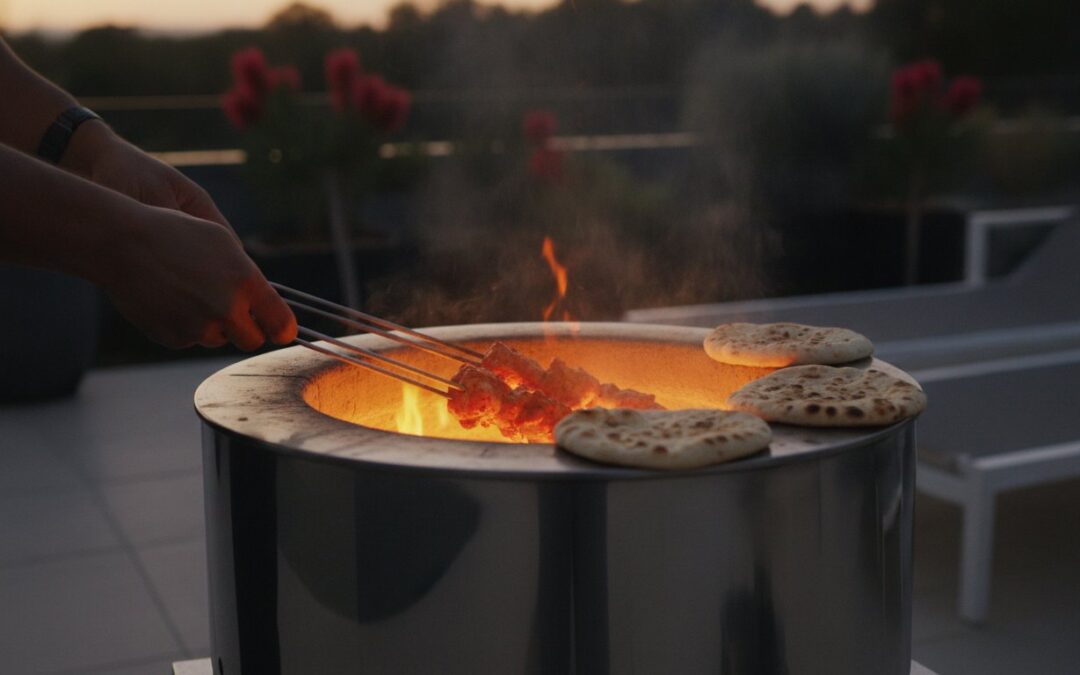
A standard backyard BBQ is essentially a toy compared to the raw, radiant power of a traditional clay tandoor. Most home cooks struggle to replicate authentic restaurant results—like those achieved by the Best Indian Food in Hayward, CA | Favorite Indian Restaurant | Indian Food near me—because they lack the intense, 480°C environment required for that signature blistered naan and succulent char. You have likely realized that standard gas setups just cannot reach the thermal heights needed for true tandoori craftsmanship. It is a common frustration for Australian pitmasters who value performance over decorative features.
This guide explains the mechanics of this ancient clay engine and identifies the best charcoal for tandoor oven cooking to ensure your heat is both clean and consistent. We promise to strip away the confusion between ceramic kamados and traditional clay liners while providing the fuel secrets used by professional chefs. You will learn the history of the craft, the science of thermal mass, and how to select high-performance, additive-free fuels that protect your equipment and elevate your flavour profile.
Key Takeaways
- Understand the ancient cylindrical design that creates a high-velocity thermal vortex for superior roasting and baking.
- Master the mechanics of radiant and convection heat to achieve perfectly charred exteriors and succulent interiors every time.
- Identify why additive-free hardwood is the best charcoal for tandoor oven use to protect your clay liner and ensure pure flavour.
- Learn the crucial performance differences between traditional clay tandoors and ceramic kamados to decide which fits your BBQ lifestyle.
- Discover the essential professional skewer kits and bread tools needed to safely handle extreme temperatures exceeding 400°C.
Defining the Tandoor: More Than Just a Clay Pot
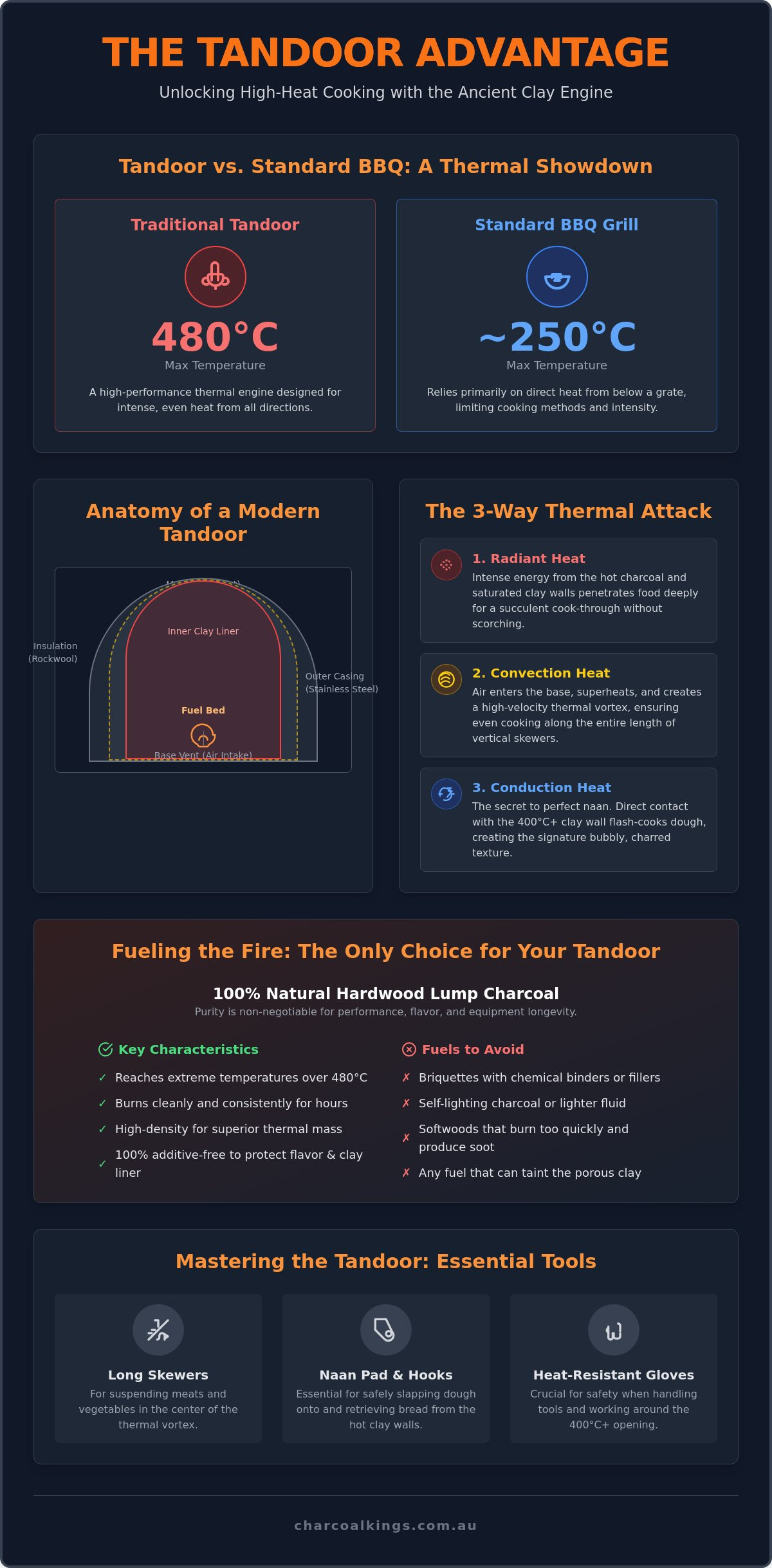
A tandoor is a high-performance thermal engine, not just a decorative vessel. It is a cylindrical ancient clay oven that has served as the backbone of high-heat cooking for over 5,000 years, with origins tracing back to the Indus Valley. Unlike a standard kettle grill where the heat source sits below a grate, the tandoor contains its fuel directly within the belly of the oven. This creates a concentrated environment where air is trapped and superheated, allowing the thick clay walls to absorb and radiate energy back into the food with incredible intensity.
This vertical orientation is the tandoor’s greatest functional strength. It allows you to slap flatbreads directly onto the scorching interior walls while simultaneously roasting meat on long, vertical skewers suspended in the centre. To reach the 400°C plus temperatures required for this process, you must use the best charcoal for tandoor oven setups: 100% natural hardwood lump. Purity is non-negotiable here. Any chemical additives or binders in your fuel will permeate the porous clay liner and permanently taint the flavour of your cook.
See how a traditional tandoor is prepped and lit for high-heat cooking in this video:
The Anatomy of a Modern Tandoor
Modern tandoors rely on a thick inner clay liner for massive heat retention. High-grade ceramic liners are now common in Australia because they resist cracking under extreme thermal stress better than traditional unrefined clay. These liners are wrapped in heavy-duty insulation, often rockwool or vermiculite, to keep the outer stainless steel casing safe while the interior glows. The mouth of the oven acts as the primary exhaust, while a small vent at the base controls oxygen intake. Precision airflow is the only way to manage a 500°C fire effectively.
Global Variants: From Tannur to Tandoor
The lineage of this technology stretches from the Arab tannur to the Central Asian tandyr. While the names vary, the core physics remain the same. The Silk Road acted as a conduit for these designs, bringing tandoori techniques from the Middle East into India and eventually across the globe. Today, Australian backyard pitmasters use portable, stainless-steel clad versions that offer the same professional performance as fixed brick units. Whether you’re cooking in a traditional pit or a modern portable unit, using the best charcoal for tandoor oven performance is the difference between a soggy kebab and a professional char.
The Science of Tandoori Heat: Radiant, Convection, and Conduction
Tandoori cooking is a masterclass in thermodynamics. While a standard grill relies almost entirely on direct heat from below, the tandoor utilizes a three-pronged thermal attack. Radiant heat is the primary force. It emanates from the white-hot charcoal and the saturated clay walls, penetrating meat to the bone without scorching the surface. To achieve this, you need the best charcoal for tandoor oven performance: high-density hardwood lump that burns clean and hot.
According to the Auguste Escoffier School of Culinary Arts, mastering Tandoori Cooking requires an understanding of how these heat sources interact. Convection occurs as air enters the bottom vent, heats up, and creates a high-velocity vortex inside the cylinder. This moving air ensures even cooking across the length of the skewer. Conduction is the final piece of the puzzle. It is the secret to perfect naan. When you slap raw dough against the 400°C clay wall, the direct contact flash-cooks the bread, creating that iconic bubbly texture.
Thermal mass is why these ovens are so efficient. A thick clay liner acts like a battery for heat. It takes roughly 45 to 60 minutes to fully charge a tandoor, but once saturated, it maintains cooking temperatures for hours with minimal fuel. Using a premium hardwood lump charcoal ensures you reach these saturation points quickly and efficiently.
The Maillard Reaction at 400 Degrees
Signature tandoori char isn’t just burnt food. It is the result of the Maillard reaction occurring at extreme speed. The Maillard reaction is a chemical process where amino acids and sugars react under high heat to create the complex flavours and deep browning characteristic of tandoori meats. In a tandoor, fat and marinades drip onto the best charcoal for tandoor oven use, vaporizing instantly. This smoke-mist coats the meat, adding a layer of complex aroma that a gas grill cannot replicate.
Temperature Management: Taming the Beast
Controlling a 480°C clay pot requires precision. The bottom air vent is your throttle. Open it to feed oxygen to the charcoal for a surge in heat; close it to stabilize. The lid is equally important. It keeps the convection vortex tight. Without it, heat escapes too fast, and the top of your skewers will remain undercooked. You must also learn to identify hot spots. The area closest to the charcoal bed is always the most intense, so rotate your skewers accordingly to ensure a uniform cook.
Tandoor vs. Other Grills: Which is Right for Your Backyard?
Deciding between a tandoor and a traditional Australian BBQ comes down to your cooking philosophy. Offset smokers are built for the low and slow marathon, using indirect heat to break down tough collagen over 12 hours. A tandoor is the exact opposite. It is a high-intensity thermal engine designed for rapid, high-heat execution. While a standard kettle BBQ is versatile for sausages and burgers, it lacks the insulation and vertical capacity of a clay oven. The tandoor focuses energy inward, making it far more fuel-efficient than thin-walled metal grills. To maintain these blistering temperatures, using the best charcoal for tandoor oven cooking, specifically premium hardwood lump, is essential for sustained performance.
Kamados often draw comparisons to tandoors because of their ceramic composition. However, the vertical orientation of the tandoor provides a distinct advantage for skewer-based cooking. In a kamado, skewers typically sit horizontally over the coals. In a tandoor, they hang vertically, allowing for a unique self-basting effect as juices run down the meat. For homeowners with limited space, modern portable tandoors offer a footprint similar to a medium kettle grill. This makes them a viable addition to any Australian outdoor kitchen where floor space is at a premium.
The Skewer Advantage
Vertical roasting is the tandoor’s secret weapon. When barbecuing with charcoal in a flat grill, fat drips directly onto the coals, often causing flare-ups that scorch the meat. In a tandoor, the extreme radiant heat from the walls cooks the meat so quickly that juices are often locked in before they can escape. This setup allows for high-volume entertaining. You can hang 10 to 12 skewers simultaneously, feeding a large group in a fraction of the time it takes to flip individual steaks on a flat plate. Achieving this level of throughput requires the best charcoal for tandoor oven use to ensure the heat remains consistent across the entire batch.
Versatility and Learning Curves
The tandoor is often wrongly labelled a one-trick pony for naan and tikka. In reality, it is a versatile tool for roasting whole birds, baking vegetables, and even light smoking. When consulting The Ultimate BBQ Buying Guide, consider your willingness to be hands-on. Tandoori cooking is not a set-and-forget method like using a pellet grill. It requires active fire management and an understanding of thermal mass. It is a primal, rewarding craft that rewards the pitmaster who values authenticity and performance over automated convenience.
Fueling the Fire: Choosing the Best Charcoal for Your Tandoor
Fuel selection is the most critical decision you will make for your clay oven. Choosing the best charcoal for tandoor oven performance is not about finding the cheapest bag at the service station. It is about heat density and chemical purity. Traditional clay liners are highly porous. If you use fuel containing chemical binders, accelerants, or mineral coal, those toxins will penetrate the clay walls. Once absorbed, they release foul-smelling gases every time the oven heats up, permanently tainting your food. Purity is the only way to protect your investment and your palate.
Using Australian hardwoods like Gidgee or Ironbark is the gold standard for tandoori cooking. These dense timbers provide the sustained, high-intensity radiant energy required to saturate thick ceramic walls effectively. You should avoid softwoods or low-quality scraps that spark excessively. In the vertical environment of a tandoor, sparks fly directly toward the mouth of the oven. This creates a safety hazard for the pitmaster and leaves unsightly ash deposits on your naan bread.
The Case for Premium Hardwood Lump
Lump charcoal is the only viable choice for authentic results. Unlike briquettes, which contain fillers and produce excessive ash that chokes the bottom air vent, lump charcoal is pure carbonized wood. High carbon content ensures a cleaner burn with minimal residue, making it the best charcoal for tandoor oven enthusiasts who demand efficiency. This allows for maximum oxygen flow, which is essential for maintaining temperatures above 400°C. For a typical four-hour session, you’ll likely use approximately 3kg to 5kg of premium lump, depending on your oven size.
Binchotan in the Tandoor: The Professional Secret
By utilizing binchotan charcoal, professional chefs achieve a level of precision that standard fuels cannot match. Binchotan, or Japanese white charcoal, is the pinnacle of fuel technology because it burns with virtually no smoke or odour. It emits intense infrared heat that penetrates deeply into proteins without scorching the exterior. Many experts use a hybrid method: they charge the tandoor with standard hardwood lump to reach peak temperature, then add Binchotan to maintain a steady, long-lasting infrared glow for the duration of the cook.
Don’t compromise your cook with inferior fuels. Ensure your next session reaches professional standards by using premium hardwood lump charcoal for a cleaner, hotter burn.
Mastering the Tandoor: Essential Tools and Next Steps
Operating a tandoor is a high-stakes craft that demands specialized hardware. You cannot use standard BBQ tongs or short skewers in an environment that exceeds 400°C. The most critical component of your kit is the skewer set. Authentic tandoori skewers feature a square profile rather than a round one. This design choice is functional. It prevents meat from spinning as the skewer is rotated, ensuring even exposure to the radiant heat. These skewers must be extra-long to keep your hands away from the thermal vortex while allowing the tips to rest securely in the charcoal bed.
Bread production requires its own dedicated toolset. To apply naan to the clay walls, you need a Gaddi. This is a heat-resistant bread cushion used to slap the dough firmly against the scorching liner. Retrieval is handled by a pair of long steel tools known as a jodi, consisting of a sharp hook to pierce the bread and a flat scraper to pry it from the clay. Using the best charcoal for tandoor oven performance ensures these walls stay at the correct temperature for the dough to stick and bubble instantly without falling into the coals.
Your Tandoori Toolkit
- Square-Profile Skewers: Prevents food rotation and ensures uniform charring.
- Gaddi (Bread Pad): Essential for safe, high-speed naan application.
- Jodi (Hook and Scraper): Precision tools for bread retrieval from the deep cylinder.
- Ash Tool: A long-handled rake to clear the bottom vent and maintain oxygen flow during long sessions.
- High-Heat Gloves: Heavy-duty protection for managing skewers and the heavy lid.
Getting Started with Your First Cook
Tempering is the first step for any new clay oven. Never start with a massive, high-intensity fire. You must cure the liner by starting with a small, low-heat burn for several hours. This allows the clay to expand gradually and prevents structural cracking. Once tempered, your first cook should focus on entry-level proteins like Chicken Tikka or Seekh Kebabs. These provide immediate feedback on how your oven manages radiant heat and convection.
Safety is paramount in an Australian backyard setting. A tandoor possesses massive thermal mass. It remains dangerously hot for hours after the fire is extinguished. Ensure the unit is placed on a non-combustible surface and keep a clear perimeter. To guarantee a successful, soot-free launch, stock up on premium hardwood lump charcoal. Starting with pure, chemical-free fuel is the only way to establish the best charcoal for tandoor oven habits from day one. Happy roasting.
Master the Art of High-Heat Clay Cooking
Mastering the tandoor is a journey into the primal roots of cooking. It is a craft that demands respect for thermal physics and a commitment to material purity. You now understand that the unique vertical design and heavy clay insulation are what separate a true tandoor from standard backyard grills. To maintain internal temperatures above 400°C without damaging your equipment, selecting the best charcoal for tandoor oven performance is the most critical step.
Professional results require professional-grade fuel. Don’t compromise your clay liner with cheap, chemical-laden alternatives that will permanently taint your oven. Ensure your next session reaches its full potential with a fuel source that burns clean and hot. High-performance cooking is only possible when your fuel matches the quality of your equipment.
Fuel your tandoor with Australia’s finest Hardwood Lump Charcoal. Our 100% Natural Hardwood contains no additives or chemicals and is trusted by professional pitmasters to deliver consistent, commercial-grade heat. Fire up your clay oven with confidence and experience the difference that authentic fuel makes.
Frequently Asked Questions
Is a tandoor oven better than a regular BBQ?
A tandoor is superior for high-heat roasting and traditional bread making, but it serves a different functional purpose than a flat grill. Standard BBQs cannot reach the 400°C radiant heat levels required for authentic tandoori textures. While a regular BBQ is versatile for sausages and burgers, the tandoor is a specialized thermal engine designed for rapid, vertical roasting and flash-baking naan.
Can I use a tandoor oven indoors?
No, you should never use a charcoal-fired tandoor indoors due to the extreme risk of carbon monoxide poisoning. These units require significant ventilation and a clear vertical exhaust path. Professional restaurant setups use specialized gas-fired units with heavy-duty extraction hoods. For home use in Australia, always operate your tandoor in a well-ventilated backyard or open outdoor kitchen area.
What is the difference between a tandoor and a pizza oven?
The primary difference lies in the heat orientation and cooking surface. Pizza ovens utilize a horizontal stone floor for conduction and a low dome for convection. Tandoors use vertical clay walls for both baking and radiant heat distribution. While both reach high temperatures, the tandoor is optimized for hanging skewers and sticking dough to vertical surfaces rather than sliding pies onto a flat deck.
How do you clean a tandoor oven?
You don’t clean a tandoor with water or detergents as the porous clay will absorb chemicals. Use a long-handled scraper to remove burnt food debris from the walls once the unit has cooled. The extreme heat of the next fire effectively sterilizes the interior. Use a dedicated ash tool to clear the base of the oven after every few cooks to maintain proper oxygen airflow.
Why does naan stick to the side of a tandoor?
Naan sticks because of the rapid moisture evaporation and protein bonding that occurs when raw dough hits the scorching clay. If your bread falls off, the wall temperature is likely too low. Using the best charcoal for tandoor oven performance ensures the clay reaches the 400°C threshold required for immediate adhesion. Always ensure the wall is free of excessive flour buildup before applying the dough.
What kind of wood or charcoal is best for a tandoor?
Premium hardwood lump charcoal is the only fuel that provides the necessary heat density and purity for a tandoor. You must avoid briquettes because they contain chemical binders and fillers that can permeate the clay liner. Natural Australian hardwoods like Gidgee or Ironbark offer a clean, sustained burn with minimal ash production. This ensures your oven stays hot and your food remains free of chemical taints.
How long does it take for a tandoor to heat up?
It typically takes between 45 and 60 minutes to fully saturate the thick clay walls with heat. This process is known as charging the oven. You cannot rush this stage by using accelerants. A steady fire allows the thermal mass to build gradually, which prevents the clay from cracking. Once the interior walls turn a white-hot shade, the tandoor is ready for professional-grade cooking.
Can I use a tandoor for smoking meat?
You can achieve a light smoke profile by adding hardwood chunks directly to the charcoal bed, but a tandoor is not a dedicated smoker. The high-heat environment means the smoking process happens very quickly. It is an excellent way to add a woody aroma to chicken or lamb skewers. However, it lacks the temperature control required for the low and slow breakdown associated with traditional offset smokers.