Your choice of fuel is not just a heat source; it’s a high-performance ingredient that dictates the success or failure of every cook. Most backyard pitmasters treat charcoal as an afterthought. However, the difference between a ruined brisket and a restaurant-quality bark often comes down to the purity of the carbon in your grate. You’ve likely experienced the frustration of inconsistent temperatures or the acrid, chemical smell of low-quality fillers ruining a prime cut of meat. It’s a common hurdle that prevents many from achieving professional results at home.
This guide provides the expertise needed to master the art of fire management using the world’s purest fuels. We’ll break down the specific performance metrics of Hardwood Lump, Binchotan, and professional-grade briquettes. You’ll learn how to select the right fuel for your gear and maintain intense, sustained heat without the fire dying mid-cook. We are providing the definitive answers on fuel selection and fire control so you can cook with absolute confidence and achieve the high standard your ingredients deserve.
Key Takeaways
- Understand how pyrolysis transforms organic wood into pure carbon for a fuel that burns hotter and cleaner than raw timber.
- Distinguish between Hardwood Lump for intense searing and briquettes for long, stable temperature management during extended cooks.
- Discover the performance benefits of Binchotan, a high-density fuel carbonized at 1000°C for unmatched infrared heat.
- Protect your food’s flavour by using a chimney starter to ignite your charcoal without the use of chemical lighter fluids.
- Identify the characteristics of professional-grade fuels made from dense hardwoods to ensure superior energy and consistent results.
What is Charcoal? Understanding the Science of Pure Carbon
Charcoal isn’t just burnt wood. It’s the result of a precise chemical process called pyrolysis. By heating hardwood in an oxygen-free environment, we strip away water, sap, and volatile gases. What remains is a concentrated block of nearly pure carbon. If you’ve ever wondered What is Charcoal? at its most basic level, it’s the high-performance residue of organic material.
Raw wood is an inefficient fuel for precision BBQ. It contains moisture that consumes energy just to evaporate, often resulting in fluctuating temperatures and heavy, soot-filled smoke. High-quality charcoal eliminates these variables. Because the volatile compounds are already removed, you get a fuel that ignites faster, burns hotter, and produces significantly less ash. This is our Purity Promise: high carbon content ensures a clean, consistent energy source that lets the natural flavour of your meat take centre stage.
We specialise in natural hardwood products. It’s vital to distinguish these from coal-based briquettes or mineral coke found in industrial applications. We don’t sell mineral coal. Our focus remains on organic, timber-derived fuels that provide a safe, food-grade environment for your smoker or grill.
The History of Charcoal in Australian BBQ
Australian outdoor cooking has evolved from basic campfire grilling to a sophisticated low-and-slow culture. Early settlers relied on whatever timber was at hand, but modern pitmasters demand more. The unique density of Australian hardwoods has shaped our local BBQ identity, providing a long-lasting heat profile that few international timbers can match. Today, the industry is led by specialised suppliers, many based in South Australia, who understand that the quality of the cook begins with the integrity of the fuel.
Why Purity Matters: The No-Additive Advantage
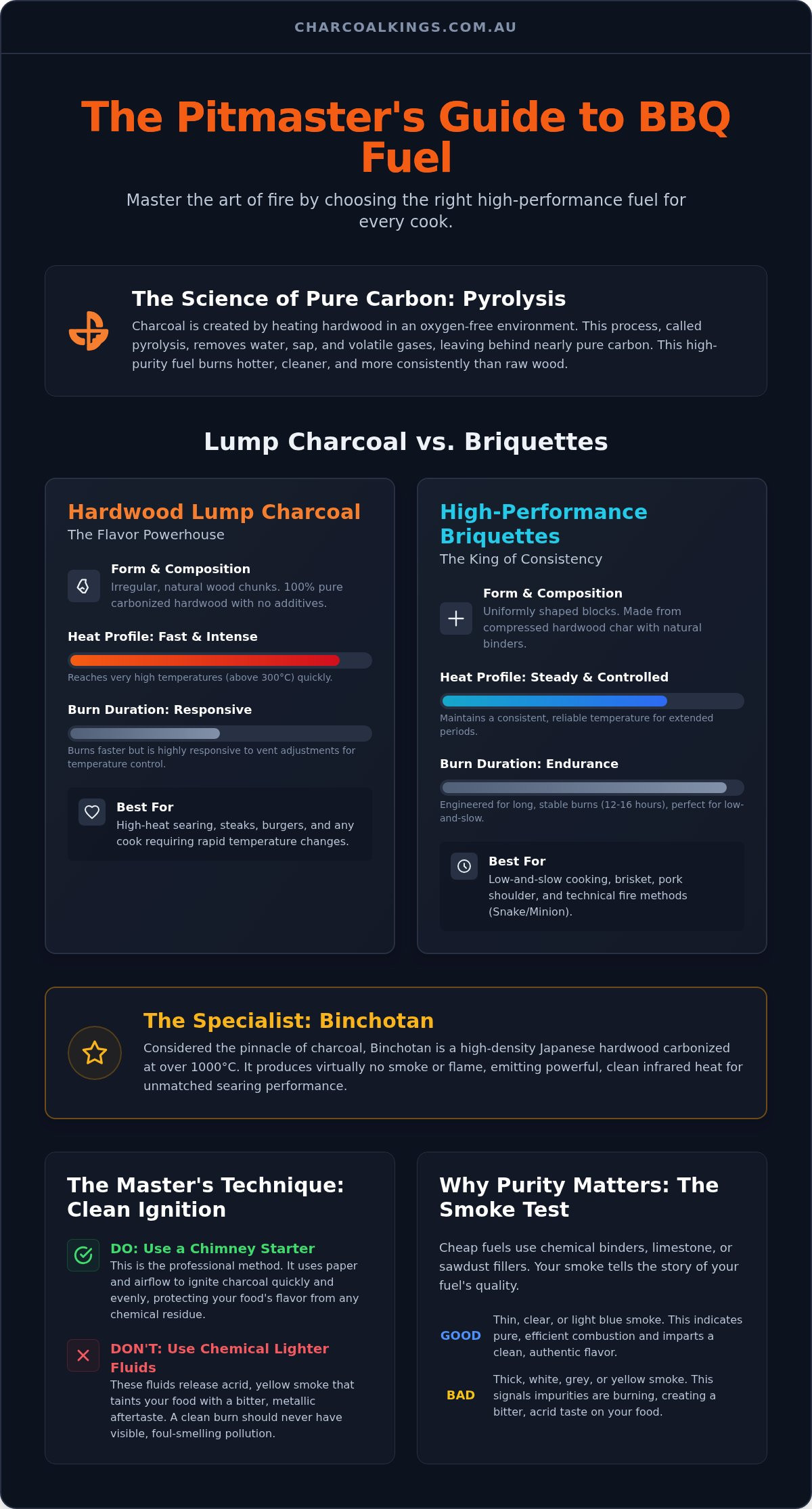
Cheap, mass-market fuels often rely on chemical binders, limestone, or sawdust fillers to keep their shape. When these ignite, they release acrid, yellow smoke that taints your food with a bitter, metallic aftertaste. A clean burn is defined by the absence of this visible pollution. You want clear or thin blue smoke, not a chemical haze. Using 100% natural hardwood ensures that no synthetic toxins enter your cooking chamber. It’s a healthier choice for your family and the only way to achieve authentic, competition-grade results.
Lump Charcoal vs. Briquettes: Choosing Your Performance Grade
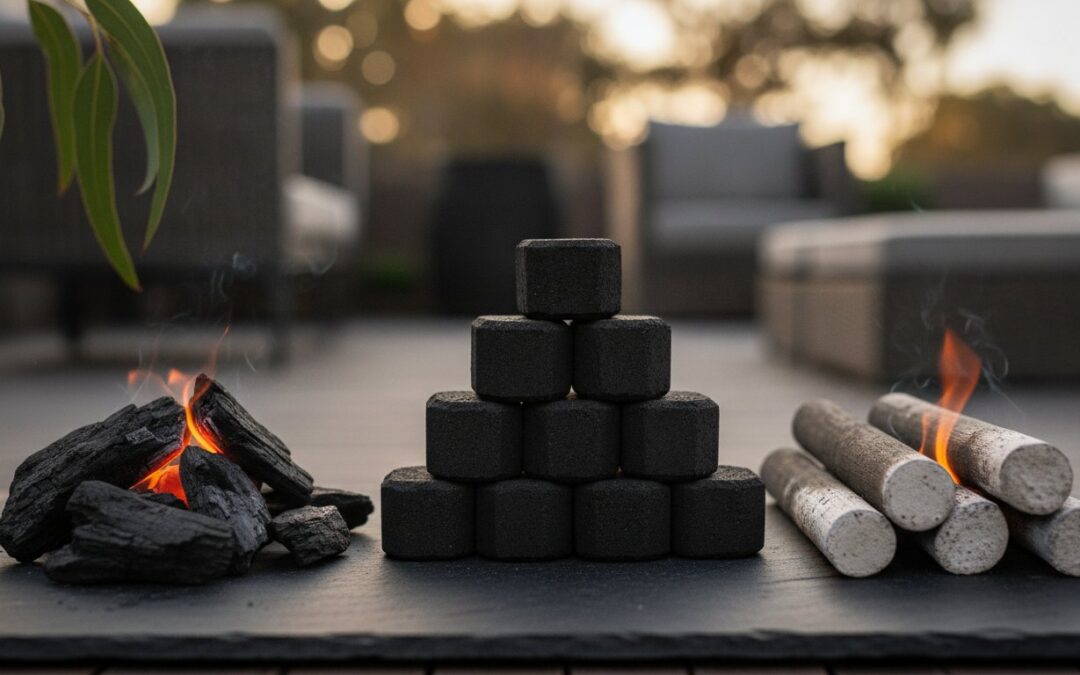
Selection depends on your hardware and your specific goal. Hardwood Lump is the industry standard for high-heat searing and an authentic smoke profile. It burns fast and intense. Conversely, Briquettes are engineered for duration and thermal stability. While lump leaves minimal residue, briquettes often produce more ash due to their compressed nature. Understanding these performance grades ensures you don’t waste premium meat on an unsuitable fire.
Hardwood Lump Charcoal: The Flavour Powerhouse
Lump consists of irregular timber pieces carbonised to a high degree. These varied shapes are essential for performance. They create natural gaps in the fuel bed that facilitate superior airflow, making the fire highly responsive to vent adjustments. If you open your dampers, the temperature spikes almost instantly. It’s the ideal choice for steaks, burgers, or any cook requiring temperatures above 300°C. For those seeking the absolute peak of this category, Binchotan and the High-Heat Revolution represent the extreme end of carbon purity and infrared output. Using Lump Charcoal: The Pro’s Choice for Flavour guarantees a clean, wood-fired essence without the interference of artificial additives.
Briquettes: The King of Consistency
Briquettes offer a predictable, uniform burn profile. Their identical size and shape make them the only reliable choice for technical fire management like the Snake Method or the Minion Method. In these setups, one coal ignites the next in a controlled chain, providing 12 to 16 hours of steady heat for large brisket or pork shoulder cooks. You must avoid supermarket-grade options. Cheap briquettes use starch binders and chemical fillers that create a thick, foul-smelling ash. High-performance briquettes rely on natural pressure and organic binders to maintain integrity and flavour. Choosing the right charcoal is a tactical decision. Use lump for speed and power. Use briquettes for endurance and precision. Most professional pitmasters keep a stock of both to handle any scenario. You can find our full range of professional-grade fuel online to ensure your next cook has a solid foundation.
Specialty Fuels: Binchotan and the High-Heat Revolution
Binchotan is often called “White Gold” because of its metallic ring and extreme carbon purity. While standard lump is produced at lower temperatures, Binchotan undergoes a final stage where the kiln reaches over 1000°C. This intense heat creates a fuel that is almost entirely pure carbon. It doesn’t just burn; it emits powerful infrared rays. This specific type of charcoal sears proteins instantly without the flare-ups associated with volatile oils. It provides a level of thermal control that standard timber fuels cannot match.
The density of the raw material is critical for this performance. High-density hardwoods are required for this process, which ties into broader global discussions regarding sustainable charcoal production and the management of slow-growing timber resources. Because the wood is so dense, the resulting fuel possesses an incredible longevity that justifies its premium status in the professional kitchen.
The Art of the Hibachi Grill
If you’re using a Hibachi or Konro grill, Binchotan is the mandatory fuel. Its performance is unique because it’s virtually smokeless and odourless. You aren’t masking the food with heavy, soot-filled smoke; you’re letting the natural quality of the ingredient speak for itself. This clean energy profile is why it remains the gold standard for high-end Japanese cuisine. For a deeper dive into these traditional methods, see our guide on Binchotan Charcoal: The Ultimate Guide to Japanese White Charcoal.
Binchotan vs. Standard Lump: A Value Comparison
The upfront cost is higher than standard lump, but the value lies in the burn duration. A single load of Binchotan can maintain a consistent cooking temperature for 4 to 6 hours. It’s the preferred choice for Wagyu beef and Yakitori skewers where precision is paramount. Standard lump often burns out just as the fat begins to render; Binchotan stays the course.
Efficiency is also a key factor. Unlike standard lump that turns to fine ash, Binchotan remains structurally sound after a cook. You can extinguish the sticks in an airtight ceramic pot or by dipping them in water, then relight them for your next session. This “extinguish and re-use” technique drastically reduces the actual cost per cook. It’s a professional-grade solution for those who value performance and efficiency over cheap, disposable alternatives.
The Master’s Technique: Lighting and Fire Management
Lighting your fuel is the first test of a pitmaster. You must never use liquid lighter fluid on premium charcoal. These petroleum-based products saturate your fuel with chemical odours that transfer directly to your food, ruining expensive cuts of meat with a bitter, synthetic aftertaste. A Chimney Starter is the only professional way to ignite your fire. It uses the physics of a thermal updraft to light coals quickly and evenly without the need for chemical additives. Simply place a few natural firelighters at the base and let the vertical airflow do the work.
Wait for the right smoke profile before adding your ingredients to the grate. Initial ignition produces thick, billowing white smoke. This is full of bitter particulates, water vapour, and unburnt gases that will taint the flavour of your meat. You are looking for Thin Blue Smoke. This indicates a clean, efficient burn and a stable thermal core. Adding meat too early results in a soot-heavy finish that masks the natural quality of the hardwood. Professional results require patience during this ignition phase.
Managing Temperature Through Airflow
Temperature control is a function of oxygen management. Your bottom vents act as the accelerator. Opening them allows more oxygen to reach the fuel, increasing the heat for high-temperature searing or fast grilling. Closing them chokes the fire and drops the temperature for low-and-slow smoking sessions. The top vents act as the exhaust and fine-tuner. They regulate how much smoke remains in the chamber and help stabilise the internal environment. If your fire is dying, check for ash blockages in the bottom grate that might be restricting oxygen. If it’s too hot, close the bottom vents by half and wait ten minutes for the thermal mass to adjust.
Direct vs. Indirect Heat Zones
Mastering the two-zone setup is essential for versatile grilling. This involves banking your fuel to one side of the grill to create distinct temperature environments. This technique allows you to manage different proteins simultaneously without risk of overcooking.
- Direct Heat: Place meat directly over the coals for intense infrared searing. This is the zone for steaks, burgers, and skewers.
- Indirect Heat: Place meat on the opposite side of the grate. The heat circulates like a convection oven, perfect for roasting whole chickens or large joints.
Strategic charcoal placement creates a dedicated safe zone where you can move meat to prevent fat flare-ups from scorching the surface. Safety is paramount when the cook is finished. Always use heat-resistant gloves when handling grates or chimney starters. Never dispose of ash in plastic bins or near combustible structures. Wait 24 hours for the embers to fully extinguish before removal. To get started with the right gear, browse our range of premium BBQ accessories and fuel.
Sourcing Quality: Why Charcoal Kings is Australia’s Choice
Charcoal Kings sets the benchmark for high-performance fuel in Australia. We source only the hardest, densest timbers to ensure maximum energy output and longevity. This “Kings grade” standard is what separates our products from generic supermarket options. While low-quality fuel often contains softwoods that burn away in minutes, our hardwood lump and Binchotan provide the sustained, intense heat required for professional results. We focus on absolute purity. No chemical additives. No fillers. Just pure carbon for a clean, authentic cook.
Our operations support the entire Australian BBQ ecosystem. We supply the food service industry with bulk wholesale solutions, ensuring restaurants can maintain consistent quality across high-volume service. At the same time, we provide the same professional-grade charcoal to backyard enthusiasts who refuse to settle for inferior fuel. Whether you are running a commercial pit or a weekend kettle, you receive the same uncompromising standard of product. We are committed to the BBQ community through education and expert support, ensuring every customer has the knowledge to master their fire.
Local Expertise in South Australia
Our headquarters in Holden Hill, South Australia, serves as a hub for the local BBQ community. We don’t just sell fuel; we provide the complete toolkit for success. This includes a curated range of BBQ Grills and Smokers designed to handle the intense output of our specialty fuels. You can also find professional-grade rubs, sauces, and smoking woods to complement your cook. We encourage you to visit our Charcoal Kings stockists for expert advice on local hardwood performance. Understanding how different smoking woods interact with your base fuel is the key to developing a signature flavour profile.
The Final Verdict: Purity Equals Performance
Investing in premium charcoal is a tactical financial decision. High-density fuel burns longer and hotter, meaning you use less product per cook compared to cheaper, air-filled alternatives. This efficiency saves you money over the long term while protecting the integrity of your ingredients. If you are just starting your journey, our guide on Mastering the Art of Barbecuing with Charcoal provides the foundational knowledge needed to succeed.
Stop compromising on your fuel. Elevate your BBQ game by choosing the purity and performance that only professional-grade hardwood can provide. Visit us in Holden Hill or browse our full range of accessories and fuel online to complete your kit today. Results matter, and they start with the quality of your fire.
Master Your Fire with Professional Standards
Mastering the art of outdoor cooking requires more than just high-quality meat; it requires an uncompromising approach to your fuel. You now understand that charcoal is a precision ingredient. Selecting between the intense infrared heat of Binchotan or the reliable consistency of professional-grade briquettes dictates your final result. By eliminating chemical additives and fillers, you protect the integrity of your food and ensure a clean, restaurant-quality bark every time. This level of purity is the foundation of every successful cook.
Our products are trusted by leading Australian restaurants to deliver consistent, high-performance results under pressure. Whether you are a commercial chef or a dedicated home pitmaster, our Holden Hill team is ready to provide the expert advice needed to refine your technique and hardware kit. Don’t let inferior, supermarket grade fuel compromise your hard work and expensive ingredients. It is time to treat your fire with the respect it deserves.
Upgrade to Professional-Grade Charcoal Today and experience the difference that pure carbon makes to your flavour profile. Take full control of your grill and produce results that speak for themselves. Get those fires started!
Frequently Asked Questions
Is charcoal better than gas for BBQ flavour?
Charcoal provides a distinct flavour profile that gas burners cannot replicate. When meat juices and fats hit the glowing embers, they vaporise and coat the food in a complex, smoky essence. Gas is simply a heat source, whereas quality hardwood fuel acts as a functional ingredient. This process creates the authentic wood-fired taste and superior bark that professional pitmasters and leading Australian restaurants demand for high-standard results.
How long does charcoal stay hot for cooking?
Burn duration depends entirely on the fuel density and the specific variety used. Standard hardwood lump typically provides intense heat for 60 to 90 minutes. High-performance briquettes are engineered for consistency and can maintain cooking temperatures for 3 to 4 hours. Specialised fuels like Binchotan offer the greatest longevity, often burning for up to 6 hours. Managing your airflow through the grill vents will also extend or shorten these durations.
Can I reuse charcoal that hasn’t fully burnt?
You can absolutely reuse unburnt fuel to reduce waste and improve efficiency. Once your cook is finished, close all vents on your grill or smoker to choke the fire of oxygen. Once the embers are completely cold, shake off the excess ash before relighting them for your next session. This technique is particularly effective with Binchotan and high-density hardwood lump. Always ensure the fuel is stored in a dry environment between uses.
What is the difference between wood charcoal and briquettes?
Hardwood lump consists of irregular pieces of carbonised timber that provide high heat and a traditional smoke profile. Briquettes are manufactured into uniform shapes to provide a predictable, steady burn rate over longer periods. While lump is the pro’s choice for searing steaks, briquettes are superior for technical fire management like the Snake Method. Our specialised charcoal products ensure both types remain free from the chemical fillers found in low-quality supermarket alternatives.
How much charcoal do I need for a standard BBQ session?
A standard grilling session usually requires one full chimney starter of fuel, which is approximately 1.5 to 2 kilograms. For low-and-slow smoking, you might start with a half-chimney and use the Minion Method to sustain heat for several hours. Larger offset smokers or commercial rigs will naturally require more volume. The density of your hardwood also matters; higher-quality fuel produces more energy per kilogram, meaning you actually use less product overall.
Why is my charcoal sparking or popping when I light it?
Sparking and popping occur when pockets of moisture or trapped gases inside the wood expand rapidly upon heating. This is often a sign of inferior fuel that hasn’t been fully carbonised or has absorbed humidity during storage. Premium hardwood fuels are processed at higher temperatures to ensure a more complete carbonisation, resulting in a cleaner, safer burn. Using a chimney starter instead of liquid accelerants also helps to minimise aggressive sparking during ignition.
Is BBQ charcoal the same as the coal used for heating?
BBQ fuel and mineral coal are completely different substances. Our products are made from 100% natural organic timber through the process of pyrolysis. Mineral coal is a fossil fuel dug from the earth that contains high levels of sulphur, mercury, and other toxins. You must never use heating coal for cooking, as it produces hazardous fumes that will taint your food and damage your health. Always stick to food-grade hardwood products for your grill.
How should I store my charcoal to keep it fresh?
Proper storage is essential for maintaining the ignition speed and heat output of your fuel. Charcoal is porous and will absorb moisture from the air, making it difficult to light and prone to excessive smoke. Store your bags in a cool, dry place off the ground. For the best results, use an airtight plastic bin or a dedicated storage container. This prevents humidity from degrading the carbon structure and ensures your fuel is ready for immediate use.