Spending $2,800 on a custom-built offset won’t guarantee a better brisket if you lack the 12 hours required to manage a firebox every 45 minutes. The ugly drum smoker vs offset debate usually centers on tradition, but in 2026, the real winner is decided by fuel economy and flavor profile. You want the deep, authentic bark of premium natural hardwood charcoal without wasting money on hardware that sits idle or drains your bank account with inefficient burns. It’s a common fear among backyard cooks, especially with fuel prices in Australia rising by 15 percent over the last 12 months.
We know you value quality and performance over frills. This guide delivers the critical differences in flavor, fuel efficiency, and fire management to help you decide which smoker belongs in your backyard. We’ll break down the 30 percent fuel savings found in vertical drums and explain why the direct dripping flavor of a UDS creates a different profile than the horizontal airflow of an offset. You’ll get a clear understanding of the learning curve for each and a final decision on which machine produces your preferred flavor. We’re looking at the raw performance data to ensure your next cook is a victory. Get sizzlin’!
Key Takeaways
- Master the physics of heat by understanding how the chimney effect provides rock-solid temperature stability for long, efficient cooks.
- Decode the flavour war between the savoury “fat-on-fire” profile of a drum and the clean, traditional wood smoke of a horizontal offset.
- Evaluate the practical running costs and space demands of an ugly drum smoker vs offset to find your perfect match for Australian conditions.
- Identify your smoking style to choose between the set-and-forget efficiency of a vertical powerhouse or the hands-on craft of a traditional stick burner.
The Smoking Showdown: Defining the UDS and the Offset
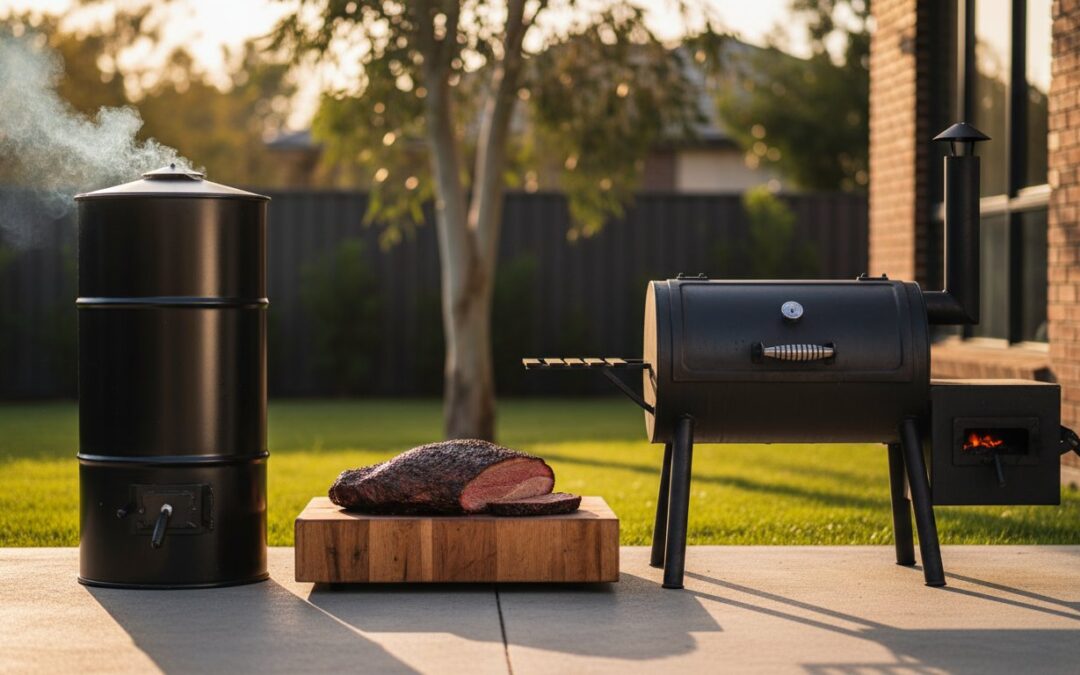
Choosing between an ugly drum smoker vs offset determines your entire BBQ trajectory. In 2026, the Australian backyard scene has shifted toward high-performance steel and fuel efficiency. Pitmasters no longer settle for thin-walled imports that lose heat. You are either looking for the vertical efficiency of a drum or the horizontal craft of a stick burner. Both tools produce world-class brisket, but the mechanical path to that result is different. Your choice depends on whether you value a set-and-forget 12 hour burn or the hands-on ritual of managing a firebox every 45 minutes.
- The Ugly Drum Smoker (UDS): A vertical powerhouse built for thermal efficiency and a distinct “fat-on-fire” flavour profile.
- The Offset Smoker: The traditional horizontal “stick burner” that relies on a clean draft and pure indirect heat.
- The 2026 Context: Rising wood costs and urban space constraints make the efficiency of the UDS more relevant than ever for Australian cooks.
What Exactly is an Ugly Drum Smoker (UDS)?
The UDS is a vertical smoker built around a 200-litre (55-gallon) steel drum. It uses a “direct-indirect” cooking method. Your charcoal basket sits at the bottom, and the meat hangs or sits on a grate directly above the coals. Because there is no water pan or heat deflector in a classic UDS, fat drips directly onto the burning premium natural hardwood charcoal. This creates a unique, savoury fog that seasons the meat. While these began as DIY projects in the early 2000s, by 2026 they have evolved into premium retail hardware featuring laser-cut intakes and high-temp powder coatings. A single 5kg load of lump charcoal can maintain a steady 250°F (121°C) for over 15 hours.
The Anatomy of a Traditional Offset Smoker
The traditional offset is a three-part system: the firebox, the cook chamber, and the chimney. It relies on the Venturi effect to pull heat and smoke horizontally across the meat. In the Australian climate, the quality of an offset is measured by its thermal mass. Professional units now standardise on 6mm to 10mm thick structural steel to maintain internal temperatures when the coastal wind picks up. This design keeps the meat entirely away from the fire source. You get a pure, translucent blue smoke that produces the heavy, dark bark synonymous with Texas-style BBQ. It requires 100% natural hardwood splits and constant attention to maintain the airflow balance. If you want to master the craft of fire management, the offset is your primary tool.
The decision comes down to your primary goal. If you want to sleep while your pork butt cooks, the UDS is the king of convenience. If you want the pursuit of the perfect bark and don’t mind standing by the firebox all day, the offset remains the ultimate status symbol in the backyard. Get Sizzlin’!
Airflow and Physics: How These Smokers Actually Cook
Understanding the physics of heat transfer is the first step to mastering the pit. In the debate of ugly drum smoker vs offset, the winner is often determined by how well you control air. These two designs move heat in fundamentally different ways. One relies on a vertical “chimney effect” while the other utilizes a horizontal draft. This choice dictates how much sleep you get during a brisket cook and the final texture of the bark on your meat.
The Vertical Draft of the Drum
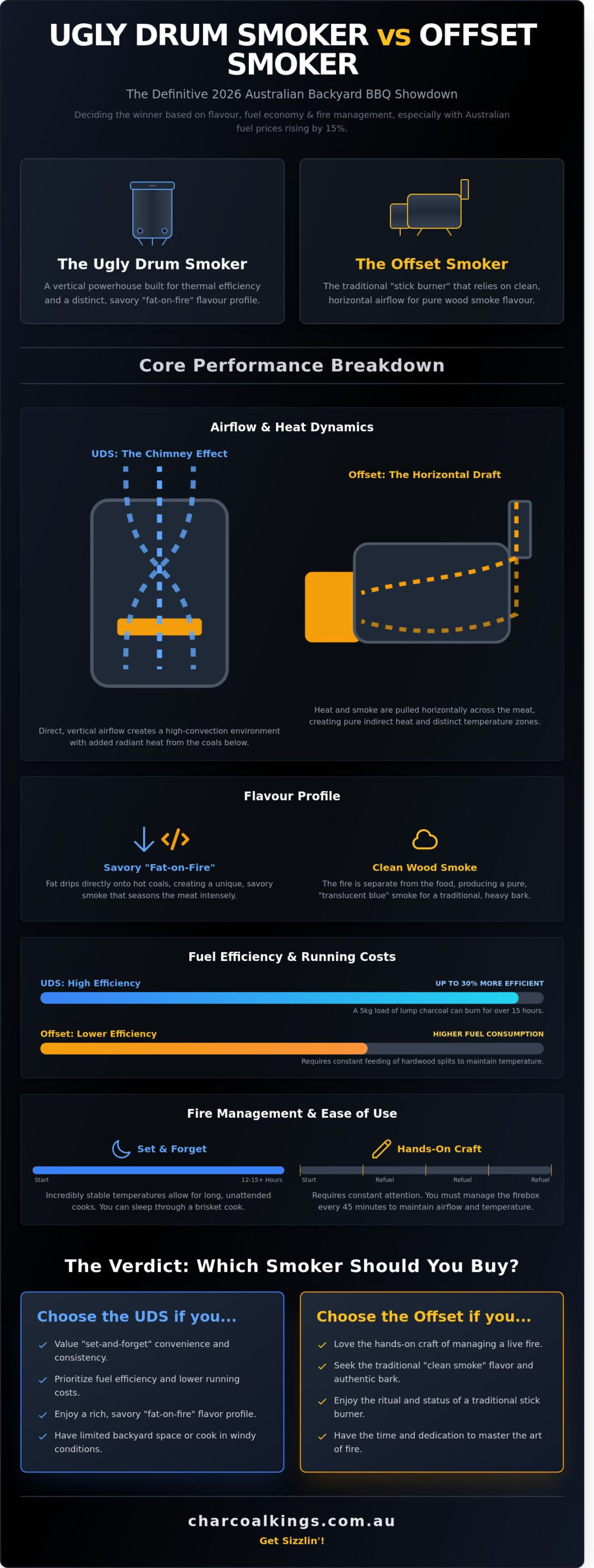
The ugly drum smoker operates on a simple, bottom-up airflow pattern. Air enters through intake valves at the base, feeds the fire in a charcoal basket, and rises directly past the meat. This creates a high-convection environment. Because the heat source is directly below the food, you benefit from radiant heat and the flavor of fat dripping onto the coals. A standard 55-gallon drum holds about 8 to 10 kilograms of fuel, allowing it to maintain steady temperatures between 225 and 250 degrees Fahrenheit for 12 to 15 hours straight.
Vertical smokers are incredibly resilient. Their cylindrical shape and concentrated heat source make them less susceptible to external variables. Even in 20 km/h winds or near-freezing temperatures, a drum smoker holds its target temperature with minimal adjustment. It’s a “set it and forget it” machine that rewards consistency.
The Horizontal Flow of the Offset
Offset smokers use the Bernoulli principle to move smoke. Hot air rises out of the chimney, creating a pressure vacuum that pulls fresh oxygen into the firebox and across the cooking chamber. This horizontal flow is why offsets are famous for producing a superior, crunchy bark. However, this design creates distinct thermal zones. You will often see a 25 to 50 degree temperature variance between the side closest to the firebox and the chimney end. This requires you to rotate meat or use tuning plates to even out the heat.
Managing the draft is the biggest challenge for offset owners. If you starve the fire of oxygen, the wood smolders and produces “dirty” creosote smoke. This thick, soot-heavy smoke leaves a bitter, metallic taste on the meat. To keep the smoke clean and blue, you must add a small, seasoned hardwood split every 45 to 60 minutes. It is a labor-intensive process that requires constant attention to the fire’s health.
Fuel choice is non-negotiable for high-performance cooking. Drums thrive on premium natural hardwood charcoal because it provides a long, steady burn with very little ash buildup. Offsets require high-quality split logs to maintain the high-velocity airflow needed for clean combustion. If you want a pit that runs itself, the drum is king. If you want to master the craft of fire-tending, the offset is your tool. Get Sizzlin’!
The Flavour Profile: Fat-on-Coals vs. Clean Wood Smoke
The most common objection to the drum is the fear of “dirty” smoke. Critics often claim a drum smoker makes meat taste like burnt grease. This is a misunderstanding of the physics involved. In the ugly drum smoker vs offset debate, the difference isn’t about quality; it’s about the source of the aroma. An offset relies on the combustion of hardwood logs to create a light, forest-like scent. A drum uses atomized fat to create a heavy, savoury profile that many enthusiasts prefer for its primal intensity.
The Science of the Dripping Fat
The unique “UDS flavour” comes from meat drippings hitting glowing hardwood lump charcoal. When rendered fat strikes the 1,000°F surface of the coals, it doesn’t just burn; it vaporizes. This creates a flavour-packed fog that rises and seasons the meat. It’s the same chemical reaction that makes a high-end steakhouse grill smell incredible. As of 2024, data from major BBQ sanctioning bodies indicates that roughly 55% of top-tier competition rib teams have moved to drums. They want that specific “charred” bite that a clean-burning wood fire simply can’t replicate.
Precision Control and Fire Management
An offset smoker is a commitment. It requires a consistent coal bed and a fresh log every 45 to 60 minutes. This is the “stick burner” lifestyle. It’s rewarding for those who enjoy the craft of fire personship, but it’s demanding. If you miss a wood addition, your temperature drops instantly. The UDS is the king of the overnight cook. It’s a set-and-forget machine. Once the intake vents are dialed in, a standard 200-litre drum can maintain a steady 250°F (121°C) for 15 hours straight on a single basket of premium charcoal.
- Brisket: The offset wins here. The high airflow and “thin blue smoke” are essential for rendering a 6kg brisket’s fat cap while building a mahogany bark.
- Pork Shoulder: The drum is superior. The humid, vertical environment prevents the meat from drying out during a 12 hour cook.
- Chicken: Drums excel at high-heat smoking. Running a UDS at 300°F (149°C) produces crispy skin that an offset often struggles to achieve.
The choice in the ugly drum smoker vs offset battle comes down to your flavour goals. If you want the refined, elegant taste of pure wood, buy an offset. If you want the bold, grease-kissed punch of a backyard pit, the drum is your winner. Both tools produce professional results when fueled correctly. Get Sizzlin’!
Practicality and Lifestyle: Running Costs in Australia
Choosing between an ugly drum smoker vs offset isn’t just about the flavor profile. It’s about how much you’re willing to spend on fuel and how much space you have in your backyard. In the Australian climate, humidity and salt air also play a massive role in how long your gear lasts. You need a unit that performs without draining your wallet every time you want to smoke a brisket for the family.
Fuel Consumption: Drum vs. Offset
The UDS is the undisputed fuel-sipper of the BBQ world. Its vertical design and airtight seal mean you’ll only burn about 2kg to 3kg of charcoal for an 8-hour cook at 250°F. This efficiency makes it incredibly economical for regular weekend use. Offsets are the opposite. They are fuel-hogs that require a constant supply of hardwood splits or high-quality briquettes to maintain clean convection. You’ll likely burn through a 10kg bag of fuel in the time it takes an offset to finish a single pork butt. When you calculate the cost per cook based on premium charcoal prices, the drum is the clear winner for the budget-conscious pitmaster.
Capacity and Cooking Surface
Vertical drums offer a compact 60cm footprint. This makes them perfect for small suburban patios or balconies in Sydney and Melbourne. However, accessing the bottom rack is a physical struggle. You have to lift the top rack out entirely, which is a messy process if it’s already loaded with meat. Offsets provide a horizontal advantage. They feature sliding racks and a massive cooking surface that can handle four or five briskets simultaneously. If you’re feeding a whole street or running a catering side-hustle, the offset is the beast you need. For a standard family of four, the drum is more than enough.
Portability is another major factor. A drum smoker fits easily in the back of a standard ute for a camping trip or a local competition. Most quality offsets weigh over 150kg and require a dedicated trailer or a team of mates to move. Maintenance is also a priority in the Aussie heat. Both units require regular seasoning with oil to prevent rust, especially in humid coastal areas. Ash management is simpler in an offset firebox; drums require you to lift out a heavy charcoal basket to clean the base after the cook is done.
Ready to fuel your next low and slow session with the best hardwood in the business? Shop our range of premium natural hardwood charcoal and get sizzlin’!
The Verdict: Which Smoker Should You Buy?
Choosing between an ugly drum smoker vs offset comes down to how you value your time and your level of obsession with fire management. The “Drum Person” is a results-oriented cook. They want a 12-hour burn at a steady 250 degrees without losing their entire Saturday to a temperature gauge. The “Offset Person” is a traditionalist. They find peace in the 45-minute cycle of adding wood splits and managing a coal bed. Both methods produce world-class barbecue, but the lifestyle requirements differ significantly.
Your choice of fuel determines 90% of your flavour profile, regardless of the steel it burns in. In 2026, the trend has shifted toward high-density, 100% natural carbon sources that minimize ash and maximize heat. Whether you choose the vertical convection of a drum or the horizontal flow of an offset, using chemical-free fuel is the only way to ensure clean, blue smoke. A high-end smoker burning low-quality, treated timber will always produce inferior meat compared to a basic unit burning premium hardwood.
For the 2026 season, Charcoal Kings recommends the Ugly Drum Smoker for 80% of backyard cooks. It offers superior fuel economy, using roughly 30% less charcoal than a traditional offset for the same duration of cook. Unless you plan to cook for crowds of 20 or more people regularly, the efficiency and “set-and-forget” nature of the drum make it the superior daily driver.
The Case for the Ugly Drum Smoker
This unit is ideal for the busy professional who wants elite flavour without the 12-hour vigil. It excels at maintaining 225 to 275 degrees with minimal airflow adjustments. For the best results, use high-quality briquettes or lump charcoal to ensure a stable, predictable burn that lasts the entire duration of a brisket cook. The UDS is the most efficient flavour-per-dollar investment for any modern pitmaster.
The Case for the Offset Smoker
The offset is built for the purist who views fire management as a meditative craft. It requires constant attention but rewards the cook with a heavy smoke ring and a distinct bark that vertical smokers struggle to replicate. Use premium hardwood lump charcoal to establish a thick, hot base of coals before finishing the cook with seasoned fruitwood splits. This combination provides the thermal mass needed to keep the heavy steel at a consistent temperature.
Your next step is simple. Decide on your cooking style, pick your rig, and get your first load of 100% natural fuel delivered. Don’t let another weekend pass with a cold grate. Get Sizzlin’ with the right gear from Charcoal Kings today.
Claim Your Throne at the Grill
Deciding on an ugly drum smoker vs offset depends on how you value your time and flavor profile. The UDS provides 12 hours of steady heat with zero hassle; perfect for those who want set-and-forget reliability. If you prefer the hands-on ritual of feeding a fire every 45 minutes; the offset remains the gold standard for clean wood smoke. Both rigs require high-quality fuel to reach peak internal temperatures for a 10 hour brisket or a heavy tray of beef ribs.
Don’t ruin a premium cut of meat with inferior fuel. Our 100% Natural and Chemical-Free lump charcoal is the same gear used by Australian Competition BBQ Teams to win trophies. We offer fast flat-rate shipping across Australia to ensure your backyard is always ready for a massive weekend cook. You’ve picked your machine; now give it the fire it deserves to produce world-class results every time.
Ready to fuel your new smoker? Shop our Premium Hardwood Lump Charcoal today!
Get sizzlin’ and enjoy the best bark you’ve ever produced.
Frequently Asked Questions
Is an Ugly Drum Smoker better than an offset for beginners?
An Ugly Drum Smoker is significantly better for beginners because it offers “set it and forget it” temperature stability. You’ll spend 80% less time managing the fire compared to a traditional offset. A drum holds a steady 225 degrees Fahrenheit for 12 hours on a single basket of premium lump charcoal. Offset smokers require fuel additions every 45 minutes to maintain consistent heat levels.
How much charcoal does an offset smoker use compared to a drum?
An offset smoker consumes 3 to 5 times more fuel than a drum smoker during a standard 10 hour cook. A drum smoker typically uses 5 kilograms of charcoal for a full brisket session. An offset requires an initial base of 8 kilograms plus one hardwood split every hour. This makes the ugly drum smoker vs offset efficiency gap a major factor for high-volume backyard cooks.
Can you use wood splits in an Ugly Drum Smoker?
Don’t use full 16 inch wood splits in a drum smoker because the fire basket is too small to accommodate them. Instead, mix 4 to 6 fist-sized hardwood chunks into your premium natural charcoal. These chunks provide the necessary smoke flavor without choking the oxygen supply or causing the temperature to spike above 350 degrees. Proper airflow is essential for clean combustion in vertical cookers.
Why is it called an ‘Ugly’ Drum Smoker if it’s expensive?
The name originates from the 1990s DIY movement where enthusiasts built smokers from salvaged 55 gallon oil barrels. Modern premium versions cost between $800 and $1,500 because they use 12 gauge laser-cut steel and professional powder coating. Manufacturers keep the “Ugly” moniker as a nod to the design’s heritage. It’s a badge of honor for a machine that prioritizes performance over flashy aesthetics.
Does an offset smoker produce a better smoke ring?
Offset smokers typically produce a deeper 1/4 inch smoke ring due to the high volume of moving air and nitric oxide from burning wood splits. Drum smokers create excellent flavor, but the fat dripping directly onto the coals produces a different chemical environment. You can still achieve a professional smoke ring in a drum by using 100% natural hardwood lump charcoal and keeping the meat cold before loading it.
What happens if I use cheap charcoal in my smoker?
Cheap charcoal contains chemical binders and sawdust fillers that produce 40% more ash and an acrid, bitter taste. This excessive ash clogs the intake vents of your smoker within 4 hours, causing sudden temperature drops. Premium natural hardwood charcoal burns at 1,000 degrees Fahrenheit and leaves less than 3% ash. High-quality fuel is the only way to ensure a clean, long-lasting fire.
How do I control the temperature in a drum smoker?
You control the temperature by adjusting the 2 or 3 intake valves located at the base of the drum. Opening a 1 inch valve increases the oxygen supply, raising the internal heat by 25 degrees in about 15 minutes. Most experienced pitmasters leave one valve fully open and use a second valve to fine-tune the airflow. It’s a simple, reliable system that depends on a completely airtight lid seal.
Which smoker is better for cold smoking cheese or fish?
An offset smoker is superior for cold smoking because the firebox is physically separated from the food chamber. This separation allows you to keep the cooking area below 90 degrees Fahrenheit while still generating clean smoke. In the ugly drum smoker vs offset comparison for cold items, drums struggle because the heat source sits directly under the food. You would need a separate cold smoke generator attachment to use a drum successfully.