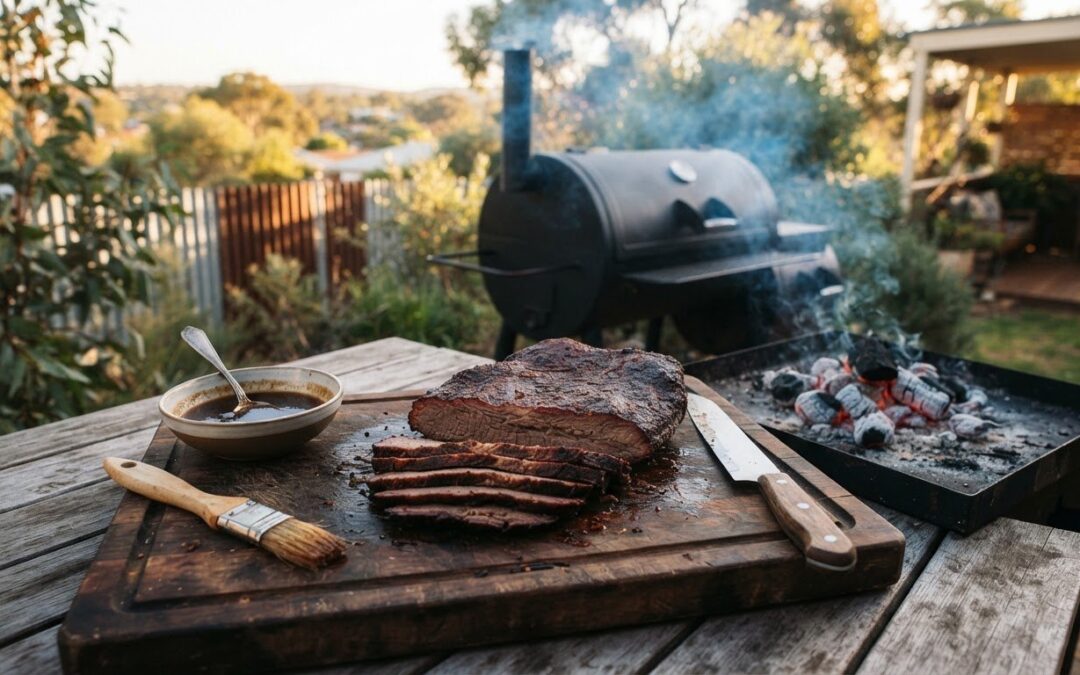
A dry brisket flat isn’t automatically a ruined brisket, and overcooking isn’t always to blame. If you’ve spent hours tending the fire only to pull apart dry slices, it can be hard to tell whether the problem was cooking, resting, slicing or heat control. Troubleshooting a dry brisket flat starts with the clues the meat gives you, not guesswork.
The flat is leaner than the point, so it can lose moisture quickly when the cook runs too hot or too long. But brisket that seems dry on the board may also have been sliced the wrong way or left to rest poorly. You may not be able to restore every slice, but you can often make the brisket more enjoyable and avoid repeating the same mistake next time.
This guide helps you match the texture and appearance of your brisket to likely causes, choose a practical way to serve what you’ve cooked, and build a more reliable plan for your next smoke. You’ll also see how temperature checks and steady fire management, supported by suitable charcoal and smoking wood, can help you keep the lean flat on track.
Key Takeaways
- Use the flat’s texture to narrow down what went wrong before choosing a fix. Dryness doesn’t always mean the brisket is unusable.
- Thin slicing, warm liquid, sauce or repurposing can make dry brisket easier to enjoy, but none can restore moisture already lost.
- When troubleshooting a dry brisket flat, consider overcooking, extended heat exposure and inadequate resting instead of assuming one explanation.
- For your next cook, follow a clear sequence from fire setup to resting and slicing. Record what you change so you can learn from the result.
- Choose charcoal and smoking wood to support steady fire management, but use tenderness and temperature checks, not fuel alone, to guide the cook.
Why Is Your Brisket Flat Dry? Diagnose the Problem Before You Fix It
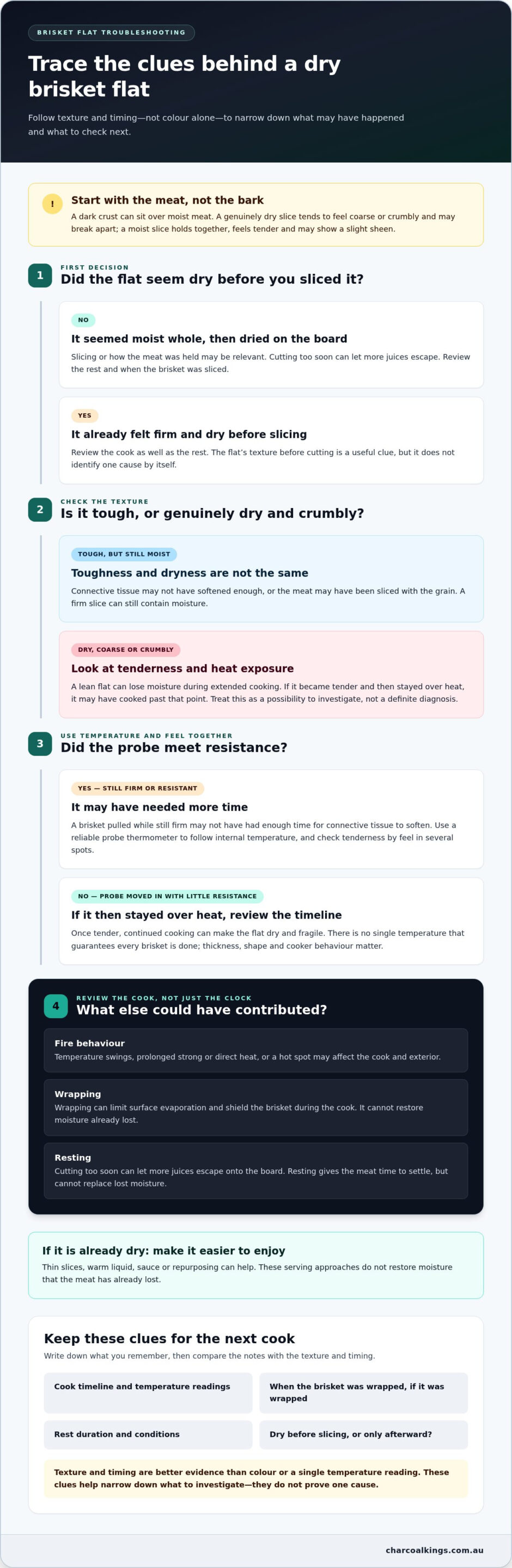
A dry brisket flat can have several causes, and it doesn’t automatically mean the whole cut is unusable. The flat is the leaner section of the brisket, so its texture is less forgiving than the point. When troubleshooting a dry brisket flat, notice how it feels and when the dryness became apparent rather than judging by colour alone.
A genuinely dry flat feels firm, crumbly or difficult to chew after cooking. That’s different from a dark, well-developed bark: the surface can look very dark while the meat beneath remains moist. Brisket contains connective tissue that needs time to soften during cooking. For background on what brisket is, including the cut’s anatomy, see this overview.
For a visual reference to brisket cooking and moisture, watch this demonstration:
What does a genuinely dry brisket flat feel and look like?
Dry slices tend to feel coarse or crumbly and may break apart instead of bending easily. A moist slice should hold together when lifted, feel tender and show some sheen without seeming greasy. Look at the cut face as well as the bark. A dark crust alone doesn’t tell you whether the flat has lost moisture.
Dryness and toughness aren’t the same problem. A tough slice may still have moisture. It can point to connective tissue that hasn’t softened enough, or to slicing with the grain. Dryness is more apparent as a lack of moisture when chewing. These clues aren’t a diagnosis on their own, but they help narrow down what to investigate next.
Which clues help identify when the flat dried out?
Think through the sequence. Did the flat feel dry while it was still whole, after resting, or only once it was sliced? If it seemed moist before cutting but dried quickly on the board, slicing or how the meat was held may be relevant. If it already felt firm and dry before slicing, review the cook and rest too.
Write down what you remember, even if the notes are incomplete:
- Cook timeline and temperature readings.
- When the brisket was wrapped, if it was wrapped.
- Rest duration and conditions.
- Whether the flat felt dry before slicing or only afterward.
Use these observations to guide the next steps. Colour can offer context, but it can’t confirm the cause. Texture and timing are better evidence than a dark surface or a single temperature reading.
The Main Causes of a Dry Brisket Flat: Heat, Timing, and Moisture Loss
The flat has less internal fat than the point, so a long cook can leave it with less margin for error. But dryness alone doesn’t identify the cause. A flat may dry out after it has already become tender, or it may come off the cooker too early, still firm and resistant. Use temperature readings together with how the meat feels before deciding what happened.
Lean meat, extended cooking and moisture loss can combine to turn a tender brisket flat into dry, fragile slices. Each factor offers a clue, not a guaranteed diagnosis. Consider the cook as a whole: heat exposure, tenderness checks, wrapping and resting all affect the result.
Did the brisket cook too long or stop before it became tender?
Once the flat has become tender, leaving it over heat can push it past that point. The meat may become dry and fragile, especially if it continues cooking for a long time. But pulling it simply because it has reached a particular temperature can also be a mistake. A flat that still feels firm or resists a probe may need more time for its connective tissue to soften.
Use a reliable probe thermometer to follow internal temperature, then check tenderness by feel in several spots. When the flat is ready, the probe should move into the meat with little resistance. There isn’t one temperature that guarantees every brisket is done. Thickness, shape and the way the cooker runs all matter. A step-by-step brisket recipe can help you compare your cooking sequence with a complete method.
Did fire management, wrapping, or resting contribute?
Review the fire as well as the clock. Temperature swings make the cook harder to control, while prolonged exposure to strong or direct heat may dry the exterior and affect the flat. Note whether the brisket sat near a hot spot and whether the cooker held steady. These are possibilities to investigate, not proof that fire management was the only cause.
Wrapping can limit surface evaporation and help shield the brisket during the cook. It can’t reverse moisture already lost or rescue a flat that has cooked past tenderness. Resting also matters: cutting too soon can let more juices escape onto the board, while a suitable rest gives the meat time to settle. Resting won’t restore moisture that’s gone, but poor timing may make slices seem drier.
When troubleshooting a dry brisket flat, compare these clues with your notes rather than settling on one culprit. On the next cook, record fire behaviour, wrapping and tenderness checks. Choosing suitable charcoal and smoking fuel can support a steadier setup, but careful heat and doneness control still determine the cook.
How to Salvage a Dry Brisket Flat: Choose the Best Fix for Its Texture
You can make dry brisket easier to eat, but serving tricks can’t put moisture back into meat that has already lost it. Choose a fix based on how the flat behaves: slices that still hold together need a different approach from meat that crumbles or feels unpleasantly dry. When troubleshooting a dry brisket flat, aim to improve the eating experience, not recreate the original texture.
Should you slice, sauce, or add warm liquid?
If the flat still holds its shape, slice it thinly across the grain. This shortens the meat fibres in each bite and can make chewing easier. Keep the unsliced portion intact, then cut only what you’re ready to serve. Exposed slices lose warmth and moisture faster than a whole piece.
Serve slices with warm cooking juices, stock or a suitable sauce. Add a little at a time so the meat is coated, not swimming. Warm liquid can make each bite seem less dry, while sauce adds flavour and improves the mouthfeel. Neither can restore the brisket’s original texture, and too much liquid may overwhelm the smoke and beef flavour.
| Symptom | Practical option | Limitation |
|---|---|---|
| Dry, but slices hold together | Slice thinly against the grain; serve with warm juices or sauce. | Improves the bite, but doesn’t replace lost moisture. |
| Dry slices that feel especially firm | Add a small amount of warm liquid and serve promptly. | Too much can make the slices soggy without changing their texture. |
| Slices crumble or fall apart | Chop or shred the meat for a moist dish. | Changes the serving style; it won’t make the brisket tender again. |
When is chopped or repurposed brisket the better option?
When slices crumble or are unpleasantly dry, stop trying to present them as neat slices. Chop or shred the brisket and fold it into a moist dish, such as a sauced sandwich filling or a stew. Add sauce or warm liquid gradually, tasting as you go. This gives the meat a different format without pretending it isn’t dry.
Keep food safety separate from texture. Sauce won’t make meat safe if it has been stored or handled improperly. If you’re unsure whether the brisket has been kept safely, discard it rather than trying to rescue it. Otherwise, choose the simplest serving method for the meat you have, and cut or dress only the portion you’ll serve.
How to Prevent a Dry Brisket Flat on Your Next Cook
A more reliable brisket cook comes from managing the whole process, not chasing a fixed finish time. Prepare the cooker, keep the fire steady, monitor the meat, check tenderness, then rest and slice with care. A probe thermometer and a simple cook log help you spot what changed between cooks. That’s more useful than relying on elapsed time alone.
- Prepare: Set up the cooker and thermometer before the brisket goes on.
- Manage: Monitor cooker temperature and fuel, adjusting airflow and setup as needed.
- Monitor: Record temperature readings and key changes, including when you wrap.
- Assess: Check tenderness with a probe as well as tracking temperature.
- Finish: Rest the brisket, then slice across the grain as you serve it.
How should you manage heat and fuel during a brisket cook?
A steady cooker makes the cook easier to read. Repeated temperature swings complicate timing and can mean the flat spends longer cooking than expected. Check the cooker regularly, keep airflow consistent and avoid changing several settings at once. Fuel is one part of fire control, alongside the cooker setup and how you manage airflow.
If you’re building confidence with charcoal, start with the fundamentals in this guide to mastering charcoal barbecuing. For a closer look at choosing and using fuel, see the charcoal fuelling guide. Suitable charcoal and smoking wood support the fire setup, but neither guarantees moist brisket. Monitoring heat and checking doneness still matter.
When should you wrap, rest, and slice the flat?
Wrapping is optional. Use it to manage the cook and protect the bark according to your preference and how the brisket is progressing. It can reduce surface evaporation, but it won’t undo overcooking or restore lost moisture. Note the timing in your cook log so you can see how wrapping affects your results.
Once the brisket is tender, give it time to rest before slicing. Keep the remaining meat covered or wrapped between servings to limit unnecessary air exposure. Slice only what you need, cutting across the grain for a more tender bite. To refine the setup for your next cook, explore charcoal and smoking wood suited to your BBQ routine. When troubleshooting a dry brisket flat, change one or two variables at a time so you can tell what helped.
Build a Better Brisket Cook with the Right BBQ Fuel and a Clear Plan
Use what you learned from this cook without changing everything at once. First, diagnose the flat’s texture and decide which serving method suits it. Then check your cook notes for the likeliest cause and choose one or two adjustments for next time. A clear plan for fire management, tenderness checks, resting and slicing gives you useful points to compare after the next cook.
What should you change first on the next brisket cook?
Start with the strongest clue in your notes. If cooker temperatures swung repeatedly, focus on fire control. If the brisket came off while the flat still felt resistant, check tenderness more carefully next time. If it seemed moist before slicing but dried quickly on the board, adjust how you rest, protect and serve it. Avoid changing all these variables together; otherwise, it’s difficult to tell which adjustment made a difference.
- Set up your thermometer and decide how you’ll monitor cooker conditions.
- Use temperature readings to track progress, then check tenderness by feel.
- Choose whether to wrap based on cook progress and your bark preference.
- Rest the brisket, protect the unsliced portion and cut across the grain as you serve.
- Record what happened, including what you changed and how the flat turned out.
This simple cook log turns troubleshooting a dry brisket flat into a practical learning process. Keep the notes brief but specific enough to guide your next decision.
How does fuel fit into a more consistent BBQ setup?
Charcoal supplies heat, while smoking wood can contribute smoke during the cook. Both are part of the overall setup, alongside airflow, cooker design and regular monitoring. Choose fuel that suits your BBQ and cooking approach, then focus on managing the fire consistently. Fuel choice alone can’t guarantee moist brisket or replace careful tenderness checks.
Charcoal Kings offers hardwood lump charcoal, charcoal briquettes and smoking woods for charcoal cooking. Treat these as components of your setup, not a fix for every dry flat. Pair suitable fuel with a repeatable plan, then use your cook notes to refine that plan over time.
Ready to plan your next charcoal cook? Explore BBQ fuel and charcoal for options to consider as part of your fire setup.
Take What You’ve Learned Into Your Next Cook
A dry flat isn’t always a lost cause, and its texture can reveal more than its colour. Thin slices, warm juices or repurposing can make it more enjoyable, but they can’t restore moisture already lost. For the next brisket, use temperature readings alongside tenderness checks, keep notes on the fire and timing, and adjust one or two things based on the evidence.
Good fuel supports your fire setup, but careful heat management and knowing when the flat is tender remain essential. Charcoal Kings supplies hardwood lump charcoal and briquettes, along with smoking woods for charcoal cooks. Choose fuel to suit your cooker and approach, then build consistency through observation and practice.
Ready to prepare for your next cook? Explore charcoal and BBQ fuel for your next cook. Each cook gives you another chance to sharpen your process. Keep your notes, trust your checks and get back to the pit with confidence.
Frequently Asked Questions
Why is my brisket flat dry but the point is juicy?
The flat is leaner than the point, so it has less internal fat to help keep it moist through a long cook. The point’s richer fat content can leave it feeling juicier even when both sections cooked in the same smoker. The flat may also have been exposed to more heat or cooked beyond tenderness. Compare the flat’s texture and your cook notes before deciding what caused the difference.
Can you make a dry brisket flat moist again?
You can make dry brisket more enjoyable, but you can’t restore moisture the meat has already lost. Serve slices with a little warm cooking juice, stock or sauce to improve the mouthfeel. Thin slicing across the grain can also make each bite easier to chew. Add liquid gradually, since too much can leave the meat soggy without bringing back its original texture.
How do you fix brisket that is dry after slicing?
If brisket seems dry after slicing, add a small amount of warm cooking juice or suitable sauce and serve it promptly. Slice only the portion you need, keeping the remaining brisket covered to limit air exposure. Cut across the grain to make the fibres easier to chew. If slices crumble, chop the meat and fold it into a moist dish. These methods improve how you serve a dry brisket flat, but they can’t restore lost moisture.
What happens if you overcook a brisket flat?
An overcooked flat can become dry, fragile and prone to crumbling because it has spent too long cooking after becoming tender. But a firm brisket isn’t always overcooked: if it still resists a probe, it may need more time to soften. Use temperature readings to track progress and check tenderness by feel in several spots. Don’t treat one temperature or a set cooking time as a universal finish line.
Should you wrap brisket to keep the flat from drying out?
Wrapping can help reduce surface evaporation and shield the brisket during the cook, but it isn’t a guarantee against a dry flat. It also affects the bark, so decide based on your preferred texture and how the cook is progressing. Wrapping can’t reverse overcooking or replace moisture already lost. Note when you wrap and how the brisket turns out, then use that information to guide the next cook.
Does resting brisket make the flat more tender?
Resting gives the brisket time to settle before you slice it, but it won’t turn an undercooked, resistant flat tender or repair meat that has dried out. Check tenderness before taking the brisket off the heat, then rest it before carving. Keep the unsliced portion covered while serving and cut only what you need. If the meat was already dry, warm juices or sauce may help at the table.
How do you slice brisket flat so it is less tough?
Slice the flat across the grain, cutting through the visible muscle fibres rather than along them. This shortens the fibres in each bite and can make the meat easier to chew. Locate the grain before carving, since its direction can change across the brisket. Keep the slices thin and cut only what you plan to serve. Slicing can improve the bite, but it won’t make an undercooked or overcooked flat tender again.