
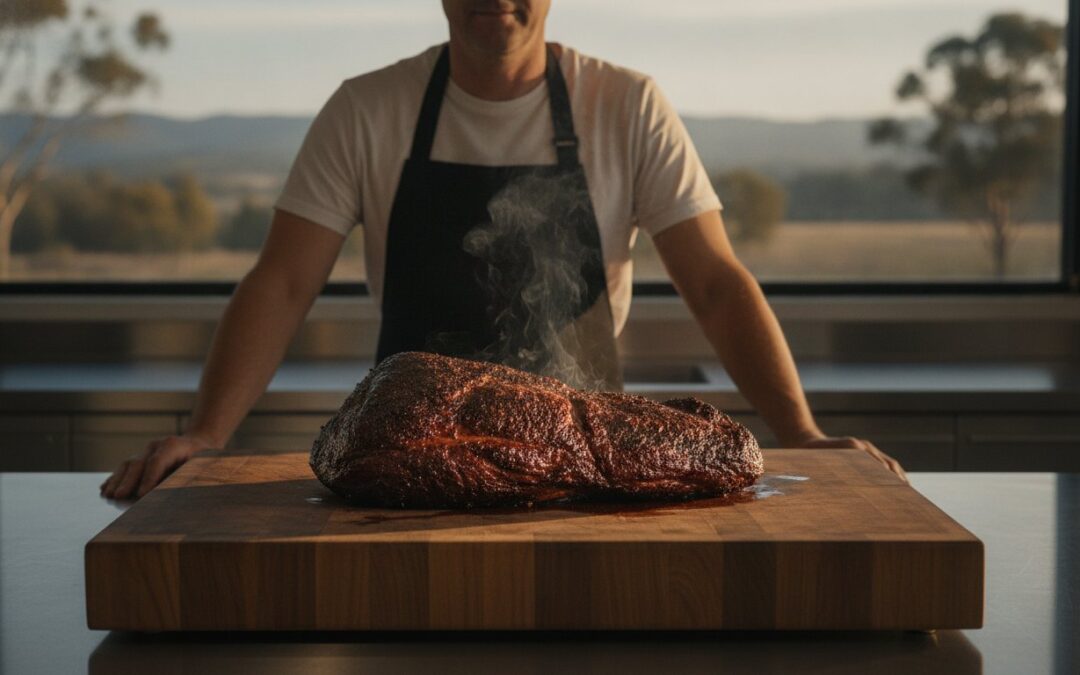
The most critical stage of your 12-hour cook isn’t the fire or the rub; it’s the moment you take the meat off the pit. You’ve spent half a day managing airflow and monitoring temperatures, only to watch the internal moisture vanish the second your knife hits the board. It’s a common frustration for pitmasters who see their hard work turn into a dry, tough disappointment. Understanding the importance of resting brisket is the difference between a mediocre meal and professional-grade BBQ that holds its juice.
This guide breaks down the biological science of muscle fibers and collagen to explain why that wait is mandatory. You’ll learn the specific techniques for bench resting and long-term holding in a cooler to ensure your meat stays out of the 140°F USDA danger zone while reaching peak tenderness. We’re providing a repeatable process to help you serve succulent slices every time. From temperature targets to insulation methods, you’ll gain the confidence to master the final, silent stage of the cook and deliver superior results to your guests.
Key Takeaways
- Understand how muscle fibers contract during the cook and why protein relaxation is the only way to lock in moisture.
- Discover the importance of resting brisket to facilitate collagen conversion, turning connective tissue into liquid gold.
- Learn the technical differences between a standard bench rest and a professional insulated hold for superior results.
- Identify the precise probe-tender moments and the “burping” process needed to stop carryover cooking immediately.
- See how using premium hardwood lump charcoal creates a durable bark that maintains its integrity throughout the resting phase.
The Science of Succulence: Why Resting Brisket is Non-Negotiable
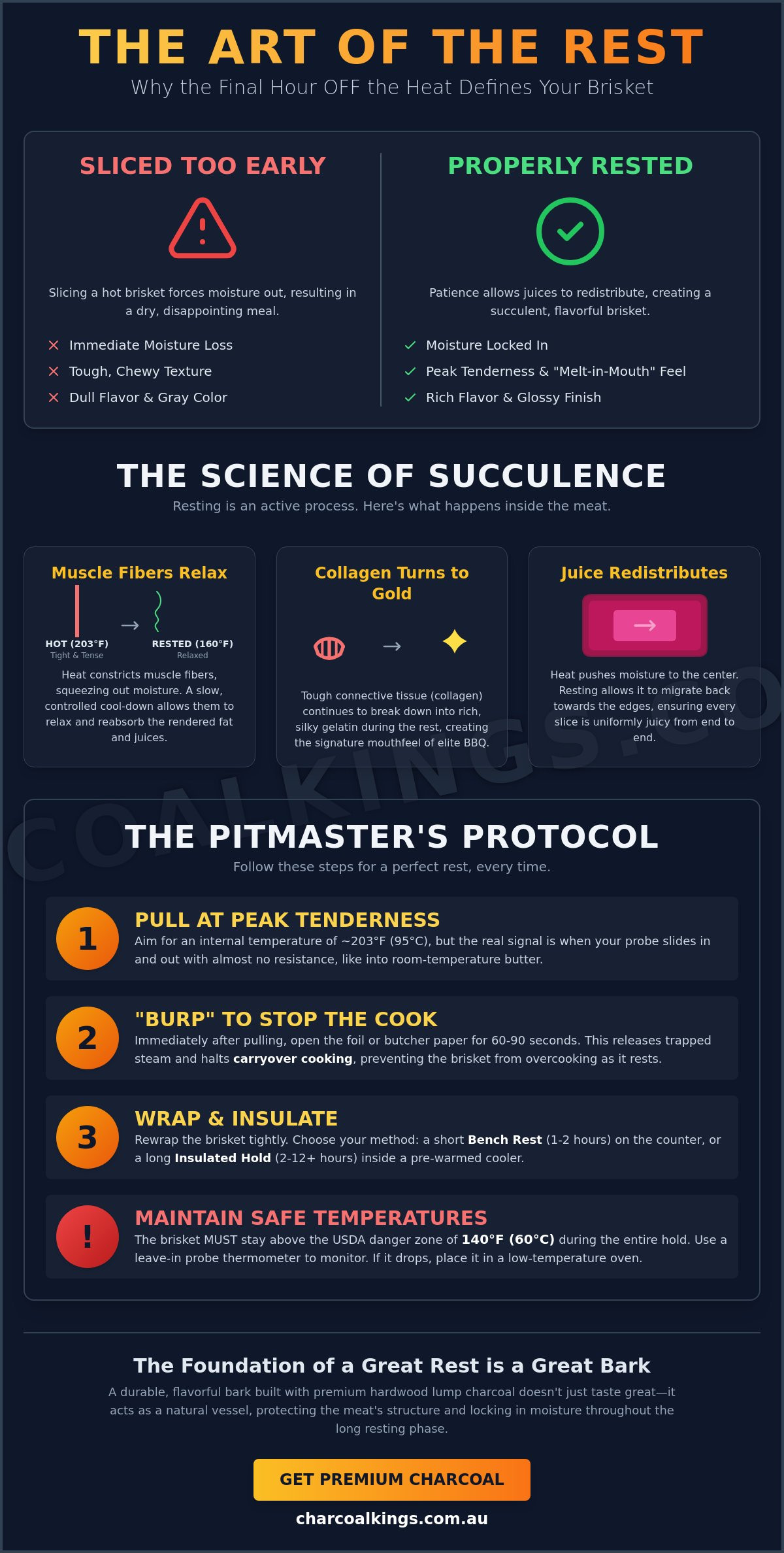
Resting isn’t a passive delay. It’s an active, final stage of heat management. When you pull a brisket at 203°F, the muscle fibers are tight and under extreme tension. They act like a sponge being squeezed by a giant fist. If you slice into the meat now, that internal pressure forces every drop of moisture onto your cutting board. This is the primary reason the importance of resting brisket is a fundamental rule for serious pitmasters. Even if you hit the perfect internal temperature and achieved a beautiful bark, a lack of patience will result in a dry, disappointing slice that fails the bend test.
You must also manage Carryover cooking. Even after leaving the smoker, the residual heat on the exterior continues to move toward the center. This can raise the internal temperature by 5 to 10 degrees depending on the size of the meat. A proper rest allows these temperatures to stabilize. It ensures the meat doesn’t overshoot its tenderness window and become overcooked while sitting on the bench. Ignoring this process turns a professional-grade cook into a mediocre meal.
To better understand this concept, watch this helpful video:
The Consequences of Cutting Too Early
Slicing a hot brisket causes an immediate, irreversible loss of myoglobin and rendered fat. Myoglobin is the pigment-carrying protein responsible for the meat’s color and moisture retention. When you cut too soon, you’ll see a “gush” of liquid on the board. This is a failure of technique, not a sign of juiciness. Steam escapes the fibers rapidly, leading to instant dehydration of the internal structure. A properly rested slice appears glossy and stays succulent on the plate. In contrast, an un-rested slice looks dull, gray, and loses its structural integrity almost immediately.
Moisture Redistribution vs. Moisture Loss
The physics of barbecue are straightforward. Heat pushes moisture away from the surface and toward the cooler center of the meat. During the rest, that liquid migrates back toward the edges as the temperature gradient levels out. This redistribution is why the rest is essentially the final 10% of your cooking process. A whole packer brisket has immense thermal mass. It can hold heat for several hours if you provide a stable environment. This mass allows the proteins to loosen and reabsorb juices without the meat falling into the 140°F danger zone. Without this stabilization period, the moisture stays trapped in the center and spills out the moment the first cut is made.
Muscle Fibres and Collagen: What Happens During the Rest?
Brisket is a notoriously tough cut because of its high concentration of connective tissue. During a long, low-and-slow cook, the primary goal is the breakdown of collagen. However, pulling the meat off the pit is only half the battle. The rest period is where that tough connective tissue completes its transformation into liquid gold. As the internal temperature stabilizes, the collagen that has been under heat for hours continues to dissolve into gelatin. This process is essential for achieving the rich, silky mouthfeel that defines professional-grade barbecue.
Muscle fibers are made of proteins that coil and tighten when exposed to high heat. This contraction is what forces moisture out of the meat during the cook. Cooling the meat slowly allows these “tight” fibers to relax and expand. This relaxation is why the importance of resting brisket cannot be overstated. Relaxed fibers act like a sponge, reabsorbing the rendered fats and juices that were previously under pressure. If the cooling process happens too quickly, the fibers remain locked, and the moisture will never be fully integrated back into the meat.
Fat rendering also relies on a controlled cooling rate. At 200°F, rendered fat is a thin, runny liquid. As the brisket rests and the temperature drops toward 160°F, that fat begins to thicken slightly. It creates a lubricating layer between the relaxed muscle fibers, which significantly enhances the perception of tenderness. This chemical transition is a delicate balance. The Science of BBQ confirms that these chemical reactions require both specific temperatures and adequate time to reach their ideal state.
The Gelatin Factor
Gelatin is a natural byproduct of collagen breakdown, and it behaves differently at various temperatures. As the brisket cools to the slicing “sweet spot” of approximately 60°C to 65°C, the liquid gelatin starts to thicken. This provides the characteristic “sticky” mouthfeel and the famous “jiggle” seen in competition-level brisket. A brisket straight off the pit lacks this texture because the gelatin is still too thin and watery. Patience during the rest ensures the gelatin reaches the perfect viscosity to coat every fiber.
Carry-Over Cooking Explained
Removing your meat from a quality charcoal grill does not immediately stop the cooking process. Carry-over cooking is the continued transfer of heat from the outer bark to the cool centre. Internal temperatures typically rise by 5 to 10 degrees after the brisket is pulled. You must account for this rise by pulling the meat when it is “probe-tender,” usually between 198°F and 203°F. If you wait until it hits 205°F on the pit, carry-over cooking can push the meat into overcooked, mushy territory during the rest phase.
Resting vs. Holding: Choosing the Right Strategy for Your Cook
Many backyard cooks confuse resting with holding. Resting is the immediate period after the cook where the meat sheds its highest heat and stabilizes. Holding is an extended phase where you keep the meat at a specific, safe temperature for several hours to maximize tenderness. Both stages emphasize the importance of resting brisket, but they serve different roles in the final texture. A short rest is about temperature stabilization. A long hold is about deep collagen breakdown and total fat saturation.
A short rest is functional. It stops the cooking process so you don’t overshoot your target. A long hold is transformational. It allows the meat to “cure” in its own rendered fats, leading to a product that is significantly more tender than one served quickly. Your choice between these two methods depends on your equipment, your environment, and your serving timeline. Understanding when to use each is what separates a hobbyist from a seasoned pitmaster.
The Bench Rest: Quick and Simple
Backyard lunches often require a faster turnaround. A bench rest typically lasts between 20 and 60 minutes. It allows the internal temperature to drop from the pull point to a sliceable 145°F to 160°F. This method is best for preserving a crunchy bark. Steam escapes more easily when the meat isn’t trapped in an insulated box. However, you must account for external conditions. In an Australian winter, an exposed brisket on a kitchen bench will cool far too quickly. This results in the fat tightening before it can fully soften. Use a loose foil tent to protect the meat from drafts while still allowing it to breathe.
The Faux-Cambro Technique: Using an Esky
For professional-grade results, an insulated hold is the gold standard. You can mimic expensive commercial equipment by using a standard Australian cooler or Esky. This “Faux-Cambro” method allows for a hold time of 4 to 12 hours. It maximizes tenderness by keeping the meat in the 150°F to 160°F range for an extended period. This extra time allows every gram of fat to render into the muscle fibers. It’s the secret behind the consistency of top-tier BBQ joints.
Follow these steps for a successful hold:
- Pre-heat the Esky: Pour hot water into the cooler and let it sit for 10 minutes. This prevents the cold walls from stripping heat from your brisket.
- Drain and dry: Empty the water and wipe the interior dry.
- Insulate: Place a layer of towels at the bottom. Wrap your foil-wrapped or butcher-paper-wrapped brisket in another towel.
- Fill the gaps: Pack the remaining air space with more towels. Air is the enemy of heat retention.
Choosing between these methods depends on your goals. If you finish the cook at 4:00 AM for an evening meal, the Esky is your only option. A long hold will soften the bark slightly compared to a bench rest, but the trade-off is a superior, melt-in-the-mouth texture. This controlled environment ensures the brisket stays safely above the 140°F danger zone while the proteins continue to relax.
The Pitmaster’s Protocol: A Step-by-Step Guide to the Perfect Rest
Execution in the final hours determines the quality of your bark and the moisture of your flat. The process begins with the “Pull.” You should remove the meat from the heat when it is probe-tender, typically between 198°F and 203°F. Identifying this moment requires experience; the probe should slide into the thickest part of the flat with the resistance of warm butter. Once pulled, the most overlooked step is “The Burp.” You must open your foil or butcher paper for 10 to 15 minutes to let the initial steam escape. This release of thermal energy stops the cooking process and prevents the meat from becoming mushy during the hold.
After the burp, re-wrap the meat tightly. This is the stage where you commit to your holding strategy. Whether you use a bench rest or an insulated Esky, you must maintain an internal temperature above 60°C to comply with food safety standards and keep the fats in a rendered state. Understanding the importance of resting brisket means recognizing that the work isn’t done until the internal temperature stabilizes at the ideal slicing point. Precision during this transition ensures a professional-grade result every time.
Temperature Milestones for Success
Patience is a technical requirement, not a suggestion. You should never slice a brisket when the internal temperature is above 75°C. At this heat, the juices are still too liquid and will exit the meat instantly upon contact with the knife. Use a high-quality digital thermometer to track the cooling curve as the meat descends toward the target. 63°C is the industry standard for the perfect slice because it represents the point where fats are sufficiently thick to coat the meat without being cold. This temperature provides the best balance of structural integrity and succulent mouthfeel.
To Wrap or Not to Wrap?
The material you choose for the rest dictates the final texture of your bark. Foil, often called the “Texas Crutch,” is an impermeable barrier that traps all moisture. It is the best choice if your brisket feels slightly lean or if you need to accelerate the final stage of the cook. However, it will soften the bark significantly. Butcher paper is the professional choice for those who value a crunchy, resilient exterior. It is breathable enough to allow some steam to escape while still retaining enough heat for a long hold. For the ultimate finish, apply a layer of rendered beef tallow to the paper before wrapping. This adds a deep, savory richness and protects the meat from drying out during an extended rest. You can find the right tools for this process by browsing our range of BBQ accessories.
Consistency in your rest protocol leads to repeatable excellence. By managing the steam, choosing the right wrap, and hitting your temperature milestones, you eliminate the guesswork from your BBQ. This systematic approach ensures that every 12-hour cook ends with a product you are proud to serve.
Fueling the Bark: Why Premium Charcoal is the Foundation of a Great Rest
The success of your rest period is determined hours before the meat leaves the pit. A superior rest requires a resilient, well-set bark that can withstand the humidity of a foil wrap or a long hold in an Esky. Achieving this texture starts with your fuel source. Premium hardwood lump charcoal provides the intense, clean heat required to render surface fat and create a mahogany crust. Unlike cheap alternatives, high-quality lump charcoal burns without the chemical additives that can leave a bitter film on the meat during the resting phase.
Stability is the hallmark of a master pitmaster. Fluctuating temperatures during the cook lead to an uneven fat render, which causes the bark to turn mushy once the brisket is wrapped. Mastering the art of barbecuing with charcoal requires a fuel that offers a long, predictable burn. Clean fuel ensures that the smoke profile remains sweet and savory throughout a 12-hour cook. If you use fuels laden with binders and fillers, those impurities become concentrated during the rest, ruining the flavor of the fat you worked so hard to render.
For those requiring absolute precision in temperature management, binchotan charcoal is the professional choice. Its extreme density and infrared heat allow for a steady, high-energy burn that sets the bark perfectly. Understanding the importance of resting brisket involves recognizing that a weak bark will fail to insulate the meat. A solid, charcoal-fired crust acts as a natural barrier, helping to retain internal moisture while the proteins relax and reabsorb juices.
The Relationship Between Bark and Resting
A well-set bark is more than a flavor profile; it is a structural necessity. Consistent airflow in a high-quality offset smoker ensures the surface stays dry enough to form a “crust” while the interior remains moist. This bark serves as a thermal jacket during the rest, slowing the cooling process and allowing for a more even distribution of gelatin. Clean heat is mandatory here. Any soot or acrid smoke produced by inferior fuel will be trapped against the meat during the hold, resulting in an unpleasant, metallic aftertaste.
Australian Hardwoods for the Ultimate Brisket
Australian hardwoods like Gidgee are world-renowned for their performance in long-form barbecue. These woods produce minimal ash, which is critical for maintaining airflow over a 12-hour cook. High ash production can choke your firebox, leading to temperature drops that compromise the bark’s integrity. Gidgee offers a bold, rugged smoke profile that complements the rich flavor of beef fat without overpowering it. Using a pure, additive-free fuel source ensures that the only thing your guests taste is the meat and the smoke.
Level up your next cook by choosing the fuels the pros use. Visit Charcoal Kings to stock up on premium lump charcoal and smoking woods for your next brisket. Your patience at the end of the cook deserves a foundation of quality at the beginning. Master the fire, respect the rest, and serve the best BBQ of your life.
Master the Final Stage for Professional Results
The difference between a dry flat and a competition-grade slice lies in the final hours of your cook. By mastering the cooling curve and allowing muscle fibers to relax, you ensure that moisture remains locked inside the meat rather than spilling onto the board. Understanding the importance of resting brisket is the final step in your journey to becoming a seasoned pitmaster. Whether you choose a quick bench rest or a long hold in an insulated Esky, the goal is always the same: perfect collagen conversion and total fat saturation.
Your hard work deserves a foundation of purity. Charcoal Kings is the wholesale supplier to Australia’s top BBQ joints, providing 100% natural hardwood with no chemical additives. Our fuels are expertly seasoned for maximum heat and longevity, ensuring your bark stays resilient throughout the resting phase. This commitment to quality ensures a clean burn and superior flavor for every cook.
Upgrade your next cook with Australia’s best Hardwood Lump Charcoal. Take control of your pit, trust the process, and get ready to serve the most succulent brisket of your life. Get your fire right and the rest will follow.
Frequently Asked Questions
How long should I rest my brisket for?
Rest your brisket for a minimum of one hour, though two to four hours is the ideal window for most backyard cooks. This duration allows the internal temperature to drop to a stable slicing range and gives muscle fibers enough time to relax and reabsorb rendered fats. For professional results, extended holds of 10 to 12 hours are common in high-end BBQ joints to maximize tenderness.
Can I rest a brisket for too long?
You can rest a brisket for too long if the internal temperature falls below the USDA-mandated safety threshold of 140°F (60°C). Once the meat enters the “danger zone,” bacterial growth accelerates rapidly. Additionally, resting for more than 12 hours can cause the meat to become overly soft or mushy as the connective tissues continue to break down beyond the point of ideal structural integrity.
Should I leave the brisket in the foil while it rests?
Leave the brisket in its wrap during the rest to retain moisture, but ensure you “burp” the package first. Opening the foil or butcher paper for 10 to 15 minutes immediately after pulling it from the pit allows steam to escape and stops carryover cooking. Once the initial heat has dissipated, re-wrap it tightly to maintain a consistent temperature during the holding phase in your cooler or oven.
What is the best temperature to slice a rested brisket?
The ideal internal temperature for slicing a rested brisket is between 145°F and 150°F (63°C to 65°C). Slicing at this specific milestone ensures the rendered fats have thickened enough to coat the meat fibers without being cold or greasy. This temperature range preserves the structural integrity of the slice while maximizing the succulent mouthfeel that highlights the importance of resting brisket for a professional finish.
Do I need to put the brisket in a cooler?
You only need to use an insulated cooler, such as an Esky, if you plan to rest the meat for longer than 60 minutes. For short rests, a bench rest with a loose foil tent is sufficient to stabilize the temperature. The cooler acts as a “faux-cambro,” using thermal mass and insulation to keep the meat at a safe, stable temperature for several hours while the collagen continues to convert into gelatin.
What happens if I don’t rest my brisket?
Skipping the rest results in a dry, tough finished product because the high internal pressure forces all the juices out the moment you cut the meat. Without a stabilization period, the muscle fibers remain tightly coiled and cannot hold onto moisture. You will see a flood of liquid on your cutting board, leaving the actual meat fibers dehydrated and chewy regardless of how well they were cooked.
How do I keep my brisket warm for 4 hours?
Use the Faux-Cambro method by placing your wrapped brisket into a pre-heated insulated cooler packed with towels. This technique minimizes air gaps and maintains the thermal mass of the meat, keeping it safely above 140°F for extended periods. Ensure the cooler lid remains closed to prevent heat loss, allowing the brisket to stay warm and continue tenderizing for the full four hours without drying out.
Is it better to rest at room temperature or in a holding oven?
A holding oven is superior for long-term consistency, while room temperature is suitable for quick turnarounds. A holding oven set to 150°F (65°C) provides a controlled environment that eliminates the risk of the meat falling into the danger zone. Room temperature rests are acceptable for backyard lunches, provided you monitor the cooling curve with a digital thermometer to ensure the meat doesn’t cool too rapidly in cold weather.