
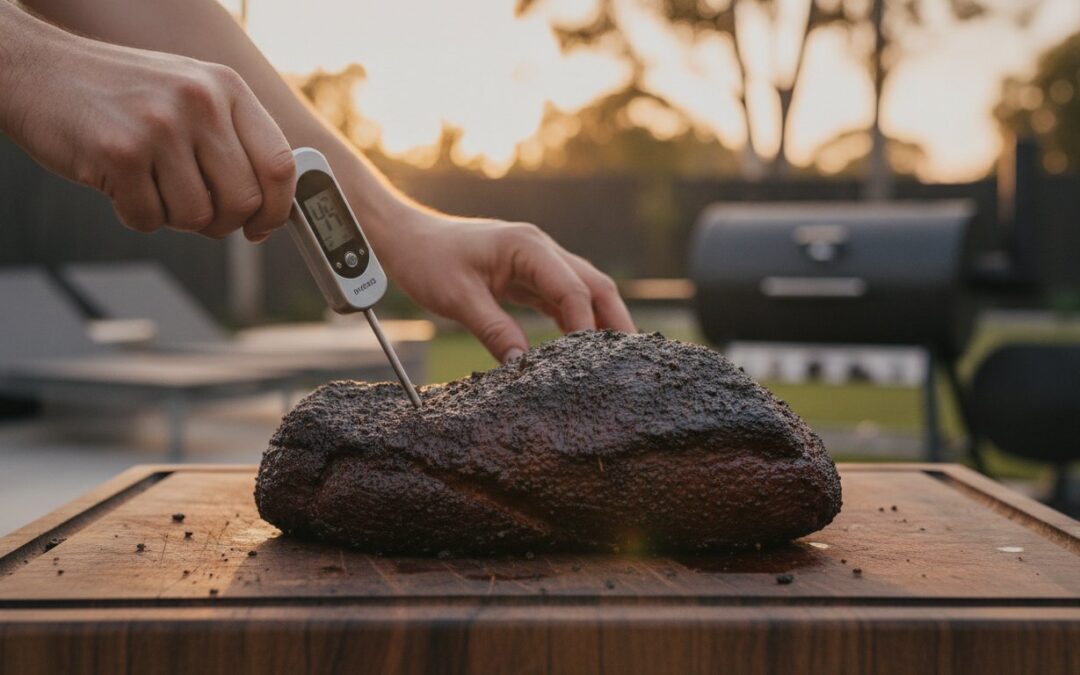
Why is your brisket still tough as a work boot despite following the recipe’s cooking time to the second? The truth is that the clock is a liar when it comes to the smoker. You’ve likely felt the frustration of pulling a pork shoulder early or leaving a rack of ribs on too long because you weren’t sure which number actually mattered. This internal temperature guide for smoked meats is designed to end that confusion and put the power of precision back in your hands.
We agree that hitting the right mark shouldn’t be a guessing game influenced by shifting winds or the performance of your charcoal. This guide promises to help you master the craft of precision smoking for competition-quality results every single time. You’ll learn the vital distinction between the USDA’s safe serving temperatures, such as 145°F for whole cuts of beef, and the higher zones where connective tissues finally melt. We are providing the exact target metrics for every major cut so you can use your fuel with total confidence.
Key Takeaways
- Stop relying on the clock; internal temperature is the only reliable metric for achieving professional, competition-quality results.
- Use this internal temperature guide for smoked meats to identify the precise 93°C to 96°C sweet spot for probe-tender beef brisket.
- Learn why target temperatures differ between USDA safety minimums and the higher heat required to render fat in pork shoulders and ribs.
- Master the “Texas Crutch” technique to push past the evaporative cooling stall that occurs between 65°C and 70°C.
- Ensure thermal consistency and predictable heat by using high-purity Hardwood Lump Charcoal and professional-grade dual-probe thermometers.
Understanding Internal Temperature: Why Time is Your Enemy
Cooking by the clock is the fastest way to serve dry brisket or tough ribs. Many beginners rely on weight-based estimates, like “1.5 hours per pound,” but these calculations fail in a smoker environment. A smoker isn’t a kitchen oven; it is a dynamic system affected by external conditions. Relying on an internal temperature guide for smoked meats is the only way to account for the unique density of each cut and the way heat moves through the muscle.
Safety and doneness are two different concepts in the world of barbecue. The USDA provides a baseline for food safety, such as 145°F (62.8°C) for beef roasts, but these figures are just the starting point. If you pull a brisket at the safety minimum, it will be inedible. True BBQ doneness requires pushing past safety into the range where connective tissues dissolve. You can consult a professional guide to meat doneness to understand these ranges, but remember that for tough cuts, texture is the goal.
To better understand how these temperatures apply to specific cuts, watch this helpful video:
Tough cuts like pork shoulder and beef brisket are packed with collagen. This connective tissue only begins to break down into silky gelatin when internal temperatures hit 90°C and above. This process is slow and requires steady heat. Ambient smoker temperature dictates how fast the surface cooks, but the internal temperature determines when the meat is actually ready to eat. High ambient heat might create a great crust, but if the internal temp hasn’t reached the target, the meat remains tight and chewy. This internal temperature guide for smoked meats highlights why patience is your most valuable tool.
The Science of the Smoked Meat Texture
Meat undergoes a transformation as heat rises. Between 40°C and 60°C, protein denaturation begins, causing muscle fibres to tighten and release moisture. This is where most steaks are served. However, low and slow smoking relies on fat rendering, which requires sustained internal heat to liquefy intramuscular fats and coat the fibres in flavour. Internal temperature is the primary indicator of meat texture and safety.
Why Pro Pitmasters Ignore the Clock
Experienced cooks know that too many variables can kill a timing estimate. High humidity slows down evaporation, while heavy winds can pull heat right out of a thin-walled smoker. Even the density of the meat varies from one animal to the next. Consistent results require consistent fuel, which is why professionals use Hardwood Lump Charcoal for stable, predictable burns without chemical additives. Instead of aiming for a specific dinner time, establish a target temperature window and give yourself a buffer for resting the meat.
Beef and Lamb Temperature Chart: The Aussie Pitmaster Favourites
Mastering red meat on the smoker requires a shift in mindset. While the USDA safe minimum internal temperatures suggest 145°F (62.8°C) for beef and lamb roasts, these figures are for safety, not texture. For low and slow cuts, you need to push much higher. This internal temperature guide for smoked meats focuses on the specific thermal points where fat renders and muscle fibres relax into competition-quality tenderness.
Beef brisket is the ultimate test of temperature control. You aren’t just looking for a number on a screen; you’re looking for the “probe tender” feel. This typically occurs between 93°C and 96°C. If you pull it too early, the fat remains rubbery. If you wait too long, the meat crumbles. Beef short ribs require even more heat. Because they carry a heavy fat cap and dense connective tissue, they often need to reach 95°C to 98°C to fully soften and render. For leaner cuts like tri-tip or thick steaks, use a reverse sear. Smoke them at a low temperature until they hit 54°C, then finish with a high-heat sear for a perfect medium-rare finish.
Beef Internal Temperature Reference
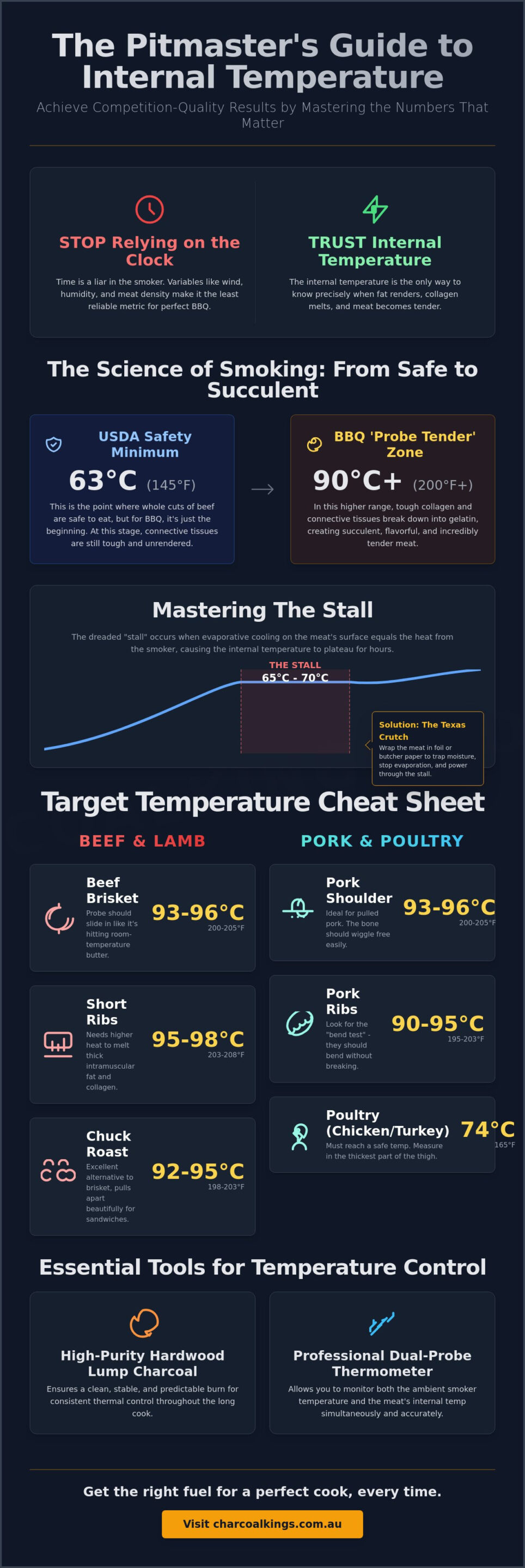
- Brisket (Pulled/Sliced): 93°C–96°C. The probe should slide in like it’s hitting room-temperature butter.
- Short Ribs: 95°C–98°C. High heat is essential to melt the thick intramuscular fat.
- Chuck Roast: 92°C–95°C. A reliable alternative to brisket that pulls beautifully at these temps.
Lamb Internal Temperature Reference
Lamb shoulder is a staple of Australian smoking. To achieve pulled perfection, aim for an internal temperature of 94°C to 96°C. Unlike a leg of lamb, which is best served medium at 63°C to 65°C, the shoulder contains the fat and collagen necessary for a long, slow cook. Success depends on thermal stability. You should focus on barbecuing with charcoal to maintain a steady ambient temperature of 110°C to 120°C throughout the cook. This consistency prevents the meat from tightening up and ensures the internal temp rises at a predictable rate.
Precision is everything in the pit. Using high-quality fuel and accurate probes ensures your hard work isn’t wasted on a tough roast. If you’re ready to upgrade your setup, explore the range of professional BBQ accessories to keep your temperatures on target.
Pork and Poultry: Balancing Safety with Succulence
Pork and poultry require a more calculated approach than beef. While a brisket is forgiving if you overshoot by a few degrees, a pork loin or a chicken breast will turn into sawdust if you aren’t precise. This internal temperature guide for smoked meats identifies the critical crossover points where meat becomes both safe to eat and delicious. You must distinguish between lean muscle and fatty, connective-tissue-heavy cuts to get the best results from your smoker.
A pork loin is a lean muscle. It lacks the internal fat of a shoulder, meaning it should be pulled at 63°C (145°F) to remain moist. If you cook it to the same 95°C target as pulled pork, it will be ruined. Pork ribs occupy a middle ground. Because they are thin, thermometers often give false readings by hitting the bone. Use the bend test instead. When you lift the rack with tongs, the meat should crack slightly on the surface and the slab should droop significantly. This physical indicator is often more reliable than a probe for thin-cut pork.
The Pulled Pork Guide
Pork shoulder, or “butt,” is the king of the smoker for a reason. To achieve that effortless shredded texture, you must target a window between 93°C and 96°C. This high temperature is necessary to melt the collagen that holds the muscle fibres together. Use the “Probe Test” as your final confirmation. If your thermometer probe slides into the meat like it is entering a tub of warm butter, the collagen has fully rendered. You can improve the final bark by using premium Smoking Woods to provide a deep, clean smoke profile during the long hours in the pit.
Poultry Precision
Poultry is dominated by the 74°C (165°F) safety rule. This is the floor for killing foodborne pathogens, but it isn’t the ceiling for flavour. White meat and dark meat have different requirements. A chicken breast is at its peak of juiciness at exactly 74°C. However, chicken thighs and turkey drumsticks contain more connective tissue. Smoking dark meat to 79°C (175°F) allows those tissues to soften, creating a much better texture without drying out. Always use a brine to protect the lean breast meat while the legs come up to temperature. Success requires monitoring both areas simultaneously to ensure the whole bird is succulent. This internal temperature guide for smoked meats helps you avoid the common mistake of serving safe but unappealingly rubbery dark meat.
Mastering the Stall and Carry-over Cooking
Experienced pitmasters know that the most stressful part of a cook happens when the thermometer stops moving. This phenomenon is known as “The Stall.” It typically occurs between 65°C and 70°C. You might see the internal temperature stay flat for hours. Beginners often assume their fire is dying and add more fuel, but this is a mistake. The stall is a physical process, not a sign of a failing fire. It is caused by evaporative cooling as moisture moves to the surface of the meat and evaporates, cooling the cut even as the smoker remains hot.
Beating the stall requires a decision: wait it out or use the “Texas Crutch.” Wrapping your meat in foil or butcher paper traps the steam and stops the evaporative cooling. This technique can shave hours off your cook time. However, it will soften your bark. If you want a crunchy, dark exterior, you must let the moisture evaporate naturally. This is a vital phase in any internal temperature guide for smoked meats because it determines the final texture of the bark and the succulence of the interior.
Surviving the 70°C Plateau
- The Evaporation Factor: Humidity in your smoker plays a massive role. A dry smoker environment can make the stall last significantly longer.
- Consistency: Maintain a steady fire. Drastic spikes in ambient temperature during the stall can result in uneven rendering.
- Patience: If you aren’t in a rush, let the meat push through the stall naturally to develop a superior bark.
The Art of the Rest
Most guides stop at the pull temperature, but carry-over cooking is where precision is won or lost. Meat continues to cook after you remove it from the heat. Large, dense cuts like brisket or pork shoulder have significant thermal mass. The internal temperature will usually increase by another 2°C to 5°C during the resting phase. If you pull your brisket at exactly 96°C, it may carry over to 100°C and become overcooked. Aim to pull the meat 2 to 3 degrees below your final target to account for this rise.
The resting phase is mandatory. It allows the muscle fibres to relax and reabsorb the rendered fats and juices. For large cuts, a 1-hour rest is the minimum requirement. Place the wrapped meat in an insulated cooler (Esky) to maintain its heat while it settles. This slow cooling process is as important as the smoke itself. To manage these critical temperature shifts, ensure you have the right BBQ accessories to monitor your progress from start to finish.
Fuel and Hardware: Tools for Temperature Control
Precision is impossible without predictable heat. You can’t hit a 95°C internal target if your fire is flickering or choking on poor airflow. High-quality Hardwood Lump Charcoal is the foundation of temperature control. It burns hotter and cleaner than standard alternatives. This purity ensures that your smoker vents actually respond to adjustments. If your fuel is inconsistent, your internal temperature guide for smoked meats becomes useless because you’re fighting the fire instead of monitoring the cook.
Managing airflow is the secret to hitting target internal temps. Open your intake vents to raise the pit temperature and close them slightly to drop it. This requires a stable fuel bed that doesn’t produce excessive ash. For high-heat precision or specialized grilling, Binchotan provides a steady, intense infrared heat that is unmatched for consistency. Use leave-in dual probes to track both the ambient pit temperature and the internal meat temperature simultaneously. An instant-read thermometer serves as your final verification tool once you enter the target window.
Maintaining a Stable Fire
A “Clean Fire” is essential for professional results. This means your smoke should be nearly invisible or a faint “blue” tint. Thick, white smoke indicates incomplete combustion, which leaves a bitter creosote taste on the meat. Cheap briquettes often contain fillers and chemical binders that cause temperature fluctuations and foul-smelling smoke. Stick to high-purity lump charcoal to maintain thermal stability. You can also use Smartburn to ensure a cleaner burn in your hardware, reducing soot and improving overall efficiency.
Essential Temperature Tools
Even the best probes can drift over time. Calibrate your thermometers regularly using the ice water test. Fill a glass with crushed ice and a little water; the probe should read exactly 0°C. When measuring your meat, always probe the thickest part of the muscle. Avoid hitting the bone or large fat pockets, as these will give false readings. Accuracy is the difference between a competition-quality brisket and a disappointing dinner. If you’re serious about your results, don’t settle for inferior fuel or tools. Shop our Premium Hardwood Charcoal now to take total control of your next cook.
Take Control of the Pit
True pitmasters know that your hardware is only as good as your fuel. As Australia’s leading supplier of natural hardwood charcoal, Charcoal Kings provides the high-performance materials needed for a clean, stable fire. Our products contain no additives or chemicals; they offer just pure, reliable heat. We provide expert advice for pitmasters of all levels to ensure every cook is a success. When you control the temperature, you control the outcome.
Don’t let your next brisket or lamb shoulder be a gamble. Trust the numbers, respect the resting phase, and fuel your fire with the best materials available. Master your next cook with Charcoal Kings Premium Fuel. Get back out to the smoker and show them what a master craftsman can do.
Frequently Asked Questions
Is it safe to eat smoked meat at 63°C?
Yes, 63°C is the safe serving temperature for whole cuts of beef, pork, lamb, and veal according to the USDA. You must allow for a 3-minute rest time after removal from the heat. While safe, this temperature is better suited for lean steaks or roasts. Tougher BBQ cuts require much higher temperatures to become tender and palatable for the diner.
Why did my brisket stall at 71°C for three hours?
Your brisket is experiencing the stall, which is a natural physical process caused by evaporative cooling. As moisture reaches the surface of the meat and evaporates, it cools the cut and prevents the internal temperature from rising. This usually occurs between 65°C and 75°C. You can wait for the moisture to deplete naturally or wrap the meat in foil to accelerate the process.
How much will the internal temperature rise while resting?
Internal temperatures typically rise by 2°C to 5°C during the resting phase due to carry-over cooking. Large, dense cuts like beef brisket or pork shoulder hold significant residual heat that continues to cook the centre after removal from the smoker. Always pull your meat slightly before your final target to account for this increase. This ensures the muscle fibres reabsorb their juices properly.
Can I smoke meat at 100°C ambient temperature?
You can smoke at 100°C, but it is extremely inefficient for large cuts of meat. Most pitmasters prefer an ambient range of 110°C to 120°C to ensure the internal temperature rises steadily. At 100°C, you risk the meat spending too long in the “danger zone” where bacteria grow rapidly. Higher ambient temperatures provide better fat rendering and a more predictable cooking timeline.
What is the best thermometer for long smoking sessions?
A dual-probe leave-in thermometer is the superior choice for long-duration cooks. It allows you to monitor both the ambient pit temperature and the internal meat temperature without opening the smoker lid. Constant lid opening causes heat loss and extends the cook time significantly. Use high-quality probes to ensure accuracy and verify the results with an instant-read thermometer before you make the final pull.
Does the type of charcoal affect the internal temperature of the meat?
The type of charcoal directly impacts how easily you can reach and maintain your target internal temperature. High-purity Hardwood Lump Charcoal provides a stable, predictable heat source without the erratic spikes caused by cheap fillers. This stability is essential for following an internal temperature guide for smoked meats accurately. Clean fuel ensures the fire responds immediately to your manual vent adjustments.
What happens if I pull my pork shoulder off at 85°C?
Pulling a pork shoulder at 85°C results in meat that is safe to eat but difficult to shred. Collagen and connective tissues only begin to melt into gelatin at temperatures above 90°C. If you pull the meat too early, it will be tough and chewy rather than “pulled” in texture. For the best results, wait until the internal temp reaches the 93°C to 96°C range.
Why is my chicken skin rubbery even though the internal temp is 74°C?
Rubbery skin occurs because low smoking temperatures are not high enough to render the fat underneath the skin. While the meat is safe at 74°C, the skin needs a blast of high heat to crisp up properly. Try increasing your smoker temperature to 175°C for the last 15 minutes of the cook. This provides the bite-through texture that low and slow cooking alone cannot achieve.