
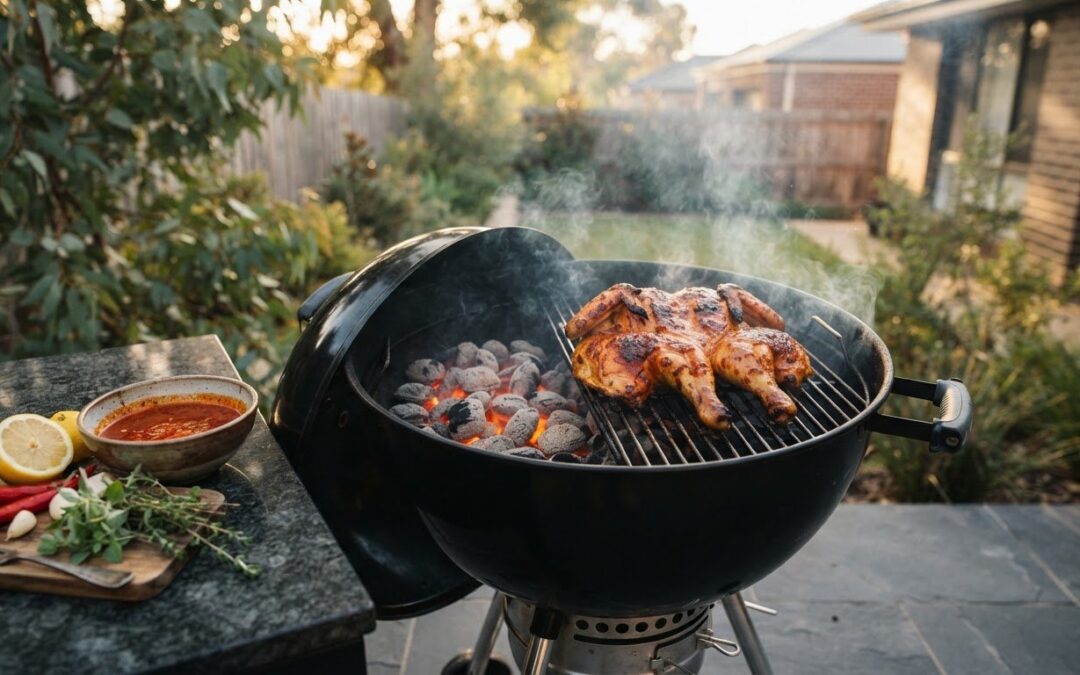
The best piri piri chicken isn’t cooked over the fiercest flames. The best way to cook portuguese piri piri chicken on a grill is to build flavour with a bright, balanced marinade, then let steady charcoal heat do the work. Direct flames can scorch the skin before the chicken cooks through, while too much chilli or acidity can overwhelm the smoky, savoury flavour.
Getting the balance right is simpler when you know what to look for. This guide explains how to combine the key flavours in a piri piri marinade, adjust the heat to suit your taste and prepare the chicken for even grilling. You’ll also learn how to set up charcoal heat zones, move chicken away from flare-ups and develop a lightly charred finish without rushing the cook.
Follow the method for juicy, properly cooked chicken with bold chilli, citrus and charcoal flavour. Use the doneness guidance to cook confidently, whether you’re grilling a whole butterflied chicken or individual pieces.
Key Takeaways
- Build a piri piri marinade around chilli, garlic, citrus and oil, then adjust the balance to suit your taste.
- The best way to cook portuguese piri piri chicken on a grill is to set up separate charcoal heat zones for browning and gentler cooking.
- Prepare the grill and establish the heat zones before adding the chicken to help avoid flare-ups and scorched skin.
- Use a meat thermometer to check doneness rather than relying on appearance alone.
- Rest the chicken before serving, and choose simple sides that complement its chilli and citrus flavours.
What Makes Portuguese Piri Piri Chicken Work on a Grill?
The challenge is cooking bone-in chicken through while building a charred finish and a clear chilli flavour. Fierce heat can blacken the outside before the meat is ready; too little browning can miss the roasted edge that makes grilled piri piri chicken so appealing. The best way to cook portuguese piri piri chicken on a grill is to use the fire to manage both flavour and doneness, not simply to turn up the heat.
Piri piri chicken is grilled chicken seasoned with a chilli-forward, tangy sauce. Garlic adds savoury depth, citrus brings acidity, and oil helps spread the seasoning over the chicken. The sauce gives the dish its identity, while charcoal contributes a roasted flavour. Aim for a lively, balanced coating and a lightly charred finish, without letting either the sauce or smoke dominate.
The dish has connections to Portuguese and Southern African food traditions, but its history is not a simple, single-origin story. The chilli and sauce have their own histories of movement and adaptation; the history of piri-piri offers useful context on how the name and flavours developed. Recipes vary in their choice of chilli, acidity and seasoning, so there is no single fixed formula.
Piri piri chicken is defined by the balance of chilli, tang and grilled savouriness, not by one unchanging recipe. You can adjust the heat without losing the recognisable flavour profile. A milder version can still taste distinctly piri piri when the garlic, citrus and savoury notes stay in balance.
What Does Piri Piri Chicken Taste Like?
Expect chilli warmth, garlic, citrus acidity and the savoury flavour of grilled chicken. Charcoal adds a roasted note and a little smoke, but it shouldn’t bury the sauce’s brightness. Keep the fire controlled so the chicken browns without the seasoning scorching. For a milder result, use less chilli; for more heat, add more. Retain the garlic and citrus so the flavour stays rounded, not merely hot.
Why Is Portuguese Piri Piri Chicken Often Grilled?
Grilling exposes the chicken to direct heat, encouraging browning and the familiar charred finish. With bone-in pieces, that same heat needs managing so the exterior doesn’t cook much faster than the meat near the bone. Portuguese and Southern African food traditions both inform familiar versions of the dish, though recipes and methods vary. A sound grasp of charcoal placement and heat control helps; mastering barbecuing with charcoal covers those broader fire-management fundamentals.
Build a Piri Piri Marinade That Clings Without Burning
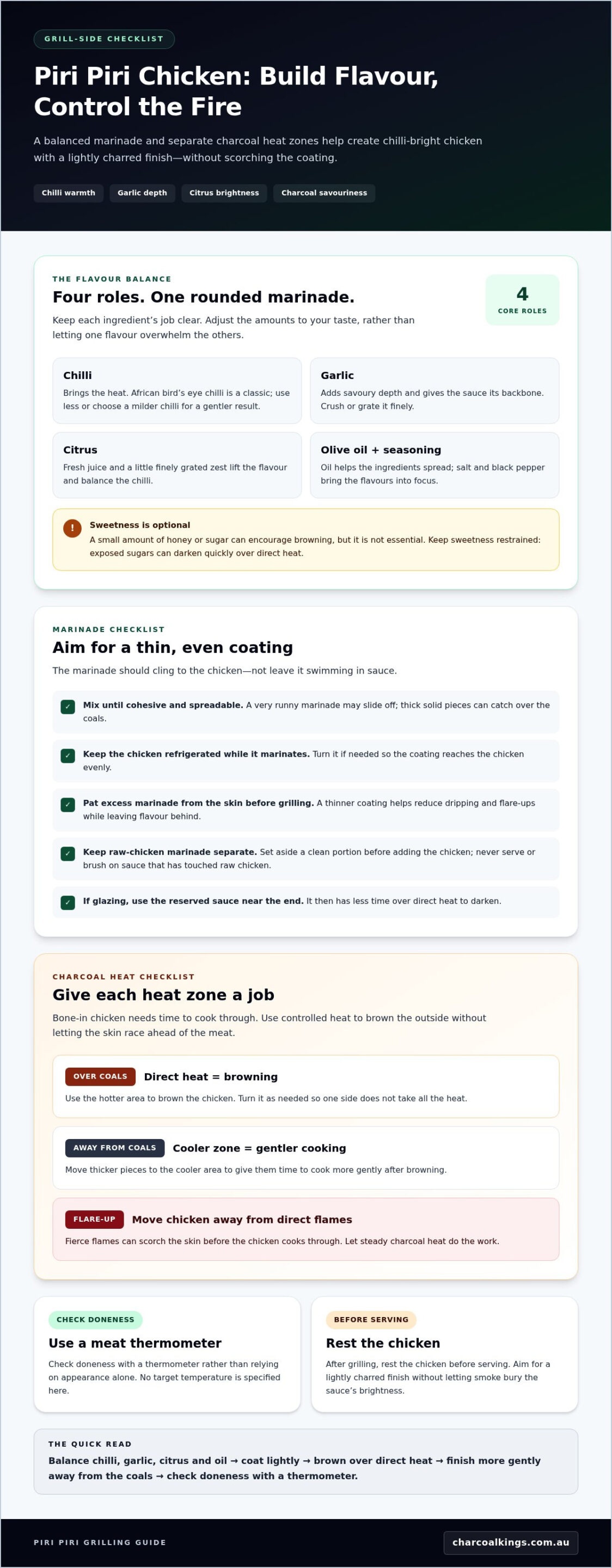
A good piri piri marinade coats the chicken in a thin, flavourful layer rather than leaving it swimming in sauce. Chilli brings heat, garlic supplies savoury depth, and citrus lifts the flavour with acidity. Oil helps distribute the ingredients and encourages the surface to brown. Seasoning brings them together. Adjust the proportions to your taste, keeping each ingredient’s role clear so no one flavour overwhelms the others.
Sauce with exposed sugars can darken quickly over direct heat, so keep sweetness restrained and manage the fire to prevent the coating from scorching. A little sugar or honey can encourage browning, but it isn’t essential to the flavour. The best way to cook portuguese piri piri chicken on a grill starts with a marinade that seasons the meat without leaving a sticky layer prone to burning.
Which Ingredients Give Piri Piri Sauce Its Character?
African bird’s eye chilli is a classic choice for direct, sharp heat—if you are based in the UK and looking for authentic chillies and seasoning staples, online African grocers such as emmycreamafromart.co.uk provide convenient access. For a gentler result, choose a milder chilli or use less. Garlic gives the sauce its savoury backbone; lemon or another citrus adds brightness and balances the chilli. Oil helps the marinade spread, while salt and pepper bring the flavours into focus.
Use these ingredients as a flexible starting point for your marinade. Adjust the amounts to suit the chicken cut and the heat you enjoy:
- Chilli, adjusted to your preferred heat level
- Garlic, finely crushed or grated
- Fresh citrus juice and a little finely grated zest
- Olive oil to bring the ingredients together
- Salt and black pepper for seasoning
- Optional small amount of honey or sugar, if you want to encourage browning
Mix until the marinade is cohesive and spreadable. If it is very runny, it may slide off the chicken; if it is thick with solids, those bits can catch over the coals. Aim for an even coating rather than a heavy paste.
How Long Should Chicken Marinate?
Keep the chicken refrigerated while it marinates. The marinade seasons the surface, so turn the chicken if needed to coat it evenly. Before grilling, pat excess marinade from the skin. A thinner coating reduces dripping and flare-ups while leaving enough flavour behind.
Keep raw-chicken marinade separate from sauce for basting or serving. Before the chicken goes into the marinade, set aside a clean portion in a separate container; never serve or brush on sauce that has touched raw chicken. If you want a glaze, apply the reserved sauce near the end of cooking, when it has less time over direct heat to darken. For a steady, manageable fire, pair a well-balanced marinade with suitable BBQ charcoal from Charcoal Kings’ charcoal range.
Choose Charcoal and Grill Heat for Even Piri Piri Chicken
Charcoal setup lets you develop a browned, lightly charred surface without making bone-in chicken cook over intense heat from start to finish. Direct and indirect heat have different jobs: direct heat browns the outside, while the cooler zone gives thicker pieces time to cook more gently. This balance is central to the best way to cook portuguese piri piri chicken on a grill.
Direct Heat or Indirect Heat: Which Should You Use?
Use the area above the coals for browning, turning the chicken as needed so one side doesn’t take all the heat. If the skin darkens too quickly or the coals flare, move the chicken to the cooler side. Bone-in and thicker portions can continue cooking there, away from the strongest radiant heat. The goal is controlled browning followed by an even cook, not a long sear over flames.
To create a two-zone fire, arrange the lit coals across one side of the charcoal grate and leave the other side clear. The coal side is your active cooking zone; the clear side is the indirect zone. Put the chicken over the active coals when you want colour, then shift it to the cooler area to continue cooking. Keep the lid on for indirect cooking if your grill is designed for covered use, and adjust its vents according to the grill’s instructions.
- Keep a clear space beside the coals so you can move chicken away from flare-ups.
- Use the hotter zone for browning, then cook thicker pieces on the cooler side.
- Watch how your grill responds to lid position and airflow, as heat varies between grills.
What Charcoal Suits a Piri Piri Cook?
Hardwood lump charcoal is one fuel option for a charcoal grill. Charcoal Kings’ Premium Hardwood Lump Charcoal is 100% natural and has a 4 hour burn time. No chemicals are used in the manufacturing of Charcoal Kings charcoal. A stated burn time applies to the named product; it doesn’t mean every grill or cook will produce identical heat or flavour.
Use enough fuel to establish a useful active zone while keeping the other side free of coals. Add or reposition fuel as needed for your grill and cooking conditions. Lump charcoal pieces can vary in size, and airflow, grill design and weather can all affect how the fire behaves. Watch the chicken and the coals rather than relying on a fixed heat expectation.
For a wider look at fuel types and their BBQ applications, the ultimate guide to BBQ charcoal can help you compare options. For this cook, choose fuel that lets you build a steady fire with distinct hot and cooler areas, then use each zone for its purpose.
How to Grill Portuguese Piri Piri Chicken Step by Step
Set up the fire before the chicken goes on. Persistent flames can char the coating before the centre is done. A two-zone charcoal arrangement gives you a hot area for browning and a cooler area for cooking through at a gentler pace.
Prepare the Chicken and Grill Before Cooking
Use a recipe-tested whole spatchcocked chicken or clearly specified chicken portions so the cooking method matches the cut. Keep the chicken refrigerated until you’re ready to grill. Pat excess marinade from the skin, then set out clean utensils and a plate for the cooked chicken.
- Light the charcoal. Let it catch and settle until the coals are glowing and no longer producing persistent flames. Arrange the coals to one side of the grill, leaving the other side clear for indirect cooking.
- Prepare the grate. Once the fire is established, clean the cooking grate and place it over the charcoal. Set up the grill so you can move chicken between the hot and cooler zones. If using a lid, learn how its vents affect airflow on your grill.
- Start over the appropriate zone. For skin-on pieces, begin skin-side down over the active coals to encourage browning. For a whole spatchcocked bird, position it to suit its shape and your grill, keeping an eye on the skin as it colours.
- Turn and reposition as needed. Turn the chicken when the first side has taken on colour and releases readily from the grate. If the surface darkens rapidly, fat drips flare or flames persist, move the chicken to the cooler zone. Don’t try to control flare-ups by leaving the meat over the flames.
- Continue cooking gently. Let thicker or bone-in portions cook on the indirect side. Turn or rotate them when needed for even exposure, and keep the lid position and airflow consistent. Watch the surface and fire rather than relying on a fixed timing that may not suit your grill.
- Baste near the finish. Brush on clean reserved sauce late in the cook, not at the start. This gives it less time to darken over the coals. Keep raw-chicken marinade away from cooked food and serving sauce.
- Check the thickest part. Insert a food thermometer into the thickest section without touching bone. Cook chicken to 74°C. Don’t rely on colour or clear juices alone; if it hasn’t reached the safe temperature, keep cooking and check again.
Controlled heat does the heavy lifting. The best way to cook portuguese piri piri chicken on a grill is to build colour over coals, then finish over gentler heat and verify doneness with a thermometer. Choose charcoal for your next BBQ cook and put that two-zone setup to work.
Rest, Serve and Repeat the Piri Piri Chicken Cook
Once the chicken has reached a safe internal temperature, take it off the grill and let it rest before carving. Resting lets the cook settle, so you can serve the meat cleanly instead of cutting straight into it while it’s piping hot. Leave the chicken uncovered or tent it loosely with foil. A tight cover can trap steam and soften the charred skin.
How Should You Finish and Serve Piri Piri Chicken?
Use only sauce that was kept separate from the raw chicken. Brush a little clean reserved sauce over the cooked chicken just before serving, or put it on the table for dipping. Never reuse marinade that has touched raw chicken. Keep the finish light so the fresh chilli and citrus complement the grilled flavour rather than masking it.
Choose simple sides that cool or soften the chilli and acidity without competing with the main event. Potatoes, a crisp salad or plainly grilled vegetables all work. Serve one or two rather than loading the plate with heavily seasoned sides. Carve a whole chicken into manageable portions, or serve individual pieces as they come off the grill.
What to Adjust for Your Next Charcoal Cook
Small changes to the fire, sauce or chicken placement can solve most issues. Note what happened before changing several things at once. That makes it easier to repeat what worked and adjust what didn’t.
- Skin darkened too quickly: Move the chicken farther from the coals or to the cooler zone sooner. If flames flare beneath it, shift it away rather than letting it cook over persistent flames.
- Sauce flavour seemed weak: Adjust the next batch to your taste. Increase the chilli for more heat, or tune the garlic, citrus and seasoning to bring the sauce’s flavour forward. Taste the clean sauce before it touches raw chicken.
- Pieces cooked unevenly: Move individual portions between zones as needed. Let thicker pieces continue on the cooler side while smaller pieces finish, and use a thermometer to check each piece at its thickest point without touching bone.
- Char was good, but the meat needed longer: Keep the browned chicken away from direct heat and let it finish more gently. Don’t sacrifice doneness to preserve the cooking schedule.
The best way to cook portuguese piri piri chicken on a grill is a repeatable balance of sauce, charcoal control and careful finishing. Charcoal Kings’ Premium Hardwood Lump Charcoal is 100% natural and has a 4 hour burn time. That product detail doesn’t mean every grill or cook will behave identically, so keep managing the fire to suit your setup. Explore the Charcoal Kings charcoal range for your next BBQ cook.
Make Your Next Grill Your Own
Build on what you learn with each cook. Keep a note of how the chilli level, chicken cut and fire setup behaved, then change one thing at a time. A milder batch might call for more chilli next time; a darker finish may simply mean moving the chicken away from the coals earlier. Small, deliberate adjustments help you shape the flavour to suit your table without losing the character of the dish.
The best way to cook portuguese piri piri chicken on a grill isn’t about chasing a perfect-looking recipe. It’s about paying attention to the fire, tasting as you go and making each cook more familiar than the last. Once you’ve found your preferred balance, the method becomes a reliable starting point for a relaxed meal with family or friends.
Charcoal Kings supplies BBQ fuels, including natural hardwood lump charcoal, for your next cook. Fire up the grill, make the recipe your own and enjoy the results. Explore Charcoal Kings BBQ fuels.
Frequently Asked Questions
Is piri piri chicken the same as peri peri chicken?
Usually, the names refer to the same chilli-seasoned chicken style, with spelling varying by region, language and recipe. You may see “piri-piri” or “peri-peri” on menus and sauce labels. The exact sauce isn’t standardised, so one version may be hotter, sharper or more garlicky than another. Check the ingredient list or taste the sauce before adding extra chilli to your chicken.
Can I make piri piri chicken with chicken pieces instead of a whole chicken?
Yes. Pieces work well and can be easier to handle on a home grill. Choose portions of similar size where possible, or expect smaller pieces to finish before larger ones. Grill them in batches if crowding would make turning difficult. Check each piece individually with a food thermometer, placing it in the thickest part without touching bone, rather than assuming every piece is done at once.
Can I prepare piri piri sauce ahead of time?
Yes, you can mix the sauce ahead and keep it covered in the refrigerator. Use a clean, sealed container and a clean spoon each time you portion it. Before adding any to raw chicken, set aside the amount you’ll use for serving or finishing. This keeps that portion separate and ready to use without risking contact with raw poultry.
How much bird’s eye chilli should I use for milder piri piri chicken?
What happens if the chicken skin darkens before the centre is cooked?
Move the chicken away from the hottest part of the grill and let it continue cooking more gently. If flames are licking the skin, shift the chicken until they settle; don’t leave it over persistent flames. Check the thickest part with a food thermometer and continue cooking until it reaches 74°C. Dark skin alone doesn’t confirm doneness.
Can I cook Portuguese piri piri chicken on a gas grill instead of charcoal?
Yes. A gas grill can cook piri piri chicken, though it won’t provide the same charcoal character. Set up a hotter area for browning and a lower-heat area for finishing, using the burners and lid according to your grill’s instructions. Keep the chicken away from flare-ups and check doneness with a thermometer. The marinade’s chilli, garlic and citrus still bring the defining flavour.
Is it safe to reuse marinade that has touched raw chicken?
No. Don’t use marinade that has touched raw chicken as a serving sauce or finishing glaze. Set aside a clean portion before marinating, and discard any leftover marinade that has contacted the raw poultry. Keep separate utensils and containers for raw and cooked chicken, too. This simple separation helps prevent raw-chicken juices from contaminating ready-to-eat food.