
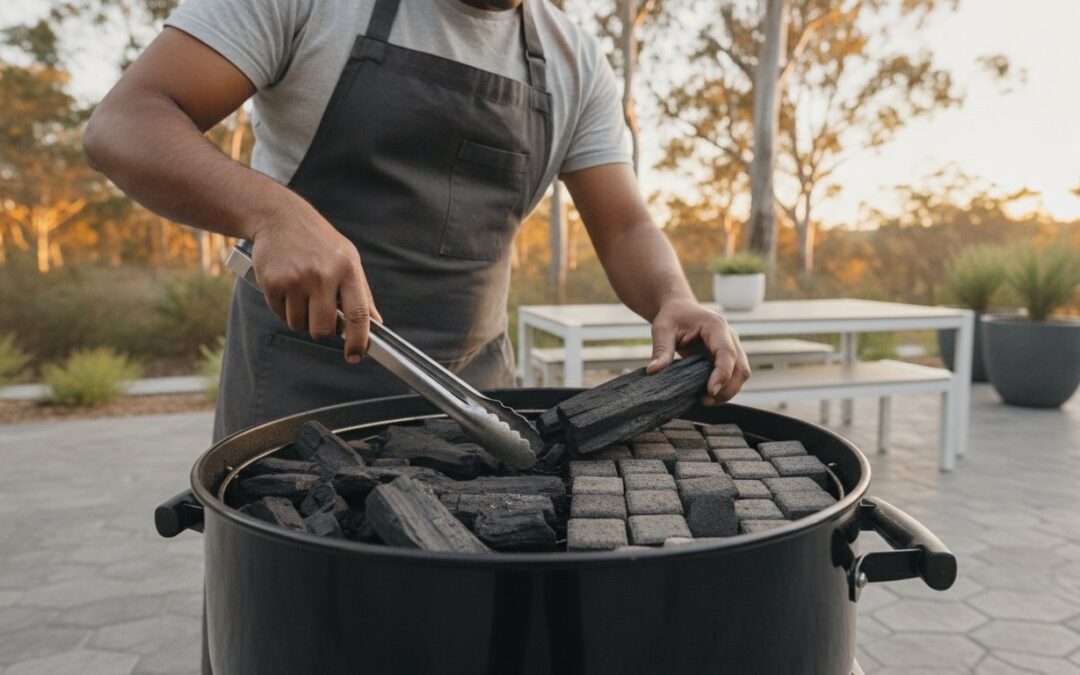
Most pitmasters blame their vents for temperature swings, but the real culprit is usually sitting in the charcoal basket. Selecting the correct fuel for a proq frontier is the difference between a stress-free overnight cook and a ruined piece of meat. It’s frustrating to wake up at 3 AM to find your smoker has plummeted to 80°C or spiked high enough to scorch your bark. You want a clean, predictable burn that doesn’t choke your airflow with excessive ash or ruin your meat with chemical smells from low-quality additives.
We’ll show you exactly how to achieve 12+ hours of rock-solid heat using high-density fuel combinations and proven loading techniques. This guide covers the performance benefits of restaurant-grade hardwood lump and cocoshell briquettes while explaining why “instant light” products should never touch your smoker. You’ll gain the expertise needed to maximize fuel efficiency and maintain a pristine smoke profile for every cook. We’ll break down the exact steps to ensure your next long-haul session is both stable and flavourful.
Key Takeaways
- Identify the specific performance requirements for vertical smokers and how to select the optimal fuel for a proq frontier to maintain thermal stability.
- Compare the benefits of hardwood lump for high-heat sessions versus the consistent, long-duration burn of charcoal briquettes for low and slow cooks.
- Implement the Minion Method to achieve 12+ hours of stable, unattended heat with a single fuel load.
- Discover why large hardwood chunks are the only viable choice for long-haul smoking to ensure a clean and efficient flavour profile.
- Eliminate chemical smells and excessive ash by choosing high-purity fuels free from synthetic binders and fillers.
Understanding the Fuel Requirements of the ProQ Frontier
The ProQ Frontier functions as a vertical chimney. It relies on a specific draft to maintain target temperatures throughout long cooks. This draft draws oxygen from three adjustable bottom vents, through the charcoal basket, and out the top vent. Understanding what charcoal is and how its physical structure affects this airflow is essential for consistent results. Choosing the wrong fuel for a proq frontier leads to erratic heat spikes and frustrating sessions spent fighting your smoker.
To better understand this concept, watch this helpful video:
The Chimney Effect and Your Fuel
Airflow is the engine of your smoker. High-quality fuel must maintain its structural integrity to allow oxygen to circulate freely. Small, broken charcoal pieces or “fines” settle at the bottom of the charcoal basket during the cook. These fragments eventually choke the intake vents, cutting off oxygen and causing your fire to die out prematurely. You need high-density fuel that resists crumbling into dust. This structural density ensures your vent adjustments produce immediate, predictable changes in temperature. Without it, you’ll spend your entire cook fighting a sluggish fire that refuses to respond to vent changes.
This requirement for structural integrity is a core principle for any high-quality solid fuel; for example, the high-density products curated by Schönbucher Brennstoffe are designed to maintain their physical form and provide a consistent energy output over long periods.
Thermal Stability: The Role of the Water Pan
The ProQ uses a water pan to create a stable cooking environment. This pan acts as a heat sink, absorbing excess energy and releasing it slowly. Your fuel works in tandem with this water to maintain a steady internal climate. If your fuel lacks density, it won’t have the energy to recover quickly after you lift the lid to spritz or wrap your meat. Thermal mass in a 225°F (107°C) smoker refers to the total energy stored within the fuel and water pan that resists temperature fluctuations when external conditions change. You want fuel that provides a long, steady release of energy rather than a short, intense burst.
Enclosed vertical smokers are highly efficient because they recycle heat and moisture. This design also means the cooking chamber traps any volatile gases released by your fuel source. Many budget-grade briquettes contain chemical binders, coal dust, or petroleum-based accelerants. These additives produce a thick, acrid smoke that ruins the natural flavour of your meat. In a ProQ Frontier, these off-flavours are significantly amplified. The air stays in the chamber longer than it does in a traditional offset smoker. Purity is a non-negotiable requirement for professional-grade results. You must use fuels that contain zero additives to ensure a clean, transparent smoke profile.
Lump Charcoal vs. Briquettes: Which Wins in a Vertical Smoker?
The choice between lump and briquettes isn’t a matter of which is superior. It’s about selecting the right tool for your specific cook time. For the ProQ Frontier, this decision dictates how often you’ll need to intervene. Vertical smokers are uniquely sensitive to ash volume. If you choose a high-ash fuel, the residue settles directly over the three bottom intake sliders. This effectively starves the fire of oxygen. Selecting the best fuel for a proq frontier requires balancing energy density with the physical residue left behind after the burn.
Hardwood Lump: The Flavour King
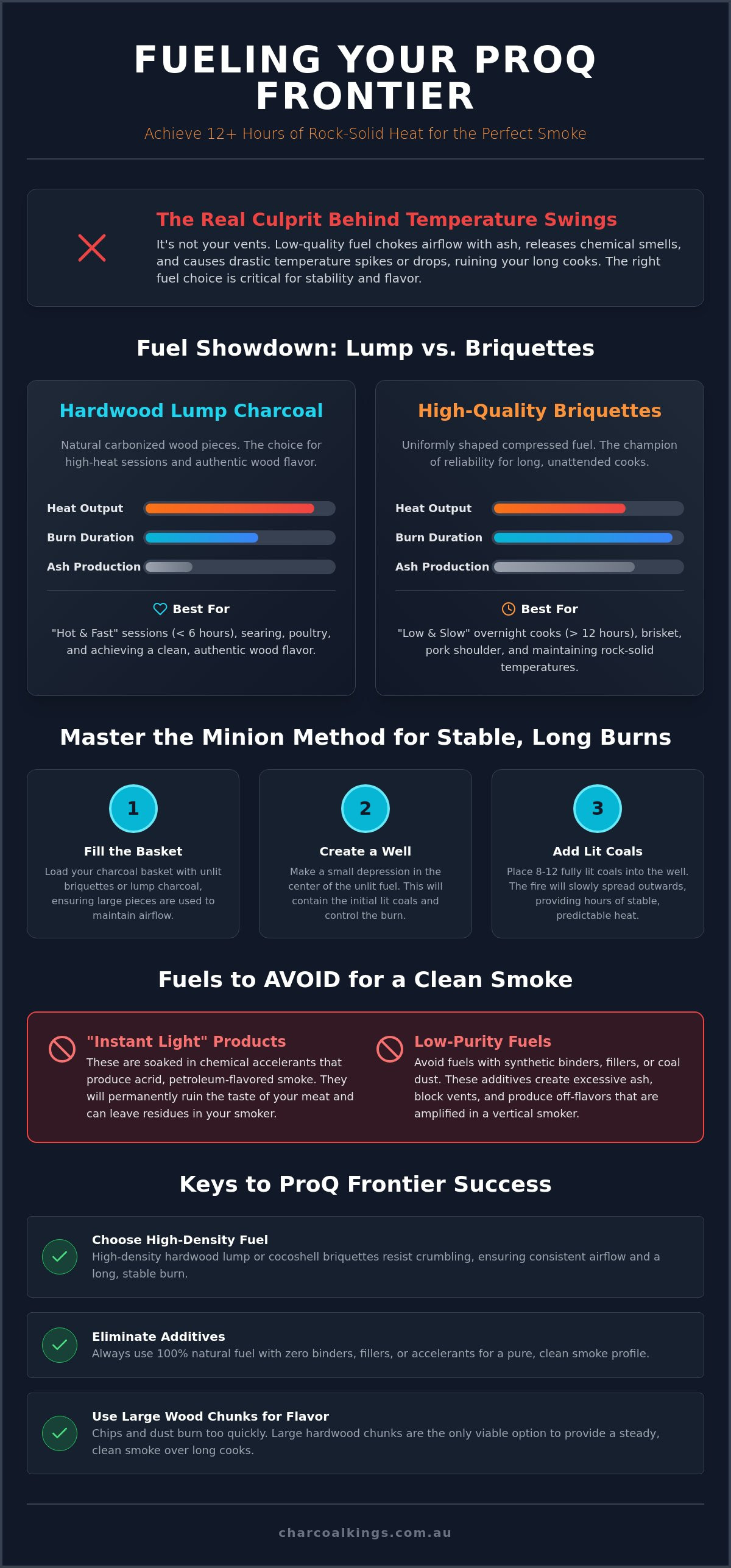
Professional pitmasters often prefer Lump Charcoal for sessions lasting under six hours. This fuel source consists of carbonised wood pieces in their natural state. It burns hotter and faster than briquettes, making it ideal for “hot and fast” ribs or poultry. Density is the critical metric here. Australian hardwoods like Gidgee are significantly denser than softer woods. This density provides a longer burn time and a more intense heat profile.
Because lump charcoal comes in irregular shapes, you must pack the charcoal basket tightly. Large gaps between pieces can cause the fire to go out. When handled correctly, lump provides a clean, authentic wood flavour that is difficult to replicate. It produces very little ash, which keeps your ProQ vents clear for the duration of the cook. If you are planning a shorter session, our Hardwood Lump Charcoal offers the purity and performance required for a championship-grade crust.
Briquettes: The Reliability Choice
Consistency is the primary advantage of professional-grade briquettes. Unlike supermarket varieties, professional versions contain no chemical binders, coal dust, or fillers. They are engineered for uniformity. This consistent sizing allows for a predictable temperature curve, which is vital for overnight cooks. Following safe smoking practices ensures that your fuel choice doesn’t just impact flavour, but also the safety and quality of the final product.
- Predictability: Every briquette burns at the same rate, allowing for precise vent control.
- Duration: High-density briquettes can provide 10 to 12 hours of heat in a single load.
- Purity: Clean briquettes avoid the acrid, “chemical” smell associated with cheap alternatives.
In terms of cost per hour, premium Australian hardwoods often prove more economical. While the upfront price is higher, you use less volume to maintain target temperatures. A single 10kg bag of high-density fuel will outlast two bags of budget fuel because it contains more carbon and less waste material. For a 12-hour brisket run in your ProQ Frontier, the reliability of a clean-burning briquette is often the safest path to success.
Optimising Your Burn: Fuel Loading Techniques for Long Cooks
Choosing the right fuel for a proq frontier is only half the battle. How you arrange that fuel determines whether you’ll be sleeping soundly or hovering over your vents all night. Vertical smokers require a strategic ignition pattern to prevent the entire charcoal basket from lighting at once. If the whole basket ignites, your temperatures will skyrocket and your fuel will be exhausted in four hours rather than twelve. The goal is a slow, controlled burn that moves through the basket like a fuse.
The “Donut” Technique is the most effective way to manage this. By creating a hollow centre in your unlit fuel and placing lit coals inside, you force the fire to move from the inside out. This method is superior to simple layering because it keeps the outer ring of fuel fresh. It also prevents the common issue of ash suffocation. As the centre burns down, the ash stays in the middle, leaving the outer areas near the bottom vents clear for oxygen intake. This specific arrangement is vital for maintaining the chimney effect required for stable 225°F (107°C) temperatures.
Step-by-Step Minion Method for ProQ
Preparing for a 12-hour brisket run requires precision. Start by filling your charcoal basket to the brim with unlit premium hardwood lump or high-density briquettes. Dig a small hole in the centre, roughly the size of a cereal bowl. While your basket is ready, light 10 to 12 coals in a chimney starter. Once they are glowing red and covered in grey ash, pour them into the centre hole.
- Wood Placement: Bury three to four large wood chunks at different depths and distances from the centre. This ensures a steady release of smoke throughout the cook.
- Ignition: Use fewer lit coals in summer and slightly more in winter to compensate for ambient temperatures.
- Stability: Allow the smoker to sit for 30 minutes with the water pan in place before adding your meat. This pre-heats the steel and stabilises the thermal mass.
Airflow and Vent Tuning
Control your temperature using the three bottom vents. As your smoker approaches 210°F, start closing two of the three bottom vents completely. Use the third vent to fine-tune the final 15 degrees. Leave the top vent fully open at all times. This acts as the exhaust, pulling clean smoke over the meat and preventing bitter creosote buildup. If your temperature begins to drop despite open vents, use a poker to gently stir the centre of the basket. This knocks the ash through the grate and restores the oxygen flow to the embers.
When the meat hits the “stall” at roughly 70°C, the evaporation of moisture can cause the smoker temperature to dip. Don’t panic and open all the vents. Your high-density fuel has the energy reserves to push through this phase. Trust the process and keep the lid closed. Every time you peek, you lose heat and moisture, forcing the fuel to work harder to recover. A stable fuel bed and disciplined vent control are the only ways to achieve professional results.
Beyond Heat: Pairing Smoking Woods with Your Primary Fuel
The ProQ Frontier’s vertical design is a precision flavour machine. Because the smoke must travel through the stacked cooking chambers to exit the top vent, it comes into sustained contact with the meat. This efficiency means you require less wood than you would in a traditional offset smoker. Your choice of smoking wood acts as the final seasoning, working alongside your primary fuel for a proq frontier to define the character of the bark and the depth of the smoke ring.
Top Australian Wood Pairings
Selecting the right timber depends on the protein and the desired intensity. Australian hardwoods are renowned for their density and unique aromatic profiles. For professional-grade results, stick to these proven combinations:
- Ironbark: This is the premier choice for beef brisket. It produces a heavy, robust flavour and helps develop a dark mahogany bark.
- Apple or Cherrywood: These fruitwoods are ideal for pork shoulders or ribs. They provide a subtle sweetness and a distinct reddish hue to the meat surface.
- Red Gum: Use this for a classic, earthy Australian BBQ aroma. It works exceptionally well with lamb or heavy beef cuts that can stand up to a bolder smoke.
Placement Strategies for Chunks
Success with the Minion Method requires a strategic wood layout. Wood chunks provide a sustained, slow-release smoke profile that matches the long-duration burn of high-density charcoal, whereas chips ignite too quickly to be effective for 8+ hour cooks. Chips usually burn up in minutes, often exhausting their flavour before the meat has even begun to take on a smoke ring.
Bury your chunks at varying depths throughout the charcoal basket. Place one chunk near the lit centre coals for immediate smoke, and position others further out so they ignite as the fire spreads through the basket. Never soak your wood chunks. Soaking does not make them last longer; it simply creates steam and lowers the temperature of your fire bed. Dry wood ensures a clean, efficient burn from the moment of ignition. For the cleanest flavour, explore our range of premium smoking woods to find the perfect match for your next cook.
Target “thin blue smoke” throughout your session. Thick, white, billowing smoke is a sign of poor combustion and results in a bitter, acrid film on your food. This bitterness is amplified in vertical smokers because of the enclosed environment. By using high-purity wood chunks free from bark and rot, you ensure a transparent smoke profile that enhances the natural flavour of the meat rather than masking it. This disciplined approach to wood selection and placement is what separates a backyard hobbyist from a seasoned pitmaster.
Why Pure Australian Hardwood is the Professional Frontier Choice
The ProQ Frontier is a precision instrument. It requires fuel that matches its engineering. Sourcing high-density Australian timber is the only way to ensure the maximum burn times required for professional-grade results. We focus on materials like Gidgee and Ironbark because these timbers provide the highest carbon content available. This density translates directly to fewer refills and more stable temperatures. When you choose our fuel for a proq frontier, you are investing in performance that cheaper, imported alternatives cannot match.
Purity is our core standard. We never use chemicals, binders, or fillers in our production process. Many mass-produced fuels use petroleum-based accelerants or limestone to increase weight and speed up ignition. These additives leave behind a thick residue and produce acrid smoke. Our Australian-made charcoal burns clean. This protects the integrity of your meat and ensures the natural wood flavours remain the star of the show. Supporting local producers also benefits the entire Australian BBQ community, ensuring that every bag meets strict quality standards before it reaches your pit.
The Purity Promise
Using clean fuel protects your hardware. The ProQ Frontier features a high-quality porcelain coating. Harsh chemicals found in low-grade fuels can degrade this finish over time, leading to premature wear. Pure fuel also directly impacts your bark. Without chemical interference, the Maillard reaction occurs more cleanly. This results in a superior crust on your brisket or pork shoulder. For those looking to refine their fire management skills further, we recommend reading our guide on Mastering the Art of Barbecuing with Charcoal.
The ultimate Frontier setup involves pairing our hardwood lump with professional-grade smoking chunks. This combination provides the heat density needed for stability and the clean smoke profile required for championship flavour. It eliminates the guesswork and allows you to focus on the meat rather than fighting your fire basket.
Ready to Elevate Your Next Cook?
Your ProQ Frontier deserves fuel that matches its potential. Don’t settle for supermarket charcoal that chokes your vents with ash and ruins your meat with chemical odours. Achieving 12+ hours of stable heat is simple when you use the right materials and techniques. If you want to discuss specific fuel combinations for your next cook, visit our Holden Hill showroom. Our team of experts is ready to help you dial in your setup for any protein. Stock up on premium Australian hardwood today and take control of your next session. Get the fire right, and the flavour will follow.
Take Control of Your Vertical Smoker
Achieving professional results in a vertical smoker requires more than just patience. It demands a fuel source that provides consistent energy without the interference of synthetic binders or fillers. By mastering the Donut loading technique and selecting high-density Australian hardwoods, you ensure your smoker maintains rock-solid temperatures for over 12 hours. This stability allows you to focus on the craft of BBQ rather than fighting with your air intake vents mid-cook.
Selecting the right fuel for a proq frontier is the foundation of every successful low and slow cook. We are a specialist supplier of Gidgee and Ironbark, providing the purity and performance trusted by Adelaide’s competition BBQ teams. Our fuels contain no chemical additives, ensuring your meat’s flavour remains untainted and your hardware stays protected from corrosive residues. It’s time to stop guessing and start cooking with confidence.
Upgrade your next cook with Australia’s finest Hardwood Lump Charcoal.
Get your fire right, trust your fuel, and enjoy the results. Let’s get to work.
Frequently Asked Questions
Can I use regular heat beads in my ProQ Frontier?
You can use commercial heat beads, but you must ensure they are free from chemical binders and fillers. Cheap supermarket beads often produce a heavy, acrid smoke that ruins the flavour of your meat in the enclosed vertical chamber. High-purity briquettes are the professional choice for maintaining the thermal stability required for long cooks without imparting off-flavours.
How much charcoal do I need for a 10-hour cook in the ProQ Frontier?
A full charcoal basket, roughly 5 to 6 kilograms of high-density fuel, is typically sufficient for a 10-hour session. This volume assumes you are using the Minion Method and high-quality Australian hardwood. Factors like ambient temperature, wind, and how often you open the lid will affect your total consumption rate. Always start with a full basket to ensure you have enough thermal mass to push through the stall.
Is lump charcoal better than briquettes for low and slow smoking?
Neither is strictly better, but they serve different purposes depending on your goals. Briquettes offer superior consistency and duration for overnight cooks, while hardwood lump provides a cleaner smoke profile and higher heat for shorter sessions. When selecting fuel for a proq frontier, many professionals use a base of high-density briquettes for longevity and add lump charcoal for its authentic wood flavour and low ash production.
Why is my ProQ Frontier struggling to reach temperature with lump charcoal?
Poor airflow is the most common reason for low temperatures when using lump charcoal. If the pieces are too small or packed too tightly, they block the oxygen flow from the bottom vents. When managing fuel for a proq frontier, ensure you are using large, restaurant-grade pieces and avoid pouring the “dust” from the bottom of the bag into your basket. Check that your bottom vents are clear of ash buildup from previous sessions.
How do I stop my charcoal from going out halfway through a cook?
Prevent your fire from dying by using the Donut Technique to ensure a continuous “fuse” of ignition. If your fuel is high-quality but still goes out, ash is likely suffocating the embers. Use a poker to gently agitate the charcoal basket through the access door to knock the ash into the pan. This restores the vital oxygen flow needed to keep the fire burning steadily.
Should I use a charcoal chimney to light my ProQ Frontier?
Yes, a charcoal chimney is the most efficient tool for lighting the starter coals used in the Minion Method. It allows you to get 10 to 12 coals glowing red and ash-covered without using chemical firelighters. Once these coals are ready, pour them into the centre of your unlit fuel basket to begin the slow, controlled burn required for long-haul smoking.
What is the best smoking wood for a ProQ Frontier?
Ironbark and Gidgee are the premier choices for beef because of their robust flavour and clean burn. For pork or poultry, fruitwoods like Apple or Cherry provide a milder, sweeter smoke profile. Always use large wood chunks rather than chips. Chunks provide a sustained release of smoke that lasts for hours, matching the burn rate of your primary fuel source.
How often do I need to add fuel to my ProQ Frontier during a long cook?
You shouldn’t need to add any fuel for 10 to 12 hours if you use high-density Australian hardwood and the Minion Method. The ProQ Frontier is highly efficient at retaining heat. If you find yourself refilling the basket every few hours, you are likely using low-density fuel or allowing too much heat to escape through the lid. Focus on fuel density to achieve a “set and forget” experience.