
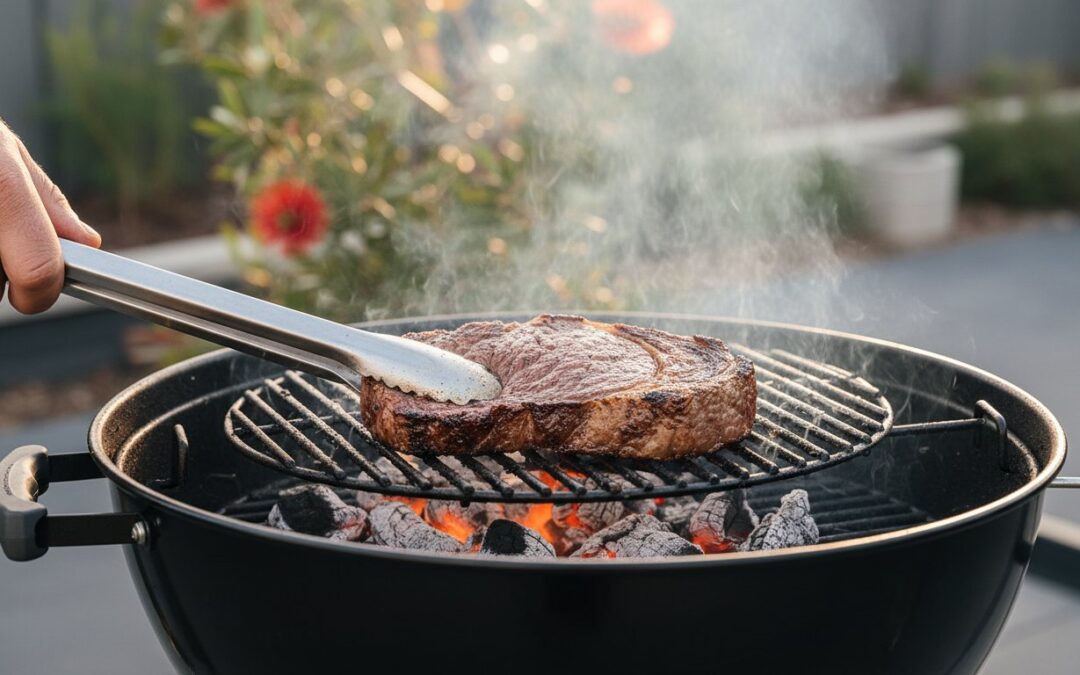
A A$75 premium Wagyu ribeye shouldn’t end up looking like it was boiled in a pan. If your crust is grey and flabby, you aren’t using the best charcoal for searing steaks. Most supermarket fuels fail to hit the 400 degree Celsius mark required for a true Maillard reaction. Instead, they choke your meat with chemical additives and burn out before the fat even begins to render. You deserve a fuel that works as hard as you do at the grill.
It’s frustrating to invest in high-end Australian beef only to have the flavour masked by acrid smoke. You want that deep, mahogany crunch and pure wood-smoke aroma found in the country’s top steakhouses. This guide reveals the high-heat natural fuels and professional techniques you need to achieve a perfect crust every time. We’ll break down the performance of Gidgee lump, Binchotan, and heavy-duty briquettes to ensure your 2026 BBQ season is a masterclass in fire management. Get Sizzlin’!
Key Takeaways
- Master the Maillard reaction by leveraging radiant infrared heat to achieve a professional, flavour-packed crust.
- Understand why high-density lump charcoal is the best charcoal for searing steaks due to its superior airflow and intense burning temperatures.
- Identify the hottest-burning Australian hardwoods, including Gidgee and Mallee Root, to reach the extreme heat levels required for thick cuts.
- Learn how to use a chimney starter and a two-zone grill setup to safely manage white-hot coals for a perfect finish.
- Discover the benefits of using 100% natural, hand-graded hardwood that is free from chemicals and binders for a cleaner, healthier sear.
The Science of the Sear: Why Your Charcoal Choice Matters
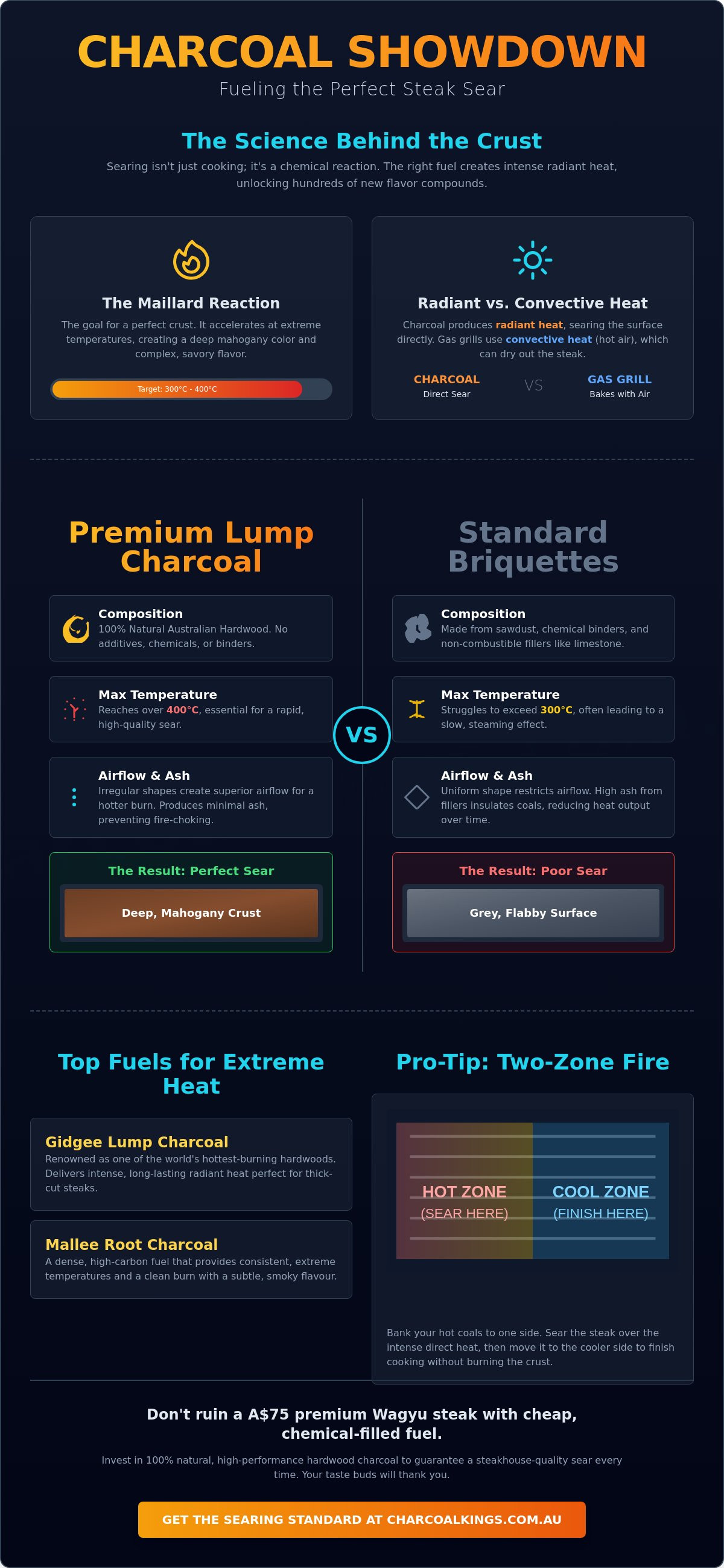
Searing a steak isn’t just about cooking meat; it’s about triggering a complex chemical transformation. Finding the best charcoal for searing steaks starts with understanding how heat interacts with protein. To get that professional crust, you need a fuel source that consistently hits at least 300°C. This temperature is the magic number where the Maillard reaction accelerates, causing amino acids and reducing sugars to create hundreds of new flavour compounds. If your coals can’t maintain this intensity, you’re essentially boiling the meat in its own juices rather than forging a crust.
To better understand how different fuel types perform during a high-heat cook, watch this helpful comparison:
High-quality charcoal performance relies heavily on carbon density. When you use dense Australian hardwoods, you’re working with a fuel that has a higher concentration of carbon per cubic centimetre. This density allows the fuel to emit intense radiant heat for longer periods. Cheaper, air-filled options often crumble or lose temperature too quickly. They fail to provide the sustained energy required to sear a thick-cut 500g ribeye properly. Using the best charcoal for searing steaks ensures your fire stays hot enough to finish the job without needing a mid-cook top-up.
Maillard Reaction vs. Charring
Searing is the art of browning, while charring is simply the result of carbonisation. You want a deep mahogany crust, not a black, bitter surface that tastes like an ash tray. The Maillard reaction is the gold standard of steak texture. Consistent high heat from premium natural lump charcoal creates this crust rapidly. This speed is vital because it prevents the “grey band.” This is the unappealing layer of overcooked, dry meat that forms when you’re forced to leave a steak on the grill for too long because the temperature is too low.
Infrared Heat: The Secret to the Crust
Most gas grills rely on convective heat, which is just hot air moving around the meat. Charcoal provides radiant infrared heat. Once your coals reach a white-hot glow, they act as an infrared radiator. This transfers energy directly into the steak’s surface without the drying effects of moving air. Thermal mass is the final piece of the puzzle. A large bed of dense hardwood coals has the mass to stay hot when a cold steak hits the grate. It won’t flinch. It maintains the energy flow, ensuring the sear begins the millisecond the meat touches the metal. Get Sizzlin’!
Lump Charcoal vs. Briquettes: Which Hits the Highest Temps?
Choosing the best charcoal for searing steaks starts with understanding fuel density and oxygen flow. Lump charcoal is 100% natural hardwood, carbonized in a kiln to remove moisture and organic gases. This leaves behind nearly pure carbon. In contrast, standard briquettes are manufactured items. They use sawdust, chemical binders like cornstarch, and fillers such as limestone or mineral char to maintain a uniform shape. Understanding The Science of Steak on the Grill reveals that surface dehydration requires intense, immediate heat that only pure carbon can reliably provide.
The irregular shapes of lump charcoal are its greatest advantage for high-heat cooking. These jagged pieces create natural air pockets in your charcoal chimney or firebox. More oxygen reaching the fuel means a faster, hotter burn. Briquettes are designed to stack tightly. While this is great for a long, steady burn, it restricts the airflow needed to reach the 400°C+ temperatures required for a professional crust. If you want a steak that looks like it came from a top-tier Australian steakhouse, you need the unrestricted airflow of lump.
Ash production is another critical factor. Briquettes contain non-combustible fillers that produce a significant amount of white ash. This ash coats the fuel as it burns, acting as an insulator that chokes the fire and drops the temperature. Lump charcoal is low-ash. It burns away almost completely, ensuring your heat stays at its peak from the first steak to the last. For those serious about their setup, you can explore our range of premium grilling fuels to see the difference quality makes.
Why Lump Charcoal is the Searing King
Lump charcoal is the undisputed choice for high-intensity grilling because it hits peak temperatures faster than any other fuel. It typically reaches cooking temp in 10 to 15 minutes. Because it’s pure wood, it responds instantly to vent adjustments. Opening your grill’s intake vents acts like a rocket ship’s throttle, sending temps soaring for a rapid sear. Using 100% natural lump charcoal also ensures your beef tastes like beef. There are no chemical additives or petroleum starters to ruin the flavour profile of a premium ribeye or wagyu porterhouse.
The Limitations of Standard Briquettes
Standard briquettes are engineered for the “low and slow” crowd. Their uniform shape provides a predictable 110°C to 150°C heat for hours, but they struggle when pushed to extreme limits. At searing temperatures, the binders used to hold briquettes together can break down and release acrid, chemical-smelling smoke. This is particularly noticeable when you’re cooking directly over the coals. Many commercial brands also include mineral char, which increases burn time but reduces the peak infrared energy output. If you’re chasing the best charcoal for searing steaks, the trade-off for consistency isn’t worth the loss in raw heat. Get Sizzlin’!
Top Australian Hardwoods for Extreme Searing Temperatures
Achieving a restaurant-quality crust requires more than just technique; it requires raw thermal power. Australian hardwoods are some of the densest timbers on the planet. This density translates directly into heat energy. When you select the best charcoal for searing steaks, you’re looking for fuel that maintains high temperatures without collapsing into a bed of suffocating ash.
Gidgee: Australia’s Hottest Burning Charcoal
Gidgee is a beast of a wood. Sourced from the arid regions of Queensland and the Northern Territory, this timber is incredibly dense. It’s a favourite for competition BBQ teams across the country. Because the wood is so compact, the resulting lump charcoal is heavy and rich in carbon. It burns clean and produces minimal ash. This is vital for searing because heavy ash builds up and blocks the “infrared window,” which is the direct radiant heat your steak needs for a perfect Maillard reaction. Gidgee can reach temperatures exceeding 500°C in a controlled environment.
Mallee Root and Red Gum: The Flavour Favourites
Mallee Root is the iconic choice for Australian backyard enthusiasts. These gnarly, underground root systems don’t grow straight, which is actually an advantage for your grill. The irregular shapes create natural gaps in your charcoal basket. This improves airflow and allows the fire to breathe, resulting in a more aggressive sear. The aroma is rugged and traditional, imparting a distinct bushland scent to the steak’s fat.
Red Gum offers a different profile. It’s a versatile hardwood that provides a steady, high-heat base. It’s perfect for those who want a bold smoke profile alongside their sear. Red Gum burns hot and long, making it a reliable pick for thick-cut T-bones that need a bit more time over the coals.
- Ironbark: This is the workhorse of the Australian BBQ scene. It provides a massive, long-lasting heat base. It’s the best charcoal for searing steaks when you have a large group, as it stays hot enough to sear multiple rounds of meat without needing a top-up.
- Binchotan: For high-end, precise cooking on a Hibachi or Konro grill, Binchotan is the ultimate choice. It’s a white charcoal that burns with intense far-infrared heat. It produces no smoke or odour, letting the natural flavour of a premium Wagyu cut shine through.
Using these premium natural hardwoods ensures your grill hits the temperatures needed to caramelise the surface of the meat instantly. Don’t settle for inferior briquettes that rely on chemical binders. Stick to natural Aussie timber for the best results. Get sizzlin’!
Setting Up Your Grill for the Ultimate Steak Sear
Achieving a restaurant-quality crust requires more than just high-quality meat. You need a setup that generates intense, focused heat. Forget lighter fluid. It ruins the flavor of premium beef with chemical fumes and oily residues. Use a chimney starter instead. This tool uses the venturi effect to get your coals white-hot in under 15 minutes. Place a few pieces of crumpled newspaper or a natural firelighter cube at the base, fill the cylinder with lump charcoal, and light it. It is the most reliable way to ensure your best charcoal for searing steaks reaches its maximum temperature before it even touches the grate.
Oxygen is the fuel for your fire. Keep the bottom vents of your grill wide open to ensure a constant stream of air reaches the base of the coals. Maximum airflow ensures the charcoal burns at its peak potential, reaching temperatures upwards of 370°C. When it is time to sear, leave the lid off. High-heat searing relies on direct radiant energy. Closing the lid traps moisture and creates an oven-like environment, which can steam the exterior rather than crisping it. Save the lid for thick cuts that need internal temperature management after the crust is set.
Mastering the Two-Zone Fire
A two-zone fire is your safety net. Pile your lit charcoal on one side of the grill to create a concentrated hot zone. Leave the other side empty to serve as a cold zone. This setup provides insurance against flare-ups caused by rendering fat. If the flames get too aggressive, move the steak to the cool side immediately. For those new to heat management, mastering the art of barbecuing with charcoal requires understanding these temperature gradients to prevent charred, bitter exteriors. The best charcoal for searing steaks will provide the intense radiant energy needed on the hot side while allowing for a clean break on the cool side.
The Reverse Sear Technique
The reverse sear is the gold standard for thick Australian ribeyes or T-bones in 2026. Start the meat on the cool side of the grill, bringing the internal temperature up slowly to about 45°C. Fuel longevity is vital here. You need a natural hardwood charcoal that maintains steady heat for 45 minutes before providing a final 60-second blast of energy. Rest the meat for 10 minutes after the low-heat phase. This allows the fibers to relax and the surface moisture to evaporate. Once rested, move it to the white-hot coals for a rapid sear. High-quality hardwood creates a deep, mahogany crust without overcooking the center of the steak.
Why Charcoal Kings Premium Hardwood is the Searing Standard
Finding the best charcoal for searing steaks requires fuel that hits extreme temperatures and stays there. Charcoal Kings uses 100% natural Australian hardwoods, sourced sustainably for local grillers. This isn’t mass-produced scrap wood. It’s high-density timber carbonised to provide the hottest and longest-lasting coals on the market. When you’re chasing that perfect crust, you need a fuel that performs without fail every time you light the pit.
Hand-Graded for Consistent Performance
Most supermarket charcoal bags contain up to 25% “dust and fines.” These tiny particles settle at the bottom of your grill and choke the fire. They block oxygen flow and prevent you from reaching the 300°C+ temperatures needed for a professional sear. We solve this through a rigorous hand-grading process that ensures only the premium pieces make it into our bags.
- Large lump sizes: We select consistent pieces to ensure maximum airflow between the coals.
- The Chimney Effect: Proper airflow creates a natural draft, allowing your grill to reach searing temperatures faster and maintain them longer.
- Repeatable Results: Our grading process means you get the same thermal output every weekend, removing the guesswork from your cook.
Consistency is the key to mastering the grill. When you use our hand-graded lumps, you won’t deal with cold spots or sudden flameouts. This reliability allows you to time your cooks to the second. Every ribeye or wagyu strip comes off the grates with a uniform, restaurant-quality crust that seals in the juices.
Chemical-Free for Pure Steak Flavour
When you’re searing at high heat, anything in your fuel ends up in your meat. Industrial briquettes often contain coal dust, cornstarch, or paraffin binders. These additives vaporise at high temperatures and leave a bitter, chemical aftertaste on your expensive cuts. It’s a waste of a good steak. Charcoal Kings guarantees a 100% natural, chemical-free product that lets the natural flavour of the beef shine.
Using pure carbonised wood is the healthiest choice for your family and the best choice for your palate. You get the authentic, smoky aroma of Australian timber without the toxic fumes associated with cheap, imported alternatives. It’s the standard for anyone searching for the best charcoal for searing steaks in a professional or home setting.
Don’t settle for inferior fuel that ruins your hard work. Level up your BBQ game with professional-grade Australian hardwood. It’s time to treat your grill like the precision tool it is. Get Sizzlin’ with the right fuel for the job!
Dominate the Grill with a Professional Sear
Elevating your backyard BBQ to professional standards in 2026 starts with understanding heat density. High-performance lump charcoal hits temperatures exceeding 600 degrees Celsius, providing the raw energy needed for a flawless crust. By selecting the best charcoal for searing steaks, you ensure your meat develops that rich, caramelized exterior without overcooking the center. It’s the difference between a grey, boiled surface and a dark, crunchy bark that locks in every drop of juice. Dense Australian hardwoods provide the sustainable, intense heat required to achieve these results every time you light the fire.
Charcoal Kings sets the benchmark with 100% natural hardwood that’s entirely chemical-free. Our charcoal is hand-graded to ensure superior airflow and consistent, reliable heat. This is the exact fuel used by top Australian competition BBQ teams to secure podium finishes across the country. You’re getting a product designed for performance, durability, and pure, clean flavor. Don’t settle for inferior fuel that adds unwanted odors or fails to hit the mark. Shop our Premium Hardwood Lump Charcoal for the ultimate sear and take total control of your grill today. Get sizzlin’ and enjoy the results of a true master’s sear.
Frequently Asked Questions
What is the hottest burning charcoal for searing?
Premium Gidgee lump charcoal is the hottest burning fuel available for Australian grillers. This dense hardwood regularly reaches temperatures exceeding 530 degrees Celsius. It’s widely considered the best charcoal for searing steaks because it provides intense, direct heat that creates a dark crust in under 90 seconds. Unlike softwoods, Gidgee maintains this high thermal output throughout the entire cooking process.
Is lump charcoal better than briquettes for steak?
Lump charcoal is superior for searing because it reaches higher peak temperatures than standard briquettes. Our natural hardwood lump contains zero chemical binders or fillers, ensuring a clean burn and a better crust on your beef. Briquettes often include coal dust and cornstarch which limit heat output to around 260 degrees Celsius. Lump charcoal easily clears 350 degrees Celsius for a professional finish.
How do I get my charcoal grill hot enough to sear?
Maximise airflow by opening all intake and exhaust vents completely. Use a chimney starter to ignite 2 kilograms of premium lump charcoal until it’s glowing red. This concentrated heat source provides the 300 to 450 degree Celsius surface temperature required for a perfect Maillard reaction. Position your grill grate 5 to 10 centimetres above the coals to harness the maximum radiant energy.
Can I use Binchotan for searing a thick ribeye?
Binchotan is an elite choice for searing thick cuts like a 600g Australian Wagyu ribeye. This traditional Japanese style charcoal emits intense infrared heat that penetrates the meat deeply while creating a uniform crust. It can reach internal temperatures of 1,100 degrees Celsius in a Konro grill. This provides a level of thermal consistency that standard charcoal simply can’t match for premium cuts.
Why does my charcoal produce so much ash when I’m trying to sear?
High ash production usually indicates the use of low grade briquettes containing lime or clay fillers. These additives can make up 15 to 25 percent of the product’s total weight and will choke your fire’s oxygen supply. Switch to 100 percent natural hardwood charcoal to reduce ash volume by 60 percent. This keeps your vents clear and ensures your fire stays hot enough to sear.
Do I need to use wood chips when searing with hardwood charcoal?
You don’t need wood chips because premium hardwood charcoal already provides a natural smoky profile. Searing typically takes less than 8 minutes, which isn’t enough time for additional wood chips to impart meaningful flavour. Save your hickory or mesquite chunks for low and slow sessions. When searing, focus on high heat and the natural aroma of the hardwood coals instead.
How long should I wait for the charcoal to be ready for searing?
Wait 15 to 22 minutes after lighting your charcoal chimney. Your coals are ready when they’re covered in a light layer of grey ash and are glowing bright orange. This indicates the fuel has reached its peak energy output. It’s now ready to deliver the intense heat needed for the best charcoal for searing steaks to produce a restaurant quality crust.