
Most pitmasters waste hundreds of dollars on a dozen different wood varieties when a single, superior species can handle every cook from brisket to salmon. While Hickory is famous and Mesquite is bold, Oak is the undisputed king of the pit. It sits at the perfect chemical intersection of sweet, savoury, and neutral. If you’re looking for the best all-purpose smoking wood, Oak provides a reliable foundation that never overpowers your ingredients. You don’t need a cluttered shed or chemical-laden shortcuts to produce world-class BBQ.
You’ve likely experienced the frustration of a bitter, over-smoked bird or inconsistent burn rates that ruin a long cook. It’s easy to believe that more complexity in your wood pile leads to better flavour, but the opposite is often true. We’ll show you how to simplify your smoking setup and achieve consistent, professional-grade results across every protein. This guide explores the science behind versatile smoke profiles and explains why this specific hardwood belongs in every serious pitmaster’s arsenal.
Key Takeaways
- Learn how the “Goldilocks” principle ensures your smoke profile is neither too mild nor too intense for delicate proteins.
- Discover why Oak is the best all-purpose smoking wood for its ability to deliver a distinct smoke ring without the risk of bitterness.
- Evaluate the performance of Hickory and Pecan as alternatives when you need a punchier or sweeter flavour profile.
- Compare local Australian hardwoods like Ironbark and Red Gum to traditional woods for high-heat and low-and-slow versatility.
- Master fire management techniques that use a solid charcoal base to maximize the efficiency and flavour of your smoking wood.
What Defines the Best All-Purpose Smoking Wood?
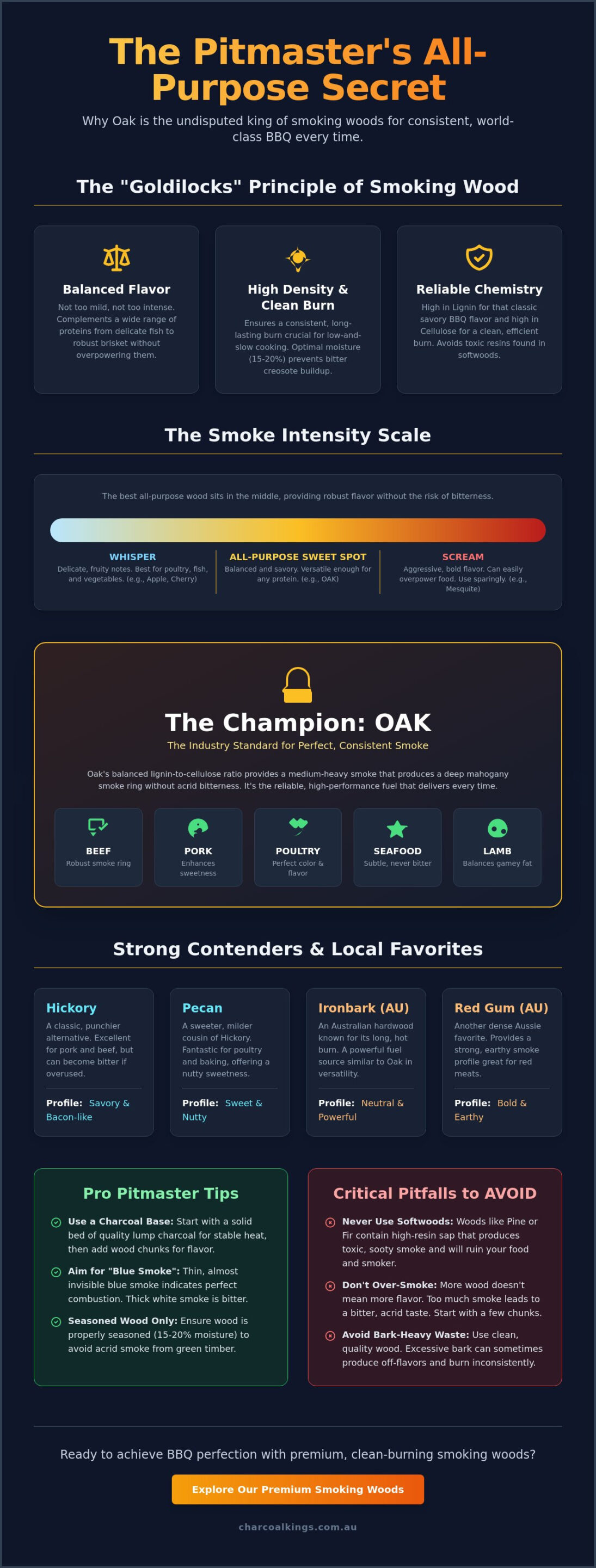
Identifying the best all-purpose smoking wood requires a focus on balance rather than raw power. Professionals rely on the “Goldilocks” principle. The ideal wood is neither too mild to be noticed nor too intense to be tolerated. A versatile wood must complement the protein rather than compete with it. This neutrality allows a pitmaster to transition from pork ribs to a whole chicken without emptying the firebox. Historically, Smoking (cooking) served as a preservation method; today, it is a precision craft centered on these specific chemical interactions.
To better understand how wood variety and smoke quality impact your BBQ, watch this comprehensive breakdown:
Performance depends heavily on density and moisture content. High-density hardwoods provide a predictable, long-lasting burn. This consistency is vital for long-haul smoking sessions where temperature spikes ruin the meat’s texture. We look for seasoned wood with roughly 15 to 20 percent moisture. This ensures a clean burn without the bitter, creosote-heavy smoke produced by green timber. When you find the best all-purpose smoking wood, it should handle everything on your menu with zero adjustments to your technique.
The Smoke Intensity Scale
Think of smoke on a spectrum. On one end, “Whisper” woods like Apple or Cherry offer delicate, fruity notes. On the opposite end, Mesquite is a “Scream” that can easily turn beef bitter. The sweet spot for an all-purpose wood lies in the middle-heavy range. This middle ground provides enough backbone for heavy beef brisket while remaining gentle enough for sensitive poultry skin.
Chemical Composition: Lignin and Flavour
Lignin is the organic polymer that creates the classic BBQ aroma. Premium hardwoods contain high lignin levels, which produce the phenols responsible for that savory, smoky taste. Cellulose levels dictate how cleanly the wood burns. We strictly prohibit high-resin softwoods like pine or fir in any smoker. These contain sap that produces toxic, soot-heavy smoke and acrid off-flavors that destroy your food and your equipment.
An effective all-purpose wood must successfully smoke this protein checklist:
- Beef: Provides a robust smoke ring on brisket and beef ribs.
- Pork: Enhances the natural sweetness of shoulder and belly.
- Poultry: Delivers colour and flavour without overpowering the bird.
- Seafood: Subtle enough for salmon and firm whitefish.
- Lamb: Balances the rich, gamey fat of the meat.
Why Oak is the Undisputed All-Purpose Champion
Oak is the industry standard for high-volume pits and backyard enthusiasts alike. Its chemical structure makes it the best all-purpose smoking wood because of its balanced lignin-to-cellulose ratio. While the lignin provides the aromatic phenols required for deep flavour, the high cellulose content ensures a steady, predictable burn. This balance allows for a medium-heavy smoke profile that produces a deep mahogany smoke ring without the acrid bitterness found in more aggressive species. It is a reliable, high-performance fuel that delivers consistent results every time you light the fire.
Professional pitmasters rely on Oak as a baseline because it doesn’t fluctuate in intensity. Unlike some fruitwoods that lose their punch during long cooks, Oak maintains its character for 12 hours or more. It is equally effective for cold-smoking salmon, where a light touch is required, or for heavy-duty brisket cooks that demand sustained heat and smoke. Performance depends on the purity of the source. At Charcoal Kings, we prioritize seasoned, clean-burning Oak that is free from bark-heavy waste and additives. For those looking to upgrade their setup, you can explore our premium smoking woods to see the difference quality makes.
Post Oak: The Central Texas Secret
Post Oak is the legendary variety that defined Central Texas BBQ. It is denser than Red Oak and burns slower than White Oak, making it the gold standard for offset smokers. Red Oak tends to be sweeter and burns faster; White Oak is often used for furniture but provides a very clean, neutral smoke. Reaching the “Blue Smoke” state, which is the sign of perfect combustion, is easier with Oak chunks because they ignite quickly and stay at a steady temperature. This transparency in smoke allows the quality of your meat and rubs to shine through.
Pairing Oak with Every Protein
Oak is the best all-purpose smoking wood because it adapts to the fat content and texture of any protein. It provides a versatile foundation that works as a solo wood or a base for blending.
- Beef: It has enough backbone to penetrate heavy fat caps on brisket and short ribs.
- Poultry: It adds a rich, golden colour and savoury depth to chicken and turkey without the heavy “bacony” taste associated with Hickory.
- Seafood: A light application of Oak smoke rivals traditional Alder, providing a sophisticated finish for oily fish like salmon or trout.
- Game Meats: The neutral profile tames the intensity of venison or lamb without adding cloying sweetness.
Reliability is the hallmark of a master craftsman. By choosing a wood that performs predictably across the board, you simplify your workflow and focus on the art of the cook. Oak doesn’t just provide flavour; it provides the confidence that your meat will taste exactly how you intended, session after session.
The Runners Up: Hickory and Pecan
Hickory and Pecan are high-performance woods, but they demand more from the pitmaster than Oak does. They don’t qualify as the best all-purpose smoking wood because their flavour profiles are too specific. While Oak works with every protein on the rack, these two require you to match the wood to the meat with precision. Using them as a solo fuel source is a gamble that doesn’t always pay off for every cook.
Hickory: The Risk of Over-Smoking
Hickory is the powerhouse of American BBQ. It delivers a punchy, “bacony” aroma that defines traditional Southern-style pork. However, beginners often struggle with its intensity. If your airflow isn’t perfect, Hickory produces a thick, acrid smoke that leaves a bitter coating on the meat. We call this “bitter tongue,” and it’s the fastest way to ruin a long cook. Professionals use Hickory sparingly or blend it to avoid this aggression. Choose Hickory when you’re smoking heavy pork ribs or shoulders that can stand up to the heat. It is simply too dominant for delicate whitefish or lean poultry.
Pecan: The Fruitwood of Hardwoods
Pecan belongs to the Hickory family but behaves like a fruitwood. It offers a distinct, nutty sweetness that is unparalleled for poultry and pork. It’s an excellent entry-level wood because it’s difficult to over-smoke your food with it. The smoke is gentle and fragrant. Despite these benefits, Pecan disappears when paired with heavy beef cuts. The rich fat and heavy rubs of a brisket simply drown out the subtle Pecan notes. It lacks the robust backbone that makes Oak the best all-purpose smoking wood for those who want one wood to rule the pit.
Smart pitmasters use a layering strategy to get the most out of these runners up. Use high-quality Oak as your base fuel to maintain steady heat and a foundational smoke layer. You can then add Hickory chunks for a boost of traditional punch or Pecan for a sweet finish. This hybrid approach gives you the nuance of these species without the risks of using them alone. Consistency comes from the Oak foundation; character comes from the blend. Stick to this method to ensure your results remain professional and repeatable across every protein you smoke.
Australian All-Purpose Alternatives: Ironbark and Red Gum
Australian pitmasters have access to some of the densest hardwoods on the planet. While American species like Post Oak are famous, local varieties like Ironbark and Red Gum offer world-class performance. Ironbark is often called the “Australian Oak” because it shares many characteristics with the best all-purpose smoking wood found in Texas. These woods burn longer and hotter than most Northern Hemisphere species. This density translates to better fuel efficiency and more stable temperatures during 12-hour cooks. Local sourcing is also critical for biosecurity. Best practices suggest using wood sourced within 10 miles of your location to prevent the spread of invasive pests.
Clean smoke is only possible with properly seasoned firewood. Green or unseasoned wood contains too much moisture, which causes the fire to smoulder. This produces acrid smoke that ruins the flavour profile of your protein. Our local hardwoods require specific seasoning times to reach the ideal 15 to 20 percent moisture level. Once seasoned, they provide a reliable, clean-burning fuel source that rivals any imported timber. High-quality Australian hardwoods are prized globally for their purity and lack of resinous sap.
Ironbark: The King of the South
Ironbark is the preferred fuel for commercial BBQ restaurants across Australia. Its smoke profile is remarkably similar to traditional Oak, providing a mellow but distinct savoury depth. It doesn’t overpower delicate meats but has enough backbone for heavy brisket. For those using offset smokers, Ironbark is the ultimate choice. It maintains excellent airflow and produces the sought-after blue smoke state with minimal effort. It is a rugged, dependable workhorse for any low and slow session.
Red Gum: Bold and Beautiful
Red Gum is another powerful contender, known for its intense heat and bold, earthy aroma. It is particularly effective for lamb, a staple of Australian BBQ. However, managing its high heat output requires skill, especially in smaller domestic smokers. You must monitor your vents closely to prevent temperature spikes. Moisture content is critical here; Red Gum must be bone-dry to avoid an acrid finish. When handled correctly, it delivers a robust flavour that stands up to the richest cuts of meat. It remains a top choice for those who want a best all-purpose smoking wood with a local edge.
To get the most out of these local workhorses, ensure you’re starting with a high-quality base. You can shop our range of premium smoking woods and accessories to elevate your next cook. Professional results depend on the quality of your fuel as much as the quality of your meat.
Maximizing Your All-Purpose Wood: Pro Tips for Every Pit
Selecting the best all-purpose smoking wood is only the first step toward BBQ mastery. Performance depends on how you manage the fire and protect your fuel. Even the highest quality Oak or Ironbark will fail if your fire management is sloppy. A clean burn requires a consistent heat engine, which is why we always recommend using quality charcoal as your primary fuel source. The charcoal provides the thermal mass, while your smoking wood provides the flavour profile. This separation of heat and smoke allows for precision control over the internal temperature of your pit.
Storage is another critical factor in the Australian climate. High humidity and local pests can quickly degrade your wood pile. Keep your smoking wood in a dry, elevated position to prevent mould growth and termite infestations. Damp wood doesn’t burn; it smoulders, creating the bitter creosote that ruins expensive cuts of meat. We also advise a “minimal bark” policy. Bark often contains tannins, dirt, and impurities that produce erratic smoke. For the purest flavour, use debarked chunks or splits that focus purely on the clean-burning heartwood.
Smoker-Specific Wood Selection
- Offset Smokers: These machines thrive on airflow. Use large splits or consistent logs to maintain a rolling fire. Small chips will burn out too quickly to be effective.
- Kettle BBQs and Bullet Smokers: The “Chunk” method is superior here. Chunks provide a sustained release of smoke that matches the burn rate of your charcoal briquettes or lump.
- Gas and Electric Smokers: These units lack the airflow for large wood. Use wood chips in foil pouches or smoker boxes to generate flavour without extinguishing the burner.
Building the Perfect Fire
Different tasks require different fuels. While you might use Binchotan for high-heat Japanese-style searing, low-and-slow sessions demand the steady release of hardwood smoke. One professional secret is the “Pre-Heating” trick. Place your next wood split on top of your firebox before adding it to the coals. Warming the wood removes residual surface moisture and ensures it ignites instantly when it hits the fire. This prevents the “dirty” white smoke that occurs when cold wood struggles to combust.
Mastering the best all-purpose smoking wood is about respecting the material and the process. Consistency in your fuel leads to consistency in your flavour. Stop guessing with inferior timber and start building your reputation on quality. Shop our range of premium smoking woods and fuels today and experience the difference that professional-grade materials make to your craft. Happy smoking.
Master the Pit with Professional Fuel
Consistency is the difference between a hobbyist and a pitmaster. You now understand why Oak and its Australian counterpart, Ironbark, represent the best all-purpose smoking wood for any protein on your menu. By focusing on a medium-heavy smoke profile and maintaining a clean charcoal base, you eliminate the guesswork and bitterness that ruin expensive cuts of meat. Purity remains non-negotiable for professional results.
We take the same no-nonsense approach to our products. Our smoking woods are sourced from sustainable Australian hardwoods and naturally seasoned for 12+ months to ensure a perfect moisture level. You won’t find additives, chemicals, or oils in our range. Just pure, high-performance fuel designed for those who take their craft seriously. This commitment to quality ensures a consistent burn and authentic flavour every time you light the smoker.
Upgrade your BBQ game with our Premium Hardwood Smoking Woods and start producing the world-class flavour your hard work deserves. It’s time to fire up.
Frequently Asked Questions
Can I use any hardwood for smoking meat?
No, you cannot use any hardwood. Avoid woods like Eucalyptus (unless using specific varieties like Ironbark) or those with high oil content. Stick to culinary hardwoods like Oak, Hickory, or fruitwoods. Never use treated, stained, or painted timber. These contain toxic chemicals that contaminate your food and your smoker. Purity is essential for safe, professional results.
Is Oak better than Hickory for a beginner?
Oak is superior for beginners because it is more forgiving than Hickory. Hickory has a high risk of producing bitter creosote if your fire management isn’t perfect. As the best all-purpose smoking wood, Oak delivers a consistent, medium-intensity flavour that complements meat without the aggressive punch that can easily ruin a cook. It ensures a reliable baseline for every session.
What is the best wood for smoking if I’m doing a mix of beef and chicken?
Oak or Australian Ironbark are the most versatile choices for a mixed-protein cook. These woods sit in the middle of the smoke intensity scale. They provide the necessary backbone for beef brisket while remaining subtle enough to avoid overpowering chicken. This versatility allows you to run one fire for your entire menu without swapping wood species or compromising flavour quality.
Do I need to soak my wood chunks before putting them in the smoker?
You should never soak your wood chunks before smoking. Soaking only produces steam and lowers your pit temperature. True smoke only begins once the moisture has evaporated. Putting wet wood on hot coals results in “dirty” white smoke, which leaves an acrid, soot-like taste on your meat. Use dry, seasoned wood to achieve a clean, blue smoke state instantly.
Is Australian Ironbark good for smoking?
Australian Ironbark is an elite choice for low and slow BBQ. It is incredibly dense and provides a slow, predictable burn with high heat output. Its flavour profile is savoury and mellow, making it the local equivalent to American Post Oak. It is the gold standard for commercial BBQ operations across Australia due to its reliability and absence of resinous sap.
What wood should I avoid using in my smoker at all costs?
Avoid all softwoods, including Pine, Fir, Cedar, and Spruce. These trees contain high levels of resin and sap that produce toxic, soot-heavy smoke. This smoke destroys the flavour of the meat and leaves a permanent, bitter residue inside your smoker. You must also avoid any wood that has been chemically treated, pressure-treated, painted, or glued, such as plywood or pallet wood.
How many wood chunks should I use for a 12-hour brisket cook?
Use 4 to 6 large chunks for a 12-hour brisket session. Most smoke absorption occurs before the meat reaches 70°C or develops a set bark. Adding wood for the entire duration is unnecessary and increases the risk of over-smoking. Focus on a clean, steady burn during the first 4 hours to achieve a professional smoke ring and deep mahogany colour.
Does the bark on smoking wood make the meat taste bitter?
Bark can introduce bitter flavours and erratic burn rates. It often contains tannins, dirt, and moss that don’t burn as cleanly as the heartwood. While some pitmasters leave it on for convenience, removing the bark ensures you are burning only the pure wood. This results in a more refined and predictable smoke profile, which is why the best all-purpose smoking wood is often sold bark-free.