
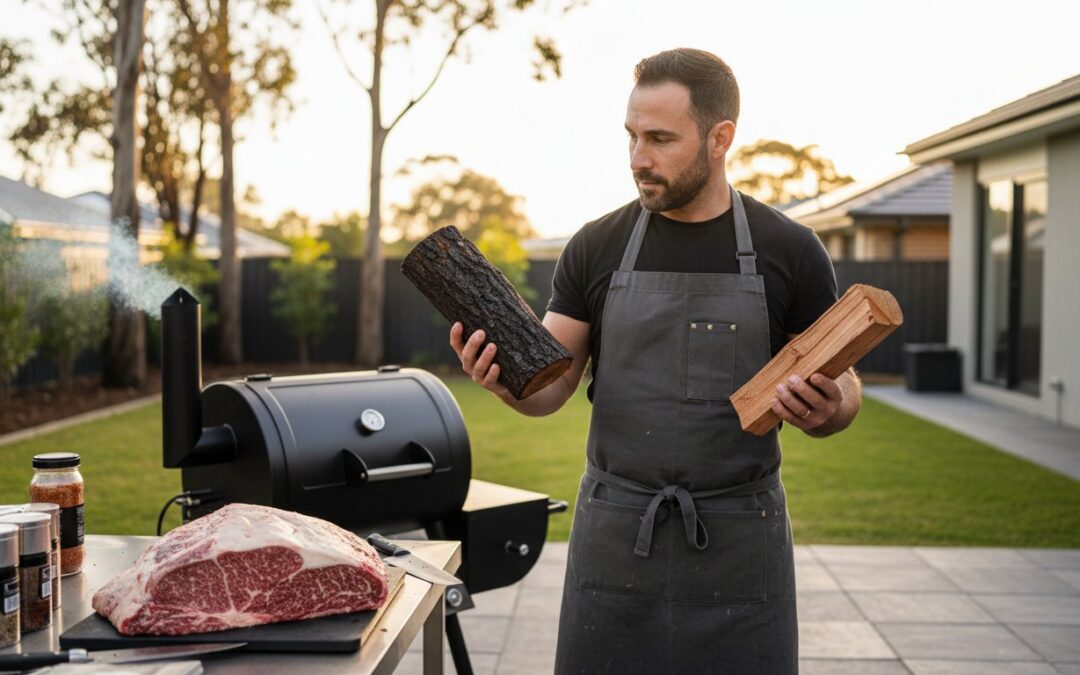
The most expensive offset smoker in Australia won’t save a premium cut of meat ruined by the wrong choice of timber. It’s a hard truth that 7 out of 10 backyard cooks face after spending A$180 on a brisket only to serve a meal that tastes bitter and over-smoked. You want the natural sweetness of the wood to enhance the protein, not mask it with an acrid cloud that ruins 12 hours of hard work.
We know that the vast array of timber options often leads to confusion and wasted effort. Mastering the science of pairing wood smoke flavour with meat is the essential skill that separates professional pitmasters from hobbyists. By understanding the specific burn characteristics of premium hardwoods, you will produce consistent, competition-grade results every time you light the fire.
This guide provides a definitive breakdown of which woods complement specific proteins. You’ll learn how to blend heavy hitters like ironbark with lighter fruitwoods to create a balanced profile that highlights the quality of your meat. It’s time to stop guessing and start cooking with the confidence of a seasoned pro. Get Sizzlin’!
Key Takeaways
- Understand the science of smoke absorption to master how phenols and surface moisture create competition-grade bark.
- Learn the professional rules for pairing wood smoke flavour with meat, from delicate fruitwoods for pork to heavy Aussie hardwoods for beef.
- Discover the “Pitmaster Blend” 70/30 ratio to achieve the perfect balance of deep colour and sophisticated flavour.
- Identify why premium, chemical-free natural lump charcoal is the essential foundation for a clean burn and pure protein taste.
The Science of Smoke: Why Pairing Wood Flavour with Meat Matters
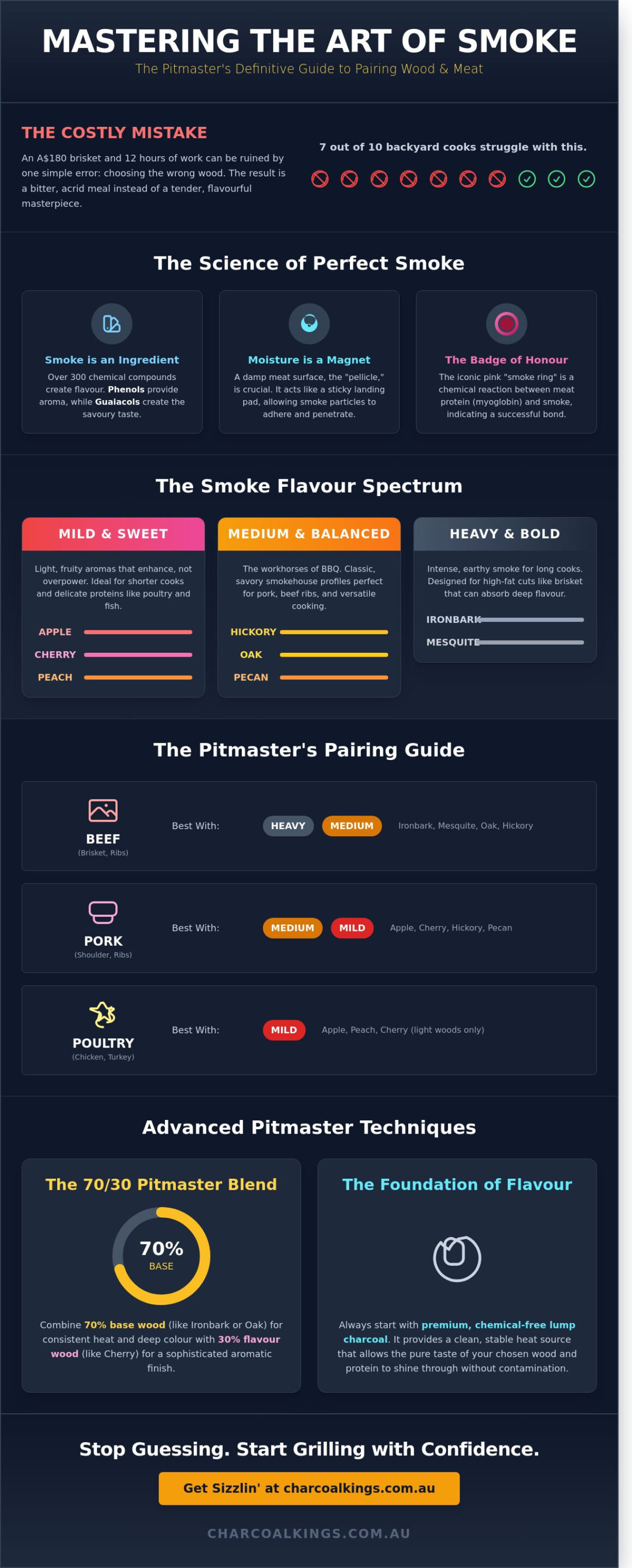
Smoke is a complex aerosol, not just a simple byproduct of fire. It consists of over 300 chemical compounds that actively transform the profile of your protein. Phenols provide the distinct smoky aroma you smell from the street, while guaiacols contribute the woody, savoury taste on the tongue. Achieving the best results requires understanding how these molecules interact with the meat surface. Moisture is your best friend in this process. A damp surface, often called the “tack” or pellicle, acts as a landing strip for smoke particles to stick and penetrate.
Myoglobin, the protein responsible for the red colour in meat, reacts with carbon monoxide and nitric oxide in the smoke. This reaction creates the iconic pink smoke ring. While the ring is a visual badge of honour, it also indicates a successful chemical bond between the fuel and the food. Mastering the art of pairing wood smoke flavour with meat ensures you don’t just cook the protein, but season it through combustion chemistry.
To better understand this concept, watch this helpful video:
Choosing the wrong wood leads to a bitter disaster. Heavy, resinous woods used on delicate proteins produce creosote. This thick, black soot leaves a nasty metallic aftertaste that lingers on the palate. You must distinguish between aromatic woods, like cherry or peach, and structural hardwoods like Australian Ironbark or Oak. Structural woods provide the steady heat and base flavour, while aromatics add the top notes that define the dish.
How Meat Density and Fat Content Affect Flavour
High-fat cuts like brisket or pork shoulder act as sponges for heavy smoke. The rendered fat traps smoke molecules throughout a 12 hour cook, allowing the meat to stand up to intense woods like Hickory or Ironbark. Lean proteins like poultry or snapper have much tighter muscle fibres and less fat to buffer the smoke. These require delicate, sweet fruitwoods to avoid being completely overpowered by the fire. A meat’s smoke profile is the specific threshold where the wood’s aromatic compounds complement the protein’s natural fats without masking the meat’s inherent flavour.
The Role of Lignin and Cellulose in Combustion
Wood is primarily composed of lignin and cellulose. Lignin is the “glue” that holds wood fibres together and serves as the primary source of flavour molecules. When lignin burns, it breaks down into those essential phenols. Dense hardwoods have high lignin content and burn slowly, providing a long lasting flavour source. Fruitwoods contain higher levels of cellulose, which causes them to burn faster and at lower temperatures. This makes them ideal for shorter cooks where you want a light touch. Always ensure your wood is seasoned to a moisture content between 15% and 20%. Wet wood creates steam and acrid white smoke, while bone-dry wood burns too quickly to release complex flavours.
The Smoke Flavour Spectrum: From Mild Fruitwoods to Bold Hardwoods
Every pitmaster knows that smoke is an ingredient, not just a byproduct of heat. Mastering the art of pairing wood smoke flavour with meat starts with understanding the three main intensity tiers: Mild, Medium, and Heavy. Choosing the wrong wood can ruin a premium cut of meat by making it bitter or leaving it bland. Professional results require a deliberate match between the wood’s chemical profile and the protein’s fat content.
- Mild (Sweet): Apple, Cherry, and Peach. These woods contain higher sugar content, producing a light, fruity aroma that doesn’t mask the meat’s natural taste.
- Medium (Traditional): Hickory, Oak, and Pecan. These are the workhorses of the BBQ world. They provide a balanced, classic smokehouse profile that people associate with authentic low and slow cooking.
- Heavy (Bold): Mesquite and Australian Ironbark. These woods have high density and produce intense, earthy smoke. They’re designed for long cooks and heavy fats.
You must consider the duration of your cook when selecting your fuel. A 12 hour brisket requires a wood that remains consistent without becoming acrid. Conversely, a 30 minute salmon fillet needs a wood that imparts flavour quickly without overwhelming the delicate flesh. Using premium natural hardwood ensures your smoke remains clean and free from the nasty chemicals found in treated timbers.
Australian Native Smoking Woods
Ironbark is the king of Australian BBQ. It’s a dense, heavy hardwood that provides incredible heat stability for 12 to 14 hour beef cooks. It delivers a clean, robust flavour that defines the local “low and slow” style. Red Gum is another powerhouse, offering bold, earthy notes. It’s the perfect partner for robust red meats like lamb or game. For something different, Macadamia and Banksia are excellent local alternatives. They produce a nutty, light smoke that works brilliantly with poultry and Australian seafood, providing a unique regional profile you won’t find with imported woods.
Fruitwoods and Their Subtle Nuances
Apple wood is the universal donor for pork. Its mild sweetness enhances everything from ribs to pork butt without being aggressive. Professional competitors often mix Apple with Cherry wood. Cherry is prized for the deep mahogany bark it creates on the meat surface, a visual hallmark of expert smoking. Citrus woods like lemon or orange are the secret weapon for seafood. They contain natural oils that provide a sharp, clean finish, cutting through the oils in fish like salmon or kingfish. When you’re pairing wood smoke flavour with meat, these subtle fruit notes provide the complexity that separates a hobbyist from a pro.
The Master Pairing Guide: Matching Wood Profiles to Your Cuts
Successful barbecue relies on matching the density and aroma of your wood to the fat content and texture of your protein. Heavy hardwoods like Oak and Ironbark produce intense, long-lasting heat and smoke that won’t get lost in rich, fatty cuts. Conversely, lean proteins like chicken or white fish require a lighter touch. If you use a heavy smoke wood on a delicate fillet, the result is often acrid and metallic. Mastering the art of pairing wood smoke flavour with meat ensures every cook delivers a balanced profile rather than a bitter experience.
Beef Brisket and Short Ribs
Low and slow beef requires wood that can stand up to 12 or 15 hour cook times. High-density hardwoods are the only choice here. Australian Ironbark is the gold standard for local pitmasters because it burns exceptionally hot and produces a clean, heavy smoke profile. For those chasing a traditional Texas-style result, a mix of Post Oak and Hickory provides the classic savoury punch. These woods possess enough “backbone” to penetrate thick fat caps and develop a deep, mahogany bark without burning out mid-cook. Use 100% natural hardwoods to ensure no chemical additives ruin the long-term flavour infusion.
Pork Ribs and Pulled Pork
Pork is the most versatile meat for smoking, but it benefits most from the “Fruit and Nut” strategy. This involves blending a sweet fruitwood like Apple with a rich nutwood like Pecan. This combination balances the natural sweetness of the pork fat with a rounded, earthy finish. Pitmasters often use Cherry wood specifically for its aesthetic properties; it creates a vibrant red hue on the bark that other woods can’t replicate. Avoid Mesquite for pork. Its high oil content creates an aggressive, sharp smoke that easily overwhelms the meat. Stick to these proven pairings:
- Apple and Pecan: A 50/50 blend for a balanced, sweet profile.
- Cherry: Best for achieving a competition-grade visual bark.
- Hickory: Use sparingly for a traditional “bacon-like” aroma.
Poultry and Delicate Proteins
Poultry and seafood are highly porous and absorb smoke faster than beef. This creates a high risk of “bitter bird” syndrome, where the smoke becomes overpowering and tastes like soot. For chicken and turkey, Maple and Pecan are the safest options for beginners. They offer a mild, sweet profile that complements the lean white meat. When pairing wood smoke flavour with meat like salmon or snapper, Alder is the professional choice. In Australia, Macadamia wood is a premium alternative, providing a subtle nuttiness and a light smoke that doesn’t mask the natural oils of the fish. Keep your airflow high and your smoke thin and blue to avoid over-smoking these delicate proteins.
Beyond the Basics: Blending Woods and Managing “Clean Smoke”
Mastering the art of pairing wood smoke flavour with meat requires more than just picking a single log. Professional pitmasters treat wood like a spice rack. They blend species to achieve a specific balance of heat, colour, and aromatic profile. A consistent burn is the foundation of any successful cook. If the fire isn’t right, the flavour won’t be either.
The most effective strategy is the 70/30 ratio. Use a 70% base wood for your primary heat source. In Australia, Ironbark or Oak are the industry standards because they burn hot, slow, and clean. The remaining 30% should be your flavour wood. This is where you add fruitwoods like Apple or Cherry to introduce sweetness and deep mahogany tones to the bark. This combination ensures you have the thermal mass to cook the meat while providing enough aromatics to define the taste.
Crafting Your Own Signature Wood Blends
Creating a custom blend allows you to tailor the smoke profile to the specific cut of meat. It’s a way to move beyond generic BBQ flavours and develop a signature style. Consider these proven combinations for your next cook:
- The “Sweet Heat” Blend: Mix Hickory with Cherry. This works best for pork ribs and shoulders. The Hickory provides a robust, traditional BBQ punch, while the Cherry adds a sweet finish and a vibrant red hue to the exterior.
- The “Bold Aussie” Blend: Combine Ironbark with Red Gum. This is the ultimate choice for brisket or beef ribs. Ironbark offers clean, high heat. Red Gum adds an earthy, heavy smoke profile that stands up to rich beef fats.
- Wine Barrel Staves: For added complexity, incorporate broken-down Shiraz or Cabernet barrel staves. These infused woods add a sophisticated, oaky tannin note that pairs exceptionally well with lamb or venison.
Fire Management for Flavour Purity
Smoke quality is dictated by the relationship between oxygen and fuel. A fire starved of air will smoulder. This produces creosote, a thick, bitter substance that ruins your efforts in pairing wood smoke flavour with meat. High-quality BBQ requires “Thin Blue Smoke.” This indicates a hot, efficient fire where the wood is combusting completely. If you see thick clouds, your airflow is restricted or your wood is too wet.
Clean smoke is a translucent, shimmering blue haze, while dirty smoke is a thick, opaque white cloud that leaves a bitter film on your food. To maintain purity, keep your exhaust dampener wide open and manage the temperature using the size of your fire. Don’t toss a massive log onto a dying coal bed. Use smaller, pre-warmed splits to ensure they ignite instantly. This prevents the “smoulder phase” that introduces acrid flavours to your expensive cuts of meat.
Ready to level up your next cook? Shop our range of premium Australian hardwoods to find the perfect base and flavour woods for your pit.
The Foundation of Flavour: Why Premium Hardwood Charcoal Matters
Your fuel choice is the most influential “spice” in your arsenal. While wood chunks provide the aromatic profile, the charcoal base dictates the temperature and the purity of the cooking environment. Using Hardwood Lump Charcoal creates a neutral, high-heat canvas. It allows the specific notes of your fruitwoods or nutwoods to shine without interference. For pitmasters seeking the pinnacle of clean burning, Binchotan offers a unique profile. It burns at temperatures exceeding 1,000 degrees Celsius with zero smoke or odour. This ensures that pairing wood smoke flavour with meat remains a precise science rather than a guessing game.
- Lump Charcoal: 100% natural wood, carbonised to burn hot and clean.
- Briquettes: Often contain fillers like coal dust and cornstarch binders.
- Binchotan: The highest grade of charcoal, providing intense infrared heat for professional results.
Why Natural Hardwood Lump Beats Gas and Briquettes
Briquettes often contain sawdust and chemical binders that produce a distinct, acrid smell during ignition. This chemical off-gassing clings to the meat, masking the delicate notes of Apple or Cherry wood. Natural lump charcoal is 100% carbonised hardwood. It offers superior heat retention and burns longer than standard retail alternatives. This reliability is the silent partner in mastering the art of barbecuing with charcoal. You get a steady 3 to 4 hour burn time from premium Australian hardwoods like Gidgee or Ironbark. It provides the stability needed for long low-and-slow sessions without the foul taste of additives.
Sourcing Quality Smoking Woods in Australia
Consistency in pairing wood smoke flavour with meat depends on the quality of your timber. Look for wood with a moisture content below 20%. Green wood produces “dirty” white smoke that tastes bitter and leaves a creosote residue. Well-seasoned wood creates the sought-after thin blue smoke. Focus on sourcing local firewood to ensure species purity. Australian hardwoods are denser than many overseas varieties. They burn hotter and provide a more robust flavour profile that stands up to heavy cuts of beef.
Don’t settle for inferior fuel that ruins a premium cut of Wagyu or brisket. Every element of your fire contributes to the final bite. High-quality charcoal doesn’t just cook the food; it protects the flavour. Elevate your next cook with Charcoal Kings premium fuel. Get Sizzlin’!
Master Your Next Burn
Mastering the art of pairing wood smoke flavour with meat transforms a standard backyard cook into a competition-grade feast. Success starts with understanding the smoke spectrum, from the delicate sweetness of fruitwoods to the robust profile of heavy hardwoods. Pitmasters know that achieving perfect blue smoke requires more than just technique; it demands high-quality fuel that burns clean and consistent every time. This foundation ensures the natural taste of the protein remains the hero of the dish.
Professional Australian pitmasters and local competition teams rely on 100% natural, chemical-free hardwood to guarantee purity in every bite. Using the hottest and longest-lasting coals on the market provides the thermal stability needed for 12 hour brisket burns or high-heat searing. When you control the fuel, you control the final result. Take these principles to the grill and start experimenting with different wood blends to find your signature style. It’s time to fire up the pit and show your guests what real barbecue tastes like.
Get Sizzlin’ with our range of Premium Hardwood Charcoal and Smoking Woods!
Frequently Asked Questions
What is the best wood for smoking beef brisket?
Ironbark is the premier choice for smoking beef brisket in Australia. It provides a clean, high heat and a heavy smoke profile that stands up to large, fatty cuts of beef. For a more traditional profile, use Oak or Hickory chunks. These hardwoods produce a consistent burn and a deep smoke ring that enhances the natural beef flavour.
Can I use any wood for smoking meat?
No, you must only use seasoned hardwoods and fruitwoods for smoking. Never use softwoods like pine, cedar, or fir because they contain resins and sap that produce acrid smoke and toxic fumes. Ensure your wood is 100% natural and free from chemicals, paints, or stains. Using the wrong wood ruins the meat and can leave harmful deposits inside your smoker.
Is fruitwood better than hardwood for pork?
Fruitwoods like Apple and Cherry are superior for pork if you prefer a sweet, mild finish and a vibrant reddish colour on the bark. Hardwoods like Hickory provide a more aggressive, traditional bacon-like flavour. A common professional ratio in Australia is a 50/50 split of Apple and Ironbark to balance sweetness with a steady, long-lasting burn.
Why does my smoked meat taste bitter?
Bitter flavour usually comes from creosote buildup caused by poor airflow or unseasoned wood. This “dirty smoke” looks thick and white instead of thin and blue. Ensure your vents are open and your wood is dry. Adding too much wood at once can also choke the fire; this results in an acrid coating on your food that masks the natural flavours.
How much wood should I add to my charcoal grill?
Add two or three fist-sized wood chunks to your charcoal for a standard 4-hour cook. You don’t need a massive pile of wood to achieve great results when pairing wood smoke flavour with meat. Overloading the grill creates thick, bitter smoke that overpowers the ingredients. Start small and add one chunk every hour if you need a more intense smoke profile.
Can I mix different types of smoking wood?
Mixing wood types is a standard practice for creating complex and unique flavour profiles. A popular Australian blend is 70% Ironbark for consistent heat and 30% Cherry for colour and sweetness. Experimenting with different combinations helps you master the art of pairing wood smoke flavour with meat. Always record your specific ratios so you can replicate successful results for your next cook.
Does the bark on the wood affect the flavour?
Bark contains more nutrients and tannins than the inner heartwood, which can create a more intense and sometimes harsh smoke. Professional pitmasters often remove thick bark to ensure a cleaner, more predictable burn. While thin bark on fruitwoods is usually fine, heavy bark on certain hardwoods can increase the risk of creosote and bitter off-flavours during long sessions.
Should I soak my wood chips or chunks before smoking?
Don’t soak your wood chips or chunks before smoking. Wet wood must evaporate all moisture at 100 degrees Celsius before it can start producing smoke, which lowers your cooking temperature and creates steam instead of flavour. Use dry, seasoned wood to get immediate, clean blue smoke and maintain a steady 110 to 135 degree Celsius environment. Get Sizzlin’!