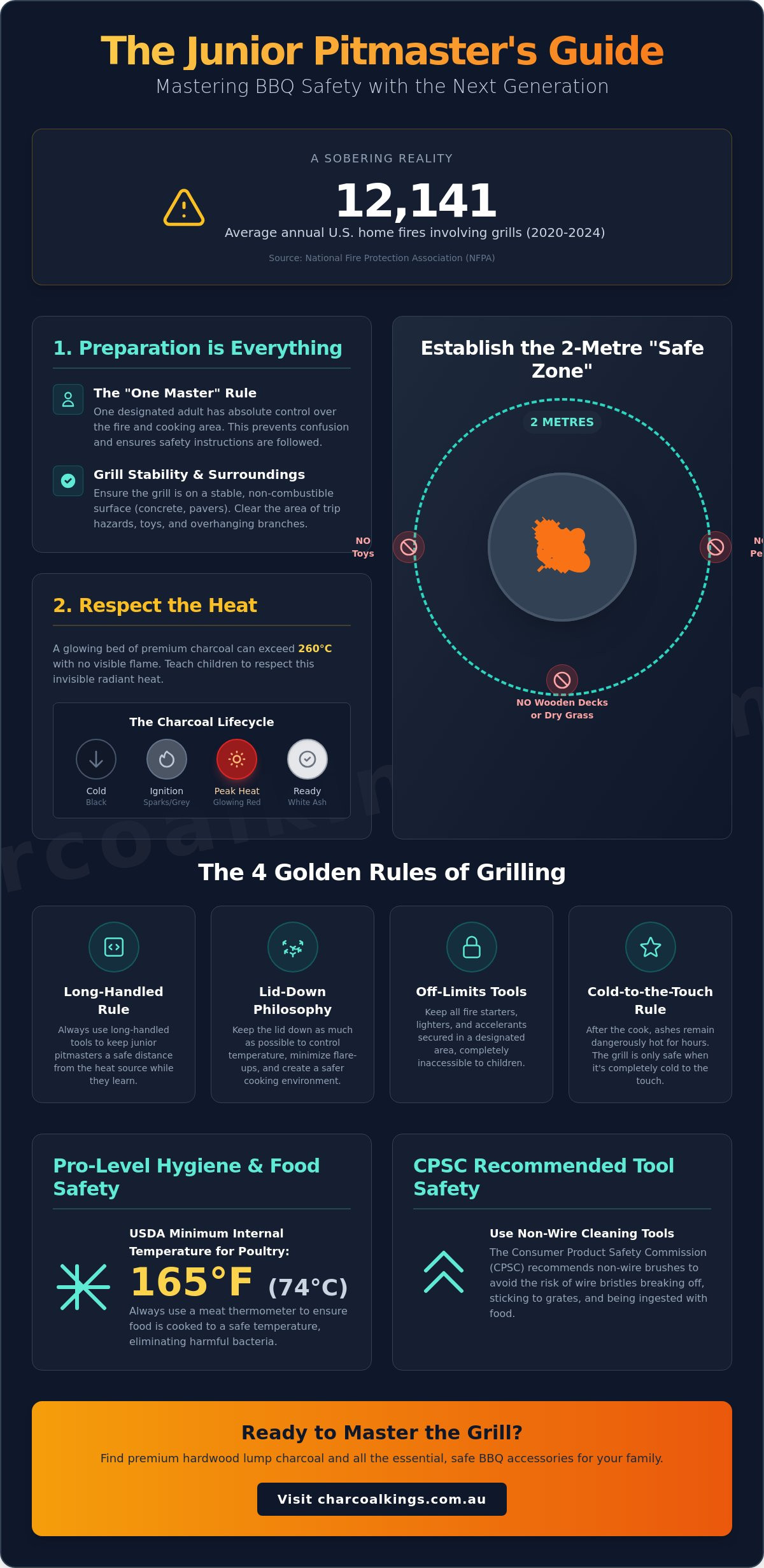
Between 2020 and 2024, U.S. fire departments responded to an annual average of 12,141 home fires involving grills. This data from the National Fire Protection Association (NFPA) proves that fire demands absolute respect, not just a simple warning. You want to share the craft of Hardwood Lump Charcoal and the science of the perfect sear with your children. However, the fear of accidental burns or unpredictable flare-ups often makes teaching kids to bbq safely feel like a difficult challenge. It’s natural to feel uncertain about which tasks are age-appropriate when intense charcoal heat is involved.
True BBQ mastery is not about avoiding the flame. It is about mastering the discipline of charcoal management and fuel purity. This masterclass shows you how to pass on the craft of charcoal grilling to the next generation while maintaining a rigorous, fail-safe environment. You’ll learn to delegate tasks with confidence, select the right BBQ Accessories for small hands, and establish a family tradition rooted in safety. We’ll also cover essential USDA temperature standards, like hitting 165°F for poultry, and why the CPSC now recommends non-wire cleaning tools to keep your backyard sessions professional and secure.
Key Takeaways
- Establish a strict 2-metre “Safe Zone” on stable, non-combustible surfaces to ensure a controlled environment before lighting the first coal.
- Success when teaching kids to bbq safely depends on explaining the intense radiant heat produced by premium, additive-free Hardwood Lump Charcoal.
- Implement the “Long-Handled” rule to keep junior pitmasters at a safe distance while they master essential BBQ Accessories and tools.
- Adopt the “Lid-Down” philosophy and distinct temperature zones to minimize flare-ups and maintain rigorous safety standards during the cook.
- Follow the “Cold to the Touch” rule for post-cook ash management to prevent thermal injuries long after the meal is served.
Establishing the BBQ Safety Zone: Preparation and Environment
Preparation is the foundation of BBQ mastery. Before you light a single piece of Hardwood Lump Charcoal, you must define the environment. A successful session of teaching kids to bbq safely starts with the “One Master” rule. This rule dictates that only one adult maintains absolute control over the fire and the immediate cooking area. This person acts as the final authority on every movement within the zone. It eliminates confusion and ensures that instructions are followed without hesitation during the heat of the cook.
The physical environment must be equally disciplined. You must position your grill on a stable, non-combustible surface. Pavers, concrete, or brick are the only acceptable foundations. Avoid wooden decks or dry grass, as NFPA data shows that approximately 25% of home structure fires involving grills start on an exterior balcony or open porch. By applying fundamental fire safety principles, you create a controlled space where the craft can be practiced without unnecessary risk. Ensure the area is clear of dry leaves or debris that could ignite from a stray ember.
To better understand this concept, watch this helpful video:
The 2-Metre Perimeter Rule
Charcoal grilling requires a larger safety buffer than gas. While gas flames are contained, charcoal can produce sparks or flying embers, especially during the lighting phase. Establish a strict 2-metre radius around the grill. This is your “Safe Zone.” For younger children, use physical markers like sidewalk chalk or outdoor mats to make this boundary visible. Teach them that this line is a hard barrier. They must ask for explicit permission from the “Master” before crossing it. This builds a habit of situational awareness and respect for the heat source that stays with them as they grow.
Grill Stability and Surroundings
Australian backyard terrain is often uneven. A wobbly grill is a primary hazard that can lead to catastrophic spills of hot coals. Check your grill’s legs for stability before every cook. Clear the area of trip hazards like garden hoses, loose toys, or pets. Look up as well. Ensure there are no overhanging branches or low eaves that could catch a stray spark. High-quality fuel like Binchotan Charcoal or Hardwood Lump Charcoal burns clean, but it still generates significant upward heat. Finally, secure all “Off-Limits” tools. Fire starters, lighters, and heavy BBQ Accessories must remain in a designated area away from curious hands. This keeps the workspace professional and organized. Establishing these boundaries ensures the focus remains on the skill of the cook, not the management of a crisis.
Teaching Respect for the Fire: Charcoal and Fuel Safety
Fire is a tool, not a toy. Teaching kids to bbq safely requires them to understand that the absence of a visible flame does not mean the absence of danger. High-quality fuel generates immense radiant heat. This energy is often invisible to the untrained eye. Unlike a bonfire with flickering flames, a bed of glowing coals can reach temperatures exceeding 260°C without a single visible lick of fire. This deceptive nature makes charcoal management a critical skill for young pitmasters.
Demonstrate the “Hand Test” from outside the 2-metre perimeter established in the previous section. Hold your hand at waist height over the grill. Feel the energy rising. Explain that this heat travels through the air without needing a flame to carry it. This lesson reinforces child grilling safety by proving that distance is the only reliable protection against thermal energy. It teaches children to respect the air around the grill, not just the grill itself.
The Anatomy of a Charcoal Fire
Charcoal goes through distinct phases. It starts black and cold. Once lit, it turns grey, then glows red, and finally settles into a coating of white ash. This white ash stage represents the peak of cooking performance. It is also when the heat is most stable. Explain to children that sparks are a natural reaction as moisture or air pockets in the wood ignite. If a spark flies, stay calm. Do not run. Simply step back. Show them how to control the intensity by adjusting the vents. More air equals more heat. Closing the vents starves the fire of oxygen. This is a fundamental lesson in fire discipline and management.
Purity Matters: Avoiding Additives
Safety extends to what your family breathes. Many mass-market briquettes contain fillers, coal dust, and chemical binders. These additives release toxic fumes that are especially harmful to developing lungs. Using hardwood lump charcoal ensures a cleaner, safer cooking environment. It burns hotter and longer without the chemical stench of artificial accelerants.
Never use lighter fluid. It is a volatile liquid that causes unpredictable flare-ups and leaves a foul residue on food. Instead, use natural wood wool starters or a chimney starter. These tools provide a controlled, vertical burn. They are essential for any pitmaster who values both performance and health. For the best results, always source premium fuel and accessories that prioritize purity and organic origins. Pure fuel means a predictable fire, which is the safest fire for a student to observe.
Age-Appropriate Tasks and Tool Mastery
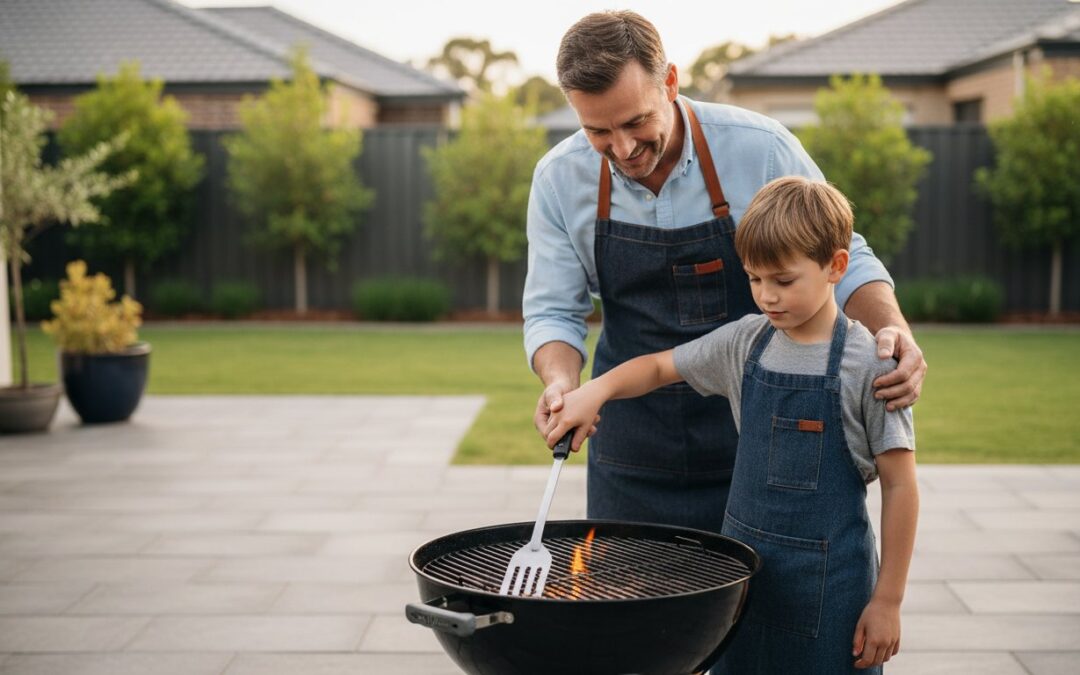
Mastery is a disciplined progression. You don’t hand a novice a set of tongs over a screaming hot Hibachi without prior training. Teaching kids to bbq safely requires a structured approach to tool handling that matches their physical and cognitive development. Every junior pitmaster must adhere to the “Long-Handled” rule. Any tool used near the heat source must provide at least 40cm of clearance. This distance ensures that hands stay well outside the primary radiant heat zone while allowing for precise movement of the food.
Model a “Two-Handed” grip for heavy BBQ Accessories like professional-grade spatulas and long tongs. One hand provides the leverage while the other stabilizes the tool. This prevents slips and drops that could lead to hot grease splashes. Following children’s grilling safety tips means active supervision is mandatory. You are not just a bystander. You are a coach correcting form, grip, and situational awareness in real time. Start with prep work as the gateway to fire management.
Tasks for Ages 5 to 8
Focus on the perimeter. Children in this age bracket should handle prep work like washing sturdy vegetables or husking corn. Use a “no-touch” shaker method for applying Rubs, Sauces & Cures. This keeps them involved in the flavor profile without requiring them to stand over the hot grate. This is also the time to teach food safety theory. Explain internal meat temperatures, such as the USDA requirement of 165°F for poultry, so they understand the goal of the cook before they ever touch the fire.
Tasks for Ages 9 to 12
At this stage, children can begin handling food in low-heat or indirect zones. They should use long-handled tongs to flip items under direct supervision. This is the ideal phase for learning the basics of barbecuing with charcoal. Task them with monitoring the BBQ timer and recording data from temperature probes. They aren’t managing the fuel yet, but they are learning how the fire behaves over time. This builds the patience required for high-level grilling.
Tasks for Teens (13+)
Teens can graduate to active fire management. Teach them safe lighting techniques using a chimney starter and natural wood wool. Avoid all chemical accelerants to maintain fuel purity. Show them how to manipulate air vents on BBQ Grills and Smokers to maintain a consistent temperature for low and slow sessions. They should also learn to slice rested meats safely. Use high-quality knives and emphasize proper finger positioning. This final stage of training turns a student into a competent assistant who understands the full lifecycle of a charcoal cook.
Active Grilling: Managing Heat and Hygiene
Active grilling is where theory meets practice. Once the Hardwood Lump Charcoal has reached a stable white ash, the real work begins. Teaching kids to bbq safely requires a deep understanding of heat zones. You must establish a two-zone setup: one side for direct heat and the other for indirect heat. This creates a “safety valve” for the cook. If the fire becomes too aggressive or food begins to char too quickly, the junior pitmaster knows to move the meat to the indirect side immediately. This prevents panic and keeps the situation under control.
The “Lid-Down” philosophy is your primary safety mechanism. Keeping the lid closed on your BBQ Grills and Smokers does more than just regulate temperature. It restricts oxygen flow, which significantly reduces the risk of unpredictable flare-ups. It also creates a physical barrier between the child and the heat source. Teach your children that the lid is the shield of the grill. Unless they are actively flipping or moving food with their BBQ Accessories, the lid stays down.
Managing Hot Spots and Flare-ups
Fat drippings are fuel. When they hit hot coals, they ignite. This causes flare-ups that can startle a young cook. Explain that these are temporary spikes in energy. The correct response is never to use water. Throwing water on a grease or charcoal fire creates a dangerous steam explosion and can spread burning fat. Instead, show them how to “choke” the fire by closing the air vents or simply shutting the lid. If a flare-up occurs, use long-handled tongs to move the food to the indirect zone. This calm, methodical approach is the mark of a true master.
Food Safety and Temperature Checks
Hygiene is as critical as fire safety. Establish a strict “Separate Plate” rule. Raw meat never touches the same surface as cooked meat. This is a non-negotiable hygiene masterclass. Use a digital thermometer to ensure every cut meets USDA safety standards. Teach your children these specific metrics for success:
- Poultry: 165°F
- Ground Meat: 160°F
- Steaks and Chops: 145°F followed by a three-minute rest.
- Fish: 145°F
Cleanliness also impacts safety. NFPA data confirms that 20% of grill fires are caused by a failure to clean the unit. However, you must avoid traditional wire brushes. In early 2026, the CPSC recalled over 13 million wire brushes due to detachment hazards. Use a ball of aluminum foil or a nylon brush instead. To ensure you have the right gear for a safe session, explore our range of professional BBQ Accessories and thermometers. High-quality tools lead to high-quality results and a safer environment for everyone involved.
Post-Cook Safety: Ash Management and Clean-Up
The cook is not finished when the meat hits the resting board. High-quality charcoal is designed for longevity and performance. This means it retains dangerous levels of thermal energy for hours after you close the vents. Teaching kids to bbq safely requires a disciplined approach to the cool-down phase. You must explain that even grey, lifeless ash can harbor a core of 500°C heat. This thermal mass is a hidden hazard that demands the same respect as an open flame.
Establish the “Cold to the Touch” rule for your backyard station. No ash or coal is moved until it has sat undisturbed for at least 24 hours. This “Next Day” rule is the only way to guarantee that the fire is truly extinguished. Patience is a core skill for any pitmaster. Rushing the clean-up process leads to melted bins and avoidable injuries. Store your fuel and firewood in a dry, elevated location to ensure it remains ready for the next session.
Handling Hot Ash and Coals
Closing all intake and exhaust vents is the professional method for killing a fire. It starves the fuel of oxygen and preserves any unburnt Hardwood Lump Charcoal for your next cook. When it is finally time to empty the grill, use a dedicated metal bucket. Never use plastic or cardboard containers. According to NFPA guidelines, coals must be allowed to cool completely before disposal in a metal container. This prevents the accidental ignition of household waste. Show your children how to safely rake the ash into the bucket using a metal ash tool. This keeps their hands well away from any potential hot spots.
Grill Maintenance for Future Safety
Clean equipment is safe equipment. NFPA data from May 2026 confirms that a failure to clean the grill is the leading factor in 20% of home grill fires. Grease and fat buildup act as secondary fuel sources that cause dangerous, uncontrolled flare-ups. Teach your children to scrape the grate while it is still warm, but never while it is at peak temperature. Following the CPSC safety updates from March 2026, use a ball of aluminum foil or a nylon brush. Avoid wire bristle brushes entirely to eliminate the risk of bristle ingestion.
Maintenance also involves inspecting the structural integrity of your unit. Check your BBQ hardware for loose bolts, rusted leg joins, or wear on the air vents. A stable grill is a safe grill. Once the unit is completely cold to the touch, apply a high-quality cover. This protects the steel from moisture and rust, ensuring your gear performs at its peak for years. A disciplined pitmaster leaves their station clean, organized, and ready for the next fire.
Forge the Next Generation of Pitmasters
Mastery of the grill is a legacy built on discipline and high-performance standards. By establishing a strict 2-metre perimeter and enforcing the “One Master” rule, you’ve laid the groundwork for a secure environment. Teaching kids to bbq safely is not a one-time lesson; it’s a continuous practice of fire respect and tool precision. You’ve moved from perimeter prep to active heat management and final ash disposal. This structured approach ensures that every family session remains professional and risk-free.
The foundation of a safe, high-quality cook is the fuel you choose. Avoid the toxic fumes and unpredictable flare-ups of chemical-laden alternatives. Upgrade to Premium Hardwood Lump Charcoal for a Cleaner, Safer Cook. Our fuel contains no chemical additives or fillers, providing the consistent high-heat performance trusted by seasoned Australian pitmasters. Take control of your backyard and pass on the authentic craft of charcoal grilling with confidence. Get those coals glowing.
Frequently Asked Questions
At what age can a child start helping with the BBQ?
Children as young as five can begin helping with peripheral tasks like prepping sturdy vegetables or applying dry rubs using a shaker. Mastery is a progression based on individual maturity rather than a specific birthday. By age nine, most children have the coordination to use long-handled tongs under strict supervision. Teens aged 13 and up can graduate to fire management and lighting. Always prioritize maturity when teaching kids to bbq safely.
Is charcoal safer than gas when grilling with kids?
Charcoal offers a more predictable heat profile compared to the pressurized fuel and potential leak hazards of gas units. NFPA data indicates that gas grills are involved in 76% of home grilling fires. Charcoal requires respect for radiant heat and embers, but it lacks the explosive potential of gas. Using premium Hardwood Lump Charcoal also ensures the environment remains free from the chemical additives often found in gas accelerants.
What should I do if my child gets a minor burn at the BBQ?
Immediately run cool, not cold, tap water over the burn for at least 20 minutes. Do not apply butter, oils, or ice, as these substances can damage the skin tissue further. If the burn is larger than a small coin or begins to blister, seek professional medical attention immediately. Maintaining a strict 2-metre safety zone is the most effective way to prevent these injuries from occurring during your cook.
How do I teach my child to use a chimney starter safely?
Teach your child to place the chimney starter on the lower charcoal grate before lighting. Use natural wood wool fire starters to avoid the unpredictable flare-ups associated with liquid accelerants. Emphasize that the metal cylinder becomes extremely hot and must never be touched with bare hands. Once the top coals show a light coating of grey ash, an adult should handle the pour into the grill to ensure safety.
Are there specific kid-friendly BBQ tools I should buy?
Invest in professional BBQ Accessories with extra-long handles to provide maximum clearance from the heat source. Tongs and spatulas should be at least 40cm in length to keep hands well outside the primary radiant heat zone. Small sized, heat-resistant silicone gloves provide an extra layer of protection for older children. A high-quality digital probe thermometer is also essential for teaching kids how to verify internal meat temperatures accurately and safely.
What is the safest way to extinguish a charcoal grill after use?
Closing all intake and exhaust vents is the most disciplined way to extinguish a fire. This starves the coals of oxygen and stops the combustion process naturally. Never use water to douse the coals, as this creates a dangerous steam explosion and can crack ceramic or metal grill components. Allow the unit to sit undisturbed for at least 24 hours before attempting to handle the ash or unburnt fuel residues.
Why is lump charcoal better for family BBQs than briquettes?
Hardwood Lump Charcoal is superior because it contains zero chemical additives, binders, or fillers. Many mass-market briquettes release toxic fumes during the lighting phase that are unsuitable for a family environment. Lump charcoal burns hotter, cleaner, and more predictably. This allows you to teach your children about the organic origin of fuel while ensuring the food is free from the foul odors associated with artificial accelerants and petroleum binders.
Can kids help with an offset smoker or hibachi grill?
Kids can assist with offset smokers by monitoring temperature gauges or adding smoking woods to the firebox under direct adult supervision. Hibachi grills require more caution due to the proximity of the open coals and the intense heat of Binchotan Charcoal. These smaller units demand a higher level of maturity and situational awareness. Focus on teaching kids to bbq safely by matching the specific hardware to their current skill level and reach.