
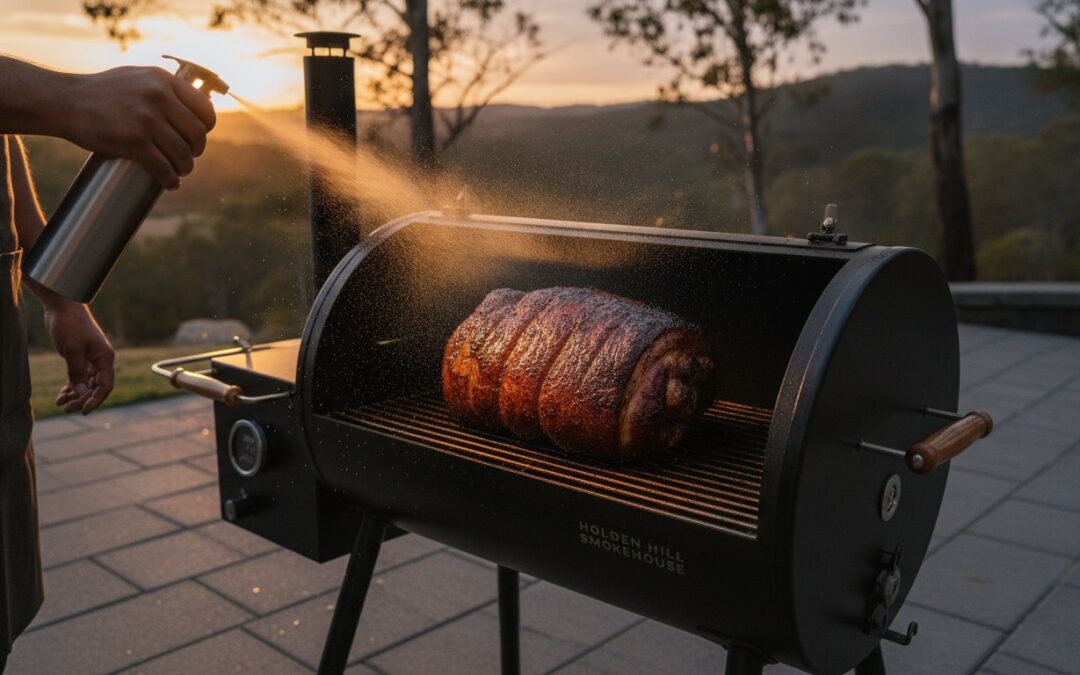
A deep, mahogany bark is the hallmark of a master pitmaster, but reaching that level requires more than just luck and a rub. When you are deciding on spritzing pork shoulder what to use, you are choosing between a soggy exterior and a competition-grade crust. Most backyard cooks fear that opening the smoker lid will ruin their cook by losing heat. However, the right liquid applied at the right time is the secret to professional results and a superior smoke ring.
You likely know the frustration of spending twelve hours on a smoke only to end up with a dry, toothy exterior that is hard to chew. It’s a common hurdle that occurs when surface management is ignored in favour of “set it and forget it” mentalities. This guide breaks down the science of surface moisture and caramelisation to solve that problem. You will discover the best liquids to spritz your pork shoulder and the pro techniques to achieve a dark, succulent bark without sacrificing internal moisture. We will explore everything from traditional vinegar blends to how high-quality, additive-free charcoal provides the clean heat necessary for a perfect finish.
Key Takeaways
- Master the science of surface management by learning exactly for spritzing pork shoulder what to use to achieve a deep, mahogany bark.
- Discover the ideal balance between apple juice for superior caramelisation and apple cider vinegar for essential acidity.
- Understand how using high-quality Hardwood Lump Charcoal creates a clean smoke environment that prevents bitter creosote from sticking to your meat.
- Learn the professional “rub-set” rule to ensure your bark remains intact during the first three hours of the cook.
- Improve your smoke ring development by maintaining the specific surface moisture levels required for maximum smoke attraction.
Why Spritzing Pork Shoulder Matters for Bark and Flavour
Spritzing is the process of applying a fine mist of liquid to the meat surface during the slow cooking process. It is a calculated strategy, not a random act of hydration. Pitmasters use this technique to control the environment on the meat’s surface. When you consider for spritzing pork shoulder what to use, you are selecting ingredients that will influence the final colour and texture of your bark. It is the difference between a professional finish and a hobbyist result.
A wet surface acts as a magnet for smoke particles. These particles adhere more aggressively to moisture, which deepens the smoke ring and enhances the overall wood-fired profile. Beyond flavour, spritzing manages the “stall.” This is the point in the cook where evaporation from the meat surface matches the heat input, causing the temperature to plateau. By adding moisture, you utilize evaporative cooling to ensure the exterior does not overcook or dry out while the internal connective tissues break down.
To better understand this concept, watch this helpful video:
The Science of Bark Development
The dark, delicious crust on a pork shoulder is the result of the Maillard reaction. This chemical reaction between amino acids and reducing sugars requires specific conditions to thrive. A completely dry surface often leads to a bark that is too hard or “toothy.” By maintaining a light layer of moisture, you keep the surface pliable. This allows the smoke and heat to interact with the rub and proteins without burning them. Acidity is another key factor. Using an acidic spritz helps break down stubborn surface fats, leading to a cleaner, more refined bark that isn’t overly greasy.
Moisture vs. Flavour: Finding the Balance
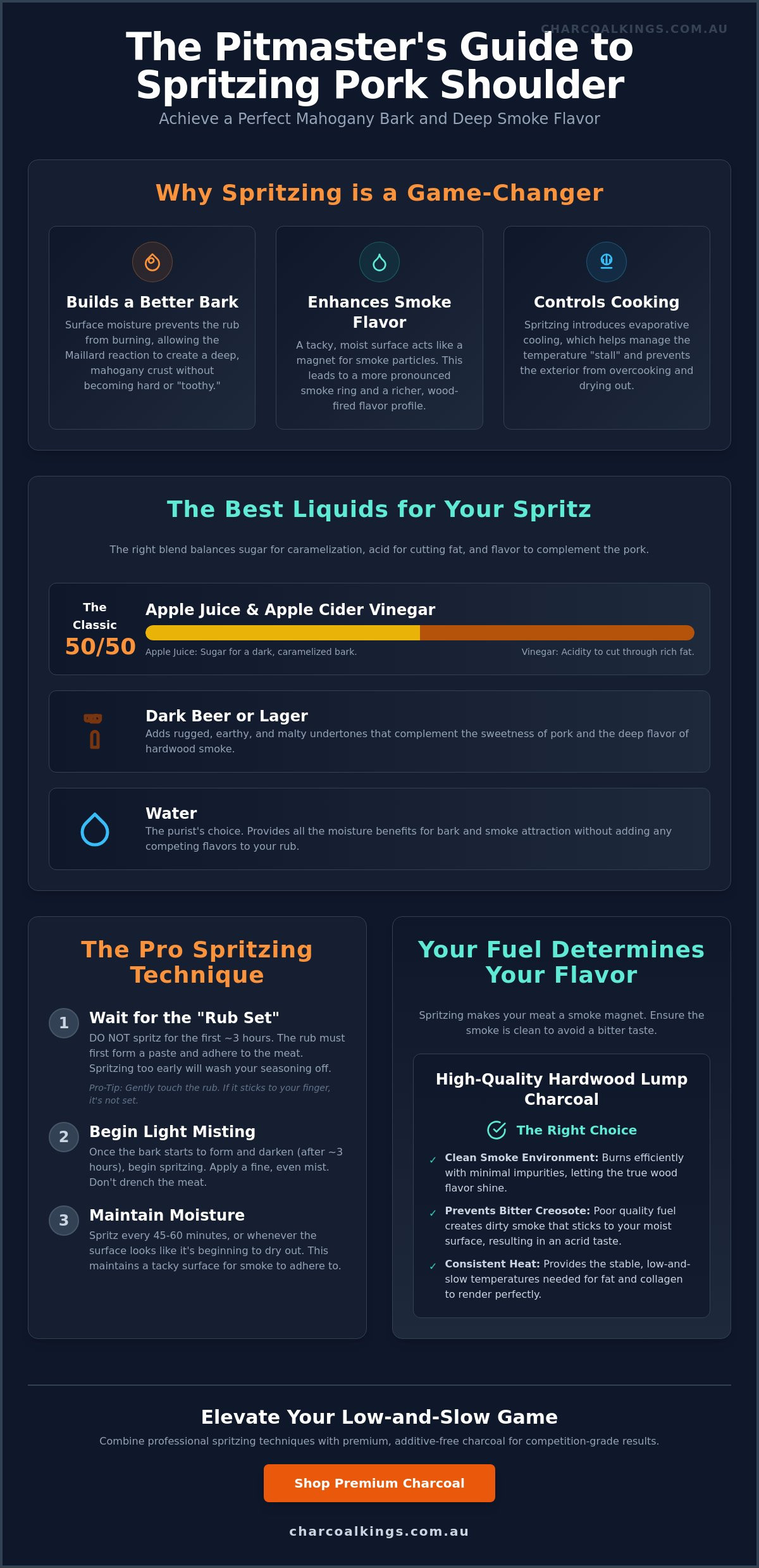
It’s vital to distinguish between internal succulence and surface hydration. Internal moisture comes from the rendering of fat and collagen, which is best achieved using consistent heat from Hardwood Lump Charcoal. Surface spritzing adds flavour in microscopic layers. Each misting session leaves behind a tiny amount of sugar or acid that caramelises over the 10-hour cook. Choosing spritzing pork shoulder what to use is as important as the rub itself. However, patience is required. You should never spritz until your rub has “set.” If the seasoning is still dry or loose, the liquid will simply wash it away. Check the rub by touching it; if it doesn’t stick to your finger, it’s ready for the first mist.
What to Use for Spritzing Pork Shoulder: The Best Liquids and Blends
Selecting the right liquid is a technical decision that impacts the final texture of your meat. When deciding on spritzing pork shoulder what to use, you must balance sugar, acid, and flavour. Each component performs a specific role during the 10 to 12-hour smoke. In Australia, choosing a local cloudy apple juice provides a richer texture and more natural sugars for the bark compared to filtered commercial options.
Apple juice is the industry standard for caramelisation. Its high natural sugar content reacts with the heat to create a dark, mahogany crust. Apple cider vinegar (ACV) is equally important. Pork shoulder is a heavy, fatty cut. The acidity in ACV cuts through the rendering fat, ensuring the bark doesn’t become greasy or soft. Many pitmasters prefer a 50/50 ratio of juice and vinegar to achieve the perfect balance of colour and tang.
Dark ales or lagers provide a rugged, earthy profile. They add malty undertones that complement the natural sweetness of the pork and the intensity of hardwood smoke. If you prefer the pure taste of the meat and your custom rub, use water. It provides the necessary hydration and smoke attraction without adding competing flavours. Pair these custom blends with professional-grade rubs and sauces to build deep, complex layers of flavour.
Sweet Bases for Maximum Caramelisation
Peach or pear nectars are excellent alternatives to apple juice. They have a thicker consistency that creates a stickier surface, allowing more smoke particles to trap in the bark. Always select “no added sugar” varieties. Refined sugars can burn during a long cook, leading to a bitter exterior. Natural fruit sugars are more heat-stable and produce a superior, deep mahogany finish that looks as good as it tastes.
Acidic Components for Fat Breakdown
Apple cider vinegar is superior to white vinegar because it offers a fruity complexity that pairs naturally with pork. For a sharper, saltier profile, pickle juice is a professional secret weapon. It contains vinegar, salt, and spices that penetrate the meat surface effectively. If your rub is particularly heavy on black pepper, a dash of lemon juice in your spray bottle can brighten the overall flavour profile and provide a clean finish on the palate.
Managing the Smoke: How Your Fuel Choice Impacts Your Spritz Strategy
Your fuel choice is the foundation of every successful smoke. While the specific choice of spritzing pork shoulder what to use dictates the flavour profile, your fuel determines the quality of the smoke particles that adhere to the meat. Clean smoke from Hardwood Lump Charcoal allows for a more forgiving spritz strategy. Because lump charcoal burns cleanly, you don’t have to worry about bitter creosote bonding to the wet surface of your pork shoulder. This purity is essential for maintaining the integrity of your bark.
In contrast, additive-filled briquettes often produce “dirty” smoke. This smoke contains chemical fillers that stick to wet surfaces more aggressively than dry ones. When you spritz a pork shoulder over poor-quality fuel, you are effectively glueing acrid flavours to your bark. High-performance charcoal provides a consistent heat profile that creates a more efficient “evaporative pull.” This ensures the liquid you apply evaporates at a rate that cools the meat without drenching the bark and ruining the texture. When deciding on spritzing pork shoulder what to use, remember that the liquid is only half the equation; the smoke quality is the other.
Pairing your spritz with specific Smoking Woods is essential for a cohesive profile. Consider these professional pairings:
- Hickory or Ironbark: Use a high-acid ACV spritz to cut through intense smoke.
- Apple or Cherry Wood: Use an apple juice base to reinforce sweet, fruity notes.
- Pecan Wood: Use a beer or water-based spritz to maintain earthy, nutty undertones.
The Purity Factor: Additive-Free Cooking
Charcoal Kings focuses on 100% natural fuel because flavour clarity is paramount. Chemical additives found in cheap charcoal can ruin the delicate taste of a fruit-based spritz by introducing metallic or petroleum-like notes. Pure carbon heat allows the sugars in your spritz to caramelise without the interference of acridity. This purity ensures that the only flavours present are the meat, the rub, and your chosen liquid. You want to taste the apple and the pork, not the fuel’s manufacturing byproducts.
Temperature Stability and the Smoker Lid
The old saying “if you’re lookin’, you ain’t cookin’” is a partial myth. While opening the lid does release heat, the thermal mass of a high-quality charcoal bed mitigates this loss. Using high-performance charcoal allows for faster heat recovery after each spritz. You don’t need to fear the lid if your fuel is capable of rebounding quickly. Aim for a consistent environment between 225°F and 250°F (107°C to 121°C). Work efficiently: have your spray bottle ready, mist the surface quickly, and close the lid to let the charcoal’s intense heat return the pit to its target temperature.
The Pro Spritzing Technique: Timing, Frequency, and Temperature
Execution is the final pillar of a successful smoke. While the previous sections detailed for spritzing pork shoulder what to use, this section focuses on the technical application. Incorrect timing or a heavy-handed spray will wash away your seasoning and ruin the bark. Follow this professional five-step process for consistent results:
- Step 1: Wait for the rub to set. This usually takes two to three hours. Do not open the lid until the seasoning has bonded with the meat proteins.
- Step 2: Use a high-quality spray bottle. You need a fine mist, not a stream. A heavy stream of liquid will crater the rub and create uneven patches in the bark.
- Step 3: Target specific areas. Focus your mist on the “hot spots” where the meat looks dry or the edges are turning dark too quickly.
- Step 4: Maintain a consistent rhythm. Spritz every 45 to 60 minutes. This frequency provides enough moisture to attract smoke without cooling the meat too much.
- Step 5: Stop at the wrap. Once you enter the “Texas Crutch” phase and wrap the shoulder in foil or butcher paper, spritzing is no longer necessary.
Equip your pit with professional BBQ accessories to ensure every mist is precise and effective.
Visual Cues: When to Pull the Trigger
Professional pitmasters don’t just rely on a clock; they look for visual indicators. Use the “Finger Test” to determine readiness. Gently touch the rub on the surface of the pork. If the seasoning sticks to your finger, it hasn’t set yet. If your finger comes away clean, you can start the spritzing cycle. Look for “ashy” spots on the bark. These are greyish, dry patches that signal the surface is dehydrating. Spritzing these areas helps “even out” the cook, especially in offset smokers where heat distribution can be uneven.
The Temperature Threshold
Spritzing is most effective when the internal temperature of the meat is between 145°F and 165°F (63°C to 74°C). This range typically coincides with the “stall,” where the meat’s internal temperature stops rising. The liquid you apply facilitates evaporative cooling, which helps the meat transition through this phase steadily. Avoid over-spritzing. If the meat is dripping with liquid, you are using too much. Excessive moisture will soften the bark and prolong the cook time unnecessarily. Aim for a light, glistening sheen that enhances the mahogany colour without drenching the meat.
Elevating Your Low and Slow Game with Charcoal Kings
Achieving a competition-grade bark is a cumulative effort that starts long before you pick up a spray bottle. While your specific choice for spritzing pork shoulder what to use provides the final layers of flavour, the foundation is always your fuel. Professional results require professional-grade heat. Starting with premium Hardwood Lump Charcoal ensures your pork shoulder is bathed in clean, blue smoke for the entire duration of the cook. This purity allows the delicate sugars in your spritz to caramelise into a deep mahogany crust without the interference of acrid chemical byproducts.
Many common BBQ guides suggest heavy spritzing to mask the bitter flavours produced by poor-quality fuel. At Charcoal Kings, we focus on a different philosophy. Clean fuel reduces the need for aggressive moisture management. When your heat source is pure, you can spritz specifically for flavour enhancement and colour development rather than damage control. Our curated range of rubs and sauces is designed to complement these clean-burning fuels. They provide a robust base that holds up under the mist of apple juice or vinegar, ensuring your bark remains intact and flavourful from the first hour to the twelfth.
Choosing the Right Fuel for Pork
Lump charcoal is the superior choice for long pork shoulder smokes because of its superior temperature stability and lack of fillers. Briquettes often contain binders that produce “dirty” smoke, which can bond to your spritz and create a grey, unappealing exterior. For a truly professional profile, pair your Hardwood Lump Charcoal with apple or cherry smoking woods. These fruitwoods reinforce the sweetness of an apple-based spritz. Ensure you have enough fuel to maintain a consistent environment for the full 10 to 12-hour journey. Longevity is a hallmark of high-performance carbon, and it’s essential for preventing temperature dips that can stall your bark development.
The Charcoal Kings Difference
Our commitment to purity is absolute. We provide 100% natural fuel with no fillers and no chemicals. This is why local Australian pitmasters trust Charcoal Kings for their competition cooks and backyard feasts alike. Using additive-free fuel is the only way to produce a clean, professional-grade bark that tastes as good as it looks. You can order your fuel, smoking woods, and BBQ accessories online for Australia-wide delivery, ensuring you have the right tools for your next smoke regardless of your location. Join the community of pitmasters who refuse to compromise on quality. Get the fire started and let’s get to work!
Master Your Next Smoke
Professional barbecue is a game of precision and patience. You now understand that for spritzing pork shoulder what to use is only one part of the equation. Success depends on balancing sweet and acidic liquids with the technical timing of the rub-set. Most importantly, you know that your fuel source dictates the quality of your bark. Using a clean, high-performance heat source prevents bitter creosote from ruining your hard work. Consistency is the hallmark of a true pitmaster.
By choosing 100% Natural Hardwood fuel with no additives or fillers, you ensure a long burn time and high heat for every session. This reliability is why we are trusted by Australian pitmasters to deliver competition-grade results in every backyard. Don’t settle for inferior fuel that compromises your flavour profile. It’s time to fire up the pit and achieve that deep, mahogany bark you’ve been chasing.
Upgrade your next smoke with Premium Hardwood Lump Charcoal from Charcoal Kings. Get to work!
Frequently Asked Questions
Does spritzing pork shoulder actually make it juicier?
Spritzing does not significantly increase the internal juiciness of the meat. Internal moisture is the result of fat and collagen rendering over a long, slow cook. Spritzing focuses on surface management by preventing the exterior from becoming too hard or brittle. It also creates a moist environment that attracts more smoke particles for a better smoke ring. This technique ensures the outside remains as high-quality as the inside.
Can I use Dr Pepper or Coke to spritz my pork shoulder?
You can use dark sodas like Dr Pepper or Coke because their high sugar content aids in rapid caramelisation. These liquids produce a very dark, sweet bark that many pitmasters enjoy. However, you must be cautious of the heat levels in your smoker. High sugar can burn and become bitter if your pit temperature fluctuates or exceeds 275°F (135°C). Always monitor the colour of the bark closely when using soda-based blends.
Will spritzing make my cook take longer?
Spritzing will likely extend your total cook time by a noticeable margin. Every time you open the smoker lid, you lose heat and moisture from the cooking chamber. Additionally, the liquid applied to the meat causes evaporative cooling, which can lengthen the “stall” period. To mitigate this, work quickly and ensure you are using high-performance fuel that can recover lost heat rapidly after the lid is closed.
Should I spritz with apple juice or apple cider vinegar?
Deciding on spritzing pork shoulder what to use often comes down to your desired flavour profile and bark texture. Apple juice provides sugars that lead to a darker, stickier bark through caramelisation. Apple cider vinegar offers acidity that helps break down surface fat and balances the richness of the pork. Most professionals prefer a 50/50 blend to capture the benefits of both ingredients simultaneously during the 12-hour cook.
What happens if I forget to spritz my pork shoulder?
If you forget to spritz, your pork shoulder will still cook successfully and taste excellent. The primary consequence is a thicker, harder bark that may be slightly difficult to pull. You might also notice a less pronounced smoke ring since smoke particles are attracted to moist surfaces. While spritzing is a valuable tool for surface management, many pitmasters produce great results using a “set it and forget it” approach with stable heat.
Is it better to spritz or use a water pan in the smoker?
These techniques serve different purposes and provide the best results when used together. A water pan creates a humid environment throughout the entire cooking chamber, which helps stabilise temperatures. Spritzing is a targeted application that cools specific “hot spots” on the meat and adds layers of flavour. When you are choosing for spritzing pork shoulder what to use, consider a blend that complements the ambient humidity provided by your water pan.
Can I use a brush instead of a spray bottle?
Avoid using a brush during the early stages of the cook because it can ruin your bark. Brushing or mopping the meat can physically wipe away your rub before it has fully set. A spray bottle produces a fine mist that settles on the surface without disturbing the seasoning. Once the bark is firmly established in the later hours, a mop can be used, but a spray bottle remains the safer choice for maintaining integrity.
Should I spritz after wrapping the pork in foil or paper?
You should stop spritzing once the meat is wrapped in foil or butcher paper. At this stage, the pork is essentially steaming in its own rendered fats and juices. Adding more liquid to the surface inside a wrap will often result in a soggy, mushy bark. The goal of the wrap is to accelerate the cook and retain internal moisture, so further surface hydration is unnecessary and counterproductive for a professional finish.