The physical geometry of your fuel is the single most overlooked variable in achieving a professional-grade bark. While most hobbyists obsess over wood species, the real battle for a clean burn is won or lost on the decision of smoking wood chunks vs chips. It’s the difference between a controlled, steady pyrolysis and a volatile spike in temperature that ruins a premium cut of meat.
You probably know the frustration of wood chips burning out before the meat has even started to take on colour, or chunks that produce a thick, bitter smoke because they never reached proper combustion. Achieving the perfect “thin blue smoke” shouldn’t feel like a guessing game. You deserve a reliable fire that works for you, not against you. It is time to stop guessing and start managing your heat with precision.
This expert guide breaks down the technical differences between these two fuel formats so you can master smoke profiles on any grill. We will cover thermal duration, moisture management, and why your choice of Australian hardwoods like Ironbark or Redgum dictates which size you need. You will learn how to maintain longer burn times and produce world-class smoke rings every single session.
Key Takeaways
- Master the technical differences in smoking wood chunks vs chips to control burn times, with chunks lasting up to four hours compared to the 30-minute burst of chips.
- Stop soaking your wood to avoid the “steam trap” that drops pit temperatures and prevents the clean combustion required for thin blue smoke.
- Match your fuel size to your hardware by using chunks for long low-and-slow sessions in offsets and kettles, while reserving chips for short cooks.
- Prioritise high-density Australian hardwoods like Ironbark and Redgum for superior heat output and professional-grade bark without chemical additives.
- Focus on seasoned, pure wood to ensure consistent pyrolysis and avoid the bitter, acrid flavours caused by poor combustion.
Defining the Fuel: Wood Chunks vs. Wood Chips
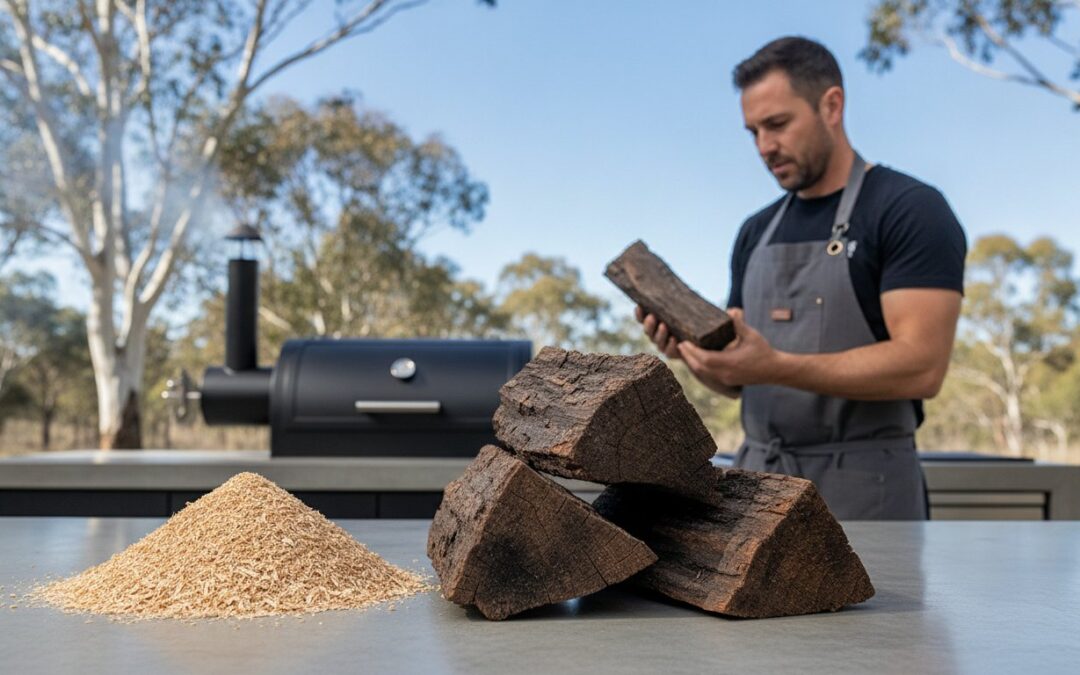
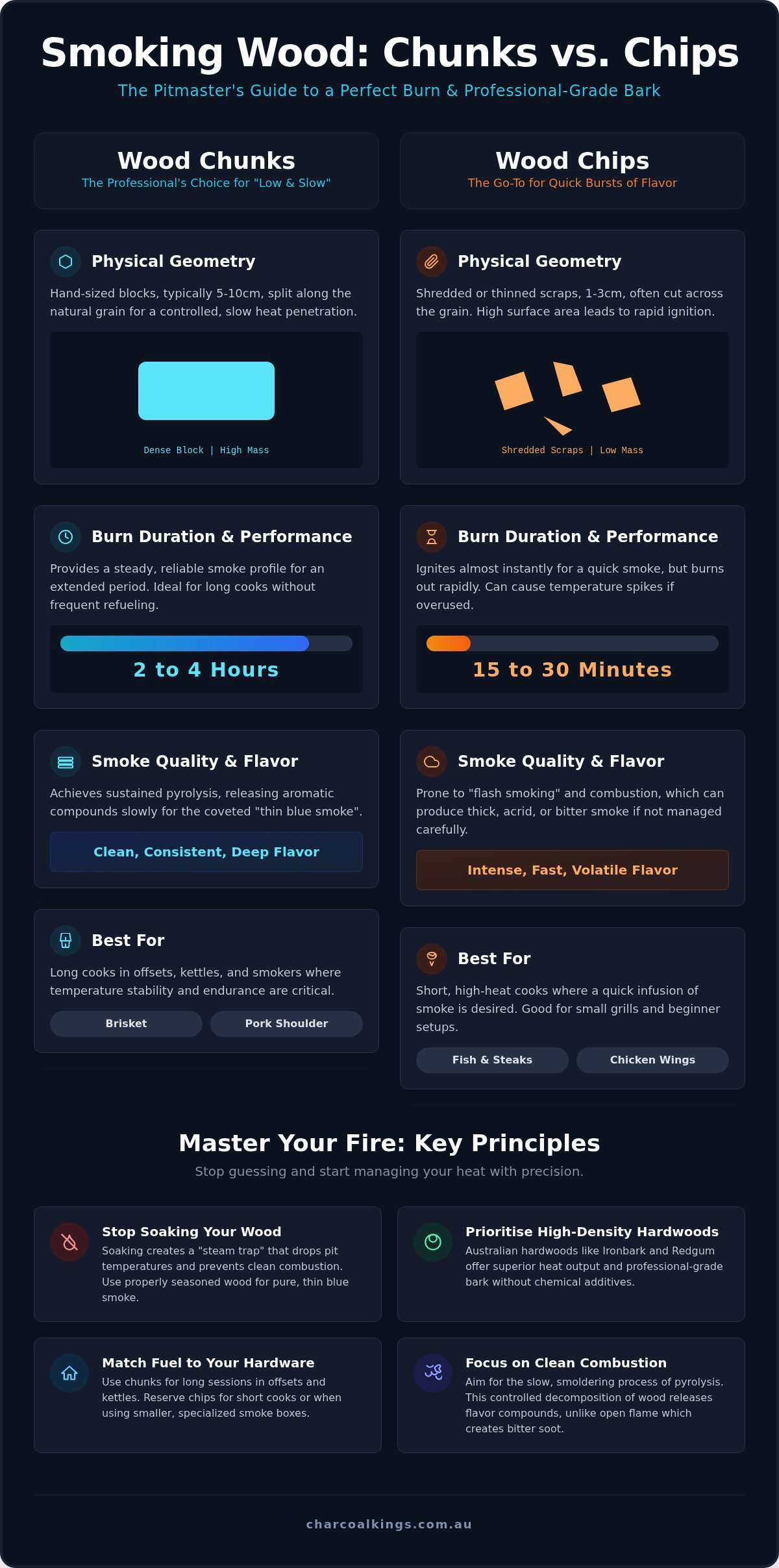
The fundamental difference in the smoking wood chunks vs chips debate begins with physical geometry. Wood chunks are hand-sized blocks, typically ranging from 5cm to 10cm, designed to provide a sustained smoulder over several hours. In contrast, wood chips are shredded or thinned scraps, usually between 1cm and 3cm, engineered for rapid ignition and immediate smoke production. Choosing the wrong size for your cook time leads to either wasted fuel or a lack of flavour penetration.
The chemical composition of the wood determines the quality of your results. Hardwoods consist of cellulose, hemicellulose, and lignin. Lignin is the most critical component for pitmasters; it breaks down during combustion to release the aromatic compounds that create the coveted smoke ring and deep BBQ flavour. For a foundational look at these processes, Wikipedia provides a comprehensive overview of cooking with smoke and the science behind wood combustion. Chunks preserve these compounds within a dense structure, while the random shredding of chips exposes more surface area, causing these elements to off-gas rapidly.
Grain direction also plays a vital role in thermal performance. Chunks are generally split along the natural grain of the timber. This allows heat to penetrate the wood slowly and move through the internal fibres, resulting in a controlled release of gas. Chips are often shredded across the grain, which creates jagged, exposed fibres. These fibres catch fire instantly, leading to “flash smoking” where the wood disappears before the meat has reached the temperature required to absorb the smoke.
The Anatomy of a Wood Chunk
Density is the primary metric of a high-quality chunk. A smoking wood chunk is a dense block of hardwood meant for long-duration pyrolysis. High-density Australian hardwoods like Ironbark provide a “clean burn” because they contain more fuel mass per cubic centimetre than softer varieties. When selecting chunks, look for heartwood rather than sapwood. Heartwood is the older, denser centre of the tree that offers consistent flavour profiles, whereas sapwood is the outer layer that can produce inconsistent, sometimes bitter smoke due to higher moisture and nutrient transport levels.
Understanding Wood Chips and Their Utility
Wood chips excel when you need a tactical burst of flavour for shorter cooks like fish, steaks, or chicken wings. Their high surface-area-to-volume ratio ensures they start smoking almost the moment they hit the coals. Most commercial chips are kiln-dried to a very low moisture content to prevent mould, but this also means they ignite faster and burn hotter. While they are a common entry point for beginners due to their availability and ease of use in smaller kettle grills, they require frequent reloading to maintain a consistent smoke profile during longer sessions.
Performance Comparison: Burn Rate, Heat, and Smoke Density
The primary differentiator in the smoking wood chunks vs chips comparison is the surface-area-to-volume ratio. This physical property dictates how oxygen interacts with the fuel. Wood chips possess a massive surface area relative to their weight. This leads to near-instantaneous ignition and rapid consumption. Chunks, with their greater mass and smaller relative surface area, resist immediate combustion. This allows them to reach the stage of pyrolysis, where the wood decomposes through heat rather than simply burning away in an open flame.
Duration is the most practical metric for any pitmaster. A single handful of chips typically provides smoke for 15 to 30 minutes before turning to ash. Conversely, a well-placed 5cm chunk can provide a steady smoke profile for 2 to 4 hours. Adding too many chips at once to compensate for this short duration often leads to unwanted temperature spikes. The sudden influx of fuel creates a heat surge that can throw your pit out of its target range. Chunks provide the stability required for a professional-grade result. For the most consistent results, choosing high-performance smoking woods ensures your fuel matches your thermal requirements.
Sustained Pyrolysis with Chunks
Chunks are the essential choice for “Low and Slow” staples like brisket or pork shoulder. Once they are nestled into a hot coal bed, they contribute to the long-term heat of the cook while releasing a steady stream of flavour. Consistency is the hallmark of a master. Larger fuel sources make it easier to achieve the coveted “thin blue smoke” because they provide a steady stream of particulates without the volatile fluctuations of smaller scraps. You must manage your airflow carefully. If the vents are too wide, even a dense chunk will catch fire and burn too hot, losing its capacity for long-term smouldering.
Short Bursts of Flavour with Chips
Chips are a tactical tool rather than a primary fuel source. They excel during short cooks where you only need 20 minutes of smoke exposure, such as when searing steaks, grilling fish, or smoking quick-cook vegetables. The main drawback is “reload fatigue.” Attempting to use chips for an 8-hour rib cook requires constant attention and frequent lid-opening, which lets out precious heat and moisture. You can maximise the “flash” smoke of chips by placing them in a dedicated smoker box, but for anything beyond a quick grill, they lack the endurance of a seasoned hardwood chunk.
Equipment Compatibility: What Should You Use?
Your choice in the smoking wood chunks vs chips debate is ultimately dictated by the hardware in your backyard. Different smokers possess varying airflow rates and heat intensities, which change how wood combusts. For instance, offset smokers are designed to run on logs, making wood chunks the ideal “mini-log” substitute. These large units have the thermal mass to ignite a 10cm chunk cleanly, providing the consistent heat and smoke required for a standard 12 hour brisket cook.
Gravity-fed smokers and vertical cabinets require a different approach. In these units, fuel consistency is critical. If your chunks are irregularly shaped or too large, they can cause “bridging” in the chute, where the fuel gets stuck and stops feeding the fire. For these systems, using uniform, seasoned chunks ensures a steady descent and a predictable smoke profile. Conversely, small electric or gas smokers often lack the oxygen flow to ignite a large hardwood chunk, leading to smouldering that produces acrid, bitter smoke rather than the clean flavour you want.
The Best Setup for Charcoal Grills
Charcoal kettles and Kamados are the most versatile tools for using both fuel types. For the best results, you should place your chunks directly onto a bed of ignited Hardwood Lump Charcoal. This ensures the wood reaches the temperature of pyrolysis quickly. If you are using the “Snake Method” for a long ribs session, chunks are the superior choice. You can space them out along your charcoal chain to ensure a new piece of wood ignites every hour. Mastering the Art of Barbecuing involves managing this interaction; if you use chips in a snake setup, they often ignite too quickly, causing a heat spike that ruins your temperature stability.
Adapting for Smoker Boxes and Tubes
If you are cooking on a gas burner, wood chips are your only viable option. Most smoker boxes are too small to accommodate a standard 5cm chunk, and even if they did, the indirect heat from a gas burner is rarely enough to ignite the centre of the block. Instead, use chips inside a stainless steel smoker box or a DIY foil pouch with holes poked in the top. This creates a concentrated “flash” of smoke. One critical warning for pellet grill owners: never add wood chips or chunks to your pellet hopper. These fuels will jam the auger and can cause permanent mechanical damage. If you want extra smoke on a pellet grill, use a dedicated smoke tube filled with chips on the grill grate instead.
The Soaking Myth vs. Seasoning Science
Many amateur guides suggest soaking wood to prolong the burn. This is a fundamental misunderstanding of combustion physics. When evaluating smoking wood chunks vs chips, your objective is clean pyrolysis, not the production of steam. Water does not turn into smoke. It turns into water vapour. This vapour creates a “steam trap” that fools the cook into thinking they have a productive fire while the actual flavour-producing compounds remain locked inside the unburnt wood.
The energy cost of this mistake is high. The latent heat of vapourisation dictates that your charcoal must work significantly harder to boil off the moisture before the wood can even begin to burn. This process inevitably drops your pit temperature and wastes fuel. Worse, wet wood leads to incomplete combustion, which produces creosote. This thick, black soot deposits a bitter, metallic taste on your meat that no amount of rub can mask. We ensure all our hardwoods are seasoned to a moisture content of under 20% to guarantee an immediate, clean transition to smoke.
Why We Never Soak Our Chunks
Wood undergoes a specific chemical transition; it moves from drying to torrefaction and finally to pyrolysis. Soaking resets this clock to zero. Dry wood allows for a cleaner and more complex flavour profile because the lignin breaks down efficiently without the interference of excess moisture. Steam inhibits the formation of the pellicle on meat. Without a tacky pellicle, smoke particles cannot adhere to the surface, resulting in a faint smoke ring and a soft, unappealing bark. Using seasoned, dry chunks is the only way to ensure the meat’s surface is prepared to take on colour and flavour. To apply these same principles of clean combustion and safety to your home heating systems, visit Home Safe Hearth & Chimney for expert fireplace and chimney care.
The only defensible use for moisture is when using wood chips in a high-heat searing environment. A brief soak might prevent chips from catching fire instantly during a five-minute steak sear. However, for any low-and-slow cook, humidity should be managed with a separate water pan. This provides the necessary moisture in the air without compromising the combustion of your fuel. For those concerned about long-term equipment maintenance and chimney health, using Smartburn can help manage flue deposits and ensure a cleaner burn across all your wood-fired appliances.
To achieve the perfect smoke profile every time, you need fuel that is ready to perform without the guesswork of soaking. Purchase seasoned Australian hardwoods to ensure your next cook is free from the bitter taste of wet wood.
The Charcoal Kings Standard: Australian Hardwoods
Native Australian hardwoods represent the pinnacle of smoking performance. While international guides often focus on US species like Hickory or Apple, they overlook the superior density of local timber. Species like Ironbark and Redgum are world-class fuels. Their high density translates directly to a higher BTU (British Thermal Unit) output. This means a single Ironbark chunk provides more sustained thermal energy than a comparable piece of American Oak. When deciding on smoking wood chunks vs chips, the density of the species is just as critical as the size of the cut.
Purity is our non-negotiable standard. We provide wood that is 100% natural. Many big-box retailers sell wood that has been treated or contains residues from industrial processing. Our smoking woods contain zero additives, glues, or chemicals. This commitment to purity ensures that the only thing flavouring your meat is the organic lignin of the hardwood. We offer a complete flavour ecosystem for the serious pitmaster. This ranges from high-performance Binchotan for clean searing to seasoned chunks for traditional low-and-slow sessions.
Pairing Australian Woods with Meat
Choosing the right wood species is about matching the intensity of the smoke to the fat content of the protein. Australian woods offer a unique range of profiles:
- Ironbark Chunks: This is the neutral, high-heat powerhouse. It produces a mild, classic smoke profile that is perfect for beef brisket and ribs where you want the meat and rub to shine.
- Redgum Chunks: Use these for a bold, earthy smoke. Redgum provides a heavy, traditional Australian BBQ flavour and imparts a deep mahogany colour to pork and lamb.
- Fruitwood Chips: Reserve these for delicate proteins. Apple or Peach chips provide sweet, subtle notes that won’t overwhelm poultry, seafood, or vegetables.
Ready to Upgrade Your Smoke Game?
Specialist suppliers offer a level of quality control that big-box retail “mystery wood” cannot match. We source, season, and cut our timber specifically for BBQ performance. You get consistent moisture levels and uniform sizes every time. This direct-to-consumer approach ensures you aren’t paying for bag weight made up of dust and sapwood. To maintain the professional look of your entire outdoor cooking space, you may also wish to explore Direct e-commerce sales of stone cleaning products for your patio or paving. Stop settling for inferior fuel that ruins your hard work. Explore our range of premium smoking woods today and experience the difference that professional-grade Australian hardwood makes to your bark and smoke ring. Your grill deserves better fuel.
Achieving a professional-grade bark and the perfect smoke ring is a matter of thermal management. You now understand that the choice of smoking wood chunks vs chips isn’t just about size; it’s about matching your fuel’s combustion rate to your specific cook time and equipment. Chunks provide the sustained pyrolysis needed for long low-and-slow sessions. Chips offer a tactical burst of flavour for quicker sears. By choosing seasoned, dry hardwoods and ignoring the soaking myth, you ensure a clean burn every time.
Charcoal Kings remains dedicated to supplying the Australian BBQ community with authoritative fuel knowledge and 100% natural products. Our expert-grade Australian hardwoods contain no chemical additives, ensuring your food tastes exactly as it should. It’s time to stop settling for inferior, moisture-heavy timber and start cooking with the confidence of a master craftsman. Your pit is ready for the best fuel on the market.
Upgrade your smoke profile with premium Australian smoking woods from Charcoal Kings. Get out there, fire up the grill, and enjoy the results of a perfectly managed smoke.
Frequently Asked Questions
Do I need to soak wood chunks before using them in a smoker?
You should never soak wood chunks. Moisture inhibits the clean combustion required for thin blue smoke and forces your fuel to work harder to evaporate water before pyrolysis begins. This process drops your pit temperature and increases the risk of creosote buildup, which leaves a bitter, metallic taste on your meat. Use seasoned, dry hardwoods with a moisture content under 20% for immediate, high-quality flavour and consistent heat management.
How many wood chunks should I use for a 12-hour brisket cook?
A standard 12-hour brisket cook requires approximately 4 to 6 large chunks of high-density hardwood like Ironbark. In the smoking wood chunks vs chips debate, chunks are superior for long sessions because they smoulder for 2 to 4 hours each. You don’t need to add them all at once. Space them throughout your charcoal bed or along your snake setup to ensure a continuous, steady release of smoke throughout the cook.
Can I use wood chips in an offset smoker?
You can use wood chips in an offset smoker, but it is not recommended for primary flavouring. The high airflow and intense heat in an offset firebox will consume chips in minutes, providing almost zero sustained flavour penetration. If you must use them, place them in a foil pouch to slow their combustion. For the best results in an offset, stick to chunks or small splits that can withstand the thermal environment without disappearing instantly.
Is it better to put wood chunks on top of or under the charcoal?
Burying wood chunks slightly beneath your unlit charcoal is the preferred method for long, low-and-slow cooks. This technique ensures that as the fire slowly spreads, it ignites the wood at a controlled rate, preventing a sudden spike in smoke density. If you are doing a short grill and need immediate smoke, placing a chunk directly on top of the glowing coals will provide a faster, more intense burst of flavour for the meat.
How long do wood chips last before they need to be replaced?
Wood chips typically last between 15 and 30 minutes in a standard BBQ environment. Because they have a high surface-area-to-volume ratio, they ignite and oxidise rapidly. This short lifespan makes them unsuitable for long sessions unless you are prepared to reload the smoker box constantly. When comparing smoking wood chunks vs chips for duration, chunks are the clear winner, often lasting up to eight times longer than a single handful of chips.
What is the best wood for smoking pork ribs in Australia?
Redgum is the traditional Australian choice for pork ribs, offering a bold, earthy flavour and a deep mahogany colour. If you prefer a sweeter profile, Apple wood chips or chunks are excellent alternatives. Pork has a high fat content that carries smoke well, so you can afford to use stronger hardwoods. Ensure your wood is pure and additive-free to avoid chemical taints that can ruin the delicate sweetness of the rib meat.
Why is my smoking wood catching fire instead of smouldering?
Your wood is catching fire because there is too much oxygen reaching the fuel. Smouldering occurs during pyrolysis, which requires high heat but restricted airflow. To fix this, adjust your intake vents to limit the oxygen supply to your firebox. If you are using a charcoal kettle, burying your chunks under the coals can also help shield them from direct flame, encouraging a slow, productive smoulder rather than a volatile open flare-up.
Can I mix different types of wood chunks and chips?
Mixing different wood types is an effective way to create a custom flavour profile. A common professional technique involves using a dense hardwood like Ironbark for sustained heat and a clean base smoke, then adding a few fruitwood chips for a tactical burst of sweetness. You can blend chunks for the long-term cook and use chips during the final hour to refresh the smoke aromatics before wrapping your meat in foil or butcher paper.