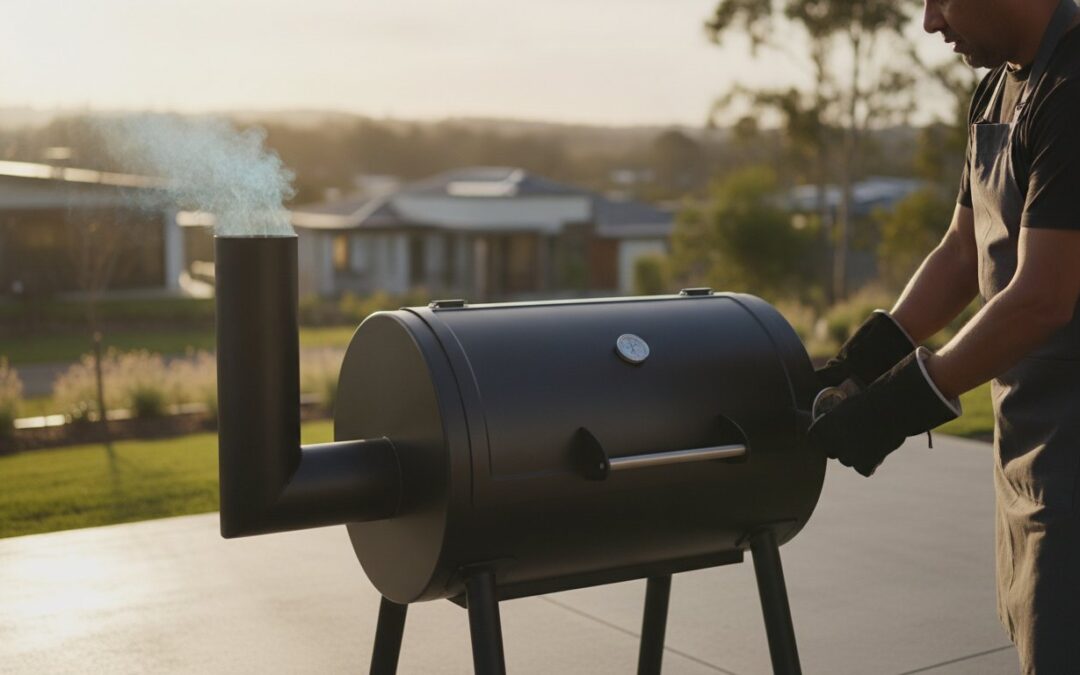
Your smoker is a thermal engine, not just a metal box, yet most off-the-shelf rigs leak heat and air like a sieve. You have likely felt the frustration of a temperature spike ruining a long cook or the sting of bitter, creosote-covered meat caused by poor combustion. Fighting against the wind to maintain a low-and-slow burn shouldn’t be your Sunday ritual. It is an exhausting way to cook that wastes your patience and your expensive fuel.
This guide breaks down the essential smoker modifications for better airflow to help you achieve rock-solid temperature stability and consistent “Blue Smoke” quality. You’ll learn how to use hardware like FireBlack12 gaskets and LavaLock RTV 650 sealant to eliminate the leaks that starve your fire of oxygen or cause it to run wild. We will also show you why choosing high-performance hardwood lump charcoal is the ultimate airflow mod for a cleaner draft. We are covering everything from sealing the cook chamber to advanced firebox management techniques that ensure a predictable, efficient burn every time you light the pit.
Key Takeaways
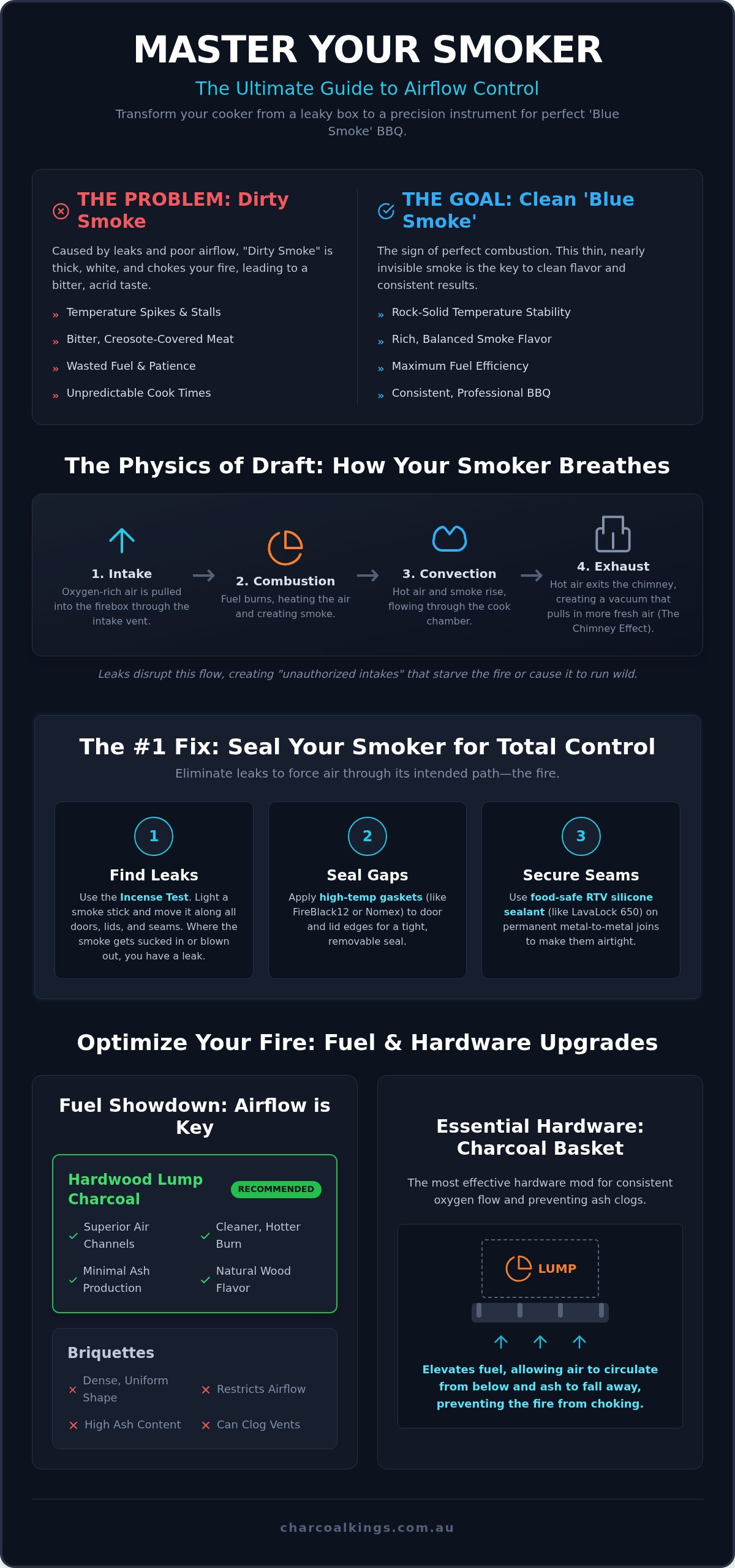
- Master the physics of draft to eliminate bitter creosote and ensure clean, high-quality combustion every time you light the pit.
- Identify and seal “unauthorised intake” leaks using the Incense Test to implement essential smoker modifications for better airflow and temperature control.
- Discover why elevating your fuel with a charcoal basket is the most effective hardware upgrade for maintaining consistent oxygen flow and preventing ash clogs.
- Optimise your firebox by choosing premium hardwood lump charcoal, which creates superior air channels compared to dense, ash-heavy briquettes.
- Apply smoker-specific hacks for WSM, Kettle, and offset rigs to achieve professional-grade temperature stability regardless of external weather conditions.
The Physics of Draft: Why Your Smoker Needs Better Airflow
Draft is the engine of your smoker. It is the movement of air through the system driven by temperature and pressure differences. When draft is weak, the fire chokes on its own exhaust. This restricted airflow leads to incomplete combustion, which deposits a bitter, acrid creosote flavour on your meat. To avoid this, pitmasters aim for “Blue Smoke.” This nearly invisible, thin blue vapour indicates a high-oxygen environment where fuel burns at peak efficiency. Achieving this level of purity often requires specific smoker modifications for better airflow to ensure the fire never starves for oxygen.
In Australia, maintaining this balance is particularly challenging. High ambient temperatures and sudden coastal winds wreak havoc on draft stability, especially in thin-gauge metal smokers. These external factors can either stall your draft or force it into an uncontrollable spike. Understanding The Physics of Smoking is the first step toward mastering your pit and producing world-class BBQ.
The Chimney Effect and Heat Convection
Heat convection is the primary driver of air movement in an offset or vertical smoker. As air inside the cook chamber heats up, it becomes less dense and rises. This movement creates the chimney effect. Draft is the pressure differential between the firebox intake and the chimney exit. As hot air escapes the stack, it creates a vacuum that pulls fresh, oxygen-rich air through the firebox.
A taller chimney often results in a stronger, more reliable draw. By increasing the vertical column of hot air, you create a more powerful vacuum at the base of the stack. This pulls fresh air through the firebox with greater velocity. This constant stream of oxygen is what allows premium hardwood lump charcoal to burn clean and hot without the bitter aftertaste of smouldering wood.
Signs Your Smoker Has Airflow Issues
Identifying airflow problems early prevents ruined cooks. The most obvious sign is “Dirty Smoke.” If your chimney is belching thick, white, or grey clouds, your fire is oxygen-starved. This smoke is full of heavy particulates that will ruin the flavour profile of your meat. It is a clear signal that your combustion is incomplete.
Another symptom is a prolonged or permanent “Stall.” While meat naturally hits a temperature plateau, poor airflow prevents the necessary surface evaporation to move past it. You should also perform a visual check for leaks. If smoke is billowing out of the cook chamber doors or firebox lid instead of the chimney, your draft is broken. These leaks act as unauthorised intakes that disrupt the intended path of air. Implementing smoker modifications for better airflow, such as sealing these gaps, is the only way to regain control over your pit’s performance.
Sealing the Cook Chamber: The Most Effective Airflow Mod
Every gap in your smoker is an unauthorised intake. These leaks disrupt the intended path of air and make precision temperature control nearly impossible. When air enters through door seams or joins, it bypasses your intake vents. This results in an inconsistent burn that alters the composition of wood smoke, often leading to the production of bitter compounds. Investing time in smoker modifications for better airflow, specifically by sealing these joins, transforms a budget rig into a precision instrument.
The Incense Test is the most effective way to identify hidden leaks. Light a smoke stick or a piece of incense and move it slowly along the edges of the doors and joins while the smoker is running. If the smoke is pulled into the chamber or pushed out through a seam, you have found a leak. Addressing these gaps is especially important during cold South Australian winters. A sealed unit retains thermal mass better and prevents wind from causing sudden, frustrating temperature drops. Sealing the firebox is just as critical as the cook chamber. A leaky firebox allows too much oxygen to reach the fuel, causing uncontrollable temperature spikes.
Installing High-Temp Gaskets and Toggle Latches
Gaskets provide the first line of defence against air leaks. Most factory seals are inadequate for long, low-and-slow cooks. Follow these steps for a professional seal:
- Step 1: Clean the mounting surfaces thoroughly. Use a degreaser and wire wool to remove all grease, soot, and old paint. This ensures a permanent bond for your adhesive.
- Step 2: Apply Nomex or high-temp felt gaskets to the lid or door seams. These materials withstand the intense heat of the firebox without degrading or melting.
- Step 3: Install adjustable toggle latches. These provide a mechanical crush on the gasket, forcing the door tight against the frame to eliminate even the smallest air gaps.
Sealing the Chimney Base and Firebox Joins
The joins where components meet are common failure points in mass-produced smokers. Use food-safe, high-temp RTV silicone to seal the gap where the chimney meets the drum. This ensures all exhaust travels through the stack rather than leaking out the base. You must also address the notorious V-gap found in many budget offset smokers where the firebox attaches to the main body. A tight seal here is mandatory if you plan on mastering the art of barbecuing with charcoal using fan-driven temperature controllers. These systems rely on a sealed environment to manage oxygen precisely. Once your rig is airtight, check our range of professional BBQ accessories to complete your setup.
Hardware Upgrades for Enhanced Air Circulation
Upgrading your smoker’s internal hardware is the next step after sealing the exterior. Baffles and tuning plates are essential smoker modifications for better airflow in offset rigs. These steel plates sit between the firebox and the cook chamber, redirecting the initial blast of heat downward. This prevents the common “hot spot” near the firebox and eliminates stagnant dead zones at the far end of the pit. Water pans also assist this process. As the water heats, it creates convection currents that help circulate air more effectively than dry heat alone. These principles are detailed extensively in The Science of Great Barbecue and Grilling, illustrating how moisture impacts heat distribution.
The Charcoal Basket Advantage
Elevating your fuel off the floor of the firebox is the number one modification for consistent draft. Expanded metal charcoal baskets allow oxygen to reach all sides of the fuel bed, ensuring a clean and efficient burn. Ash buildup is the silent killer of airflow in long cooks. When fuel sits directly on a solid grate or floor, ash accumulates and chokes the fire’s oxygen supply. A basket allows this ash to fall away, keeping the air channels clear. This setup is particularly vital for maximising Hardwood Lump Charcoal performance. Because lump charcoal lacks the fillers found in briquettes, it requires a high-oxygen environment to maintain its superior heat and flavour profile.
Chimney and Intake Extensions
The “Lowered Exhaust” mod is a popular technique for improving smoke flow. Most factory chimneys pull smoke from the top of the cook chamber, often bypassing the meat entirely. By using a flexible pipe to extend the internal chimney intake down to grate level, you force the draft to travel across the food before exiting. This ensures the meat is constantly bathed in fresh, moving smoke rather than sitting in a pocket of stale air.
Intake air deflectors are another critical addition for outdoor cooking. These shields prevent wind from blowing directly into the firebox, which often causes uncontrollable temperature spikes. They act as a buffer, ensuring the fire receives a steady, predictable stream of air regardless of weather conditions. If your smoker still feels sluggish after these upgrades, you might need a larger diameter chimney pipe. Increasing the pipe size allows for a greater volume of air to move through the system, which is sometimes necessary for larger custom pits or budget rigs with undersized factory stacks.
Smoker-Specific Airflow Hacks (WSM, Kettle, and Offsets)
Specific smoker designs require tailored smoker modifications for better airflow to achieve consistent results. While offset smokers dominate the discussion, vertical units and kettle grills possess unique draft signatures that require different hardware solutions. For Kamado smokers, the felt seal is the critical component. A compromised seal turns a precision ceramic tool into an unpredictable fire box. Similarly, offset smokers benefit from “Grate Level Exhaust” mods, where the internal chimney intake is lowered to pull smoke horizontally across the cooking surface rather than letting it rise and exit immediately.
Optimising the Weber Smokey Mountain (WSM)
The Weber Smokey Mountain is a workhorse, but its factory door is a major leak point. Upgrading to a heavy-duty, stainless steel aftermarket door stops air from bypassing your intake vents. This ensures the fire only receives oxygen through the bottom dampers, giving you total control over the burn rate. You should also perform a “Compression Mod” by applying high-temp gaskets to the centre section joins. This prevents heat and smoke from escaping where the drum sections meet. In these rigs, the water pan is more than a moisture source. It acts as a thermal regulator that stabilises convection currents and prevents the “chimney effect” from becoming too aggressive during long cooks.
Kettle Airflow: Turning a Grill into a Smoker
Kettle grills require careful management to function as effective smokers. Using firebricks or a dedicated charcoal basket creates a high-pressure intake zone. This setup forces air to travel directly through the fuel bed, which is essential when using the “Snake Method” for low-and-slow sessions. In contrast, the “Vortex” method requires maximum airflow for high-heat searing. Regardless of the method, position the lid vent opposite the coals. This forces the draft to travel over the meat before exiting the chamber.
Many users struggle with leaks in the “One-Touch” cleaning system. Bending the blades slightly for a tighter fit against the bowl can stop unauthorised air from entering the system. This simple mechanical adjustment provides better control over your intake air. If you are looking to upgrade your rig for more predictable results, browse our selection of professional BBQ accessories to find the right tools for the job. These small adjustments transform a standard grill into a capable smoking machine that can handle the toughest Australian weather conditions.
Optimising Combustion: How Fuel Choice Impacts Airflow
Airflow is a system that begins at the intake and ends at the chimney, but the fuel bed is the final regulator of the draft. The physical geometry of your fuel determines how easily oxygen reaches the point of combustion. Irregular shapes found in lump charcoal create natural air channels that allow for a high-velocity draw. Uniform briquettes often settle into a dense, restrictive pack that starves the fire. No matter how many smoker modifications for better airflow you install, poor fuel choice will always act as a bottleneck.
Moisture content is another critical factor. Seasoned smoking wood and bone-dry charcoal are non-negotiable for a fast, clean draft. Wet fuel smoulders and produces heavy, soot-laden smoke that clings to the meat. This isn’t just a flavour issue; it’s a physics issue. Energy that should be heating your pit is instead wasted evaporating moisture, which kills your draft and drops your temperatures. High-performance pits require high-performance, additive-free fuel to maintain a clean burn.
Hardwood Lump vs. Briquettes for Airflow
Lump charcoal burns hotter and more efficiently than processed alternatives. Because it is pure carbonised wood, it requires less total air volume to maintain a specific temperature. The real danger with low-quality briquettes is ash production. These products contain binders and fillers that don’t burn away; they turn into a fine, suffocating powder. This ash settles into the gaps between the coals, effectively killing the fire from below. For offset and gravity-fed smokers, we recommend using premium hardwood lump to ensure air channels remain open, serving as one of the most effective non-hardware smoker modifications for better airflow.
Stacking Your Fuel for Maximum Draw
Fire management is a skill that complements your hardware mods. When building your fire, the Log Cabin method is superior for airflow. It creates a hollow centre that acts like a mini-chimney within the firebox. The Teepee method is useful for quick start-ups but can collapse and smother the coal bed if not managed. When adding new fuel, don’t dump it in a heap. Gently place logs or lump on the active coal bed to maintain those vital air gaps. Upgrade your fuel and gear at Charcoal Kings to see what your rig is truly capable of when it isn’t fighting for air.
Master Your Draft and Elevate Your BBQ
Achieving the perfect draft requires a combination of mechanical precision and high-performance fuel. You’ve learned how to eliminate unauthorised intakes with gaskets and how to optimise air circulation using charcoal baskets and chimney extensions. These smoker modifications for better airflow are the foundation of consistent, professional-grade results. By focusing on the physics of your rig, you ensure that every cook produces the clean flavour profile your guests expect.
Charcoal Kings is Australia’s leading supplier of additive-free hardwood charcoal. Based in Holden Hill, our team provides expert advice from seasoned pitmasters alongside a comprehensive range of smokers and accessories. We understand the impact of the Australian climate on your equipment and offer the high-performance tools needed to overcome it. Stop fighting your fire and start mastering it with the right setup.
Master your fire with premium Hardwood Lump Charcoal from Charcoal Kings. Your journey to rock-solid temperature stability and perfect blue smoke starts here. Get out there and light the pit.
Frequently Asked Questions
How do I know if my smoker has poor airflow?
Signs of poor airflow include thick white smoke, bitter-tasting meat, and a fire that struggles to stay lit. You will often see smoke leaking from the door seams instead of exiting through the chimney. This indicates that the draft is stalled or blocked. Perform an incense test to find hidden leaks. If your fuel is smouldering into a pile of black soot rather than glowing red, your fire is oxygen-starved.
Will modifying my smoker void the manufacturer warranty?
Permanent structural changes like drilling holes for chimney extensions or installing toggle latches typically void your warranty. However, non-permanent smoker modifications for better airflow, such as adding Nomex gaskets or using an elevated charcoal basket, generally do not. Always check your specific manufacturer’s terms before making permanent alterations. Most pitmasters find the trade-off worthwhile to achieve the rock-solid temperature stability and clean smoke quality required for professional-grade barbecue results.
What is the best way to seal a leaky smoker door?
The most effective method involves a combination of high-temp Nomex gaskets and adjustable toggle latches. You must first clean the door rim with a degreaser and wire wool to ensure a permanent bond for the adhesive. Apply the gasket to the door seam and install latches to create a mechanical crush. This forces the door tight against the frame, eliminating unauthorised air intakes that disrupt your internal draft and waste expensive fuel.
Do I really need a charcoal basket for my offset smoker?
A charcoal basket is the number one hardware upgrade for maintaining a clean fire. It elevates your fuel off the floor of the firebox, allowing ash to fall away rather than choking the coals. This is one of the most effective smoker modifications for better airflow because it prevents oxygen starvation during long cooks. Without a basket, ash buildup acts as a silent killer that smothers your fire and ruins your temperature control.
Why is my smoker producing thick white smoke instead of blue smoke?
Thick white smoke is a symptom of incomplete combustion caused by restricted airflow or high moisture in your fuel. This dirty smoke contains heavy particulates that deposit a bitter, acrid flavour on your meat. To achieve the desired “Blue Smoke,” you must increase the oxygen supply by opening intake vents or clearing ash clogs. Ensure you use seasoned smoking woods and dry hardwood lump charcoal to promote a fast, clean burn.
Can I use a fan or blower to improve airflow in my smoker?
Fan-driven temperature controllers are excellent for maintaining precision, but they require an airtight unit to function correctly. These blowers manage oxygen intake to hit specific temperature targets. If your smoker has significant leaks, the fan cannot control the fire because air enters through unauthorised gaps. You should seal your cook chamber and firebox first to ensure the blower can regulate the combustion process without interference from external wind or leaks.
How does the height of the chimney affect the smoker’s draft?
A taller chimney increases the stack effect by creating a stronger pressure differential between the firebox and the exhaust exit. This height creates a more powerful vacuum that pulls fresh air through the intake with greater velocity. If your smoker feels sluggish or struggles to stay hot in cold Australian winters, extending the chimney is a proven way to improve the draw. This ensures stale smoke exits the chamber before it can turn bitter.
Does the type of charcoal I use affect how much air my smoker needs?
Yes, the physical structure of your fuel determines how much air can pass through the firebox. Premium hardwood lump charcoal creates large, irregular air gaps that promote a cleaner draft. In contrast, low-quality briquettes produce heavy ash and settle into a dense pack that restricts oxygen flow. Choosing high-quality, additive-free fuel reduces the need for aggressive modifications by naturally allowing the fire to breathe and burn at peak efficiency.