
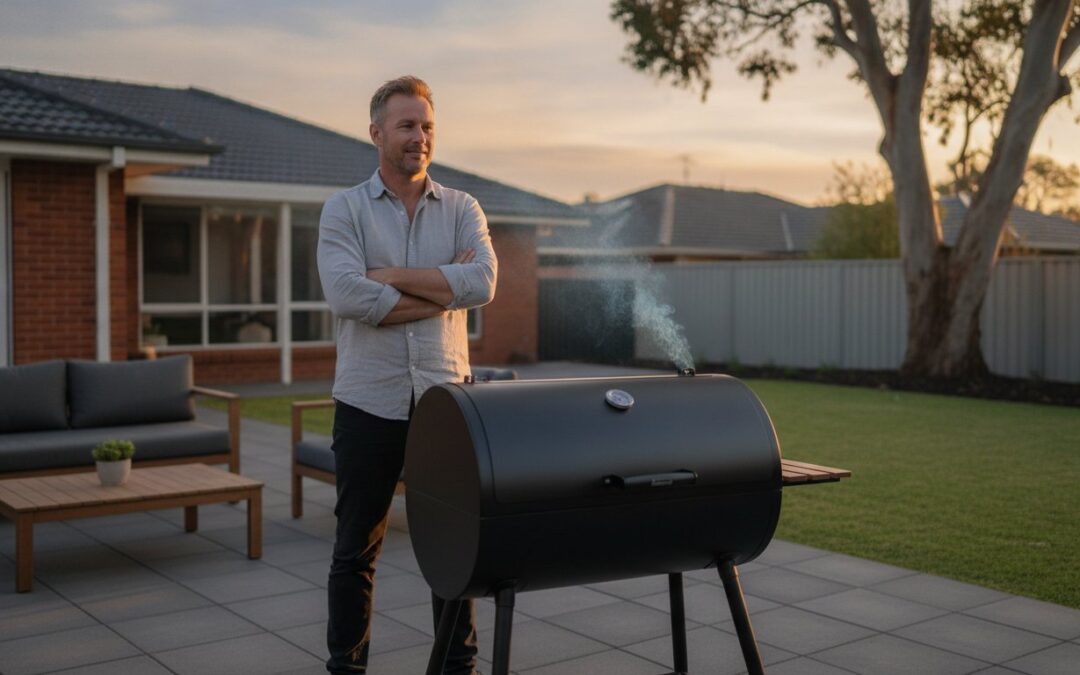
The best BBQ in Australia doesn’t come from a machine that hums, whirrs, or clicks through the night. The quietest charcoal smoker for suburban backyards isn’t a complex piece of electronics; it’s a precision-engineered vessel designed to hold heat without mechanical assistance. You want the authentic flavour of a real wood fire, but you shouldn’t have to deal with the constant drone of a pellet grill fan or the metallic clatter of a cheap smoker leaking heat. Your neighbours deserve a quiet afternoon, and you deserve a cook that doesn’t sound like a factory.
We understand the frustration of balancing a passion for low-and-slow cooking with the realities of suburban living. You need a setup that offers total silence and high-purity fuel that won’t spark or pop. This 2026 guide shows you how to achieve competition-grade results without a single electric component. We’ll preview the most reliable passive smokers on the Australian market, from the Weber Smokey Mountain to heavy-duty Oklahoma Joe’s Bronco Drum Smokers. We also explain why premium Hardwood Lump Charcoal is the secret to a spark-free, stealthy cook. It’s time to reclaim your backyard peace while mastering the primal nature of the craft.
Key Takeaways
- Eliminate the mechanical hum of fans and augers by switching to a passive airflow system that relies on physics rather than electronics.
- Identify the quietest charcoal smoker for suburban backyards by choosing heavy-gauge materials that naturally dampen the sound of a roaring fire.
- Learn why purity matters; premium Hardwood Lump Charcoal without additives won’t pop or spark, keeping your cook as silent as it is clean.
- Maintain neighbourly relations by mastering airflow controls that produce invisible heat instead of thick, billowing white smoke.
- Discover why professional-grade insulation is the key to maintaining stable temperatures during overnight cooks without any audible distractions.
Why Charcoal Smokers are the Quietest Choice for Suburban Patios
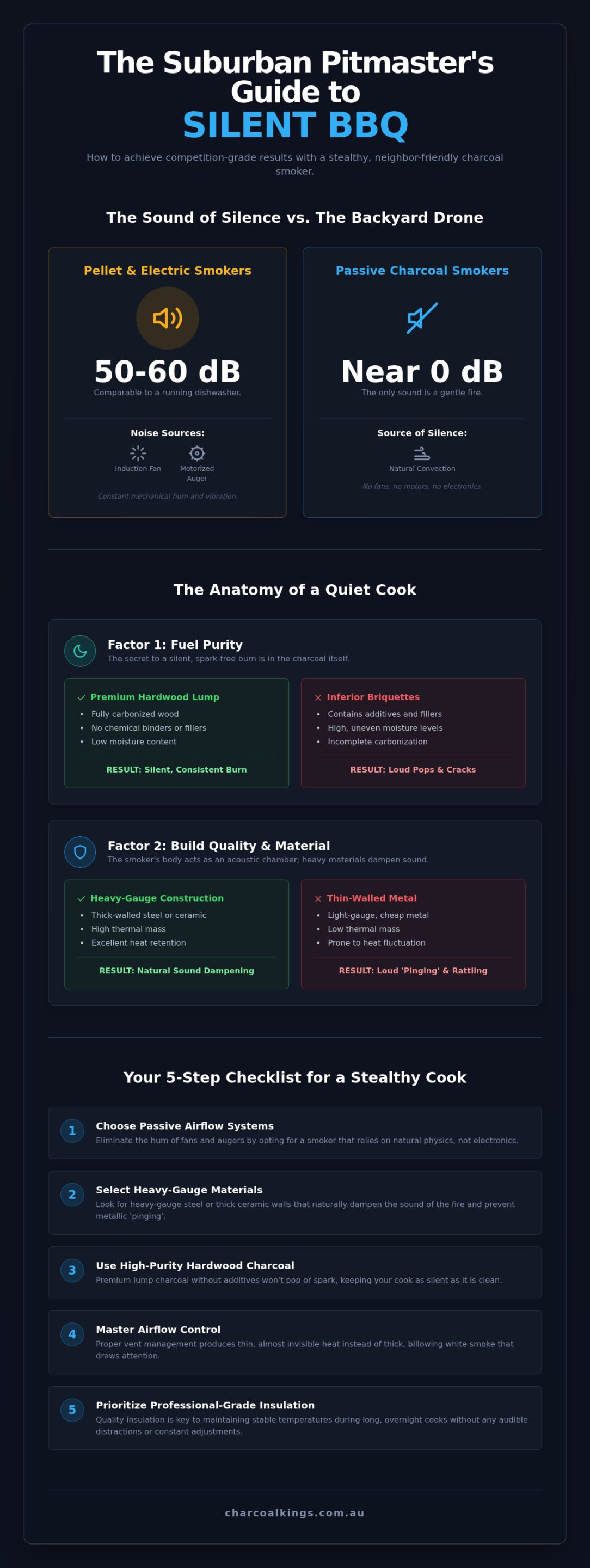
Suburban backyard acoustics are unforgiving. Sound bounces off fences and carries through open windows. If you choose a pellet grill, you’re committing to a constant mechanical hum for twelve hours straight. The quietest charcoal smoker for suburban backyards avoids this entirely by relying on physics rather than electricity. Charcoal smoking is a passive process. It uses natural convection to move heat and smoke through the cooking chamber. There are no motors to burn out and no fans to irritate the neighbours. You get a cleaner cook and a silent yard.
The Silent Advantage: No Motors, No Fans
Modern electric and pellet smokers are essentially outdoor appliances packed with moving parts. They require induction fans to stoke the fire and motorized augers to feed the fuel. These components run continuously to maintain temperature. The result is a high-pitched whirr that cuts through the quiet of a Sunday afternoon. In contrast, premium charcoal units use gravity or manual airflow dampers to regulate heat. There’s a certain zen found in fire management when the only sound is the occasional crackle of high-quality hardwood. Managing a charcoal fire is a rugged, tactile hobby that rewards skill without the interference of a buzzing control board, providing the perfect silence to enjoy a new release from Champion Fiction while you wait for the cook to finish.
For those looking to master this craft, a comprehensive overview of smoking reveals that the best results come from stable, radiant heat. Passive airflow systems provide this stability without the need for forced air. By removing the electric blower, you remove the primary source of suburban noise complaints.
Acoustic Comparison: Decibels in the Backyard
The difference in noise levels is measurable and significant. Most pellet grills operate at roughly 50 to 60 decibels. This is comparable to a dishwasher or a loud conversation happening right on your patio. Low-frequency hums from these motors vibrate through timber decks and travel much further than most people realise. A charcoal smoker operates at near zero decibels. The only sound generated is the internal movement of air through the vents. Passive airflow is the gold standard for silence because it generates no vibration.
Thermal mass also plays a critical role in noise reduction. Cheap, thin-walled smokers can rattle as the fire expands the metal. High-performance units use heavy-gauge steel or thick ceramic walls. These materials act as natural acoustic insulators. They keep the heat inside and dampen the sound of the burning fuel. When you combine heavy insulation with a motorless design, you achieve a truly stealthy cooking experience. You can run an overnight brisket cook in a dense suburban area without a single person knowing your smoker is active until they smell the results.
Evaluating Noise Factors: It Is Not Just the Smoker
Noise in a suburban backyard isn’t always mechanical. While fans and motors are the obvious culprits, the physical properties of your equipment and fuel play a massive role in the acoustic profile of your cook. Cheap materials and inferior fuel choices create a symphony of pops, pings, and metallic clatters that can travel across fence lines. To secure the quietest charcoal smoker for suburban backyards, you must look beyond the spec sheet and evaluate the integrity of the build and the purity of the burn. A silent experience requires a combination of high-density materials and high-quality fuel.
The Role of High-Purity Hardwood Charcoal
Purity is the industry standard for silent operation. Inferior charcoal briquettes often contain chemical binders, fillers, and high moisture levels. When these pockets of moisture or additives heat up rapidly, they turn to steam and explode; this causes the aggressive “popping” and “cracking” sounds that disrupt a quiet evening. Using premium Hardwood Lump Charcoal ensures a consistent, silent burn because the wood has been fully carbonized. This process removes the volatile gasses and moisture that cause noise and sparks. For the ultimate stealth cook, high-grade Binchotan charcoal is virtually spark-free and produces a steady, silent heat. This level of fuel control is essential for following safe smoking practices, as stable fuel leads to predictable temperature management without the need for constant, noisy adjustments.
Build Material and Sound Dampening
The smoker vessel itself acts as an acoustic chamber. Thin-walled smokers made of cheap tin or light-gauge steel are prone to “pinging” sounds as the metal expands and contracts rapidly under heat. This thermal expansion can be loud enough to startle neighbours during an overnight cook. High-performance units use heavy-gauge steel or thick ceramic walls to dampen these vibrations. Ceramic Kamado-style smokers are essentially soundproof vaults; their thick, porous walls keep the combustion noise trapped inside the vessel. You should also inspect the hardware. Flimsy vents, loose lids, and thin handles clatter in the wind or vibrate when the fire is roaring. Professional-grade hardware stays silent under pressure. Thick steel, specifically anything 6mm or higher, absorbs the energy of the fire and prevents the unit from becoming an echo chamber.
Thermal expansion is a physical reality, but it shouldn’t be a noisy one. Rugged construction prevents the warping that leads to loud metallic pops. In the Australian climate, where temperature shifts can be dramatic between day and night, thin metal fails and makes noise. If you are serious about a silent backyard, investing in high-performance BBQ hardware is the only way to ensure your equipment doesn’t become a nuisance. Look for units with spring-loaded handles and gasket-sealed lids to eliminate any chance of rattling while the unit is in use. A truly quiet cook is the result of choosing the quietest charcoal smoker for suburban backyards and pairing it with the cleanest fuel available.
The Top 3 Quietest Charcoal Smokers for 2026
Choosing the right hardware is the final step in securing a silent backyard. While fuel purity is vital, the physical design of the smoker determines how much sound escapes the cook. The quietest charcoal smoker for suburban backyards must possess high thermal mass to dampen the internal roar of the fire. Heavy-duty construction doesn’t just hold heat; it acts as an acoustic barrier between your charcoal and your neighbour’s window. In 2026, the market has shifted toward high-density materials that prioritise silence and efficiency.
Ceramic Kamados: The Silent Suburban King
Ceramic Kamados are the gold standard for silent operation. These units are essentially ceramic vaults. Their thick, porous walls provide 360-degree insulation that traps heat and noise simultaneously. Unlike thin metal offsets that can rattle or “ping” as they expand, a Kamado is a solid, vibration-free structure. The airtight felt or mesh seals prevent the high-pitched whistling of air leaks, which is critical when cooking close to a fence line. Their compact footprint and vertical design make them the most effective choice for Australian townhouses and smaller patios where space and sound are at a premium.
Insulated Cabinet Smokers
Insulated vertical cabinets are the heavyweights of silent BBQ. These units feature a double-walled, “fridge-like” construction with high-density insulation sandwiched between layers of heavy-gauge steel. This design ensures that neither heat nor sound escapes the vessel. They are the ultimate “set and forget” tools for long overnight briskets. By mastering the basics of barbecuing with charcoal, you can run these cabinets for 12 hours or more without touching a single vent. The lack of moving parts and the sound-deadening properties of the insulation make them virtually undetectable from a few metres away.
Heavy-duty reverse flow offsets also offer a quiet alternative if built correctly. Traditional, cheap offsets often require frequent door slamming and metal-on-metal contact. However, a professional reverse flow unit built from 6mm or 8mm steel uses its sheer weight to stay stable and silent. Drum smokers are another effective, budget-friendly choice. When fitted with a tight lid seal and high-quality intake vents, they operate with a muffled, low-frequency presence that doesn’t carry across the yard.
Residential peace is more than a preference; it’s often a regulatory requirement in modern urban settings. While Australian local councils have their own specific bylaws regarding noise and smoke, international benchmarks like the New York City Noise Code demonstrate how seriously urban environments treat residential disturbances. Investing in a smoker with high thermal mass ensures you stay well within the bounds of local etiquette and law while producing world-class BBQ.
Suburban Smoke Management: Keeping the Peace
In a dense Australian suburb, managing your output is just as important as choosing the quietest charcoal smoker for suburban backyards. Noise might be the first thing neighbours notice, but intrusive, acrid smoke is what leads to complaints. Responsible pitmasters aim for “Blue Smoke.” This is a thin, almost translucent vapor that indicates perfect combustion. Thick, billowing white smoke is a sign of a struggling fire and unburnt fuel. Achieving this clean burn requires high-purity fuel and precise airflow management.
Strategic placement of your smoker can also mitigate local impact. Position your unit so prevailing winds carry smoke away from laundry lines and open windows. Using existing structures like garden sheds or fences as windbreaks helps maintain stable internal temperatures. This stability reduces the need for frequent vent adjustments; it keeps the cook silent and the smoke output consistent. When the air moves smoothly through the vessel, the fuel burns efficiently without the erratic “puffing” common in poorly placed units.
Starting the Fire Silently and Cleanly
The start-up phase is usually the loudest and smokiest part of any BBQ. Avoid electric heat guns or loud blowers that sound like hair dryers. Natural wood wool firelighters are silent and effective. For long cooks, use the Minion or Snake method. These techniques involve lighting a small cluster of charcoal that gradually ignites the rest of the fuel bed over several hours. This slow progression prevents the “smoke bomb” effect often seen when a full chimney starter is dumped into a cold smoker. For more on ignition and wood types, refer to our firewood guide.
Choosing the Right Fuel for Low Smoke
Fuel selection is the most significant factor in smoke volume. Cheap briquettes contain fillers that produce excessive ash and thick, lingering smoke. Premium Hardwood Lump Charcoal burns hotter and cleaner because it contains no additives. For those in high-density living situations, Binchotan charcoal is the gold standard. It is a high-density Japanese-style charcoal that burns with almost zero visible smoke and zero odour. It provides the purest heat source available for residential environments where discretion is a priority.
Purity is the key to neighbour-friendly BBQ. When you use fuel that is free from chemicals and moisture, you eliminate the volatile organic compounds that cause acrid smells. This allows you to focus on the flavour of your meat rather than managing a nuisance. To ensure your next cook is both silent and smoke-free, shop our range of premium hardwood fuels and high-performance hardware designed for Australian conditions.
Selecting Your Silent Setup at Charcoal Kings
Finding the quietest charcoal smoker for suburban backyards requires more than just reading a manual; it requires touching the steel and testing the seals. Charcoal Kings stocks only heavy-duty hardware designed for maximum thermal mass. We don’t sell flimsy, thin-walled units that clatter or ping as they heat up. Our smokers are selected for their ability to hold heat and dampen sound. We provide the quietest charcoal smoker for suburban backyards by focusing on the physics of the cook rather than the electronics. Our commitment is simple: no additives, no fillers, and no mechanical noise. Just pure, rugged performance.
Expert Advice for Australian Backyards
Every backyard has a different acoustic profile. A smoker that stays quiet on a large rural block might still cause issues on a tight suburban patio where sound bounces off fences. Our team helps you navigate these challenges by assessing your specific layout. We consider wind direction, proximity to neighbours, and the reflective surfaces in your yard. This local expertise ensures you don’t just buy a smoker; you buy a solution that fits your lifestyle. We understand the Australian climate and the need for hardware that survives the elements. Our BBQ range is built for no-nonsense quality and long-term reliability. If you want to feel the build quality for yourself, visit our Holden Hill showroom. Seeing the thickness of the steel and the precision of the vents in person confirms why we are masters of the craft.
Final Checklist for a Quiet Cook
Success in suburban smoking comes down to three non-negotiable factors. First, ensure your smoker has thick walls and professional-grade insulation. Second, verify that all seals are airtight to prevent whistling. Third, use only high-purity Hardwood Lump Charcoal to eliminate popping and sparks. Follow this checklist to maintain your status as the neighbourhood’s best pitmaster:
- Vessel Integrity: Use heavy-gauge steel or ceramic to dampen fire noise.
- Fuel Purity: Stick to additive-free lump charcoal for a silent burn.
- Ignition Method: Use natural firelighters and the Minion method for a clean start.
- Hardware Maintenance: Keep vents and hinges lubricated to prevent squeaks.
Ready to upgrade your backyard game? Book a consultation with our experts or browse our inventory online for Australia-wide delivery. If you are also looking to enhance your outdoor living area with premium handcrafted timber pieces, check out TK Garden Heritage. Charcoal Kings is the standard for BBQ excellence in Australia. Get the gear that performs as well as it looks. Happy smoking.
Master the Stealth of Suburban BBQ
Achieving competition-grade flavour in a residential area requires a commitment to quality hardware and pure fuel. You’ve learned that the quietest charcoal smoker for suburban backyards relies on passive airflow and thick insulation to keep the peace. By choosing heavy-gauge steel or ceramic vessels, you eliminate the mechanical buzz of fans and the clatter of cheap metal. Pairing this hardware with additive-free charcoal ensures your cook remains spark-free and virtually silent from start to finish.
Charcoal Kings stands as Australia’s leading supplier of additive-free hardwood charcoal. We’ve provided expert BBQ hardware advice since our inception, helping pitmasters across the country achieve professional results without the noise. Visit our showroom in Holden Hill, SA, to see our rugged range in person or browse our selection online. Shop Premium Hardwood Charcoal for a Silent, Clean Burn and reclaim your weekend. It’s time to fire up the grill and enjoy the quiet satisfaction of a perfect, stealthy cook.
Frequently Asked Questions
Is a charcoal smoker quieter than a pellet grill?
Yes, charcoal smokers are significantly quieter. Pellet grills rely on electric induction fans and motorized augers that run continuously, creating a persistent mechanical hum. A passive charcoal unit has no moving parts. It is the quietest charcoal smoker for suburban backyards because it uses natural convection to move heat, operating in near-total silence throughout the cook.
Does the type of charcoal affect how much noise the smoker makes?
Fuel quality is a major factor in noise production. Low-grade briquettes containing chemical binders and trapped moisture often pop, crack, and spark aggressively. High-purity Hardwood Lump Charcoal burns silently. Because the wood is fully carbonized, it lacks the volatile gasses and moisture pockets that cause loud mini-explosions in the firebox.
What is the best smoker for a very small suburban backyard?
Ceramic Kamados are the superior choice for compact Australian yards. They have a small vertical footprint and provide 360-degree insulation. This insulation traps both heat and the internal sounds of the fire. Their airtight design ensures that you don’t disturb neighbours with mechanical noise or excessive smoke leakage on small patios.
Can I use a charcoal smoker on a balcony without annoying neighbours?
You must check your local council regulations and strata bylaws first. While charcoal smokers are silent, smoke management is the main concern on a balcony. Using Binchotan charcoal is the best strategy for high-density living. It produces almost zero visible smoke and zero odour, making it the most discreet fuel option available.
Do offset smokers make a lot of noise during a 12-hour cook?
High-quality offset smokers are silent, but cheap units made of thin metal are not. Thin steel often makes loud “pinging” sounds as it expands and contracts. A professional-grade offset built from 6mm steel has the thermal mass to stay quiet. The only sound you’ll hear is the occasional opening of the firebox door.
What is the quietest way to light a charcoal smoker?
Natural wood wool firelighters are the quietest ignition method. Avoid electric heat guns or loud blowers that sound like industrial machinery. Use the Minion or Snake method for a slow, silent start. This allows the fire to spread gradually through the fuel bed without the need for noisy mechanical assistance or high-volume airflow.
Are ceramic Kamado smokers worth the extra price for suburban use?
They are worth the investment for the acoustic benefits alone. The thick ceramic walls act as a soundproof vault, containing all internal combustion noise. This makes a Kamado the quietest charcoal smoker for suburban backyards. They also require less airflow to maintain temperature, which results in a cleaner, less intrusive smoke profile for your neighbours.
How can I stop my smoker from making “pinging” or “popping” metal noises?
Metallic noises are caused by rapid thermal expansion in thin-gauge steel. You can minimize this by using high-purity fuel to maintain a steady, consistent heat. Avoid sudden temperature spikes or dumping cold water into a hot ash pan. Ultimately, upgrading to a smoker with thicker walls or ceramic construction is the only permanent way to eliminate these sounds.