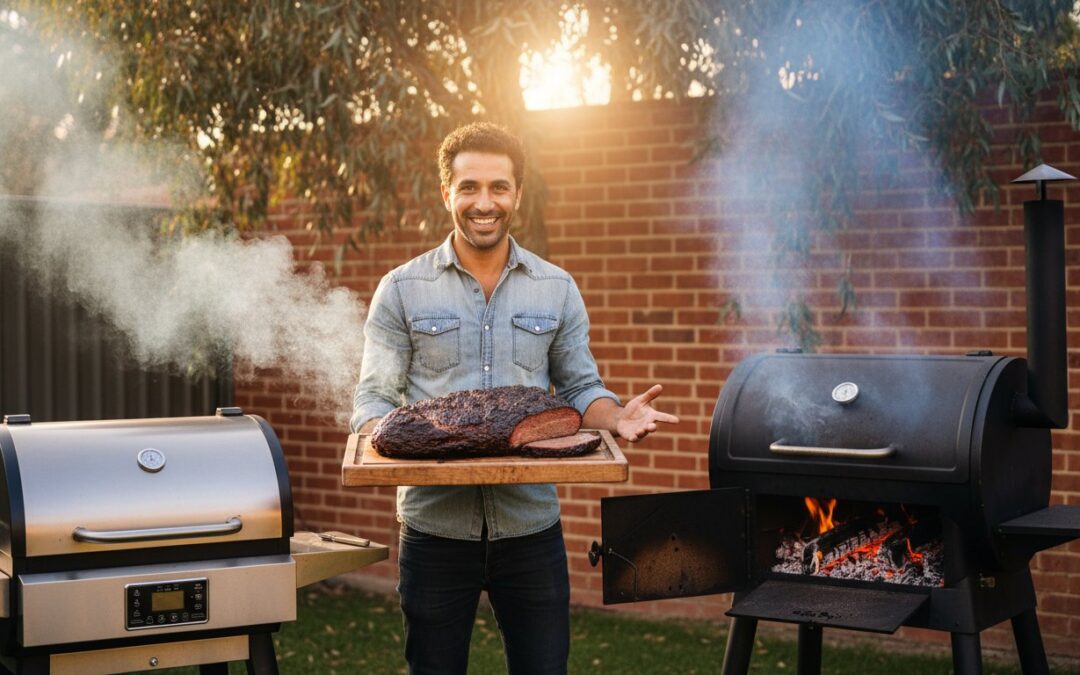
The A$2,500 pellet grill you just eyed off might be the most convenient tool in your backyard, but it’s often little more than a glorified outdoor oven. Many pitmasters find themselves frustrated by a “clean” smoke that’s so transparent it’s practically invisible. When comparing pellet grill vs charcoal smoker flavour, the difference comes down to the science of combustion and the density of the fuel. You want that deep, mahogany bark and a heavy smoke ring that only comes from real fire.
It’s true that convenience matters, but you shouldn’t have to sacrifice the authentic, rugged taste of premium natural hardwood. We understand the fear of spending thousands on a machine that produces inconsistent results or “dirty” smoke that ruins a 12 hour cook. You’ll discover the scientific and culinary differences between pellet and charcoal smoke to find your perfect flavour profile. We’re breaking down everything from combustion rates to chemical compounds so you can finally choose the right fuel for your specific palate.
Key Takeaways
- Understand how the mechanics of indirect convection versus direct combustion fundamentally alter the depth and complexity of your meat’s smoke profile.
- Learn the science behind “Blue Smoke” and how specific combustion temperatures create the volatile organic compounds responsible for authentic pitmaster taste.
- Evaluate the pellet grill vs charcoal smoker flavour intensity scale to determine which fuel source best suits delicate proteins versus heavy-duty cuts like brisket.
- Master practical techniques for maximizing bark, including the “Char-Wood” method for a more robust and traditional Australian BBQ finish.
- Identify why premium, chemical-free natural hardwood remains the gold standard for purists seeking superior heat and the most authentic flavour profile.
Defining the Smoke Profile: Pellet Grill vs Charcoal Smoker Flavour
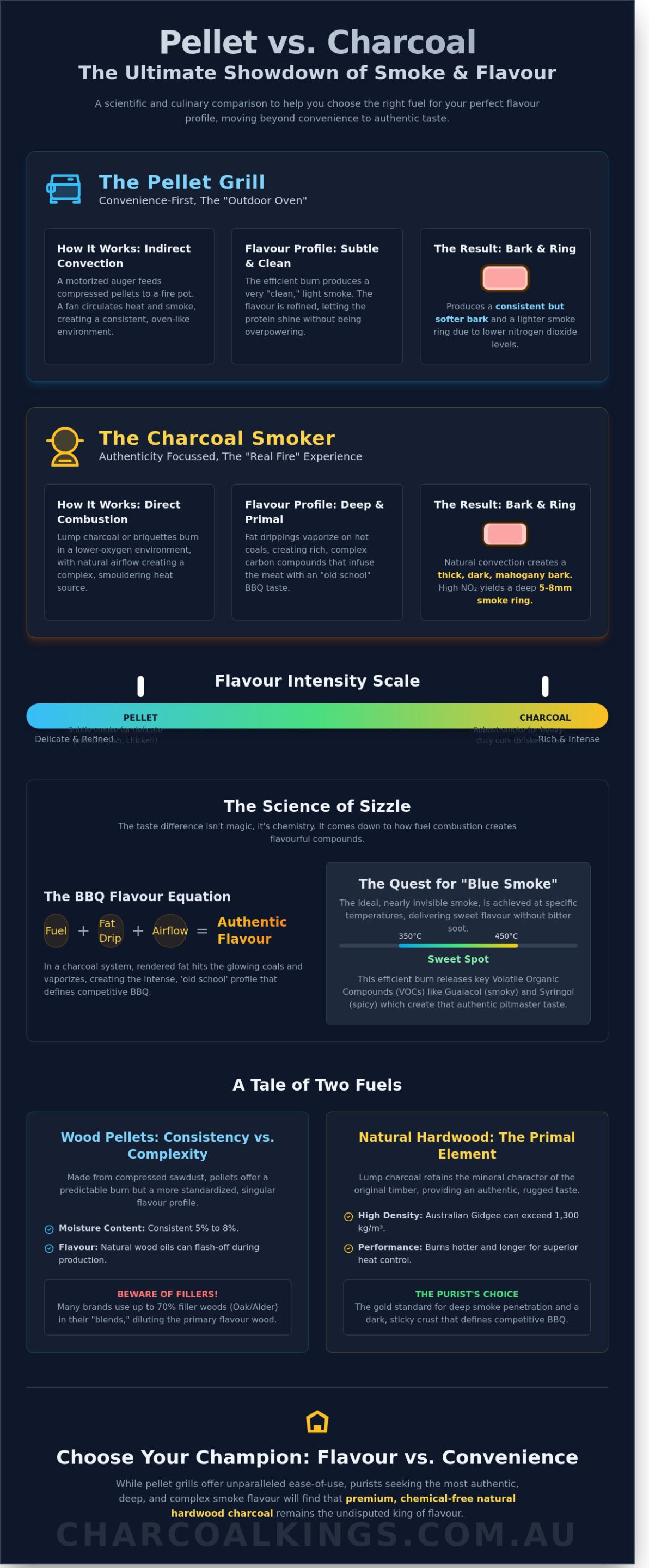
Understanding the fundamental pellet grill vs charcoal smoker flavour debate requires a look at how heat meets meat. These two systems produce distinct results because their combustion methods are worlds apart. Pellet grills operate through indirect convection. A motorised auger feeds compressed hardwood pellets into a small fire pot while a fan circulates the heat. This creates an environment similar to a wood-fired oven. Charcoal smokers rely on direct combustion. Whether you’re using a ceramic kamado or a traditional offset, the fuel burns in a lower-oxygen environment, creating a different chemical reaction.
True BBQ flavour is a three part equation: fuel source, vaporised fat drippings, and airflow. In a charcoal system, fat hits the glowing coals and instantly vaporises, sending complex carbon compounds back into the meat. This creates the heavy, traditional profile many Australians associate with classic low and slow cooking. Pellet grills burn their fuel so efficiently that there’s less “dirty” smoke, resulting in a cleaner but milder profile. Even the smoke ring looks different. While both systems produce the pink nitric acid ring, charcoal setups often yield a deeper 5mm to 8mm band due to higher nitrogen dioxide levels during the burn.
The Australian BBQ scene has seen a massive shift. Purists still swear by 6mm thick steel offset smokers, but the “pellet pooper” has gained ground for its set-and-forget convenience. Choosing between them depends on whether you value a subtle wood accent or a punchy, soot-infused bark.
What is the ‘Pellet Taste’?
The pellet taste is defined by its subtlety. Because pellets are made from 100% natural hardwood sawdust compressed at high pressure, they burn very clean. You won’t get the heavy creosote punch of a poorly managed log fire. The forced-fan convection creates a consistent bark, but the high airflow can dry the meat’s surface faster than a charcoal unit. It’s a refined, light smoke that lets the quality of the protein shine through without overpowering it.
The Charcoal Smoker Taste Explained
Charcoal provides a deep, primal umami that pellets struggle to match. The complexity varies by fuel grade. Premium lump charcoal, such as Gidgee or Quebracho Blanco, burns hotter and longer than standard briquettes, offering a distinct mineral earthiness. This system is the gold standard for heavy bark. The combination of smouldering wood chunks and dripping rendered fat creates the intense, “old school” flavour profile that defines competitive BBQ. It’s the best choice for enthusiasts who want maximum smoke penetration and a dark, sticky crust. Get sizzlin’ with the real deal.
The Science of Sizzle: How Fuel Combustion Affects Taste
The core difference in the pellet grill vs charcoal smoker flavour debate lies in the chemistry of combustion. When you burn wood or charcoal, you aren’t just creating heat; you’re triggering a complex breakdown of lignin and cellulose. This process releases Volatile Organic Compounds (VOCs) like syringol and guaiacol, which provide that hit of smoky aroma. Pellet grills typically operate at lower, controlled temperatures to maintain smoke, while charcoal baskets allow for a broader range of combustion levels. A clean, efficient burn at 350°C to 450°C produces the coveted “blue smoke,” a translucent vapour that delivers a sweet, subtle finish rather than a bitter, heavy soot.
Airflow plays a vital role in how your meat develops its crust. In a charcoal smoker, the natural convection of air moving over hot coals dries the meat’s surface, accelerating the Maillard reaction. This creates a thick, dark bark that many enthusiasts find superior to the softer exterior often produced by the fan-forced environment of a pellet unit. If you want a deeper profile, choosing the right fuel is the first step toward professional results. You can explore premium fuel options to see the difference quality makes.
Wood Pellets: Consistency vs. Complexity
Manufacturers produce pellets by compressing sawdust at pressures exceeding 10,000 PSI. This process generates heat that can flash-off some of the wood’s natural oils, leading to a more standardised, singular flavour profile. Most pellets maintain a consistent moisture content of 5% to 8%, ensuring a predictable burn. However, many commercial brands use up to 70% “filler” woods like oak or alder as a base, adding only a small amount of flavoured hardwood. You can spot these by checking if the bag is labelled as a “blend” rather than 100% species-specific wood.
Natural Hardwood Charcoal: The Primal Element
Using lump charcoal provides an authentic, rugged taste because the carbonisation process retains the essential mineral character of the original timber. Australian hardwoods like Gidgee are prized for their high density, often exceeding 1,300 kg/m³, which allows them to burn hotter and longer than softwoods. High-carbon charcoal produces less acrid smoke than unseasoned wood. This clean heat allows the natural profile of the meat to shine without being masked by heavy creosote. For those seeking a complex smoke ring and a traditional wood-fired punch, the mineral-rich ash from natural charcoal remains the gold standard in BBQ circles.
Pellet vs Charcoal: A Comparative Flavour Intensity Scale
Pellet grills and charcoal smokers sit on opposite ends of the smoke intensity spectrum. A pellet grill provides a subtle “Hint of Wood” profile. These machines burn compressed sawdust pellets at roughly 95% combustion efficiency. This clean burn results in less particulate matter hitting the meat. It’s the preferred choice for those who find traditional BBQ overpowering. Charcoal smokers deliver the “Pitmaster Punch.” They produce a heavy, traditional smoke profile because the fuel source is less processed. The pellet grill vs charcoal smoker flavour profile is defined by this chemical difference. Natural lump charcoal creates a complex reaction that releases higher levels of guaiacol and syringol. These are the organic compounds responsible for that deep, campfire taste.
The trade-off for the modern Australian griller involves choosing between convenience and character. Pellets offer “set and forget” technology. You sacrifice the heavy bark and deep smoke rings found in traditional pits. Charcoal requires more effort but rewards you with a distinct, rugged profile. Your choice of wood species carries more weight in a charcoal setting. Adding a single chunk of Ironbark to a charcoal bed provides a more intense flavour than an entire hopper of Ironbark pellets.
Flavour Matchmaking by Meat Type
Poultry and fish have delicate fats that absorb smoke rapidly. These proteins often shine on a pellet grill. The lighter smoke prevents the meat from tasting bitter or acrid. Heavy cuts demand the dominance of charcoal. A 6kg brisket or a rack of beef ribs needs the high-intensity heat and dense smoke of natural hardwood. Use Ironbark for beef; it’s a premium Australian hardwood that offers a long, clean burn. Match pork with fruitwoods like apple or cherry. The natural sugars in fruitwood smoke complement the sweetness of the pork fat.
The ‘Dirty Smoke’ Trap
Creosote is the bitter enemy of quality BBQ. It’s a thick, oily substance that forms when wood doesn’t burn hot enough. It leaves a numb sensation on the tongue and a black, sooty appearance on the food. Pellet grills rarely suffer from creosote because their internal fans manage the air-to-fuel ratio automatically. This precision can cause the meat to lack depth. You must learn to manage airflow in a charcoal BBQ to keep the smoke sweet. Avoid “choking” the fire by closing the vents too far. You want a thin, blue shimmer of smoke. Thick white clouds indicate poor combustion and will ruin your cook. Get Sizzlin’ with clean, hot coals for the best results.
Maximising Your Bark: Practical Tips for Better Smoker Taste
Achieving a competition-grade bark requires more than just choosing a side in the pellet grill vs charcoal smoker flavour debate. Precision is the priority. Temperature stability is the secret to a clean finish. Fluctuations exceeding 10°C during a long cook can trigger creosote production, leaving a heavy, bitter film on your meat. Always rest your protein for a minimum of 45 to 60 minutes. This process allows smoke-infused juices to redistribute throughout the muscle fibres, ensuring every bite remains moist and carries the full profile of your wood choice.
Boosting Pellet Grill Performance
Pellet grills offer unmatched convenience, but they can occasionally lack the heavy smoke profile of traditional methods. Use a stainless steel smoke tube to supplement the burn. This provides an extra 3 hours of clean blue smoke without raising the internal temperature of the pit. Quality is the most important factor here. Select 100% hardwood pellets that contain zero oils or chemical fillers. Many budget brands use up to 40% softwood as a base, which dilutes the authentic taste. For maximum smoke adhesion, place a water pan near the fire pot. The increased humidity keeps the meat surface tacky, allowing smoke particles to stick more effectively during the critical first 4 hours of the cook.
Perfecting the Charcoal Burn
The ‘Char-Wood’ technique is the most effective way to layer flavour in a charcoal unit. Mix 80% premium lump charcoal with 20% raw wood chunks to create a sustained, complex smoke profile. For long sessions in a kettle or bullet smoker, the Snake Method provides a consistent 110°C burn for up to 12 hours without needing manual intervention. If you want the cleanest possible heat for high-end grilling, Binchotan charcoal is the ultimate choice. It burns for 4 hours at a steady, intense heat with zero smoke or chemicals, making it perfect for finishing premium cuts. Manage your ash build-up every 5 to 6 hours. Excess ash blocks oxygen flow to the coals, leading to dirty, white smoke and stalled temperatures.
Ready to elevate your next cook with authentic, chemical-free fuel? Shop our range of premium natural hardwood charcoal and get sizzlin’ today.
Choosing Your Champion: Why Premium Hardwood is the King of Flavour
Deciding between a pellet grill vs charcoal smoker flavour depends on your priorities. Pellet grills offer convenience for the busy cook, providing a subtle smoke profile with minimal effort. Charcoal smokers remain the choice of the purist. They deliver a robust, authentic intensity that pellets cannot replicate. We recommend natural hardwood for the most authentic Australian BBQ experience. It produces the heavy smoke ring and complex bark that defines professional-grade brisket and ribs.
Choosing natural fuel provides significant health and environmental benefits. Our hardwood contains zero chemical binders, fillers, or artificial accelerants. Mass-produced briquettes often use sawdust and chemical glues that can taint the taste of your food. Natural lump charcoal burns cleaner and produces less ash, making it better for your smoker and the planet. Before your next weekend smoke-off, ensure you have the right supplies ready:
- Premium Lump Charcoal: At least 10kg to 20kg of Gidgee or Mallee.
- Natural Firelighters: Avoid petroleum-based starters to keep the flavour clean.
- Wood Chunks: Ironbark or fruitwoods for specific aromatic layers.
- Reliable Probe: To monitor internal meat temperatures accurately.
The Charcoal Kings Difference
Our commitment to 100% natural, chemical-free hardwood fuels sets us apart. Our Gidgee and Mallee lump charcoal outperforms standard briquettes in every category. Gidgee is one of the densest timbers on earth. It burns at higher temperatures and lasts up to 5 hours longer than soft wood alternatives. This reliability ensures your pit temperature stays stable throughout the entire cook. We invite you to become a Charcoal King in your own backyard by using the same professional fuel used in Australia’s top smokehouses.
Next Steps for Your BBQ Journey
Transitioning from gas to charcoal is a major step toward a superior flavour profile. You don’t need to be a professional to master the fire. Finding the right hardware is essential, from traditional offset smokers to portable hibachis for high-heat searing. Start with high-quality fuel and the rest will follow. Get Sizzlin’! Join our community of low and slow enthusiasts and elevate your backyard game today.
Master Your Smoke Profile Today
Deciding on the pellet grill vs charcoal smoker flavour profile depends on your dedication to the craft. While pellet systems offer convenience, they often lack the punch of 100% natural Australian hardwoods. Pro pitmasters across the country choose lump charcoal because it delivers a cleaner, more intense heat that penetrates meat deeply. Our premium charcoal is 100% natural and chemical free, providing a steady burn for up to 4 hours. This reliability ensures your bark develops perfectly without the interference of synthetic additives or fillers found in inferior products.
The science of taste is tied directly to fuel quality. Using high-density hardwoods creates the authentic, rugged smoke profile that defines world-class barbecue. When you’re running a 12 hour low and slow session, you need fuel that won’t quit or produce excessive ash. Trusted by pro pitmasters for its consistency and performance, our range represents the gold standard for Australian backyard chefs. It’s time to stop compromising on taste and start cooking with the best materials available.
Shop our Premium Natural Hardwood Charcoal and Get Sizzlin’!
Grab your gear and get ready to impress at your next weekend cookout.
For many enthusiasts, the experience isn’t complete without relaxing after the meal with a quality cigar, which shares a similar heritage of smoke and rich flavor. You can find a vast selection of premium cigars online at gothamcigars.com.
Frequently Asked Questions
Is there a real difference in pellet grill vs charcoal smoker flavour?
Yes, there’s a distinct difference in the pellet grill vs charcoal smoker flavour profile that most experienced pitmasters can identify. Charcoal smokers produce a heavy, traditional barbecue taste because they burn lump charcoal or briquettes alongside raw wood chunks. This creates a high-carbon environment that delivers a pungent, smoky punch. Pellet grills use compressed sawdust, which creates a thinner, cleaner blue smoke. This results in a milder taste that allows the natural flavour of the meat to lead, whereas charcoal provides that deep, classic smoke profile found in 90% of competition BBQ.
Can you use charcoal in a pellet grill to get more taste?
You can’t put standard lump charcoal or briquettes into a pellet grill’s hopper without risking a total mechanical failure. The auger system is engineered specifically for uniform 6mm wood pellets. However, you can buy charcoal-infused pellets. These typically contain 30% charcoal dust mixed with hardwood. They provide a darker bark and a more authentic charcoal bite without jamming your internal components or voiding your manufacturer warranty.
Which smoker gives the best smoke ring?
Offset charcoal smokers produce the most prominent smoke ring due to the high levels of nitrogen dioxide released during the combustion of lump charcoal. This gas reacts with the myoglobin in the meat to create that classic 5mm to 8mm pink band. While pellet grills do produce a smoke ring, it’s often thinner and less defined. You’ll get a deeper, more professional ring on a brisket by using a traditional charcoal setup with Australian hardwoods like ironbark or red gum.
Do pellet grills taste like gas grills?
Pellet grills don’t taste like gas grills because they use 100% natural hardwood as the fuel source. Gas grills rely on propane or natural gas, which adds zero flavour to the food. A pellet grill burns wood to create heat and smoke, providing a genuine wood-fired taste. Even though the smoke is lighter than what you’d get from a charcoal unit, it’s a significant upgrade over the flavourless heat of a gas burner.
Why does my charcoal smoker make the meat taste bitter?
Bitter meat is usually the result of creosote buildup caused by poor airflow or “dirty” white smoke. This happens when you choke the oxygen supply or use wood that hasn’t dried properly. To fix this, ensure your exhaust is 100% open and wait for the smoke to turn thin and blue before putting your meat on. High-quality lump charcoal burns cleaner than cheap, chemical-filled briquettes, which reduces the risk of acrid flavours ruining your A$150 brisket.
What are the best wood pellets for a strong smoky flavour?
Hickory and Mesquite pellets provide the most intense smoke profile for those seeking a heavy pellet grill vs charcoal smoker flavour. Most fruitwoods like apple or cherry are mild and better suited for poultry. If you want maximum impact on beef or pork, use 100% Hickory pellets. They deliver a bold, pungent taste that stands up well to heavy rubs. Avoid “blends” that contain 70% oak or alder filler if you want a true smoky hit.
Is lump charcoal better than briquettes for long smoking sessions?
Lump charcoal is the superior choice for flavour because it’s 100% natural carbonised wood with no chemical additives. It burns hotter and cleaner than standard briquettes. For a 12-hour session, premium Gidgee lump charcoal provides incredible heat and produces 50% less ash. Briquettes often contain 20% binders and fillers, which can produce a chemical smell during the initial ignition. If you want the purest taste for long cooks, go with natural hardwood lump.
How can I get more smoke flavour out of my pellet grill?
You can increase smoke flavour by using a stainless steel smoke tube filled with extra pellets or wood chips. Place it directly on the grate to provide a secondary smoke source for 3 to 4 hours. Additionally, keep your grill temperature low, around 95°C to 105°C, during the first two hours of the cook. Pellet grills produce significantly more smoke at these lower temperatures before the pellets burn too efficiently and cleanly at higher heats.