
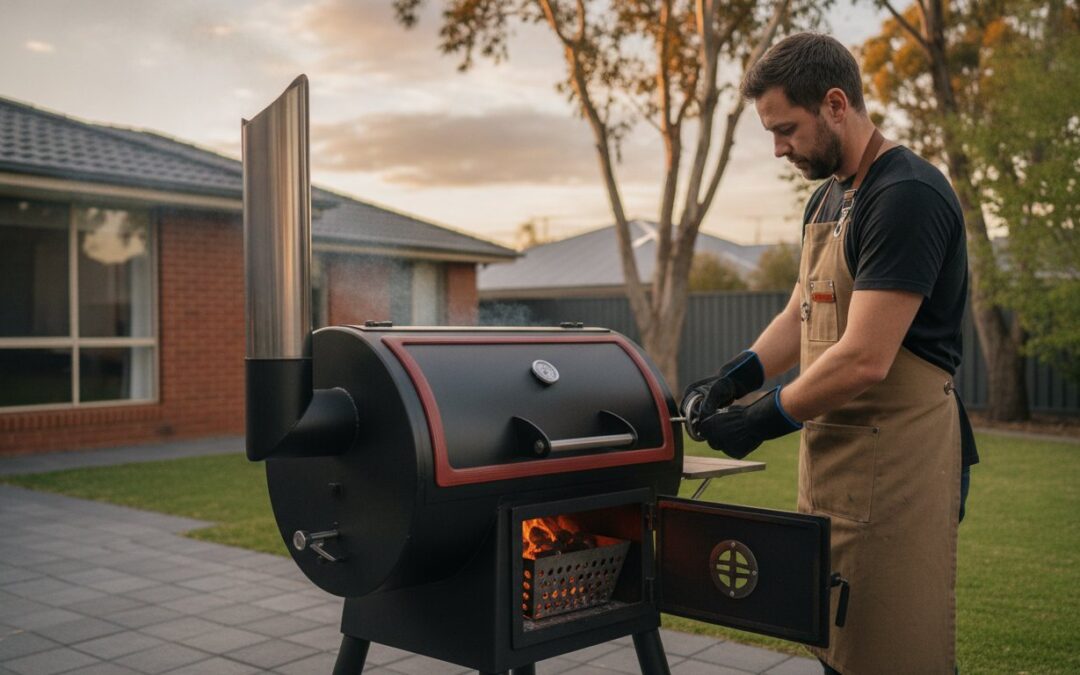
Most budget-friendly offset smokers are essentially leaky metal boxes that bleed heat and waste fuel. You don’t need a three thousand dollar competition pit to produce world-class brisket, but you do need to fix the factory flaws that are sabotaging your cooks. It’s frustrating to watch your temperature gauge swing wildly while precious smoke pours out of every door seam and join instead of your seasoned meat.
Key Takeaways
- Seal the cook chamber with high-temperature gaskets to prevent heat loss and ensure precise airflow control.
- Install tuning plates to eliminate hot spots and create uniform temperatures across the entire cooking grate.
- Optimise the firebox with a charcoal basket to improve combustion and simplify ash management during long cooks.
- Implement these essential offset smoker mods to transform an entry-level rig into a high-performance pit.
- Pair hardware upgrades with premium, additive-free fuel to maintain consistent temperatures and pure smoke flavour.
Common Performance Issues with Stock Offset Smokers
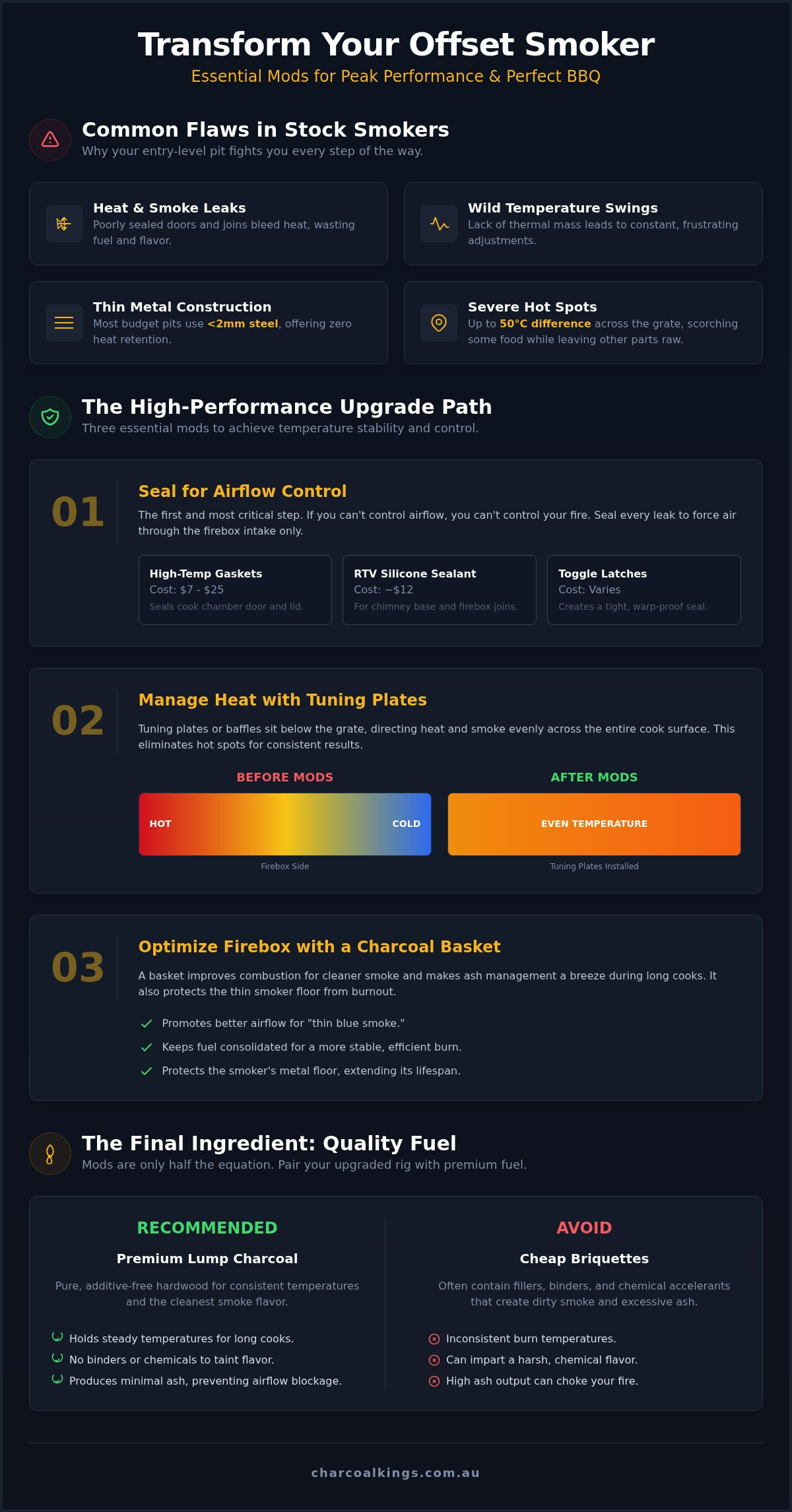
Entry-level smokers often arrive with fundamental design flaws that frustrate even the most patient pitmaster. Most budget units use thin-gauge steel, often less than 2mm thick, which offers zero thermal mass. In the Australian climate, especially in coastal areas or during a windy South Australian winter, this thin metal loses heat faster than the firebox can generate it. You end up burning through double the amount of fuel just to maintain a basic cooking temperature. Understanding Offset smoker basics is the first step toward diagnosing why your rig isn’t performing.
Smoke leakage is another critical failure. When smoke pours out of the door seals and chimney joins, you lose the convective pressure needed to pull heat across the meat. This leakage forces the fire to work harder, leading to inefficient fuel consumption and a bitter flavour profile. Implementing strategic offset smoker mods is the only way to reclaim control over your cooking environment and stop wasting expensive wood and charcoal.
Airflow and Draft Problems
A functioning offset relies on the venturi effect. This occurs when hot air rising through the chimney creates a vacuum that pulls fresh oxygen into the firebox. If the chimney is too short or the intake is restricted, the draft stalls. This creates “dirty smoke” thick with creosote. Creosote is a bitter, oily substance that ruins the taste of your BBQ. You want “thin blue smoke,” which only occurs when the fire has enough oxygen to burn clean and the exhaust is moving fast enough to vent combustion byproducts efficiently.
Thermal Inconsistency Across the Grate
Temperature distribution in a stock offset is notoriously poor. It’s common to see a 50°C difference between the side closest to the firebox and the far end of the cook chamber. These hot spots make it impossible to cook multiple briskets or racks of ribs simultaneously without constant rotating. Stock designs often fail to circulate heat under the grate, leaving the bottom of your meat cold while the top scorches. This lack of uniformity is why many enthusiasts turn to offset smoker mods to install baffles or tuning plates that redirect the airflow and balance the heat.
Essential Sealing Mods for Airflow Control
Sealing the cook chamber is the first mod every pitmaster should perform. If air enters the chamber anywhere other than the firebox intake, you lose control over the combustion process. These leaks cause temperature spikes and force you to burn more fuel to maintain heat. High-temperature gaskets and sealants are the primary tools for fixing these issues. A 12-ounce tube of high-temperature RTV silicone sealant costs approximately $12 and is essential for sealing the base of the chimney and the joins where the firebox meets the main body.
Gasket kits for smoker doors and lids generally range from $6.99 to $24.95. These heat-resistant strips provide a cushioned barrier that fills gaps in the metal. When you pair these with mechanical latches, you create a pressurized environment that forces smoke to travel the full length of the grate. This is a core component of successful offset smoker mods that lead to consistent results. Proper sealing ensures that every bit of heat and flavour stays where it belongs: on the meat.
Applying High-Temp Nomex Gaskets
Success depends on surface preparation. Use a heavy-duty degreaser or acetone to strip all grease and soot from the rim of the cook chamber. If the surface is dirty, the adhesive will fail within one or two cooks. Measure the perimeter carefully and cut the gasket material with sharp shears to avoid fraying. Apply the gasket to the chamber rim rather than the lid for better longevity. Once installed, perform the dollar bill test. Close the lid on a banknote and try to pull it out. If the bill slides out easily, the seal is too loose. You need consistent resistance around the entire opening to ensure a true airtight fit.
Installing Toggle Latches
Gravity alone is rarely enough to keep a thin-gauge lid sealed. Heat causes metal to warp, which creates new gaps during the cook. Adjustable toggle latches provide the mechanical force needed to pull the lid tight against your new gaskets. Choose a medium-sized zinc-plated or stainless steel latch for durability. Position the latches on the front of the cook chamber. Mark your holes and use a cobalt drill bit to penetrate the steel. Mounting these latches ensures the seal remains tight even as the metal expands. For those looking to finish their build with professional-grade gear, browse the range at Charcoal Kings for expert advice on pit hardware and accessories.
Managing Heat Distribution: Baffles and Tuning Plates
Mastering an offset smoker requires controlling two types of heat: radiant and convective. Radiant heat is the raw energy emitted from the fire, which easily scorches meat placed near the firebox throat. Convective heat is the moving hot air that actually cooks the BBQ. In a stock rig, the radiant heat is often overwhelming and creates massive temperature imbalances. Implementing offset smoker mods like baffle plates and tuning plates allows you to shield the meat and redirect that energy for a uniform cook.
Adding thermal mass is a professional tactic to stabilise your rig. Lining the bottom of the cook chamber with heavy firebricks helps the smoker retain heat. This is crucial for budget smokers with thin steel walls that lose energy rapidly in the wind. The bricks absorb heat and radiate it back steadily, dampening the temperature swings that occur when you open the firebox to add wood. It transforms a temperamental smoker into a reliable, steady pit that holds its temperature for hours.
Baffle Plate vs. Tuning Plates
A baffle plate is a fixed piece of steel angled over the firebox throat. Its primary job is to deflect direct flames and radiant heat downward, forcing the air to travel under the meat. Tuning plates take this a step further. These are individual, adjustable steel plates that sit across the bottom of the cook chamber. Tuning plates are the primary tool for horizontal heat management because they allow you to create precision temperature zones. By widening or narrowing the gaps between plates, you can eliminate hot spots and ensure the far end of the smoker is just as hot as the end near the firebox. Pre-made tuning plates for popular models typically cost between $30 and $150, providing a high-value upgrade for any serious pitmaster.
The Role of Water Pans in Thermal Stability
Water pans are a critical thermal management tool. Placing a heavy pan of water over the firebox throat acts as a massive heat sink. Because water evaporates at a constant 100°C, it helps buffer the intense heat coming out of the firebox. This prevents the sharp temperature spikes that lead to dry, overcooked meat. Beyond thermal stability, the steam created by the pan keeps the surface of the meat tacky. This moisture is essential for bark formation, as it allows smoke particles to stick more effectively to the protein. Whether you place the pan directly over the throat or tucked under the grate, it’s a simple mod that pays massive dividends in both texture and temperature control.
Firebox Upgrades for Efficiency and Longevity
The firebox is the engine room of your pit. If the firebox fails to maintain a clean, efficient burn, every other mod in the cook chamber is useless. High-performance offset smoker mods often focus on the firebox because it controls the quality of the smoke and the stability of the temperature. A heavy-duty replacement firebox for a popular model like the Oklahoma Joe’s Highland costs approximately $299. However, you can achieve significant improvements with more targeted upgrades like integrated ash pans and air channels for around $190. These modifications ensure that the fire receives a constant supply of oxygen without being choked by its own combustion byproducts.
The Charcoal Basket Advantage
Using a charcoal basket is a game-changer for thermal efficiency. It keeps the fuel concentrated, which creates a hotter, more consistent core temperature. This concentration allows you to burn premium hardwood lump charcoal with maximum precision. Without a basket, coals spread out and lose heat, often becoming “choked” by their own ash pile. A raised basket allows ash to fall through the grate, ensuring oxygen always reaches the fire. This results in the clean, blue smoke necessary for professional-grade BBQ. It also makes clean-up faster, as you can simply lift the basket out once the cook is finished.
Chimney Modifications
Chimney modifications are frequently misunderstood. Many beginners believe extending the height of the chimney is the only way to improve the draft. In reality, the most effective mod is lowering the chimney intake inside the cook chamber. By using a piece of flexible aluminium ducting to bring the exhaust opening down to grate level, you force the heat and smoke to travel across the meat before exiting. This prevents the “hot ceiling” effect where heat stays at the top of the chamber and leaves the meat cold. Balancing the draft is a delicate process. If the chimney is too wide or too tall, the air moves too fast, and you lose heat. If it’s too restricted, you get stagnant, bitter smoke that ruins your bark.
Insulating your firebox is a heavy-duty project but offers a massive return on fuel efficiency. Some pitmasters choose a double-wall mod, where an extra layer of steel is welded over the firebox with an air gap or insulation material between. While this requires advanced tools, it’s worth the effort for those cooking in colder climates. It prevents the exterior steel from losing heat to the ambient air, keeping the energy focused on the cook chamber. For those ready to upgrade their hardware, you can shop expert BBQ accessories at Charcoal Kings to complete your rig.
The Final Ingredient: Quality Fuel and Expert Support
A perfectly modified pit is only half the battle. You can seal every leak and balance every hot spot, but your BBQ will fail if you use poor-quality fuel. High-performance offset smoker mods increase the efficiency of your rig. This means your fuel needs to be pure enough to match that performance. At Charcoal Kings, we set a standard of absolute purity. Our hardwood lump charcoal contains no additives or chemical binders. This ensures that the only thing seasoning your meat is clean, organic smoke. If you use supermarket briquettes full of fillers, you’re essentially undoing all the hard work you put into sealing your cook chamber.
Matching your fuel to your modded airflow is a technical requirement. A sealed rig allows you to control oxygen intake with surgical precision. Hardwood lump charcoal responds instantly to these adjustments, while lower-grade fuels often smoulder or produce inconsistent heat. For South Australian pitmasters, we invite you to visit our Holden Hill showroom. Seeing the hardware in person and discussing your specific rig with our experts can save you hours of trial and error. We understand the nuances of thermal duration and how different wood species interact with your specific smoker model.
Why Hardwood Lump is the King of Offset Fuel
Hardwood lump charcoal is the superior choice for any offset smoker. It offers a significantly higher heat output than standard briquettes. This makes fire management much easier, especially when you’re trying to maintain a steady 120°C over a twelve-hour cook. Another major advantage is minimal ash production. Excessive ash can block the airflow in your newly installed charcoal basket, leading to temperature drops and “dirty” smoke. For those just starting their journey, our guide on Mastering the Art of Barbecuing with Charcoal provides essential fire-starting tips and management techniques. Clean fuel results in clean flavour.
Get the Right Gear for the Job
Success requires more than just a modified smoker and good fuel. You need the right tools to manage the process safely and accurately. Essential accessories include high-temperature gloves for handling firebox grates and accurate digital probes to monitor grate-level temperatures. Don’t rely on the cheap dial thermometers that come stock on budget rigs. They’re notoriously inaccurate. Charcoal Kings supports the Australian BBQ community by stocking only the gear we use ourselves. We value performance over decorative flourishes. Start with the basics. Seal your rig, install your plates, and fuel it with the best charcoal available. The results on the plate will speak for themselves. Happy smoking.
Master Your Pit Performance
Transforming a budget rig into a high-performance pit requires a systematic approach to both hardware and fuel. Start by sealing the cook chamber with gaskets and latches to reclaim control over the draft. Once your airflow is secure, install tuning plates to ensure every centimetre of the grate maintains a consistent temperature. These essential offset smoker mods provide the mechanical foundation needed for competition-grade results. Hardware alone is only half the equation. You must pair your optimised rig with high-performance fuel that burns clean and consistent.
As Australia’s leading supplier of additive-free charcoal, Charcoal Kings provides the purity required for superior smoke flavour. Visit our Holden Hill showroom in South Australia for expert technical advice from seasoned pitmasters who know how to dial in your specific setup. Upgrade your fuel with Charcoal Kings Premium Hardwood Lump and experience the difference of professional-grade combustion. Get your modifications finished and get the fire started. Your best brisket is just one clean burn away.
Frequently Asked Questions
Do offset smoker mods really make a difference in flavour?
Yes, they improve flavour by ensuring a clean burn and consistent airflow. Offset smoker mods that seal the cook chamber prevent air from stagnating, which is the primary cause of bitter creosote buildup. When your rig drafts correctly, you maintain the thin blue smoke necessary for a clean, professional flavour profile. Better airflow management directly results in better tasting BBQ.
Will modifying my smoker void the manufacturers warranty?
Most structural modifications, such as drilling holes for toggle latches or permanent baffle plates, will void a manufacturer’s warranty. It is best to perform these upgrades on budget-friendly units where the performance gains outweigh the loss of a limited warranty. Always review your specific warranty terms before using power tools on your smoker’s chassis.
What is the most important mod for a cheap offset smoker?
Sealing the cook chamber is the most critical modification you can perform. Without an airtight seal on the doors and joins, you cannot control the internal temperature or the oxygen intake. This mod provides the foundation that allows every other upgrade to function. It is the most cost-effective way to immediately improve your fuel efficiency and cooking results.
Can I use high-temp silicone instead of a gasket?
No, you should use high-temperature RTV silicone for fixed joins and Nomex gaskets for moving doors. Silicone is a permanent sealant that will tear or fail if applied to a door that opens and closes. Use a $12 tube of RTV silicone for the chimney base and firebox joins, but stick to felt or Nomex gaskets for the main lid.
How much does it cost to mod an offset smoker in Australia?
You can perform essential offset smoker mods for a relatively small investment. A tube of high-temperature RTV silicone sealant costs approximately $12, while gasket kits typically range from $6.99 to $24.95. Even with the addition of toggle latches, most pitmasters can significantly upgrade their budget rig for less than $50 in total materials. This provides a massive return on performance.
Why is my offset smoker leaking so much smoke from the door?
Smoke leaks occur because budget smokers use thin-gauge steel that warps under intense heat. Factory tolerances are often loose, leaving gaps where the lid meets the cook chamber. When these gaps exist, the chimney cannot create the vacuum needed to pull smoke across the meat. Installing gaskets and adjustable toggle latches is the only way to pull the metal into a tight seal.
Do I need to mod a reverse flow offset smoker?
Reverse flow smokers don’t require tuning plates, but they still benefit from sealing and firebox mods. While the design naturally manages heat distribution better than a standard offset, it is still prone to heat loss through leaky doors. Focus your efforts on gaskets and a charcoal basket to ensure your reverse flow rig operates at maximum thermal efficiency.
How do I stop my firebox paint from peeling after mods?
Firebox paint peels when internal temperatures exceed the thermal rating of the factory coating. To prevent this, sand back any bubbling areas and apply a dedicated high-heat BBQ spray paint rated for at least 600°C. After the paint cures, season the exterior of the firebox with a light coat of cooking oil while the smoker is warm to create a rust-resistant barrier.