
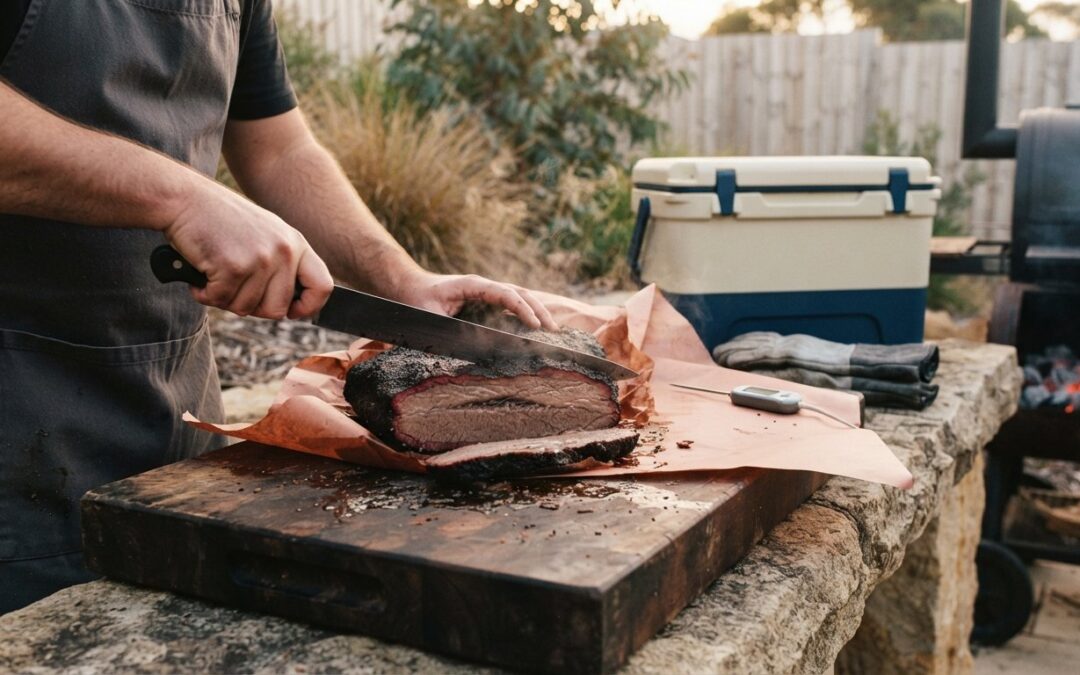
Slicing into a brisket the second it leaves the smoker is the fastest way to ruin a twelve-hour cook. You watch months of practice and kilos of Premium Natural Hardwood Charcoal go to waste as a lake of juice floods your cutting board, leaving the muscle fibers dry and tight. Mastering the minimum resting time for smoked meats isn’t about being patient; it is the final, active stage of thermal management that determines the texture of your meat.
You want that professional, glossy finish where the fat remains liquid but the meat holds its structure. You have likely felt the pressure to serve hungry guests while worrying the food is getting cold in the Esky. This guide eliminates that guesswork. You will learn the specific resting windows for every major cut, from brisket to pork shoulder, and how to manage carryover cooking like a seasoned pitmaster. We are breaking down the science of moisture retention and heat management so your next roast is the best one yet.
Key Takeaways
- Learn why slicing too early causes immediate moisture loss and how to stop the “floodgate” effect for juicier results.
- Understand how to determine the minimum resting time for smoked meats based on weight and density to ensure maximum tenderness.
- Master the “Faux-Cambro” technique using a standard Australian Esky to hold large cuts at safe temperatures for hours.
- Identify the critical internal temperature markers and visual cues that signal your meat is ready for the cutting board.
- Discover how to manage carryover cooking to prevent your brisket or pork butt from overcooking during the rest phase.
The Science of the Rest: Why Patience is a Pitmaster’s Secret
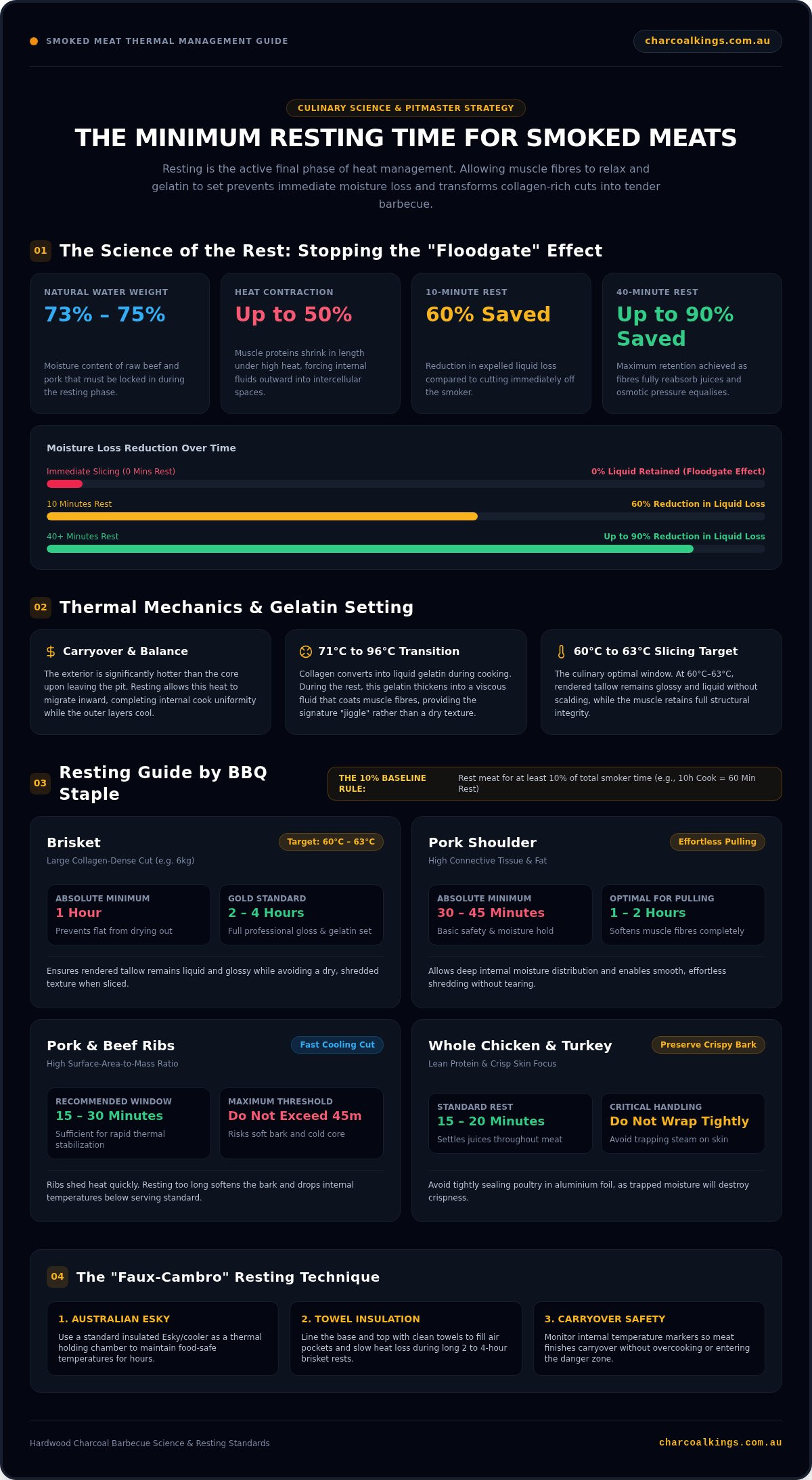
Resting is the period where internal temperatures stabilise and constricted muscle fibres finally relax. When meat is under high heat, muscle proteins contract by up to 50% of their length, physically squeezing internal moisture out into the spaces between the fibres. Raw beef and pork consist of approximately 73% to 75% water by weight, and this moisture is what keeps your cook succulent. If you slice immediately, this pressurized moisture escapes instantly. This is the “Floodgate” effect. Research indicates that a 10-minute rest can reduce liquid loss by 60%, while a 40-minute rest reduces it by up to 90%.
Temperature equilibrium is also achieved during this time. The exterior of the meat is significantly hotter than the core when it leaves the pit. Resting allows this heat to migrate inward, finishing the internal cook through carryover cooking while the outer layers begin to cool. This balance is critical for maintaining a uniform temperature throughout the cut. Understanding the minimum resting time for smoked meats ensures you don’t lose the hard-earned results of a long, clean burn with high-quality hardwood charcoal.
To better understand how these thermal mechanics work in a professional setting, watch this detailed breakdown:
Muscle Fibre Relaxation and Moisture Retention
Heat acts on meat like a hand squeezing a wet sponge. As the meat cools during the rest, those fibres expand and re-absorb the juices that were previously expelled. This redistribution creates a uniform texture from the bark to the core. Osmotic pressure in this context refers to the movement of internal fluids from high-pressure areas near the surface to the lower-pressure, drier areas of the muscle as the temperature drops. This process ensures every bite is as juicy as the center, provided you don’t rush the process.
The Role of Collagen in Large BBQ Cuts
Large cuts like brisket and pork shoulder behave differently than a standard steak. They rely on the conversion of collagen into gelatin, a process that occurs significantly between 71°C and 96°C. During the rest, rendered fats and liquid gelatin begin to thicken into a viscous fluid that coats the muscle fibres. This thickening is what gives a properly rested brisket its signature “jiggle” and prevents the meat from looking dry and shredded when sliced. Adhering to the minimum resting time for smoked meats ensures these proteins set properly, turning a tough cut into a professional-grade masterpiece. Without this stage, the gelatin remains too thin to hold the meat together, leading to a “pot-roast” texture rather than clean, competition-style slices.
Minimum Resting Times by Cut: A Guide for Every BBQ Staple
Size and thermal mass dictate the clock. A 6kg brisket holds heat differently than a rack of pork ribs. While the minimum resting time for smoked meats is technically reached once internal temperatures stop rising, the optimal rest is about achieving the perfect texture. For most cooks, you can use the 10% rule as a baseline. Rest your meat for at least 10% of the total time it spent in the smoker. If a pork butt took 10 hours, it needs at least 60 minutes of peace before you touch it.
There is a clear distinction between a safety minimum and a culinary optimal. A three-minute rest might satisfy basic food safety for a steak, but it won’t suffice for a collagen-heavy roast. You are waiting for the internal temperature to drop to a specific window, usually between 60°C and 63°C, where the meat is safe to handle and the juices have thickened.
The Big Three: Brisket, Pork Shoulder, and Ribs
- Brisket: One hour is the absolute minimum to prevent the flat from drying out. For a professional finish, two to four hours is the gold standard. Slicing at 60°C to 63°C ensures the rendered tallow remains glossy and liquid without scalding the palate.
- Pork Shoulder: Give this cut 30 to 45 minutes as a minimum. If you plan on pulling the meat, a longer rest of one to two hours allows the muscle fibres to soften further, making shredding effortless.
- Pork and Beef Ribs: These have a high surface-area-to-mass ratio and lose heat quickly. A 15 to 30-minute rest is usually sufficient. Resting ribs for over 45 minutes risks softening the bark too much and letting the meat get too cold.
Poultry and Smaller Roasts
Whole chicken and turkey require 15 to 20 minutes of resting. Do not wrap poultry tightly in foil; this traps steam and turns your smoked skin rubbery. Loosely tenting the bird is a better approach. For Australian favourites like a lamb leg or shoulder, a 20-minute rest is essential. This allows the juices to redistribute through the lean muscle groups, preventing a dry result. Smaller, high-heat items like steaks or reverse-seared roasts only need a five to ten-minute window to stabilise. Achieving these professional results starts with a clean, consistent burn. Using high-quality hardwood lump charcoal provides the stable thermal foundation needed to make your resting window predictable and successful.
The Resting Environment: Eskys, Faux-Cambros, and Countertops
Where you place your meat after the cook is as important as the smoker itself. The environment determines how quickly the temperature drops and whether your bark remains crisp. Adhering to the minimum resting time for smoked meats requires a stable environment that prevents the meat from entering the “Danger Zone” below 60°C. For short durations, a countertop rest is sufficient. This works best for ribs, poultry, and steaks that only need 15 to 30 minutes. Place the meat on a wooden board and tent it loosely with foil to prevent drafts from cooling the surface too quickly.
For large cuts like brisket or pork shoulder, the Australian Esky is your most valuable tool. Converting a standard cooler into a Faux-Cambro allows you to maintain heat for several hours. Pre-heating the vessel is a critical step. A cold Esky will immediately pull heat from the meat, shortening your safe window. Pour several litres of boiling water into the Esky and close the lid for 10 minutes. Drain the water and dry the interior before adding your meat. This ensures the insulation starts warm, keeping your food at a professional serving temperature.
How to Build a Faux-Cambro with an Esky
A Faux-Cambro relies on insulation and the elimination of dead air space. Follow these steps for a professional-grade hold:
- Venting: Before placing meat in the Esky, let it sit on the counter for 10 to 15 minutes. This “burping” phase allows steam to escape and drops the internal temperature to roughly 71°C to 76°C, stopping the carryover cooking.
- Wrapping: Ensure the meat is wrapped tightly in butcher paper or foil to retain moisture.
- Insulation: Line the bottom of the pre-heated Esky with old, clean bath towels. Place the meat inside and fill all remaining gaps with more towels.
- Monitoring: Keep a probe thermometer in the meat. You must keep the internal temperature above 60°C to satisfy food safety standards. A well-packed Esky can maintain this for 4 to 6 hours.
Protecting the Bark During the Rest
Determining the minimum resting time for smoked meats also involves managing moisture levels. Wrapping meat too tightly in heavy-duty foil creates a steam-cooker effect. This can turn a crunchy, well-developed bark into a soft, mushy mess. Professional pitmasters prefer high-density, unlined peach butcher paper. This material is breathable, allowing excess steam to escape while retaining the essential fats and tallow that keep the meat moist.
Building a high-quality bark starts with the right fuel. Check out The Ultimate Guide to BBQ Charcoal for tips on setting the foundation for a perfect rest. If you must use foil, use the “foil boat” method, which leaves the top bark exposed to the air while the bottom sits in its own juices. This hybrid approach offers the moisture retention of a wrap with the bark protection of a naked rest.
Carryover Cooking and the Danger of the “Cold Meat” Myth
Carryover cooking is the thermal energy that continues to move through the meat after you remove it from the pit. When your smoker is running at 110°C to 135°C, the exterior of the meat is significantly hotter than the core. Once the meat is pulled, that exterior heat migrates inward, raising the internal temperature even without an external heat source. For a large 6kg brisket, this thermal mass is substantial. A thick cut can continue to cook for 20 to 30 minutes after it leaves the grates, often increasing the internal core temperature by 3°C to 6°C. Understanding this rise is essential for hitting your minimum resting time for smoked meats without overshooting your target tenderness.
Safety remains the priority during this phase. Food Standards Australia New Zealand (FSANZ) and the USDA define the “Danger Zone” as the window between 5°C and 60°C. In this range, pathogenic bacteria can double every 20 minutes. You must ensure your resting environment keeps the meat above the 60°C threshold for the duration of the hold. A large roast has the density to stay safe for hours, whereas smaller items like chicken wings or thin ribs will drop into the danger zone much faster.
Adjusting Your Pull Temperatures
You cannot wait until the meat hits its final target temperature before pulling it from the smoker. If you want a finished brisket at 95°C, you should pull it at 90°C to 92°C to account for carryover. High-heat cooking methods or heavy foil wrapping will accelerate this temperature spike. Using a reliable, high-accuracy meat probe is the only way to track the “peak” of this carryover before the temperature begins its slow descent. If you pull too late, the carryover will push the meat into the overcooked zone, turning a competition-style slice into a crumbly mess. Upgrade your setup with professional BBQ accessories to ensure your temperature tracking is flawless.
Busting the “Cold Meat” Fear
The most common mistake backyard pitmasters make is slicing too early because they fear the meat is getting cold. This fear is a myth. While the surface of a pork shoulder might feel cool to the touch after 45 minutes, the internal core remains incredibly hot. A large roast wrapped in butcher paper and insulated correctly holds its heat far longer than most people realise. Slicing at 60°C to 63°C is the scientific sweet spot. At this temperature, the rendered fat is glossy and liquid, the muscle fibres are relaxed, and the meat is still hot enough to be enjoyable. If you must rest for more than six hours and the temperature threatens to dip below the 60°C safety line, you can place the wrapped meat in an oven set to its lowest warming calibration (usually 65°C to 70°C) to maintain a safe hold without further cooking the proteins.
The Final Cut: How to Know Your Meat is Ready
Determining when the minimum resting time for smoked meats is complete requires more than just watching a clock. You must look for specific physical indicators that the muscle fibres have relaxed and the internal fluids have stabilised. A primary visual cue is the re-absorption of surface moisture. When meat first leaves the smoker, it often appears wet or has pools of liquid on the surface. As it rests, this moisture is pulled back into the muscle. Once the surface looks tacky rather than drenched, you are approaching the window for slicing.
The “feel” test is the gold standard for large cuts like brisket. A properly rested brisket should jiggle like jelly when you tap it. This movement indicates that the collagen has fully converted into gelatin and has thickened enough to provide structural integrity without being stiff. For the best results, track your internal temperature milestones. Slicing brisket at 63°C is the professional sweet spot. At this temperature, the fat is rendered and glossy, but the meat is firm enough to hold a pencil-thin slice without falling apart. Achieving this level of perfection starts with clean heat. High-quality fuel ensures your bark is set properly before the rest begins. Learn more about this foundation in our guide on Mastering the Art of Barbecuing with Charcoal.
Slicing Against the Grain
Even a perfectly rested roast can feel tough if you slice it incorrectly. You must identify the grain direction, which is the way the muscle fibres run. Always slice perpendicular to these fibres to shorten them, making the meat easier to chew. This is particularly important in a brisket, where the grain in the “flat” runs in a different direction than the grain in the “point.” Use a sharp, long slicing knife with a scalloped edge to make clean passes. Avoid using a sawing motion, which can tear the softened fibres and ruin the presentation you worked hours to achieve.
The Charcoal Kings Conclusion
The rest is not an optional waiting period. It is the final ingredient in your BBQ process. Skipping this step turns a premium cut into a dry disappointment. By mastering the minimum resting time for smoked meats, you ensure that every gram of juice stays in the meat where it belongs. This level of detail separates hobbyists from pitmasters. Professional results require professional tools and pure, additive-free fuel. Consistency in your cook allows for consistency in your rest. Shop our range of premium BBQ fuels and smokers to give your next cook the quality foundation it deserves. Get the fire right, nail the rest, and serve the best BBQ in the neighbourhood.
Master the Final Stage of the Pit
Resting meat is the difference between a dry disaster and a professional-grade roast. You now understand that heat management doesn’t end when you close the pit lid. By respecting the minimum resting time for smoked meats and accounting for carryover cooking, you preserve the moisture and flavour developed during the long, slow burn. Whether you use a pre-heated Esky or a countertop tent, the goal remains the same: temperature stability and muscle fibre relaxation. It’s the final, active step of the cook that ensures every gram of juice stays exactly where it belongs.
This level of precision requires reliable fuel that burns clean and consistent without additives. As Australia’s leading supplier of natural hardwood charcoal, Charcoal Kings provides the expert-grade smoking woods and lump charcoal trusted by professional pitmasters across Australia. Don’t let a long cook go to waste by rushing the finish. Upgrade your next cook with Charcoal Kings Premium Hardwood Lump to ensure your hard work results in the perfect, glossy jiggle every time. Get your fire right, be patient with the rest, and serve the best BBQ in the neighbourhood.
Frequently Asked Questions
What is the absolute minimum resting time for a brisket?
One hour is the absolute bare minimum for a backyard brisket. Ideally, you should aim for a two to four-hour rest in a pre-heated Esky. This allows the internal temperature to drop to the 60°C to 70°C range where muscle fibres fully relax. Rushing this process results in a dry flat and a crumbly point. Proper thermal management ensures the rendered fat stays glossy and liquid for a professional finish.
Will resting my meat make the bark soggy?
Resting only makes bark soggy if you trap too much steam inside a tight foil wrap. You must “burp” the meat by letting it sit on the counter for 15 minutes before placing it in a cooler. Using breathable peach butcher paper instead of heavy-duty foil allows excess moisture to escape while keeping the fat warm. This technique preserves the crunch you built using premium hardwood lump charcoal during the cook.
How long can I safely keep meat in a cooler (Esky)?
You can safely keep meat in a pre-heated Esky for four to six hours. The critical factor is keeping the internal temperature above the 60°C safety threshold defined by FSANZ. Use clean bath towels to fill every centimetre of dead air space in the cooler. This insulation prevents rapid heat loss. If the temperature threatens to dip below 60°C, you must serve the meat or move it to a warming oven.
Do I need to rest ribs, or can I eat them immediately?
You should rest ribs for 15 to 30 minutes before slicing. While their smaller size means they lose heat faster than a brisket, eating them immediately causes the internal juices to flood the board. A short rest allows the proteins to re-absorb moisture without the bark becoming too soft. Loosely tent them with foil on a wooden board to maintain serving temperature without steaming the exterior during the wait.
Should I leave the meat probe in while it rests?
You should absolutely leave the meat probe in during the resting phase. This is the only way to track carryover cooking and ensure the meat stays above the 60°C danger zone. Large roasts can continue to rise by 5°C or more after leaving the pit. Monitoring the “peak” and the subsequent slow drop helps you time your meal perfectly for guests without risking food safety or serving cold meat.
What happens if I forget to rest the meat?
If you forget to rest the meat, you will experience the “Floodgate” effect where internal moisture escapes instantly upon slicing. The muscle fibres remain tight and constricted from the heat, resulting in a tough, dry texture. You lose the benefit of the gelatin conversion that happens during the cooling phase. Even the best-cooked meat will taste like a failure if the juices aren’t given time to redistribute through the muscle.
Does a reverse-seared steak need to rest as long as a smoked one?
A reverse-seared steak requires a much shorter rest than a large smoked roast. Five to ten minutes is usually sufficient for a standard steak because it has less thermal mass and a lower pull temperature. In contrast, the minimum resting time for smoked meats like brisket is much longer due to the higher internal heat and density. The goal for a steak is simple fibre relaxation, not long-term collagen breakdown.
Is it better to rest meat wrapped or unwrapped?
It is generally better to rest large BBQ cuts wrapped in butcher paper to prevent the surface from drying out. Butcher paper provides the best balance of moisture retention and breathability. However, you should rest smoked poultry like chicken or turkey unwrapped or loosely tented. Tight wrapping traps steam against the skin, turning it rubbery. For the best flavour profile, ensure your initial cook uses additive-free smoking woods and clean heat.