
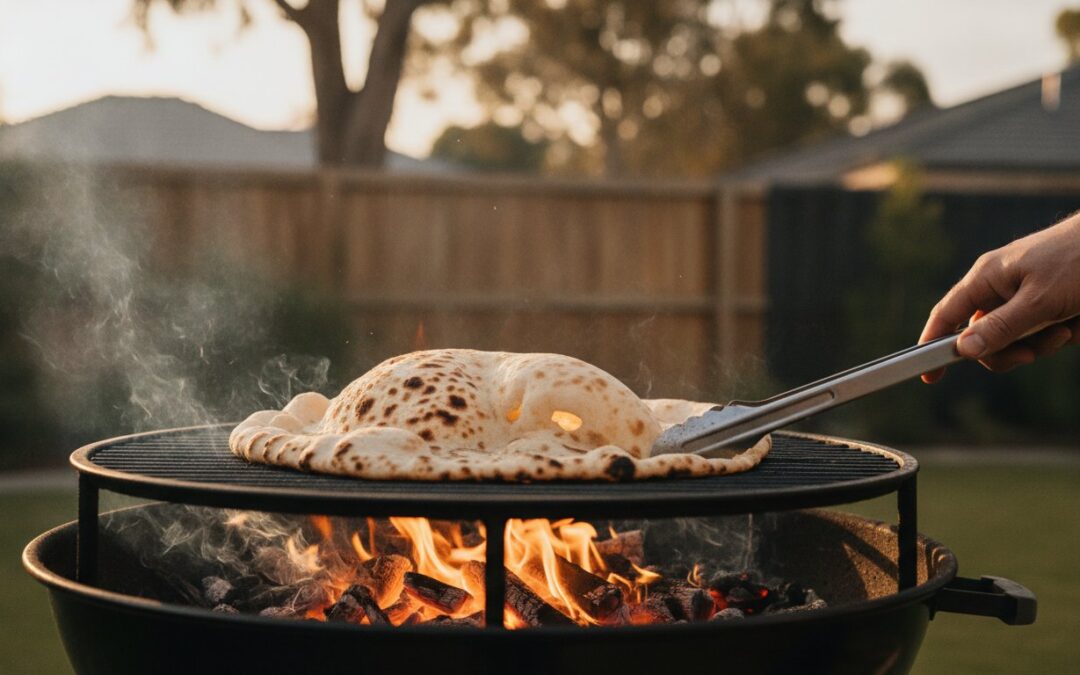
Your kitchen oven will never produce authentic naan because it lacks the raw, aggressive heat of a traditional clay tandoor. Achieving that signature puffy texture and leopard-spot char requires temperatures exceeding 450°C. This performance level is only possible when cooking naan on a charcoal grill fueled by premium, additive-free hardwood. Many home cooks face the frustration of dough sticking to grates or drying out before it blisters. These failures usually stem from insufficient thermal mass and low-quality fuel.
We understand the pursuit of the perfect, smoky sear. This guide provides the technical expertise to replicate restaurant-quality results in your backyard. You’ll learn to leverage the intense heat of hardwood lump charcoal to mimic a tandoor’s environment. We cover precise heat zone management, a reliable BBQ-ready dough recipe, and the exact steps to ensure a soft interior with a charred finish. Master the fire to produce professional-grade naan every time you light the grill.
Key Takeaways
- Replicate the 450°C heat of a traditional tandoor by using premium hardwood lump charcoal for maximum radiant power.
- Master the two-zone fire technique for cooking naan on a charcoal grill to achieve a perfect char without drying out the interior.
- Understand why high-hydration dough with yogurt and milk is essential for a puffy, resilient crumb that withstands intense heat.
- Identify the professional-grade gear, including cast iron grates and long-handled tongs, required for safe and consistent results.
Why Charcoal is the Secret to Authentic Homemade Naan
To understand why your home oven fails, you must first understand what a tandoor oven is. These traditional clay vessels reach temperatures between 450°C and 480°C, creating the “Tandoor Effect.” This phenomenon is a specific synergy of massive radiant heat and smoky convection. Most gas grills and domestic ovens max out at significantly lower temperatures, failing to replicate this environment. High-intensity heat is non-negotiable. It triggers rapid steam expansion within the dough, forcing it to puff into airy bubbles within seconds.
Gas grills also lack the atmospheric depth required for authentic flatbreads. When cooking naan on a charcoal grill, you utilize a bed of glowing coals that emit intense infrared radiation. This energy sears the dough surface instantly, locking in moisture while creating iconic leopard-spot charring. Gas burners provide convection, but they don’t offer the raw radiant power needed for a professional 60-second bake. Without this speed, your naan will likely become tough and cracker-like.
To better understand this concept, watch this helpful video:
Mimicking the High-Heat Tandoor Environment
A traditional tandoor acts as a thermal battery, radiating heat from every surface. On a standard BBQ, you must compensate for the lack of clay walls by using a high-density fuel source. Cooking naan on a charcoal grill requires a fuel that can maintain a consistent 580°C output. Hardwood lump charcoal provides this intensity. It creates a dry, searing environment that mimics the internal conditions of a clay oven. This allows the bread to blister and rise before the interior loses its essential moisture.
The Flavour Advantage of Hardwood Smoke
Purity is the most critical factor when selecting your fuel. Many commercial briquettes contain chemical binders, coal dust, or fillers that release acrid smoke. Because naan dough is highly porous, it absorbs these chemical taints immediately, ruining the final product. You must use PREMIUM, ADDITIVE-FREE fuel to protect the delicate, buttery taste of the bread. Natural hardwood releases a clean, organic aroma that enhances the dough. As flour dust or yogurt drips from the dough hit the white-hot coals, they vaporize into a “BBQ perfume” that seasons the bread from the bottom up. Hardwood Lump Charcoal provides the most authentic flavour profile for traditional flatbreads by ensuring a clean burn and high-intensity heat.
Lump Charcoal vs. Binchotan: Choosing the Right Fuel
Success when cooking naan on a charcoal grill depends entirely on fuel purity. Supermarket briquettes often contain sawdust, coal dust, and chemical binders. These additives release acrid smoke that taints porous dough, resulting in a chemical aftertaste. For professional results, you must use high-density, carbonized wood. Hardwood lump charcoal and Binchotan are the only two viable options for mimicking a tandoor’s thermal output.
High-quality fuel ensures you maintain the required heat for the duration of the cook. While a James Beard Foundation’s naan recipe provides the culinary foundation, your grill must provide the thermal stability. Hardwood lump offers rapid, intense heat, while Binchotan provides unparalleled longevity and cleanliness. Selecting the right one depends on your batch size and desired flavor profile.
Hardwood Lump Charcoal for Intense, Quick Heat
Lump charcoal is the industry standard for high-intensity grilling. It reaches peak temperatures of approximately 580°C faster than any other fuel. This speed is essential for spontaneous sessions. You can identify premium lump by its weight and sound; it should feel light for its size and produce a metallic “clink” when handled. This indicates high carbon content and the absence of moisture. It’s the best choice for large batches where you need to replenish the fire quickly to keep the grates searing hot.
Binchotan for Precision and Cleanliness
For the most refined results, Binchotan Charcoal is the ultimate choice. This Japanese white charcoal burns at temperatures near 700°C and can last up to eight hours. It produces virtually no smoke, no sparks, and no odor. This allows the subtle, fermented notes of a high-hydration dough to remain front and center. Many professionals use a hybrid method when cooking naan on a charcoal grill: start the fire with hardwood lump for quick ignition, then layer Binchotan on top for a steady, intense infrared sear.
Using pure fuels ensures your bread remains free from contaminants. If you want to elevate your next cook, explore our range of premium hardwood charcoal to find the right fit for your setup.
The Science of the Perfect Naan Dough for Grilling
Intense heat demands a resilient dough. When cooking naan on a charcoal grill, you are subjecting the dough to thermal stress far beyond what a standard kitchen oven produces. A basic water and flour mix will fail in this environment; it will dry out and turn brittle before the interior cooks. You need an enriched dough. High hydration and specific fats are the only way to ensure the bread puffs rapidly while remaining soft and pliable.
Hydration levels should sit between 65% and 70%. This high water content is essential because the charcoal’s radiant heat causes immediate evaporation. That steam is what creates the massive internal bubbles. Without enough moisture, the dough won’t expand fast enough to achieve the signature tandoor texture. A long cold ferment of 12 to 24 hours also helps. It breaks down complex starches into simple sugars, which stand up better to the aggressive sear of hardwood coals.
Enrichment: Why Fat and Protein Matter
Yogurt is the most critical ingredient for texture. Its lactic acid acts as a natural tenderizer, weakening gluten strands just enough to ensure the bread isn’t rubbery. This creates a “short” crumb that is easy to tear. Milk provides the necessary proteins and lactose. These sugars trigger the Maillard reaction almost instantly upon contact with the heat. This produces the deep, mahogany charring that defines professional-grade naan. For vegan alternatives, soy milk and coconut yogurt provide similar protein profiles to maintain structural integrity under high heat.
Flour Selection: All-Purpose vs. Bread Flour
Flour protein percentages dictate the “chew” of your final product. All-purpose flour (roughly 10% protein) yields a softer, more delicate bite. However, bread flour (12% to 13% protein) is the superior choice for cooking naan on a charcoal grill. The stronger gluten network allows the dough to stretch thinner without tearing, which is vital when placing it on uneven grill grates. This protein strength provides the iconic “pull-apart” texture found in high-end restaurants.
Proper resting is the final technical hurdle. Once you divide and ball the dough, it must rest for at least 30 minutes at room temperature. This allows the gluten to relax. If you skip this step, the dough will “snap back” and shrink the moment it hits the heat. In the Australian climate, manage your hydration based on local conditions. High humidity in coastal regions requires slightly less water, while dry inland heat necessitates a wetter dough to prevent premature crust formation.
Step-by-Step: Grilling Naan Like a Pro
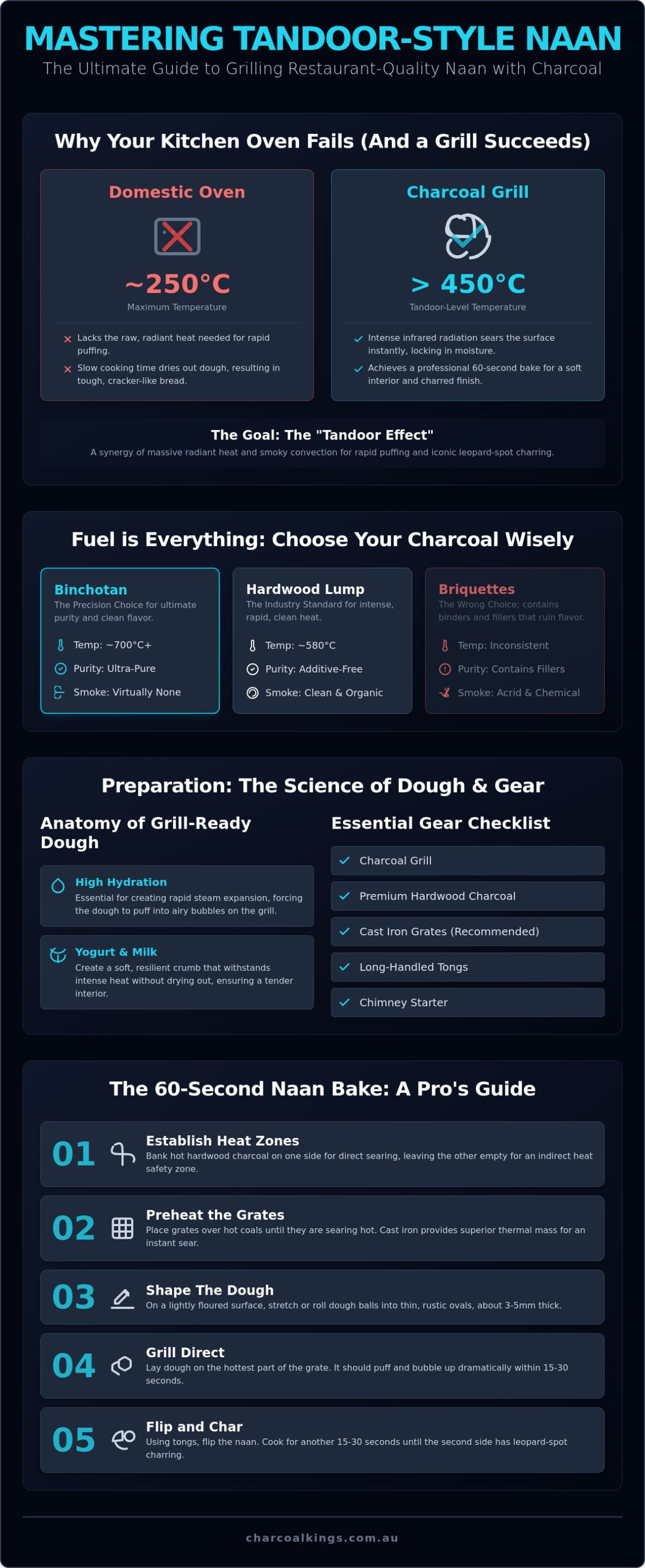
Precision is the difference between a charred masterpiece and a burnt failure. When cooking naan on a charcoal grill, you must shift from passive baking to active fire management. A traditional tandoor relies on massive thermal energy; your grill replicates this through a two-zone setup. Bank your coals to one side to create a searing zone for the initial puff. Leave the other side empty to act as a safety zone for finishing the interior without scorching the crust. This configuration gives you total control over the aggressive heat output of your fuel.
Cleanliness is your primary defense against sticking. Carbon buildup on your grates acts like glue for high-hydration dough. Scrub your grates until they are silver, then apply a high-smoke-point oil using a folded paper towel and tongs. A well-seasoned grate allows the naan to release naturally once the bottom has seared. If the dough resists when you try to lift it, the char hasn’t set. Wait five more seconds. The bread will tell you when it is ready to move.
Managing Your Fire for 250°C+ Cooking
Efficiency starts with your barbecuing with charcoal technique. To hit the required 250°C+ surface temperature, use a full chimney of lit hardwood lump. Spread the coals in a dense, even layer on the hot side. You can verify the heat levels using a simple hand test: hold your palm five centimetres above the grate. If you must pull away in under two seconds, the temperature is sufficient. For more precision, use an infrared thermometer to confirm the grates have reached at least 260°C. Keep the lid off during the bake to maximize direct radiant heat and prevent the dough from steaming into a soggy texture.
The Flip and the Bubble: Timing Your Bake
Speed is essential. Once the dough hits the steel, watch the surface tension. You should see small air pockets form within 20 to 30 seconds. As these bubbles expand and the edges begin to turn opaque, use long-handled tongs to peek at the underside. You are looking for distinct leopard-spotting. Flip the naan onto the same hot zone. The second side always cooks faster because the dough is already hot and the internal steam is pressurized. Expect the final sear to take only 40 to 60 seconds. Rotate the bread constantly to ensure the heat reaches every curve of the dough.
The process doesn’t end at the grill. Immediately transfer the hot naan to a plate, baste it heavily with melted ghee or butter, and wrap it in a clean tea towel or foil. This “post-grill” ritual traps the remaining steam, softening the crust and ensuring the bread remains pliable for the table. Equip your station with professional BBQ accessories to handle high-heat flatbreads with precision.
Essential Gear and Finishing Touches
Executing professional flatbreads requires specialized hardware. While the fire provides the energy, your tools determine the final texture and safety of the cook. When cooking naan on a charcoal grill, skip the pizza stones recommended by amateur guides. Authentic naan requires direct contact with a heavy-duty cast iron grate. Cast iron offers superior heat retention and creates the immediate, aggressive sear necessary for restaurant-quality results. A stone often acts as a thermal buffer, preventing the rapid puffing and leopard-spotting that defines a true tandoor-style bake. Direct contact with the metal ensures the dough receives the maximum infrared energy from your coals.
You must maintain a set of dedicated tools for high-heat dough handling. Long-handled stainless steel tongs are essential for rotating the bread over the 250°C+ searing zone without risking burns. A heavy-duty basting brush allows for rapid fat application, ensuring the bread is coated before it cools. A sharp dough scraper is also vital. Because high-hydration dough is sticky, a scraper allows you to divide and move portions without deflating the air pockets created during fermentation. These items allow you to work with the speed required when cooking naan on a charcoal grill.
The Final Baste: Infusing Flavour
Flavor infusion happens in the seconds after the bread leaves the grate. Ghee is the traditional choice due to its high smoke point and rich profile. Use warm, melted ghee rather than cold butter to ensure the fat penetrates the porous, charred surface instantly. Freshly minced garlic and coriander are standard additions. Adding Nigella seeds, also known as Kalonji, provides an authentic, earthy punch that balances the richness of the dairy. For a modern Australian twist, whisk a small amount of a savoury BBQ rub into the ghee. The residual heat from the charcoal-seared dough will bloom the spices, creating a complex, smoky finish that complements the natural hardwood aroma.
Wrapping and Resting
The secret to authentic results is a combination of technical skill and the purest fuel available. To achieve the cleanest burn and highest heat for your next session, explore our range of premium Hardwood Charcoal and start your journey toward mastering the fire.
Master the Fire for Professional Results
Achieving authentic flatbread requires more than a reliable recipe; it demands the raw, aggressive heat that only a high-performance fire can provide. By cooking naan on a charcoal grill, you bridge the gap between a standard domestic kitchen and the intense environment of a traditional clay tandoor. Success depends on your ability to manage high-heat zones and your commitment to using the purest fuel available. This approach ensures your bread achieves that signature puffy texture and deep char without the interference of chemical off-flavours.
Professional results are only possible when you utilize materials that meet the highest standards of performance. Our fuel is the preferred choice for professional Australian pitmasters because it provides long-lasting high heat with absolutely no chemicals or additives. This purity is essential for protecting the delicate, buttery profile of your dough. Upgrade your BBQ game with our Premium Hardwood Lump Charcoal to ensure your next session delivers the clean, smoky sear your craft deserves.
Frequently Asked Questions
Can I use charcoal briquettes instead of lump charcoal for naan?
Hardwood lump charcoal is superior to briquettes for this application. Briquettes often contain chemical fillers and binders that release acrid smoke, which porous dough absorbs instantly. Premium lump charcoal provides the clean burn and high-intensity heat required to mimic a traditional tandoor. It reaches the necessary 580°C output faster and maintains the purity of the dough’s flavour.
How do I stop my naan dough from sticking to the BBQ grates?
Ensure your grates are silver-clean and seasoned with a high-smoke-point oil before cooking naan on a charcoal grill. The dough will naturally release once the bottom has seared and formed a crust. If the bread resists when you try to lift it, wait a few seconds longer for the leopard-spotting to set properly. A well-maintained cast iron surface provides the best non-stick performance.
What is the ideal temperature for cooking naan on a charcoal grill?
Aim for a grate surface temperature between 250°C and 280°C. This intensity allows for a rapid 60-second bake, which is essential for trapping steam and creating airy bubbles. You can verify this by using an infrared thermometer or the hand test. High heat is the only way to trigger the rapid expansion needed for a soft, puffy crumb.
Do I need a pizza stone to cook naan on a BBQ?
You don’t need a pizza stone to achieve authentic results. Direct contact with a heavy-duty cast iron grate is more effective for cooking naan on a charcoal grill. A stone acts as a thermal buffer that can slow down the bake. Direct radiant heat from the coals creates the characteristic char and rapid rise found in professional restaurant naan.
Why is my grilled naan tough and chewy instead of soft and fluffy?
Tough naan is usually the result of a low-temperature grill or an over-extended cook time. If the bread takes longer than three minutes to cook, it loses internal moisture and turns cracker-like. Ensure your fire is white-hot and your dough hydration is at least 65%. Using yogurt in the dough also helps tenderize the gluten strands for a softer bite.
Can I make the naan dough in advance?
You can and should prepare your dough in advance. A cold ferment of 12 to 24 hours in the refrigerator develops complex, tangy flavours that complement hardwood smoke. Always allow the dough to reach room temperature for at least 30 to 60 minutes before stretching it. This resting period ensures the gluten is relaxed and prevents the dough from snapping back.
What is the best way to reheat leftover grilled naan?
Reheat leftover naan by lightly splashing it with water and wrapping it tightly in foil. Place it in a 180°C oven for approximately five minutes to restore its moisture and pliability. Avoid using a microwave, as it causes the proteins to tighten and results in a rubbery texture. A quick flash in a hot, dry pan also works well for a single piece.