Big flames don’t make better souvla. Steady radiant heat does. If you’re worried about scorching the outside while the centre stays underdone, focus on the fire and how the meat sits on the spit. Mastering greek souvla over charcoal means controlling both, not cooking over constant high heat.
Souvla is a generous, slow-cooked meal made for sharing, but large cuts can be tricky to cook evenly. A settled ember bed, securely mounted meat and steady rotation give you more control from the first turn to the final check.
This practical guide explains how to prepare and season the meat, arrange charcoal for a sustained cook and manage the heat as the embers change. You’ll also learn how to check doneness reliably and handle raw and cooked meat safely. With a consistent ember bed and careful attention at the spit, you can serve tender, evenly cooked souvla with confidence.
Key Takeaways
- Understand how Greek souvla differs from smaller souvlaki skewers, and why the spit method suits larger cuts.
- Follow a practical setup sequence to position the equipment, build a steady ember bed and mount the meat securely.
- See how cut size and shape affect even cooking, then use simple seasoning to bring out the meat’s flavour.
- Learn why cooking time varies and how to check doneness reliably with a thermometer at the thickest part.
- Use the guide’s checklist to rest, carve and serve confidently while mastering greek souvla over charcoal.
Greek souvla over charcoal: what the method involves
Greek souvla is large pieces of meat cooked slowly on a rotating spit over charcoal, where steady radiant heat cooks the meat as it turns. That principle is central to mastering greek souvla over charcoal: aim for an even bed of glowing embers, not tall flames licking the meat.
Souvla is made for a slower cook and is often shared around the table. Lamb is a familiar choice, though Greek traditions and meat choices vary. The pieces are larger than the small, individually skewered morsels used for souvlaki. For a fuller overview of what souvla is, see the dish’s history and traditional method.
Watch the spit in action to see how rotation and charcoal work together:
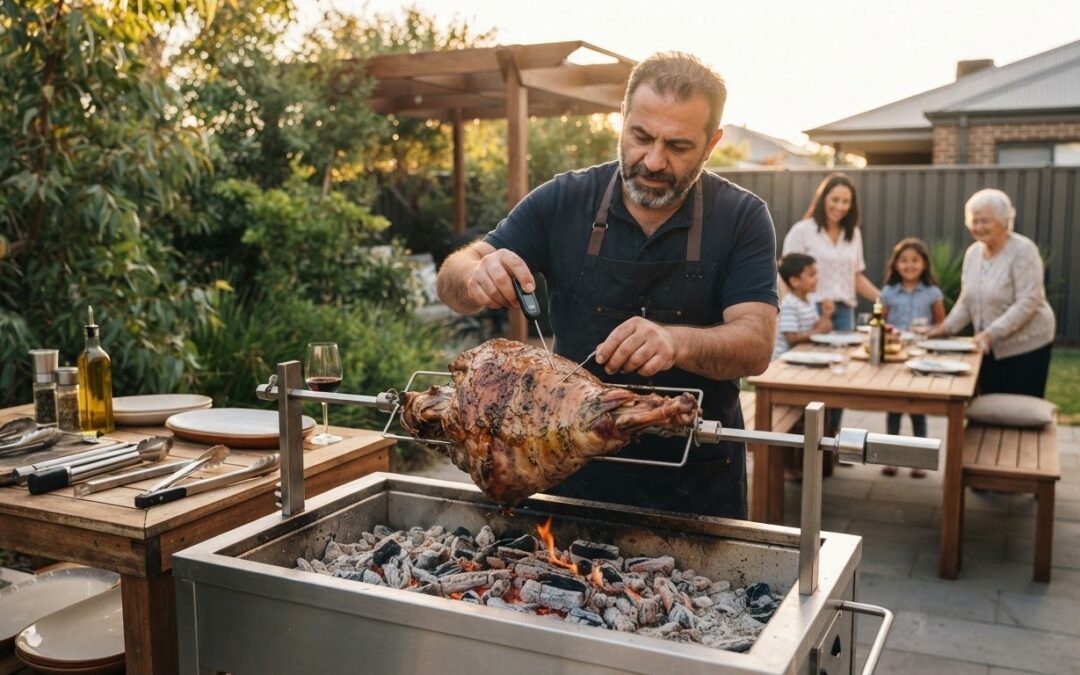
As the spit turns, different sides of the meat face the embers in sequence. Rotation helps the cut brown gradually, while the radiant heat cooks it without leaving one side exposed for too long. Keep the fire to glowing embers rather than open flames, which can flare against the meat and scorch the outside before the centre is ready. A consistent bed of fuel gives the cook a steadier foundation.
How souvla differs from souvlaki and ordinary grilling
Souvla typically uses larger pieces secured on a long spit. Souvlaki uses smaller pieces threaded onto individual skewers and grilled more quickly. The spit’s rotation is the practical difference: instead of turning each small skewer by hand, the whole load rotates over the charcoal. This steady movement, paired with radiant heat, helps cook the meat more evenly than direct exposure to strong flames.
Choose a cut and spit setup for a home cook
Match the cut to the spit, motor capacity and cooking space. Lamb shoulder is a familiar option, but choose a piece that sits securely without crowding the fire. Arrange the meat so its weight is balanced around the spit, then turn it by hand before switching on the motor. If it dips or swings heavily, reposition it. A secure, balanced load rotates more smoothly and puts less unnecessary strain on the motor.
Set up the charcoal and spit for steady, controllable heat
A long spit cook starts with a safe, stable setup and a fire you can adjust. Work outdoors on level ground in a well-ventilated area, with the BBQ clear of buildings, overhanging branches and other combustible materials. Check the spit and motor instructions before lighting, and leave enough room to tend the fire without reaching over hot coals.
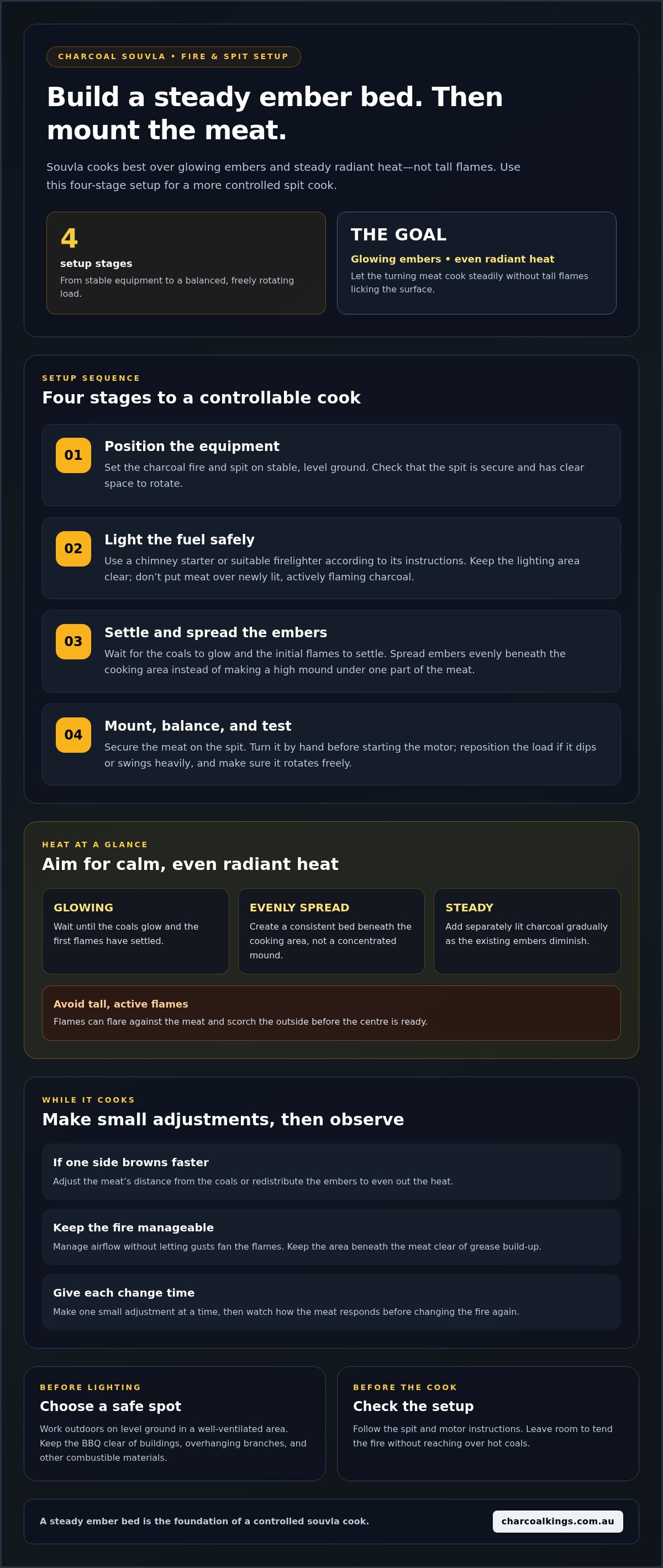
Indirect radiant heat is the steady warmth rising from a bed of glowing embers, cooking the turning meat without exposing it to tall flames. That’s the heat to build for souvla. Use these steps to prepare the fire and spit:
- 1. Position the equipment. Set the charcoal fire and spit on a stable, level surface. Check that the spit is secure and has clear space to rotate.
- 2. Light the fuel. Use a chimney starter or suitable firelighter according to its instructions. Keep the lighting area clear and don’t place the meat over newly lit, actively flaming charcoal.
- 3. Establish the ember bed. Wait until the coals are glowing and the initial flames have settled. Spread them evenly beneath the cooking area instead of building a high mound directly below one part of the meat.
- 4. Mount the meat. Secure the load on the spit and check its balance. Turn it by hand to make sure it rotates freely before starting the motor.
Light charcoal and build an even ember bed
Patience at this stage pays off. A settled bed of embers is easier to control than active flames, which can flare and char the surface. For a longer cook, light additional charcoal separately so it is ready to add gradually as the existing embers diminish. This helps maintain a consistent fire without tipping a large amount of unlit fuel directly beneath the meat.
Position the spit and control cooking distance
Centre the meat over the ember bed and make sure the spit rotates freely. If one side browns faster, adjust the distance from the coals or redistribute the embers to even out the heat. Manage airflow through the BBQ without letting gusts fan the flames, and keep the area beneath the meat clear of grease build-up. Make one small adjustment at a time, then watch how the meat responds before changing the fire again.
Mastering greek souvla over charcoal means tending the ember bed, not chasing flames. Consistent fuel and a well-managed fire support a sustained cook. Explore the hardwood lump charcoal range for a natural charcoal option.
Prepare and balance the meat so souvla cooks evenly
Even cooking starts before the spit reaches the fire. Cut shape and size affect how heat moves through the meat. Irregular pieces, or a thick section beside a thin one, can finish at different times. Choose pieces with a reasonably even profile and trim loose flaps that could catch or burn. There’s no universal cooking duration: the cut, its dimensions and the strength of the fire all make a difference.
For broader fire fundamentals, see this charcoal grilling guide. A steady ember bed supports the cook, while careful preparation helps the meat rotate and brown evenly once it’s on the spit.
Season the meat without masking its character
Keep the base seasoning simple: salt, black pepper and herbs such as oregano. Garlic, lemon zest or other aromatics can be added to suit the cut and the flavour you want. Season the meat evenly before loading it. A lengthy marinade isn’t essential. If using a rub or sauce, choose one suited to charcoal cooking and avoid applying sugary sauces over direct flame, where they can scorch.
For lamb, a restrained hand lets the meat remain the focus. Greek souvla traditions vary, so treat this seasoning as a practical starting point rather than a fixed formula.
Secure and balance the cut on the spit
Position the meat centrally and fasten it firmly with the spit’s appropriate forks or attachments. Keep the cut from sliding along the rod, and secure loose sections so they can’t flap as it turns. Before lighting the cook, rotate the loaded spit by hand through a full turn. Stop and reposition the meat if it wobbles, dips or shifts. A balanced load rotates more smoothly and puts less strain on the motor.
Check the fit once more before cooking. The meat should clear the grill and surrounding surfaces throughout its rotation, with enough space for the spit to turn freely. Taking time to secure the load is a key part of mastering greek souvla over charcoal: stable rotation exposes each side to the heat in turn and makes the cook easier to manage.
Cook souvla over charcoal: manage heat, timing, and doneness
There’s no single cooking time for every souvla. A thick piece takes longer than a smaller one, and a cut straight from the fridge cooks differently from one that has warmed slightly. Fire strength, distance from the embers and the spit design also affect the pace. Use time as a guide, not proof of doneness.
Steady heat and consistent rotation help limit scorching by sharing the heat across the surface instead of leaving one side facing intense flames. Keep the meat turning and manage the ember bed as the cook progresses. The outside may brown before the centre is ready, so colour alone can’t tell you when it’s safe to serve.
Maintain a steady fire throughout the cook
As the ember bed reduces, add lit fuel gradually at its edges. This helps avoid a sudden surge of heat beneath the meat. Watch for flare-ups caused by dripping fat. If flames reach the cut, shift embers away from the flare or increase the distance between the meat and the heat source. Check that the motor is running smoothly and the spit keeps turning freely.
If one side darkens faster, keep the spit turning and adjust the height or redistribute the embers to reduce direct radiant heat. If cooking is slow or uneven, inspect the ember bed, meat balance, distance from the fire and airflow before adding more fuel.
Check doneness and troubleshoot common problems
Use a food thermometer for a reliable doneness check. Insert it into the thickest part of the meat, avoiding bone, which can distort the reading. Check more than one thick area if the cut is uneven. Follow current Australian food-safety guidance for the particular meat and preparation, as the safe target can differ between whole cuts, poultry and minced meat.
Visual signs such as browning, clear juices or a firm surface can help you assess how the cook is progressing, but they don’t replace a thermometer. Clean the probe between checks and keep utensils and platters used for cooked meat separate from those that held raw meat.
Mastering greek souvla over charcoal comes down to controlling the fire, keeping the spit moving and checking the centre rather than guessing from the surface. For your next cook, choose hardwood lump charcoal to build and tend a consistent ember bed.
Serve Greek souvla and choose charcoal for your next cook
Once the meat passes its thermometer check, transfer it to a clean board and let it rest before carving. Resting gives the juices time to settle through the cut. Use a clean knife and utensils, kept separate from anything that touched raw meat. Carve across the grain where practical, making portions easy to serve and share. Bring the meat to the table promptly with sides such as salad, flatbread or grilled vegetables.
Rest, carve, and serve the meat
Resting time depends on the cut, so don’t treat one duration as right for every cook. For a large piece, carve only what you plan to serve and keep the remainder intact until needed. This helps limit moisture loss and keeps portions warm. Use a sharp knife and slice across the grain where practical for tender, comfortable-to-eat portions.
Match charcoal format to your cooking style
Hardwood lump charcoal is a natural fuel option, and individual pieces vary in shape and size. Briquettes offer a more uniform format, but performance depends on the product. Neither type is automatically right for every cook. Consider the fuel you know how to manage, your BBQ setup and how you prefer to build and maintain the ember bed. For more detail on fuel formats, read the ultimate BBQ charcoal guide.
Use this checklist beside the BBQ:
- Build a settled, evenly distributed ember bed.
- Secure and balance the meat, then check that the spit turns freely.
- Keep the meat rotating and adjust the heat if the surface browns too quickly.
- Check the thickest part with a food thermometer and follow safe guidance for the meat.
- Rest before carving; use clean utensils and a separate board for cooked food.
Mastering greek souvla over charcoal means managing each stage with care, from a steady fire to the final carve. Explore Charcoal Kings’ charcoal options to choose a fuel format for your next spit cook and build a routine you can repeat with confidence.
Put your souvla skills to work at the next cook
Great souvla comes from control, not constant flames. Build a settled ember bed, secure and balance the meat on the spit, and keep it turning for more even exposure to heat. Cooking time varies, so use a food thermometer at the thickest part and follow safe temperature guidance for the meat you’re cooking.
Those fundamentals are the heart of mastering greek souvla over charcoal. A steady fuel supply helps you manage the fire through a long cook. Charcoal Kings supplies premium natural hardwood lump charcoal and states that chemicals aren’t used in its charcoal manufacturing.
Set up carefully, trust your thermometer and take time to enjoy the meal with family and friends. Explore natural hardwood charcoal for your next souvla cook, then bring these practical steps to the spit with confidence.
Frequently Asked Questions
What cut of meat is best for Greek souvla?
Lamb shoulder is a traditional, flavourful choice for Greek souvla, and a bone-in cut can help retain moisture during a slow cook. Pork shoulder is another suitable option. Choose a piece with an even shape that fits your spit and cooking space. Cut size affects cooking time, so don’t assume a large, irregular piece will cook at the same pace as a smaller, more even one.
How long does Greek souvla take to cook over charcoal?
Allow roughly 1.5 to 2 hours as a guide, but don’t treat this as a fixed cooking time. The size and shape of the cut, its starting temperature, the strength of the ember bed and the spit setup all affect how quickly it cooks. Keep the meat turning and check its internal temperature with a food thermometer. Doneness, not the clock, should determine when it’s ready.
What temperature should lamb souvla reach?
Use a food thermometer to check the thickest part of the lamb, keeping the probe clear of bone. Follow current Australian food-safety guidance for the specific cut and preparation to determine the appropriate internal temperature. Don’t rely on colour or juices alone to judge doneness. If the souvla includes minced or otherwise prepared meat, use guidance that applies to that type of meat rather than assuming whole-cut recommendations are suitable.
Should souvla cook over direct or indirect heat?
Cook souvla over steady radiant heat from glowing embers, rather than tall, active flames directly beneath the meat. The rotating spit exposes different sides to the heat, helping the cut brown more evenly over time. If the surface is darkening too quickly, reduce the heat by adjusting the spit’s distance or redistributing the embers. Keep the meat turning and use a thermometer to check the centre.
Can you cook Greek souvla on a regular BBQ?
Yes, if your BBQ can safely support a rotisserie spit and the cut has enough room to rotate freely. Check the BBQ and spit instructions, including the motor’s capacity, and make sure the loaded meat is securely fastened and balanced. The setup also needs to allow charcoal heat to be managed beneath the meat. A standard grill without a suitable spit arrangement may not provide the space or support needed.
How do you stop souvla from drying out?
Choose a cut with some natural fat, secure it so it rotates smoothly, and cook over a controlled ember bed rather than harsh flames. Avoid cooking by time alone: check the thickest section with a thermometer and follow Australian food-safety guidance for the meat. Rest it before carving, then slice across the grain where practical. These steps support juicy results without leaving doneness to guesswork.
What charcoal is best for cooking souvla?
Choose a charcoal format you can manage steadily in your BBQ. Hardwood lump charcoal is a natural fuel option, while briquettes offer a more uniform shape; performance varies by product, so neither is universally best. For mastering greek souvla over charcoal, focus on building and maintaining an even ember bed that suits your spit setup. Charcoal Kings supplies premium natural hardwood lump charcoal and states that chemicals aren’t used in its charcoal manufacturing.