
Your grill vents aren’t just decorative hardware. They’re the throttle for your entire cook. Many pitmasters struggle with sudden temperature spikes that ruin expensive cuts of meat or watch their fire suffocate under a blanket of ash. It’s frustrating to fight your equipment when you should be focused on the flavor. Mastering charcoal grill airflow management is the only way to stop reacting to your fire and start commanding it like a professional.
You’ve likely dealt with the headache of inconsistent heat during a cold snap or high winds. We agree that a reliable fire is the foundation of any successful barbecue. This guide promises to teach you how to manipulate oxygen flow to maintain rock-solid temperatures for hours on end. We’ll preview the essential techniques for balancing intake and exhaust to ensure you get clean blue smoke and maximum fuel efficiency every time you light the coals. It’s time to take total control of your “gas pedal” and stop wasting fuel on inconsistent results.
Key Takeaways
- Understand the “Fire Triangle” and how to use the intake vent as your primary regulator for precise heat control.
- Learn the balance between intake and exhaust to maintain clean blue smoke and prevent acrid flavors from building up.
- Master charcoal grill airflow management to transition seamlessly between high-heat searing and steady, indirect roasting.
- Avoid common pitfalls like ash buildup and the “lid peeking” trap that disrupt your grill’s internal temperature cycle.
- Choose high-quality, additive-free Hardwood Lump Charcoal to ensure natural air pockets and superior fuel longevity.
The Physics of Fire: How Oxygen Drives Temperature Control
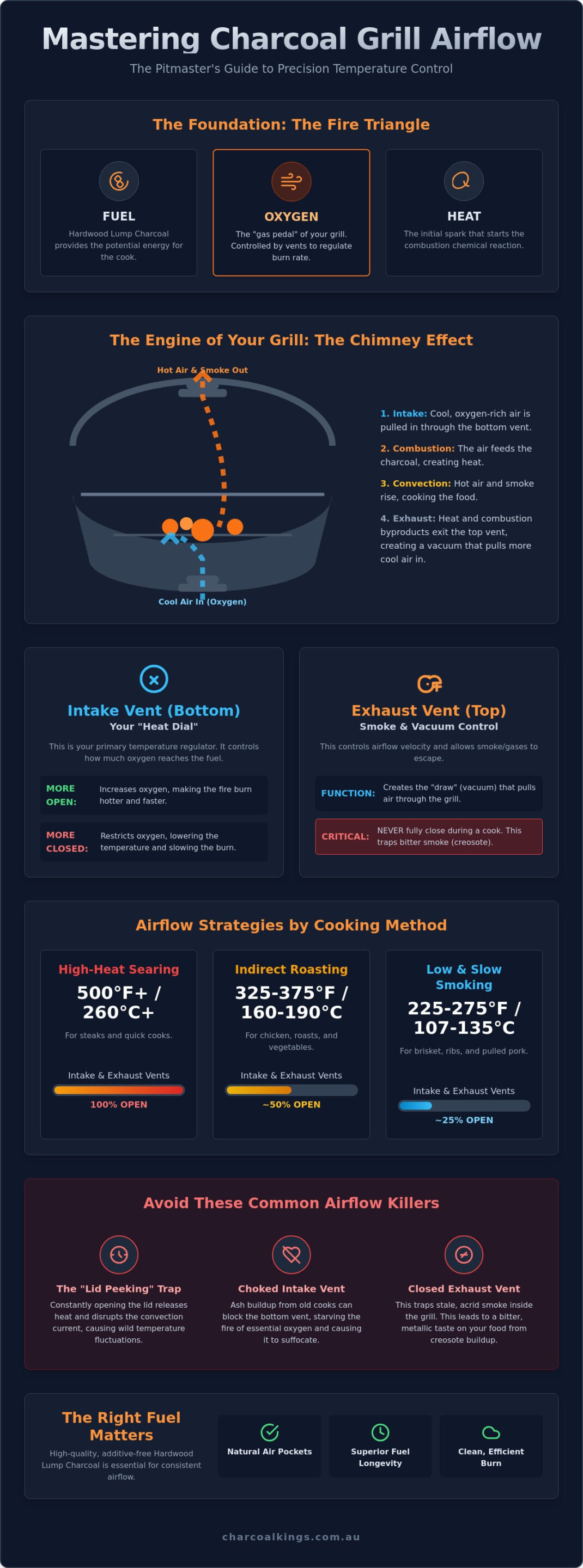
Fire is a chemical reaction requiring three specific components: heat, fuel, and oxygen. This is known as the “Fire Triangle.” In the context of professional barbecue, your Hardwood Lump Charcoal acts as the fuel tank. It contains the potential energy needed for a long, consistent cook. However, that energy remains dormant without a consistent supply of oxygen. Oxygen acts as the gas pedal. By adjusting your vents, you decide how fast that fuel burns. Understanding this relationship is the foundation of professional charcoal grill airflow management.
While most different types of charcoal grills share basic venting designs, the way you manipulate them determines the quality of your results. Poor management leads to “dirty” smoke, which coats your meat in bitter creosote. Clean airflow ensures that the combustion is complete. This results in the desired thin blue smoke that seasoned pitmasters crave. It’s the difference between a meal that tastes like a campfire and one that features deep, authentic wood flavor.
To better understand this concept, watch this helpful video:
Oxygen vs. Fuel: Finding the Equilibrium
Adding more charcoal to a struggling fire is a common mistake. If your vents are choked, more fuel won’t raise the temperature; it will only create more soot and smoke. Oxygen saturation determines the rate of combustion. When oxygen is limited, the fire smolders at a low temperature. When it’s abundant, the fire roars. Airflow management is the regulation of oxygen to control the rate of fuel consumption. Achieving this equilibrium allows for rock-solid temperatures and longer burn times without wasting premium fuel.
The Convection Current in Charcoal Grilling
Convection is the process of moving air carrying heat to your food. This process relies on the “chimney effect.” Cool, oxygen-rich air enters through the bottom intake vents, is heated by the coals, and rises toward the top exhaust vent. This movement creates a natural vacuum that pulls more oxygen into the fire. If you obstruct this flow by closing the top vent too much, you kill the vacuum. Stagnant air allows combustion byproducts to settle on the meat, creating an acrid, metallic taste. A steady, unobstructed current is vital for both temperature stability and superior flavor. Charcoal grill airflow management ensures this vacuum remains consistent throughout the duration of your cook.
Mastering the Vents: Intake vs. Exhaust
Every professional setup relies on a two-vent system to regulate heat. The intake vent, typically located at the bottom of the grill, serves as your primary oxygen source. The exhaust vent on the lid acts as the exit point for heat and combustion gases. Effective charcoal grill airflow management requires you to treat these two components as a single, unified system. If you restrict one, you inevitably impact the performance of the other. Mastering the push and pull of air between these two points is what separates a backyard hobbyist from a pitmaster.
The Intake Vent: The Heat Dial
The bottom vent is your primary regulator for temperature. Opening this vent wide introduces a massive volume of fresh oxygen to the coal bed. This causes the fuel to burn faster and hotter. Conversely, closing the intake is the most effective way to “kill” a flare-up or bring a runaway fire back under control. It starves the combustion process at the root. When you are using a charcoal chimney starter, you keep the intake vents fully open to ensure the fuel ignites rapidly. Once the coals are placed and the lid is closed, you begin the process of choking down the intake to stabilize your cooking temperature.
The Exhaust Vent: Smoke and Vacuum
The exhaust vent’s role is to control smoke quality and air velocity. It creates the “draw” or vacuum effect that pulls air from the bottom vents through the fuel and over the food. You should never fully close the exhaust vent during a cook. Closing it completely traps stale, bitter smoke inside the grill. This leads to creosote buildup, which imparts an acrid, metallic taste to your meat. Understanding the science of charcoal reveals that even the cleanest fuel produces gases that must be vented to maintain a pure flavor profile. Use the top vent to clear out “dirty” white smoke and ensure the air inside the chamber remains fresh.
For low and slow smoking, precision is vital. Once you are within 10 degrees of your target temperature, use the “Hairline Adjustment” technique. This involves moving the intake vent in tiny, millimeter increments. Small changes at the intake have a delayed but significant impact on the internal heat. Keep the exhaust vent at least half open to maintain a clean burn and steady air velocity. If you find your temperatures are consistently dipping, check for ash blockage before making large vent adjustments. Professional results start with high-quality equipment, so consider browsing the specialized accessories at Charcoal Kings to refine your temperature control setup.
Airflow Strategies for Searing, Roasting, and Smoking
Effective charcoal grill airflow management changes based on your target temperature. You don’t use the same vent configuration for a thin-crust steak as you do for a 12-hour pork shoulder. Precision is the requirement. Every adjustment you make should serve the specific goal of your cook. Whether you are chasing a hard sear or a steady smoke, your vents are the primary tools for success.
- High-Heat Searing (250°C+): Open both intake and exhaust vents to their maximum capacity. This provides the coal bed with a surplus of oxygen, creating the intense infrared heat needed for a perfect crust.
- Indirect Roasting (180°C – 200°C): Keep the exhaust vent fully open but choke the intake vent to approximately 50%. This creates a steady convection current that roasts food evenly without scorching the exterior.
- Low and Slow Smoking (100°C – 120°C): This requires extreme restriction. The intake vent should be open only a few millimeters. Keep the exhaust vent at least half open to ensure smoke continues to move across the meat.
The two-zone setup is a fundamental technique for directional airflow. Place your lit coals on one side of the grill and your meat on the other. Position the lid so the exhaust vent is directly over the food. This configuration forces hot air and smoke to travel from the intake, across the coal bed, and over the meat before exiting. It creates a natural heat gradient that provides total control over the cooking process.
The Low and Slow Balancing Act
Maintaining a 12-hour brisket cook requires a strategic approach to fuel and air. Use the “Minion Method” or the “Snake Method” to ensure only a small portion of your fuel burns at any given time. Start with your intake vent 25% open and wait for the temperature to stabilize. As the fuel consumes, you may need to make hairline adjustments to the intake to compensate for ash buildup. For a deeper dive into these configurations, see our guide on mastering the art of barbecuing with charcoal.
Managing Airflow in Offset Smokers
Offset smokers operate differently than kettle grills. The firebox vent is the most critical component in an offset. It is your throttle. You must manage the “stack” to ensure a consistent draw across the meat. If the exhaust stack is too restricted, heat backs up into the firebox and the fire smolders. This leads to “stagnant smoke” in the cook chamber, which ruins meat with a bitter, creosote-heavy flavor. Keep the stack wide open and use the firebox door or vent to regulate your burn rate. This ensures a high-velocity flow of clean, flavorful smoke.
Common Airflow Killers and How to Fix Them
Mastering charcoal grill airflow management involves more than just sliding a vent. You must identify internal and external factors that actively work to choke your fire. Even a perfect vent setting can’t compensate for a physical blockage or a sudden change in environment. Recognizing these “killers” early is the only way to maintain a rock-solid temperature during a long cook. If your heat is dipping despite wide-open vents, you are likely dealing with one of these common failures.
The “Lid Peeking” trap is a primary offender. Every time you lift the lid to check your meat, you reset the airflow cycle. This introduces a massive, uncontrolled burst of oxygen that causes a temporary heat spike. Once the lid is closed, the temperature crashes as the grill tries to re-stabilize. This cycle wastes fuel and dries out the meat. If you want consistent results, trust your thermometers and keep the lid shut. A seasoned pitmaster knows that if you’re lookin’, you ain’t cookin’.
Combatting Ash Suffocation
Ash is the silent killer of oxygen flow. Low-quality briquettes often contain high levels of fillers and additives that turn into a thick, fine silt as they burn. This silt settles in the bottom of the grill, effectively sealing off the intake vents. Hardwood Lump Charcoal is the superior choice because its organic origin results in significantly less ash production. To manage ash during a 12-hour smoke, use a charcoal basket. These accessories keep the fuel elevated, allowing ash to fall through to the bottom of the bowl instead of clogging the grate. If you must clear ash mid-cook, use the internal cleaning blades or a long poker to gently agitate the coal bed without dropping the overall temperature.
Grilling in the Australian Wind
Dealing with Australian wind and humidity requires a tactical approach. High winds create a “forced induction” effect, pushing air into your intake vents at a higher velocity than intended. This can lead to runaway temperatures that are difficult to reel in. Position your grill so the intake vents face away from direct gusts. If the wind is particularly aggressive, you may need to close your intake vents more than usual to compensate for the natural pressure. To better protect your cooking space from these elements, you can visit Aussie Online Blinds for durable, custom-made outdoor solutions. Humidity also plays a role, as moist air is less dense and can make your fire feel “sluggish.” In these conditions, you might need to open your exhaust vent slightly wider to maintain a strong draw.
Finally, never underestimate the impact of grease and gunk. Carbonized grease and old food debris on the vent sliders create friction and block air movement. A dirty grill is a non-responsive grill. Ensure your vent paths are clear of obstructions before you light your first coal. For the best performance and specialized tools to keep your setup in peak condition, explore the range of professional grade gear at Charcoal Kings. Maintaining your equipment is just as vital as the fuel you put inside it.
Choosing the Right Fuel for Consistent Airflow Management
Your choice of fuel is the final piece of the temperature control puzzle. While vent positions provide the mechanical control, the physical structure of your charcoal dictates how oxygen actually moves through the firebox. High-quality fuel creates a porous environment that allows air to circulate freely around every ember. Inferior products do the opposite, creating a dense, suffocating layer that resists oxygen and causes your temperatures to stall. Mastering charcoal grill airflow management starts with selecting a fuel that supports, rather than hinders, your convection current.
Purity in fuel leads to predictable temperature responses. When you use charcoal free from chemical additives, you get a consistent burn rate and a clean exhaust. Specialised fuels like Binchotan offer high-density performance for Hibachis, requiring specific airflow strategies to maintain their intense, steady heat. For standard grills and smokers, the debate usually centers on the physical form of the fuel and how it impacts the “draw” of the fire.
Lump Charcoal vs. Briquettes: The Airflow Debate
The natural, irregular shapes found in a pile of hardwood lump charcoal are a major advantage for airflow. These varied sizes create large air pockets throughout the coal bed. Oxygen can reach the bottom and middle of the pile easily, ensuring a more complete and hotter combustion. Briquettes offer consistency in shape, but they can pack together too tightly. This tight packing restricts oxygen flow and can lead to a sluggish fire.
To ensure air reaches the bottom of the coal bed, you must stack your fuel strategically. Avoid dumping small, broken pieces at the very bottom where they can block the intake holes. Place larger chunks of lump charcoal at the base to act as a foundation. This keeps the air channels open and allows the “chimney effect” to function at peak performance. This method ensures that your vent adjustments result in immediate, visible changes to your grill’s temperature.
The Charcoal Kings Standard for Purity
We maintain a strict commitment to 100% natural fuel with zero chemical additives. Cheap fillers and binders in low-grade charcoal don’t just affect flavor; they ruin your airflow. These additives turn into a fine, airflow-blocking silt that settles over your intake vents. Clean-burning fuel is essential for maintaining a clear exhaust vent and ensuring that the smoke moving over your food is always pure and flavorful. When your fuel is pure, your grill responds to vent changes with surgical precision.
Don’t let inferior fuel compromise your hard-earned pitmaster skills. High-performance BBQ requires a fuel that can keep up with your technique. Upgrade your fuel and master your grill with our Premium Hardwood Lump to experience total control over every cook. It is time to stop fighting your fire and start commanding it with the best materials available.
Take Command of Your Fire
Mastering charcoal grill airflow management transforms your BBQ from a guessing game into a precise craft. You now understand that your intake and exhaust vents act as the throttle and vacuum for your fire. By choosing high-quality fuel and maintaining a clear path for oxygen, you eliminate the temperature spikes and bitter smoke that ruin expensive cuts of meat. Consistency is the hallmark of a true pitmaster.
Our 100% Natural Hardwood Lump contains no chemical additives; it provides the predictable heat required for competition-grade results. This level of purity is why we are trusted by Australian BBQ professionals and competition teams nationwide. For those seeking specific technical guidance, our expert support team at our Holden Hill HQ is always available to help you refine your setup. Shop Premium Hardwood Lump Charcoal for Superior Airflow Control and start producing superior results on every cook. Grab your gear and get to work. You have the knowledge and the tools to dominate the grill.
Frequently Asked Questions
Should the top or bottom vent be open on a charcoal grill?
Both vents must remain open during the cooking process to maintain a fire. The bottom vent serves as your primary temperature regulator by controlling how much oxygen reaches the coals. The top vent manages the exhaust and smoke quality. It’s vital to keep the top vent at least partially open to maintain the convection current. Closing it completely traps bitter gases and will eventually extinguish your fire.
How do I lower the temperature of my charcoal grill quickly?
Close the bottom intake vent almost entirely to drop the temperature. This action starves the coal bed of the oxygen it needs to produce heat. Don’t open the lid to “let the heat out” because this introduces a massive burst of fresh air that can cause a sudden flare-up. Keep the lid shut and let the restricted airflow do the work for you naturally over several minutes.
Why does my charcoal grill keep going out even with vents open?
Ash buildup is the primary reason a fire dies despite open vents. Fine silt from inferior briquettes can physically block the intake holes, preventing oxygen from reaching the fuel. To fix this, use a poker to gently agitate the coals or clear the ash catcher. Proper charcoal grill airflow management requires a clear path for air to enter the bottom of the chamber without obstruction from debris.
Does opening the lid make a charcoal grill hotter or colder?
Opening the lid provides a sudden, unlimited supply of oxygen that makes the coals burn hotter. While the ambient air temperature inside the grill drops initially, the fire will rapidly intensify once you close it again. This creates a “yo-yo” effect that makes it impossible to maintain steady heat. For consistent results, keep the lid closed and use your vents to make all necessary temperature adjustments.
How much should I open the vents for low and slow smoking?
Set the bottom intake vent to a hairline opening for low and slow smoking. This is usually about two to three millimeters wide. Keep the top exhaust vent at least half open to ensure a steady draw. This balance provides enough oxygen to keep the fire alive at 110°C while allowing combustion byproducts to escape. It’s the secret to achieving that perfect bark and tender texture on long cooks.
How does wind affect my charcoal grill temperature?
Wind acts as a forced induction system for your grill. It pushes air into your intake vents with more pressure than a calm day, causing temperatures to rise unexpectedly. Position your grill in a sheltered area or turn it so the intake faces away from the wind. You’ll likely need to close your vents more than usual to maintain your target heat levels when dealing with gusty conditions.
Why is my grill producing thick white smoke instead of thin blue smoke?
Thick white smoke is a sign of a “dirty” fire caused by poor oxygenation or moisture. It happens when the fire is smoldering rather than burning cleanly. Open your vents to increase airflow and ensure your fuel is dry and free from chemical fillers. Achieving thin blue smoke requires a high-velocity convection current and 100% natural Hardwood Lump Charcoal to ensure complete and efficient combustion.
Can I use a fan to increase the heat in my charcoal grill?
You can use a fan to boost heat for high-temperature searing. Forcing air directly into the coal bed increases the combustion rate, allowing you to reach temperatures over 300°C in minutes. While this is a useful shortcut, it demands active charcoal grill airflow management. You must monitor the fuel closely, as the increased oxygen will cause the charcoal to be consumed much faster than a natural draw would allow. For those looking to integrate automated fans or monitoring systems into their outdoor kitchen, asthome.com.au provides the high-quality electrical components needed for a professional setup.