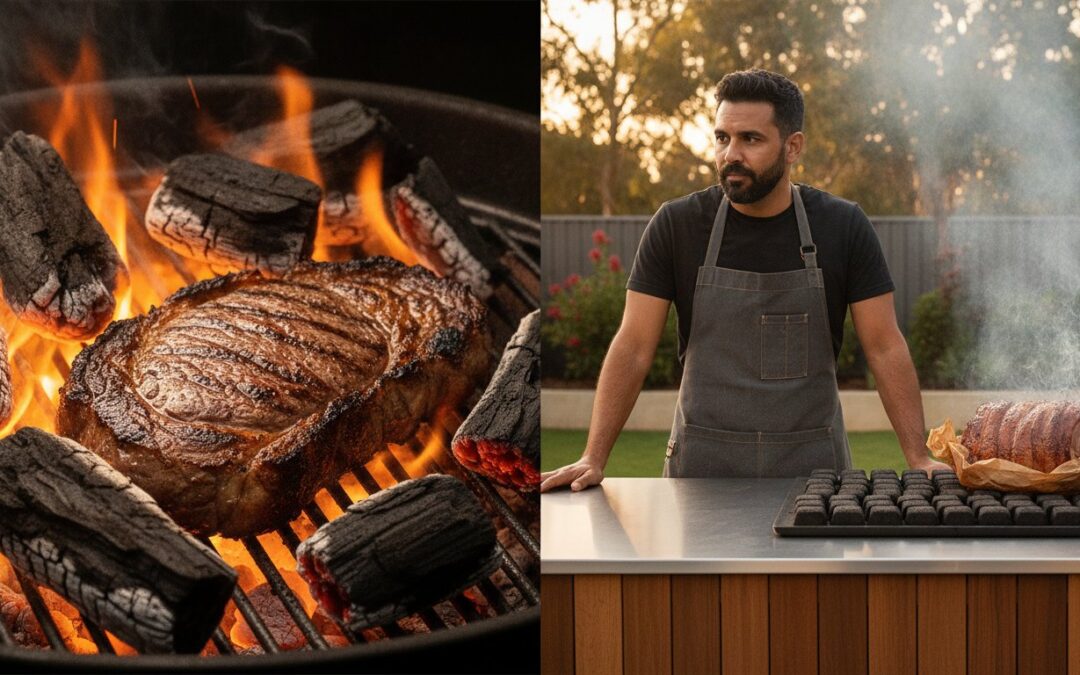
Most pitmasters spend hundreds on premium wagyu only to ruin the cook with inferior, chemical-laden fuel. It’s a hard truth to swallow, but your choice of fuel dictates the success of your cook as much as the quality of the meat itself. You’ve likely dealt with the frustration of inconsistent heat spikes or excessive ash clogging your vents mid-cook. Worse still is that acrid, chemical smell from mass-market fillers that taints expensive cuts of meat.
Mastering the core differences between lump charcoal vs briquettes is the only way to achieve predictable burn times and that clean, authentic wood smoke flavour. We’ll show you how to match the right fuel to your specific smoker or grill for easy temperature management. This guide previews the performance metrics of high-grade Australian hardwood fuels versus compressed alternatives. By the end, you’ll have the expertise to choose the perfect heat source for a flawless 2026 BBQ season, ensuring every sear and low-and-slow session is defined by purity and performance.
Key Takeaways
- Identify the core structural differences between pure hardwood lump and compressed charcoal briquettes to master heat control.
- Match your fuel to your hardware by learning which options suit offset smokers, Weber Kettles, or high-heat Hibachis.
- Eliminate chemical taints and excessive ash by prioritizing additive-free, professional-grade fuel sources.
- Compare the performance metrics of lump charcoal vs briquettes to choose between searing peak temperatures or long, consistent burn times.
- Discover why sourcing from a specialist ensures the purity and performance required for high-stakes Aussie BBQ.
Understanding the Basics: What is Lump Charcoal vs. Briquettes?
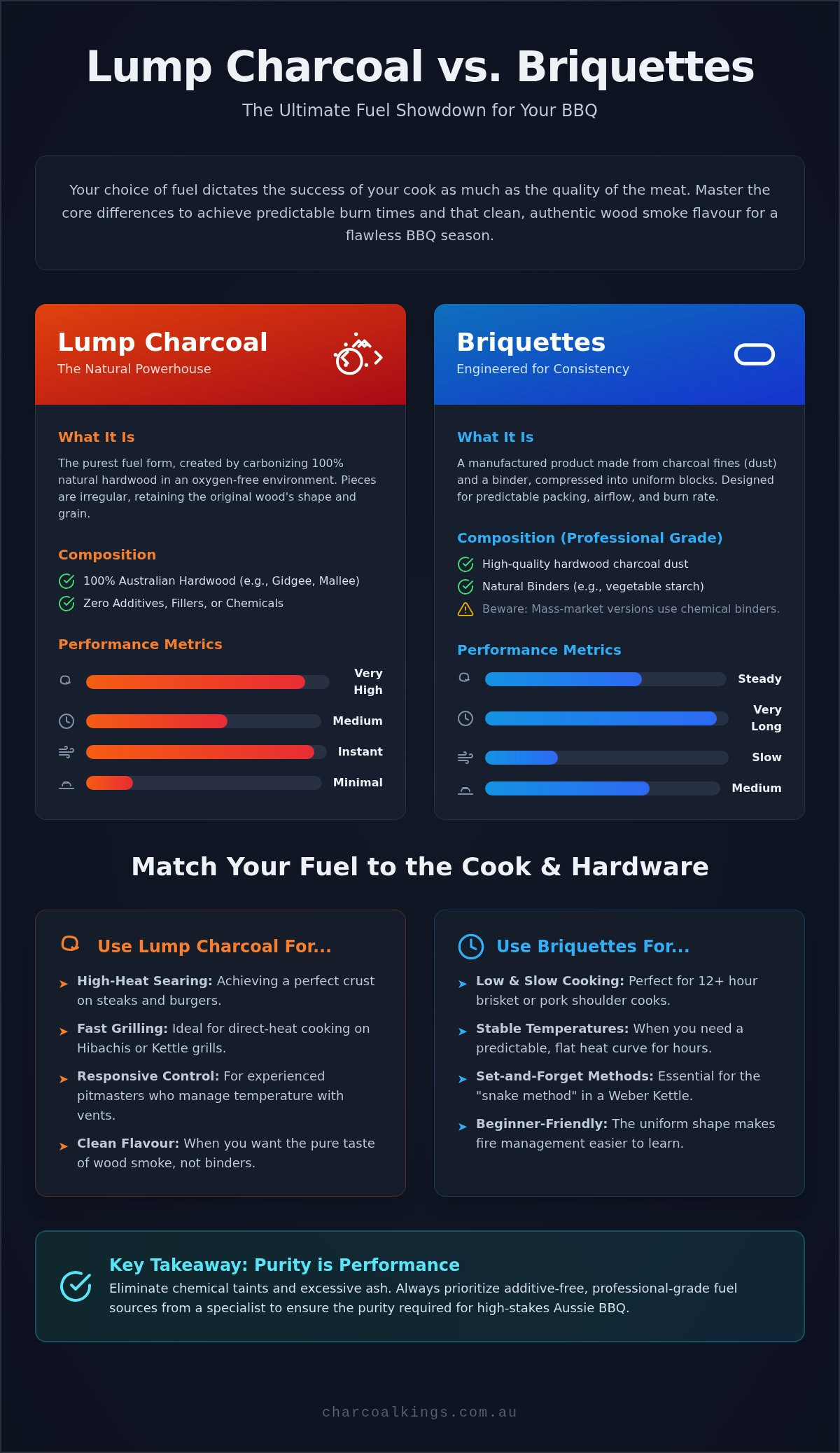
Comparing lump charcoal vs briquettes begins with the production method. Lump charcoal is the purest form of solid fuel. It is created through pyrolysis; the process of carbonizing hardwood in an oxygen-free environment to remove moisture and volatile gases. To understand the science of what is charcoal, you must recognize that this thermal decomposition leaves behind high-carbon material that retains the original cell structure of the timber. You can see the knots, grain, and bark of the tree in every piece.
Briquettes are manufactured products. Producers take charcoal fines, which are the small fragments and dust left over from lump production, and mix them with binders. This mixture is then compressed into uniform blocks. While lump charcoal looks like charred pieces of a branch, briquettes are identical in size and density. The choice between lump charcoal vs briquettes often comes down to this structural difference. One is a raw, organic material; the other is an engineered fuel designed for predictable packing and airflow.
The Pure Nature of Australian Hardwood Lump
Premium Australian lump charcoal relies on dense timber species like Gidgee or Mallee. These hardwoods are significantly more robust than the softwoods used in cheap, imported varieties. Because the wood is so dense, the resulting charcoal is heavier and contains more energy per cubic centimetre. This is industrial-grade fuel for the serious cook. Our lump charcoal contains zero additives, zero fillers, and zero petroleum-based starters. It is 100% natural carbon. When you open a bag, you will find a variety of sizes:
- Large Chunks: Ideal for long cooks and maintaining airflow in offset smokers.
- Medium Coals: Perfect for high-heat searing and everyday grilling.
- Fines: Smaller pieces that ignite quickly to get the fire moving.
How Modern Briquettes are Manufactured
The quality of a briquette depends entirely on its composition. Mass-market “mystery bags” often contain limestone, coal dust, and chemical binders that produce a foul smell and excessive ash. Professional-grade briquettes are different. They use high-quality hardwood charcoal dust bonded with natural vegetable starches like cornstarch. This manufacturing process ensures every block has the same weight and moisture content. This uniformity is a massive advantage for specific BBQ techniques, such as the “snake method” in a kettle grill, where you need a consistent burn rate for 12 hours or more. You trade the rugged, organic nature of lump for the surgical precision of a manufactured block.
Performance Metrics: Heat Intensity and Burn Duration
The performance gap between lump charcoal vs briquettes is most evident when you look at the heat curve. Lump charcoal is built for power. Because it is pure carbonized wood, it reaches peak temperatures far exceeding standard briquettes. If you are chasing a restaurant-quality crust on a ribeye, you need the intense infrared heat that only lump provides. Professional confirms that lump charcoal ignites faster and hits higher maximum temperatures than its compressed counterparts.
Responsiveness is another critical factor. Lump charcoal reacts almost instantly to oxygen. Open your vents, and the temperature climbs rapidly. Close them, and the fire settles just as fast. This makes it the preferred fuel for experienced pitmasters who manage their fire by feel. An added benefit is efficiency. High-quality hardwood lump can be extinguished by cutting the oxygen supply and relit for your next cook. This reduces waste and saves money over a long BBQ season. When comparing the burn duration of lump charcoal vs briquettes, the choice depends on your specific hardware and goals.
Why Lump Charcoal Wins for Searing and High Heat
Lump charcoal provides a cleaner burn with minimal ash. This lack of debris is vital for high-heat applications where you don’t want ash clogging your fire grate or blowing onto your food. Ignition is fast. You can have a chimney starter ready to pour in under fifteen minutes. Because there are no binders or fillers, you won’t experience the acrid off-smells often associated with lighting cheap briquettes. For the best results, using hardwood lump charcoal ensures your steak tastes like beef and wood smoke, not chemicals.
The Consistency Advantage of Briquettes
Briquettes trade raw heat for surgical precision. Their uniform shape allows for a flatter, more predictable heat curve that lasts for several hours. This makes them the ultimate tool for low and slow enthusiasts. When you are running a 12 hour brisket cook, you want a fuel that behaves exactly the same way from the first hour to the last. Their density and shape allow for advanced fire management techniques like the Snake Method or Minion Method, where you need a steady, slow-moving burn. For beginners still mastering temperature control, the predictable nature of a briquette provides a safety net that lump charcoal cannot offer. You get a set-and-forget experience that is hard to beat for convenience.
The Flavour Factor: Purity, Smoke, and Ash
Flavour is the primary reason most Australians switch from gas to solid fuel. When comparing lump charcoal vs briquettes, you must view the fuel as an ingredient rather than just a heat source. Pure hardwood lump provides a clean, VOC-free heat that allows the natural fats of the meat to shine. In contrast, mass-market briquettes often rely on coal dust, limestone, and chemical accelerants. These additives don’t just burn; they off-gas. This creates a “fuelled” taste that can easily overpower the delicate notes of a high-quality rub or the natural sweetness of a pork shoulder.
Authentic Wood Smoke vs. Manufactured Aromas
The purity of your fuel choice directly impacts the “terroir” of the BBQ, as the wood species’ unique chemical profile infuses the meat during combustion. Professional chefs almost exclusively choose hardwood lump for delicate proteins like snapper or spatchcock chicken. The reason is simple: you want the aroma of the wood, not the smell of the factory. For those seeking the absolute pinnacle of clean-burning performance, Binchotan charcoal represents the gold standard. It burns with virtually zero smoke or odour, providing a pure infrared heat that preserves the integrity of the most expensive ingredients.
Managing Ash Production and Airflow
Ash is the enemy of consistent temperature. When you weigh the pros and cons of lump charcoal vs briquettes, consider the residue left in the firebox. A standard 10kg bag of briquettes can produce significantly more ash than the equivalent weight of premium hardwood lump. This occurs because briquettes contain non-combustible binders and fillers. As these blocks burn, they leave behind a thick layer of grey dust that settles at the bottom of your grill.
In ceramic grills like Kamados, this excessive ash can lead to “temperature stalls.” The dust physically blocks the air intake holes in the fire bowl; this starves the fire of oxygen and causes your temperatures to plummet mid-cook. Hardwood lump burns down to almost nothing, leaving only a handful of white ash for easy cleanup. If your grill has a limited ash pan capacity or small air vents, sticking to pure hardwood lump is a functional necessity rather than just a flavour preference. It ensures your airflow remains unobstructed from the first light until the final pull.
Choosing Your Fuel Based on the Cook and Hardware
Selecting the right fuel depends entirely on your hardware and your desired level of involvement. While previous sections detailed the raw performance of lump charcoal vs briquettes, applying that knowledge to your specific grill is where the results happen. You must match the burn characteristics to the airflow design of your cooker. A high-performance offset smoker behaves differently than a ceramic egg or a portable hibachi. Your choice dictates whether you spend your afternoon fighting the fire or enjoying the process.
Assess the duration of your session before lighting up. For quick-cook items like steaks, burgers, or seasonal vegetables, the high-intensity heat of lump charcoal is superior. If you are planning an overnight brisket or a slow-roasted lamb shoulder, the predictable density of briquettes provides a reliable heat battery. Many professional pitmasters choose to mix and match; they use a foundational base of high-quality briquettes for longevity and layer premium hardwood lump on top for an initial burst of authentic smoke flavour. This hybrid approach offers the best of both worlds for mid-length cooks.
Best Fuel for Low and Slow Smoking
Consistency is the priority for long-haul sessions. We recommend using professional-grade briquettes for traditional offset smokers because they maintain a steady temperature with minimal intervention. If you prefer using lump for smoking, you must be selective. Use only the largest chunks from the bag to ensure maximum airflow remains between the coals. Smaller pieces can settle and choke the firebox over an eight-hour cook. Always prioritize additive-free fuel for these sessions. Long-duration exposure to low-quality binders will ruin the flavour of expensive cuts of meat.
Ideal Setups for Hot and Fast Grilling
Lump charcoal is the undisputed king for high-heat applications. It provides the searing power needed to caramelize the exterior of a steak without overcooking the centre. This is especially true when using skewers over a narrow bed of coals. The rapid ignition and intense infrared output enhance the flavour of quick-cook items like wings or smash burgers. For the best performance in Australian conditions, buy premium BBQ fuel that matches your hardware’s potential and your cooking style.
Sourcing Professional Grade BBQ Fuel in Australia
Buying fuel from a supermarket is a gamble that usually ends in a ruined cook. Most “mystery bags” found in big-box retail contain low-density wood scraps, excessive dust, and chemical binders that compromise your results. Sourcing from a specialist like Charcoal Kings ensures you receive high-performance fuel that has been properly seasoned before carbonization. This seasoning process is vital; it ensures the timber is at the optimal moisture level to create dense, energy-rich carbon. For restaurants and heavy users, our wholesale charcoal options provide the volume and consistency required to run a commercial pit day after day without variation in heat or flavour.
Proper storage is just as critical as the initial purchase. Charcoal is extremely porous and will absorb moisture from the air or a damp garage floor. This moisture makes the fuel difficult to light and causes it to spark and pop during ignition. Store your bags in a cool, dry place, ideally off the ground on a pallet or in sealed plastic bins. When navigating the choice of lump charcoal vs briquettes for the 2026 season, remember that fire safety is paramount. In Australia, solid fuel use is strictly prohibited on Total Fire Ban days. Always check with your state fire service before lighting your grill to ensure compliance with local regulations.
Why Purity Matters for Your Health and Your Grill
Using all-natural, chemical-free fuel is an investment in the longevity of your BBQ hardware. Petroleum-based starters and coal-based fillers leave behind corrosive residues that can degrade the metal components of your smoker over time. Beyond hardware protection, the health benefits of avoiding additives cannot be overstated. You don’t want synthetic vapours or “manufactured” aromas near your food. Our commitment to all-natural standards means you get nothing but pure carbonized hardwood. This purity ensures that the only thing you taste is the meat and the authentic smoke from the wood species.
Getting Expert Advice and Supplies
If you are still weighing up the benefits of lump charcoal vs briquettes, visit our Holden Hill showroom for a hands-on comparison. Our team can walk you through the specific densities of our current Australian hardwood stocks. We offer premium hardwood lump charcoal and specialized briquettes with nationwide delivery across Australia. Don’t settle for supermarket fillers that undermine your craft. Shop the full range of Charcoal Kings BBQ fuels today and take control of your fire.
Master Your Heat for the 2026 BBQ Season
Your mastery of the fire determines the quality of your results. Choosing between lump charcoal vs briquettes is no longer a matter of guesswork but a strategic decision based on your hardware and your protein. Pure hardwood lump delivers the high-intensity infrared heat required for a perfect sear. Premium briquettes provide the stable foundation needed for overnight low and slow sessions. Purity remains the most critical factor in this equation. By eliminating chemical additives and fillers, you protect both your health and the integrity of your BBQ hardware.
We provide specialist advice from seasoned Aussie pitmasters to help you navigate these choices. Whether you need wholesale quantities for a commercial kitchen or retail bags for your backyard kettle, we stock only the highest grade of carbon. Our products contain no chemical additives or fillers; this ensures a clean burn and authentic flavour every time you light up. Don’t let inferior fuel compromise your hard work at the grill.
Upgrade your BBQ with Australia’s finest Hardwood Lump Charcoal and experience the difference that professional-grade fuel makes. It’s time to fire up the pit and produce the best BBQ of your life.
Frequently Asked Questions
Is lump charcoal better than briquettes for a Weber Kettle?
The choice for a Weber Kettle depends on your cooking method. Briquettes are superior for low and slow sessions because their uniform shape allows for precise temperature control using the Snake Method. Hardwood lump charcoal is the better option for high-heat direct grilling where you need a fast, intense sear on steaks or burgers.
Can I mix lump charcoal and briquettes in the same cook?
You can absolutely mix both fuels in a single cook. Many pitmasters use a foundation of briquettes for a steady, long-lasting heat source and add lump charcoal on top to provide an initial boost of authentic wood smoke flavour. This hybrid approach helps stabilize temperatures while adding the aromatic qualities of natural hardwood.
Why does my lump charcoal spark and pop when lighting?
Sparking and popping usually indicate moisture absorption or trapped air pockets within the carbonized wood. If your fuel was stored in a damp environment, the moisture expands rapidly when heated and causes the charcoal to crackle. Using properly seasoned, high-density Australian hardwoods like Gidgee significantly reduces this behavior compared to cheaper, unseasoned imports.
How much longer do briquettes burn compared to lump charcoal?
High-quality briquettes typically provide a consistent burn for 8 to 12 hours depending on your airflow settings. While lump charcoal reaches higher peak temperatures, it burns through its energy faster due to its irregular shape and higher oxygen exposure. When comparing lump charcoal vs briquettes for long-duration cooks, the manufactured density of a briquette offers a more predictable heat window.
Are all charcoal briquettes full of chemicals?
Not all briquettes contain harmful chemicals. While mass-market brands may use coal dust and petroleum-based binders, professional-grade options use pure hardwood charcoal fines bonded with natural vegetable starches. We prioritize additive-free fuels to ensure your meat never absorbs acrid, synthetic aromas during the ignition phase.
Can you reuse lump charcoal after you finish cooking?
You can reuse lump charcoal for multiple cooking sessions. Simply close all air vents once you finish your cook to starve the fire of oxygen and extinguish the coals. The remaining chunks will be ready for your next light, making it a highly efficient and cost-effective fuel choice for regular backyard grilling.
Which fuel is better for a ceramic Kamado-style grill?
Hardwood lump charcoal is the preferred fuel for ceramic Kamado-style grills. These cookers rely on precise airflow through small intake holes that can easily become blocked by the high ash volume produced by briquettes. The minimal residue left by pure lump ensures your temperature remains stable throughout the entire duration of a long smoke.
Does lump charcoal expire or go bad if stored for a long time?
Charcoal does not have an expiration date and won’t go bad if kept completely dry. However, its performance degrades if it absorbs ambient moisture from the air. In the debate of lump charcoal vs briquettes, both fuels will last indefinitely if stored in airtight containers or sealed plastic bins away from the elements.