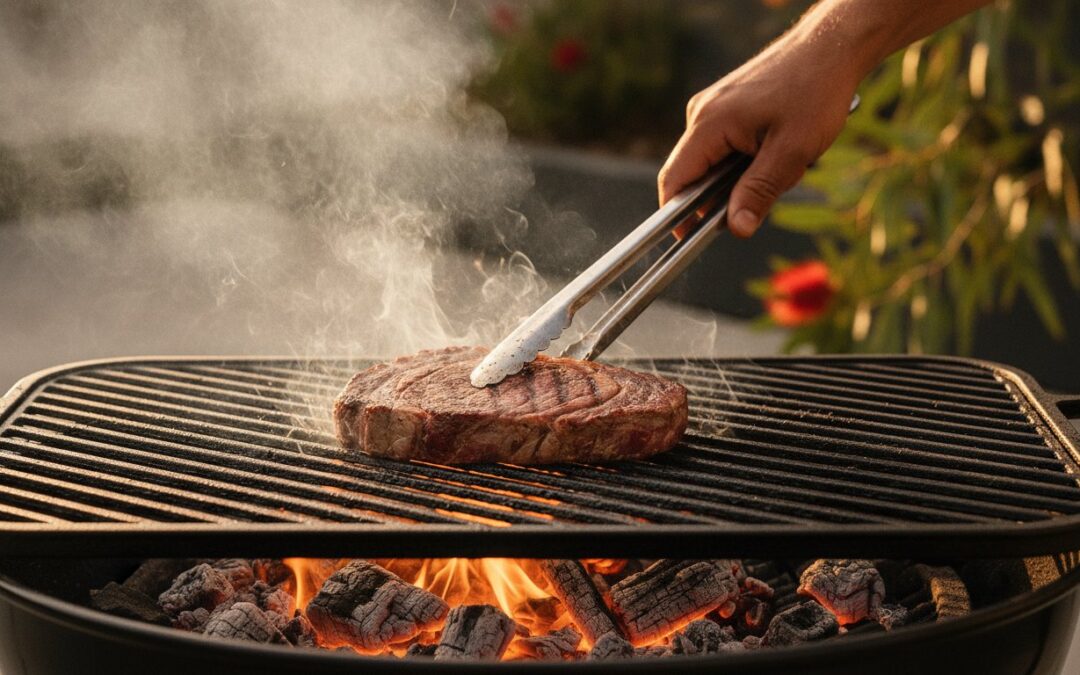
Most backyard cooks treat fuel as an afterthought, but for a professional pitmaster, the right charcoal is a performance ingredient that dictates the success of the entire cook. You’ve likely felt the frustration of supermarket briquettes that struggle to reach searing temperatures or leave a bitter, chemical aftertaste on a prime cut of beef. Dealing with excessive ash that clogs your air vents mid-smoke is a recipe for an inconsistent meal and a wasted afternoon.
Premium hardwood lump charcoal eliminates these variables by providing a pure, additive-free heat source that burns hotter and cleaner than any mass-produced alternative. It’s the difference between a faint smokiness and the deep, authentic wood-fired flavour found in the world’s best steakhouses. In this guide, we’ll explain why density matters for long-duration cooks and how to harness intense heat for the perfect sear. You’ll discover how to select the right wood species for your smoker and why purity isn’t just a marketing term; it’s a requirement for high-performance BBQ. We’ll also cover essential safety context, including why understanding local Total Fire Ban rules is critical for every solid-fuel enthusiast in Australia.
Key Takeaways
- Understand why the absence of chemical binders in premium lump charcoal is the primary requirement for achieving a clean, authentic wood-fired flavor.
- Learn how the high density of Australian hardwoods like Ironbark and Gidgee translates into superior longevity for your longest low and slow cooks.
- Master the airflow management techniques necessary to harness the intense heat required for professional-grade searing on any grill.
- Identify the specific performance metrics that separate professional-grade hardwood fuel from low-quality supermarket alternatives.
- Discover the fire-building methods that allow you to maintain consistent temperatures without the need for constant fuel replenishment.
What is Lump Charcoal? Understanding the Purity of Hardwood Fuel
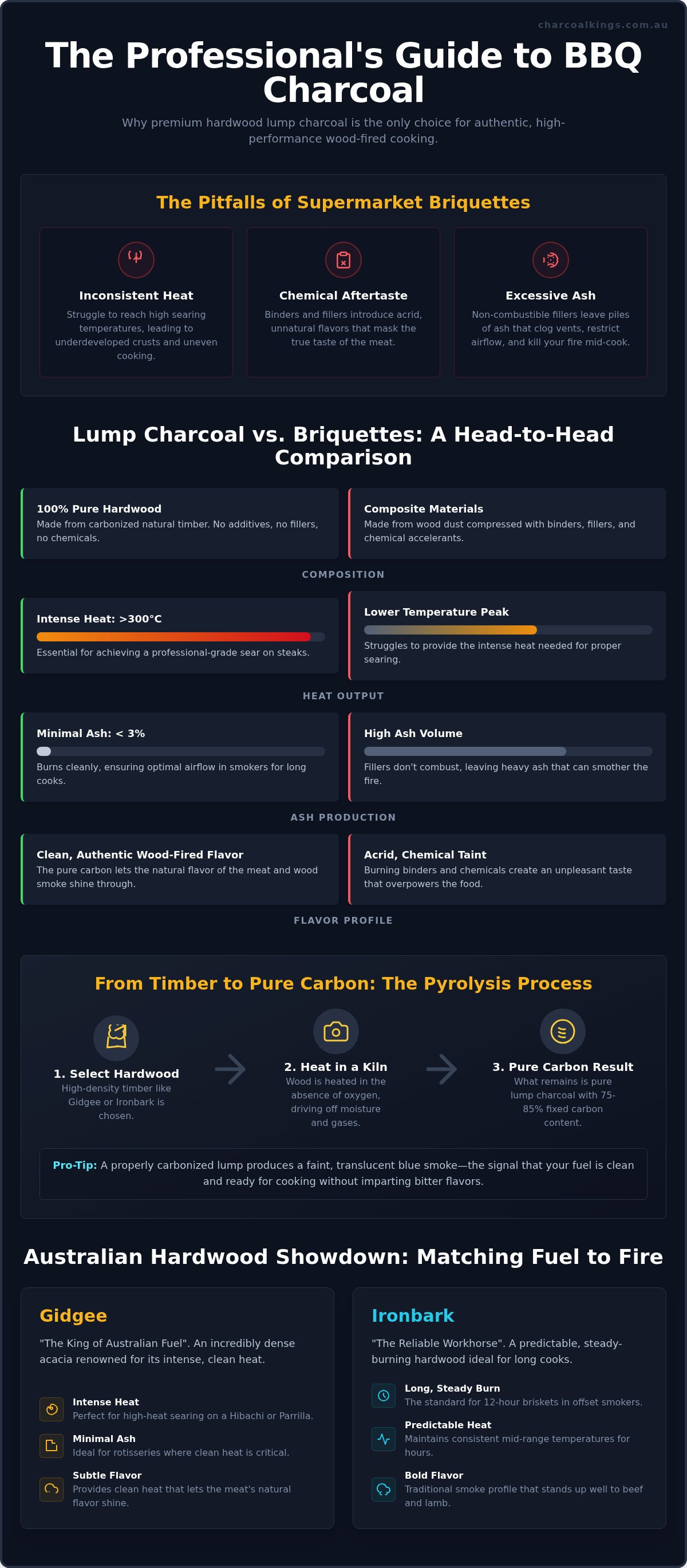
Lump charcoal is the carbonized remains of hardwood that retains the original wood structure. To understand what is charcoal in its most professional form, you must look at the manufacturing process. Unlike mass-produced briquettes, premium lump contains zero binders, fillers, or chemical accelerants. It’s 100% natural timber that has undergone a specific thermal transformation. This absence of additives is why serious pitmasters refuse to use anything else.
Purity dictates performance. When you cook with pure carbon, there are no burning chemicals to interfere with the Maillard reaction. This chemical reaction between amino acids and reducing sugars creates the complex, savoury crust on a steak. Using inferior fuel with chemical fillers introduces acrid flavours that mask the natural profile of the meat. High-quality fuel ensures the only thing you taste is the wood-smoke and the protein.
The Pyrolysis Process: From Timber to Carbon
Pyrolysis is the chemical decomposition of organic material through heat in the absence of oxygen. During this process, wood is heated in a kiln until moisture and volatile gases are driven off. What remains is a piece of pure carbon that looks exactly like the original branch or log. It’s a rugged, straightforward process that requires mastery to get right.
The final grade of the lump charcoal depends entirely on the kiln’s temperature and duration. High-quality production targets a fixed carbon content between 75% and 85%. If the process is rushed, the wood won’t carbonize fully. This results in “dirty smoke” during the lighting phase. Properly carbonized lump produces a faint, translucent blue smoke. This indicates the fuel is ready for cooking and won’t impart bitter flavours to your food.
Lump Charcoal vs. Briquettes: The Core Differences
The physical composition of lump charcoal offers three distinct advantages over compressed briquettes. First is heat intensity. Because it’s pure carbon, lump can easily reach temperatures exceeding 300°C. This makes it the only viable choice for high-heat searing on a Hibachi or Parrilla. Briquettes peak at lower temperatures due to their non-combustible fillers.
Second is ash production. Briquettes contain heavy binders that don’t burn away. This leaves behind piles of grey ash that can clog the air vents of ceramic smokers and kill your fire. Premium lump burns almost entirely away, often leaving less than 3% ash. Finally, lump offers superior response time. It reacts instantly to oxygen changes. If you open your vents, the temperature spikes fast. If you close them, it chokes down quickly. This level of control is essential for the precision required in professional BBQ.
Australian Hardwood Species: Choosing the Right Lump for the Job
Not all timber is created equal. The performance of your lump charcoal depends entirely on the density of the source wood. Australian species like Gidgee and Ironbark are world-renowned for their extreme hardness. This density translates directly to longevity. A single load of high-density charcoal can last twice as long as softer varieties found in hardware stores. This is why professionals prioritize wood species over brand names. Using a heavy wood means you’ll spend less time refuelling and more time focusing on the cook.
Flavour profiles also shift based on the timber variety. Ironbark offers a bold, traditional smoke profile that stands up well to beef and lamb. Gidgee is more subtle, providing a clean heat that lets the natural flavour of the meat shine. While Gidgee provides an aggressive, high-heat sear, Ironbark delivers the steady, predictable burn required for 12-hour briskets. Choosing the right species is about matching the fuel’s energy output to your cooking method.
Gidgee and Ironbark: The Heavyweights of the BBQ World
Gidgee is widely considered the king of Australian fuel. It’s an incredibly dense acacia that burns with intense heat and leaves behind almost no ash. This makes it perfect for rotisseries where you need consistent heat without ash blowing onto the meat. Ironbark is the reliable workhorse. It provides a steady, mid-range heat that stays consistent for hours. This predictability is why it’s the standard for offset smokers across the country.
Understanding the origin of your fuel is vital for both performance and sourcing sustainable charcoal. Choosing local Australian hardwoods ensures you’re getting species designed for the rugged demands of open-fire cooking. You can quickly identify high-quality lump by looking for these markers:
- The Metallic Clink: Tap two pieces together. They should produce a sharp, metallic sound rather than a dull thud.
- Weight: High-quality lump feels heavy for its size, indicating high carbon density.
- Structure: The pieces should retain the visible grain and shape of the original timber.
Mallee Root and Mangrove: Fast Lighting and High Heat
Mallee Root is a traditional favorite for backyard enthusiasts. It’s less dense than Ironbark but lights much faster. It’s the ideal choice for open-fire grilling or quick sears on a kettle grill where you need heat in under 20 minutes. Mangrove is a popular imported alternative for those using Kamado-style cookers. It offers consistent sizing and lights easily, providing a neutral smoke profile that doesn’t overpower delicate proteins like fish or chicken. Matching the wood to your equipment is the mark of a master. If you want to experience the difference that professional-grade timber makes, you should explore our range of hardwood lump.
Performance Metrics: Why Pros Choose Lump for Flavour
The primary reason professionals choose lump charcoal is the “Clean Burn” promise. Because it contains no chemical binders or petroleum-based accelerants, it doesn’t produce the acrid smell typical of budget briquettes. This purity allows the natural flavour of the meat to take centre stage. Understanding how charcoal is made reveals that the lack of fillers isn’t just about health; it’s about culinary precision. When you light a fire, you want heat and wood-smoke, not the scent of burning additives.
High-grade lump charcoal also offers a significantly higher temperature ceiling than compressed alternatives. While budget fuels often plateau, premium hardwood lump can easily reach temperatures exceeding 300°C. This intense heat is essential for the rapid searing required on a Hibachi or Parrilla. For those seeking the absolute pinnacle of heat and duration, our Binchotan Charcoal Guide details the performance of traditional Japanese white charcoal. Fire bed stability is also dictated by sizing. A bag containing a mix of large chunks and medium pieces ensures optimal airflow, preventing the fire from choking on its own weight during long cooks.
The Flavour Profile of Pure Carbon
Pure carbon provides a clean canvas. This allows your rubs and sauces to shine without competing with “fuel flavour.” Many beginners confuse fuel flavour with smoke flavour. Smoke flavour should come from added smoking wood chunks, while the fuel itself should remain neutral and efficient. Professional kitchens prioritize lump for open-fire cooking because it produces less visible smoke and a cleaner aroma. This creates a better environment for both the chef and the diners in open-plan restaurants.
Longevity and Reusability
The idea that lump charcoal burns too fast is a persistent myth. When managed correctly with precise vent control, it supports 12-hour low and slow cooks without issue. The real economy lies in reusability. Once your cook is finished, shut your vents completely to extinguish the fire. You can re-light the remaining unburnt charcoal for your next session. This re-lighting capability often makes premium lump cheaper on a per-cook basis than budget alternatives that turn entirely to ash. It’s a rugged, efficient fuel that respects the bottom line of serious pitmasters.
Mastering the Fire: How to Light and Manage Lump Charcoal
Managing lump charcoal requires more precision than uniform briquettes. Because the pieces vary in size, airflow through the fire bed is less predictable. You must become a master of your vents. Small adjustments have immediate effects on the temperature. If you leave the intake wide open, the fire will spike rapidly due to the high carbon content of the hardwood. To maintain a steady temperature, start with your vents mostly closed and open them in increments of 2 or 3 millimetres. This level of control is what separates a backyard cook from a professional pitmaster.
Purity is the hallmark of professional BBQ. Never use chemical accelerants or lighter fluid. These liquids soak into the porous structure of the charcoal and release foul-smelling gases throughout the entire cook. Instead, use natural firelighters or a chimney starter to preserve the clean wood-smoke profile. To reach peak searing temperatures in 15 minutes, follow this straightforward process:
- Step 1: Fill your charcoal chimney to the brim with premium hardwood lump.
- Step 2: Place two natural firelighters on your bottom grate and light them.
- Step 3: Set the chimney directly over the flames to draw heat upward.
- Step 4: Wait until the top pieces show a light coating of white ash and the smoke turns clear.
- Step 5: Dump the glowing coals into your grill and spread them to create your fire bed.
Technique: The Bottom-Up vs. Top-Down Light
The direction of the fire’s spread determines your cooking style. A bottom-up light is best for high-heat grilling. It ignites the entire fuel bed quickly for a short, intense burn. For long-duration smoking, the top-down light is superior. This is the foundation of the Minion Method, where lit coals are placed on top of unlit ones to create a slow-moving fire front. Alternatively, the Snake Method involves an arch of unlit fuel that burns like a fuse. Both methods provide consistent heat for 12 hours or more. For a deeper dive into these fire-building strategies, read our guide on mastering the art of barbecuing with charcoal.
Managing Hot Spots and Air Voids
Uneven sizing can lead to air gaps in your firebox. These voids cause sudden temperature drops as the fire struggles to jump the gap between pieces. When loading your smoker, pack the larger chunks at the bottom and fill the gaps with medium pieces. This creates a dense, stable fuel bed that resists “hot spots.” You should also be aware of “sparking,” which occurs when trapped pockets of air or sap in the wood expand rapidly. High-density species like Gidgee are less prone to this, but always use a high-quality BBQ scraper to manage the coal bed from a safe distance. If you need the right tools for fire management, check out our professional BBQ accessories.
Sourcing the Best: Why Charcoal Kings is the Professional Choice
Charcoal Kings operates as the master of the craft in the Australian charcoal market. We serve as a primary wholesale supplier to the Australian food service industry, providing fuel to high-volume commercial kitchens and specialty smokehouses. This commercial background means our standards for lump charcoal are uncompromising. We don’t just sell these products; our team consists of seasoned practitioners who use this fuel in rugged, commercial environments. This ensures that every bag we stock has been tested for the heat output and duration required by the most demanding chefs.
Home pitmasters now have access to the same professional-grade fuel that powers top-tier restaurants. Whether you’re a hobbyist or a serious competitor, you deserve a fuel source that respects the quality of the meat you’re cooking. By focusing on purity and the absence of additives, we ensure your cook is never compromised by chemical aftertastes or inconsistent heat. To understand how our hardwood range fits into the wider landscape of fuel options, you should consult our Ultimate Guide to BBQ Charcoal.
Consistency You Can Trust
For a professional chef, bag-to-bag consistency is the most important performance metric. A restaurant’s service depends on predictable burn times and heat levels. We prioritize this consistency by maintaining strict quality control over our supply chain. Our handling processes are designed to minimize “fines” and dust, which are the small fragments that often plague lower-grade products. These small pieces are a liability in a professional firebox because they settle at the bottom, restrict oxygen flow, and cause temperature stalls. Our commitment to high-standard sourcing means you get usable, high-density chunks in every bag.
Ready to Upgrade Your Fuel?
Identifying premium hardwood lump is straightforward once you know what to look for. Our products are characterized by their large sizing, heavy weight, and the visible grain of the original timber. You won’t find compressed dust or hidden fillers here. We offer our professional-grade range to the public with the same focus on performance and authenticity that we provide to our commercial partners. Bulk savings are available for those who order direct, making it easier to maintain a steady supply of high-performance fuel. Stop fighting with inconsistent supermarket brands and start cooking with the fuel the pros trust. Explore our Premium Hardwood Lump Charcoal range today.
Elevate Your BBQ with Professional Grade Fuel
Choosing the right fuel is the most direct way to improve your results on the grill. You’ve seen how the purity of 100% natural hardwood prevents chemical aftertastes and how the density of species like Gidgee provides the longevity needed for serious cooks. Mastering the airflow and fire management techniques discussed will ensure you get the most out of every bag. As a wholesale supplier to top Australian steakhouses, we understand that consistency is non-negotiable for a professional result.
Our range of premium lump charcoal is sourced specifically for those who value performance over convenience. You’ll benefit from the same expert support that seasoned pitmasters rely on to maintain their commercial standards. It’s time to stop settling for inferior supermarket options that clog your vents with ash. Take control of your heat and flavour profile by switching to a fuel source that respects the craft of authentic BBQ. Shop Premium Hardwood Lump Charcoal at Charcoal Kings and experience the difference that pure carbon makes.
Frequently Asked Questions
Is lump charcoal better than briquettes for smoking?
Lump charcoal is superior for smoking because it contains zero chemical additives or binders. This purity ensures that the smoke profile remains clean and doesn’t impart acrid flavours to the meat. Unlike briquettes, lump reacts instantly to vent adjustments, giving you the precision required for long-duration cooks. It also produces significantly less ash, which prevents your firebox from becoming choked during a 12-hour brisket smoke.
How long does a 15kg bag of lump charcoal last?
The duration of a 15kg bag depends entirely on your cooking temperature and the density of the wood species used. High-density Australian hardwoods like Gidgee or Ironbark burn much slower than softer varieties. For a typical low and slow session, you might use 2 to 3 kilograms of fuel. This means a large bag can support multiple long cooks or dozens of high-heat searing sessions if you manage your airflow efficiently.
Can I reuse lump charcoal after a cook?
You can definitely reuse your fuel after a cook is finished. Once you’re done, shut all air vents completely to starve the fire of oxygen and extinguish the coals. For the next session, simply shake the charcoal grate to remove loose ash and add a small amount of fresh fuel on top. This reusability makes premium hardwood a very economical choice for regular backyard cooks who value efficiency and performance.
Why does my lump charcoal spark when I light it?
Sparking is a natural occurrence caused by small pockets of air or moisture trapped within the wood fibres. When these pockets heat up rapidly, they expand and pop, creating sparks. This is more common in certain species or if the fuel has absorbed environmental humidity. Using a chimney starter and high-density hardwoods helps minimize this while ensuring a safer, more predictable lighting process for your next BBQ session.
What is the best way to light lump charcoal without lighter fluid?
A chimney starter is the most efficient tool for lighting your fire without using chemical lighter fluid. Simply place natural firelighters under the chimney and fill the cylinder with your fuel. The vertical design creates a draft that ignites the pieces in about 15 to 20 minutes. This method preserves the purity of the hardwood and ensures that no foul-smelling vapours ever reach your food or affect the final flavour profile.
Which Australian wood species provides the longest burn time?
Gidgee and Ironbark are the top performers for burn duration in the Australian market. These species are incredibly dense, meaning they contain more carbon per cubic centimetre than lighter woods like Mallee. This density allows them to maintain a steady temperature for extended periods. Professional pitmasters prioritize these heavy woods for overnight smokes because they require fewer refills and provide the most reliable heat output available for long cooks.
Is lump charcoal safe for ceramic grills like the Big Green Egg or Kamado Joe?
Lump charcoal is the recommended fuel for ceramic grills like the Big Green Egg or Kamado Joe. These cookers rely on precise airflow through a narrow firebox to maintain temperature. Because lump produces very little ash compared to briquettes, your air intake won’t get blocked during a long cook. The high-heat capabilities of hardwood lump also allow these grills to reach the 300°C+ temperatures needed for authentic Neapolitan pizza.
Does lump charcoal expire or go bad if stored for a long time?
Charcoal is almost pure carbon and does not expire or go bad over time. However, it is extremely porous and will absorb moisture from the air if stored in a damp environment. Wet fuel is difficult to light and will produce excessive smoke and sparking. To maintain peak performance, store your bags in a cool, dry place like a sealed plastic bin or a dedicated storage locker away from ground moisture.