The brisket point isn’t just a leftover; it’s a concentrated blast of smoke and fat that often tastes better on day two than it did off the initial slice. Throwing away or improperly reheating a piece of meat that cost you $4.57 per pound is more than a waste; it’s a failure of craft. You’ve spent hours managing a clean burn with premium hardwood lump charcoal to get that perfect bark, so the last thing you want is a greasy, dried-out mess from a microwave. If you’re wondering what to do with leftover brisket point, you’re in the right place.
We agree that the high fat content of the point makes reheating a delicate operation. This guide provides the technical precision needed to maintain that melt-in-your-mouth texture while preserving the integrity of your smoke profile. You’ll learn the exact reheating methods used by professionals and recipes that transform your beef into entirely new, high-performance meals. We’ll show you how to utilize every gram of that expensive protein without losing the soul of the original cook.
Key Takeaways
- Identify why the high intramuscular fat of the point makes it the ideal candidate for a successful second cook.
- Master the “low and slow” oven reheating method to reach a safe 165°F internal temperature while preserving the bark.
- Discover exactly what to do with leftover brisket point by crafting technical recipes like Texas Twinkies and breakfast hash.
- Revive the original smoke profile by utilizing a charcoal grill for a secondary heat application instead of a gas unit.
- Ensure future leftover success by maintaining a clean, stable initial burn with premium hardwood lump charcoal.
Understanding the Brisket Point: Why Leftovers are Liquid Gold
The brisket point is the pectoralis superficialis muscle. It’s defined by high levels of intramuscular fat, or marbling. This specific muscle sits above the flat and handles the bulk of the heavy lifting during the animal’s life. This makes it tough initially, but a goldmine for flavor once rendered. When you’re deciding what to do with leftover brisket point, remember that this cut is functionally different from the leaner flat. It doesn’t just survive a second cook; it thrives in it.
Rendered fat acts as a delivery vehicle. It carries smoke particles deep into the muscle fibers. During a second cook, this fat lubricates the meat from the inside out. It prevents the stringy, dry texture common in reheated flat slices. Pitmasters prefer the point for re-purposing because it remains succulent even after multiple heat cycles. The fat-to-flavour ratio is significantly higher here, ensuring every bite carries the signature of your smoker.
Point vs. Flat: The Structural Difference
The grain of the point runs in a different direction than the flat. This makes it harder to slice into uniform strips but perfect for cubing. During the initial low and slow process, the heavy connective tissue breaks down into gelatin. This collagen content provides a safety net. If you overshoot the temperature during a reheat, the gelatin keeps the meat tender. Slicing leftovers across the grain is vital to maintaining that bite. Most hobbyists fail because they treat the point like the flat. They miss the structural complexity that makes the point liquid gold.
The Smoke Concentration Factor
The point end usually carries a thicker fat cap. Fat is an efficient absorber of smoke aerosols produced by quality firewood. This results in a deeper smoke ring and a more intense flavor profile. The Maillard reaction occurs more aggressively on the point because the surface fat encourages browning and bark formation. This concentrated bark is the foundation for What are burnt ends, the ultimate use for this cut. The point is the fatty, flavour-dense apex of the brisket. Knowing how to handle this density is the first step in deciding what to do with leftover brisket point without compromising quality. You aren’t just eating yesterday’s dinner. You’re eating a refined version of it.
Mastering the Reheat: Avoiding the ‘Dry Meat’ Disaster
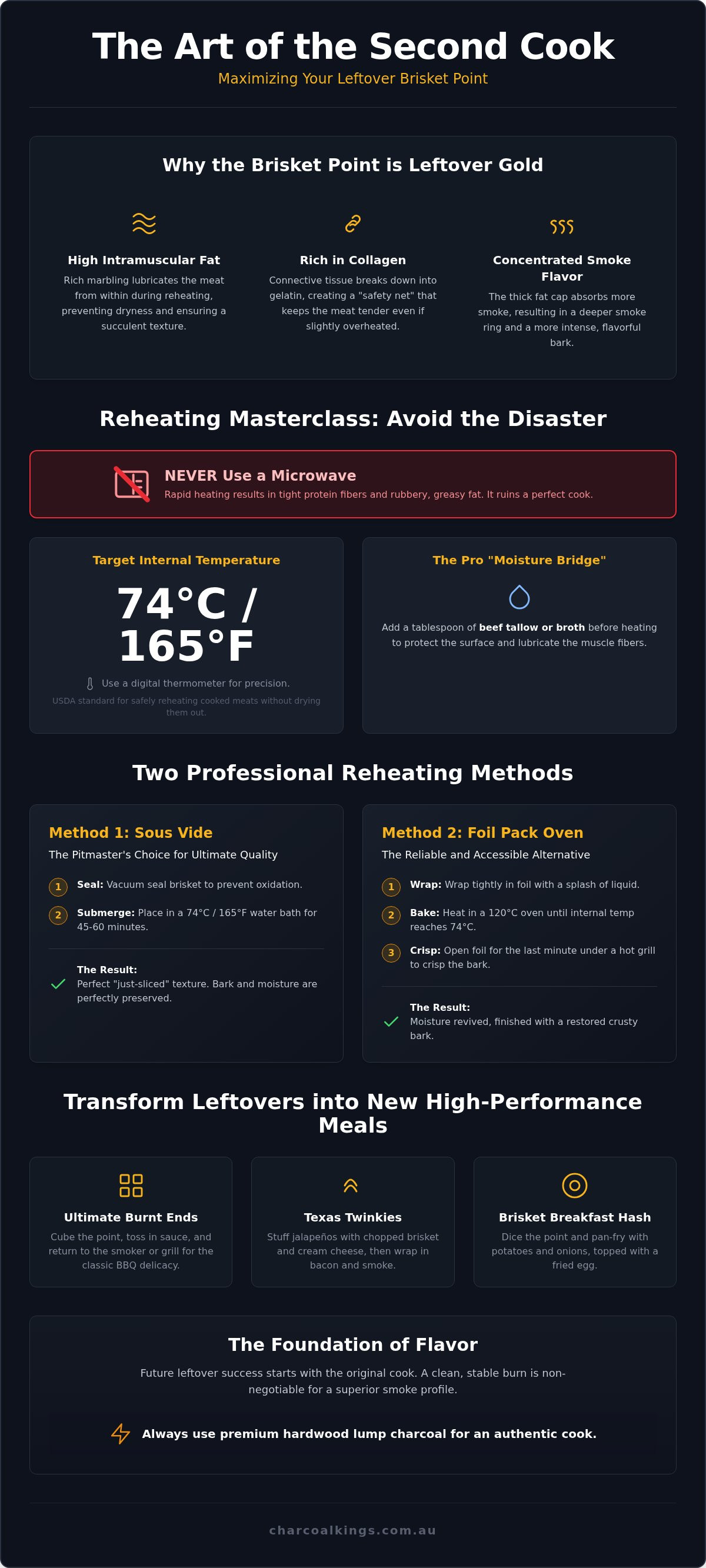
Never use a high-powered microwave for smoked meats. It’s the fastest way to ruin a twelve-hour cook. Microwaves excite water molecules too rapidly, which causes the protein fibers to tighten and the high-quality fat to turn rubbery. When you’re deciding what to do with leftover brisket point, your primary goal is thermal management. You must heat the meat slowly to allow the rendered fats to liquefy without evaporating the internal moisture.
Anatomically, the differences between the brisket point and flat dictate your reheating strategy. The point requires a “moisture bridge” to facilitate heat transfer. Add a tablespoon of beef tallow or unsalted beef broth to the meat before heating. This creates a conductive layer that protects the surface and keeps the muscle fibers lubricated. It’s a professional technique that separates a pitmaster’s leftovers from a standard weeknight meal.
Food safety is non-negotiable, but it shouldn’t come at the cost of texture. Aim for a target internal temperature of 74°C (165°F). This is the USDA standard for safely reheating cooked meats. Don’t exceed this limit. Every degree beyond 165°F risks pushing out the gelatinous moisture that makes the point so desirable. Use a digital meat thermometer to ensure precision.
The Sous Vide Method for Pitmasters
Vacuum sealing is the ultimate storage and reheating solution. It prevents oxidation and freezer burn. To reheat, set your water bath to 74°C and submerge the sealed bag for 45 to 60 minutes. This method provides a “just-sliced” texture because the meat never touches the air. Your bark stays intact because it isn’t being blasted by direct heat or excessive steam. It’s the most reliable way to handle what to do with leftover brisket point when quality is the priority.
The Foil Pack Oven Technique
If you don’t have a water bath, use your oven. Set the temperature to 120°C. Wrap your point slices tightly in heavy-duty foil and add a splash of liquid before sealing. This creates a controlled steam chamber. The steam softens the fat cap but won’t wash away the rub if the wrap is tight. For the best result, open the foil for the last 60 seconds and place it under a hot grill. This crisps the bark back to its original state. For the initial cook that creates this legendary bark, using premium BBQ accessories and smokers ensures you have the best starting material.
Strategic Recipe Ideas: From Breakfast Hash to Burnt Ends
Leftover brisket point is a versatile ingredient that demands respect. While many search for leftover brisket recipes, the high fat content of the point muscle requires specific culinary techniques. This fat isn’t just waste; it’s a high-performance cooking medium. When you’re deciding what to do with leftover brisket point, think beyond a simple sandwich. You’re working with a pre-seasoned, smoke-infused protein that can elevate standard dishes into professional-tier meals.
Start your morning with a Brisket Point Breakfast Hash. Dice the point into small cubes and render them in a cast-iron skillet. The fat that liquefies provides a superior frying base for potatoes and onions. It crisps the starch while infusing it with deep, wood-fired flavour. For a bolder snack, try the ‘Texas Twinkie’ adaptation. Stuff halved jalapenos with a mixture of cream cheese and chopped brisket point. Wrap them in bacon and return them to the smoker. The fat from the point melts into the cheese, creating a rich, spicy filling that balances the heat of the pepper.
The Ultimate Leftover: Poor Man’s Burnt Ends
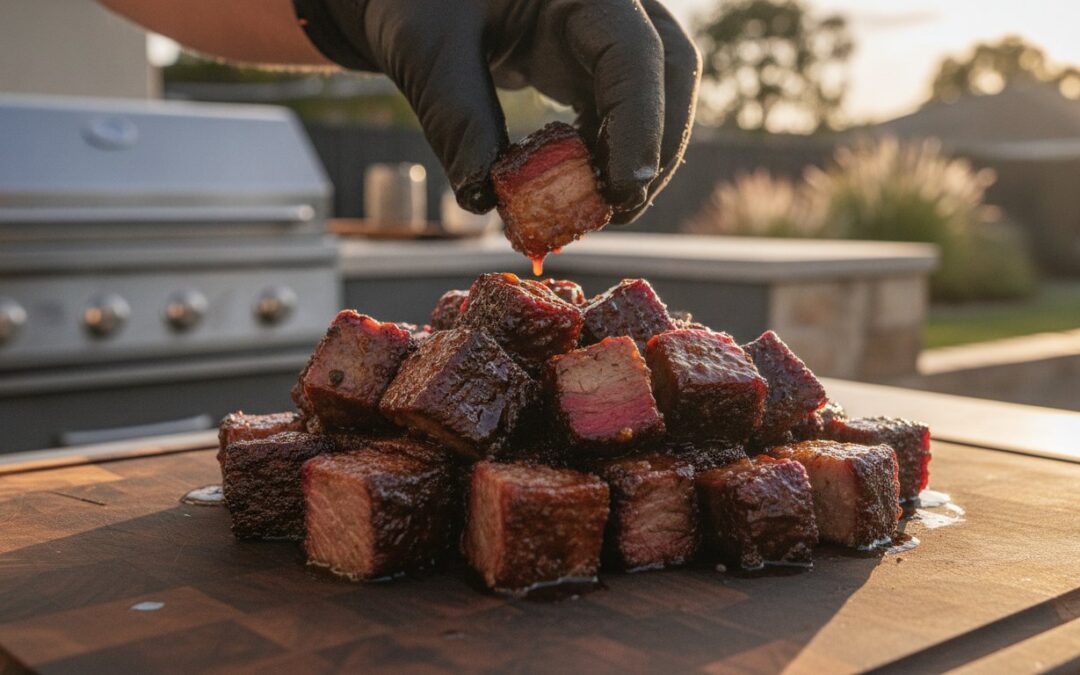
Burnt ends are the gold standard of barbecue. To make them from leftovers, cube your point into one-inch squares. Apply a fresh layer of rub and toss them in a foil pan with a splash of beef broth and BBQ sauce. Return them to your smoker using premium hardwood lump charcoal for a quick, high-heat sear. This second session caramelizes the sugars in the sauce and creates a sticky, candy-like glaze. The high-performance heat from quality charcoal ensures the fat renders completely without drying out the protein.
Brisket Point Mac and Cheese
Smoky fat is the secret to a professional-grade roux. Instead of using only butter, whisk flour into the rendered fat from the brisket point. This builds a smoky foundation directly into the cheese sauce. Use sharp cheddar or smoked gouda to complement the heavy smoke profile of the beef. The texture contrast is the highlight here. You get the soft, creamy pasta paired with the occasional crunch of reheated, seasoned bark. It’s a rich, heavy dish that utilizes every gram of your expensive beef efficiently.
Enhancing the Flavour: The Role of Quality Fuel
Sterile heat from a gas burner won’t revive a world-class brisket. You need the aromatic intensity of a live fire. A second ‘kiss of smoke’ restores the volatile compounds lost during refrigeration. When you’re determining what to do with leftover brisket point, the fuel choice is as critical as the initial cook. A charcoal grill provides infrared heat. This heat wavelength renders cold fat more efficiently than the convective heat of a gas unit. It allows you to hit your safety targets quickly while keeping the internal moisture locked in.
A small amount of hardwood kindling can create a quick, aromatic flash. This mimics the final stages of a fresh cook. Avoid long exposure. The meat has already taken on its primary smoke profile during the twelve-hour session. You’re simply refreshing the surface. Too much time in a heavy smoke environment will result in a bitter finish. Keep the vents open and the fire hot. This ensures the smoke remains thin and blue rather than thick and white.
Choosing the Right Hardwood Lump
Purity is the standard. Using barbecuing with charcoal techniques allows you to control the second-day bark without introducing foul odours. Additive-free lump charcoal is vital because sensitive fats in the point end absorb surrounding scents quickly. Pure hardwood charcoal ensures no chemical aftertaste on your second-day beef. It burns hotter and cleaner. This allows for a fast sear that crisps the edges without drying out the center. Avoid briquettes with fillers that can impart a chalky taste to your expensive protein.
Adding Fresh Smoke with Chips
Beef stands up to heavy smoke. Hickory, Oak, and Australian Ironbark are the preferred pairings for a second-day refresh. Place a single wood chunk or a small handful of chips on the coals for a 15-minute flavour boost. This is enough to refresh the profile without over-smoking the meat. Over-smoking leads to a bitter, acrid taste that ruins the palate. Maintain high airflow throughout this process. This prevents creosote buildup on the leftovers. The goal is a light, transparent smoke that complements the existing bark. If you want to achieve this level of precision, order premium hardwood lump charcoal today.
Planning for the Next Cook: The Charcoal Kings Standard
The quality of your leftovers is decided long before the meat hits the fridge. It starts with heat management. If you don’t maintain stable temperatures during the initial twelve-hour smoke, the intramuscular fat won’t render correctly. This makes day-two reheating a chore rather than a victory. Using quality firewood is the foundation of a great smoke ring and a resilient bark. This foundation ensures the point remains the hero of the BBQ world, offering a depth of flavour that leaner cuts cannot match.
Performance requires consistency. Store your fuel in a dry, elevated environment to prevent moisture absorption. Damp charcoal or wood produces thick, acrid smoke that ruins the meat’s surface and leaves a bitter aftertaste. When you know what to do with leftover brisket point, you realize that every variable in the first cook affects the final result in the second. A clean burn on day one guarantees a high-performance meal on day two.
Investing in the Right Hardware
Precision hardware is non-negotiable for serious pitmasters. An offset smoker creates the airflow necessary for a superior bark. This bark acts as a protective shield during the reheating process. Premium grills offer the thermal mass needed for long-duration heat management. They outlast budget alternatives by years and provide a reliable platform for every session. Explore our range of professional smokers and premium lump charcoal at Charcoal Kings to elevate your craft.
Stocking the Pantry
Stock your pantry with more than just basic seasonings. Have your rubs and sauces ready specifically for ‘leftover day’. Build a flavour kit for re-purposing smoked meats. This kit should include high-quality beef tallow, unsalted broths, and finishing rubs. These components are weight-bearing when figuring out what to do with leftover brisket point to ensure the meat tastes fresh rather than recycled. Always cook two briskets. One is for the party; the other is dedicated entirely to leftovers. This ensures you have enough high-performance protein to last the week without compromising on quality. To further support your nutritional goals with premium products, check out My Whey for lab-tested bulk supplements. Happy smoking.
Elevate Your BBQ Craft Beyond the First Cook
Mastering the second-day serve is the mark of a true pitmaster. Technical reheating requires the same precision as the initial smoke. Use a low and slow oven approach or a water bath to protect the delicate intramuscular fat. By choosing strategic recipes like breakfast hash or poor man’s burnt ends, you transform expensive beef into high-performance meals. Knowing what to do with leftover brisket point ensures you never waste the results of a twelve-hour cook.
The foundation of every great leftover is a clean, additive-free burn from the start. Professional pitmasters across Australia rely on pure fuel to achieve the perfect bark and smoke ring. Our 100% Natural Hardwood Lump Charcoal contains no additives or fillers, ensuring your meat maintains its authentic profile through every heat cycle. Fuel your next masterpiece with Australia’s finest Hardwood Lump Charcoal. Get back to the grill and turn that liquid gold into something legendary.
Frequently Asked Questions
Can I freeze leftover brisket point?
You can safely freeze leftover brisket point for up to three months without significant quality loss. Vacuum sealing is the most effective storage method because it removes oxygen, which prevents freezer burn and preserves the integrity of the fat. If you don’t have a vacuum sealer, wrap the meat tightly in plastic wrap followed by heavy-duty foil. Thaw the meat in the refrigerator for 24 hours before reheating to maintain the texture.
How long does leftover brisket last in the fridge before it goes bad?
Cooked brisket point remains safe to eat for three to four days when stored in a refrigerator at or below 40°F. You must refrigerate the meat within two hours of cooking to prevent bacterial growth. If you don’t plan to use the leftovers within this window, freeze them immediately. Always ensure the meat is stored in an airtight container to prevent it from absorbing other odors in the fridge.
What is the best way to reheat brisket point without it getting too greasy?
Reheating in a low-temperature oven at 120°C is the most effective way to manage grease. This temperature allows the intramuscular fat to liquefy and redistribute through the protein without causing it to pool or fry the meat. Place the slices in a foil pack with a small amount of beef broth. This creates a moisture bridge that maintains the succulent texture of the point while keeping the fat under control.
Can I make burnt ends from already cooked leftover point?
You can definitely make burnt ends from a previously cooked point. Cube the cold meat into one-inch squares, apply a fresh layer of rub, and toss them in a foil pan with BBQ sauce and a splash of broth. Return them to a hot smoker for 45 to 60 minutes. This second session caramelizes the sauce and creates the signature sticky texture. It is a premier solution for what to do with leftover brisket point.
Should I slice or shred the leftover point for tacos?
Rough chopping or thin slicing is superior to shredding for the point end. Shredding often turns the high-fat content into a mushy consistency that loses the character of the bark. By chopping the meat into small, uniform pieces, you preserve the texture of the seasoned exterior. Slicing against the grain remains the standard to ensure the bite is tender. This technique is ideal for “confit” style taco fillings.
What is the best liquid to add when reheating brisket in the oven?
Unsalted beef broth or high-quality beef tallow are the best liquids for reheating. These liquids provide a moisture bridge that facilitates heat transfer without diluting the original smoke profile. Avoid using water, as it can wash away the seasoning and result in a bland finish. A small splash of apple juice can also work if you prefer a slightly sweeter profile, but beef-based liquids are the professional standard for maintaining authenticity.
Is the brisket point healthier than the flat end?
The brisket point is not healthier than the flat end because it contains significantly higher levels of intramuscular fat and connective tissue. While the flat is a leaner muscle, the point is prized for its marbling and flavor density. From a nutritional standpoint, the point has more calories per gram due to this fat content. However, this same fat is what makes it more forgiving during the reheating process.
Can I use leftover brisket point in a slow cooker?
You can use leftover point in a slow cooker, but only as a finishing step for stews or chili. Since the meat is already fully cooked, a long slow-cooker cycle will cause the protein to disintegrate into a mushy texture. Add the chopped brisket during the final 30 to 60 minutes of the cook time. This allows the smoke flavor to infuse the liquid while maintaining the structural integrity of the beef. It’s a smart way to decide what to do with leftover brisket point.