The lowest price per kilo on the butcher’s board is often the most expensive way to fill your smoker. Many pitmasters assume that is buying a whole primal cut of brisket cheaper than grabbing a pre-trimmed flat, but the raw sticker price is a deceptive metric. You see the bulk discount and think you’re winning. You forget that a massive portion of that packer weight is destined for the bin or the tallow pot. With Australian beef prices hitting record highs, every gram of waste counts against your bottom line.
Staring down a 7kg slab of meat with a trimming knife is intimidating. This guide breaks down the true cost of yield. We move past the marketing and into the hard math of price-per-kilo after the trim. You will learn to calculate your real investment and identify the point and flat with precision. We also show you how to turn every scrap of fat into high-quality tallow. This knowledge ensures you buy in bulk with absolute confidence and master the low and slow craft with professional efficiency.
Key Takeaways
- Calculate the true price per edible kilo to determine if is buying a whole primal cut of brisket cheaper than purchasing pre-trimmed cuts.
- Apply the 60/40 yield rule to account for the 30-40% weight loss typical when trimming a whole packer brisket.
- Implement a zero waste strategy by rendering fat into liquid gold tallow and using meat scraps for high-quality burger grinds.
- Master precision trimming with a sharp 6-inch boning knife to minimize waste and protect the meat during long smokes.
- Select premium, additive-free fuel like hardwood lump charcoal to maintain consistent heat for the entire duration of a 12-hour cook.
Understanding the Price Gap: Primal vs. Trimmed Brisket
The whole primal brisket is the heavy-hitter of the BBQ world. It is one of the nine beef primal cuts, encompassing both the lean “flat” and the fatty “point” muscles. In Australia, these are often sold as “packer” briskets, weighing anywhere from 5kg to 9kg. When you see a wholesale price that looks like a steal, it’s natural to ask: is buying a whole primal cut of brisket cheaper than buying a pre-trimmed piece from the local butcher? The answer isn’t always found on the price tag. You must account for the time, tools, and the significant amount of fat you will inevitably remove.
The Sticker Price vs. The True Cost
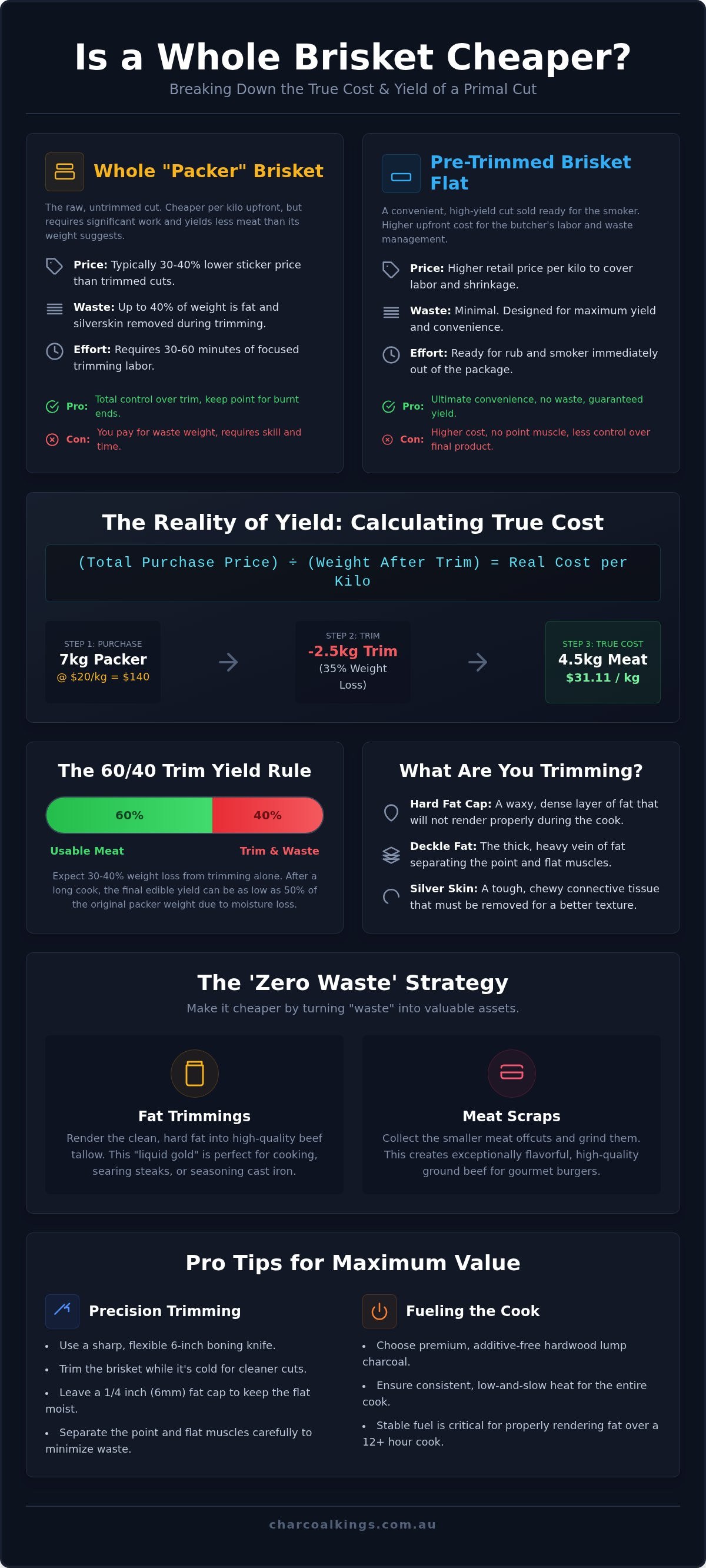
Wholesale primal prices are typically 30% to 40% lower than trimmed retail cuts found in boutique butcher shops. A primal cut is the raw, unrefined section of the carcass before retail processing. While the lower cost per kilo is enticing, the initial saving is often offset by the weight of the fat cap. On a standard Australian packer brisket, the fat and silver skin can account for up to 40% of the total weight. If you pay A$100 for a 7kg brisket but throw away 2.5kg of trim, your effective price per kilo has skyrocketed. You are paying for every gram of that fat, whether it makes it to the smoker or the bin. Is buying a whole primal cut of brisket cheaper? Only if you know how to manage the yield.
Why Retail Brisket is So Expensive
Butchers charge a premium for trimmed flats because they provide a finished, high-yield product. They factor in the cost of professional knife skills and the overheads of running a shop. When a butcher trims a brisket, they are taking on the risk of “shrinkage” and the logistical burden of waste disposal. They price these factors into the final retail product. A “supermarket flat” is designed for convenience; it’s ready for the rub immediately. In contrast, a packer requires 30 to 60 minutes of focused labor. You are essentially choosing between paying the butcher for their time or paying yourself in savings by doing the dirty work. For many, the ability to control the trim and keep the point for burnt ends makes the primal cut the superior choice despite the effort.
The Reality of Yield: Calculating Price per Edible Kilogram
Buying a massive slab of beef feels like a financial victory until you see the pile of fat on the cutting board. Most pitmasters follow the 60/40 rule. You should expect to lose approximately 30% to 40% of your primal weight during the trimming process alone. When you factor in the moisture loss during a 12-hour smoke, many experts estimate a final 50% yield of edible meat from the original packer weight. This reduction is the primary reason why the wholesale price is deceptive. To find your true investment, use this simple formula: (Total Purchase Price) / (Weight after Trim) = Real Cost per Kilogram. If you paid A$140 for a 7kg brisket and trimmed off 2.5kg, your effective price is based on 4.5kg of meat, not the 7kg you carried out of the shop.
Yield Factors: What Determines Your Waste?
The volume of waste depends on the specific anatomy of the cut. You are primarily removing the hard fat cap. This fat feels like wax and will never render, no matter how long you cook it. Then there is the deckle fat. This is the thick, heavy vein of fat situated between the point and the flat muscles. Removing it is necessary for a professional finish, but it’s a heavy loss. Beginners often suffer from scalping, where the knife dives too deep into the muscle. Every gram of red meat you accidentally slice off increases your cost per kilo. Using high-performance fuel ensures you maintain the steady temperatures needed to render the remaining fat without drying out your hard-earned yield.
Grade and Marbling Impact
The grade of beef you select directly dictates the fat-to-meat ratio. Premium Australian Wagyu briskets are prized for internal marbling, but they frequently carry much larger external fat caps than lower grades. This means your trimming loss could be higher on a more expensive piece of meat. Conversely, lower grades like Choice or Select might have thinner fat caps but often feature more tough silver skin and oxidized, greyish meat on the edges that must be removed. A heavier brisket isn’t always a better value. You want a piece with a manageable fat cap and a thick, even flat muscle to ensure your yield remains as high as possible. Determining if is buying a whole primal cut of brisket cheaper requires looking past the weight and assessing the fat distribution on the specific bag in your hands.
Is it Actually Cheaper? The ‘Zero Waste’ Strategy
Brisket prices in Australia have climbed steadily, turning what was once a budget cut into a premium investment. This demand-driven phenomenon means you can’t afford to be wasteful. If you throw your fat and meat scraps in the bin, you’re literally throwing away A$30 to A$50 per cook. To answer if is buying a whole primal cut of brisket cheaper, you have to look at the total value of the animal. When you repurpose the trim, the cost per kilo of your main cook drops significantly because you’re generating secondary products for free. You aren’t just buying a dinner; you’re stocking a pantry and a freezer.
Liquid Gold: Rendering Beef Tallow
The fat cap you trim off is a powerhouse of flavor. Rendering this white fat into tallow creates a shelf-stable, high-smoke-point oil that beats any supermarket vegetable oil. Many professionals use this tallow during the “Texas Crutch” phase of a cook. Smearing rendered tallow onto the butcher paper before wrapping the brisket keeps the meat incredibly moist and reinforces the beefy profile. This process is a core part of Mastering the Art of Barbecuing with Charcoal. Pure, additive-free tallow is also excellent for frying potatoes or searing steaks, providing a performance level that justifies the labor of the trim.
The Ultimate Burger Blend
Brisket meat offcuts are often superior to the pre-packaged mince found in grocery stores. The point and flat scraps provide a distinct texture and rich fat content that is perfect for a professional 80/20 lean-to-fat burger ratio. Instead of buying separate ground beef for your midweek meals, you can use your brisket “waste” to stock the freezer. Mixing the lean meat with a portion of the softer fat creates a grind that rivals high-end burger joints. Is buying a whole primal cut of brisket cheaper? It absolutely is when you consider you’re getting 1kg to 2kg of premium burger mince as a side effect of your main barbecue session. This zero-waste approach transforms the economics of bulk buying, making the packer brisket the most cost-effective choice for the serious home cook.
Trimming Like a Pro: Minimizing Waste and Maximizing Value
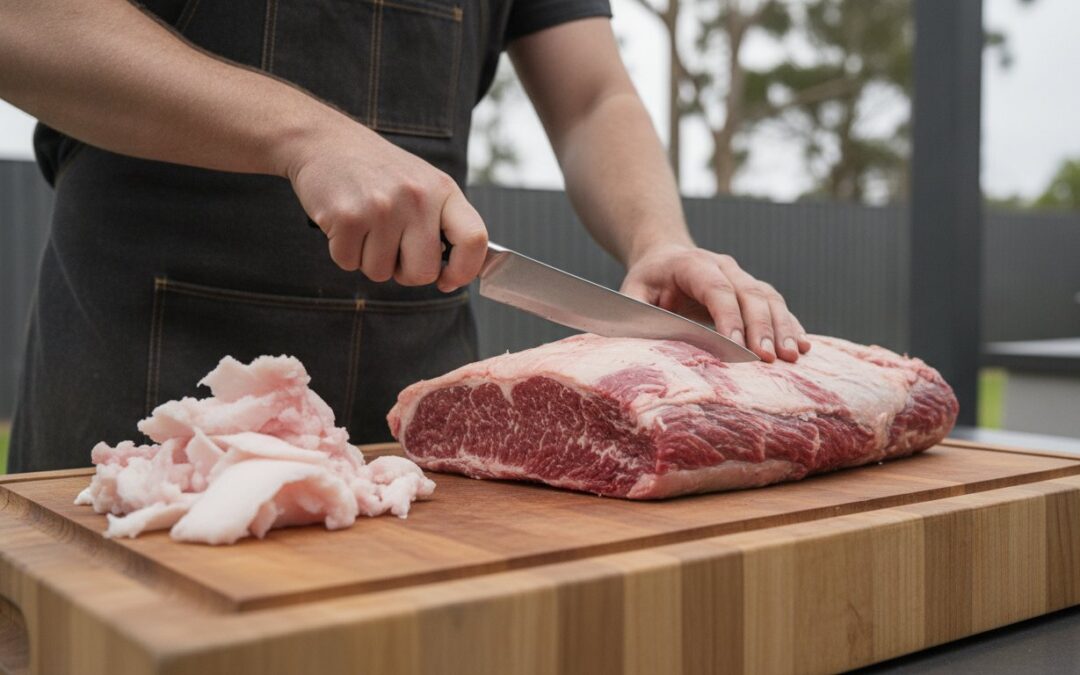
Precision with a blade determines your final profit margin on a cook. If you’ve decided that is buying a whole primal cut of brisket cheaper for your budget, your knife skills must back up that choice. You need a sharp 6-inch curved boning knife. This tool is non-negotiable for navigating the contours of the point and flat without gouging the muscle. A thick chef’s knife is too clumsy; it leads to “scalping” where you accidentally remove expensive red meat along with the fat.
Success starts with the “cold meat” trick. Never trim a brisket at room temperature. Fat becomes soft and slippery as it warms, making it nearly impossible to slice with accuracy. Keep the packer in the fridge until the moment you’re ready to cut. Cold fat is firm and behaves like wax, allowing you to shave off thin, consistent layers. This reduces waste and keeps your yield high. You’re also trimming for aerodynamics. A smooth, rounded shape allows smoke to flow over the meat without hitting jagged edges that will eventually burn and turn into bitter, dry waste.
The 5-Step Economic Trim
- Remove the deckle fat: Locate the hard, waxy fat vein between the point and the flat. This fat won’t render. Cut it out entirely to ensure the two muscles can cook evenly.
- Square the edges: Trim the thin, brown, or ragged edges of the flat. These bits dry out fast. Save these for your burger grind to ensure every cent of your investment is used.
- The 6mm rule: Shave the fat cap down to a consistent 6mm thickness. This layer protects the meat from the heat while allowing enough fat to render into the muscle.
- Clear the silver skin: Flip the brisket and remove the thin, pearlescent membrane from the underside. Rub cannot penetrate silver skin. Removing it ensures your bark forms directly on the meat.
Common Trimming Mistakes that Cost Money
Over-trimming is the fastest way to ruin the economics of a primal cut. Being too aggressive with the knife turns edible meat into scrap. Conversely, under-trimming is equally problematic. Leaving hard fat blocks the smoke from reaching the meat, preventing the formation of a proper smoke ring and deep flavor. Using a dull or incorrect knife creates jagged surfaces. These ridges increase the surface area, leading to more moisture loss during the long smoke. To get the most out of your meat, equip yourself with professional BBQ accessories that allow for surgical precision. Master the trim, and you master the cost.
Fueling the Cook: Why Premium Charcoal Matters for Primal Cuts
A 12-hour brisket cook is a marathon. You’ve spent significant time trimming the meat and calculating the true cost of your yield. It makes no sense to compromise that effort with substandard fuel. Is buying a whole primal cut of brisket cheaper if you end up with meat that tastes like chemical accelerants? Absolutely not. Cheap, supermarket-grade charcoal often contains fillers, binders, and chemical additives. These release acrid smoke that penetrates the meat during the long “low and slow” process. For a high-value primal cut, purity is the only standard that matters.
Consistent heat is the key to conquering the stall. When temperatures fluctuate, the muscle fibers tighten and release moisture. This can turn a premium Wagyu flat into a dry, tough piece of leather. Hardwood lump charcoal provides the intense, clean heat required for a robust bark. Briquettes, when free from additives, offer the predictable, long-duration burn needed for overnight sessions. You can find a detailed breakdown of these fuel types in The Ultimate Guide to BBQ Charcoal.
Purity for Performance
Charcoal Kings focuses on providing high-performance, additive-free hardwood. This ensures the natural flavor of the beef remains the hero of the dish. Stable thermal performance reduces moisture loss by preventing the temperature spikes that shock the meat. If you are searing offcuts or small point-muscle steaks for a quick snack during the long smoke, Binchotan Charcoal is the superior choice for high-end, clean searing. It provides the intense infrared heat needed to develop a crust without the flare-ups associated with inferior fuels.
The Final Verdict: Is it Worth It?
The math is clear. Buying a whole primal is the most cost-effective path for pitmasters who cook for large groups or those who meal prep. It allows you to control the trim and harvest valuable byproducts like tallow and burger mince. However, if you only need a quick dinner for two, a pre-trimmed retail flat from a quality butcher is often more practical. You pay for the convenience, but you save on labor and waste management.
Ultimately, the decision isn’t just about the A$ per kilo. It’s about owning the entire craft. There is immense psychological value in taking a raw packer brisket and transforming it into a masterpiece of bark and render. Is buying a whole primal cut of brisket cheaper? Yes, provided you have the right tools, the patience to trim, and the best fuel. Stock up on premium Hardwood Lump Charcoal for your next brisket cook and ensure your investment pays off in pure, unadulterated flavor. Master the fire, and the meat will follow.
Master Your Yield and Your Fire
Success in low and slow cooking depends on precision. You’ve seen the math behind the yield and the value of repurposing every scrap of trim. Determining if is buying a whole primal cut of brisket cheaper comes down to your willingness to do the work. If you render the tallow and grind the burger mince, the packer brisket is a superior economic choice. Without that zero-waste approach, you are simply paying for fat you won’t eat. Every gram of waste counts against your final price per kilo.
Don’t waste a premium primal investment on substandard fuel. Australia’s top pitmasters rely on 100% natural hardwood with zero chemical additives to achieve consistent results. You need a fuel that provides steady burn times for 12+ hour sessions. Get the professional fuel your brisket deserves – Shop Charcoal Kings today. Equip yourself with the right tools and the best fire to turn that raw primal into a legendary cook. It’s time to fire up the smoker and master your craft.
Frequently Asked Questions
Is buying a whole brisket really cheaper than buying just the flat?
Buying the whole primal is cheaper at the checkout, but the real saving depends on how you use the waste. While a trimmed flat has a higher price per kilo, it offers 100% yield. To decide if is buying a whole primal cut of brisket cheaper for your needs, you must value the byproducts. Harvesting tallow and burger mince from a packer brisket often makes the bulk purchase the most economical choice for serious pitmasters.
How much weight does a brisket lose after trimming?
Trimming typically removes 30% to 40% of the initial weight. This includes the hard deckle fat and the external fat cap. Once you factor in the moisture loss during the long smoke, your final edible yield is roughly 50% of the original purchase weight. A 7kg packer brisket will likely result in approximately 3.5kg of finished, sliced meat. Understanding these numbers is vital for planning large group serves.
What can I do with the fat I trim off a brisket?
Render the clean white fat into beef tallow for a high-quality cooking oil. This “liquid gold” is perfect for frying potatoes or searing steaks at high temperatures. Many professionals also apply rendered tallow to the butcher paper when wrapping the brisket to maintain moisture. Meat scraps should be reserved for burger grinds. Only discard the hard, waxy fat that refuses to render or any oxidized, discolored meat.
How long does it take to trim a whole primal brisket for the first time?
Set aside at least 45 to 60 minutes for your first attempt. Trimming a large packer is a meticulous process that requires focus to avoid “scalping” the meat. As your knife skills improve, you will likely reduce this time to under 20 minutes. Speed comes with experience. For your initial cooks, prioritize clean, consistent fat layers over a fast finish to maximize your final yield and reduce waste.
Do I need special knives to trim a whole brisket?
A 6-inch curved boning knife is essential for a professional finish. This specific tool offers the flexibility needed to navigate the space between the point and flat muscles without damaging the meat. Avoid using a standard chef’s knife or a serrated blade. These are too clumsy and will result in jagged cuts and higher waste. A sharp, narrow blade, like those found in the premium collections from DineRite, ensures you remove only what is necessary to prepare the cut.
Is it better to buy a Choice or Prime grade brisket for yield?
Choice grade often provides a better meat-to-fat yield because it carries less external fat than Prime or Wagyu. While Prime and Wagyu offer superior internal marbling, they frequently require more aggressive trimming of the fat cap. If your primary goal is maximizing the volume of meat for the lowest price, Choice is the logical choice. However, most experts accept lower yield for the better flavor profile of Prime.
Can I freeze the trim for later use in burgers?
You can freeze brisket trim for later use in professional-grade burger blends. Place meat scraps and soft fat in vacuum-sealed bags to prevent freezer burn. They will remain high quality for up to three months. Accumulating trim from several cooks allows you to create a large batch of mince with a perfect 80/20 lean-to-fat ratio. This strategy is a key factor in proving that is buying a whole primal cut of brisket cheaper.
What is a ‘packer’ brisket compared to a regular brisket?
A “packer” is the complete primal cut as it comes from the wholesaler, including both the point and flat muscles. It is untrimmed and encased in a thick fat cap. In contrast, a “regular” retail brisket is often just the flat muscle, heavily trimmed of fat and silver skin for immediate cooking. The packer gives you more options for burnt ends and tallow, while the retail cut offers convenience for smaller cooks.