
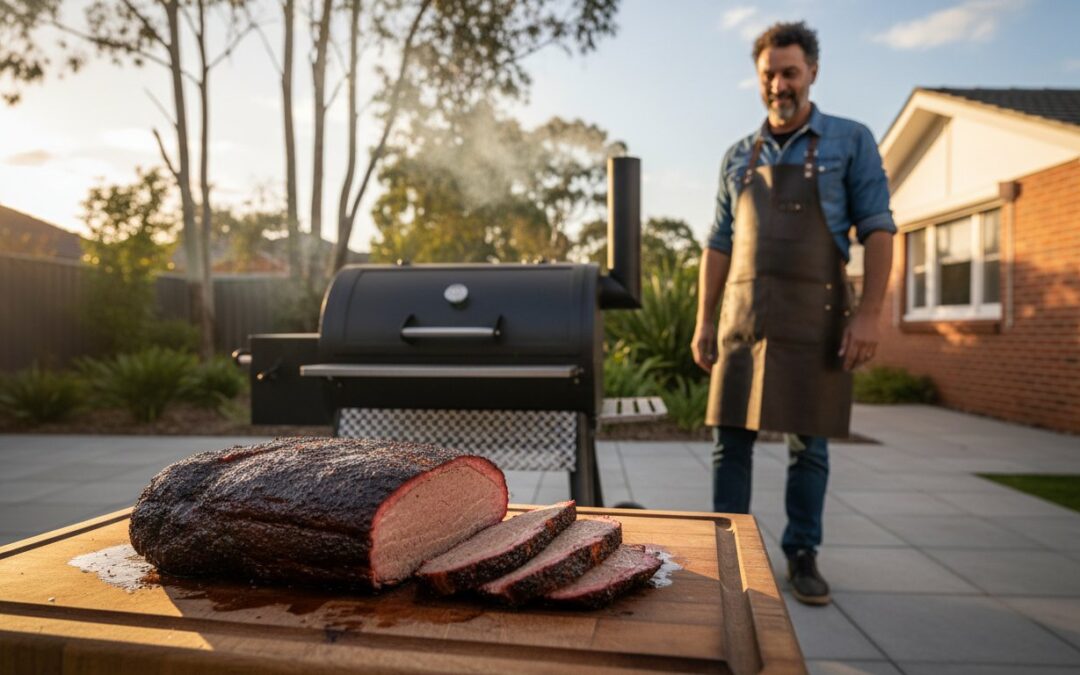
Buying a cheap smoker is often the most expensive mistake a backyard cook can make. Most pitmasters start with a A$350 hardware store unit only to realize they’re spending double that on extra fuel and replacement parts within 24 months. You want that deep smoke ring and consistent bark without babysitting a thermometer at 3 AM. It’s frustrating when a thin-walled unit leaks heat and forces you to burn through a A$50 bag of premium natural charcoal just to finish one brisket. You’re likely asking yourself: is an expensive smoker worth it when the entry-level options look similar on the showroom floor?
We agree that performance must come before price tags. This guide breaks down the technical engineering and thermal mass differences that separate professional rigs from seasonal toys. You’ll discover how 6mm thick steel and precision air control create the “set and forget” stability required for world-class barbecue. We’re looking at the real-world costs of fuel efficiency, build materials, and the long-term ROI of investing in a smoker built to survive a decade in the harsh Australian climate.
Key Takeaways
- Understand how heavy-gauge steel and premium ceramic materials provide the thermal mass needed to maintain steady temperatures in unpredictable Australian weather.
- Calculate the hidden ROI of high-end rigs by comparing the “fuel tax” of budget units against the 20-year durability of professional-grade smokers.
- Learn how advanced internal geometry and superior airflow control eliminate hot spots to ensure consistent low-and-slow results every time.
- Use our expert five-question checklist to finally decide if an expensive smoker is worth it based on your specific backyard needs and volume.
- Discover the essential synergy between high-gauge hardware and premium natural hardwood fuel to maximise your flavour profile and heat efficiency.
Defining the Price Gap: What Makes a Smoker “Expensive”?
Walking into a local hardware chain, you will find mass-produced offset smokers and pellet grills priced between A$250 and A$600. These units look the part, but they weigh less than a standard esky. In contrast, premium rigs built by specialist manufacturers start at A$1,500 and easily climb past A$5,000. This massive price gap leads many backyard pitmasters to ask: is an expensive smoker worth it? The answer lies in the physics of heat retention and the quality of the materials used.
Most budget units use 1mm stamped sheet metal. This thin material loses heat almost as fast as the fire generates it. High-end smokers use 6mm or even 8mm structural plate steel. This heavy-gauge material is essential for the process of smoking food over a 12-hour period. The extra mass acts as a thermal battery, keeping temperatures steady even when the wind picks up or the ambient temperature drops. To better understand this concept, watch this helpful video:
The Hardware Reality Check
The difference between 1mm sheet metal and 6mm structural steel isn’t just about weight; it’s about control. Cheap units often have loose manufacturing tolerances, leading to significant oxygen leaks around the doors and firebox. If oxygen enters the chamber at random, your fire burns inconsistently. Premium rigs feature hand-welded seams and heavy-duty gaskets. High-quality hinges ensure the door stays true for decades. These features allow you to control the burn with 100% accuracy using only the intake vents.
Commercial vs. Residential Grade
An expensive smoker is often a tool designed for 24/7 competition or catering use. While a budget unit might rust through its firebox after 3 seasons of use, a premium 1/4-inch steel rig is a lifetime investment. You are paying for a transition from hobbyist equipment to professional hardware. In the Australian market, “expensive” also accounts for the logistics of quality. Importing a 350kg Yoder or Lone Star Grillz from the USA incurs massive freight costs. Local Australian craftsmen now produce world-class pits that rival these imports, helping you avoid the “Aussie Tax” while still getting a rig that performs in our harsh climate. For most backyard cooks, the point of diminishing returns starts around A$4,500, where you begin paying for aesthetics over actual cooking performance.
For the growing number of local manufacturers and online retailers in the BBQ space, managing the shipping of these heavy, high-value items is a critical part of their business model. Efficient order fulfillment is key, and many turn to expert providers like Pik Pak Logistics to handle the complex logistics so they can focus on crafting quality smokers.
The Physics of Flavour: Thermal Mass and Airflow Control
Thermal mass represents the core difference between a budget hardware store unit and a professional rig. A cheap smoker typically uses 1mm to 1.5mm pressed steel. These thin walls lose heat as fast as they gain it. When asking is an expensive smoker worth it, you must first look at the steel gauge. Premium Australian-made offsets often feature 6mm to 10mm thick structural steel. This mass acts like a thermal battery. It absorbs energy and radiates it back into the cooking chamber evenly, meaning a sudden southerly gust or a passing rain shower won’t drop your internal temperature by 20 degrees in seconds.
Precision airflow dictates the quality of your combustion. Cheap smokers are notorious for air leaks around doors and firebox lids. This uncontrolled oxygen causes temperature spikes that are impossible to manage effectively. High-end units utilize CNC-cut vents and high-temperature gaskets to seal the cooking chamber completely. This allows you to choke the oxygen to a precise crawl, facilitating steady 12-hour burns without constant intervention. Without this level of control, you risk “dirty smoke.” This occurs when poor airflow leads to smouldering, incomplete combustion, coating your brisket in bitter, black creosote rather than clean, sweet flavour.
Stability is the Secret to Better Bark
Consistent heat is mandatory for the Maillard reaction, the chemical process that creates a dark, savoury crust on your meat. When temperatures fluctuate wildly, meat fibres tighten and relax, squeezing out moisture and ruining the delicate fat rendering process. Expensive smokers maintain a “blue smoke” profile, where the fire burns hot and clean enough for the exhaust to be nearly invisible. This ensures the smoke enhances the meat rather than overpowering it with acrid tones. Using premium natural hardwood charcoal provides the steady fuel source these high-mass units need to perform at their peak for 10 hours or more.
Insulation and External Factors
Australian conditions demand heavy-duty insulation. A scorching 43 degree Adelaide summer day creates a completely different cooking environment than a 4 degree winter night in the High Country. Ceramic Kamado smokers use thick refractory walls to trap heat, while premium steel units often employ double-walled construction with air gaps. This insulation creates a “set and forget” experience. While a A$250 smoker requires vent adjustments every 20 minutes, a professional unit can hold 110 degrees Celsius for 8 hours with zero input. When calculating if is an expensive smoker worth it, you must factor in the value of your own time and the 25% reduction in fuel consumption that superior thermal efficiency provides.
The Hidden ROI: Fuel Efficiency and Longevity
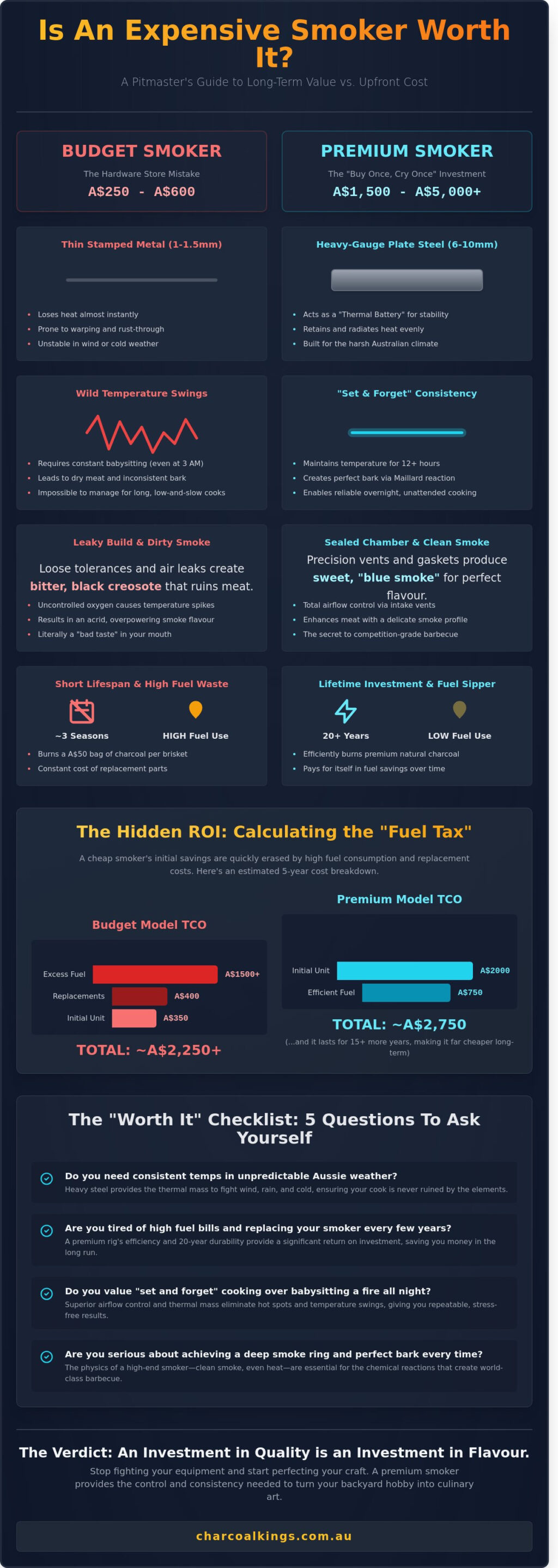
Buying a budget unit often incurs a “Fuel Tax” that most owners ignore until they are halfway through a long cook. A thin-walled offset smoker might burn 2kg of charcoal per hour just to maintain a steady 110°C. In contrast, a premium insulated unit uses less than 0.5kg for the same result. Over a single 12-hour brisket cook, the cheap unit wastes A$15 to A$20 in extra fuel. When considering is an expensive smoker worth it, you have to look at the 20-year horizon. A A$300 budget grill usually ends up in a landfill within 24 months. Investing A$2,000 in a high-end unit once every two decades is significantly cheaper than spending A$300 every two years on replacements. Brands like Yoder or Kamado Joe also retain roughly 70% of their original retail price on the used market, making them a liquid asset rather than a sunk cost.
Charcoal Consumption Analysis
A 5kg bag of premium hardwood lump charcoal lasts roughly four hours in a budget offset due to air leaks and thin steel. That same 5kg bag provides over 15 hours of cook time in a premium ceramic or insulated cabinet smoker. High-end units feature airtight fiberglass or felt gaskets that prevent oxygen from fueling unnecessary combustion. These seals allow you to shut the vents and extinguish the coal immediately after the meat comes off. You save the remaining fuel for your next session instead of letting it ash out. Thermal efficiency is defined as the ratio of heat retained versus fuel energy lost. Premium builds maximize this ratio, ensuring your money doesn’t literally vanish into thin air.
Durability in the Australian Climate
Australia’s coastal salt air is a death sentence for cheap powder-coated finishes found at big-box retailers. Budget smokers use thin 1mm steel that pinholes and flakes within a single humid summer. Professional-grade units utilize 6mm structural steel or high-grade 304 stainless steel. These materials resist the corrosive “salt spray” found in backyards from Perth to the Gold Coast. Heavy-duty fireboxes don’t warp or burn through during 400°C searing sessions. This durability is why is an expensive smoker worth it is a question answered by longevity. While budget units rely on rust-prone chrome grates, premium smokers use thick stainless steel or heavy cast iron. This reduces maintenance to a simple scrape and oil, keeping your rig ready for action for decades. Get Sizzlin’!
- Fuel Savings: Premium units reduce charcoal consumption by up to 75% per cook.
- Build Quality: 6mm steel prevents the warping common in budget fireboxes.
- Resale Value: High-end brands maintain high demand on second-hand marketplaces.
- Weather Resistance: Stainless steel components survive the harsh Australian coastal humidity.
The “Worth It” Checklist: 5 Questions Before You Buy
Investing in high-end barbecue equipment requires more than just a large bank balance. It demands an honest assessment of how you actually cook. To determine if is an expensive smoker worth it for your specific backyard setup, run through these five critical questions.
- Frequency of use: Are you a once-a-year Christmas griller or a weekly pitmaster? If you fire up the pit 50 times a year, a premium unit built from 6mm thick steel will last 20 years. A cheap, thin-gauge alternative often rusts through within 24 months of heavy use.
- Capacity needs: Cooking for a family of four is different from catering for the whole neighbourhood. A standard 45cm kettle might fit two racks of ribs, but a 100cm offset smoker handles five full briskets simultaneously. Buy for your largest annual event, not your Tuesday night dinner.
- Fuel preference: Do you enjoy the “stick burn” process or want pellet-fed automation? Manual fire management is a dedicated hobby that requires attention every 45 minutes. Pellet grills offer set-and-forget convenience for busy lifestyles.
- Budget for fuel: The purchase price is just the beginning. A 12-hour low-slow brisket cook can easily consume 10kg of quality charcoal. At current Australian market rates, this adds A$35 to A$50 to the cost of every cook. Ensure you can afford the ongoing operational costs.
- Storage and space: A 200kg professional steel offset smoker isn’t portable. It requires a dedicated concrete slab or a reinforced deck. If you move house frequently, a heavy permanent fixture might become a liability rather than an asset.
Matching the Smoker to Your Lifestyle
Pellet grills provide digital precision and ease, yet they rarely match the intense, authentic smoke profile produced by lump charcoal in a ceramic or offset unit. Expensive doesn’t always mean better if the features don’t align with your flavour goals. If you value the ritual of the fire, a high-end manual smoker is the right choice. Always prioritize brands with established Australian support. A 10-year local warranty on a A$3,000 investment provides more peace of mind than a vague international guarantee.
Avoiding the “Buyer’s Remorse” Trap
The biggest mistake new enthusiasts make is buying a small unit and realizing within 180 days that they’ve outgrown it. This leads to a second purchase, making the “cheap” entry-level smoker a total waste of money. Visit a showroom and handle the equipment in person. Feel the weight of the doors and the quality of the welds. Keep in mind that the smoker itself is only 50% of the quality equation; the other 50% depends entirely on your choice of fuel, wood, and rubs. Is an expensive smoker worth it if you use inferior, chemical-filled fuel? Absolutely not.
Equip your pit with premium charcoal and professional rubs to get the most out of your investment.
Maximising Your Investment with Professional Fuel
Dropping A$3,000 on a 6mm thick steel offset smoker and then using discount supermarket briquettes is like putting low-octane fuel in a Ferrari. Cheap charcoal often contains fillers, sawdust, and chemical binders that produce acrid smoke and excessive ash. This ash builds up rapidly, clogging the intake vents of a precision machine and suffocating the fire. When asking is an expensive smoker worth it, you have to consider the fuel quality as part of the total performance equation. High-end hardware requires high-end energy to function as designed.
High-gauge steel provides incredible thermal mass. It holds heat for hours, but it needs a clean, intense heat source to reach its operating temperature efficiently. Charcoal Kings supports the “Buy Once, Cry Once” philosophy by providing fuels that match the lifespan and performance of your hardware. Using 100% natural lump charcoal ensures your investment performs at its peak, rather than struggling against the inconsistent burn rates of inferior products. Professional-grade fuel creates a synergy with heavy-duty steel, allowing for a “set and forget” experience that cheaper thin-walled units can never replicate.
The Role of Natural Hardwood
High-end ceramic grills and insulated cabinet smokers are virtually airtight environments. Any chemical additives in your fuel will permeate the meat, leaving a bitter, medicinal aftertaste that ruins a 12-hour brisket cook. Natural hardwood burns cleaner and longer, often providing 40% more burn time than standard grocery store options. High-density charcoal provides the steady BTU output premium smokers require to maintain those critical low-and-slow temperatures without constant firebox management. This stability is essential for achieving the deep smoke ring and tender texture that defines professional-grade barbecue.
Get Sizzlin’ with the Right Gear
Thermal consistency is the ultimate goal of any BBQ upgrade. A high-end smoker paired with premium hardwood fuel reduces your temperature variance to within 5 degrees Celsius over an entire afternoon. For the transitioning backyard cook, the high price tag is justified when you value your time and the repeatable quality of the final product. Don’t let poor fuel be the weak link in an otherwise elite BBQ setup. Is an expensive smoker worth it? Yes, provided you don’t compromise on the heat source that powers it. Shop our range of premium smokers and fuels today to elevate your outdoor cooking. Get Sizzlin’!
Master Your Low-Slow Performance Today
Investing in a high-end unit means you’re paying for 6mm thick steel that maintains a steady 107°C even when the ambient temperature fluctuates. This superior thermal mass reduces fuel consumption by up to 30% compared to thin-walled alternatives found in big-box retailers. You’re trading a A$300 hardware store grill that lasts two seasons for a professional rig designed to perform for 20 years or more. The ultimate question of is an expensive smoker worth it comes down to your commitment to the craft and your desire for consistent, blue-smoke results every weekend. A premium smoker only reaches its full potential when paired with a high-performance heat source. We’re an authorised supplier of premium hardwood charcoal, providing 100% natural, chemical-free fuel options for local pitmasters. You’ll get expert Australian advice from our team to ensure your gear matches your ambition and delivers the best possible flavour. Upgrade your BBQ game with Charcoal Kings’ premium fuel and hardware. Get sizzlin’ and take full control of your next cookout.
Frequently Asked Questions
Is an expensive smoker easier to use for beginners?
Yes, premium smokers are significantly easier for beginners because they offer superior thermal mass and insulation. High-end units maintain a steady 110°C to 135°C with minimal adjustment, whereas cheap, thin-walled alternatives fluctuate wildly with every gust of wind. You’ll spend 60% less time fiddling with air vents and more time actually cooking your meat.
How much should I realistically spend on my first “serious” smoker?
Budget between A$800 and A$1,500 for a smoker that provides professional results and lasting durability. This price bracket gets you into thick-walled ceramic kamados or 6mm structural steel offsets. Spending less than A$400 often results in a unit that leaks smoke and rusts out within 24 months in Australian conditions.
Do expensive smokers actually produce better-tasting meat?
Yes, because premium designs facilitate 30% better airflow and cleaner combustion. Proper airflow prevents the buildup of bitter creosote on your brisket or ribs. When asking if an expensive smoker is worth it, consider that consistent heat allows fat to render perfectly at 95°C internal temperature, creating a superior bark and texture.
What is the most durable type of smoker for the Australian coast?
Ceramic kamados are the most durable choice for coastal regions like the Gold Coast or Sydney. Ceramic doesn’t rust, unlike mild steel which can show signs of corrosion within 6 months of salt air exposure. If you prefer a steel offset, ensure it’s finished with high-temperature powder coating and use a heavy-duty weather cover daily.
Can I use cheap charcoal in a premium smoker?
You can, but it’s a poor decision that compromises your cook and your equipment. Cheap supermarket briquettes often contain 15% to 20% fillers and chemical binders that produce excessive ash. This ash blocks the precision air intakes of a high-end smoker. Always use 100% natural hardwood lump charcoal to ensure a clean 4-hour burn and pure flavor.
What are the best premium smoker brands available in Australia?
Yoder Smokers, Kamado Joe, and Joe’s BBQ Smokers are the top tier brands currently available in the Australian market. Yoder’s Wichita model is a 150kg beast of 6mm steel, while Joe’s BBQ Smokers are locally manufactured in New South Wales. These brands are known to retain 75% of their original retail value on the secondhand market after 3 years.
How long does a high-end offset smoker typically last?
A high-end offset smoker built from 6mm or 8mm steel will last between 15 and 25 years. These units are heavy-duty industrial tools rather than disposable backyard toys. If you keep the firebox seasoned with oil and the cooking chamber clean, it’s likely the last smoker you’ll ever need to buy.
Is a pellet grill considered an expensive smoker?
Yes, premium pellet grills are major investments that typically range from A$1,200 to over A$4,000. They utilize digital PID controllers to maintain temperatures within 5 degrees of your target. When deciding if an expensive smoker is worth it, the convenience of “set and forget” technology is the primary factor for many Australian pitmasters.