What if the secret to a competition-level brisket isn’t found in your dry rub, but in a needle? You’ve likely felt the frustration of pulling a brisket off the pit after twelve hours only to find the flat is dry and unyielding while the point is perfect. It’s the ultimate letdown for any pitmaster who values their craft and their time. Understanding the injecting brisket pros and cons is the difference between a lucky backyard cook and a repeatable, professional result that stands up to the highest standards of the industry.
You likely agree that authentic beef flavour should always be the star of the show. We promise to show you how to use injection as a precision tool for moisture insurance rather than a mask for poor technique. You’ll learn how to choose the right liquids, avoid the chemical taste of store-bought additives, and protect your bark. We are covering everything from the biological challenges of the brisket flat to the professional grid technique required for a juicy, tender finish every single time you light the pit.
Key Takeaways
- Understand why the lean brisket flat requires internal moisture to survive the stall and prevent a dry, crumbly texture.
- Evaluate the injecting brisket pros and cons to ensure a juicy interior without sacrificing your authentic bark.
- Avoid over-engineering your meat to prevent a pasty, mushy texture that masks high-quality beef flavours.
- Learn the professional protocol of using chilled liquids and precision tools for repeatable, competition-level results.
- Pair your injection strategy with clean-burning hardwood charcoal to achieve a pure flavour profile free from chemical additives.
The Science of Succulence: Why Pitmasters Consider Injecting Brisket
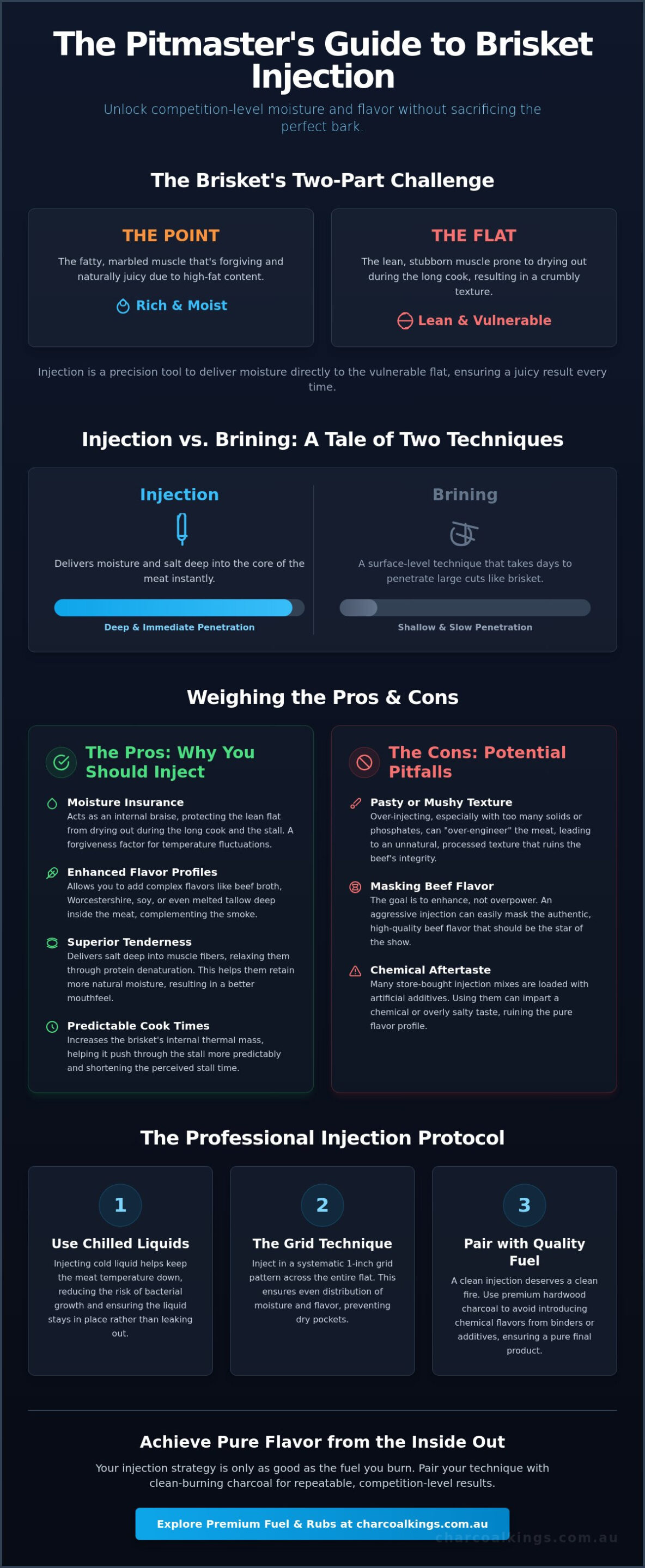
A whole packer brisket is not a single, uniform piece of meat. It is a tale of two distinct muscles: the fatty, marbled point and the lean, stubborn flat. While the point can almost look after itself, the flat is notoriously lean. It is prone to drying out during the grueling 12-hour journey to internal tenderness. This is where the debate over injecting brisket pros and cons begins. Pitmasters treat injection as a precision tool to combat the inevitable moisture loss that occurs during the stall. In the current 2026 BBQ standard, professional results are judged as much by internal moisture as they are by the quality of the bark. You aren’t just adding liquid; you are installing insurance against a dry, crumbly finish.
Injection acts as an internal braise. It protects the meat from the inside out by placing moisture exactly where the heat does the most damage. The Science of Plumping and Meat Injection demonstrates how adding salt-water solutions can help muscle fibres retain their structure under high-heat stress. This isn’t just a backyard trick. USDA data indicates that approximately 15% of beef sold in the US already contains added solutions for this very reason. For the serious cook, taking control of this process ensures the meat survives the long exposure to hardwood smoke without losing its integrity.
The Anatomy of the Brisket Flat
The flat consists of long, lean muscle fibres held together by tight connective tissue. Many beginners rely on a thick external fat cap to keep the meat moist. This is a mistake. Surface fat does not penetrate dense muscle tissue during a cook. It simply renders off. By targeting the leanest parts of the flat with an injector, you deliver moisture directly into the muscle structure. This prevents the fibres from tightening too much and squeezing out the natural beef juices that remain.
Injection vs. Brining: What is the Difference?
Traditional brining is a surface-level game that works well for poultry but fails for massive cuts like brisket. A large, 6kg brisket would require days in a tub to see any significant salt penetration at its core. Direct internal delivery is the only efficient way to reach the centre of the muscle. Injection provides an immediate speed advantage. It ensures that salt and moisture are distributed uniformly throughout the meat, providing a consistent flavour profile that surface rubs cannot achieve. When you weigh the injecting brisket pros and cons, the ability to bypass the clock and hit the centre of the meat is a clear win for the injector needle.
The Pros: Why Injecting Can Save Your Sunday Smoke
Injecting is your best defence against the harsh environment of a professional smoker. While surface rubs provide a great crust, they don’t penetrate the dense muscle fibres of a large brisket. When you weigh the injecting brisket pros and cons, the primary benefit is the delivery of salt deep into the meat. Salt triggers protein denaturation. This process relaxes the muscle fibres, allowing them to hold onto more moisture rather than pushing it out as the temperature rises. It’s a fundamental change in the meat’s biology that leads to superior tenderness and a better mouthfeel.
There is a technical advantage regarding the “stall” as well. By adding liquid, you increase the internal thermal mass of the brisket. This extra volume of fluid helps the meat maintain a steadier temperature climb during the middle of the cook. It can actually shorten the perceived time the meat spends stuck in the evaporative cooling phase. You get a more predictable cook time. This is vital when you’re aiming for a specific serving window for a competition or a large family gathering.
Enhanced Flavour Profiles
You aren’t limited to just beef broth or water. Professional pitmasters often use phosphates and umami boosters like Worcestershire sauce or soy to build complexity. These ingredients work from the inside to complement your choice of smoking woods. Some even incorporate melted tallow or clarified butter into the mix. This adds a rich mouthfeel that mimics the high-fat content of a Wagyu brisket, even when you’re cooking a Choice grade cut. If you’re looking for a specific edge, exploring our range of premium rubs and cures can help you find the perfect flavour profile for your next smoke.
Moisture Insurance Policy
Think of injection as a forgiveness factor. Backyard smokers often face temperature spikes or unexpected wind shifts that can dry out the meat. An injected brisket has a higher threshold for these errors. It stays succulent during the long resting phase, which is when many briskets lose their moisture. Competition pitmasters almost never skip this step because it provides a consistent, repeatable result. For a detailed breakdown of the technique, you can study How to Inject Brisket to see the professional standard in action. Balancing the injecting brisket pros and cons usually leads serious cooks to the needle for this reason alone. It ensures the flat remains as juicy as the point.
The Cons: Potential Pitfalls of Over-Engineering Your Meat
Injecting is a double-edged sword. If you overdo it, you risk turning a prime cut into something with the consistency of wet cardboard. Many pitmasters find that the injecting brisket pros and cons lean toward the negative when the process isn’t handled with precision. The most common failure is a “mushy” or “pasty” texture. This occurs when the injection solution contains too many phosphates or acids that break down the muscle fibres beyond the point of tenderness. You want meat that pulls apart, not meat that dissolves on the tongue like a spread.
There is also the issue of aesthetics. Poor technique results in “injection tracks.” These are unsightly pockets of discolouration or grey streaks visible in the finished slice. It ruins the presentation of an otherwise perfect smoke ring. Additionally, the process adds significant prep time and requires specialised hardware like a pistol-grip injector. For some, the extra effort doesn’t justify the result, especially when dealing with high-grade Wagyu that already possesses superior intramuscular fat. You can find various expert opinions on injecting brisket that highlight these trade-offs, showing that even the pros are divided on the necessity of the needle.
The Texture Trap
Over-engineering your injection often leads to a “hammy” flavour profile. This happens when the salt concentration is too high or if the solution sits in the meat too long before hitting the smoker. The brisket begins to cure rather than just absorb moisture. To avoid this, keep your salt levels balanced and ensure the meat rests properly after injection. This allows the liquid to redistribute through the muscle fibres rather than pooling in one spot. If the texture feels rubbery or overly processed, you’ve likely used too much phosphate.
Aesthetic and Flavour Compromises
Leaking is another major drawback. If the injection isn’t done correctly, the liquid will seep out during the first few hours of the cook. This moisture washes away your rub and prevents a hard, crusty bark from forming. You end up with a soggy exterior that lacks the crunch every pitmaster craves. During the injection itself, “spurting” can occur if the needle hits a pocket of air or tough connective tissue. This makes a mess of your prep station and wastes expensive injection liquid.
Finally, consider the flavour of the beef itself. Heavy injections can mask the natural, rich taste of the meat. If you are using premium hardwood lump charcoal, the clean, intense heat and natural wood smoke often provide enough depth on their own. In these cases, a heavy chemical injection is often redundant. You’ve spent money on quality beef; don’t drown it in store-bought chemicals that hide the organic origin of your materials.
The Professional Protocol: How to Inject Brisket Correctly
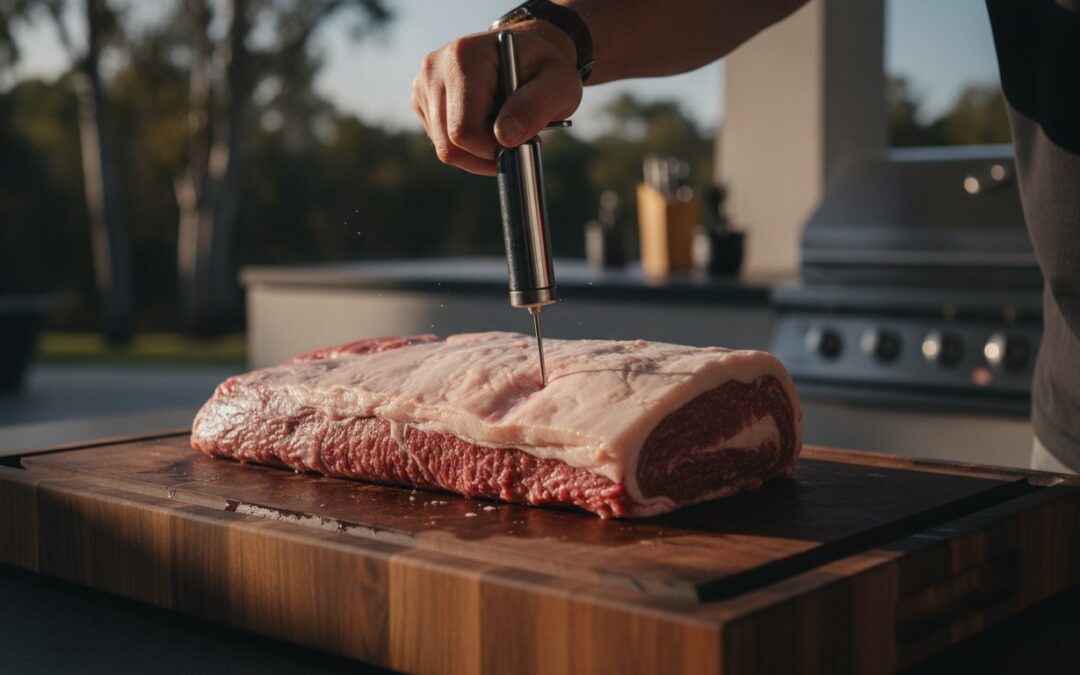
Precision is the hallmark of a master craftsman. When evaluating injecting brisket pros and cons, the final outcome depends entirely on your technical execution. You need the right hardware. A simple plastic syringe works for the occasional cook, but a stainless steel pistol-grip injector is the professional standard. It provides the leverage needed to push liquid into dense muscle fibres without hand fatigue. Always ensure your injection liquid is chilled. Warm liquid can alter the internal temperature of the raw beef and poses a food safety risk. Cold liquid also stays within the muscle structure more effectively during the initial phase of the cook.
Timing is equally critical. Always inject before applying your dry rub. If you inject after seasoning, the liquid will wash away your carefully applied salt and pepper, ruining the potential for a consistent bark. Once injected, pat the surface dry before applying your binder and rub. This ensures the exterior remains prepared for the smoke while the interior is primed for moisture. This repeatable workflow is what separates a lucky backyard cook from a seasoned pitmaster.
The Injection Grid Technique
Consistency requires a system. Use a one-inch grid pattern across the entire flat. Insert the needle with the grain of the meat. This allows the liquid to travel along the muscle fibres rather than pooling in a single spot. If you inject against the grain, you create the “injection tracks” mentioned previously. Control your depth carefully. You want the needle in the centre of the muscle, not piercing through the bottom. As you withdraw the needle, apply steady pressure to the trigger to leave a trail of moisture throughout the entire thickness of the cut.
Liquid Selection and Ratios
Your base liquid dictates the final flavour profile. High-quality beef stock or consommé provides a natural foundation. For an ultra-premium finish, some pitmasters use melted beef tallow. This adds rich, fatty lipids directly into the leanest sections of the flat. If you use commercial boosters, follow the manufacturer’s ratios strictly. Over-concentrating phosphates leads to the pasty texture that ruins the cook. A balanced internal rub usually includes a small amount of salt and sugar to enhance the beef’s natural sugars during the long smoke. To achieve this level of precision, you need the right tools. View our range of professional BBQ accessories to upgrade your setup before your next cook.
Beyond the Needle: Pairing Injections with Premium Fuel
Injected meat carries a higher moisture content. This changes how the beef reacts to the heat of your pit. To achieve a professional bark on a moisture-heavy brisket, you need a fuel that burns clean and provides consistent, high-intensity heat. Barbecuing with charcoal is the only way to ensure the temperature remains stable enough to evaporate surface moisture while sealing in those internal juices. If your fuel is inconsistent or produces heavy ash, your bark will turn into a soggy, unappealing mess rather than a dark, crunchy crust.
A premium rub acts as the final seal for your work. Once you have injected the meat, the rub works with the convective heat of the smoker to create a protective barrier. This crust prevents the internal liquids from leaking out during the long hours of the stall. When you weigh the injecting brisket pros and cons, the quality of your fuel and rub is often the deciding factor. The best injection in the world cannot save a brisket cooked over low-quality, chemical-laden fuel that produces acrid smoke and uneven temperatures.
Choosing Your Fuel for the Long Haul
The purity of your heat source is non-negotiable for long cooks. Hardwood lump charcoal provides an organic, additive-free burn. It won’t interfere with the delicate flavour profile of your injection. Cheap fuels often contain chemical binders. These binders produce a foul-smelling smoke that can penetrate the meat along with your injection liquid, ruining the beef’s natural flavour. Always pair your smoking wood with your injection. If you use a sweet, fruit-based injection, use apple or cherry wood. For a heavy, savoury beef-broth injection, stick with ironbark or oak for a rugged, traditional result.
The Charcoal Kings Conclusion
The final verdict is straightforward. Inject for the flat, but cook for the point. If you are dealing with a Choice grade brisket or a particularly lean flat, injection is a mandatory insurance policy. It provides the moisture needed to survive the gruelling 12-hour cook. For high-grade Wagyu, the process might be redundant if your fire management is perfect. However, for competition cooks, the consistency provided by a professional injection protocol is too valuable to ignore. Mastering the injecting brisket pros and cons takes your BBQ from a hobby to a master’s craft. It requires the right meat, the right technique, and the right fuel. Stock up on premium charcoal and professional rubs for your next brisket. Ensure your next cook is a repeatable success that honours the primal nature of the pit.
Master the Art of the Perfect Brisket
Achieving competition-level results requires more than just luck. It demands a technical understanding of your ingredients and your fire. By weighing the injecting brisket pros and cons, you can decide when to use injection as a precision tool for moisture insurance. Focus your efforts on the lean flat and maintain a strict grid pattern to ensure even distribution. Remember that your meat prep is only half the battle. You must pair your technique with a clean, high-performance fuel source to protect the authentic beef flavour you’ve worked hard to enhance.
Don’t settle for subpar fuel that masks your hard work with chemical additives. We are a South Australian owned and operated expert team and the wholesale supplier to Australia’s top BBQ restaurants. We provide 100% Natural hardwood with zero additives for a pure, intense burn. Upgrade your next smoke with Charcoal Kings Premium Hardwood Lump to ensure your bark is as impressive as your juicy interior. It’s time to fire up the pit and deliver the best brisket of your life. Happy smoking!
Frequently Asked Questions
Does injecting brisket ruin the bark?
Injecting does not ruin the bark as long as you prevent surface leakage. Ensure the needle is deep in the muscle and pat the exterior completely dry before applying your rub. Surface moisture is the enemy of a hard, crunchy crust. If liquid seeps out during the initial phase of the cook, it will wash away your seasoning and leave a soggy patch.
How long before smoking should I inject my brisket?
Inject your brisket 4 to 12 hours before it hits the smoker. This window allows the salt and phosphates to effectively denature the proteins and distribute through the muscle fibres. If you’re short on time, even 30 minutes is better than nothing. However, the best results come from an overnight rest in the fridge to allow the liquid to fully integrate.
Can I just use store-bought beef broth as an injection?
You can use store-bought beef broth, but beef consommé is the superior choice for professional results. Consommé has a higher gelatin content and a more concentrated flavour profile without the muddy sediment found in cheap broths. Always check the label for excessive additives or MSG that might clash with your rub’s ingredients or mask the natural beef taste.
What happens if I over-inject the meat?
Over-injecting leads to a pasty, mushy texture and unsightly grey streaks known as injection tracks. When you weigh the injecting brisket pros and cons, this is the most common technical failure for beginners. The meat will lose its natural beefy bite and take on a cured, ham-like flavour if the salt concentration is too high or the volume of liquid is excessive.
Do I need to inject the point of the brisket?
You don’t need to inject the point because it already contains significant intramuscular fat. The point is naturally self-basting and remains juicy throughout the 12-hour cook. Focus your injection efforts entirely on the lean flat. This is the part of the brisket most vulnerable to drying out and becoming crumbly during the long exposure to hardwood smoke.
Is it better to inject hot or cold liquid into the meat?
Always inject cold liquid into your meat. Using warm or hot liquid raises the internal temperature of the raw beef and creates a food safety risk. Cold liquid also integrates better with the muscle fibres and stays in place more effectively. Keep your injection solution in the refrigerator until the moment you are ready to use your pistol-grip injector.
Can I use a rub if I have already injected the brisket?
You must use a rub after injecting to seal the surface and build your bark. The injection handles the internal moisture while the rub creates the external crust and depth of flavour. Always inject first, wipe away any surface spills, and then apply your binder and dry seasoning. This ensures the exterior remains prepared for the smoke while the interior is protected.
Does injecting brisket make it cook faster?
Injecting doesn’t necessarily speed up the cook, but it makes the process more predictable. By increasing the internal thermal mass, the brisket handles the stall more efficiently. You’ll find that the temperature climb remains steadier through the middle of the cook. This helps you hit your target serving time without the meat drying out during unexpected temperature fluctuations in the pit.