The cheapest bag of charcoal on your invoice is often the single most expensive line item in your commercial kitchen. Real fuel expenditure is measured per service hour, not per kilogram purchased at the dock. With Australian hospitality wages and prime costs constantly squeezing venue viability, improving profit margins with efficient bbq fuel is the most reliable way to protect your bottom line. You already know the operational frustration of watching crew members nurse temperamental fires, seeing expensive proteins shrink under erratic pit temperatures, and discarding excessive ash during peak trade.
Discover how choosing high-efficiency solid fuel reduces burn rates, cuts kitchen labor, and protects commercial BBQ profit margins shift after shift. When your firebox runs hotter and longer with zero chemical additives, your kitchen spends less time reloading fuel and more time expediting consistent orders. We examine the commercial mechanics of high-density natural fuels, show you how stable heat delivers superior meat yields, and outline fuel management standards that speed up nightly pack-down.
Key Takeaways
- Calculate true energy costs by service hour rather than retail bag weight to stop hidden operating budget leaks.
- Discover the mechanical role of wood density, low moisture, and zero additives in improving profit margins with efficient bbq fuel.
- Reduce expensive kitchen wage hours by eliminating constant firebox adjustments and clearing minimal ash residue during nightly pack-down.
- Stabilize pit temperatures across long smoking cycles to protect protein yields against unnecessary moisture loss and plate shrinkage.
- Transition kitchen supply chains to planned wholesale procurement models to bypass retail markups and volatile freight disruptions.
The Hidden Drain on BBQ Venue Margins: Sticker Price vs Burn Efficiency
Operating a commercial smokehouse in Australia demands ruthless control over physical consumables. While hospitality operators routinely audit protein invoices and electricity tariffs, solid fuel expenditure rarely receives genuine scrutiny. Generic business advisory guides suggest trimming broad overheads to protect gross margins, but they miss the day-to-day reality of the pitroom. In a commercial kitchen, buying low-grade charcoal based solely on a cheaper initial bag price creates an invisible financial drain. True fuel profitability hinges entirely on thermal longevity, not the entry invoice total.
To understand the mechanics of commercial pit profitability without inflating menu pricing, watch this breakdown:
The Sticker Price Fallacy in Commercial Kitchens
Budget fuels look attractive on an accounts payable spreadsheet, but they fail inside an active firebox. Cheap charcoal bags frequently contain soft timber scraps, high internal moisture, and chemical binders that dilute pure combustible material. During the industrial charcoal production process, proper carbonization drives off moisture and volatile organics to yield dense, energy-rich carbon. Low-cost alternatives skip rigorous carbonization steps, leaving behind uncarbonized wood and filler agents that ignite quickly, burn out rapidly, and multiply the total kilograms required per shift. Kitchen crews end up feeding the firebox double the volume of fuel simply to maintain basic cooking heat.
Calculating Cost per Service Hour Instead of Cost per Bag
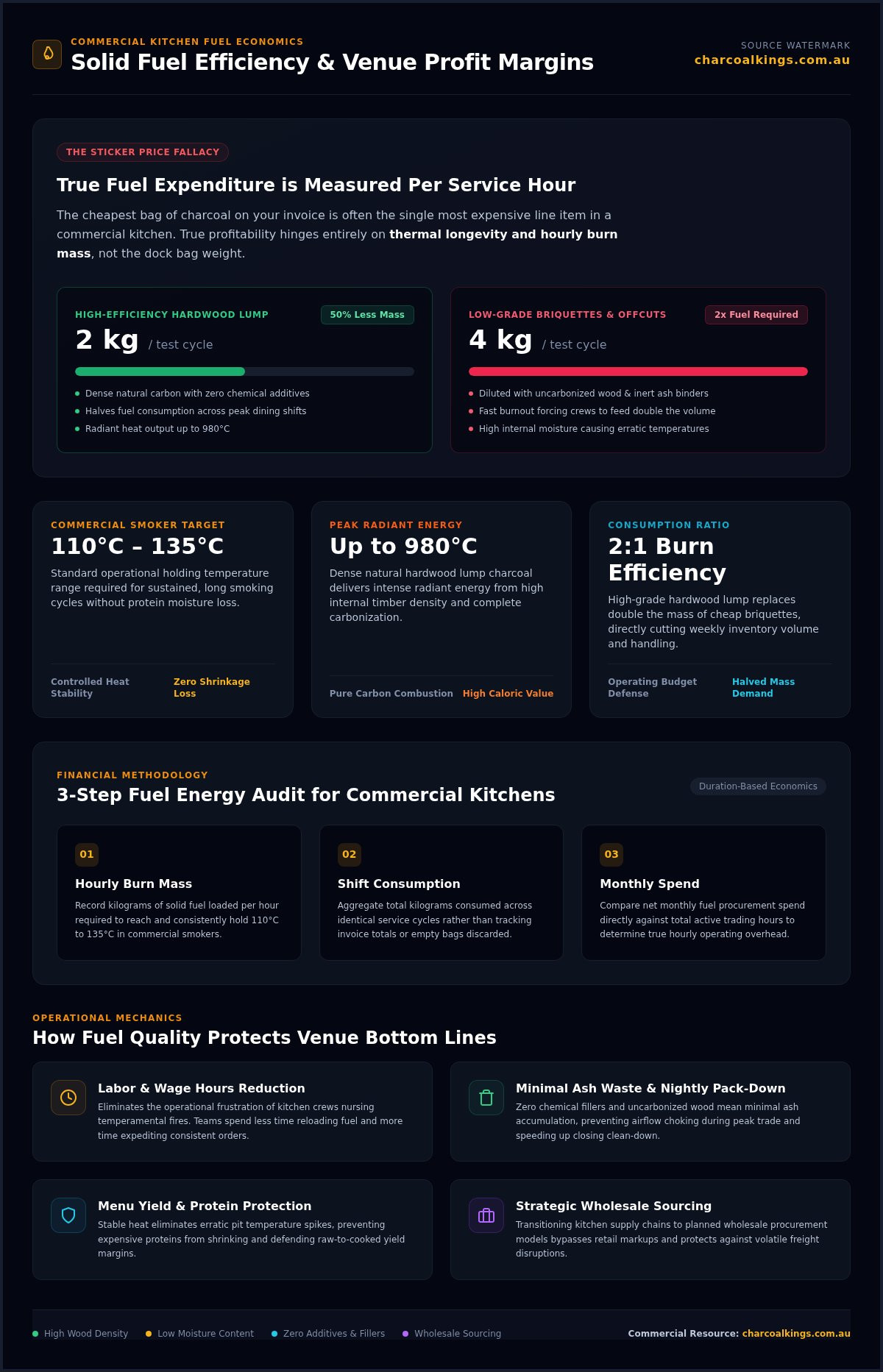
Savvy kitchen managers audit energy by the service hour. Tracking hourly burn rates under sustained service cooking temperatures gives you clear visibility over pit economics. In high-volume dining shifts, using dense, high-grade fuel halves fuel consumption compared to cheap briquettes packed with inert ash binders. Field testing demonstrates that using 2kg of premium hardwood lump charcoal can outperform 4kg of low-grade briquettes over an identical operational window.
Evaluating fuel by operational duration rather than gross weight changes the financial equation entirely:
- Hourly Burn Mass: Record kilograms loaded per hour to reach and hold 110°C to 135°C in your commercial smokers.
- Shift Consumption: Aggregate total kilograms consumed across identical service cycles rather than counting empty bags discarded.
- Monthly Spend: Compare net monthly fuel orders against total operating hours.
Shifting your focus to duration-based efficiency is the cornerstone of improving profit margins with efficient bbq fuel. Professional pits eliminate unnecessary mass, burn less product per cover, and stabilize energy spend across every trading week.
Evaluating Solid Fuel Efficiency: Density, Moisture Content, and Caloric Output
Energy delivery in commercial live-fire cooking is governed by raw physics. While restaurant equipment guides highlight stainless steel gauge and burner ratings, they routinely ignore the thermal output of the combustible materials inside. Solid fuel efficiency relies strictly on timber density, total carbonization, and the total absence of non-combustible fillers. Selecting fuels with optimal physical properties is essential for calculating operating costs accurately and defending your gross profit line.
Hardwood Lump vs Softwood and Low-Grade Fillers
Dense natural hardwood lump charcoal produces intense radiant energy that sustains cooking temperatures up to 980°C. For a comprehensive comparison of grading standards, review our guide to BBQ charcoal. Softwood scraps and unclassified forest offcuts lack internal cell density. They ignite violently, generate erratic flare-ups that scorch expensive proteins, and burn through their structural mass before transferring meaningful heat to the pit. High-density native timbers, such as premium Gidgee, burn up to 40% longer than standard wood char, locking in predictable cook cycles.
The Role of Moisture Content and Carbon Purity
Internal moisture destroys kitchen efficiency. When unseasoned or poorly carbonized charcoal enters a firebox, thermal energy is squandered vaporizing trapped water rather than cooking food. High fixed-carbon content guarantees direct heat transfer without bitter smoke spikes. Purity also safeguards physical airflow. Low-grade fuels laden with clay binders melt into glassy slag, choking intake vents and smothering combustion beds during service.
| Fuel Metric | Premium Hardwood Lump | Economy Retail Briquettes |
|---|---|---|
| Ash Residue | Under 3% total mass | Up to 25% inert fillers |
| Heat Range | Up to 980°C radiant heat | 425°C to 540°C steady heat |
| Binder Additives | 0% (Pure timber carbon) | Starches, clays, limestone |
High-Density Briquettes and Binchotan for Extended Commercial Shifts
Commercial operations require specialized fuels matched to distinct kitchen stations. Pure hardwood briquettes pressed without chemical binders yield steady heat beds between 425°C and 540°C, providing the steady floor required for overnight offset smoker runs. For high-turnover yakitori or open robata service, ultra-dense Binchotan charcoal delivers sustained, steady infrared heat across extended service hours without smoke, spark, or sudden flame flares. Matching specialized solid fuel to specific equipment requirements remains the definitive strategy for improving profit margins with efficient bbq fuel. Professional venues looking to stabilize line costs can explore commercial supply tiers directly through Charcoal Kings.
Operational Cost Reduction: Minimising Kitchen Labor, Firebox Tending, and Ash Waste
Australian restaurant wage costs typically absorb between 35% and 38% of total revenue. With casual loadings of 25% and rising superannuation obligations, unmetered manual tasks rapidly erode venue profitability. Operators spend hours adjusting rosters, yet overlook the physical consumable dictating pitroom labor. Just as venues deploy ENERGY STAR certified equipment to curb utility draw, selecting high-efficiency solid fuels directly cuts the human labor required to run commercial smokers.
Minimising Service Interruptions and Fire Management Labor
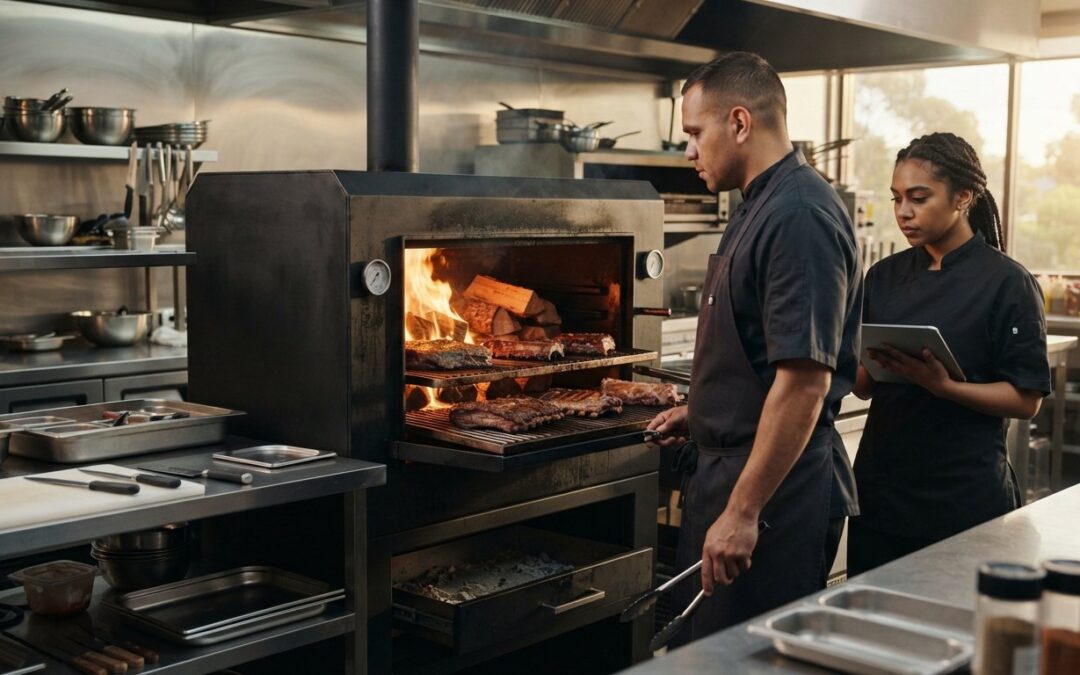
Low-grade fuel turns kitchen staff into firebox babysitters. Substandard charcoal burns erratically, forcing pitmasters to clear grates, adjust dampers, and reload fresh fuel every 40 minutes during service. Every open firebox door causes heat dumps, dragging out cook times and stalling line orders. High-density lump charcoal and unadulterated briquettes maintain a steady combustion rate without continuous oversight. Kitchen hands spend their shift slicing protein and expediting dockets, rather than nursing temperamental coal beds.
Ash Volume and Commercial Pit Maintenance Overhead
Ash accumulation is a major driver of wasted kitchen hours. Fuel laden with scrap binders leaves behind up to 25% non-combustible ash by weight. This dead material clogs intake grates, chokes combustion oxygen, and forces premature charcoal reloads. In contrast, pure natural hardwood lump leaves less than 3% ash residue. This clean burn directly lowers operating friction:
- Sustained Intake Airflow: Coals burn cleanly without ash suffocating active embers mid-service.
- Accelerated Station Pack-Down: Sweeping out a minimal ash bed saves up to 30 minutes of labor during nightly kitchen close-down.
- Reduced Waste Handling: Minimal physical volume cuts the time and heavy labor spent hauling hot refuse to outdoor commercial bins.
Treating fuel as a functional kitchen tool is vital for improving profit margins with efficient bbq fuel. Every hour stripped from fire management and firebox maintenance directly lowers your prime cost ratio.
Menu Yield and Temperature Stability: Preventing Expensive Food Loss in the Pit
Raw beef commands 40% of Australia’s meat market, representing the single largest variable plate expense in an authentic smokehouse. When pit chambers fluctuate wildly, that expensive inventory evaporates into the atmosphere. Hospitality inventory guides usually treat stock shrinkage as a cellar or coolroom issue, but pitmaster yield loss happens directly on the grates. Preserving sellable cooked weight requires flatline thermal control across 12-hour brisket cycles.
Eliminating Cold Spots and Unplanned Flare-Ups
Low-grade, uneven fuel fragments burn irregularly, creating intense localized heat zones alongside dead cold pockets. When drafts catch uncarbonized timber flecks, sudden fire spikes scorch fat caps before intramuscular connective tissue renders out. True mastery in barbecuing with charcoal begins with building a uniform, dense ember base. High-grade natural hardwood lump settles into a consolidated radiant bed, delivering consistent ambient convection without aggressive flare-ups.
Consistent Heat Retention for Higher Meat Yields
Thermal stability governs finished commercial plate yields. Collagen breakdown accelerates smoothly between 105°C and 125°C without forcing rapid moisture evaporation. Wild swings outside this target compress muscle fibers aggressively, squeezing out juices and shrinking finished portions. Managing protein contraction delivers clear commercial returns:
- Targeted Shrink Reduction: Holding narrow temperature bands limits overall brisket cooking loss to standard fat rendering, avoiding severe moisture deficits.
- Higher Sellable Portions: Retaining an extra 4% to 6% finished yield across 50 kilograms of daily brisket output generates immediate, high-margin portions from the same raw input.
- Waste Elimination: Uniform convection prevents dried-out flats and scorched tips, keeping entire batch runs out of the kitchen discard bin.
Flavour Consistency and Protecting Brand Reputation
Pure carbonized fuel delivers neutral, pristine radiant heat. This allows intentional smoking woods to season proteins without interference. Poorly processed charcoals emit pungent petroleum volatiles and binder fumes that coat delicate bark in harsh, bitter creosote. Unpleasant chemical finishes drive negative guest reviews and kill repeat visitation. Protecting your kitchen from costly protein waste and bitter flavor profiles is fundamental to improving profit margins with efficient bbq fuel. Upgrade your kitchen fuel consistency by choosing Charcoal Kings commercial lump and briquettes today.
Strategic Fuel Sourcing: Commercial Procurement Framework for Australian Venues
Ad-hoc fuel runs to retail trade suppliers siphon revenue straight out of your till. Commercial kitchens cannot operate sustainably when buying solid fuel bag-by-bag at retail markups. Treating charcoal as a core strategic commodity transforms a volatile consumable into a predictable, budgeted line item. Securing bulk supply directly through commercial distribution channels protects kitchen operations from regional stockouts and volatile transport disruptions.
Auditing Weekly Fuel Consumption and Establishing Operational Baselines
Start by documenting baseline burn rates across lunch and dinner services. Track how many kilograms your kitchen consumes during high-volume weekend trade versus quieter weekday shifts. Once you calculate burn mass per hundred covers, establish strict Standard Operating Procedures (SOPs) for fire lighting, damper management, and coal conservation during pit shutdown. Clear operating baselines quickly expose fuel leaks, such as kitchen hands overloading fireboxes during service panics.
Wholesale Sourcing and Pallet Logistics Across Australia
Ordering full pallets directly bypasses distributor markups and stabilizes input costs across the operational year. Consolidating shipments into scheduled pallet deliveries slashes freight rates, cuts administrative processing, and ensures uniform fuel grading across every service. Proper storage protects that investment:
- Elevation: Store pallets off damp concrete floors using timber skids to block ground moisture.
- Cover: Keep stock in dry, well-ventilated storage bays to preserve fuel density and ensure rapid lighting.
- Stock Rotation: Enforce first-in, first-out (FIFO) inventory rotation to prevent older bags from absorbing ambient humidity.
Upgrading Kitchen Fuel Standards with Charcoal Kings
Standardising kitchen fuel on dense, additive-free carbon is the final step in improving profit margins with efficient bbq fuel. Eliminate chemical binders, synthetic accelerants, and variable offcut timbers across your smokers, grills, and fireboxes. Partnering with seasoned industry specialists like Charcoal Kings gives your venue dependable wholesale access to premium hardwood lump charcoal, dense briquettes, and authentic Binchotan nationwide. Locking in high-grade commercial fuel protects your cook yields, lowers labor demands, and defends your bottom line shift after shift.
Lock in Commercial Pit Performance and Protect Your Bottom Line
Operating a profitable commercial smokehouse comes down to mastering controllable variables. Measuring energy by burn duration rather than initial invoice weight stops hidden operating budget leaks immediately. High-density, additive-free timber carbon eliminates erratic temperature spikes, protects valuable meat yields, and strips unproductive firebox-tending hours off your kitchen roster. Committing to thermal stability is the most decisive move for improving profit margins with efficient bbq fuel across every service shift.
Stop letting inferior charcoal erode your kitchen margins. Charcoal Kings is a dedicated Australian wholesale supplier supporting commercial smokehouses, hibachi venues, and grill rooms nationwide. With an extensive commercial inventory spanning dense Hardwood Lump, clean-burning Briquettes, and traditional Binchotan, our 100% natural, additive-free hardwood fuels deliver maximum burn longevity and clean radiant heat. Partner with Charcoal Kings for Wholesale Commercial Charcoal today, stabilise your line costs, and take complete control of your commercial pit economics.
Frequently Asked Questions
How does efficient BBQ fuel improve restaurant profit margins?
Efficient fuel lowers operating expenditure by reducing total kilograms burned per service cover. Dense natural hardwood burns longer and hotter than softwood scraps, halving raw fuel consumption during active cooking. This stability minimizes fire tending labor and speeds up nightly pit cleaning. Stabilizing these physical consumables is essential for improving profit margins with efficient bbq fuel across commercial smokehouses.
Is lump charcoal or briquettes more cost-effective for commercial smoking?
Cost effectiveness depends on the specific cooking application and equipment design. High-density lump charcoal provides intense radiant heat and rapid ignition, making it superior for direct grilling and offset fireboxes. Additive-free briquettes deliver consistent geometry and steady, predictable heat curves for extended low-and-slow cooks. Venues achieve optimal margins by deploying lump for high-heat searing and briquettes for long, unattended smoking cycles.
How does charcoal quality directly impact meat yield and shrinkage?
Charcoal quality dictates internal pit stability, which directly governs protein moisture retention. Erratic fuels cause temperature spikes that force muscle fibers to contract violently, driving out natural juices and fat. Clean, high-density fuel maintains narrow chamber temperatures without wild fluctuations. This thermal control preserves connective tissue rendering, protects valuable meat yield percentages, and stops expensive raw cuts from shrinking excessively on the grates.
Why do low-grade charcoal brands increase back-of-house labor costs?
Substandard fuels burn down quickly and contain heavy non-combustible fillers. Kitchen staff must continuously open smoker doors to replenish fuel beds, adjust intake dampers, and nurse uneven fires during busy dining services. Additionally, high binder content produces massive ash beds that clog airflow grates and require prolonged nightly clean-down routines, driving up casual wage hours and prime costs.
Can a commercial smokehouse safely reuse unburnt charcoal after service?
Commercial kitchens can safely reuse residual high-density charcoal by fully choking smoker intake and exhaust dampers at service close. Depriving the firebox of oxygen extinguishes the embers rapidly, preserving remaining fuel mass for the next service cycle. Pure hardwood lump retains structural integrity after being snuffed out, allowing pitmasters to shake off loose ash and reignite the base with fresh coals next shift.
How should commercial kitchens store bulk charcoal pallets to prevent degradation?
Store commercial fuel pallets inside a fully enclosed, well-ventilated storage bay off cold concrete. Keep bags stacked securely on raised timber pallets to isolate the carbon from ground moisture and humidity seepage. Fuel absorbs ambient airborne moisture readily, which wastes heat energy upon combustion. Implement strict first-in, first-out stock rotation so older pallets burn before newly delivered inventory.