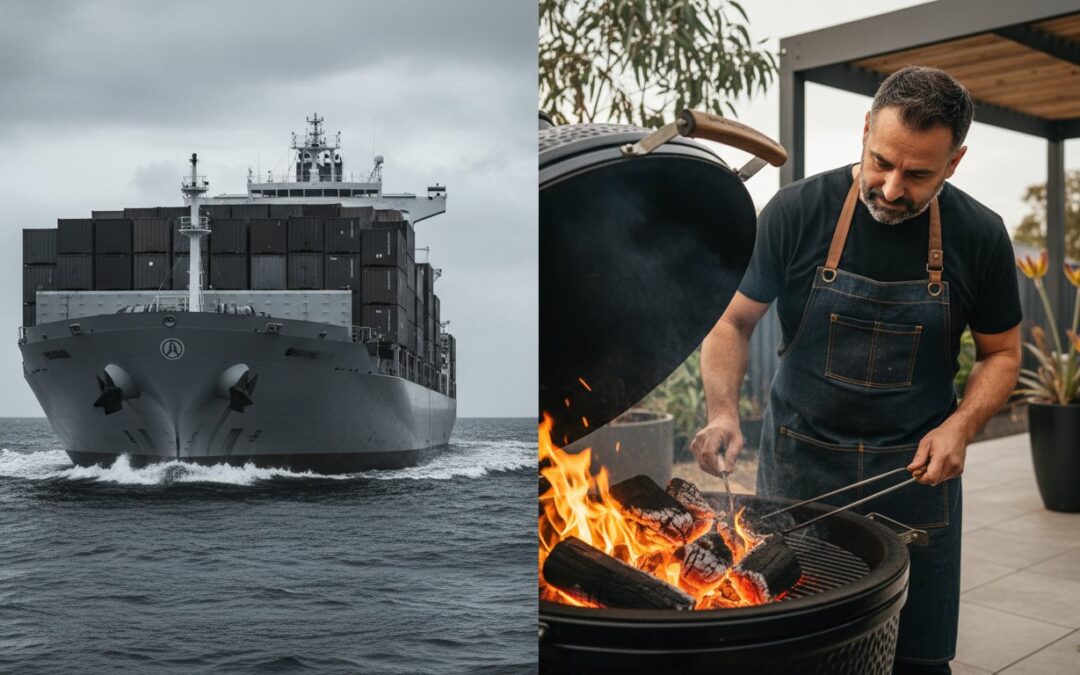
The cheap bag of imported charcoal sitting on the hardware store shelf looks like a bargain, but it’s often the most expensive mistake a griller can make. As of January 1, 2026, new international shipping regulations classify all charcoal as Dangerous Goods under UN 1361, Class 4.2, following 68 documented container vessel fires. These rules have hit imported fuel with heavy surcharges, often between A$200 and A$800 per container, and mandatory 14-day weathering periods. This often leaves you with degraded product that burns fast and leaves your firebox choked with ash. Finding the best wood for lump charcoal isn’t about hunting for the lowest price; it’s about understanding wood density and carbonisation purity.
You want a fuel that burns hot for hours and delivers a clean, organic flavour profile without chemical additives or foul smells. This guide breaks down the performance differences between Australian hardwoods and imported varieties like Paraguayan Quebracho Blanco. We’ll show you how to identify ethically sourced fuel that offers longer burn times and superior heat so you can stop fighting your fire and start mastering your cook.
Key Takeaways
- Compare the thermal performance and ash production of local Australian hardwoods against high-density imported varieties.
- Evaluate the best wood for lump charcoal to match your specific cooking style, from fast searing to overnight low-and-slow sessions.
- Decode the flavour profiles of different species, including the clean, neutral profile of Mallee root and the bold smoke of Quebracho.
- Understand the impact of the 2026 shipping regulations on the cost and quality of imported fuel landing on Australian shores.
- Identify the ethical differences between invasive species management in Australia and the risks associated with unregulated international timber sourcing.
The Source of the Smoke: Defining Local and Imported Lump Charcoal
Fuel quality starts with the wood. To understand what is lump charcoal, you must understand the carbonisation process. Raw timber is heated in an oxygen-starved environment to drive off moisture, methane, hydrogen, and tar. What remains is nearly pure carbon. The best wood for lump charcoal is always a dense species because density correlates directly to BTU output and burn duration. High-density woods contain more carbon mass per cubic centimetre, meaning they pack more energy into every lump.
Local Australian charcoal relies on native hardwoods that have adapted to harsh, arid climates. These trees grow slowly, creating tight grain structures and high mineral content. Imported products vary wildly. Some are industrial byproducts like Mangrove, while others are artisan fuels crafted through ancient methods. The origin of the timber dictates everything from how much ash stays in your firebox to whether your steak tastes like clean smoke or acrid chemicals.
To better understand this concept, watch this helpful video:
Australian Hardwoods: The Local Heavyweights
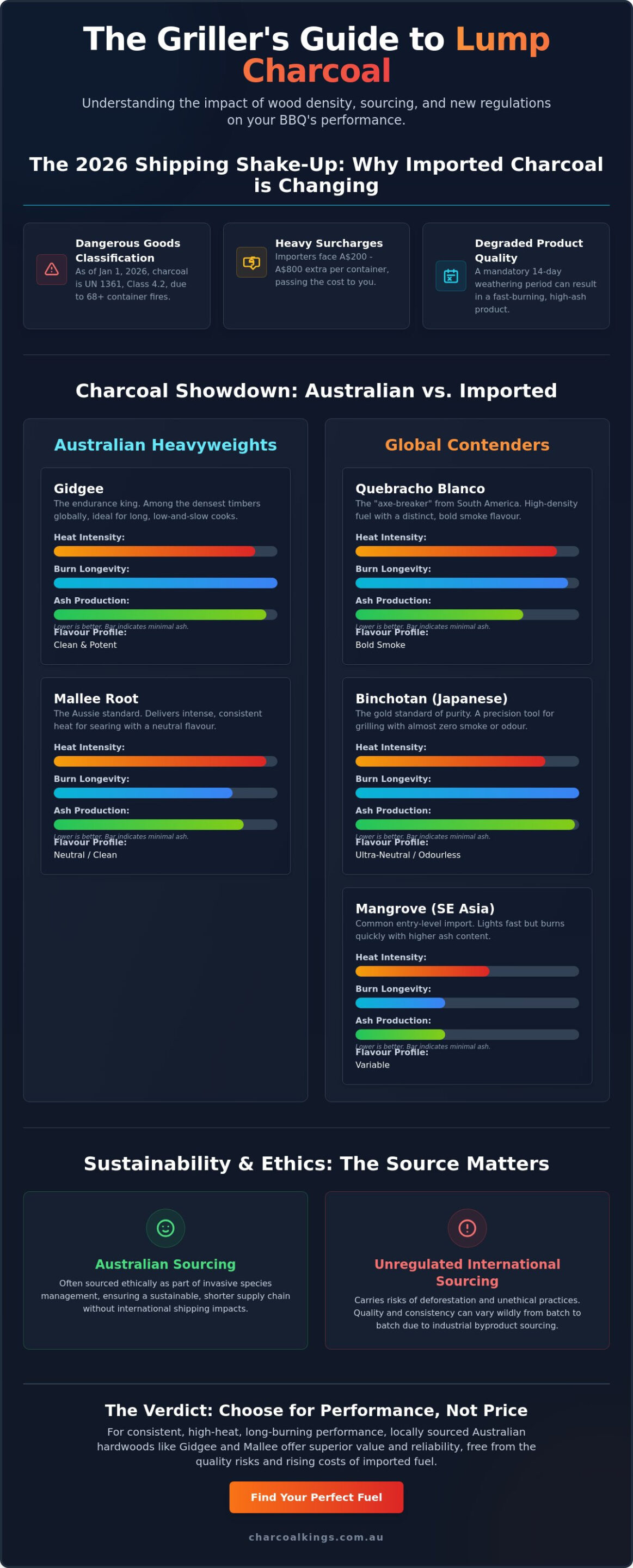
Mallee Root is the standard for Australian pitmasters. It delivers intense heat and a neutral flavour profile that doesn’t mask the meat. For those running long cooks, Gidgee is the superior choice. It is among the densest timbers on the planet. It burns incredibly slow and leaves minimal ash. Sourcing locally ensures a shorter supply chain. You aren’t paying for 2026 shipping surcharges or waiting for 14-day mandatory weathering periods. You get a fresher, more reliable product that hasn’t spent months in a shipping container.
The Global Market: From Commodity to Premium
The international market offers unique profiles you can’t find locally. South American Quebracho, often called “axe breaker” wood, provides massive heat for heavy-duty smokers. It is a high-density hardwood that competes with the best Australian species. Southeast Asian Mangrove is a common entry-level import. It lights fast but often lacks the longevity of denser woods. At the top of the hierarchy is Binchotan charcoal. This Japanese-style white charcoal is the gold standard for purity. It burns for hours with almost zero smoke or odour. This makes it the precision tool for high-end grilling. Choosing the best wood for lump charcoal requires balancing these performance metrics against your specific cooking needs.
Performance Metrics: Heat, Longevity, and Ash Production
Performance boils down to three critical variables: heat, duration, and residue. The best wood for lump charcoal must excel in all three to be considered professional grade. High-density hardwoods like Australian Gidgee or South American Quebracho Blanco possess a tight cellular structure. This allows them to produce significantly higher BTUs than lighter woods like Pine or Poplar. When you’re searing a ribeye at 400°C, you need that intense thermal energy. If you’re running a low and slow brisket for 12 hours, you need a fuel that won’t vanish in three.
Sparking and popping are safety hazards often caused by trapped moisture or pockets of uncarbonised resin. Quality fuel undergoes a rigorous kiln process to ensure nearly 100% carbonisation. If your charcoal sounds like a firecracker, it’s a sign of poor production or high moisture content. This is a common issue with cheap, unbranded bags that skip the 14-day mandatory weathering required by 2026 shipping codes. Professional grillers prioritise stability over price every time.
The Density Factor: Why Gidgee and Quebracho Rule
Gidgee and Quebracho are world-class because they are heavy. Tropical softwoods are porous and burn through their carbon stores rapidly. Desert hardwoods grow slowly in extreme conditions. This creates a wood that is nearly as dense as stone. This density directly impacts the environmental impact of charcoal, as denser woods require less volume to achieve the same thermal result. For a 12-hour cook, you might use half the weight of Gidgee compared to a lighter Acacia. Higher density means more carbon per kilogram and more consistent fire management.
Ash Management and Airflow
Ash is the silent killer of temperature control. Excessive ash clogs the air vents in your firebox, effectively starving the fire of oxygen. When comparing lump charcoal to standard briquettes, lump always wins on purity. Briquettes often contain cornstarch or clay binders that leave a thick blanket of grey dust. Pure hardwood charcoal leaves almost nothing behind. You can identify clean fuel by its weight and sound; high-quality lump should have a metallic clink when pieces hit each other. If you’re tired of cleaning out buckets of ash after every cook, explore the high-performance range at Charcoal Kings to see the difference purity makes.
The Flavour Profile: Subtle Local vs. Bold Imported
Smoke is a seasoning, not just a byproduct of heat. The terroir of the timber determines the final taste of your cook. Just as soil and climate affect wine grapes, they dictate the chemical composition of wood. The best wood for lump charcoal provides a flavour profile that complements your protein rather than drowning it. Australian Mallee root is prized for its clean, neutral output. It delivers a light, sweet aroma that allows the natural quality of the meat to take centre stage. This makes it a staple for competition pitmasters who need consistent, predictable results across multiple categories.
South American hardwoods offer a different experience. Species like Quebracho Blanco are high in tannins and natural oils. When carbonised, these elements produce a bold, earthy smoke with a distinct musky undertone. It is a robust profile that can stand up to heavy rubs and long exposure. At the opposite end of the spectrum sits Binchotan. Because it is fired at temperatures exceeding 1000°C, it contains almost zero volatile matter. It produces no smoke flavour at all. It relies on intense infrared heat to sear the meat from the inside out, preserving the moisture and natural fats without any external smoke interference.
Matching Fuel to Protein
Strategic fuel selection is the mark of an expert. Subtle Australian hardwoods are the preferred choice for delicate proteins like seafood, pork, and poultry. A heavy smoke profile can easily overpower a white fish or a chicken breast. Use bolder imported charcoals for heavy beef cuts like brisket, chuck roast, or beef ribs. These meats have the fat content and muscle density to absorb a more aggressive smoke profile. For those seeking specific flavour notes, layering smoking woods like Apple or Mesquite over a neutral charcoal base provides the ultimate control over the finished product.
The Purity Test: Avoiding Chemical Additives
Your charcoal should never smell like a chemical plant. If you detect acrid, synthetic aromas during the light-up phase, your fuel likely contains uncarbonised resins or industrial additives. These impurities release volatile organic compounds that stick to your food, leaving a bitter aftertaste. High-quality lump charcoal is defined by its purity and the total absence of additives. When you light the best wood for lump charcoal, the smoke should be thin, blue, and pleasantly woody. Anything else indicates a low-grade product that will compromise the integrity of your cook. Stick to 100% natural timber to ensure the only thing you taste is the meat and the fire.
Sustainability and Ethics: Behind the Bag
The environmental impact of your fuel is just as critical as its BTU output. While you search for the best wood for lump charcoal, you must consider what happens before the timber reaches the kiln. Australian Mallee harvesting is a prime example of responsible resource management. In many regions, Mallee is harvested to manage invasive growth or as part of sustainable land clearing under government oversight. This process turns a management necessity into a premium, high-performance fuel source. Conversely, unregulated imported charcoal often carries a heavy ethical price. Illegal logging in Southeast Asia and South America remains a significant risk. These operations often clear-cut old-growth forests, destroying biodiversity for short-term profit.
Carbon footprint calculations also favour local products. International shipping involves thousands of kilometres of transport and heavy fuel consumption. The 2026 shipping surcharges reflect the complexity and energy cost of moving these goods safely across oceans. Buying local minimises the transport distance and ensures your money supports Australian ecosystems rather than offshore deforestation. Always look for certifications like the Forest Stewardship Council (FSC) or the Programme for the Endorsement of Forest Certification (PEFC) to verify the timber’s origin. Choosing the best wood for lump charcoal requires looking beyond the price tag and examining the supply chain.
Australian Regulatory Standards
Australian producers must adhere to some of the world’s strictest environmental laws. These regulations ensure that timber extraction doesn’t compromise soil health or local water tables. The industry also sustains vital regional jobs in rural communities across the country. Choosing local firewood and charcoal products guarantees that your fuel is sourced under these transparent frameworks. It’s about accountability from the forest floor to your grill. Supporting local makers keeps the industry clean and the quality high.
Ethical Importing
Importing doesn’t have to be unethical. Transparent importers track their entire supply chain to ensure they aren’t contributing to habitat loss. Cheap, unbranded charcoal usually has the highest environmental cost because it bypasses these audits. The global trend is shifting toward sustainable plantation-grown wood, such as specifically managed Acacia or Eucalyptus groves. This ensures a renewable cycle of fuel without touching virgin forests. If you value performance without the guilt, buy your hardwood charcoal from a supplier committed to these ethical standards.
The Verdict: Choosing the Right Fuel for Your Grill
The choice between local and imported fuel isn’t about geography; it’s about matching the thermal properties of the wood to your specific cooking method. Local Australian hardwoods like Mallee root are the superior choice for daily grilling and high-rotation cooks where clean flavour and fast ignition are the priorities. If you are running a commercial kitchen or a precision backyard setup, specialty imports like Binchotan provide a level of infrared heat and purity that local woods cannot replicate. The best wood for lump charcoal is ultimately the one that aligns with your target temperature and desired smoke intensity.
Some pitmasters prefer a hybrid approach. Mixing a base of high-density Gidgee with a layer of quicker-lighting Mallee root allows for a fast start with a sustained, long-term burn. Regardless of your choice, storage is the most overlooked factor in fuel performance. Charcoal is carbonised and highly porous; it will absorb moisture from the Australian humidity if left in an open bag. Store your fuel in an airtight container to prevent the popping and temperature fluctuations caused by damp wood. This ensures the 100% natural purity of the product remains intact from the first light to the final ember.
The Decision Matrix: Match Your Cook to Your Coal
Selecting the right fuel depends on your hardware and your protein. Use this guide to ensure maximum efficiency:
- Best for Hibachi: Binchotan (Imported). Its high-purity, smokeless burn is essential for small, tabletop grills.
- Best for Kettle BBQs: Mallee Root (Local). It provides the ideal balance of heat and versatility for steaks, roasts, and burgers.
- Best for Offset Smokers: Gidgee (Local) or Quebracho (Imported). These dense hardwoods offer the longevity required for 12-hour low and slow sessions.
Final Checklist for Your Next Purchase
Before you commit to a 20kg bag, perform a quick quality audit. High-performance charcoal should have a distinct, glass-like clink when two pieces are tapped together. This sound indicates high-density carbonisation and the absence of uncarbonised wood. Check the bag for piece size; you want large, consistent lumps rather than a bottom layer of dust and fines that will choke your airflow. Avoid big-box retailers that stock generic, low-grade brands. Support specialist suppliers who understand the best wood for lump charcoal and maintain strict quality control over their stock. Master the fire with the right fuel and let the performance speak for itself. Happy grilling.
Master the Fire with Superior Fuel
Choosing your fuel is the most important decision you make before lighting the match. You now understand that density dictates burn time and that purity defines the flavour of your meat. Whether you choose the clean, neutral profile of Australian Mallee or the intense infrared heat of premium Binchotan, your priority must remain on quality and ethical sourcing. Identifying the best wood for lump charcoal is the foundation of every successful pitmaster’s toolkit. It ensures your firebox remains clear of ash and your food stays free from chemical taints.
Charcoal Kings has been an authoritative expert in Australian and international fuels since 2014. We supply both retail and wholesale markets with a strict “No Additives” purity guarantee. We don’t compromise on performance because we know you don’t either. It’s time to stop fighting inconsistent heat and start commanding your grill with confidence. Upgrade your BBQ game with our Premium Hardwood Lump Charcoal and experience the difference that professional-grade carbonisation makes. Get out there and light it up.
Frequently Asked Questions
Is Australian lump charcoal better than imported?
Australian lump charcoal is not inherently better, but it offers distinct advantages in freshness and flavour neutrality. Local species like Mallee root and Gidgee are world-class for density and thermal output. Choosing local fuel also bypasses the 2026 international shipping surcharges and mandatory weathering delays. This ensures you receive a stable, reliable product that hasn’t spent months in a shipping container.
Why is some charcoal so much more expensive than others?
Retail price reflects wood density, carbonisation purity, and logistical complexity. High-density hardwoods take longer to grow and require more energy to process into high-purity carbon. Premium brands also invest in rigorous screening to ensure the bag contains large lumps instead of dust. Since January 2026, imported fuel also carries significant Dangerous Goods surcharges that increase the final cost for Australian consumers.
Does imported charcoal contain chemicals or additives?
Pure lump charcoal is 100% natural timber, but quality varies significantly between international brands. Low-grade imports may contain uncarbonised resins or bark that produce acrid, chemical-like smells during ignition. High-performance fuel is processed until only carbon remains. Always look for a “No Additives” guarantee to ensure the best wood for lump charcoal is the only thing in your firebox.
What is the best charcoal for a long, slow smoke?
High-density hardwoods like Australian Gidgee or South American Quebracho are the superior choices for low and slow sessions. These species have a tight cellular grain that allows them to burn for 12 hours or more at a stable temperature. Their high carbon mass means you use less fuel per kilogram compared to lighter, fast-burning woods like Acacia or Mangrove.
How can I tell if charcoal is sustainably sourced?
Look for FSC or PEFC certifications on the bag to verify responsible forest management. Australian producers often use Mallee root harvested under strict environmental legislation to manage invasive growth or land clearing. Reliable suppliers maintain transparency in their supply chain. They track the timber from the forest floor to the kiln to ensure no illegal logging contributes to the final product.
Can I mix local and imported charcoal in the same cook?
Mixing local and imported fuels is an effective strategy to balance ignition speed and longevity. You can use fast-lighting Mallee root to reach your target temperature quickly and then layer in dense Quebracho to maintain that heat for several hours. This hybrid approach allows you to customise the burn profile to match the specific requirements of your protein and your smoker.
Why does some charcoal spark more than others?
Excessive sparking indicates high moisture content or incomplete carbonisation. If the wood wasn’t fully processed in the kiln, pockets of trapped resin or moisture explode when they hit the heat. Professional-grade lump undergoes a rigorous kiln process to drive out these volatile organic compounds. Storing your fuel in an airtight container also prevents moisture absorption from the local humidity.
Does the type of charcoal really affect the taste of the meat?
The wood species acts as a primary seasoning by releasing specific aromatic compounds during combustion. Neutral woods like Mallee root allow the natural flavour of the meat to take centre stage. Bolder woods like Quebracho add a robust, earthy smoke profile that complements heavy beef cuts. Choosing the best wood for lump charcoal is essential for achieving a clean, professional flavour profile.