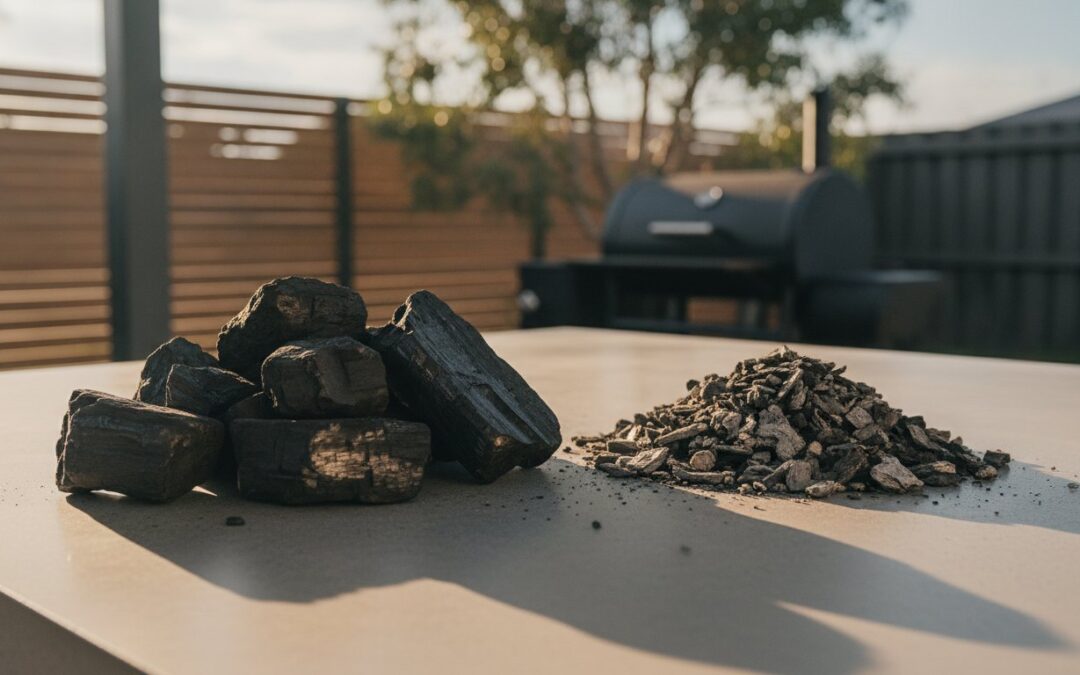
The “bargain” bag of imported charcoal sitting on the retail shelf is a financial and performance trap. Since the mandatory Dangerous Goods classification took effect on January 1, 2026, international shipping for carbonized fuel has become a logistical nightmare. When you weigh up imported vs local lump charcoal, you aren’t just comparing wood species; you’re paying for shipping surcharges and mandatory 14-day weathering periods that often leave imported fuel brittle and dusty. It’s no longer about finding the lowest price per bag. It’s about finding the highest density per dollar.
You’re likely tired of seeing your firebox choked by excessive ash or smelling chemical additives in low-quality imports. This breakdown promises to help you master your fire by explaining how Australian hardwoods like Gidgee and Mallee outperform global imports in the current regulatory environment. You’ll learn why local density translates to longer burn times for low-and-slow cooks and how to navigate the 2026 value-to-cost ratio. We’ll examine wood density, smoke profiles, and the true impact of the new UN 1361 shipping regulations on your next cookout.
Key Takeaways
- Australian arid-zone hardwoods like Gidgee and Ironbark provide superior carbon density for extreme heat and minimal ash production.
- The 2026 shipping landscape for imported vs local lump charcoal is now defined by mandatory 14-day weathering periods and Dangerous Goods surcharges that impact landed quality.
- High-performance local fuels sustain 12-hour low-and-slow cooks with a single load, significantly reducing fuel consumption compared to low-density imports.
- Match your smoke profile to your protein by choosing specific species like Mallee for delicate seafood or Ironbark for heavy beef cuts.
- Master the value-to-cost ratio by identifying when to invest in premium hardwood lump charcoal and when economy options suffice for basic searing.
Defining the Source: Australian Hardwoods vs. Global Imports
Fuel quality begins with the tree’s biology. Australian arid-zone hardwoods are forged in extreme, dry conditions. This creates a cellular structure far denser than tropical softwoods or temperate forest timbers. When asking What is lump charcoal, you must realize it’s the carbonized result of these specific wood species. The density of the raw timber directly dictates the energy potential of the coal. High-density local woods produce a heavy coal that resists crumbling and maintains structural integrity under extreme heat.
Choosing between imported vs local lump charcoal involves more than just checking the price tag. Origin dictates the carbon purity and the volatile organic compounds remaining after the kiln process. Australian timber produces a fuel that burns hotter and longer than standard imports. This performance gap is the difference between a successful 12-hour cook and a firebox full of useless ash. Our focus remains on 100% natural timber. We never use fillers, chemical binders, or scrap wood in our production.
To better understand the differences between various fuel types, watch this helpful video:
The Australian Contenders: Gidgee and Mallee
Gidgee is the undisputed heavyweight of the BBQ world. It’s the gold standard for density. It provides intense, consistent heat that lasts for hours without fading. Mallee Root offers a different performance profile. It’s a cleaner, more neutral burn. This makes it the preferred choice for delicate proteins like poultry or seafood where you want the meat to shine. Sourcing ethics are a priority for us. Much of our Hardwood Lump Charcoal comes from invasive species management. We transform problematic scrub into high-performance fuel. This supports local ecosystems while providing pitmasters with superior materials.
Imported Varieties: Beyond the Commodity Label
Quebracho Blanco from Paraguay and Argentina is the primary global competitor. It’s known as the Axe-Breaker wood because of its hardness. It delivers massive energy output, but the 2026 shipping landscape has made consistent quality harder to find. When comparing imported vs local lump charcoal, be wary of mixed hardwood bags. These often contain random species with wildly different burn rates. You’ll experience excessive sparking and inconsistent temperatures. Imported fruitwoods like apple or cherry are also becoming rare due to changing agricultural export laws. For a reliable, predictable fire, invest in premium hardwood lump charcoal that guarantees a single-species profile. Consistency is the key to mastering the pit.
The 2026 Regulation Factor: Why Shipping Impacts Quality
The regulatory landscape for solid fuels shifted permanently on January 1, 2026. International maritime authorities now mandate stricter handling protocols for all charcoal products. This change isn’t a mere bureaucratic hurdle; it directly impacts the thermal performance of the coal in your bag. When evaluating imported vs local lump charcoal, you must account for the physical toll that global logistics takes on the product. Long-distance shipping turns premium carbon into useless dust through constant vibration and humidity exposure.
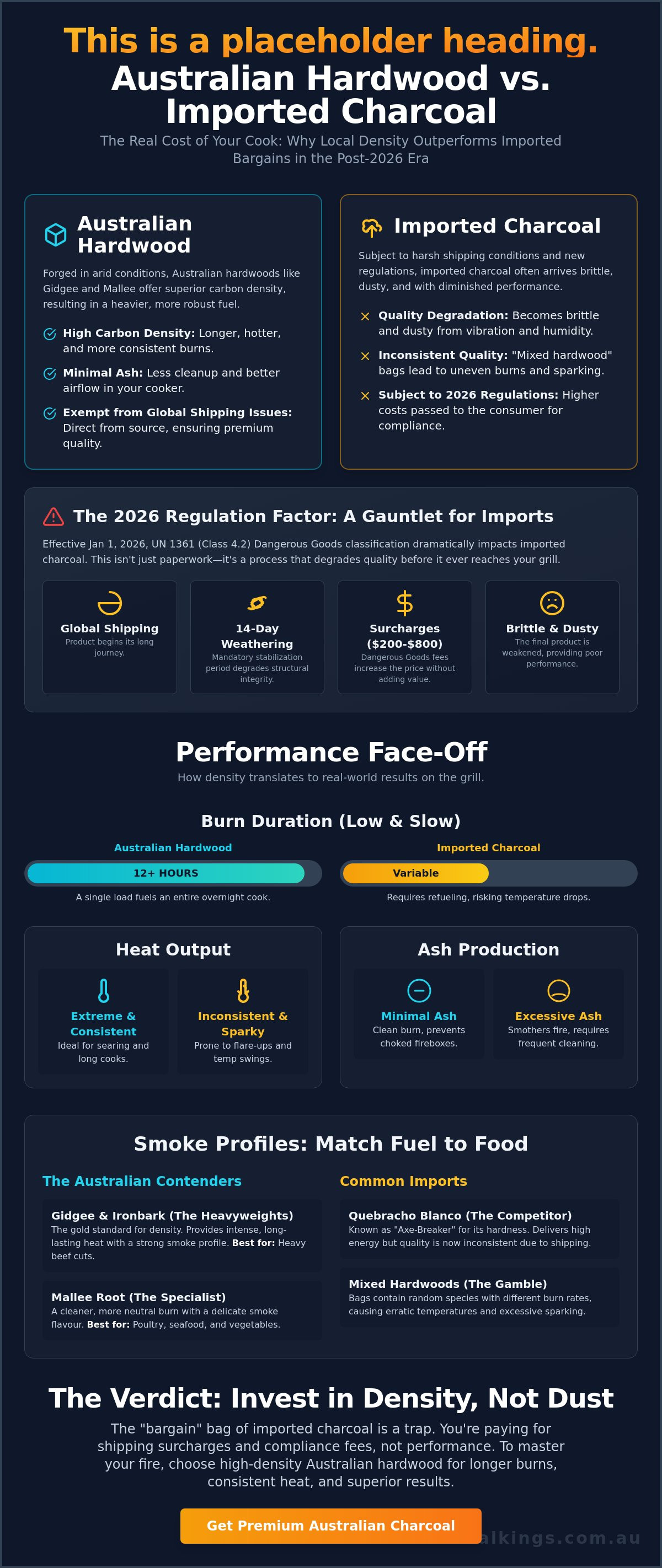
Shipping lines now impose a “Dangerous Goods Premium” on every container of charcoal. These surcharges typically range from $200 to $800 depending on the route and carrier. Importers are forced to pass these costs to the consumer, which causes retail prices to converge. You are increasingly paying for logistics and safety compliance rather than actual fuel density. Choosing high-quality Australian hardwood lump eliminates these international shipping surcharges and ensures your money goes toward performance, not freight insurance.
What is UN 1361 Class 4.2?
UN 1361 is the international standard for self-heating substances. This classification was enforced globally following a series of documented container fires caused by improperly stabilized charcoal. Every imported container must now undergo a mandatory 14-day weathering period after production. While this ensures safety, it often exposes the charcoal to high ambient humidity in tropical ports. This moisture absorption leads to sluggish ignition and excessive smoke during your cookout. Local production bypasses this stabilization delay, maintaining the bone-dry purity required for a clean burn.
From Port to Pit: The Degradation Journey
Every mile of ocean travel degrades the structural integrity of the coal. Imported bags frequently contain 20-30% unusable dust and small fragments known as “fines.” These fines are the direct result of multiple trans-shipment points and rough mechanical handling at international ports. They aren’t just a waste of weight. Small fragments settle at the bottom of your firebox and effectively choke the airflow. This is particularly problematic in ceramic grills where precise oxygen control is vital for temperature stability.
Local supply chains offer a “Farm to Fire” advantage that imports cannot match. Australian lump charcoal moves from the kiln to the warehouse with minimal handling and zero ocean transit. This preserves the large, chunky pieces that pitmasters prize for long-duration cooks. You get more usable fuel per bag and a cleaner firebox every time you light up. Reliability in the pit starts with the integrity of the fuel, and local hardwoods simply arrive in better condition than their global counterparts.
Performance Face-Off: Heat, Duration, and Ash Production
Performance in the pit isn’t subjective; it’s a matter of thermal physics. When you compare imported vs local lump charcoal, the most immediate metric is peak temperature. Local Gidgee is a biological anomaly that provides a concentrated heat source few global timbers can match. While South American Quebracho Blanco is a formidable opponent, it often suffers from inconsistent carbonisation. This results in “cool spots” in your fuel bed that can ruin a high-heat sear. Australian hardwoods offer a uniform energy release that keeps your grates at a steady, searing temperature for the duration of the cook.
Burn duration is the second critical metric for any serious pitmaster. A 12-hour brisket cook is the ultimate stress test for fuel. Using low-density imported charcoal often necessitates a mid-cook refill, which disrupts temperature stability and introduces raw wood smoke at a critical stage. High-density local hardwoods survive the “stall” without intervention. You get a reliable, linear burn that allows you to focus on the meat rather than managing a dying fire. We ensure our fuel is fully carbonised to eliminate the “brown wood” that causes bitter, acrid smoke profiles.
Thermal Density and Energy Output
Thermal density refers to the amount of potential energy stored within each piece of coal. Australian arid-zone timbers have a significantly higher specific gravity than standard imported species. This translates to more “BTUs per bag.” Because the wood grew slowly in harsh conditions, the carbon structure is tighter and more resilient. Higher carbonisation temperatures during our kiln process further refine this density. The result is a fuel that ignites easily but refuses to burn out quickly. You use less fuel by weight to achieve the same thermal results as bulk imports.
The Ash Factor in Long Cooks
Ash is the silent killer of airflow. Excessive ash production from low-quality imported coal eventually smothers the fire by blocking the intake vents. This is particularly dangerous in offset smokers where consistent oxygen flow is the only way to maintain a clean burn. Local Gidgee and Mallee produce a minimal, white, wispy ash that falls through the grates without clumping. In contrast, many imports produce a heavy, grey ash that remains in the firebox. This creates a thermal blanket that chokes the remaining coals and forces your temperatures to plummet. Choosing local fuel ensures your airflow remains unobstructed from the first light to the final pull.
Purity is our non-negotiable standard. We don’t use chemical additives, binders, or scrap timber. Every bag contains 100% natural hardwood. This lack of impurities means you aren’t breathing in burnt chemicals or dealing with “sparking” caused by uncarbonised sap. When you weigh up imported vs local lump charcoal, the local option provides a cleaner, more predictable experience that respects the quality of the meat you’re cooking. Professional results require professional-grade fuel.
Smoke Profiles: Matching Flavour to Your Protein
Smoke is more than an aesthetic byproduct; it is the chemical signature of your fuel. Different wood species release unique volatile organic compounds when they hit the combustion zone. When weighing the benefits of imported vs local lump charcoal, you are essentially choosing a flavour profile for your protein. High-purity charcoal must produce a translucent blue smoke. If you see thick, billowy white or yellow smoke, you’ve hit the ‘acrid’ trap. This is caused by uncarbonised resins in poorly processed coal. These resins leave a bitter, metallic finish on the meat that no amount of seasoning can hide.
Australian hardwoods offer a distinct spectrum of smoke intensities. For heavy proteins like ribs or brisket, Ironbark is the definitive choice. It provides a deep, traditional aroma that complements the natural fats of beef and lamb. If you prefer a neutral canvas, Mallee is the superior option. Its clean burn allows your chosen rubs and sauces to take center stage without competing against an aggressive wood profile. This subtlety is vital for poultry and seafood, where heavy smoke quickly becomes overpowering. High-purity local coal prevents the ‘over-smoking’ that often ruins delicate cuts.
The Imported Smoke Signature
Imported fuels like South American Quebracho Blanco bring a different energy to the pit. Quebracho is famous for a bold, peppery smoke profile. It works exceptionally well for game meats or large beef cuts that can stand up to a stronger aromatic presence. However, be cautious of low-tier imports that carry a faint petroleum scent. This often indicates the use of chemical accelerants or contamination during the mandatory weathering periods. Reliable imports should smell organic and earthy, never like a mechanic’s workshop. When you compare imported vs local lump charcoal, the purity of the carbonisation process is what ultimately protects your palate.
Customising Your Flavour Profile
Many professional pitmasters use a blending strategy to achieve custom results. You can mix high-density Gidgee for its long-lasting heat with a smaller portion of Quebracho for its peppery aromatic signature. This gives you total control over both the thermal environment and the final taste. Purity remains the most important factor in any blend. Additives and fillers will always produce unpredictable, unpleasant results. We guarantee 100% natural timber in every bag to ensure your fire remains clean from start to finish. Mastery of the pit requires fuel that behaves predictably every time you light it.
Ready to elevate your next cookout with the cleanest smoke profile on the market? Shop our premium hardwood lump charcoal today and experience the difference that 100% purity makes.
The Verdict: Choosing the Right Fuel for Your Grill
Selecting the right fuel in 2026 requires a balance between your specific cooking goals and the regulatory realities of global shipping. When you evaluate imported vs local lump charcoal, the winner depends on your hardware and your timeline. Investing in premium hardwood lump charcoal is the only logical choice for maximum performance during low-and-slow sessions. The high carbon density of Australian arid-zone hardwoods provides a linear heat release that cheaper imports simply cannot match. You pay for the energy content, not just the weight of the bag.
There is still a strategic place for the economy play. If your weekend plans involve high-heat, short-duration searing for burgers or thin-cut steaks, a quality imported bag can be a cost-effective tool. These fuels ignite quickly and provide the intense initial burst needed for a crust. However, for specialty Japanese-style grilling, binchotan charcoal remains in a league of its own. Its unique infrared heat signature is essential for Hibachis and cannot be replicated by standard lump varieties, regardless of origin.
Fuel Matching by Grill Type
- Kamados and Ceramic Eggs: These cookers rely on precise oxygen control. Local Gidgee is the superior choice because its structural integrity maintains the air gaps necessary for temperature stability.
- Kettle BBQs: These versatile units allow you to balance cost and performance. Use local hardwoods for roasts requiring more than two hours of cook time to avoid mid-session refills.
- Commercial Kitchens: Professional environments demand the reliability of wholesale local supply. Local chains bypass the 2026 shipping delays and moisture issues common in international containers.
The 5-Point Bag Checklist
Before you tap your card at the register, check these five markers of quality. First, look for species clarity; the bag should name the specific timber like Gidgee or Mallee. Second, check for carbonisation quality by looking for a deep black luster without “brown wood” visible. Third, feel for fines; excessive dust at the bottom of the bag indicates rough handling. Fourth, verify the purity guarantee to ensure no chemicals or binders are present. Finally, check the origin transparency to understand the potential impact of UN 1361 shipping regulations on that specific batch.
Charcoal Kings’ Recommendation for 2026
We prioritize Australian hardwoods for the domestic market because they offer the highest value-to-performance ratio in the current climate. Our focus remains on purity. We provide fuel with no chemicals, no fillers, and no additives. You get 100% natural timber that respects the quality of your meat. This no-nonsense approach to fuel is why professional pitmasters and backyard enthusiasts trust our grading. Visit our Holden Hill showroom to inspect our stock in person or order online for reliable Australia-wide delivery. Get the fire right the first time. Finish your cook with the confidence that only premium carbon provides.
Secure Superior Performance for Your Next Cook
The 2026 regulatory environment has fundamentally changed the value proposition for pitmasters. Choosing between imported vs local lump charcoal is now a matter of logistics as much as biology. Local hardwoods like Gidgee and Mallee Root offer superior thermal density and arrive without the degradation caused by global shipping. You get more usable fuel, less ash, and a cleaner smoke profile that respects the ingredients you’ve sourced. Purity is the foundation of every successful cook.
We are the specialist supplier of premium Gidgee and Mallee Root charcoal. Our operation serves as both a wholesale and retail hub with stockists across Australia. Whether you’re running a commercial kitchen or a backyard smoker, our seasoned pitmasters provide the expert advice needed to maximize your thermal results. For hospitality business owners, balancing these operational costs with professional financial planning is essential; read more about how The Bucket List Accountant provides specialized advisory services. We guarantee 100% natural timber with no additives or chemicals. This commitment to quality ensures your fire remains consistent and predictable every time you light it.
Shop our range of Premium Australian Hardwood Lump Charcoal and take control of your fire today. You’ve done the work on the meat. Now give it the fuel it deserves. Happy grilling!
Frequently Asked Questions
Is imported charcoal safe to use in 2026?
Imported charcoal is safe to use in 2026 provided it meets the new UN 1361 Class 4.2 stabilization standards. These regulations mandate a 14-day weathering period to prevent spontaneous combustion during transit. While this increases safety, the charcoal can absorb ambient moisture in tropical ports. Always check for a clean, carbonized smell. Avoid any bags that emit a chemical or petroleum odor when opened.
Why is Australian Gidgee charcoal so much more expensive than other types?
Australian Gidgee is a premium product because of its extreme biological density. It is an arid-zone hardwood that grows slowly, creating a tight cellular structure. This results in a much higher carbon purity and thermal energy output compared to softer timbers found in many imported vs local lump charcoal comparisons. You achieve longer burn times and higher temperatures using significantly less physical fuel by weight.
Does lump charcoal expire or go bad if stored for a long time?
Lump charcoal does not have a biological expiration date, but its performance degrades if exposed to humidity. Carbon is highly porous and absorbs moisture from the atmosphere over time. This leads to difficult ignition, excessive sparking, and a sluggish burn. Store your fuel in a sealed, dry environment. If your coal feels heavy or produces thick white smoke, it has likely absorbed too much environmental moisture.
Can I mix local and imported lump charcoal in the same cook?
You can definitely mix different fuel types to customize your thermal environment. Many pitmasters combine the intense heat of local Gidgee with the specific aromatic profile of South American imports. This allows you to manage the cost-to-performance ratio for different stages of the cook. Ensure both fuels are 100% natural and free from chemical additives to prevent cross-contamination of flavors in your firebox.
Why does some imported charcoal spark so much when lighting?
Excessive sparking is usually a sign of uncarbonized resin or trapped moisture within the timber. This is a common issue with low-quality imports that haven’t undergone a complete pyrolysis process. When the heat hits these “brown wood” pockets, the internal gases expand rapidly and pop. High-quality Australian hardwoods are processed at higher kiln temperatures to ensure every piece is fully carbonized, resulting in a stable, spark-free light.
How can I tell if a bag of charcoal has too many ‘fines’ before opening it?
You can identify excessive “fines” by performing a physical check of the bag’s base before purchase. Lift the bag and gently shake it; listen for the sound of shifting dust rather than the clatter of solid chunks. If the bottom feels like a heavy, compacted mass of sand, the contents have likely been crushed during international shipping. High-performance fuel should feel light and consist of large, distinct pieces.
Which charcoal produces the least amount of ash?
Australian arid-zone hardwoods like Gidgee and Mallee Root produce the lowest ash volume in the industry. These species consist almost entirely of pure carbon with very little mineral content. Low ash production is vital for maintaining airflow in ceramic grills and offset smokers. Many imported varieties contain higher levels of silica and minerals, which leave behind a heavy, grey ash that can eventually smother your fire.
What is the best charcoal for a low-and-slow brisket cook?
Gidgee and Ironbark are the definitive choices for a low-and-slow brisket cook. Their high thermal density allows them to sustain a steady temperature for over 12 hours without a refill. This consistency is critical during the “stall” phase of a brisket. Using high-density local fuel ensures you don’t have to open the lid and disturb the cooking environment to add more coal mid-cook.