
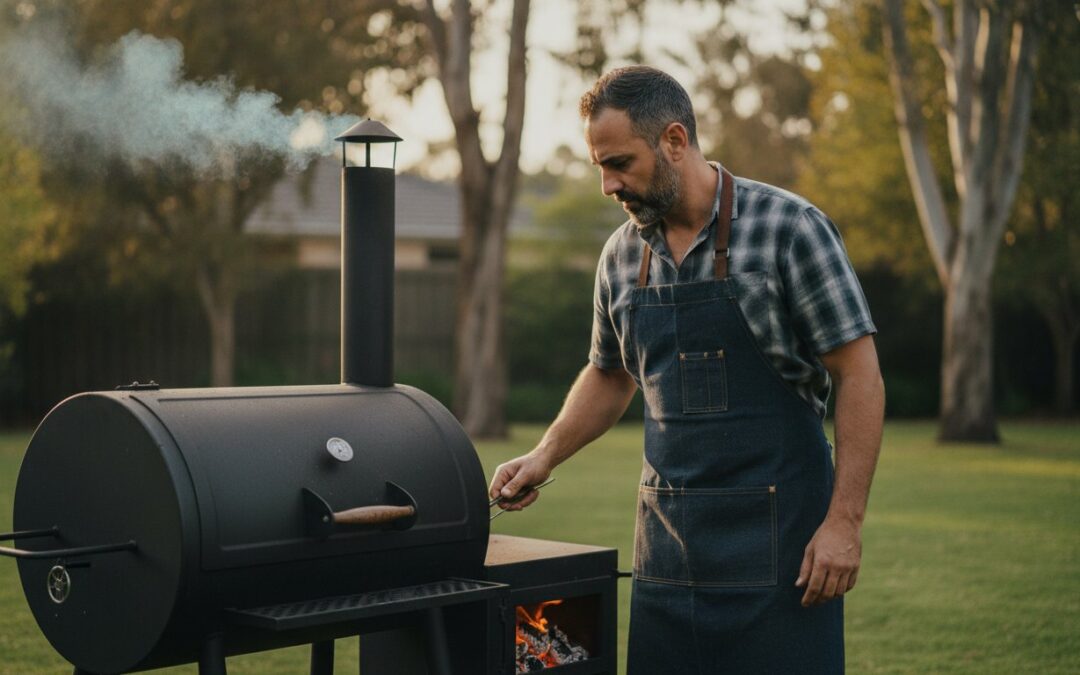
A charcoal smoker is not a simple outdoor grill; it is a thermodynamic engine where fuel purity dictates every note of flavour. Most pitmasters have experienced the frustration of wild temperature fluctuations or the bitter, acrid taste of dirty smoke that can instantly ruin an expensive 6kg brisket. Learning how to use a charcoal smoker requires a shift from passive cooking to active fire management. You must understand how oxygen interacts with your fuel to produce consistent results every time you light the firebox.
We understand the stress of managing a long cook while worrying about wasting high-quality meat. This guide provides the definitive blueprint for mastering the low and slow method on a traditional offset smoker. You will learn to achieve the legendary Thin Blue Smoke and manage a clean-burning fire for 12 hours or more. From selecting additive-free Hardwood Lump Charcoal to perfecting your airflow settings, we cover the technical skills needed to produce tender meat and a professional-grade bark.
Key Takeaways
- Master the convection physics of an offset smoker to ensure heat and smoke move across your meat rather than directly under it.
- Learn exactly how to use a charcoal smoker by managing airflow to achieve the elusive ‘Thin Blue Smoke’ for a clean, competition-grade flavour.
- Understand why 6mm thick steel is the industry standard for maintaining thermal mass and preventing temperature fluctuations during 12-hour cooks.
- Eliminate bitter aftertastes by using additive-free Hardwood Lump Charcoal as your primary heat source instead of chemical-laden alternatives.
- Protect your investment by seasoning your smoker to build a durable carbon patina that prevents rust and improves performance.
What is an Offset Smoker and How Does the Physics Work?
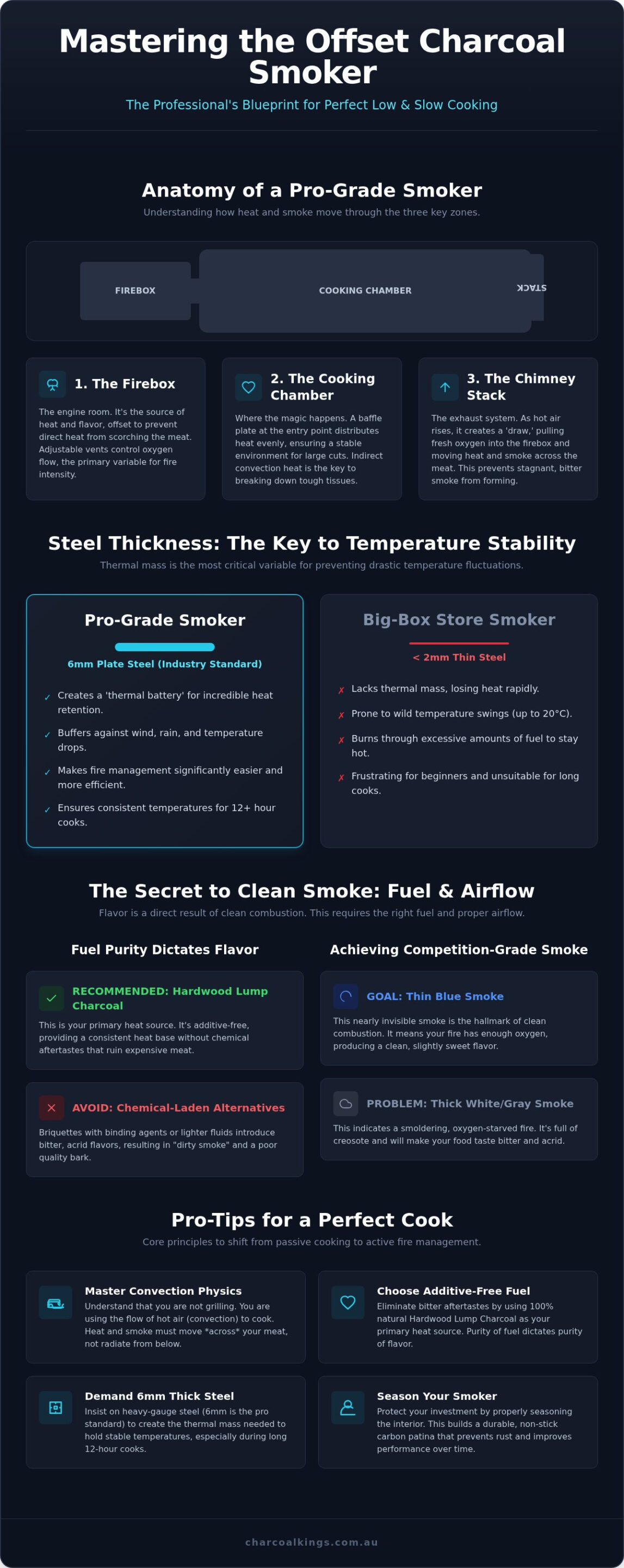
The offset smoker is the definitive tool for serious pitmasters. Its design is deceptively simple: a side-mounted firebox connected to a horizontal cooking chamber. This configuration separates the fuel source from the protein. Unlike a standard grill, you aren’t cooking over an open flame. You’re using convection to move heat and smoke across the meat. This indirect method is the foundation of Smoking (cooking), allowing for the low temperatures required to break down tough connective tissues in cuts like brisket. Understanding this layout is the first step in learning how to use a charcoal smoker effectively.
To better understand this concept, watch this helpful video:
The Firebox: The Engine Room
The firebox is the source of both heat and flavour. Because it’s offset from the main chamber, it prevents direct radiant heat from scorching your food. This creates a stable environment for long-duration cooks. You manage the fire through adjustable air intakes on the side of the box. These vents control oxygen flow, which is the primary variable in fire intensity. A well-managed firebox uses high-quality Hardwood Lump Charcoal to create a consistent heat base without the chemical aftertaste of inferior fuels. It’s the engine that drives the entire process.
The Cooking Chamber: Where the Magic Happens
The cooking chamber is where your meat sits. Its horizontal drum design provides the capacity needed for large Australian briskets or multiple racks of ribs. Heat enters from the firebox and is often distributed by a baffle plate. This heavy steel plate sits at the entry point, forcing the heat downward and outward to prevent hot spots near the firebox opening. It ensures the environment remains stable across the entire cooking surface.
The chimney, or stack, sits at the opposite end. It doesn’t just vent smoke; it creates a draw. As hot air rises out of the stack, it pulls fresh oxygen into the firebox and drags heat through the chamber. This continuous cycle ensures the air stays moving, which is essential for mastering the art of barbecuing with charcoal. Without a strong draw, smoke becomes stagnant and bitter. With it, you get the clean, moving air required for competition-grade bark.
Anatomy of a Pro-Grade Smoker: Why Steel Thickness Matters
Steel thickness is the most critical variable for temperature stability. Beginners often struggle with how to use a charcoal smoker because their equipment lacks the necessary thermal mass to resist external conditions. Cheap, thin-walled smokers found in big-box retail stores usually feature steel less than 2mm thick. These units lose heat rapidly, forcing the user to burn through excessive amounts of fuel just to maintain a steady temperature. In the unpredictable Australian climate, a sudden breeze or a drop in evening temperature can cause a 20-degree Celsius spike or dip in a thin smoker, potentially ruining a long cook.
Professional-grade offset smokers utilize 6mm plate steel as the industry standard. This thickness creates a ‘thermal battery’ effect that simplifies the process of learning how to use a charcoal smoker effectively. Once the steel absorbs heat, it radiates it back into the cooking chamber with incredible consistency. This mass buffers the internal environment against external changes, making fire management significantly easier. You’ll spend less time adjusting vents and more time focusing on the meat. To ensure maximum efficiency, these units also feature precision-welded seams and high-temperature gaskets. If smoke is leaking from the doors rather than the chimney, you’ve lost control of your airflow.
Stack Height and Diameter
The chimney is the engine’s exhaust. Its height and diameter are precisely calculated to create a venturi effect, or ‘draw’. A taller stack creates a stronger pressure differential, pulling air through the firebox and across the cooking grates at a higher velocity. This prevents stale, creosote-heavy smoke from lingering around your food. A well-proportioned stack ensures that the smoke remains ‘thin and blue’, which is the hallmark of clean combustion. Proper draw reduces the risk of the fire starving for oxygen, which is a common cause of bitter flavours.
Door Design and Heat Retention
Heavy steel doors are essential for maintaining a pressurized cooking environment. Because 6mm steel is exceptionally heavy, pro-grade smokers often include integrated counterweights. These allow you to lift the lid with minimal effort while ensuring the door closes with a tight, metal-on-metal seal. This prevents heat loss every time you check the meat. When choosing your perfect grill in Australia, prioritise these structural details over decorative features. For those ready to invest in serious hardware, Charcoal Kings provides the heavy-duty smokers required for professional results.
The Secret to Clean Blue Smoke: Choosing the Right Fuel
Achieving ‘Thin Blue Smoke’ is the ultimate goal for any pitmaster. This nearly translucent, blue-tinted vapour indicates clean, efficient combustion. In contrast, billowing white smoke is a sign of incomplete combustion. This ‘dirty’ smoke coats your meat in creosote, resulting in a bitter, acrid flavour that can’t be masked by sauces. Learning how to use a charcoal smoker effectively requires you to prioritise fuel purity above all else. When you use high-quality fuel, you ensure that the natural flavours of the meat and the wood are the stars of the show.
Data suggests that a traditional charcoal smoker requires approximately 0.45kg (1 pound) of wood per hour during the active smoking phase. Because you are burning fuel for 12 hours or more, any chemical additives or binders found in low-grade briquettes will accumulate on your food. This buildup ruins the low and slow experience. You must select fuels that are free from coal, fillers, and petroleum-based starters to maintain a professional-grade environment inside the chamber.
Hardwood Lump Charcoal: The Foundation
Hardwood Lump Charcoal is the superior heat foundation for offset smokers. Unlike standard briquettes, which often contain sawdust and chemical binders, lump charcoal is created by carbonising whole pieces of hardwood in an oxygen-free environment. This results in a product with extremely high carbon content. It burns hotter and cleaner, leaving behind significantly less ash. Minimal ash production is vital for maintaining airflow; excessive ash can clog the firebox grates and starve your fire of oxygen. For a deeper dive into selecting the right heat source, consult the ultimate guide to fuelling your BBQ.
Smoking Woods and Flavour Profiles
While charcoal provides the heat, wood splits provide the flavour. When mastering how to use a charcoal smoker, you should match the wood species to the protein. Ironbark is the gold standard for Australian beef, offering a heavy, robust smoke profile. For pork or poultry, fruitwoods like Cherry or Apple provide a milder, sweeter finish and a vibrant mahogany colour on the bark. It’s essential to use ‘seasoned’ wood splits with a moisture content between 15% and 20%. Green or unseasoned wood contains too much sap and moisture, which causes the fire to hiss and produce the dreaded white smoke. You can find more detail on sourcing the right timber in the complete Australian guide to choosing firewood.
Traditional vs. Reverse Flow Offset Smokers
Choosing between a traditional offset and a reverse flow design is a pivotal decision for any Australian pitmaster. A traditional offset smoker features a firebox at one end and a chimney at the other. Smoke and heat travel directly from the firebox, across the meat, and out the stack. In a reverse flow smoker, a heavy baffle plate sits below the grates. This plate forces the smoke to travel under the sealed floor to the far end of the chamber before doubling back over the meat to exit through a chimney located near the firebox. Understanding these mechanics is essential when learning how to use a charcoal smoker for consistent results.
Understanding the Reverse Flow Baffle
The baffle plate in a reverse flow unit acts as a massive heat sink. It absorbs the intense energy from the firebox and radiates it evenly across the entire cooking surface. This design effectively eliminates the hot spot typically found where the firebox meets the main chamber. For beginners, this creates a more stable environment that is far more forgiving during long cooks. However, the baffle plate requires regular maintenance. You must ensure it is angled correctly for fat drainage. This prevents grease fires and simplifies the cleaning process after a 12-hour session. The thermal mass of the plate helps maintain temperatures even when you open the door to spritz the meat.
The Traditionalist’s Choice
Traditional offsets are the choice of many competition professionals. These units allow for distinct temperature zones within the chamber. You can use the hotter side near the firebox to quickly render fat on a brisket point while keeping the flat in a cooler zone. This level of control offers greater versatility but demands a much steeper learning curve. Managing the draw and fire intensity in a traditional unit requires constant attention to the air intakes. If you prioritise maximum bark development and enjoy the active process of fire management, the traditional design is unmatched. It provides a more direct path for the smoke, which some argue produces a cleaner flavour profile.
For those just starting out, the reverse flow design is the superior entry point. It provides the stability needed to focus on meat preparation and smoke quality without fighting the hardware. Regardless of the design you choose, success depends on using high-performance fuel and heavy-duty hardware. Explore the range of professional-grade equipment and smokers at Charcoal Kings to start your BBQ journey with the right foundation.
Getting Started: Maintenance and Your First Cook
Before you place an expensive cut of meat on the grates, you must prepare the steel. Learning how to use a charcoal smoker effectively begins with the seasoning process. This initial step creates a protective carbon patina that prevents rust and provides a non-stick surface for your food. In the Australian climate, where coastal humidity or intense heat can accelerate oxidation, this barrier is your first line of defence. Beyond seasoning, you need a specific kit of essential tools to manage a 12-hour cook. High-quality probe thermometers are non-negotiable; you need to monitor both the internal meat temperature and the ambient chamber temperature simultaneously. Heavy-duty fire pokers and heat-resistant welding-style gloves are also required for safe firebox management.
Every offset smoker has unique thermal characteristics. To master yours, perform the ‘Biscuit Test’. Line the cooking grates with slices of cheap white bread and run the smoker at a standard 120 degrees Celsius. After 15 minutes, observe the browning patterns. The slices that toast first indicate your hot spots, while the lighter slices show cooler zones. This simple test provides a visual map of the convection currents inside your chamber. Understanding these zones allows you to position different proteins strategically, ensuring even rendering across the entire cook.
The First Seasoning
The seasoning process is a straightforward but vital operation. First, wipe down the interior to remove any manufacturing oils or dust. Coat every internal surface, including the grates and the inside of the lid, with a thin layer of high-smoke-point oil like canola or grapeseed oil. Light a fire in the firebox using Hardwood Lump Charcoal and bring the chamber to approximately 150 degrees Celsius. Maintain this heat for two to three hours. This process bakes the oil into the steel, creating a durable, black finish. Never use soap or abrasive chemicals on the interior of your smoker; doing so will strip the patina and expose the raw steel to moisture.
Next Steps for Pitmasters
For your first actual cook, start with a forgiving cut like pork shoulder. Its high fat content and robust connective tissue make it resistant to the minor temperature fluctuations common while you are still learning how to use a charcoal smoker. Unlike brisket, which can turn dry if the fire stalls, a pork shoulder remains moist and tender even if your management isn’t yet perfect. Once you’ve mastered the rhythm of the firebox, you can move on to more technical challenges.
Consistency in BBQ comes from using the right equipment and the purest fuel. To source premium Hardwood Lump Charcoal, specific Smoking Woods, or heavy-duty hardware in Australia, visit Charcoal Kings. Our team provides the expert advice and professional-grade supplies needed to take your low and slow game to a competition level. Get your gear sorted and start the fire.
Master the Fire and Elevate Your Pitmaster Skills
Mastery of the offset smoker depends on your ability to manage the thermodynamics of convection and oxygen. You now understand that high-quality 6mm steel provides the necessary thermal mass to maintain stable temperatures for 12 hours or more. Achieving Thin Blue Smoke is no longer a mystery; it’s the direct result of using pure, additive-free fuels and maintaining a consistent draw through your chimney. Learning how to use a charcoal smoker is a rewarding process that prioritises performance and material quality over shortcuts.
By mapping your heat zones and protecting your steel with a durable carbon patina, you’ve established the technical foundation required for professional-grade bark and tender meat. Upgrade your BBQ game with premium Offset Smokers and Hardwood Charcoal at Charcoal Kings. We provide expert advice from seasoned Australian pitmasters and stock the premium, additive-free hardwood fuels needed for clean results. Visit our physical store in Holden Hill, SA, for local support and hardware expertise. It’s time to light the firebox and start your first cook.
Frequently Asked Questions
Are offset smokers hard to use for beginners?
Offset smokers have a steeper learning curve than pellet or gas units because you must manage the fire manually. Success depends on understanding airflow and using quality fuel. While it takes practice to master how to use a charcoal smoker, the resulting flavour is superior to automated options. Most beginners find their rhythm after three or four cooks once they understand how their specific unit draws air through the chamber.
Can you use just charcoal in an offset smoker?
You can use just charcoal, but you will miss the characteristic smoke profile of traditional BBQ. Hardwood Lump Charcoal is an excellent heat source that provides a clean, consistent base. However, wood splits are necessary to produce the aromatic compounds that create the smoke ring and deep bark. Using a combination of charcoal for heat and wood for flavour is the standard approach for professional results in any offset.
What is the difference between a cheap and an expensive offset smoker?
The primary difference is the steel thickness and the quality of the seals. Cheap smokers use thin, stamped metal that loses heat rapidly and leaks smoke from the doors. Expensive pro-grade units use 6mm plate steel, which provides superior thermal mass and temperature stability. High-end smokers also feature precision-welded seams and heavy-duty hinges that ensure the air only moves through the intended path from the firebox to the chimney.
How often do you have to add wood to an offset smoker?
You typically need to add a small wood split every 45 to 60 minutes to maintain a clean fire. The exact timing depends on your smoker’s size and the ambient conditions. When learning how to use a charcoal smoker, you should aim to keep a small, hot fire rather than a large, smouldering one. This ensures you maintain the Thin Blue Smoke required for clean flavour without causing massive temperature spikes.
Can you grill normally on an offset smoker?
Yes, most offset smokers allow you to grill directly over the coals in the firebox. Many units include a set of grates specifically for this purpose. This is ideal for searing steaks or cooking burgers after a long smoke session. However, the main cooking chamber is designed for indirect heat. If you want to grill in the main chamber, you would need to move the charcoal source directly inside that section.
How do I stop my offset smoker from rusting?
Regular seasoning and a high-quality cover are essential for rust prevention in Australia. You must maintain the carbon patina on the interior by occasionally reapplying a thin coat of high-smoke-point oil. If you notice external rust spots, sand them back and apply high-temperature BBQ paint immediately. Keeping the unit dry and sheltered from the elements will protect your investment for decades of use in harsh coastal or humid environments.
What is the best wood for smoking in an offset?
Ironbark is widely considered the best all-rounder for Australian pitmasters. It burns hot, long, and provides a robust flavour that complements beef perfectly. For lighter proteins like pork or chicken, fruitwoods such as Cherry or Apple are superior choices. Always ensure your wood is well-seasoned with a moisture content between 15% and 20%. This prevents the production of bitter, dirty smoke that occurs when burning green or unseasoned timber.
Do I need to wrap meat when using an offset smoker?
Wrapping meat is not mandatory, but it helps push through the stall and preserves moisture. Many pitmasters wrap briskets or pork shoulders in peach butcher paper once the bark is set and the internal temperature reaches about 70 degrees Celsius. This technique, known as the Texas Crutch, speeds up the cook and prevents the meat from taking on excessive smoke. It ensures a tender result without compromising the quality of the bark.