Thick, billowing white smoke isn’t a badge of honour; it’s a sign of poor combustion and a fast track to a “please explain” from the local council. Every Aussie pitmaster knows that sinking feeling when the wind shifts and carries a heavy grey cloud straight over the fence. You want the authentic flavour of charcoal, but you don’t want the social friction or the guilt that comes with it. Learning how to stop bbq smoke from annoying neighbours is about more than just being polite. It’s about fuel efficiency and better-tasting food.
We’re here to show you that you don’t need to sacrifice traditional methods to keep the peace. You can enjoy high-heat searing and low-and-slow sessions without becoming the neighbourhood nuisance. This guide breaks down the expert techniques and fuel secrets required to achieve a clean, efficient burn every time. We’ll explore why premium hardwood lump charcoal outperforms standard supermarket options and how Binchotan can transform your balcony grilling experience. From moisture control to proper airflow, you’re about to master the art of the invisible fire.
Key Takeaways
- Identify the science behind nuisance smoke and why moisture, chemical additives, and ‘dirty’ fats are the primary culprits for neighbour complaints.
- Learn how to stop bbq smoke from annoying neighbours by switching to high-purity fuels like Hardwood Lump Charcoal or the smoke-free gold standard, Binchotan.
- Master the clean light technique using a chimney starter to achieve rapid combustion without the heavy chemical plumes caused by liquid accelerants.
- Utilise strategic grill placement and the ‘Lid Down’ rule to contain smoke particles and ensure a more efficient, flavourful cook.
- Implement a proactive communication protocol to maintain positive suburban relationships while staying compliant with Australian local council regulations.
Why Does Your BBQ Smoke? Understanding the Science of Nuisance
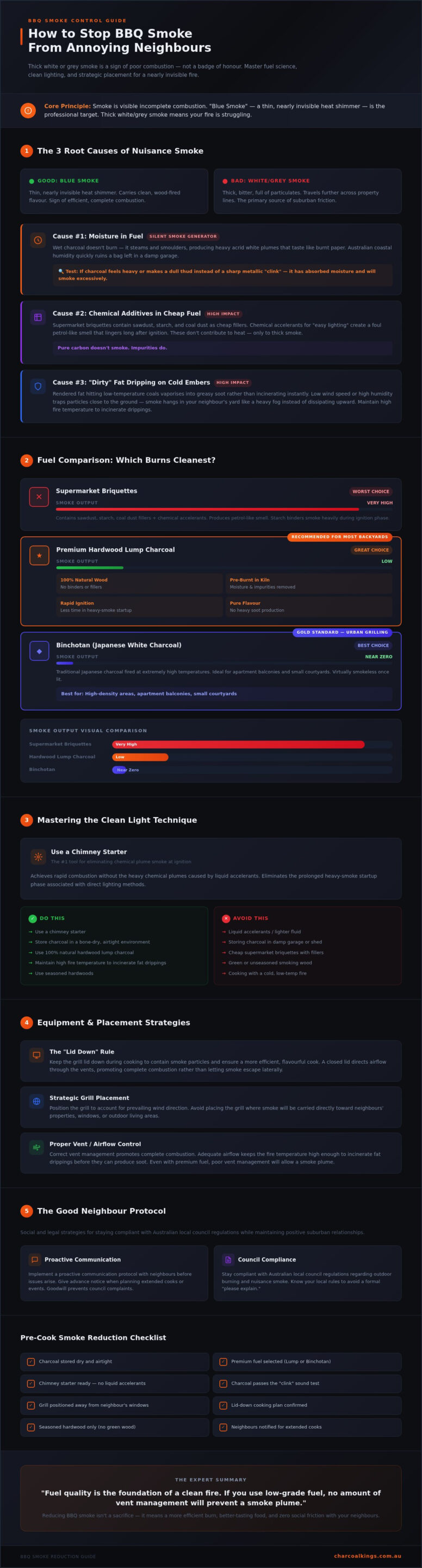
Smoke is the visible result of incomplete combustion. When fuel does not burn efficiently, it releases unburnt carbon particles and volatile organic compounds into the air. This is the fundamental issue when considering how to stop bbq smoke from annoying neighbours. Professional pitmasters aim for “Blue Smoke”, a thin, nearly invisible heat shimmer that carries clean, wood-fired flavour. In contrast, thick white or grey smoke indicates a struggling fire. This heavy smoke is bitter, contains more particulates, and travels further across property lines, making it the primary source of suburban friction. Understanding barbecue combustion and fuel types is the first step toward achieving a cleaner, more respectful burn.
Three main factors drive nuisance smoke: high moisture content in the fuel, chemical additives in low-grade products, and “dirty” fats dripping onto cold embers. When rendered fat hits a low-temperature coal, it vaporises into a greasy soot rather than incinerating instantly. Environmental conditions like low wind speed or high humidity exacerbate this by trapping these particles close to the ground. Instead of dissipating vertically, the smoke hangs in your neighbour’s yard like a heavy fog. Managing your fire temperature ensures these drippings are incinerated, reducing the volume of airborne irritants.
Moisture: The Silent Smoke Generator
Wet charcoal is a disaster for suburban grilling. When moisture-laden fuel hits heat, it doesn’t burn; it steams and smoulders. This produces a heavy, acrid white plume that tastes like burnt paper and irritates the eyes of anyone downwind. Australian coastal humidity can quickly ruin a bag of fuel left in a damp garage or shed. Always store your charcoal in a bone-dry, airtight environment. If your charcoal feels heavy or makes a dull thud instead of a sharp, metallic “clink” when handled, it has likely absorbed atmospheric moisture and will smoke excessively during ignition.
The Additive Problem in Cheap Fuels
Supermarket briquettes often contain more than just carbon. Manufacturers use sawdust, starch, and even coal dust as cheap fillers to bulk out the product. These materials don’t contribute to heat; they contribute to volume and, ultimately, thick smoke. Chemical accelerants used for “easy lighting” create a foul petrol-like smell that lingers long after the fire is lit. Switching to 100% natural Hardwood Lump Charcoal is the most effective strategy for how to stop bbq smoke from annoying neighbours while maintaining superior heat. Pure carbon doesn’t smoke. Impurities do. High-purity fuel burns hotter and cleaner, providing the performance required for responsible residential cooking.
Choosing the Right Fuel: The Pro’s Secret to Low-Smoke BBQ
Fuel quality is the foundation of a clean fire. If you use low-grade fuel, no amount of vent management will prevent a smoke plume. The secret to how to stop bbq smoke from annoying neighbours lies in the carbon density of your fuel. High-carbon fuels burn with minimal visible emissions because the volatile organic compounds have already been removed during the carbonisation process. In contrast, using “green” or unseasoned smoking wood is a guaranteed way to produce thick, bitter smoke that compromises wood smoke health and air quality impacts in your local area. Stick to seasoned hardwoods to ensure a clean, responsible burn.
Why Premium Hardwood Lump Wins
For most Aussie backyards, Hardwood Lump Charcoal is the superior choice for smoke reduction. Unlike briquettes, which often use starch binders that smoke heavily as they ignite, lump charcoal is 100% natural wood. This material has been “pre-burnt” in an oxygen-free kiln to remove impurities and moisture. This results in a fuel source that ignites rapidly. Faster ignition means you spend less time in the heavy-smoke startup phase. You reach a clean burn in minutes rather than waiting for chemical-laden binders to ash over. It provides a pure flavour profile without the heavy soot production associated with cheaper supermarket alternatives.
Binchotan: The Ultimate Urban Grilling Solution
If you are grilling in a high-density area like an apartment balcony or a small courtyard, Binchotan Charcoal is the gold standard. This traditional Japanese white charcoal is fired at extremely high temperatures, creating a fuel that is nearly 100% carbon. It is so pure that it produces almost zero visible smoke and no odour. It burns with an intense infrared heat that sears meat perfectly without the flare-ups that usually trigger neighbour complaints. While it requires more effort to light, its longevity and cleanliness are unmatched for close-quarters cooking. You can explore our selection of premium Binchotan and lump charcoal to find the right fit for your specific setup. Avoid the temptation of “easy-light” bags. These are laden with chemicals that create an immediate nuisance. High-purity carbon is the only way to keep your reputation and your air quality clean.
Mastering the Clean Light: Operational How-To
Lighting your fire is the most volatile part of the cook. This is when the highest volume of visible smoke is produced as the fuel reaches combustion temperature. To understand how to stop bbq smoke from annoying neighbours, you must master the ignition phase. A chimney starter is an essential tool for this. It concentrates heat and creates a vertical draft that accelerates the fire. By forcing air through the charcoal, you reach high temperatures faster. This effectively skips the long, smouldering period that creates heavy grey clouds and foul odours.
Never use liquid accelerants or lighter fluid. These petroleum-based products are a primary cause of suburban friction. They produce thick, chemical-heavy smoke plumes that smell like a refinery. This scent is a clear signal to everyone downwind that your grill is active. Natural ignition methods are more efficient and leave no chemical residue on your food. Once your charcoal is lit, wait for the “Ash Over” phase. This occurs when the coals are covered in a fine grey layer. At this point, the initial volatile gases have burnt off and the fire is burning clean.
Eliminating Startup Smoke
The first 15 minutes of your cook are the most critical for neighbour relations. You want to get through the startup smoke as quickly as possible. Use natural wood wool starters instead of white chemical cubes. Wood wool burns hotter and cleaner, providing a neutral scent. Position your chimney starter in an open area where it can catch a natural updraft. This ensures the fire moves rapidly through the fuel bed. If you see thick white smoke, your fire is struggling for oxygen or your fuel is damp. A healthy, clean-burning fire should produce a light heat shimmer within minutes.
Managing Airflow and Vents
Temperature control is a balancing act that directly impacts smoke output. If you choke the fire by closing the vents too much, you starve the embers of oxygen. This causes the charcoal to smoulder, creating “dirty” smoke that is bitter and soot-heavy. It’s always better to use a smaller amount of high-quality fuel with open vents than a large pile of fuel with the air supply restricted. You can master the art of barbecuing with charcoal by learning how to balance these airflow settings.
For low-and-slow sessions, use the “Snake Method” or “Minion Method.” These techniques involve lighting a small section of fuel that slowly ignites the rest of the pile. This prevents the entire fuel bed from off-gassing at once. By maintaining a steady, oxygen-rich environment, you ensure complete combustion and a cook that remains virtually invisible to the people next door.
Equipment and Placement Strategies
Hardware selection and physical positioning are the final layers of a smoke-free strategy. Even with the cleanest fuel, poor equipment management can lead to excessive emissions. The “Lid Down” rule is the most effective operational change you can make. Keeping the hood closed creates a pressurised environment that forces smoke particles back into the high-heat zone, where they are incinerated rather than released. This process, known as reburn, significantly reduces the volume of visible exhaust. Learning how to stop bbq smoke from annoying neighbours involves more than just fuel; your hardware and its location are equally vital.
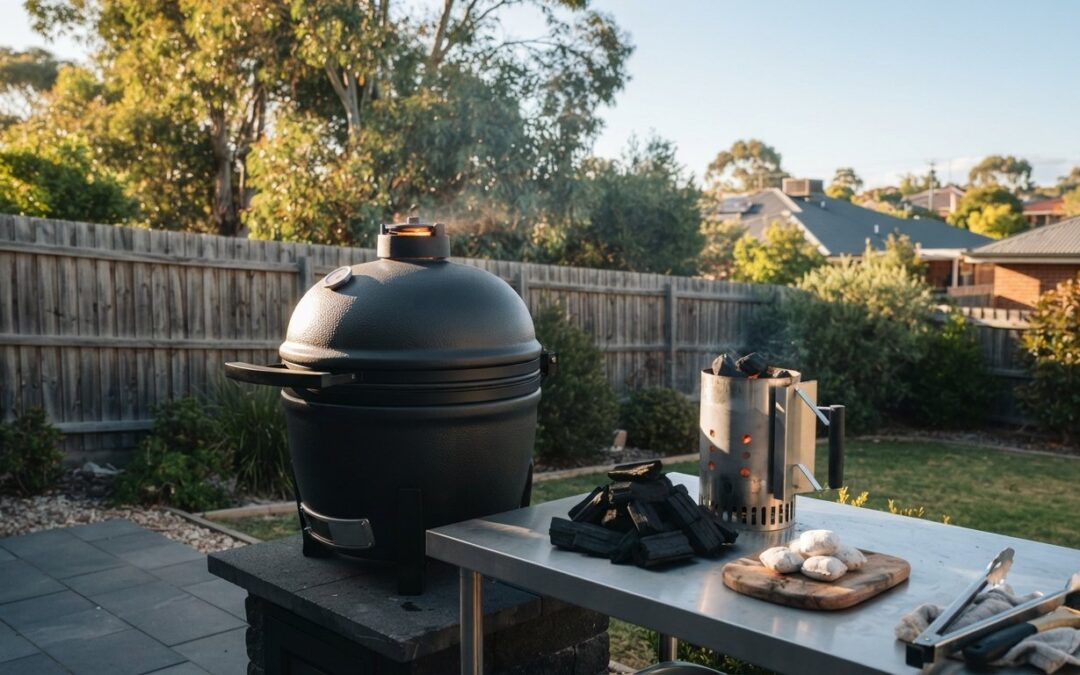
Maintenance is another critical factor. Old grease and carbonised food on your grates will smoke at relatively low temperatures. When fresh fat hits these dirty surfaces, it creates a “fat flare” that produces a heavy, acrid soot. Clean your grates with a high-quality wire brush after every session while the metal is still warm. This ensures that the only thing burning during your next cook is your premium charcoal. For those in high-density urban areas, ceramic Kamados are superior to open grills. Their heavy insulation allows for precise temperature control and requires less fuel, resulting in a much smaller smoke footprint.
Strategic BBQ Placement in the Yard
Before you light the chimney, identify the prevailing wind patterns in your yard. In many Australian coastal regions, afternoon sea breezes can carry smoke directly into a neighbour’s open window or outdoor entertaining area. To keep your own guests comfortable while you manage the breeze, consider the placement of your rengard.co.uk garden furniture to ensure seating remains clear of any smoke paths. Avoid “smoke traps” like narrow side-passages or areas directly under eaves. These architectural features prevent smoke from dissipating vertically, causing it to linger and concentrate at ground level. If you find yourself in a stagnant air pocket, use a portable high-velocity fan to redirect the plume upward or away from property boundaries. This simple mechanical intervention can prevent a minor cook from becoming a suburban nuisance.
Specific equipment upgrades can further mitigate smoke issues. Offset smokers are designed to direct smoke through a dedicated chamber, giving you more control over where the exhaust exits. Using drip pans is another pro move; by catching rendered fat before it hits the hot embers, you eliminate the primary cause of secondary smoke. If you are using a fire pit or an enclosed unit, consider using a Smartburn device. This Australian-made catalyst helps improve combustion efficiency and reduces emissions by up to 50% in many setups. To ensure you have the right tools for a clean burn, browse our range of professional BBQ accessories and grills designed for high-performance outdoor cooking. Investing in quality hardware ensures your fire stays hot and your reputation stays clean.
The Good Neighbour Protocol: Social and Legal Tips
Technical mastery of your fire is only half the battle. Maintaining suburban harmony requires a social strategy as refined as your vent management. Proactive communication is the most effective tool for how to stop bbq smoke from annoying neighbours. A simple “Text Before You Light” gives your neighbours a chance to close their windows or bring in their washing before you start. This small gesture transforms you from a nuisance into a considerate pitmaster. It builds a level of goodwill that makes the occasional puff of smoke a non-issue. Most people don’t object to the smell of a BBQ; they object to being caught off guard by a cloud of soot.
Navigating Local Council Rules
In Australia, local council regulations regarding “smoke nuisance” often fall under broader EPA guidelines. These rules generally state that smoke must not cause an unreasonable interference with another person’s comfort or repose. Because “offensive smoke” is a subjective term, the burden of proof often lies in the frequency and density of the emissions. If a complaint is ever made, having a record of your clean burn practices is invaluable. Document your use of high-purity fuels like Hardwood Lump Charcoal and your ignition method. Showing that you prioritise efficient combustion demonstrates a commitment to being a responsible resident and a master of your craft.
Building Community Through BBQ
The best way to mitigate complaints is to turn your neighbours into allies. A “Peace Offering” in the form of a sample of your latest cook can quickly dissolve tension. Use these moments to explain your low-smoke setup and why you choose premium fuels over supermarket alternatives. Timing is also critical. Avoid lighting up on days when the neighbourhood has fresh laundry on the line or during peak outdoor entertaining hours for others. It is also important to distinguish between “smell” and “smoke”. A clean fire will produce a pleasant wood-fired aroma, which is rarely the cause of legal complaints. It’s the visible, soot-heavy smoke from poor combustion that triggers council intervention.
Know when to call it. High-wind days or periods of extreme heat increase the risk of smoke travel and fire hazards. Always check for Total Fire Bans in your state before you light your charcoal. If the conditions aren’t right, save the cook for another day. A true expert knows that respect for the community is just as important as the quality of the sear. By combining the right fuel with the right social protocol, you ensure your BBQ remains a source of pleasure rather than a point of conflict.
Master the Invisible Fire and Command Your Backyard
Achieving a smoke-free cook is a matter of precision and fuel purity. You now understand that nuisance smoke is not an inevitable part of charcoal grilling; it is a sign of inefficient combustion. By prioritising high-carbon fuels and mastering techniques like the “Lid Down” rule, you produce professional results without the suburban fallout. Communication remains your best social tool, but technical excellence is what ensures you never have to apologise for your fire. Mastering how to stop bbq smoke from annoying neighbours is a combination of technical skill and the right materials.
Don’t settle for chemical-laden supermarket alternatives that compromise your reputation. Our Adelaide-based team provides expert support and premium supplies for serious pitmasters across Australia. Whether you need the intense, smoke-free infrared heat of high-carbon Binchotan or our signature pure natural hardwood with no chemical fillers, we have the inventory to elevate your game. Upgrade to Premium Hardwood Lump Charcoal for a Cleaner Burn and take full control of your outdoor kitchen. It’s time to enjoy authentic wood-fired flavour with total confidence.
Frequently Asked Questions
Is it illegal to have a smoky BBQ in Australia?
Having a BBQ is legal, but generating excessive smoke can lead to a “smoke nuisance” order from your local council. Australian EPA guidelines define offensive smoke as emissions that unreasonably interfere with a person’s comfort or repose. If you consistently produce thick, grey clouds, you risk fines or formal warnings. Using high-purity fuels and efficient combustion techniques is the best way to ensure you stay within residential regulations.
Which charcoal produces the least amount of smoke?
Binchotan charcoal is the world’s cleanest fuel and produces almost zero visible smoke. It is fired at temperatures exceeding 1000 degrees Celsius to remove all impurities. For a more versatile option, premium Hardwood Lump Charcoal is the best all-rounder. Unlike supermarket briquettes, it contains no chemical binders or fillers that create heavy smoke plumes during ignition. This is a primary strategy for how to stop bbq smoke from annoying neighbours.
How do I stop my BBQ from smelling like petrol when I light it?
Eliminate liquid accelerants and chemical-based firelighters from your routine. That petrol smell comes directly from petroleum-based additives in cheap lighting products. Switch to natural wood wool starters or a chimney starter. These methods rely on clean combustion and won’t leave a chemical residue on your food or a foul scent in the air. High-quality fuel deserves a clean start to maintain its natural hardwood aroma.
Can my neighbour complain about the smell of my BBQ even if there is no smoke?
Neighbours can complain about any perceived nuisance, but smell is subjective and difficult for councils to enforce without visible smoke. Most Australian regulations focus on the physical impact of smoke particles on air quality and property. However, a strong, persistent smell from low-grade fuels can still cause social friction. Using 100% natural charcoal ensures the aroma is pleasant and wood-fired rather than chemical and offensive.
Does soaking wood chips in water reduce smoke?
Soaking wood chips is a common mistake that actually increases nuisance smoke. Wet wood must evaporate the moisture before it can burn, creating thick, acrid white steam and smoke. This “dirty” smoke is bitter and highly irritating to neighbours. For the cleanest flavour and minimal emissions, always use well-seasoned, dry smoking woods. Dry wood ignites faster and transitions quickly to the desirable “Blue Smoke” phase.
What should I do if a neighbour complains while I am cooking?
Respond with transparency and a proactive solution. Invite the neighbour to see your setup and explain that you are using premium, low-smoke Hardwood Lump Charcoal. If the wind has shifted, offer to move the grill or adjust your vents to thin out the exhaust. Sharing a sample of the food often turns a potential complaint into a conversation. Most people are reasonable if they see you taking active steps to be a responsible pitmaster.
Are electric starters better than firelighters for reducing smoke?
Electric starters are superior for reducing startup smoke because they provide intense, direct heat without chemical combustion. Firelighters, especially white chemical cubes, produce a distinct plume of soot as they burn. An electric heat gun gets the charcoal to ignition temperature rapidly and cleanly. This significantly shortens the time your grill spends in the initial “heavy smoke” phase, keeping the air clear for everyone in the immediate vicinity.
How far should a BBQ be from a neighbour’s fence?
There is no universal Australian law for BBQ distance, but you should aim for at least 2 to 3 metres from any boundary fence. Positioning your grill too close to a fence or under an eave traps smoke and forces it sideways into neighbouring properties. Always check your specific local council’s fire safety and nuisance bylaws. Proper placement combined with a clean-burning fire is essential for maintaining good suburban standing.