
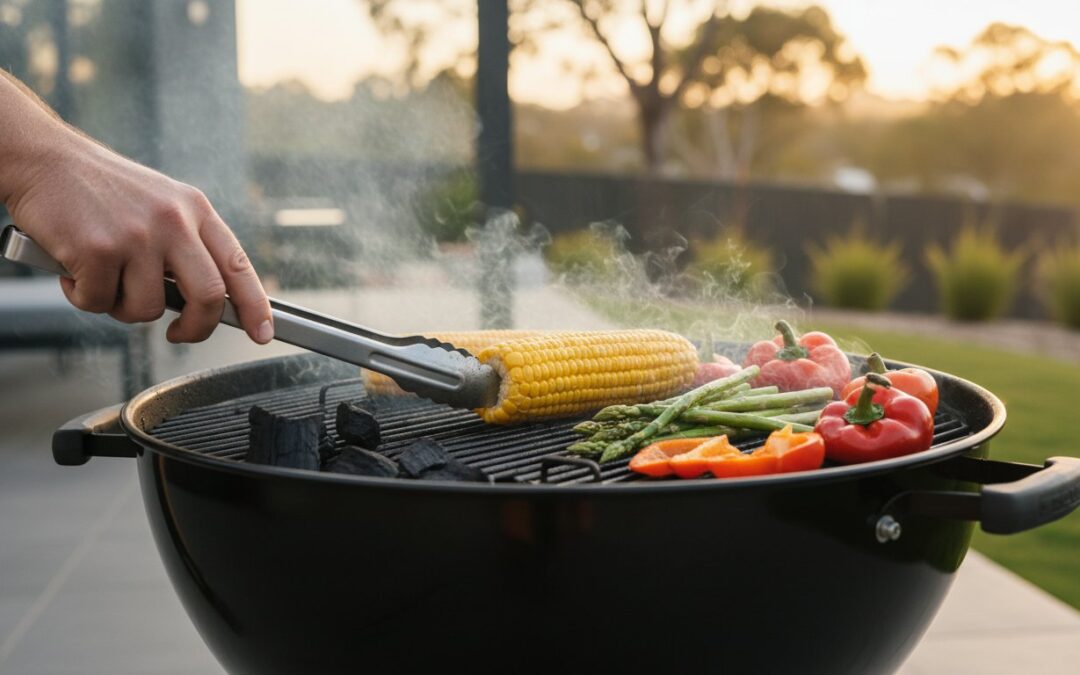
Most pitmasters treat greens as an afterthought, yet 58% of grill owners now regularly smoke vegetables to round out their menus. The common mistake is treating a delicate zucchini like a tough brisket. Learning how to smoke vegetables on a charcoal grill is about managing a clean, precise fire that respects the produce. If you don’t control the heat, you end up with mushy textures or an acrid, bitter flavor that ruins the meal.
It’s frustrating when your sides don’t match the quality of your premium proteins. We’ll show you how to achieve crispy yet tender results with a deep smoky infusion every time. You’ll learn to master temperature control, select the right hardwood for specific produce, and use your charcoal efficiently while your meat rests. From choosing between hickory and apple wood to timing your cook for peak flavor during the July grilling rush, this guide covers the essential techniques for professional results. Get ready to transform your charcoal grill into a precision tool for the ultimate smoky feast.
Key Takeaways
- Use premium natural lump charcoal for a cleaner burn that won’t overpower delicate vegetable sugars.
- Master the two-zone setup to learn how to smoke vegetables on a charcoal grill without losing their natural texture to high heat.
- Match your wood profile to your produce by using light fruitwoods for greens and heavy hardwoods like Ironbark for root vegetables.
- Apply a thin layer of oil or a quality rub to act as a binder, ensuring smoke particles adhere to the vegetable surface.
- Maintain steady airflow through your vents to keep temperatures between 110°C and 135°C for a perfect smoky infusion.
Why Smoked Vegetables are the Secret to a Better BBQ Experience
Vegetables are often treated as a simple side dish, but their porous structure makes them the ultimate flavour sponges. While meat requires hours to break down tough connective tissue, vegetables absorb aromatic compounds almost instantly. This is why mastering how to smoke vegetables on a charcoal grill is a game changer for any backyard chef. By using indirect heat and a wood-smoke infusion, you create a complex profile that boiling or steaming simply cannot match. High heat triggers the Maillard reaction, caramelizing natural sugars while the smoke adds a deep, earthy layer that defines authentic barbecue.
Smoking is also a healthier alternative to traditional frying or heavy oil roasting. You use significantly less fat, and the controlled temperatures help preserve more nutrients than high-heat boiling. Understanding the process of smoking is the first step toward moving beyond basic corn on the cob and into professional-grade produce preparation. To better understand how this looks in practice, watch this helpful demonstration:
The Flavour Profile: Smoke vs. Char
There’s a massive difference between a charred vegetable and a smoked one. Charring often results in an acrid, burnt taste that masks the vegetable’s identity. Clean smoke from premium natural hardwood charcoal provides a sweet, subtle infusion that enhances the produce. Charcoal offers an authentic, grounded base that gas grills or pellet smokers struggle to replicate. Since most vegetables consist of 80% to 95% water, this internal moisture acts as a conductor for the smoke. It helps the flavour penetrate the skin without drying out the interior, keeping your greens vibrant and juicy.
Smoked Veg as the Main Event
You don’t have to be a vegetarian to appreciate a smoked cauliflower steak or a whole-smoked pumpkin. These dishes can easily become the centerpiece of your meal when you focus on texture. The goal is always a tender-crisp result. You want enough bite to feel the structure of the vegetable, but enough tenderness to show it’s cooked through. To avoid bitterness, your goal is a “clean smoke” produced by efficient combustion, ensuring delicate produce absorbs sweet notes instead of grey, soot-heavy clouds. When you get the balance right, you’ll see why the best pitmasters treat their veg with the same respect as their brisket. Get sizzlin’ with a focus on precision.
Choosing the Right Fuel: Lump Charcoal vs. Briquettes for Veg
Fuel selection is the most critical decision you’ll make. It dictates the purity of the smoke and the stability of your cook. When you’re learning how to smoke vegetables on a charcoal grill, you must understand that produce is far more sensitive to fuel quality than a slab of beef. Vegetables are porous. They lack the protective fat layers found in meat, meaning they quickly absorb any chemical binders or fillers present in low-quality fuel. Using 100% natural fuel ensures your carrots and peppers taste like the garden, not a chemical factory.
Temperature stability is vital for delicate produce. Fluctuating heat leads to uneven cooking, leaving you with veg that’s burnt on the outside and raw in the middle. For a deeper look at different fuel types and their properties, check out our ultimate guide to charcoal. Selecting the right base fuel allows you to experiment with various wood pairings for vegetables without the fuel itself interfering with the flavour profile.
Hardwood Lump: The Cleaner Burn
Hardwood lump charcoal is the undisputed gold standard for vegetable smoking. It’s made from 100% natural timber, providing a clean, hot, and efficient burn. One major advantage is the lack of ash. Low-quality briquettes produce heavy ash that can blow around the grill, causing “ash-dusting” on your food. This ruins the texture and appearance of your greens. Lump charcoal also offers higher heat potential. This is perfect for “hot and fast” roasting where you want a quick smoke infusion and a crisp exterior. We recommend using Australian hardwood lump for a robust, authentic local flavour.
When to Use Briquettes or Binchotan
Briquettes have their place, specifically for long-duration cooks. If you’re smoking a whole pumpkin or dense root vegetables for over 60 minutes, the steady burn of a natural briquette provides excellent consistency. For high-end, delicate work like vegetable yakitori, Binchotan is the ultimate tool. This Japanese white charcoal burns at incredible temperatures with zero smoke or odour, allowing the wood chunks you add to provide 100% of the flavour. Read our Japanese Binchotan guide to master this specialty technique. Whether you’re using a standard kettle or a hibachi, choosing the right fuel is the first step to professional results. Explore our range of premium natural charcoal to elevate your next cook. Get Sizzlin’!
Wood Flavour Profiles: Pairing Smoking Woods with Vegetables
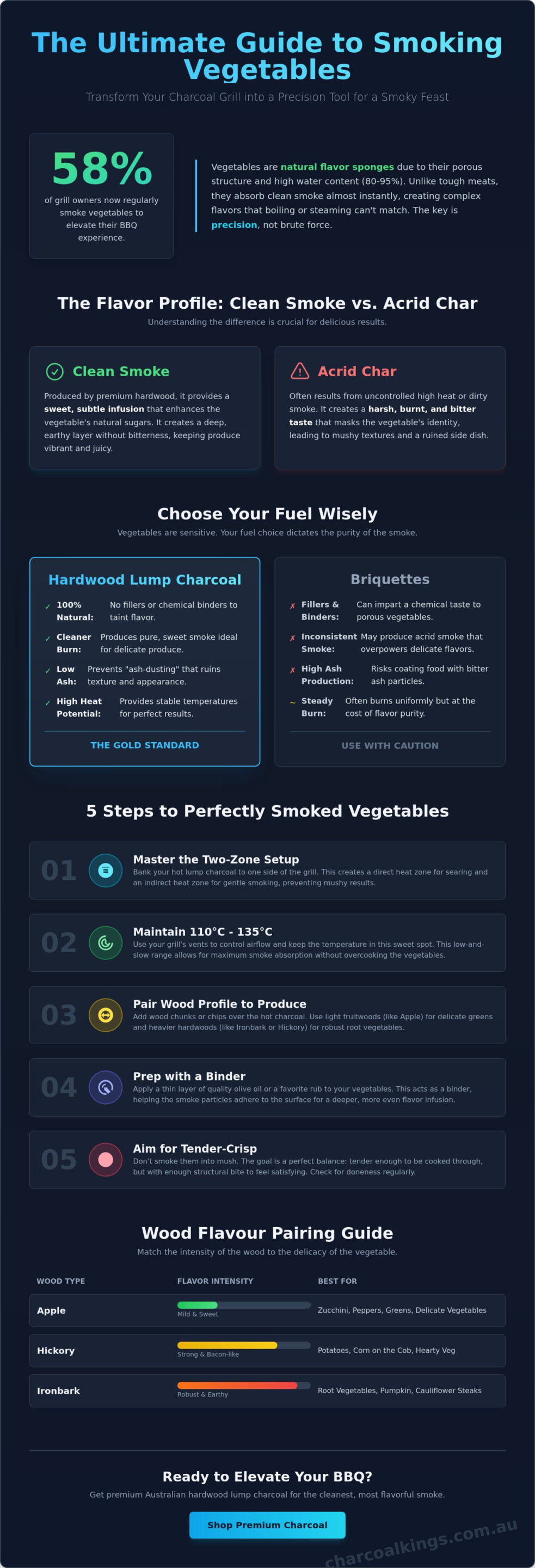
Choosing the right wood is as important as the vegetable itself. A common mistake is using a heavy wood like Mesquite for every cook. This results in an overpowering, acrid taste that hides the natural sweetness of the produce. The golden rule for how to smoke vegetables on a charcoal grill is to match the intensity of the wood to the density of the vegetable. Lighter, more porous vegetables require subtle fruitwoods. Dense root vegetables can stand up to robust hardwoods without becoming lost in the smoke profile.
Achieving “clean blue smoke” is the hallmark of a master. Because vegetables have high moisture content, they act as a magnet for soot. If your smoke is thick and grey, your vegetables will taste like an ashtray. You want a thin, barely visible blue haze. For charcoal grills, always use wood chunks rather than chips. Chunks sit on the hot coals and smoulder steadily for 30 to 45 minutes. Chips flare up and burn out too quickly, making it difficult to maintain a consistent flavour infusion throughout the cooking process.
Fruitwoods for Sweet and Delicate Veg
Fruitwoods provide a mild, sweet finish that complements the high sugar content in many vegetables. Applewood is a versatile choice, pairing perfectly with onions, bell peppers, and corn. It offers a subtle fruitiness that doesn’t mask the vegetable’s identity. Cherrywood is a secret weapon for presentation; it provides a deep mahogany colour to pale vegetables like cauliflower. For summer produce like zucchini or yellow squash, Peach or Apricot wood adds a delicate floral note that elevates the dish without the need for heavy seasoning.
Stronger Woods for Root Vegetables
Root vegetables and hearty greens require more aggressive wood profiles. Hickory and Mesquite are the heavyweights of the BBQ world. They work best with potatoes, beets, and carrots, where the smoke needs to penetrate a denser structure. For a traditional Australian BBQ experience, Ironbark is the premium choice for hearty greens like kale or cabbage. However, you must be careful with delicate stalks. Over-smoking with Hickory can make asparagus taste intensely bitter because the strong smoke reacts poorly with the vegetable’s natural sulfur compounds. Stick to shorter smoke times for these items to ensure a balanced result. Get Sizzlin’ with the right wood pairing and taste the difference.
Master the Technique: Setting Up Your Charcoal Grill
Precision is the difference between a master pitmaster and a backyard hobbyist. Setting up your equipment correctly is the first step in learning how to smoke vegetables on a charcoal grill without ending up with a bitter mess. You must use the “Two-Zone” setup. This involves banking your lit coals to one side of the grill, creating a direct heat zone for searing and an indirect zone for smoking. Place your produce on the cool side, away from the intense radiation of the embers. This allows the wood smoke to circulate around the vegetables, cooking them evenly through convection rather than direct contact with the fire.
Managing airflow is how you control your temperature. Your bottom vents act as the accelerator, while the top vent acts as the brake. To maintain a steady range of 110°C to 135°C, you need to find the “sweet spot” where your vents are partially closed but still providing enough oxygen for a clean burn. If you’re new to the process, mastering charcoal BBQ basics will help you understand how to fine-tune these adjustments. Always start with a clean grill grate. Residual grease or carbon buildup from previous meat cooks can transfer off-flavours to your delicate greens, ruining the purity of the smoke.
Indirect Smoking vs. Charcoal Roasting
While many competitors suggest smoking every vegetable at a flat 107°C, this often results in soggy textures. Dense root vegetables like beets or whole pumpkins benefit from the “low and slow” 110°C method, which allows the heat to penetrate the core without burning the exterior. However, for items like broccoli, cauliflower, or Brussels sprouts, the “Hot and Fast” charcoal roasting method at 175°C is superior. This higher temperature triggers rapid caramelization, giving you crispy edges and a tender interior in about 20 minutes. Using a charcoal basket helps concentrate the heat and smoke, ensuring your fuel burns efficiently throughout the cook.
Essential Tools for Smoked Veg
The right tools prevent frustration and food waste. A perforated grill basket is a mandatory investment for small-cut vegetables like mushrooms or diced peppers, as it prevents them from falling through the grates into the coals. For “smoked and braised” dishes, such as cabbage wedges in cider, use a heavy cast iron skillet. This holds heat exceptionally well and allows you to catch any escaping juices. Finally, don’t guess the doneness of thick produce. Use a reliable digital thermometer to check internal temperatures. A potato is perfectly cooked at 98°C, while denser tubers are ready at 93°C. To get the best results, start with premium charcoal and smoking woods from our professional range. Get Sizzlin’!
The Best Vegetables for Smoking: Prep and Timing Guide
Success depends on how you prepare your produce before it hits the grates. While 58% of grill owners regularly cook vegetables, many fail to use a binder. The “Oil and Rub” rule is mandatory. Fat is the vehicle that carries smoke flavour into the vegetable. Without a thin coating of high-smoke-point oil or melted butter, the smoke particles simply bounce off the surface. Apply your oil first, then follow with a quality rub or simple sea salt to create a surface that grips the aromatic compounds from your charcoal and wood.
Prep requirements vary by vegetable type. For carrots and parsnips, peeling is essential to remove the bitter outer skin and allow smoke penetration. Beetroot is the opposite. You should leave the skin on during the cook to let the vegetable steam internally, then rub the skins off once they are tender. Knowing how to smoke vegetables on a charcoal grill means mastering the “Fork Tender” test. If a fork slides into the densest part of the vegetable with zero resistance, it’s ready to serve. Don’t rely solely on timers; the moisture content of your produce dictates the final cook time.
Quick Smokes (20–45 Minutes)
Delicate vegetables require a “Hot and Fast” approach to prevent them from turning into mush. Asparagus, green beans, and sliced capsicum only need 20 to 30 minutes at 175°C. This allows them to pick up a light hickory infusion while maintaining a crisp snap. Broccoli and cauliflower florets take roughly 40 minutes; keep them in a perforated basket to ensure the edges caramelize. Mushrooms are the ultimate smoke-absorbers. Because they are 92% water, they act like sponges. Toss them in plenty of butter and garlic before smoking for 45 minutes to achieve a rich, umami-heavy result.
Hearty Smokes (1–2+ Hours)
Dense Australian produce requires the “Low and Slow” 110°C method. A whole butternut squash or pumpkin is a BBQ classic that takes about 2 hours to reach perfection. For corn on the cob, you have two choices. Smoking in the husk provides a subtle flavour and keeps the kernels moist, while smoking “naked” corn results in a more intense wood-fired profile and better char. Whole garlic bulbs are another staple. Cut the tops off, drizzle with oil, and smoke for 90 minutes. The cloves will soften into a paste, creating a blackened smoked garlic butter that elevates any steak or loaf of bread. Get Sizzlin’ with these local favourites and master your timing for the ultimate feast.
Take Command of Your Charcoal Grill
Mastering the fire isn’t just about the meat. You’ve now learned how to smoke vegetables on a charcoal grill using precision techniques like two-zone heating and matching specific hardwoods to produce density. These skills turn simple sides into high-performance showstoppers. Success starts with the fuel. Using chemical-free charcoal ensures the porous structure of your vegetables absorbs only clean, authentic smoke. Charcoal Kings provides 100% Natural and Chemical-Free Fuels that are trusted by Australian Pitmasters for their steady burn and superior quality. We offer fast nationwide shipping to get your setup ready for the next cook.
Grab your gear and start experimenting with different wood profiles today. Your backyard reputation depends on the quality of your fire. It’s time to show your guests what a professional-grade side dish tastes like. Get Sizzlin’ with our Premium Hardwood Lump Charcoal!
Frequently Asked Questions
What are the best vegetables to smoke on a charcoal grill?
Dense root vegetables and high-sugar produce offer the best results. Whole pumpkins, potatoes, corn on the cob, and bell peppers are top choices because their structure holds up well during long cooks. 58% of grill owners prefer these varieties because they absorb wood aromatics without losing their shape. For shorter sessions, mushrooms and asparagus are excellent because they act as sponges for clean smoke flavour.
Do I need to parboil vegetables before smoking them?
No, you don’t need to parboil vegetables before they hit the grill. Parboiling often introduces excess moisture that leads to a mushy, unappealing texture. Instead, rely on the indirect heat of your charcoal to soften the interior of the vegetable. This method ensures the produce cooks through while the exterior develops a complex, smoky crust that boiling simply cannot replicate.
How do I prevent smoked vegetables from getting mushy?
Control your temperature and avoid the “low and slow” method for delicate greens. Use a higher heat setting of 175°C for vegetables like broccoli and Brussels sprouts to trigger rapid caramelization. This “Hot and Fast” approach creates crispy edges while maintaining a tender-crisp interior. Removing the produce as soon as it passes the fork-tender test prevents the cellular structure from collapsing into a mushy state.
Can I smoke vegetables at the same time as meat?
Yes, smoking vegetables alongside meat is an efficient way to use your fuel. Place your vegetables on the indirect side of the grill during the final 45 to 60 minutes of your meat cook. This allows the produce to benefit from the established smoke environment while the meat rests. It’s a professional technique that ensures your entire meal is served hot and infused with the same hardwood profile.
What temperature should I smoke vegetables at on charcoal?
The ideal temperature depends on the density of the produce. For hearty root vegetables, maintain a steady 110°C to 135°C to allow deep penetration without burning. If you’re learning how to smoke vegetables on a charcoal grill for quicker items, aim for 175°C. Use your bottom vents to regulate oxygen flow to your natural lump charcoal, ensuring the heat stays within these specific ranges for consistent results.
Should I use wood chips or wood chunks for smoking vegetables?
Always choose wood chunks over chips when working with a charcoal base. Chunks provide a cleaner, more stable smoke that lasts for 30 to 45 minutes. Wood chips tend to flare up and burn out within 10 minutes, which can create the acrid, grey smoke that leads to bitterness. Chunks allow you to maintain a thin blue smoke line, which is essential for preserving the delicate sugars in your vegetables.
How do I stop my vegetables from falling through the grill grates?
Use a perforated grill basket or a heavy cast iron skillet to secure small-cut produce. These tools are designed to keep sliced peppers, mushrooms, and cherry tomatoes from dropping into the coals. A quality stainless steel basket features small holes that allow 360-degree smoke circulation while keeping your food safe. This setup is a game changer for maintaining high yields and preventing food waste during your cook.
Does smoked vegetable flavour get stronger the longer they stay on?
Smoke flavour does intensify over time, but there’s a clear point of diminishing returns. Most vegetables reach their peak smoke absorption within the first 60 minutes of the cook. Leaving them on the grill beyond this point can lead to an over-smoked, bitter profile that masks the natural taste of the produce. Focus on achieving the right texture first, as the smoke infusion happens rapidly. Get Sizzlin’!