
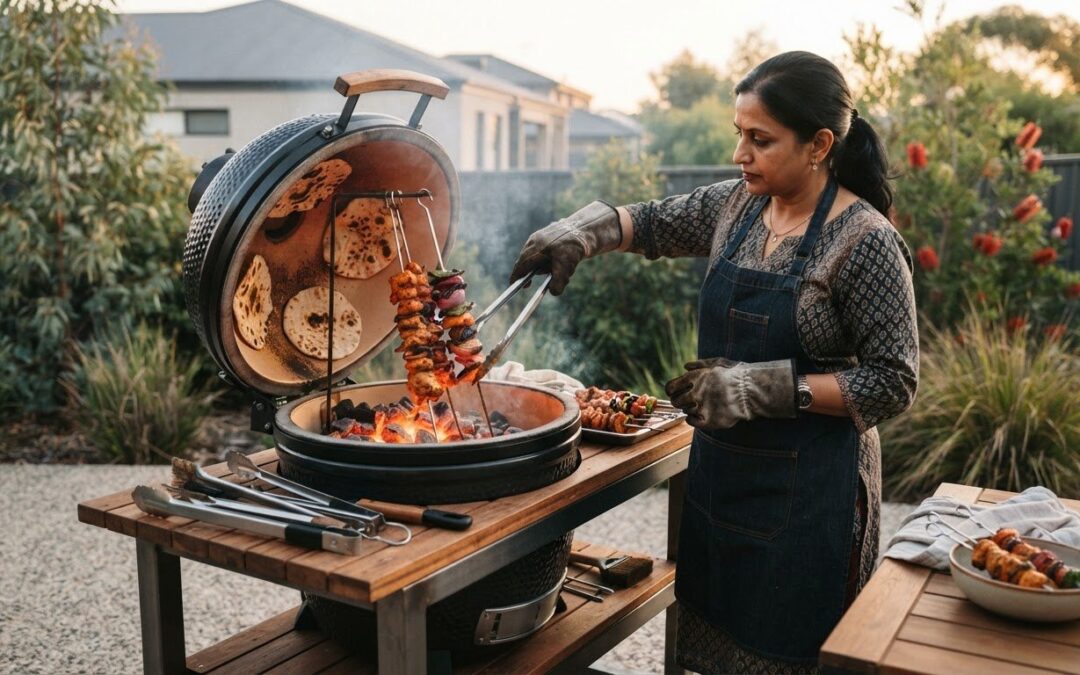
A kamado can cook tandoor-inspired food, but it won’t become a tandoor. If you’re learning how to set up a tandoor using a kamado, focus on arranging charcoal and food to create intense heat while keeping every support stable. A ceramic cooker has different airflow and cooking geometry from a traditional tandoor, so hot food suspended inside needs careful handling.
This guide covers the equipment to consider, how to prepare the charcoal bed, and how to manage the vents for high-heat cooking. You’ll also learn which tandoori-style foods suit a kamado, where the technique differs from a dedicated tandoor, and how to decide which cooker fits your plans. Follow the manufacturer’s guidance before using accessories or changing your kamado’s configuration. Use heat-resistant gloves and suitable tools when handling hot skewers.
Key Takeaways
- Learn how to set up a tandoor using a kamado by adapting its charcoal and cooking arrangement, not by treating it as a dedicated tandoor.
- Follow a practical setup sequence, and check your kamado’s manual before changing its standard configuration or adding accessories.
- Adjust airflow gradually and position food with care to keep hands, clothing, and tools clear of hot surfaces.
- Compare a kamado’s versatility with a dedicated tandoor’s focused design to decide which suits your cooking plans.
- Choose suitable charcoal for a clean, controlled burn, then use the BBQ charcoal guide to explore fuel basics.
Can a Kamado Work Like a Tandoor? Understand the Cooking Difference
A kamado can produce some tandoor-style results, but it can’t reproduce every part of cooking in a purpose-built tandoor. Tandoor-style cooking uses intense heat, with food positioned close to the heat source. In a traditional tandoor, cooks may place skewers vertically inside the oven or press flatbread against its hot inner wall. That positioning affects how food cooks and browns.
A kamado works differently. Its ceramic chamber retains heat, while its vents regulate airflow and temperature. Its shape, airflow path, and cooking surfaces differ from a tandoor’s, so the method needs adapting. Understanding this distinction is the first step in deciding how to set up a tandoor using a kamado. For background on traditional construction, operation, and foods, see Tandoor – Wikipedia.
This video shows one grill-based approach to tandoor-style naan:
How tandoor-style cooking differs from ordinary kamado grilling
In ordinary kamado grilling, food commonly sits on a grate above the charcoal. Tandoor-style cooking brings food closer to intense radiant heat, which can brown the surface quickly. The result depends on the distance from the heat, cooking time, and how evenly the food is exposed. A kamado’s enclosed chamber retains heat, but that alone doesn’t make it behave like a tandoor.
Vertical skewers change the cooking position from horizontal to upright, while flatbreads may be placed against a hot surface rather than laid on a grate. Both techniques need a secure, suitable arrangement. The cooking principle is general, but the safe way to position food and accessories depends on the kamado model. Follow its manufacturer’s instructions before changing the usual configuration or attempting a vertical setup.
A kamado adaptation uses a versatile ceramic cooker for tandoor-inspired food; a purpose-built tandoor is designed around traditional tandoor cooking. Expect an approximation, not an identical method or outcome.
Which foods suit a kamado tandoor adaptation?
Skewered foods and flatbreads are useful options to consider, but cooking results depend on the setup. Thin or evenly sized pieces may cook differently from thick cuts, while dense skewers can need more time than flatbreads. Marinade also affects browning: moisture and ingredients can change how quickly the outside cooks. Distance from the heat source matters too.
Start with a small batch and observe how your cooker and food respond before cooking more. Keep pieces a similar size where practical, and follow the recipe’s food-safety guidance to judge doneness instead of relying on surface colour alone. If food cooks unevenly or the setup feels unstable, stop and reassess rather than improvising around hot ceramic. These limits help set realistic expectations before you prepare the equipment.
How to Set Up a Kamado for Tandoor-Style Cooking
Start with your kamado’s instructions, not a one-size-fits-all conversion. Check the manual before changing the standard cooking configuration or fitting an accessory. A method that suits one cooker may not suit another. The goal is to create a secure position for food while keeping airflow clear and protecting the ceramic body.
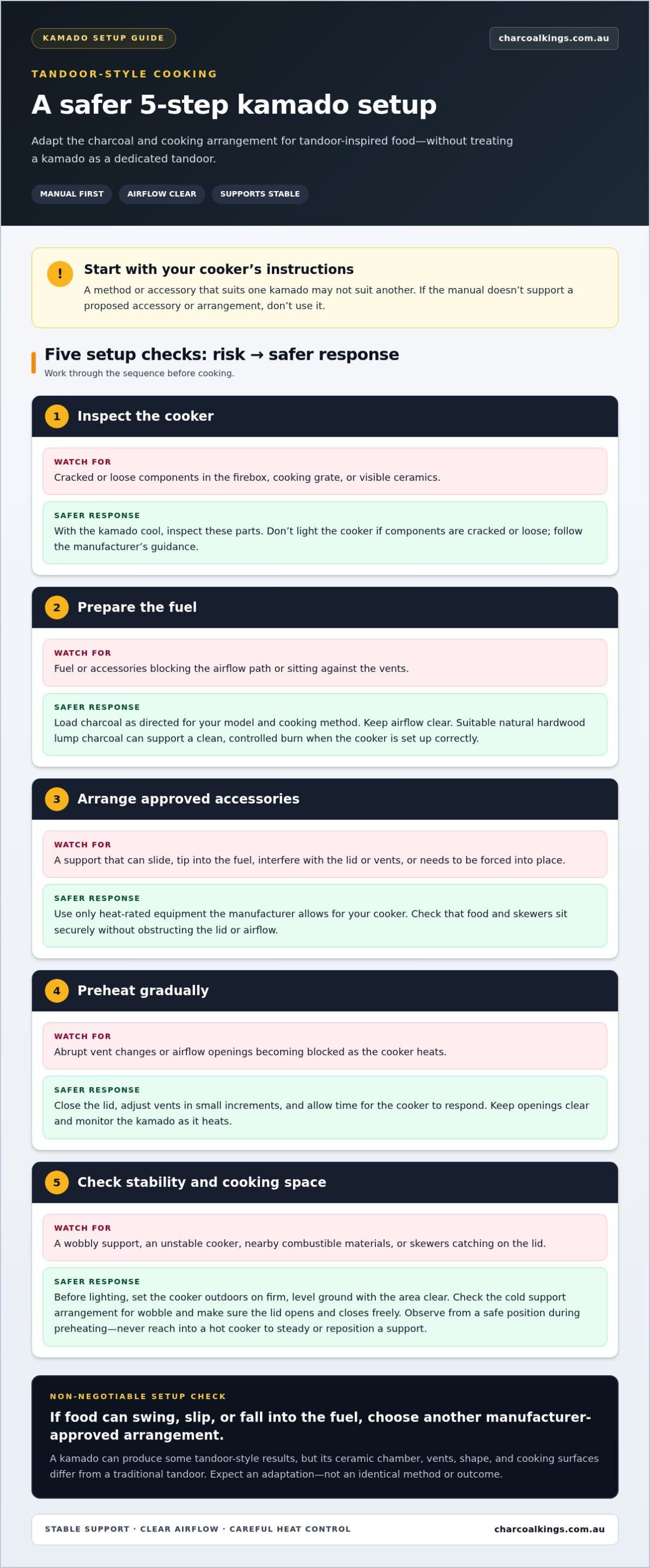
Use this sequence for a careful first setup. If the manual doesn’t support a proposed accessory or arrangement, don’t use it.
- Inspect the cooker. With the kamado cool, check the firebox, cooking grate, and visible ceramics for damage or movement. Don’t light a cooker with cracked or loose components. Follow the manufacturer’s guidance to address any issues.
- Prepare the fuel. Load charcoal as directed for your model and cooking method. Keep the airflow path clear, and don’t pile fuel or accessories against the vents. Suitable natural hardwood lump charcoal can support a clean, controlled burn when the cooker is set up correctly.
- Arrange approved accessories. Fit only heat-rated equipment that the manufacturer allows for your cooker and that sits securely. Position skewers or food supports so they can’t slide, tip into the fuel, or interfere with the lid and vents. Never force an accessory into place.
- Preheat gradually. Close the lid and adjust the vents in small increments, allowing time for the cooker to respond. Keep the airflow openings clear and monitor the kamado as it heats. Avoid abrupt changes when adjusting the temperature.
- Check stability. Before lighting, confirm the cooker is on a stable outdoor surface and the cold support arrangement doesn’t wobble. Observe the setup from a safe position during preheating. Don’t reach into a hot cooker to steady or reposition a support.
Check the kamado, accessories, and cooking space
Set the cooker outdoors on firm, level ground, with the surrounding area clear of combustible materials. Follow the manufacturer’s directions for placement and operation. Check that the lid opens and closes without catching on skewers or supports, and that tools and clothing can stay clear of hot ceramics. If the arrangement shifts while cold, don’t use it.
Arrange charcoal and supports without obstructing airflow
Vents regulate the fire, so keep their openings unobstructed and arrange fuel as directed in the manual. Supports must hold food securely without resting on fragile ceramic edges or balancing on loose parts. Never improvise an unstable support for hot skewers. If food can swing, slip, or fall into the fuel, choose another manufacturer-approved arrangement.
For fuel selection, hardwood lump charcoal is one option for kamado cooking. Once the cooker is hot, leave the setup in place unless the manual gives a safe way to adjust it. A stable arrangement and clear airflow matter more than forcing a particular tandoor-style position.
Control Heat, Position Skewers, and Cook Tandoor-Style Food
Once your kamado is set up, steady heat control matters more than chasing a particular temperature by feel. Airflow feeds combustion: opening the vents allows more air through, while closing them restricts it. Make small adjustments and give the cooker time to respond. Sudden changes can push the heat away from your target and make a close, fast cook harder to manage.
Use a reliable thermometer and follow the operating limits in your kamado’s manual. Readings help you track changes, but they don’t replace watching the food. High-heat cooking can move quickly, so stay with the cooker, keep your tools ready, and don’t leave it unattended while food is close to the heat source.
Manage airflow and heat steadily
Begin with the vent positions recommended by the manufacturer for your cooking configuration. If the kamado is cooler than you want, adjust airflow gradually rather than opening the vents fully. If it’s running hotter, reduce airflow in small steps. Check the thermometer after each change and watch for the heat to stabilise. The response depends on the cooker, fuel bed, and conditions, so rely on the manual and live readings rather than guessing.
Good charcoal habits support consistent heat. Keep the airflow path clear and avoid repeatedly disturbing the fuel while cooking. For a broader foundation in controlling a charcoal fire, mastering charcoal barbecuing explains how fuel, airflow, and heat management work together.
Cook skewers and flatbreads with control
Before cooking, confirm that each skewer is held securely by an approved support and that food can’t slide, swing into the charcoal, or rest against an unstable surface. Keep your hands and forearms out of the chamber as much as possible. Use long, heat-rated tools and protective gloves when handling hot equipment. Keep loose clothing and tool handles away from the open cooker and hot ceramics.
For flatbreads, use a cooking surface approved for your kamado. Don’t reach into the hot chamber to press dough onto a wall or attach it by hand. Place and retrieve bread with suitable tools, working carefully and keeping your face clear of rising heat. If the surface or placement method isn’t approved for your model, choose another suitable arrangement.
Turn, inspect, and remove food with heat-rated tools. Check it often enough to prevent scorching without repeatedly leaving the lid open. Food thickness, shape, and position affect cooking time, so follow recipe-specific instructions for doneness and food safety. Don’t rely on browning alone to decide that skewered food is ready. When learning how to set up a tandoor using a kamado, test a small batch first, note how your cooker responds, and use what you observe to guide the next cook.
Kamado or Dedicated Tandoor: Choose the Right Cooking Method
A kamado is a versatile cooker that can handle occasional tandoor-inspired cooking. A dedicated tandoor is built around its own chamber shape and food placement. Neither is the right choice for every cook. Consider how often you plan to cook this way, what you want to make, and whether you value versatility or equipment designed specifically for tandoor food.
| Factor | Kamado adaptation | Dedicated tandoor |
|---|---|---|
| Versatility | Supports multiple cooking styles beyond tandoor-inspired food. | Designed primarily around tandoor cooking. |
| Cooking position | Food placement depends on the kamado’s shape and approved accessories. | Chamber shape is designed for tandoor-style placement, such as vertical skewers or flatbreads against the inner surface. |
| Setup complexity | Requires checking accessory compatibility, support stability, and airflow for your model. | Uses a chamber designed for its intended cooking method. |
| Intended use | Useful for owners who want to experiment alongside other BBQ methods. | Suited to cooks who want equipment focused on tandoor-style food. |
Keep the main limitation in mind: a kamado adaptation can’t guarantee the same cooking geometry or results as a dedicated tandoor. Chamber shape, distance from the heat, and food supports all affect the cook. A kamado can approximate some aspects of the method, but it doesn’t become a traditional tandoor.
When adapting a kamado makes practical sense
If you already own a compatible kamado and plan to cook tandoor-inspired food occasionally, an adaptation can be a practical way to experiment while keeping the cooker available for other uses. Before committing to a full cook, check that approved equipment fits securely and food sits in a stable position. The trade-off is flexibility: you’re adapting a multi-purpose cooker rather than using a dedicated cooking chamber.
Think about the food you’ll actually cook. A setup that supports a small batch of skewered food may not suit a different shape or quantity. If safe positioning depends on improvised supports, the adaptation isn’t a sensible option. Check your kamado’s manual before changing its standard configuration.
When a dedicated tandoor is the better fit
If tandoor-style cooking is a regular part of your plans, compare purpose-built equipment with the adapted approach. A dedicated chamber is designed around the intended placement of skewers and flatbreads. That geometry shapes the cooking experience, while the kamado’s strength is its ability to handle different kinds of BBQ cooking. The choice comes down to how often you’ll use it and what you want to cook, not a blanket claim that one cooker is always better.
For a wider look at cooker styles and considerations for Australian buyers, the Australian BBQ buying guide can help put your priorities in context. If a kamado’s flexibility suits your plans, explore BBQ grills and charcoal for the essentials behind charcoal cooking.
Choose Suitable Charcoal and Make Your First Kamado Tandoor Cook
Fuel is part of the setup, not an afterthought. Natural hardwood lump charcoal is a suitable option for kamado cooking, where a clear airflow path and steady fire help the cooker respond to vent adjustments. Use clean charcoal suited to your kamado and follow the manufacturer’s directions for fuel type and loading. Rather than guessing how much fuel a tandoor-style cook needs, build experience with your cooker and record what works.
Charcoal condition and consistency can affect how the fire behaves. Keep fuel dry and free from contaminants, and don’t use material that isn’t intended for cooking. For a fuller explanation of fuel types and selection, the complete BBQ charcoal guide covers the basics.
Select fuel and prepare for a controlled test cook
Choose a familiar recipe and begin with a small portion. A modest test makes it easier to observe how food responds to its position and how your kamado holds heat. Follow the cooker manual for lighting and airflow, and use recipe-specific guidance for food safety. Don’t transfer temperatures or cooking times from another cooker without checking that they suit your recipe and setup.
As you work through how to set up a tandoor using a kamado, keep a simple record of the fuel amount, vent positions, food placement, and result. These notes give you a baseline for the next cook instead of relying on memory.
First-cook checklist:
- Inspect: Confirm the cooker and approved accessories are in good condition and seated securely.
- Light: Prepare the charcoal as directed in the kamado manual.
- Stabilise heat: Adjust airflow gradually and monitor the cooker with a reliable thermometer.
- Test a small portion: Cook a familiar recipe, using its food-safety guidance to assess doneness.
- Clean safely: Let the kamado cool as directed before handling or cleaning any components.
A controlled first cook also helps you decide whether the adaptation suits your routine. If it does, explore charcoal and BBQ essentials for fuel and equipment that support charcoal cooking.
Clean down and improve the next cook
Wait until the cooker has cooled according to the manufacturer’s guidance before removing or cleaning components. Use methods suited to the kamado’s materials and accessories rather than assuming a technique that works on another surface will work here. Remove food residue carefully, then note what you’d change next time. Fuel amount, vent settings, support stability, and food position are useful details to track. Make small, deliberate adjustments to help future cooks become more consistent.
Make Your Next Cook Your Best Yet
Let your first cook guide the next one. Note what you’d change, then refine the setup one adjustment at a time. This helps you decide whether a kamado adaptation fits your cooking habits or whether you want equipment dedicated to tandoor-style food. The aim isn’t to force a perfect replica. It’s to find a safe, repeatable method that suits your cooker and the food you enjoy making.
Suitable fuel gives you a solid foundation for experimenting. Charcoal Kings is an Australian-based supplier serving retail, wholesale, and food-service customers, with premium natural hardwood lump charcoal among its core offerings. Choose fuel suited to your cooker and learn how it responds to airflow and heat.
Ready for your next charcoal cook? Explore charcoal and BBQ essentials to find fuel, grills, smokers, and accessories for your setup. Start small, cook with care, and enjoy building your confidence.
Frequently Asked Questions
Can you use a kamado as a tandoor?
Yes, a kamado can cook some tandoor-inspired food, especially small batches that can be positioned close to strong heat. But it remains a kamado, with a different chamber shape and cooking arrangement from a purpose-built tandoor. Treat the method as an adaptation, not a conversion. Use only accessories supported by your cooker’s instructions, and choose recipes suited to the position you can create safely.
How do you set up a kamado for tandoor-style cooking?
To understand how to set up a tandoor using a kamado, start with the model’s manual, then inspect the cooker and accessories while everything is cool. Load cooking charcoal as directed, arrange only approved supports, and confirm food can’t shift or fall before lighting. Once lit, let the cooker settle and monitor it with a thermometer. If the support arrangement isn’t secure when cold, don’t try to stabilise it over a fire.
Can you stick naan directly to the inside of a kamado?
Don’t press naan dough directly onto a kamado’s inner ceramic wall unless the manufacturer explicitly allows that method. A surface designed for a traditional tandoor may not suit your cooker, and attaching dough by hand means reaching close to hot surfaces. Use a suitable, approved cooking surface instead, and place or remove the bread with appropriate tools. Follow your recipe for doneness, since browning alone doesn’t confirm the centre is cooked.
What charcoal should you use in a kamado for tandoor-style cooking?
Use cooking-grade natural hardwood lump charcoal that’s suitable for your kamado. Dry, clean fuel helps you manage the fire without introducing unwanted smoke from damp or unsuitable material. Check the manufacturer’s guidance on fuel type and loading, since each cooker’s airflow design differs. Avoid using charcoal intended for non-cooking purposes, and don’t assume fuel that works in another BBQ will behave the same way in your kamado.
Is a kamado as good as a dedicated tandoor?
Neither is automatically better; each suits a different cooking pattern. A kamado is a practical option if tandoor-inspired food is an occasional addition to grilling or smoking. A dedicated tandoor is purpose-built for that style of cooking and may suit someone who expects to use its chamber and food positions often. If matching traditional cooking geometry is a priority, a kamado adaptation may not deliver the same experience.
Is it safe to cook with vertical skewers in a kamado?
It can be safe only if your specific kamado’s instructions support the arrangement and the skewers sit securely in compatible equipment. Don’t balance them on the rim, wedge them between parts, or rely on a homemade support. Check that food can’t slide into the charcoal and that the lid and vents remain unobstructed. Keep clear of the hot opening, use heat-resistant gloves and long tools, and stay beside the cooker during the cook.