
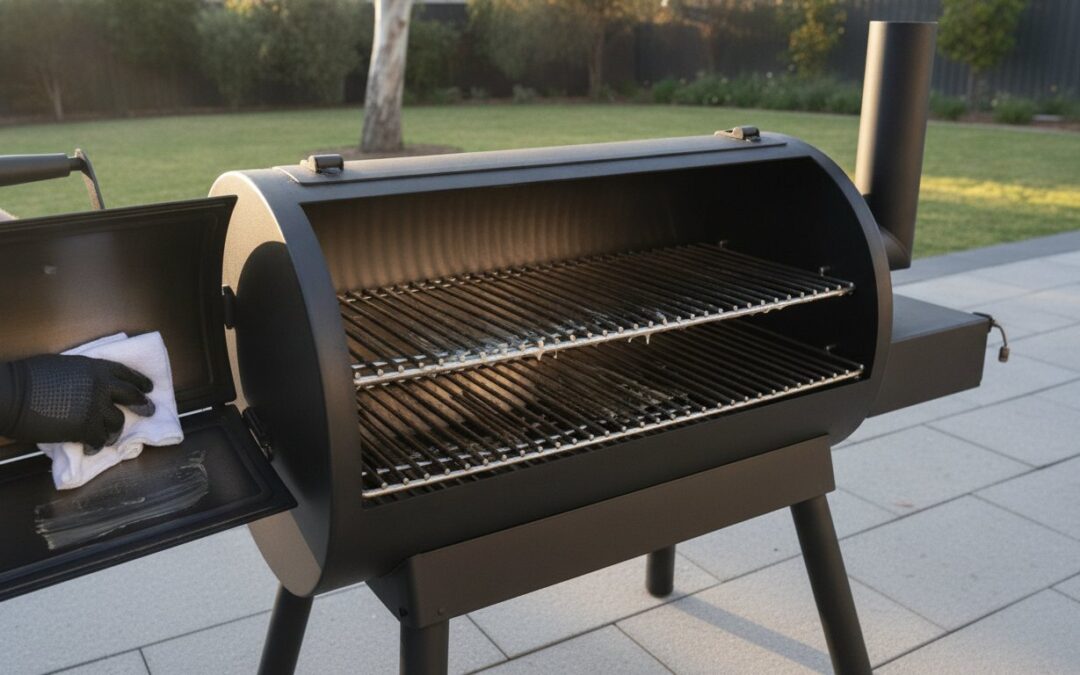
Your new offset smoker is currently a liability of factory chemicals and raw steel, not a cooking tool. It’s understandable if you’re hesitant to fire it up without a clear plan. You’ve invested in a premium piece of hardware, and the fear of causing early corrosion or using the wrong oil is a common hurdle for many pitmasters. Learning how to season an offset smoker is the critical first step to ensuring your rig performs at its peak for decades.
We agree that a high-quality smoker is a prized possession that deserves professional care from the very first light. This guide will show you how to strip away industrial residues and achieve a perfectly sealed, non-stick cooking chamber. You’ll learn which fats provide the most durable polymerization and why using additive-free hardwood lump charcoal is essential for a clean, effective burn. We’ll walk through the entire process from the initial oil coat to the final temperature spike, ensuring your smoker remains rust-free and ready for world-class BBQ.
Key Takeaways
- Learn why a high-heat burn-off is essential to strip away factory oils and industrial solvents before your first cook.
- Master the step-by-step process of how to season an offset smoker to build a permanent, non-stick surface that protects your steel.
- Discover why professional pitmasters are moving toward the Tallow Revolution for a superior, flavour-enhancing finish compared to standard vegetable oils.
- Identify the early warning signs of flaking and corrosion so you can re-season hot spots before rust takes hold.
- Implement specific storage strategies for the Australian climate, including external seasoning techniques to block humidity and prevent blooming rust.
What is Smoker Seasoning and Why is it Essential?
Seasoning is the foundation of every successful cook. It’s the process of baking high-quality fats into the raw steel of your rig to create a permanent, carbonized barrier. This layer acts as a shield against the elements and a non-stick surface for your food. Without it, your smoker is just a large piece of vulnerable iron. Understanding how to season an offset smoker correctly ensures that your equipment performs exactly as intended from the very first fire.
A seasoned interior does more than just stop rust. It actively improves the thermodynamics of the cooking chamber. Raw steel is porous and slightly abrasive on a microscopic level. The carbonized layer fills these pores, creating a smoother surface that facilitates superior air-flow efficiency. This slick interior also helps with heat retention, allowing the steel to radiate warmth more consistently during a long Smoking (cooking) session. High-carbon steel is prone to rapid oxidation; a proper season stops this process before it starts.
The Science of Polymerization
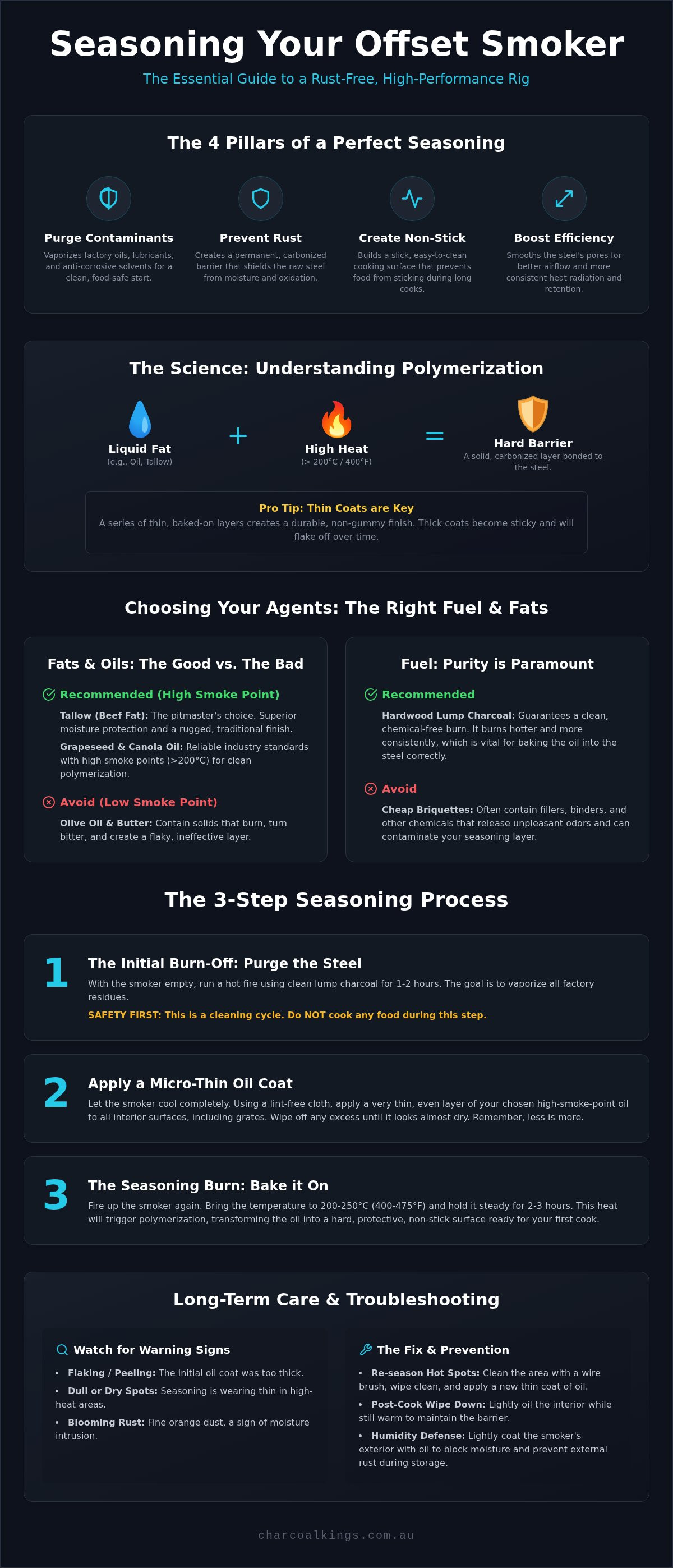
Polymerization is the chemical reaction where liquid fats transform into a hard, plastic-like solid. When you apply heat to a thin layer of oil, the molecules cross-link and bond to the steel. Success depends on reaching the smoke point of your chosen fat. Don’t apply a thick coating. Thick layers become sticky, gummy, and eventually flake off. A series of thin, hard coats is the professional standard for a durable finish. This creates a surface that is both hydrophobic and heat-resistant, ensuring your smoker remains a high-performance tool for years.
Removing Factory Residues
Manufacturing an offset smoker involves heavy machinery, industrial lubricants, and anti-corrosive solvents. These chemicals remain on the steel when the unit arrives at your door. You must perform a “burn-off” to vaporize these contaminants. Skipping this step results in food with a distinct metallic, chemical taste that can ruin expensive cuts of meat. Identifying common contaminants like machine oils or paint overspray is the first step in preparing your rig for use.
Safety is paramount during the initial fire. Never cook food during the seasoning phase. The goal is to purge the system of impurities, not ingest them. Use pure, additive-free hardwood lump charcoal to ensure the first heat cycle is clean and powerful. This initial burn-off should be hot and sustained to ensure every inch of the internal steel is reached. Once the factory oils are gone, you can begin building the protective layer that defines a well-maintained, professional smoker.
Choosing Your Seasoning Agents: Oils, Fats, and High-Quality Fuel
Selecting the right materials is just as important as the technique itself. Using low-quality fuel or the wrong oil risks a sticky mess or toxic fumes. Generic guides often suggest “any cooking oil”, but that lack of precision leads to poor results. When you’re learning how to season an offset smoker, you must prioritize high smoke points and pure, additive-free fuels. This is about building a foundation that lasts for the life of the smoker.
Best Oils and Fats for Seasoning
Canola and grapeseed oil are the reliable industry standards for a reason. They have high smoke points, usually exceeding 200°C, which allows for proper polymerization without the oil breaking down into a rancid residue. However, the current trend among elite pitmasters is the “Tallow Revolution”. Rendered beef fat, or tallow, provides superior moisture protection and a traditional, organic aroma. It bonds exceptionally well to high-carbon steel, creating a rugged, durable finish that vegetable oils struggle to match.
Avoid olive oil and butter. These have low smoke points and contain solids that burn, turn bitter, and eventually flake away. Following USDA food safety guidelines for smoking ensures you aren’t introducing unstable fats that could spoil or contaminate your cooking environment. Stick to pure, high-heat fats to build a clean, protective barrier.
Selecting the Right Fuel for the Burn
Your choice of fuel determines the purity of the seasoning layer. Cheap briquettes often contain fillers and chemical binders that release unpleasant odours during a high-heat burn. For the initial seasoning, you need a clean, consistent heat source. Using premium hardwood lump charcoal is the only way to guarantee a chemical-free environment. It burns hotter and cleaner than standard alternatives; this is vital for baking the oil into the steel at the correct temperature.
Introducing smoking woods like ironbark or oak during the process helps establish the first layer of smoke flavour. Even though there is no meat in the chamber, managing a “clean fire” is critical. You want thin, blue smoke, not thick, white, creosote-heavy clouds. This teaches you the nuances of your specific rig while creating a professional-grade finish. Mastering how to season an offset smoker starts with the ingredients in your firebox and the oil on your cloth.
A high-performance smoker requires high-performance fuel. If you want to start your pitmaster journey with the right foundation, check out our range of premium charcoal and BBQ accessories to get the job done right.
The Step-by-Step Guide to Seasoning Your Offset Smoker
Precision is the difference between a rig that lasts decades and one that rots in a few seasons. You’ve selected your high-heat oil and premium fuel; now you must apply them with technical accuracy. Learning how to season an offset smoker requires patience and a systematic approach. Start by wiping down every internal surface with a damp, lint-free cloth. This removes loose dust and metallic shavings left over from the manufacturing process. Don’t use harsh detergents or soaps. You want a clean, raw surface for the oil to bond with during the heat cycle.
Preparation and Application
Once the steel is dry, apply your seasoning agent. A spray bottle works well for large areas, but a lint-free rag ensures you reach every corner and weld. Apply a thin, uniform coating to all internal steel surfaces. This includes the cooking grates, the interior of the firebox, and the inside of the smoke stack. Avoid heavy pooling or dripping. A light, consistent sheen is the goal. Many professionals look to to see the exact level of coverage required. Before lighting the fire, perform a safety check. Clear any flammable debris from the air intakes and ensure the smoker is on a level, stable surface.
Managing the Seasoning Burn
Lighting the fire is the most critical stage. You aren’t aiming for a roaring inferno. Instead, bring the temperature up gradually to prevent warping the new steel. Target a range between 120°C and 150°C (250°F to 300°F). Maintaining this steady heat for 2 to 4 hours allows the oil to reach its smoke point and begin the polymerization process. If the temperature spikes too high, you’ll burn the oil off rather than baking it in. Keep the air vents open to ensure a clean, oxygen-rich fire that produces thin, blue smoke.
The “Bake and Cool” cycle is the secret to a professional finish. Multiple thin layers are always superior to one thick coating. After the first 4-hour burn, allow the smoker to cool down naturally. This cooling phase “sets” the seasoned layer and allows the metal to contract. If you’re serious about longevity, repeat the oil application and burn cycle a second time. This builds a deeper, more resilient carbonized barrier that will withstand the intense heat of future cooks. Don’t rush. A well-seasoned rig is the mark of a pitmaster who respects their craft and their equipment. Mastering how to season an offset smoker is an investment in every meal you’ll ever cook on it.
Troubleshooting and Re-Seasoning: Keeping the Rust at Bay
Seasoning isn’t a one-time event. It’s a continuous cycle of maintenance that evolves with every cook. Even after mastering how to season an offset smoker, the intense heat and humidity will eventually wear down the protective barrier. While some pitmasters debate the merits of beef tallow versus vegetable oils, the signs of a failing season remain the same regardless of your chosen fat. Tallow users often find the seasoning lasts through more high-heat cycles, whereas vegetable oils may require more frequent spot treatments. You must learn to identify the difference between a healthy patina and dangerous grime. A patina is a hard, glass-like surface that feels slick to the touch. Grime is a soft, carbonized buildup of old grease and ash that traps moisture against the steel. If you feel a rough, flaky texture, it’s time to use a BBQ scraper to clear the debris and prepare for a fresh coat of fat.
The firebox is the most vulnerable area of your rig. Because it houses the direct heat of your hardwood lump charcoal, the seasoning here burns off much faster than in the cooking chamber. These hot spots are the first places rust will strike. Check the firebox after every long smoke. If the steel looks grey or dry, apply a light coat of beef tallow or canola oil while the metal is still warm. This proactive approach prevents the deep-seated corrosion that ruins expensive offset smokers. If years of neglect have left you with a smoker that is beyond repair, you can discover Servant King for professional assistance with the removal of heavy, rusted backyard equipment.
Dealing with Sticky Residue
A common mistake is applying too much oil during the seasoning process. This results in gumming, where the oil remains tacky and brown rather than turning into a hard black shield. This happens when there isn’t enough heat to finish the polymerization process. You don’t need to strip the smoker to fix this. Simply increase your airflow and run a hotter fire for 60 minutes. The additional heat will bake that sticky residue into a solid finish. When you’re refining your technique for how to season an offset smoker, remember that a thin, almost invisible layer of oil is always superior to a heavy coating.
Spot Treating Rust
Rust is the enemy of all high-carbon steel. If you spot orange blooming on the exterior or interior, act immediately. Use a wire brush or steel wool to scrub the area down to bare metal. Once the rust is gone, wipe the spot clean and apply your seasoning agent. You must seal the repair with heat to bond the oil to the steel. The firebox exterior often requires more attention than the interior due to the extreme temperature fluctuations. Keeping a small rag soaked in oil nearby allows for quick touch-ups while the smoker is still hot.
Proper maintenance ensures your equipment stays in peak condition for the long haul. If you need professional-grade tools for the job, explore our collection of premium BBQ accessories and heavy-duty scrapers to keep your rig rust-free.
Protecting Your Investment: Storage and Care in Australia
Australia’s environmental conditions demand a more rigorous maintenance schedule than most international guides suggest. From the salt-heavy air of coastal regions like Glenelg to the intense humidity of the tropical north, your smoker is under constant atmospheric attack. High-carbon steel is a superior material for heat retention, but it remains a liability if left exposed. Understanding how to season an offset smoker must extend beyond the internal cooking chamber to include the exterior shell. This holistic approach to care ensures your rig remains a high-performance tool rather than a rusting relic in the backyard.
The External Wipe-Down
External seasoning is your primary defense against “blooming” rust. While most premium smokers arrive with high-temperature powder coating or paint, these layers are often porous on a microscopic level. Moisture and salt can penetrate these finishes, leading to oxidation underneath the paint. Applying a light coat of beef tallow or canola oil to the exterior while the smoker is still warm is a professional-grade solution. Focus specifically on weld points, hinges, and the underside of the firebox where moisture traps most easily. This oil barrier acts as a sacrificial layer, blocking oxygen from reaching the steel. In salty coastal environments, this practice is not optional; it is a structural necessity.
Post-Cook Maintenance Routine
The work begins the moment the cook ends. A “Clean and Coat” method is the most efficient way to prep for your next session. Removing ash promptly is the most critical step in this routine. Ash is highly hygroscopic; it pulls moisture from the air to create an acidic, corrosive paste. This paste is the leading cause of firebox floor failure in offset smokers. Once the coals are extinguished, clear the firebox and wipe the floor with a dedicated oil-soaked rag. This neutralizes any remaining residue and seals the metal until the next light.
Storage strategy is equally important. A heavy-duty, waterproof cover is essential, but it must allow for ventilation. Trapped condensation under a non-breathable cover is often more damaging than direct rain. Leave your intake and chimney vents slightly cracked to encourage airflow through the chamber. This prevents stagnant, humid air from settling on your seasoned surfaces. Success in barbecuing with charcoal depends on the reliability of your equipment. By mastering how to season an offset smoker and maintaining a strict post-cook routine, you guarantee that your rig is always ready for a world-class smoke. Treat your smoker with the respect its performance deserves.
Master Your Pit and Start Cooking
Seasoning your rig is the most important investment you’ll make in your BBQ journey. You now have the technical knowledge required for how to season an offset smoker using high-heat fats and systematic fire management. A durable, carbonized barrier is the only thing standing between your high-carbon steel and the harsh Australian elements. Consistent maintenance through external wipe-downs and prompt ash removal ensures your smoker remains a high-performance asset for years. You’ve stripped the factory chemicals and built a foundation for world-class results.
Don’t compromise your hard work with low-quality, chemical-filled fuels. A clean seasoning burn requires a pure, high-performance heat source. Our signature hardwood lump charcoal contains no additives or chemicals; it’s the professional standard for consistent heat and purity. If you need more expert BBQ advice, visit our Holden Hill showroom to speak with a seasoned master of the craft. Upgrade your next burn with Premium Hardwood Lump Charcoal and prepare your pit for a lifetime of superior flavour. It’s time to light the fire and get to work.
Frequently Asked Questions
How often do I need to re-season my offset smoker?
You should re-season your offset smoker every six to twelve months or whenever you notice the protective layer flaking. High-usage rigs or those kept in coastal Australian environments require more frequent attention. Check the firebox specifically after every long cook. If the steel looks dry or grey, apply a light coat of fat while the metal is warm. Regular spot treatments prevent the need for a full strip and re-season later.
Can I use bacon grease to season my smoker?
Avoid using bacon grease for seasoning because it contains salt and chemical nitrates that can actually promote rust. These additives also go rancid quickly, creating unpleasant odours in your cooking chamber. Use high-smoke point vegetable oils or rendered beef tallow instead. These pure fats provide a more durable, neutral-tasting carbonized barrier. Stick to materials that offer long-term stability and superior moisture protection for your steel.
Do I need to season the outside of the smoker too?
You must season the exterior of your smoker to prevent blooming rust, particularly in high-humidity regions. While the high-temp paint provides some protection, it is often porous. Wiping the outside with a thin layer of oil while the unit is warm creates an essential hydrophobic barrier. This practice is vital for maintaining the structural integrity of your rig in the harsh Australian climate. Don’t skip the hinges or weld points.
What happens if I don’t season my new smoker?
Failing to season a new smoker leads to immediate oxidation and a distinct metallic taste in your food. Manufacturing residues like machine oils and solvents will contaminate your meat if they aren’t burned off and sealed. Without a seasoned layer, raw steel absorbs moisture from the air, causing deep-seated corrosion within weeks. Learning how to season an offset smoker is the only way to protect your investment and ensure food safety.
Should I season the cooking grates every time I cook?
You don’t need to perform a full seasoning burn on your grates every time, but a light oil wipe after cleaning is highly recommended. This maintains the non-stick surface and prevents surface rust from forming between cooks. Clean the grates while they are still warm and apply a thin coat of canola oil or tallow. This simple habit extends the life of your accessories and makes your next startup much faster.
Why is my smoker peeling inside after seasoning?
Peeling is usually caused by a buildup of carbon and creosote rather than the seasoning itself. This texture happens when smoke residue layers over time and loses its bond with the steel. It’s a sign that your fire management needs adjustment for a cleaner burn. Use a heavy-duty scraper to remove the flakes down to the seasoned layer. A clean, thin season is always better than a thick, flaky one.
Is it better to use charcoal or wood for the seasoning burn?
Using premium hardwood lump charcoal is the best choice for the initial seasoning burn because it provides consistent, controllable heat. Charcoal ensures you reach the necessary temperatures for polymerization without the erratic spikes of a wood fire. You can add smoking wood chunks once the charcoal is established to start layering the internal aroma. Mastering how to season an offset smoker requires this fuel precision to build a clean, protective barrier.
How do I remove rust before re-seasoning an old smoker?
Remove rust by using a wire brush or steel wool to scrub the affected area down to bare, shiny metal. Once the oxidation is gone, wipe the surface with a clean cloth to remove all dust. You must apply oil and heat immediately after cleaning to seal the steel. If you leave the raw metal exposed to the air, it will begin to rust again within minutes. Fast action is critical for successful repairs.