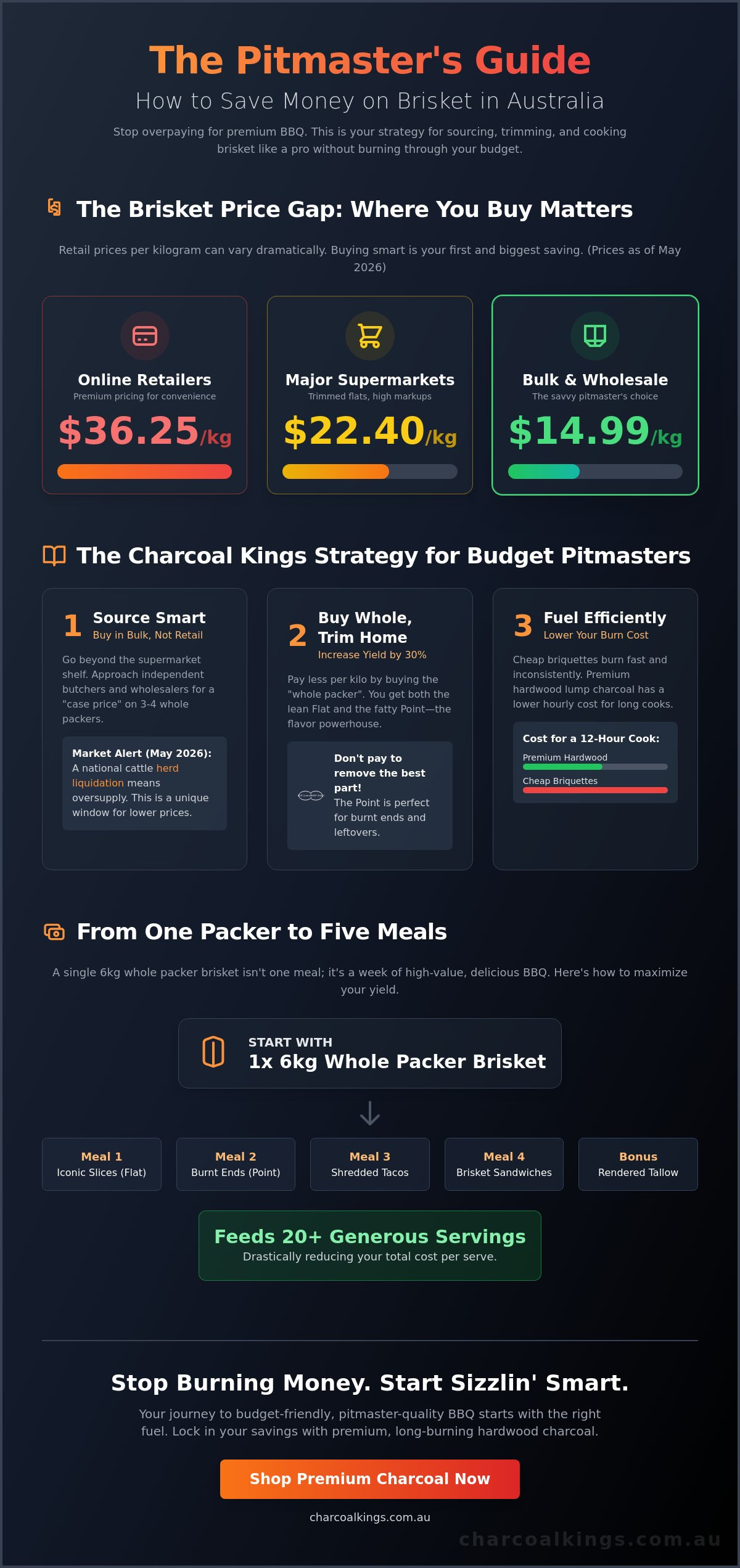
Paying $16.00 per kilogram for supermarket brisket is a choice, not a necessity. As of May 2026, Coles is charging $22.40 for a small 1.4kg flat, while some online retailers are pushing prices as high as $36.25 per kilo. We know the frustration of watching your BBQ budget disappear into a 12-hour smoke, especially when high fuel costs and meat wastage from poor trimming are factored in. You want the premium results of a pitmaster without the premium price tag. Understanding how to save money on brisket in australia starts with realizing that the current cattle oversupply and national herd liquidation have created a unique window for savvy buyers to secure high-quality meat at a lower cost.
You can maximize your yield and slash your total cost per serve by moving beyond the standard supermarket shelf. This guide reveals the professional secrets to sourcing wholesale-priced meat, including where to find the $14.99 per kilo grain-fed packers currently available at bulk retailers like Costco. We will show you how to trim for maximum yield and how to optimize your fuel usage using high-performance hardwood charcoal. You’ll learn how to turn a single packer into multiple meals and keep your smoker running efficiently without burning through your profits. Get sizzlin’ and master the art of the budget-friendly burn.
Key Takeaways
- Identify the case price advantage by sourcing from independent butchers and wholesalers instead of paying retail markups at major supermarkets.
- Adopt the “Buy Whole, Trim Home” method to increase your total meat yield and reduce the price per kilo by up to 30%.
- Discover how to save money on brisket in australia by using premium hardwood charcoal that offers a lower hourly burn cost than cheap briquettes.
- Lower your total overhead for 12-hour cooks by purchasing your natural fuel in bulk quantities to match your meat savings.
The Brisket Economy: Why This ‘Cheap’ Cut is Getting Pricey
Brisket is a secondary cut located in the lower chest of the cow. Historically, it was considered a cheap, tough cut that required hours of braising or corning to become edible. Understanding what is brisket helps you see why it has become the cornerstone of the “Low and Slow” movement in Australia. As American-style BBQ culture exploded across the country, retail demand for this specific muscle soared. This increased popularity turned a once-overlooked budget cut into a premium-priced item at major supermarkets.
To see how a budget-friendly supermarket cut can still produce world-class results, watch this technique guide:
Current market data from April 2026 shows Coles pricing their brisket at $16.00 per kg. Meanwhile, bulk retailers like Costco offer grain-fed Australian brisket for $14.99 per kg. While these prices are higher than they were a decade ago, brisket remains the most cost-effective way to feed a large group. A single 6kg packer can easily provide 20 generous servings. The trick to how to save money on brisket in australia lies in buying the whole muscle rather than pre-trimmed portions. Supermarkets often charge a premium for the convenience of smaller, trimmed flats, but you lose the fat and the point muscle that provide the best flavor.
Point vs. Flat: Understanding the Muscle
A whole brisket consists of two distinct muscles: the fatty point and the lean flat. The point is highly marbled and ideal for “burnt ends” or shredded beef. The flat is more uniform and provides those iconic, clean slices. Buying a “whole packer” is always cheaper per kilo than buying pre-trimmed portions. The point offers superior value for leftovers. Its higher fat content ensures the meat stays moist when reheated for tacos or sandwiches the next day. Don’t pay a butcher to remove the best part of the meat.
Australian Beef Grading and Your Wallet
Meat Standards Australia (MSA) grading provides a reliable indicator of eating quality. You don’t always need a high-marbling Wagyu score to get a great result. Grain-fed brisket often provides more consistent fat rendering during a 12-hour smoke compared to grass-fed options. In May 2026, the Australian cattle market is in a herd liquidation phase. This oversupply means MSA-grade grain-fed briskets are currently the “sweet spot” for budget pitmasters. You get the performance of premium beef without the luxury price tag of boutique brands. Get sizzlin’ with a cut that balances quality and cost.
Sourcing Strategies to Slash Your Meat Bill
Securing the “Case Price” is the most effective method for how to save money on brisket in australia. When you buy a full box of briskets, usually containing three to four whole packers, wholesalers often reduce the per-kilo rate significantly. While Coles currently lists brisket at $16.00 per kg as of April 2026, independent butchers and specialized meat outlets in industrial zones are often more flexible. These local operators prioritize moving volume over high retail margins. If you approach a butcher and offer to buy 15kg to 20kg of meat at once, they are likely to provide a discount that major supermarkets cannot match.
The current market conditions in May 2026 favor the consumer. Australia is in a herd liquidation phase, and national saleyard yardings reached record levels in late April 2026. This massive oversupply has pushed the processor cow market into a “bear market” with prices dropping more than 20%. Savvy pitmasters should watch for “Manager’s Specials” at large retailers. When a 6kg packer is 48 hours from its best-before date, stores frequently apply markdowns of 30% or more. These near-expiry briskets are ideal for immediate smoking or long-term freezer storage.
Mastering the science of cooking brisket allows you to achieve elite results with these budget-friendly finds. Once the meat is secured, ensure you use premium hardwood charcoal to maintain the steady temperatures required for perfect fat rendering. Get sizzlin’ with a sourcing strategy that respects your wallet.
Wholesale vs. Retail: Where to Look
Costco Australia remains a top-tier option for budget BBQ, offering grain-fed brisket for $14.99 per kg in early 2026. For those without a membership, specialized meat outlets in city fringes provide similar high-volume pricing. Buying frozen brisket is another viable path to savings. Frozen stock is often priced 10% lower than fresh equivalents and, when thawed slowly in the fridge, performs identically in the smoker. Always ask for the “untrimmed packer” to avoid paying for labor you can do yourself.
Buying Online: Is It Worth the Shipping?
Online butchers like The Meat Box offer grass-fed brisket for $19.99 per kg. To make online sourcing profitable, you must calculate the “landed cost.” This includes the base price plus shipping and packaging fees. Splitting a bulk order with two or three friends is the best way to neutralize delivery costs. By ordering a 20kg box together, you access farm-to-table quality at a price point that rivals local wholesale rates. Always verify the total price per kilo at the final checkout screen before clicking buy.
Maximizing Yield: Turning One Brisket into Five Meals
Buying a pre-trimmed brisket flat from a supermarket shelf is a major financial leak. You pay a premium for the butcher’s labor and lose the most valuable byproducts of the animal. The “Buy Whole, Trim Home” philosophy is the most effective way to realize how to save money on brisket in australia. When you purchase a full packer, you control the fat cap thickness and keep the trimmings. A 6kg packer can yield roughly 4kg of cooked meat, 1kg of renderable fat, and 500g of meat offcuts for burgers. This approach reduces your total cost per serve by ensuring nothing ends up in the bin.
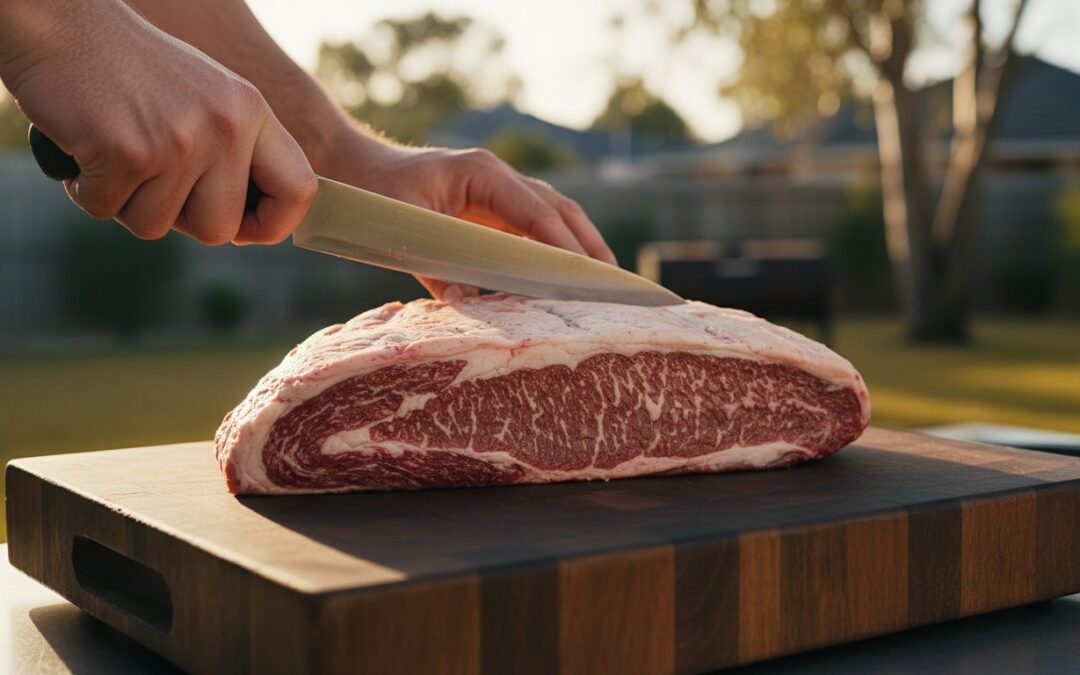
Trimming requires a sharp boning knife and a systematic approach. Start by removing the hard “decal” fat, which is the thick, waxy layer between the point and the flat. This fat won’t render during the smoke and creates a barrier for your rub. Next, slice away the silver skin from the underside of the flat. These offcuts aren’t waste. They are the raw materials for premium tallow and high-quality ground beef. According to data from Australia’s red meat and livestock industry, beef production is forecast to reach a record 2.9 million tonnes in 2026. This high supply means whole packers are abundant, making it the perfect time to master home trimming.
Strategic planning turns a single Sunday cook into a week of high-quality meals. A 6kg brisket easily feeds a family of four for five separate sittings.
- Sunday: Traditional sliced brisket with sides.
- Monday: Brisket sandwiches using the lean flat.
- Tuesday: Brisket tacos or nachos using the fatty point.
- Wednesday: Brisket-topped baked potatoes.
- Thursday: Brisket fried rice or chili.
This rotation eliminates the need for additional grocery spend throughout the week.
Rendering Liquid Gold: Homemade Beef Tallow
Don’t spend $20 on a small jar of Wagyu tallow. Place your fat trimmings in a foil tray or slow cooker during your smoke. The heat renders this fat into “liquid gold.” Use this tallow to bind your rub, baste the meat during the wrap, or roast potatoes. It’s a free byproduct that adds professional-grade flavor. Mix any small meat offcuts with cheap chuck steak to create brisket burgers that outperform anything from a fast-food chain. Get sizzlin’ with 100% yield from every purchase.
Portioning for the Freezer
Proper storage is vital for long-term savings. Vacuum sealing is the gold standard. It prevents freezer burn and maintains meat quality for up to 6 months. If you don’t have a vacuum sealer, use high-quality freezer bags and the water displacement method to remove air. To reheat without drying the meat out, use the “Sous Vide” hack. Place the sealed bag in 70°C water for 45 minutes. This gently warms the fat and protein without overcooking the meat, keeping it as juicy as the day it came off the smoker.
Fuel Efficiency: Lowering the Cost of the 12-Hour Burn
A 12-hour brisket cook can easily double your total expense if you use inefficient fuel. Many beginners ignore the hourly burn cost. They focus only on the price of the meat. In April 2026, a 4kg bag of budget briquettes costs approximately $10.95. However, these often burn through in 3 to 4 hours. This forces you to use three bags for a single brisket. That is over $30 just for heat. Understanding fuel density is a core pillar of how to save money on brisket in australia. Switching to premium hardwood lump charcoal reduces the frequency of refills and maintains a more stable temperature throughout the day.
A well-insulated smoker is your best defense against waste. Leaky lids and thin metal walls allow heat to escape. This forces your fire to work harder and consume more fuel. High-performance “Smartburn” technology in modern pits or simply adding felt gaskets to a kettle lid can reduce fuel consumption by up to 20%. When your pit stays sealed, the charcoal burns slower. This efficiency ensures every dollar spent on fuel goes into the meat, not the air. Buy premium charcoal in bulk to further lower your operational costs and get sizzlin’ with a more profitable cook.
Lump Charcoal vs. Briquettes: The Real Cost
Standard supermarket briquettes often contain fillers and chemicals that produce excessive ash. This ash smothers the fire and causes the temperature to drop. 10kg of premium hardwood lump charcoal typically provides 8 to 10 hours of burn time in a controlled environment. In contrast, 10kg of supermarket coal often lasts half that time. Natural hardwood lump charcoal is the most economical choice for long cooks because its high carbon content delivers more heat per gram than compressed fillers. This prevents the “stall” from dragging on and saves you hours of total cooking time.
The ‘Snake Method’ and Minion Method for Efficiency
Controlling the burn rate is as important as the fuel type itself. The “Snake Method” involves lining up charcoal in a semi-circle to create a fuse. This ensures only a few pieces burn at once. The Minion Method uses a small amount of hot coal to slowly ignite a larger bed of unlit fuel. Both techniques prevent you from burning through your entire fuel supply in the first four hours. Proper airflow control via the bottom vents is the secret to maintaining a steady, low-cost fire. For a deeper dive into these techniques, check out our guide on Mastering the Art of Barbecuing with Charcoal.
The Charcoal Kings Strategy for Budget Pitmasters
Realizing how to save money on brisket in australia requires a shift from thinking about the price of the meat to the price of the entire process. You have already learned to secure a $14.99 per kg grain-fed packer from a wholesaler. Now you must ensure your fuel doesn’t eat those savings. The foundation of affordable BBQ is a long, steady burn that doesn’t require constant intervention. Cheap, chemical-laden fuel is a false economy. It burns too fast and forces you to use twice the volume to finish a single cook. We focus on providing high-performance fuel that respects your budget and your time.
Flavor is the final piece of the budget puzzle. A high-quality rub can make a “secondary” cut from a processor cow market sale taste like a million bucks. When you use a professional-grade seasoning, you don’t need the most expensive Wagyu marbling to impress your guests. The combination of a well-trimmed packer, a consistent fire, and a bold rub creates a result that rivals any high-end smokehouse. This is the goal for every Charcoal King. We invite you to join our community of royalty where performance and quality are the only standards that matter. Get sizzlin’ with the confidence of a master craftsman.
Premium Fuel for Better Value
Using Hardwood Lump Charcoal provides a hotter, cleaner, and significantly longer burn than standard supermarket alternatives. This is vital for overnight brisket cooks. You don’t want to wake up at 3 AM to find your pit temperature has plummeted because your charcoal turned to ash. Natural hardwood lump contains no fillers or chemicals. It produces less smoke and more heat per gram. Sourcing local Australian wood like Ironbark or Gidgee also provides authentic flavor without the heavy import price tag found on American brands. You save money on shipping costs while getting a superior local product.
Get Sizzlin’ Without the Stress
Success in Australian BBQ comes down to preparation and bulk sourcing. Just as you buy your meat by the case, you should buy your charcoal in bulk to mirror those savings. Purchasing 20kg or 40kg quantities significantly reduces your cost per cook. For those in Adelaide and across the country, we offer wholesale charcoal inquiries to help you stock up for the season. Follow these final tips for a low-cost session: monitor your airflow, use the Minion method for efficiency, and always render your fat trimmings. Shop our range of premium charcoal and accessories to start your next budget-friendly cook. Please contact us if you would like to be a CHARCOAL KING and lead your own backyard revolution.
Master the Art of the Affordable Burn
Mastering how to save money on brisket in australia requires a three-pronged approach: smart sourcing, total yield management, and fuel efficiency. By moving from supermarket shelves to wholesale packers and rendering every gram of fat into tallow, you transform a high-cost hobby into a sustainable craft. The final step is choosing a fuel that matches the quality of your meat. Using inefficient coals only drains your budget through constant refueling and extended cooking times.
Charcoal Kings provides the foundation for every professional-grade session. Our 100% Natural Hardwood charcoal ensures a steady, hot burn that lasts longer than standard briquettes. We are Adelaide-based and offer wholesale and retail pricing with nationwide stockists to keep your operational costs low. Don’t let rising beef prices stop your next cook. Take control of your pit and produce world-class BBQ without the luxury price tag. Get sizzlin’!
Get Sizzlin’ with Australia’s best value hardwood charcoal!
Frequently Asked Questions
Is it cheaper to buy brisket from a butcher or a supermarket in Australia?
Independent butchers and wholesalers generally offer better value for bulk purchases than supermarkets. While Coles priced brisket at $16.00 per kg in April 2026, these were often smaller, pre-trimmed portions. Buying a full 6kg packer from a local butcher or wholesaler typically reduces the per-kilo rate. Professionals prefer butchers because they provide the whole muscle, which is essential for maintaining moisture during long cooks.
How much should I expect to pay for a whole packer brisket per kilo?
Current market rates in May 2026 range between $14.99 and $24.99 per kg depending on the grade. Costco offers grain-fed Australian beef for $14.99 per kg, while premium MSA-grade fresh brisket from online retailers sits closer to $24.99 per kg. Prices are currently influenced by a national herd liquidation, which has increased supply at saleyards to record levels. Always compare the “landed cost” before purchasing.
Can I use trimmings from my brisket for anything else?
Never throw away your trimmings if you want to maximize your investment. Fat trimmings should be rendered into homemade tallow for basting or roasting. Small meat offcuts are ideal for grinding into high-quality burgers or adding to a slow-cooked chili. This practice ensures a 100% yield from your meat and significantly reduces your total cost per serve over multiple meals.
Does a longer cook time mean I spend more on charcoal?
A 12-hour cook only becomes expensive if you use low-quality fuel. Premium hardwood lump charcoal burns hotter and longer than standard briquettes, which often require frequent refilling. By using efficient fuel and mastering airflow control, you can maintain a steady temperature without burning through your entire supply. This is a critical factor in how to save money on brisket in australia during the smoking process.
Is frozen brisket as good as fresh for smoking?
Frozen brisket produces excellent results if it is thawed correctly. Move the meat to the refrigerator 48 to 72 hours before your cook to ensure a slow, even thaw. Frozen briskets are often priced 10% lower than fresh stock, making them a smart choice for budget-conscious pitmasters. The cell structure remains intact, and the final bark and smoke ring will be indistinguishable from fresh beef.
What is the best way to reheat leftover brisket to save money on meals?
Reheating in a vacuum-sealed bag using hot water is the most effective method. This “sous vide” style approach warms the meat to 70°C without drying it out or overcooking the protein. Avoid using a microwave, as it toughens the meat and ruins the fat rendering. Preserving the quality of your leftovers ensures that none of your expensive brisket goes to waste.
How can I tell if a brisket has a high yield before I buy it?
Select a packer that feels flexible in the hand and has a uniform thickness across the flat. Avoid briskets with massive, hard “decal” fat deposits that will need to be carved away and discarded. A 6kg brisket with a consistent 6mm fat cap offers the best balance. High-yield briskets require less aggressive trimming, meaning more of the weight you paid for actually ends up on the plate.
Is ‘Wagyu’ brisket ever worth the extra money for a budget cook?
Wagyu is rarely the best choice for a budget-focused session. With prices reaching $36.25 per kg in early 2026, it is more than double the cost of standard grain-fed options. Grain-fed MSA brisket provides enough intramuscular fat for a juicy result at a fraction of the price. Focus on your fire management and rub quality instead of paying for luxury marbling. Get sizzlin’ with high-value cuts instead.