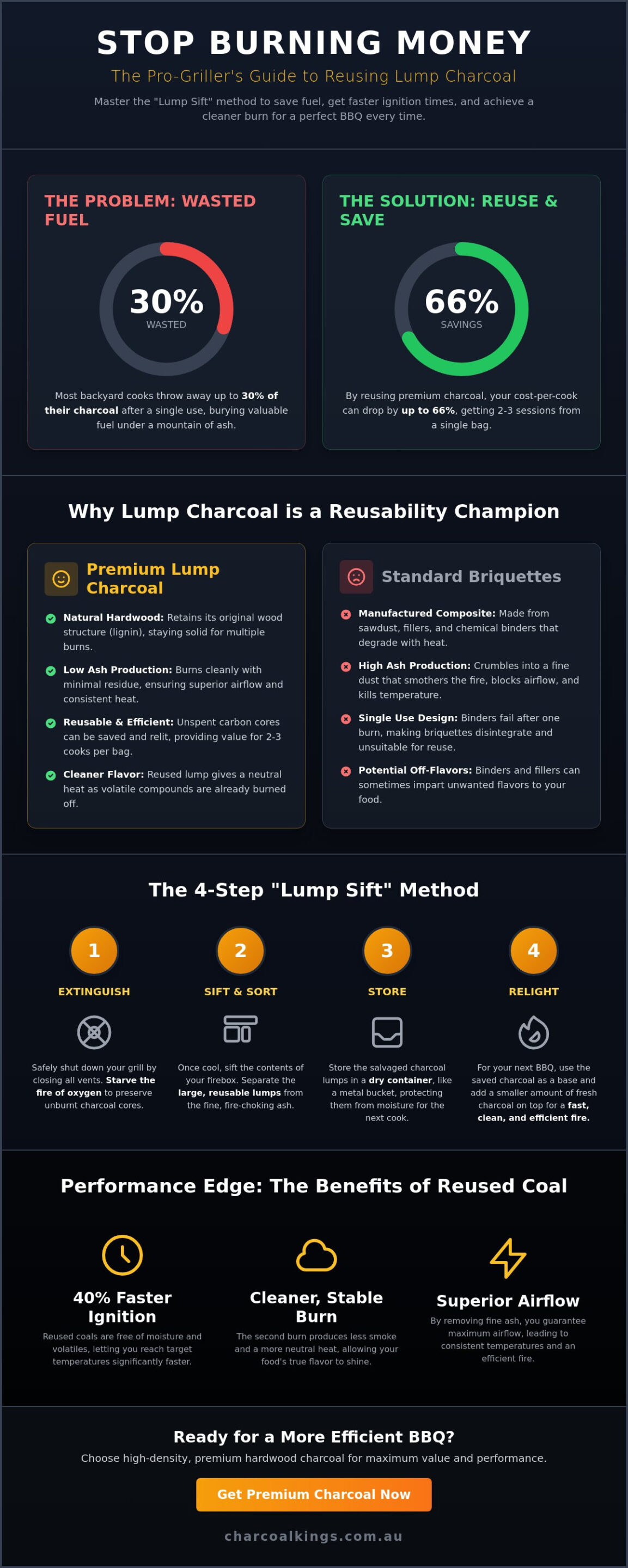
You are literally throwing money into the bin every time you dump a half-used grill basket after a Sunday cook. Premium natural hardwood charcoal is the ultimate fuel for flavour, but it’s too valuable to treat as a single-use product. Most backyard cooks waste up to 30 percent of their fuel because they don’t know how to reuse lump charcoal effectively. You likely feel the frustration of seeing expensive black chunks buried under a mountain of fine ash that chokes your fire and kills your target temperatures.
We agree that high-performance BBQ shouldn’t be wasteful. This guide will help you master the “Lump Sift” method to extinguish, sort, and relight your hardwood fuel for better results. You’ll learn how to achieve faster ignition times and a cleaner fire with superior airflow. We’ll show you the exact steps to turn your leftover coals into a roaring heat source for your next cook. Get sizzlin’!
Key Takeaways
- Stop wasting fuel and lower your cost per cook by getting up to three sessions from one bag of premium hardwood.
- Master the “Lump Sift” technique to learn exactly how to reuse lump charcoal by separating unspent carbon cores from fine ash.
- Discover why natural hardwood maintains its structural integrity for relighting while chemical-filled briquettes simply crumble.
- Use the oxygen deprivation method to safely shut down your grill and preserve your fuel for your next BBQ.
- Learn why high-density, chemical-free coal is the pro-griller’s secret to consistent heat and maximum efficiency.
Why Reusing Lump Charcoal is a Pro-Griller’s Secret Move
Mastering how to reuse lump charcoal starts with understanding what actually remains in your firebox after a cook. Reusable charcoal is the unspent carbon core left behind when you shut down your grill vents and starve the fire of oxygen. While beginners often tip these remains into the garden or bin, seasoned pitmasters recognize this fuel as a valuable resource. It represents a significant reduction in backyard waste and lowers your carbon footprint by maximizing every kilogram of timber harvested. You aren’t just saving money; you’re operating with the efficiency of a commercial kitchen.
The performance benefits are just as compelling as the sustainability. The Science of Charcoal shows that this material is nearly pure carbon. Because the initial burn already drove off residual moisture and various volatile compounds, these “spent” coals actually ignite faster than fresh, dense lump. This gives you a distinct performance edge for quick mid-week grills where time is a factor. You get to the cooking temperature in roughly 40% less time than a fresh stack of logs.
To better understand this concept, watch this helpful video:
The Economics of Premium Hardwood
Investing in premium Australian hardwoods like Gidgee or Ironbark might seem like a higher upfront cost. However, these high-density timbers provide enough energy for 2-3 separate cooks when managed correctly. If a A$50 bag of premium lump lasts for three sessions instead of one, your cost-per-cook drops by 66%. Cheap, low-density charcoal often disintegrates into useless ash after a single burn. This makes the “budget” option significantly more expensive over a month of weekend grilling. Choosing high-density coal ensures you have substantial chunks left over for the next light.
Flavour Integrity: Does Reused Coal Taste Different?
A common myth suggests that old coals produce stale smoke or off-flavours. This is incorrect. High-quality lump produces a cleaner, more neutral heat on the second light because the first burn already eliminated any remaining volatile organic compounds. You get the pure essence of the hardwood without the heavy “green” smoke sometimes associated with fresh bags. Learning how to reuse lump charcoal actually provides a more stable flavour profile. It’s a cleaner burn that allows your dry rubs and sauces to take centre stage without being masked by acrid smoke.
The Science of “Spent” Coals: Why Lump Beats Briquettes for Reuse
Understanding the physics behind your fuel is key to mastering how to reuse lump charcoal. Unlike briquettes, which are manufactured composites, lump charcoal is the carbonized remains of actual hardwood. When you use charcoal as a solid fuel, you’re working with a material that retains the cellular structure of the original tree. This biological foundation is what makes reusability possible. Briquettes are designed for a single lifecycle; they crumble into a fine powder as the binders fail, whereas hardwood lump retains its structural integrity for multiple cooks.
Structural Stability of Hardwood
Hardwood lump charcoal stays solid due to lignin, a complex organic polymer that acts as the glue in wood cells. During the initial burn, this structure remains largely intact even as volatiles escape. Binchotan charcoal represents the pinnacle of this stability; it’s fired at temperatures exceeding 1,000°C to create a carbon structure so dense it sounds like metal when struck. In contrast, standard briquettes rely on cornstarch or chemical binders that degrade rapidly once heat is applied. You can identify high quality leftovers by their weight. Hard charcoal feels dense and heavy, while soft leftovers or low grade woods will feel airy and crumble under light finger pressure.
The Ash Problem
Briquettes are engineered to collapse into a pile of fine dust. This ash acts as a thermal insulator, effectively smothering the remaining fuel and preventing heat transfer to your food. Pure hardwood lump produces significantly less waste because it lacks the clay and sawdust fillers found in mass-market alternatives. Low ash production is the #1 indicator of reusable fuel. Chemical binders in cheap briquettes also create a calcified shell on the surface that prevents re-ignition. Lump charcoal remains porous, allowing oxygen to reach the carbon core instantly during your next lighting session.
Reusing “pre-charred” lump is actually more efficient than starting with fresh bags alone. The surface of a used coal is already carbonized and bone-dry, meaning it often catches fire 25% to 30% faster than raw charcoal. Large leftover chunks are vital for maintaining airflow within the firebox. These irregular shapes create air channels that prevent the fire from choking on its own exhaust. Small fragments and dust block these channels, so always sift out the fines before your next cook. If you want a fuel that stands up to multiple sessions, browse the premium hardwood range to find high-density options that won’t quit after one round.
How to Extinguish and Save Your Charcoal for the Next Cook
Mastering how to reuse lump charcoal starts with a disciplined shutdown routine. The goal is oxygen deprivation. Fire requires three elements: fuel, heat, and oxygen. By removing oxygen, you stop the combustion process instantly. This is the only way to preserve the internal carbon structure of your premium hardwood. When you cut the air, the coals stop burning and stay large enough to be reused when left over from your previous session. This method is safer for your equipment and keeps your fuel ready for the next round of searing.
Pros avoid the “Water Dunk” method for good reason. Pouring water into a hot grill creates a thermal shock that can crack ceramic fireboxes or warp thin steel. It also creates a thick, acidic ash paste that clogs vents and promotes rust. If you are in a rush and must use water, only use a fine mist to drop the surface temperature. Never soak the coals unless it is a genuine fire emergency. Wet charcoal takes days to dry and often loses its ability to burn clean, which ruins the flavour of your next cook.
Sealing the Grill
Shutting down a kettle or ceramic grill requires a top-down protocol. Start by closing the bottom intake vents completely. This stops the flow of fresh air from entering the firebox. Next, close the top exhaust vent. For high-end ceramic grills, the seal is usually airtight. On older offset smokers or budget kettles, check for air leaks around the lid or doors. A gap as small as 3mm can provide enough oxygen to keep a fire smouldering for hours. Wait a full 24 hours before you attempt to handle the coals. Even if the surface looks grey and cold, the core of a large lump can hold dangerous levels of residual heat.
Emergency Extinguishing Techniques
If you need to clear the grill quickly, use a dedicated metal ash bucket. Transfer the hot coals one by one using long-handled tongs. Place the lid on the bucket to stifle the remaining embers. This is the fastest way to clear a grill for transport while saving your fuel. Don’t ever use a chemical fire extinguisher on charcoal you intend to cook with later. The chemicals will saturate the porous wood, making it toxic and unusable. For a controlled cool-down without a total soak, use a spray bottle on a mist setting. This lowers the temperature enough to stop the burn without turning your charcoal into a soggy mess. Get Sizzlin’ safely by respecting the heat.
The “Lump Sift” Method: Sorting, Cleaning, and Storing Old Coal
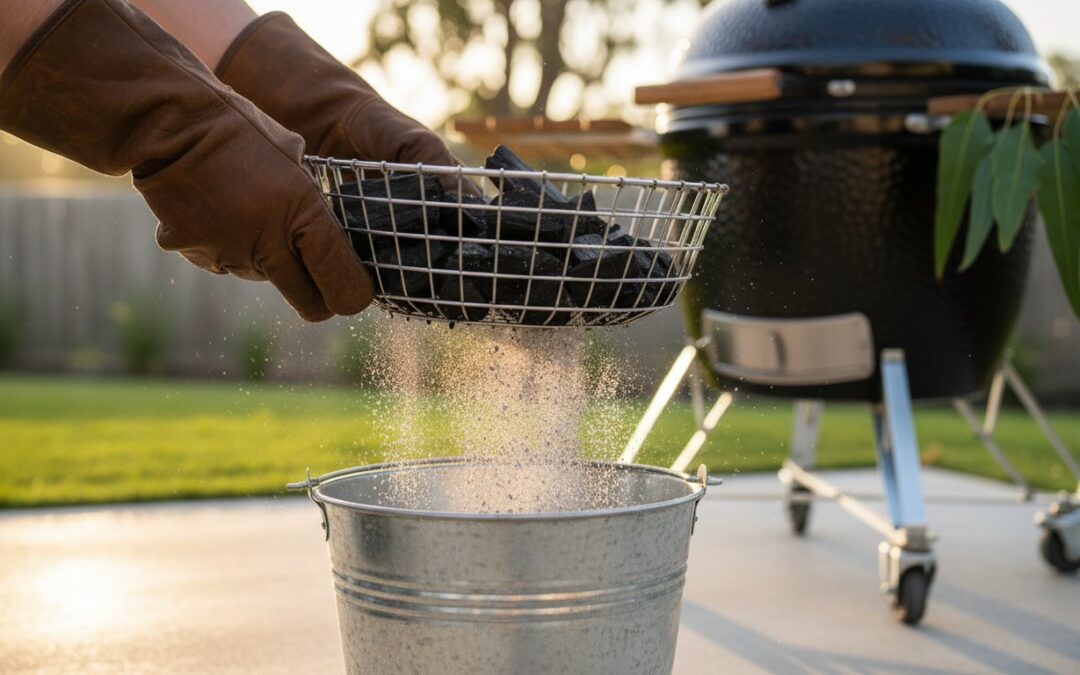
Learning how to reuse lump charcoal effectively starts with the “Shake and Bake” technique. This process requires a high-quality stainless steel charcoal basket. Once your grill has completely cooled, lift the basket and give it a vigorous shake. This action sheds the fine white ash that restricts oxygen flow and clogs your vents. You need clear air passages to reach the core of the coal for a successful second burn. The pieces remaining in the basket are your “gold,” while the dust at the bottom of the firebox should be cleared out to maintain airflow.
The Sorting Process
Not every piece of spent coal is worth saving for your next low-and-slow session. Use a 10mm garden sieve or a specialised charcoal grate to separate the debris. Identify “sinkers” versus “floaters” by checking their density. Premium hardwood charcoal, such as Gidgee or Quebracho, stays heavy and solid after a burn. If a piece feels light or crumbles under thumb pressure, discard it. These small, dense fragments are essential for mastering the art of barbecuing with charcoal as a base layer. They fill the voids between fresh, larger lumps. This creates a stable heat bed that prevents the temperature fluctuations common with uneven fuel loads.
For a consistent burn, don’t use 100% recycled coal. Aim for a 50/50 mix. Place the old, smaller pieces at the bottom of your chimney starter or firebox. Top them with fresh, premium lump charcoal. This ratio ensures you get the quick ignition and high heat of new fuel combined with the steady, predictable endurance of the seasoned coals.
Storage and Moisture Control
Australia’s coastal humidity is the primary enemy of salvaged fuel. In regions like Queensland or New South Wales, humidity levels frequently climb above 75%. Lump charcoal is porous and acts like a sponge. Damp coal is difficult to light and produces acrid, white smoke that ruins the flavour of your meat. Store your sieved coals in an airtight 20-litre plastic bucket or a galvanised steel bin with a locking gasket seal. Keep these containers on a shelf rather than a concrete garage floor to prevent moisture wicking through the base.
Test for moisture by tapping two pieces together. Dry charcoal produces a clear, metallic “clink” sound. If you hear a dull, muffled “thud,” the coal has absorbed too much moisture. You don’t have to throw it away. Use these damp pieces as sacrificial kindling in a chimney starter where the intense heat from fresh firelighters can dry them out during the ignition phase.
Maximising Value with Charcoal Kings Premium Hardwood
Learning how to reuse lump charcoal is about more than just saving a few dollars. It’s about respecting the fuel and the craft. Our premium hardwood is carbonised at high temperatures to ensure maximum density. This density means the coal doesn’t crumble into fine dust after one cook. It maintains its structural integrity, allowing you to shut down your vents and save the remaining energy for your next session. You’ve invested in quality; make sure you get every minute of burn time out of every bag.
The Charcoal Kings Advantage
Our Gidgee hardwood is one of the densest timbers on the planet. When you compare our Gidgee to standard hardwoods, the difference in reusability is clear. Gidgee offers a higher thermal mass, often retaining 60% to 75% of its original size after a standard four-hour roast. We use zero chemicals in our manufacturing process. This is vital for safety. When you relight our charcoal, you aren’t reigniting old accelerants or toxic fillers. You’re getting clean, organic heat every single time. Our product range is engineered to perform in Kamados, kettles, and offset smokers alike.
Relighting Protocol
Success depends on how you arrange the fuel bed. Use the “Bottom-Load” technique. Place your smaller, reused pieces at the bottom of your chimney starter or coal basket. These smaller bits have a higher surface-area-to-mass ratio, meaning they ignite faster than large fresh chunks. Top them with fresh, large lumps to ensure a sustained, high-temperature burn.
Adjust your airflow expectations. Reused coals are smaller and can pack together tightly, which sometimes restricts oxygen flow. Open your intake vents an extra 10% to 15% to compensate for the denser coal bed. If the fire feels sluggish, a quick stir with a poker will clear any trapped ash and get the oxygen moving again.
- Shake it out: Aggressively shake the coal basket to remove all fine ash.
- Visual inspection: Ensure the reused pieces are still “clinking” hard and not soft or spongy.
- The 50/50 Rule: Mix old and new fuel at a 1:1 ratio for the best balance of ignition speed and longevity.
- Seal the deal: Check your grill gaskets. A leak-proof seal is the only way to kill the oxygen and save your coals.
Mastering how to reuse lump charcoal turns a standard BBQ into a professional, high-efficiency operation. You’ll save money, maintain better temperature control, and reduce waste. Stop throwing away good fuel. Get Sizzlin’!
Master Your Fuel Efficiency Today
Mastering how to reuse lump charcoal is the hallmark of a seasoned pitmaster. By properly extinguishing and sifting your coals, you reclaim high-value fuel that still packs a punch. High-density Australian hardwood charcoal is engineered to withstand multiple lightings without crumbling into useless ash. This process saves you money and cuts down on prep time for your next cook. Our 100% natural and chemical-free charcoal ensures that every relit coal provides the same clean, smoky profile as the first time. It’s why leading Aussie pitmasters and wholesale food services choose our high-density timber for their daily operations. You’ll get longer burns and hotter fires every single time you fire up the pit. Stop wasting your premium fuel and start maximizing every bag. Quality charcoal is an investment in your craft; treat it with the respect it deserves.
Shop our Premium Natural Hardwood Charcoal and start grilling like a King
Get sizzlin’ and take control of your fire.
Frequently Asked Questions
Can you reuse charcoal that has been rained on?
You can reuse rained-on charcoal provided you dry it completely before the next burn. Spread the wet lumps on a tray in direct sunlight for at least 48 hours to ensure all internal moisture evaporates. Damp charcoal is difficult to ignite and produces excessive smoke. If the lump has started to crumble into small fragments or its moisture level stays high, discard it to maintain proper airflow in your grill.
Does reused lump charcoal burn as hot as fresh charcoal?
Reused lump charcoal generally reaches lower peak temperatures compared to fresh, premium hardwood. You can expect a 15% reduction in heat output because the initial burn consumes the most volatile organic compounds. While it won’t hit the extreme searing temperatures of a fresh batch, it remains effective for indirect cooking or low and slow sessions. This is a practical way to learn how to reuse lump charcoal without wasting high-quality fuel.
How many times can you actually reuse the same lump charcoal?
Most high-quality hardwood charcoal lasts for 2 to 3 separate cooking sessions. The limiting factor is the physical size of the lumps rather than a specific number of burns. Once pieces break down to less than 40mm in diameter, they pack too tightly and choke the airflow. Sift out the fine ash and small fragments after every cook to keep your fire breathing properly and your temperatures stable.
Is it safe to reuse charcoal if I cooked fish or fatty meats over it?
It’s perfectly safe to reuse charcoal regardless of what you cooked previously. Any fat or juices that dripped onto the coals burn off during the shutdown process or the subsequent preheat. Ensure your grill reaches at least 200°C for 15 minutes to carbonise any remaining organic residue. This process keeps your fuel clean and prevents off-flavours from affecting your next meal, ensuring a pure hardwood taste every time.
Why does my reused charcoal pop and spark more than fresh coal?
Popping and sparking in reused coals usually indicates that the charcoal has absorbed moisture from the air. Because charcoal is highly porous, it pulls humidity into its structure while sitting in your grill, especially in coastal regions like Queensland or New South Wales. When you relight it, that trapped water turns to steam rapidly and causes the lump to crack. Store your grill in a dry area to keep your fuel in peak condition.
Can I reuse charcoal in a ceramic Kamado grill?
Ceramic Kamado grills are the best tools for fuel recovery because their airtight seals extinguish fires rapidly. You can often save up to 50% of your fuel by closing the top and bottom vents immediately after you finish cooking. Simply stir the old coals to knock off the ash before your next cook. This efficiency is a primary reason why Kamado owners master how to reuse lump charcoal so quickly and effectively.
Should I mix old charcoal with new charcoal every time?
You should always mix your leftover coals with a fresh supply of premium hardwood charcoal. A 50/50 ratio provides the best balance of easy ignition and sustained heat for your cook. Place the smaller, used pieces at the bottom and top them with fresh, larger lumps to ensure maximum airflow through the basket. This technique maintains a consistent temperature and extends the life of your 100% natural fuel supply.