
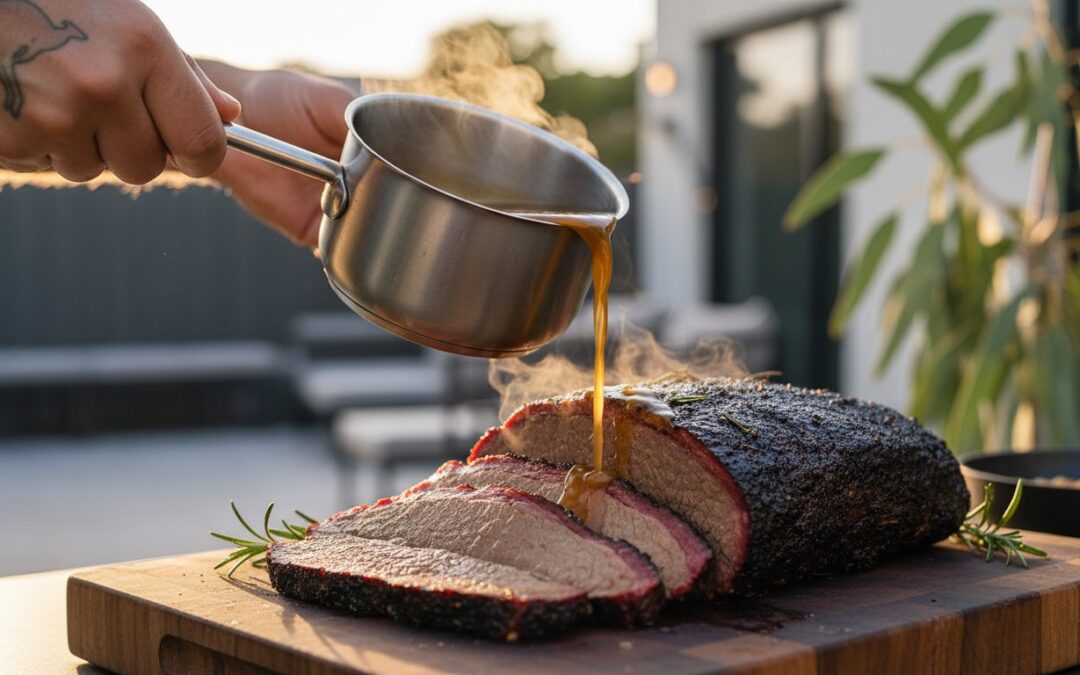
You just spent 14 hours at the smoker and over A$170 on a premium beef brisket, only to find the meat is as dry as a desert track. It’s a gut-wrenching moment when all that effort and hard-earned cash results in a tough, disappointing meal. Every pitmaster has faced this hurdle at least once. Learning how to rehydrate dry smoked brisket is the only way to save your BBQ and your reputation before the guests arrive at the table.
We promise to show you the exact professional techniques used to restore moisture and rich flavour to overcooked beef. You’ll learn about fat-injection methods and how to use a proper au jus dip to bring the meat back to life while keeping your bark intact. This guide covers everything from immediate rescue tactics to the essential tips that prevent dry meat on your next long burn. Get ready to turn that cardboard-like brisket into a juicy, tender masterpiece. Get sizzlin’!
Key Takeaways
- Identify the difference between under-rendered and overcooked meat to choose the most effective rescue strategy for your BBQ.
- Master the professional tallow-and-foil technique to learn exactly how to rehydrate dry smoked brisket and restore its signature moisture.
- Discover fast-acting “Beef Bath” methods to revive already-sliced brisket using au jus and steam for immediate flavour enhancement.
- Learn how to repurpose over-dried meat into gourmet meals like chopped brisket sandwiches to ensure no cut goes to waste.
- Prevent future dry cooks by using premium natural hardwood lump charcoal to maintain the steady temperatures required for juicy results.
Why Your Smoked Brisket is Dry (and Yes, You Can Save It)
Smoking a brisket is a 12 to 16 hour commitment that demands precision. When you slice into that bark and find the meat parched, it feels like a total failure. It isn’t. Every professional pitmaster from Sydney to Texas has faced a dry cook at some point. It is a natural part of the learning curve. Brisket is a fickle muscle with high connective tissue levels that require specific conditions to break down. Understanding how to rehydrate dry smoked brisket starts with diagnosing exactly what went wrong in your pit.
Many beginners mistake “tough” meat for “dry” meat. These are two distinct issues. Toughness usually means the collagen hasn’t rendered into gelatin yet. This chemical transformation typically happens between 71°C and 93°C. If you pull the meat too early, the fibers stay locked tight and feel dry to the tongue. Conversely, overcooking past 96°C or 98°C evaporates the internal moisture, leaving you with a crumbly mess. Pouring water on the meat won’t fix this. Water lacks the viscosity to penetrate muscle fibers and will only ruin your bark. You need a lipid-based solution to restore that signature mouthfeel.
Identifying the ‘Type’ of Dryness
You must diagnose the meat before attempting a rescue. A “Tight” brisket feels dry because the connective tissue is still intact. It offers significant resistance when you pull a slice. A “Dusty” brisket is the opposite; it crumbles into small pieces because the proteins have completely broken down and lost all liquid. Use a high-quality temperature probe to check. If the probe feels like it’s pushing through cold butter, the texture is right. If it meets resistance, you have an under-rendered product that needs more time rather than a rescue mission.
The Science of Rehydration in BBQ
Fat is your ultimate tool for moisture. Beef tallow, specifically rendered from brisket trimmings, is a superior rehydrator compared to beef broth. Tallow coats the fibers and provides the rich “juiciness” people crave. Moisture loss often stems from temperature shocks. If your pit temperature fluctuates by more than 15°C frequently, the muscle fibers contract violently and squeeze out juice. Proper resting for at least 120 minutes is your final safeguard. This allows the remaining moisture to redistribute from the center to the edges. Skipping the rest is a guaranteed way to end up with a dry flat, even if your cook was technically perfect.
The Best Way to Rehydrate Brisket: The Tallow and Foil Method
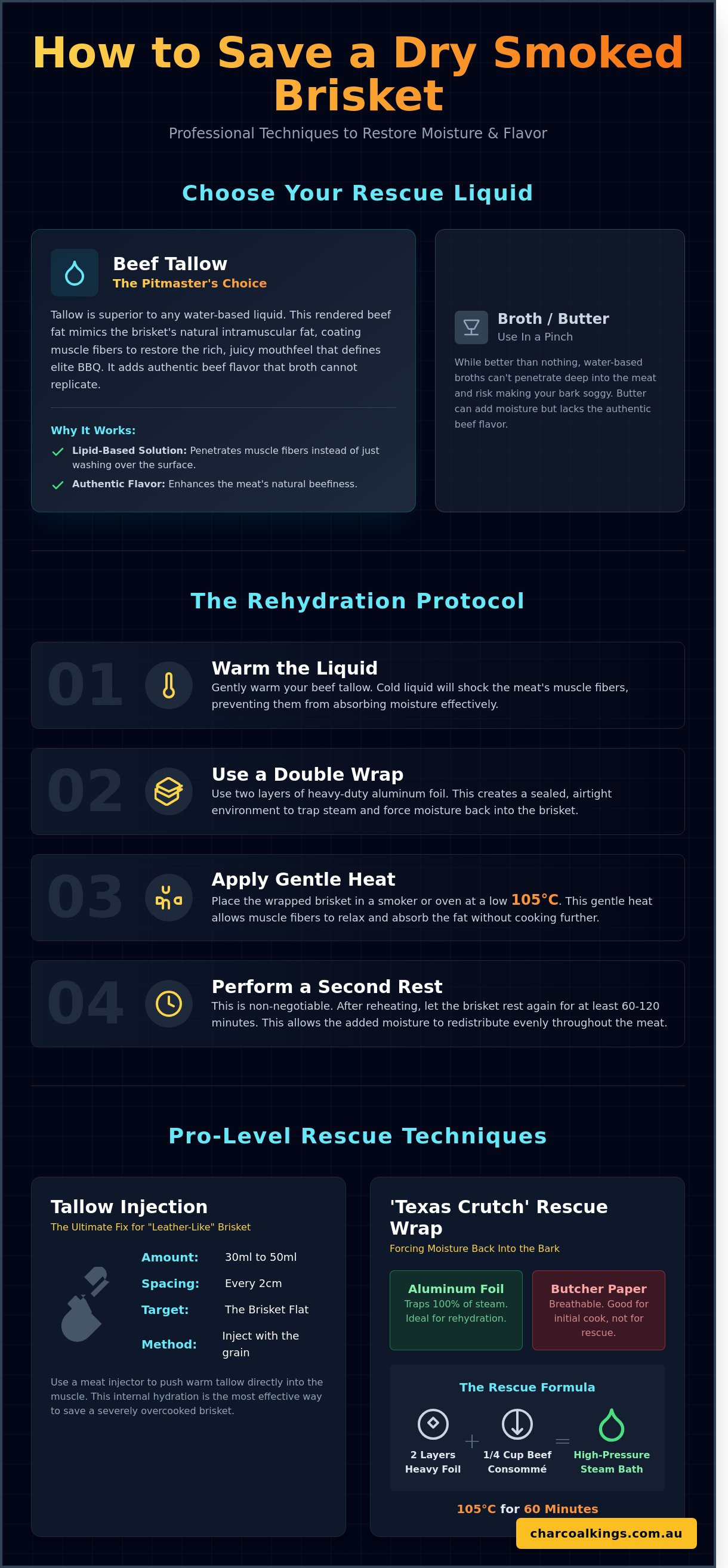
Beef tallow is the undisputed champion for moisture restoration in the BBQ world. Professional pitmasters rely on rendered fat to mimic the intramuscular marble that often renders out during long, punishing cooks. When you are learning how to rehydrate dry smoked brisket, your first task is selecting the right rescue liquid. While beef broth or unsalted butter can work in a pinch, tallow provides a rich, authentic beef profile that water-based liquids simply cannot match.
The rehydration process follows a strict four step protocol to ensure the meat fibers actually absorb the liquid rather than just sitting in a puddle. It’s a method built on patience and precision.
- Step 1: Warm your chosen liquid. Cold tallow or broth will shock the meat and won’t penetrate the surface effectively.
- Step 2: Use the double wrap technique. This involves two layers of heavy-duty foil to create an airtight micro-steaming environment.
- Step 3: Set your smoker or oven to a low 105°C. This gentle heat allows the muscle fibers to relax and soak up the fats without further tightening.
- Step 4: Perform a second rest. Skipping this means the moisture you just added will spill out the moment you slice.
The Tallow Injection Technique
Dryness usually hits the brisket flat hardest because it lacks the fat content of the point. Use a stainless steel meat injector to push 30ml to 50ml of warm tallow directly into the muscle every 2 centimetres. Don’t overdo it. Too much fat makes the meat feel greasy rather than juicy. Distribute the liquid evenly by following the grain of the meat. This internal hydration method is the most effective way to save a brisket that has turned into “leather” during the initial smoke.
The ‘Texas Crutch’ Rescue Wrap
Forget butcher paper for this specific task. While paper is great for bark preservation, you need heavy-duty aluminium foil to trap 100% of the steam. Place the brisket on two layers of foil and add a moisture bomb consisting of 1/4 cup of beef consommé. Seal the edges tightly to prevent any steam from escaping. This creates a high-pressure environment that forces moisture back into the bark. For the most consistent heat during this recovery phase, many pros rely on premium hardwood charcoal to maintain that steady 105°C temperature without fluctuations. Let the brisket sit in this wrap for 60 minutes at temperature before moving to the final rest.
Quick Fixes for Sliced Brisket: Using Au Jus and Steam
Realising your brisket is dry after you have already sliced it is a common pitfall. The moisture has escaped, and the muscle fibres have tightened. You can still save the meal. The first step is mechanical. Ensure your slices are thin. Cut against the grain at a thickness of approximately 3mm. This technique shortens the muscle fibres, making the meat feel more tender on the palate even before you add moisture. If the meat is still parched, you need to introduce liquid or humidity immediately.
Knowing how to rehydrate dry smoked brisket once it is on the cutting board requires a delicate touch. You cannot simply throw it back on the smoker. Instead, you must use targeted methods like an au jus dip or a controlled steam. These techniques focus on the exposed surface area of the slices to deliver instant hydration without overcooking the protein further.
The Professional Au Jus Dip
A “beef bath” is the fastest way to add moisture and flavour back into individual slices. Never use plain water. Water lacks seasoning and will strip the salt and smoke from your bark. Instead, create a quick BBQ au jus using a base of high-quality beef stock. This method is a staple for professional pitmasters who need to hold meat for long periods.
- The Recipe: Combine 250ml of low-sodium beef stock with 1 tablespoon of Worcestershire sauce. If you have reserved drippings from the cook, add them now.
- The Fat Element: Add a teaspoon of beef tallow or melted butter. Dry meat lacks fat, and this replaces the rendered intermuscular fat that was lost.
- The 10-Second Rule: Heat the liquid to 70°C. Dip each slice for exactly 10 seconds before plating.
This short immersion allows the liquid to penetrate the grain without making the meat soggy. It is the most effective way to manage how to rehydrate dry smoked brisket when you are minutes away from serving.
Steam Recovery for Slices
Steaming is a gentle revival method that protects the integrity of your spice rub. Set up a stovetop steamer basket over simmering water. Ensure the water level is low enough that it does not touch the meat. Place your brisket slices in a single layer. This creates a high-humidity environment that forces moisture back into the tight fibres of the beef.
The “sweet spot” for sliced brisket is 2 to 3 minutes. This timeframe allows the steam to soften the proteins and render any remaining fat. Watch the meat closely. If you exceed 4 minutes, the bark will lose its structural integrity and turn into mush. You want a slice that bends over your finger, not one that falls apart like pulled beef. This method is ideal for reviving leftovers or a brisket that sat out on the carving station for too long.
Transforming ‘Beyond Saving’ Brisket into Gourmet Meals
Professional pitmasters know when to fold. If your brisket slices are crumbling or feel like timber under the knife, stop slicing immediately. Sliced brisket must hold its own weight and pass the “bend test” over a finger. When it fails, you aren’t failing; you’re just pivoting to a different culinary strategy. Knowing how to rehydrate dry smoked brisket often means changing its form entirely to maximise the surface area available for moisture absorption.
Chopped brisket sandwiches are your most effective recovery tool. A high-quality, vinegar-based BBQ sauce provides the necessary lubrication and tang. For a Tex-Mex twist, brisket tacos rely on heavy acidity. Fresh lime juice and chunky salsa provide immediate moisture that masks dryness in the muscle fibres. Another professional hack involves the “Burnt Ends” method. Cube the dry flat into 2cm squares, toss them in a heavy glaze, and braise them in a foil pan. Place these cubes in a tray with a mixture of beef broth and sauce, then cover tightly with foil. This creates a steam-rich environment that forces moisture back into the protein.
The Chopped Brisket Strategy
Success starts with the right mix. Take the dry meat from the flat and combine it with any remaining fat or moist meat from the point. Aim for an 80:20 meat-to-sauce ratio to ensure the sandwich isn’t soggy but remains juicy. Heat the chopped mix in a cast-iron pan rather than a microwave. Add 150ml of apple juice per 500g of meat during the reheat. This is a vital step in how to rehydrate dry smoked brisket because the natural sugars and acidity break down tight fibres while the liquid absorbs directly into the parched grain.
Brisket Chili and Stews
Dry brisket is actually superior for long-simmered dishes. Perfectly moist brisket often disintegrates into mush during a long cook. Dry meat has the structural integrity to withstand a 4 to 6 hour simmer in a heavy pot. The meat acts like a sponge, drawing in the seasoned chili liquid or beef stock. A standard 5-litre batch of chili benefits from roughly 1kg of diced dry brisket. The heavy smoke profile from your natural hardwood charcoal releases into the tomatoes and beans, providing a genuine wood-fired essence. This transformation turns a BBQ mistake into a premium, slow-cooked masterpiece.
How to Prevent Dry Brisket on Your Next Charcoal Cook
Learning how to rehydrate dry smoked brisket is a vital skill for any pitmaster, but the ultimate goal is to ensure your meat stays juicy from the start. Moisture retention is directly tied to temperature stability. When your smoker temperature fluctuates wildly, the muscle fibres in the beef contract and squeeze out essential juices. Starting your cook with premium hardwood lump charcoal is the first step toward a successful result. High-quality fuel provides a clean, predictable burn that eliminates the aggressive temperature spikes common with inferior products.
Humidity plays a massive role in the final texture of your BBQ. The “Water Pan Rule” is a standard for a reason. Placing a pan of hot water inside your cook chamber creates a humid environment that slows down the evaporation of moisture from the brisket’s surface. This humidity also helps the smoke stick to the meat, improving the bark while protecting the internal fats. Once the cook is finished, the rest is non-negotiable. You must allow the brisket to rest for at least 2 hours in an insulated cooler. This period allows the internal temperature to equalise and the juices to redistribute throughout the muscle rather than spilling out onto your cutting board.
Fuel Choice and Heat Management
Consistent heat from barbecuing with charcoal prevents the “stall” from wicking away too much moisture. The stall occurs when the meat’s surface moisture evaporates, cooling it down and halting the internal temperature rise. If you use cheap fuel, you will experience a “yo-yo” effect where the temperature constantly bounces up and down. This extended time in the smoker dries the flat out before the point is even close to done. Master your air-flow control by making small, 5mm adjustments to your intake vents. On an offset smoker, keeping a small, hot fire with steady oxygen is better than a large, smouldering pile of coals.
The Importance of Internal Temp vs. Feel
While 95°C (203°F) is a reliable guide for doneness, “probe tender” is the absolute law of the pit. Every brisket is different; some might be ready at 93°C while others need to hit 97°C to break down the tough connective tissues. Use a leave-in thermometer to track the rate of temperature rise throughout the day. If you notice the temperature climbing more than 2 degrees per minute, your fire is likely too aggressive. If you understand how to rehydrate dry smoked brisket, you know it’s a lot of work, so it’s better to monitor the feel of the meat. The probe should slide into the thickest part of the flat with zero resistance, similar to a knife through soft butter. Get Sizzlin’ with the right gear from the start to avoid a rescue mission later.
Master Your Next Low and Slow Cook
A dry brisket is a setback, but it’s never the end of the meal. You now have the professional techniques to fix it. Whether you use the tallow and foil method to restore moisture or use an au jus steam for sliced meat, you can save your BBQ. Knowing how to rehydrate dry smoked brisket ensures you never waste a premium cut of meat again. However, the most effective strategy is preventing dryness before it starts. This requires absolute temperature control and a reliable heat source that lasts the distance.
Australia’s top competition BBQ teams don’t leave their results to chance. They use fuel that maintains steady heat for 12+ hour brisket cooks without the need for constant refuelling. Our 100% natural hardwood charcoal contains no chemicals; this ensures your meat tastes like wood smoke rather than additives. When you use the longest burning coals available, you spend less time managing the fire and more time perfecting your craft. Get your setup right from the start and let the quality of your fuel do the heavy lifting.
Upgrade your fuel for your next cook; shop our Premium Hardwood Charcoal
Get Sizzlin’!
Frequently Asked Questions
Can I use butter to rehydrate my brisket?
Butter adds essential fat and moisture to lean brisket cuts like the flat. Place 50g of unsalted butter on the meat before wrapping it tightly in foil. This method helps lubricate the muscle fibres. It creates a rich mouthfeel that mimics the natural tallow found in premium Australian Wagyu briskets. Use high quality butter for the best flavour profile and a silky finish.
How do I fix a dry brisket that has already been refrigerated?
Fix cold, dry meat by slicing it thin and placing it in a tray with 250ml of beef stock. Cover the tray tightly with heavy duty foil to trap steam. This process is the most effective way to learn how to rehydrate dry smoked brisket after it has sat overnight. Heat it until it reaches an internal temperature of 74°C to ensure it stays tender.
What is the best temperature to reheat and rehydrate brisket in the oven?
Set your oven to 120°C for the best results. Higher temperatures like 175°C will cook the meat further and evaporate any remaining moisture. A 2kg portion typically takes 60 minutes to reach the target temperature. Always use a digital probe thermometer to monitor the internal heat without opening the oven door repeatedly. This ensures the steam remains trapped inside the foil wrap.
Will apple juice help rehydrate my brisket during the cook?
Spritzing with apple juice every 45 minutes after the bark sets adds external moisture. The natural sugars in the juice help develop a dark, crusty bark while preventing the edges from scorching. It won’t penetrate deep into the meat like an injection, but it keeps the surface from becoming brittle during a 12 hour cook. Use a standard spray bottle for even coverage.
Is it possible to over-rehydrate brisket and make it mushy?
Over-rehydrating happens when brisket sits in liquid for more than 2 hours during reheating. The muscle fibres lose their integrity and turn into a texture similar to pot roast. Keep your liquid levels to roughly 15% of the meat’s weight. Monitor the texture closely to ensure the slices still hold their shape when lifted. Stop the process once the meat feels pliable and soft.
How long can a brisket rest before it starts to dry out?
Rest your brisket for at least 60 minutes but no more than 4 hours in an insulated cooler. Internal temperatures should stay above 60°C to meet Australian food safety standards. If the temperature drops below this mark, the fats begin to congeal. This makes the meat feel dry and waxy on the palate. A 2 hour rest is usually the perfect sweet spot.
Does the type of charcoal I use affect how dry my brisket gets?
Using premium natural hardwood charcoal ensures a steady burn and consistent temperature control. Cheap briquettes often contain fillers that cause temperature spikes. A stable 107°C environment prevents the meat from drying out due to unexpected heat surges. Understanding how to rehydrate dry smoked brisket is easier when you start with a clean burn from quality fuel. Get sizzlin’ with the right heat source.