
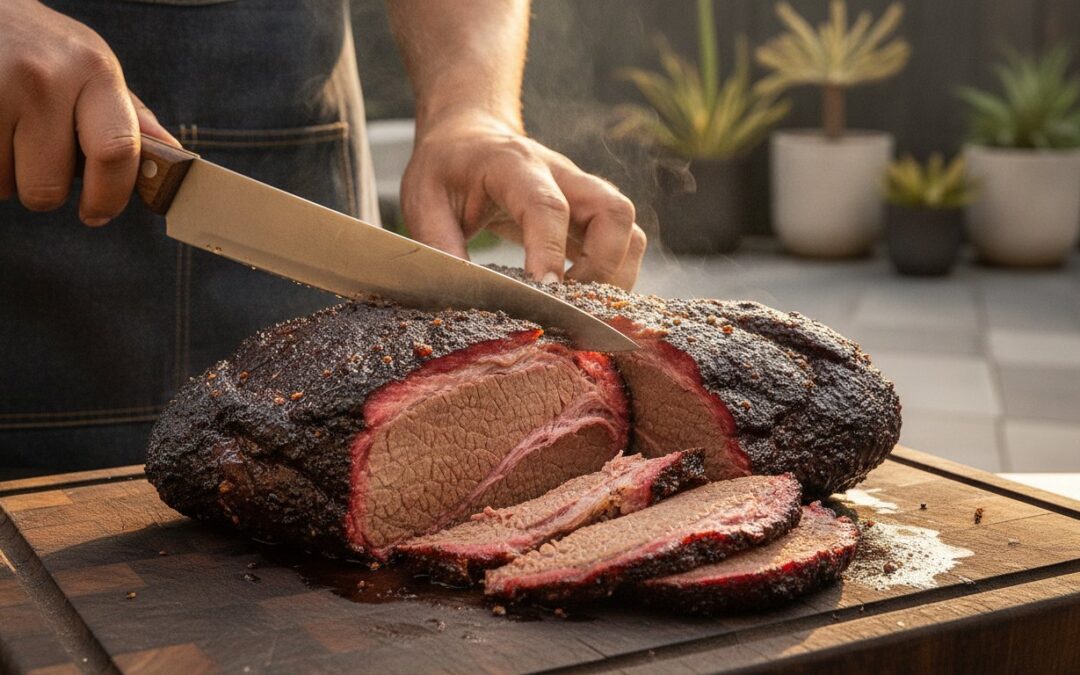
A sous vide machine is a luxury, not a requirement for professional-grade results. Many pitmasters believe that reheating smoked brisket without a sous vide actually preserves the integrity of the bark better than simmering it in a plastic bag. You spent hours managing a clean-burning fire and premium hardwood lump charcoal to build that perfect crust. You shouldn’t let a microwave or a rushed oven session turn your hard work into dry, crumbly leather with unappealing, grey fat.
We understand the frustration of watching a prime cut lose its soul in the refrigerator. It’s a common pain for anyone who values the craft of real BBQ. This guide provides the definitive blueprint for reviving your meat using standard kitchen and BBQ hardware. You will learn to master moisture management and fat rendering to ensure every slice remains juicy and tender. We preview the best methods for using an oven, offset smoker, or slow cooker to hit that 150°F sweet spot without sacrificing the smoky flavour profile you worked so hard to create.
Key Takeaways
- Treat the reheating process as a gentle rendering phase rather than a second cook to liquefy fats without toughening the muscle fibres.
- Master reheating smoked brisket without a sous vide by maintaining low, consistent temperatures between 110°C and 120°C in your oven or offset smoker.
- Protect the bark and internal moisture by adding a splash of beef broth and wrapping the brisket tightly to create a controlled, steamy environment.
- Utilize premium hardwood lump charcoal for a clean-burning heat source that preserves the original smoky profile during the reheating process.
- Ensure long-term success by pulling the brisket at 203°F during the initial cook and allowing a proper 12-hour rest to set the juices before storage.
The Science of Reheating Brisket: Why Moisture is King
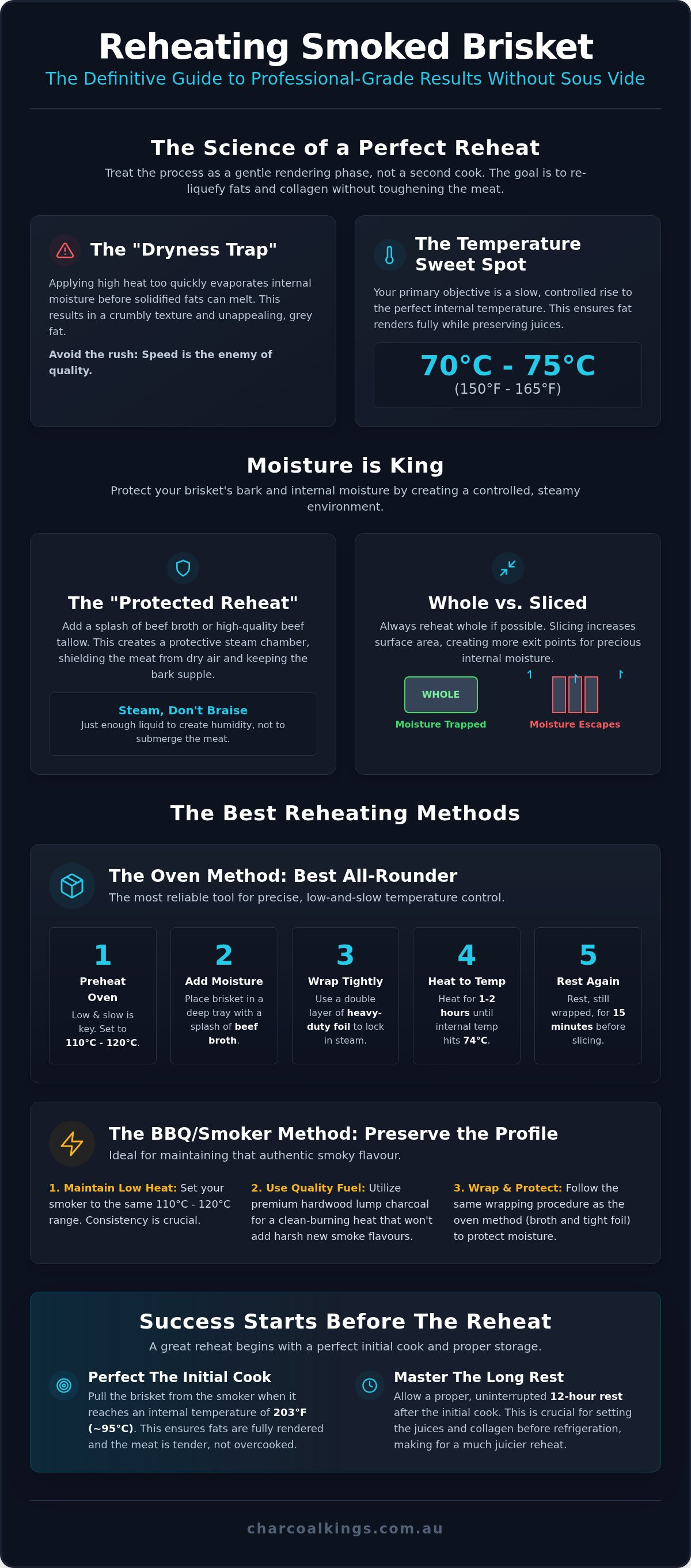
Reheating is a process of gentle rendering. It’s not a second cook. When a brisket cools, the fats and collagen that made it tender during the initial smoke solidify into a waxy, firm state. To restore that melt-in-the-mouth texture, you must liquefy these elements without over-tightening the muscle fibres. Understanding the science of brisket is essential for anyone aiming to serve leftovers that rival the first cut. If you apply heat too aggressively, you’ll ruin the delicate balance of the meat’s structure.
The “Dryness Trap” occurs when you apply high heat in a rush. Intense energy evaporates internal moisture before the solidified fats have time to melt and lubricate the fibres. This results in grey, unappealing fat and a crumbly, dry texture. Your primary objective when reheating smoked brisket without a sous vide is reaching an internal temperature of 70°C to 75°C. This specific range ensures the fat renders fully while preventing the proteins from expelling their remaining juices. Speed is the enemy of quality here; you need a slow, controlled rise in temperature.
The Role of Beef Tallow and Broth
Adding high-quality beef tallow or a splash of beef broth creates a protective steam chamber around the meat. A “dry reheat” exposes the bark to direct air, leading to rapid dehydration and a leathery exterior. A “protected reheat” uses these supplemental liquids to shield the muscle. We recommend using pure beef tallow for the most authentic flavour profile. It reinforces the existing fat cap and keeps the bark supple. This barrier prevents moisture from escaping into the oven or smoker atmosphere, ensuring the meat stays lubricated from the outside in.
Whole Brisket vs. Sliced: The Surface Area Factor
Always reheat the brisket whole if the situation allows. Slicing the meat before reheating increases the total surface area significantly. More surface area creates more exit points for internal moisture. When you reheat individual slices, the steam escapes almost instantly, leaving you with dry, tough strips of beef. Keeping the muscle intact traps the internal liquids where they belong. Only slice the meat right before it hits the plate to ensure maximum juiciness. This approach is the gold standard for reheating smoked brisket without a sous vide, maintaining the integrity of the cut until the very last moment.
The Oven Method: The Best All-Rounder for Home Cooks
The kitchen oven is the most reliable tool for reheating smoked brisket without a sous vide. It offers precise temperature control that prevents the meat from reaching a second “stall” or drying out. Start by preheating your oven to a low range of 110°C to 120°C. High temperatures are the enemy. You want a gentle environment that encourages the fat to liquefy without boiling the internal juices. Low and slow is the only way to respect the time you invested in the initial smoke.
Place your brisket in a deep baking tray. Add a splash of beef broth or water to the bottom. This isn’t meant to submerge the meat; it’s there to provide a constant source of humidity. Wrap the tray tightly with a double layer of heavy-duty aluminium foil. A loose wrap allows steam to escape, which defeats the purpose. Heat the meat until it reaches an internal temperature of 74°C. This usually takes between 1 and 2 hours depending on the weight of the cut. Following USDA food safety guidelines ensures the meat is safe to consume while maintaining the tender texture you worked for.
The “Texas Crutch” Reheat Strategy
A tight foil seal is non-negotiable for moisture retention during an oven reheat. This method mimics the “Texas Crutch” used during the initial smoke to push through the temperature stall. The Texas Crutch is a moisture-locking technique used by pitmasters to accelerate cooking while preserving internal liquids. Be careful with the volume of liquid you add to the tray. Too much broth turns your bark into mush and gives the meat a “pot roast” texture. You want steam, not a braise. If you need a reliable tray or professional-grade foil, check out our range of BBQ accessories to upgrade your hardware setup.
Resting the Meat (Again)
Patience is the final ingredient. A 15-minute rest after pulling the brisket from the oven is just as important as the initial rest after the smoke. This final step is crucial when reheating smoked brisket without a sous vide. During the reheat, the rendered fats become highly mobile. Resting allows these fats to settle and redistribute through the muscle fibres. If you slice the meat immediately, you’ll see a cloud of steam escape. That steam is your internal moisture leaving the building. Slicing too hot results in a piece of meat that looks juicy for ten seconds and then turns into leather on the plate. Keep the foil on during this rest period to maintain the temperature while the juices stabilize.
The BBQ or Smoker Method: Maintaining the Smoky Profile
Reheating on a smoker is the ultimate way to maintain the integrity of your BBQ. It keeps the meat in its natural habitat and preserves the authentic texture of the bark. Configure your setup for indirect cooking at 110°C. This temperature is low enough to prevent further cooking while allowing the fat to render effectively. You must use premium hardwood lump charcoal for this process. Clean fuel ensures the bark doesn’t absorb off-flavours from chemical binders or additives found in inferior products. A clean-burning fire is the foundation of a successful reheat.
Keep the brisket wrapped in butcher paper or heavy-duty foil throughout the duration. This shield protects the exterior from drying out in the moving air of the smoker. Monitor the internal temperature using a digital probe. Pull the meat when it hits 75°C to ensure it’s hot enough to serve without being overcooked. This method is the professional choice for reheating smoked brisket without a sous vide, especially if you have the time to manage a fire.
Why Indirect Heat is Crucial
Indirect heat is non-negotiable. Direct exposure to the coals will scorch the bottom of the brisket before the centre is even warm. Place the meat on the cool side of the grate, away from the direct heat source. Use a water pan filled with hot water to increase humidity and act as a thermal mass. This stabilizes the temperature inside the chamber. Even warming depends on airflow and positioning. Place the thickest part of the brisket toward the heat source to balance the energy distribution across the cut.
Choosing the Right Fuel for the Reheat
Choosing natural charcoal over gas is a matter of performance and authenticity. Gas lacks the dry, radiant heat and subtle aroma required for a perfect result. Charcoal briquettes are also an excellent option for long, steady temperature control. They provide a predictable burn rate that makes monitoring the smoker easier. Avoid adding heavy smoking woods like hickory or ironbark during the reheating phase. The meat has already absorbed its maximum smoke profile. Adding more wood leads to “smoke overkill,” which creates a bitter, acrid aftertaste on the palate.
Quick Fixes: Reheating Brisket Slices for One
Whole-muscle reheating is the gold standard, but it isn’t always practical for a single meal. When you only need two or three slices, you need a method that works fast without sacrificing the structural integrity of the meat. Reheating smoked brisket without a sous vide on a slice-by-slice basis requires precision to avoid the “leather effect.” You’re dealing with a higher surface-area-to-volume ratio, which means moisture loss happens in seconds rather than minutes.
The microwave is the primary enemy of quality BBQ. It works by exciting water molecules, which causes the protein fibres to vibrate and contract violently. This process expels internal moisture and turns the fat into a rubbery, unpalatable mess. If you must use one, set the power to 50% and wrap the slices in a damp paper towel. This creates a makeshift steam barrier, but it remains a last resort for those who value the craft of low and slow cooking.
The Skillet and Tallow Sear
A cast-iron skillet is the best tool for a fast, high-quality reheat. Heat the skillet over medium heat with a teaspoon of beef tallow or butter. Place your slices in the pan for only 30 to 60 seconds per side. This short burst of heat “wakes up” the fats and creates a slight, crispy edge on the bark. Before removing the meat, add a single tablespoon of water to the pan and immediately cover it with a lid for 30 seconds. This “steam-finish” ensures the centre of the slice is hot while the exterior remains supple. For the best results, use professional-grade hardware from our BBQ accessories collection to manage your cook.
The Bamboo Steamer Technique
Steaming is the most gentle way to handle individual slices. A bamboo steamer provides indirect, humid heat that softens the meat without immersion. This prevents the water from washing away your complex spice rub or diluting the smoky flavour profile. Place the slices on a piece of parchment paper inside the steamer basket. Steam for three to five minutes until the fat looks translucent and feels soft to the touch. This method is ideal for leftovers destined for Brisket Bao or tacos, as it maintains a texture that mimics a fresh pull from the smoker.
Choosing the right quick fix depends on your desired end use. Each method has specific trade-offs for those reheating smoked brisket without a sous vide:
- Skillet Method: Best for texture and speed; risk of overcooking if left unattended for too long.
- Steam Method: Best for moisture retention and soft sandwiches; takes slightly longer than a pan.
- Microwave: Fastest option; high risk of toughening the meat and ruining the bark texture.
Preventing Dry Brisket Before the Reheat Starts
Success in reheating smoked brisket without a sous vide begins hours before the first slice is ever chilled. Your performance during the initial cook dictates the meat’s resilience. Pulling the brisket at an internal temperature of 203°F (95°C) ensures the collagen has fully transformed into gelatin. This gelatin acts as a natural lubricant during the reheat. If you pull the meat too early, it will remain tough regardless of your reheating technique. A “Long Rest” of 12 hours or more is equally vital. This duration allows the internal pressure to stabilize and the juices to set within the muscle fibres, creating a more stable foundation for future warming.
Storage Best Practices
Proper storage is the bridge between a fresh cook and a successful reheat. Always wait for the meat to cool completely before placing it in the refrigerator. Putting hot meat in a cold environment creates condensation inside the container. This moisture settles on the bark, turning your hard-earned crust into a muddy, unappealing mess. Keep the “au jus” or drippings from the original cook in a separate container. This liquid is essential for adding moisture back during the oven or smoker methods discussed earlier. Brisket lasts safely in the fridge for up to four days. For long-term storage, vacuum sealing is mandatory. It prevents oxidation and freezer burn, keeping the meat viable for up to six months in the freezer.
Fuel Quality and Bark Integrity
The quality of your fuel directly impacts how well the bark survives a second trip to the heat. Using Binchotan or premium hardwood lump charcoal produces a clean, consistent heat with minimal ash. High ash production from low-grade fuels can coat the meat, leading to a bitter flavour that intensifies during reheating. A clean-burning fire fueled by high-quality smoking woods creates a resilient, well-set bark. This exterior acts as a physical barrier that helps trap internal moisture when you are reheating smoked brisket without a sous vide. Professional-grade charcoal isn’t just for the initial flavour; it’s for the structural integrity of the final product. Stick to additive-free fuels to ensure your leftovers remain as pure and potent as the day they left the smoker.
Master Your Next Brisket Reheat
Mastering the art of reheating smoked brisket without a sous vide comes down to one core principle: respect the meat. You already have the tools in your kitchen and backyard to revive that smoky glory without turning it into leather. Focus on gentle rendering rather than a second cook. Maintain low temperatures between 110°C and 120°C; always use a protective moisture barrier like beef tallow or broth to shield the bark. These techniques ensure the fat melts while the muscle fibres stay tender.
The success of your leftovers is built on the foundation of your initial smoke. Using pure, additive-free fuel creates the resilient bark needed to survive the cooling and warming cycles. We provide wholesale quality materials for home pitmasters who demand the best results every time. Our products are 100% natural hardwood with no additives, ensuring a clean burn for every cook.
Shop Premium Hardwood Charcoal for Your Next Brisket Cook and take advantage of our Australia-wide shipping. Get back to the pit and serve your brisket with confidence.
Frequently Asked Questions
Can I reheat brisket in an air fryer?
You can use an air fryer, but you must be extremely cautious with the high-velocity airflow. Set the temperature to 120°C and wrap the meat tightly in foil with a splash of beef broth. Without a protective wrap, the air fryer will dehydrate the exterior in minutes. This method is faster than an oven but requires constant monitoring to avoid the “Dryness Trap.” It is a viable alternative for reheating smoked brisket without a sous vide.
How many times can you safely reheat smoked brisket?
You should only reheat smoked brisket once. While food safety guidelines allow for multiple reheats if the meat reaches 74°C each time, the structural integrity of the fibres collapses with every cycle. Each trip to the heat source expels more internal moisture and degrades the rendered fat. For the best experience, only reheat the portion you intend to eat immediately and keep the rest vacuum-sealed in the refrigerator for future use.
What is the best temperature to reheat brisket in the oven?
The optimal oven temperature is between 110°C and 120°C. This range provides enough energy to liquefy solidified fats and collagen without triggering a second cooking process. High temperatures cause the proteins to contract and squeeze out remaining juices. By maintaining a steady, low heat, you ensure the meat warms through evenly. This is the most reliable strategy for reheating smoked brisket without a sous vide in a standard home kitchen environment.
How do I reheat brisket without losing the bark?
To preserve the bark, avoid submerging the meat in liquid. Use a tight foil wrap with just a tablespoon of beef tallow or broth at the bottom to create humidity. If the bark feels too soft after reaching 74°C, unwrap the brisket and place it under a low grill or back in the smoker for five minutes. This short exposure to dry heat helps reset the crust without drying out the tender centre of the muscle.
Should I slice the brisket before or after reheating?
Always reheat the brisket whole or in the largest pieces possible. Slicing before reheating creates a massive increase in surface area, which allows steam to escape almost instantly. Keeping the muscle intact acts as a natural barrier for internal moisture. Wait until the meat has rested for at least 15 minutes after reheating before you slice it. This ensures the rendered fats remain trapped within the fibres for a juicy and tender result.
How do I fix brisket that has already dried out during reheating?
If the meat is already dry, you cannot reverse the protein contraction, but you can add external lubrication. Chop or shred the brisket and toss it with warm beef tallow or a high-quality BBQ sauce. This coats the dry fibres and provides the fat content needed for a better mouthfeel. Using these leftovers for tacos, brisket chili, or loaded fries is the best way to salvage the flavour when the texture is compromised.
Is it better to reheat brisket in foil or butcher paper?
Foil is superior for moisture retention, while butcher paper is better for bark integrity. Foil creates an airtight seal that traps every drop of steam, making it the safer choice for very dry cuts. Butcher paper is breathable and prevents the bark from becoming muddy or mushy. If your brisket already has a heavy, well-set bark from a clean-burning fire, butcher paper is the preferred professional choice for the reheating process.
Can I use a slow cooker to reheat my brisket?
A slow cooker is an effective tool if you have several hours to spare. Use the “Warm” or “Low” setting and add a small amount of beef broth to the bottom of the pot. A 1.5-pound piece of brisket typically takes about two hours to reach the target internal temperature. This method provides a very humid environment, which is excellent for maintaining tenderness, though it may soften the bark more than other techniques.