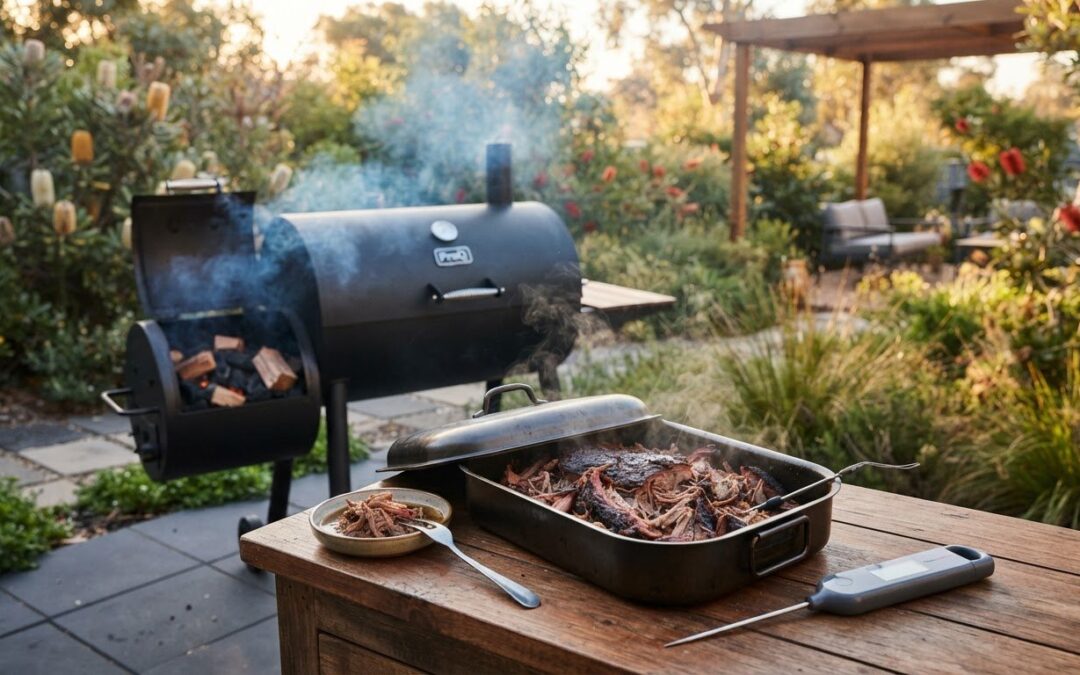
More smoke isn’t the answer to better leftover pulled pork. The key to how to reheat pulled pork on a charcoal smoker is gentle, indirect heat and enough moisture to keep the strands tender. Reheating can dry pork quickly, especially if it sits uncovered over direct heat, so start with a steady charcoal setup and a covered pan.
Because the meat is already cooked, the aim is to warm it through, not give it another long barbecue cook. This guide explains how to arrange charcoal for indirect heat, when to add reserved juices or another mild liquid, and how to check the pork with a food thermometer. The result should be warm, juicy pork that retains its original smoky flavour.
Key Takeaways
- Reheating means warming cooked pork through, not repeating a long barbecue cook.
- For how to reheat pulled pork on a charcoal smoker, use a covered, smoker-safe pan to help protect the meat’s texture.
- Warm only the portion you plan to serve and handle stored leftovers safely.
- Keep the charcoal setup controlled and use little or no added smoking wood to avoid overpowering the pork’s original flavour.
- Before serving, check for even warmth, adjust moisture and seasoning if needed, then serve promptly.
Why reheat pulled pork on a charcoal smoker instead of cooking it again?
The goal is to warm leftover pulled pork without losing the results of the original cook. Reheating is not another long barbecue session. The pork is already cooked, so you’re warming it evenly for serving. Shredded meat has plenty of exposed surface, and prolonged heat can drive off moisture, leaving the strands dry or tough.
A charcoal smoker is a practical option when it’s already lit or you’re serving a barbecue. Set it up for indirect heat and manage the airflow to maintain a steady cooking environment. The pork warms away from the coals, and you can add a restrained touch of smoke or none at all.
This short video offers another look at reheating pulled pork:
What changes when you reheat already-cooked pulled pork?
The aim is to warm the meat through, not break it down further with hours of cooking. Long exposure to heat can evaporate moisture from the strands, making the pork less juicy and its texture firmer. Gentle warming helps preserve its tenderness. Reheating over charcoal also doesn’t require another substantial dose of smoke: the original barbecue flavour is already part of the finished meat. Pulled pork is traditionally cooked until it can be shredded, so reheating calls for a different approach from cooking the original cut.
When does a charcoal smoker make sense for reheating?
Use the smoker when it’s convenient, especially if charcoal is already burning for the meal. Indirect heat and adjustable airflow give you control, while a covered pan helps limit exposure to drying heat. Keep added smoking wood to a minimum so the pork’s existing flavour stays in front.
If you want a quicker option, reheating indoors may be more practical. Neither approach is universally better: choose based on your time, equipment and whether an outdoor charcoal finish suits the meal. For charcoal setup fundamentals, see this charcoal barbecue beginner’s guide. The same principles of controlled airflow and indirect heat make how to reheat pulled pork on a charcoal smoker manageable. Use refrigerated leftovers that have been handled and stored safely, and follow current Australian food-safety guidance.
Prepare pulled pork for the charcoal smoker so it stays moist
Good reheating starts before the charcoal is ready. Take out only the amount of pulled pork you plan to serve, and keep the rest refrigerated instead of warming the whole batch and cooling it again. Handle leftovers with clean utensils and use a clean pan. For general leftover-handling advice, see Michigan State University Extension’s Handling Leftovers Safely.
Choose a smoker-safe pan that holds the pork in a loose, even layer. Gently separate large clumps with a fork, but don’t mash or pull the strands apart aggressively. Loosening dense pieces helps the heat reach the pork more evenly while preserving its familiar texture.
Should you add liquid before reheating pulled pork?
Yes, if the pork looks dry or has little juice clinging to it. Stir in a modest splash of reserved cooking juices first. They add moisture and reinforce the flavour of the original cook. If you don’t have drippings, use a little suitable stock or another mild liquid. Add it gradually: the aim is to lightly moisten the pork, not leave it sitting in a pool. Too much liquid can make the strands soggy and dilute the seasoning.
Should pulled pork be covered on the smoker?
Cover the pan for most of the reheating. A close-fitting lid or foil helps trap moisture and reduces the pork’s exposure to the smoker’s dry heat. Michigan State University Extension also recommends covering leftovers to retain moisture while ensuring they heat through. Keep the cover secure, and continue managing the smoker’s airflow as usual so the heat stays steady.
If you prefer a slightly drier surface, uncover the pan briefly near the end. This is optional; leaving the pork uncovered for too long can undo the moisture protection. With how to reheat pulled pork on a charcoal smoker, the balance is enough added moisture and a covered, controlled warm-up, not soaking the meat or exposing it to extended heat.
For a charcoal setup suited to controlled cooking, explore charcoal and smoker equipment. Keep the serving portion separate from the untouched leftovers, and return any remaining refrigerated pork promptly after serving.
How to reheat pulled pork on a charcoal smoker: step-by-step
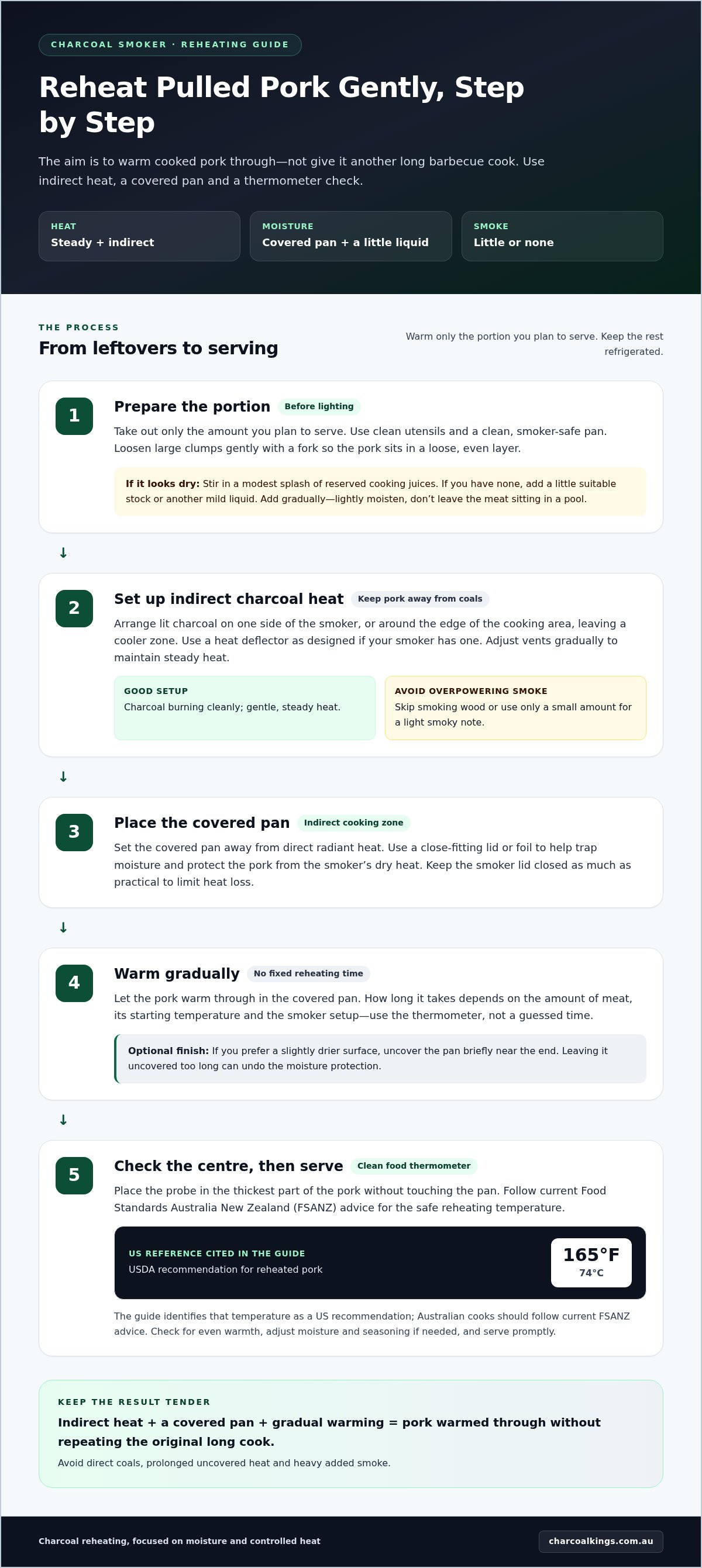
The method is simple: steady indirect heat, a covered pan and a thermometer check. Keep the pork away from direct coals, and don’t add a heavy load of smoking wood. The meat already has its barbecue flavour, so extra smoke is optional, not the goal.
Set up indirect charcoal heat for reheating
Arrange lit charcoal on one side of the smoker, or around the edge of the cooking area, leaving a cooler zone for the pork. If your smoker has a heat deflector, use it as designed. Place the covered pan in the indirect zone, away from direct radiant heat. Adjust the vents gradually to maintain steady heat rather than making sharp changes.
Use charcoal that’s burning cleanly. Skip smoking wood, or add only a small amount if you want a light smoky note. Strong fresh smoke can overpower the cooked pork’s existing flavour.
Warm, check and serve the pulled pork
- Prepare the smoker. Light the charcoal and let the smoker settle into steady, gentle heat before adding the pork.
- Position the pan. Set the covered, smoker-safe pan in the indirect cooking zone. Keep the lid closed as much as practical to limit heat loss.
- Warm gradually. Let the pork heat through without relying on a fixed time. The amount of meat, its starting temperature and the smoker setup all affect how long it takes.
- Check the centre. Use a clean food thermometer, placing its probe in the thickest part of the pork without touching the pan. Follow current Food Standards Australia New Zealand (FSANZ) advice for the safe reheating temperature. The USDA food safety guidelines give a US recommendation of 165°F (74°C) for reheated pork, but Australian cooks should use current local guidance.
- Stir and serve. Once the pork reaches the safe temperature, stir gently to distribute warmer and cooler portions evenly. Serve promptly.
For how to reheat pulled pork on a charcoal smoker, don’t rely on appearance or touch as the only doneness check. A clean thermometer gives you a reliable reading, while indirect heat and a covered pan help protect the pork as it warms. If it hasn’t reached the recommended safe temperature, cover it again, continue warming and check the centre once more.
Keep pulled pork safe and avoid common reheating mistakes
A charcoal smoker can reheat leftover pulled pork safely when you control the heat and handle the food properly. Use refrigerated leftovers, warm only the amount you plan to serve, and avoid repeatedly warming and cooling the same batch. For specific reheating temperatures or storage limits, follow current Food Standards Australia New Zealand (FSANZ) guidance. Don’t substitute a judgement based on colour or texture for its recommended safety checks.
How can you tell when reheated pulled pork is ready?
Use a clean food thermometer to check the centre of the pork, where it may take longest to warm. Follow current FSANZ recommendations for reheated leftovers and confirm the applicable temperature before serving. Insert the probe into the meat without touching the pan, then wash and sanitise the thermometer after use. If you stir the pork and continue heating it, check again with a clean probe.
Good handling matters as much as the smoker setup. Keep serving utensils clean, and don’t return cooked pork to a plate or container that held cold leftovers unless it has been washed. Serve the reheated portion promptly, and put any untouched leftovers away according to current Australian food-safety advice.
Why did the pulled pork turn dry, smoky or uneven?
Most reheating problems come down to too much direct heat, too much smoke or uneven warming. Use this quick-fix list:
- Dry strands: The pork may have warmed for too long or been exposed to uncovered heat. Keep it covered for most of the reheating, shorten its time on the smoker and add a modest splash of reserved juices or suitable liquid if it looks dry.
- Overly smoky flavour: Too much smoking wood can mask the pork’s original flavour. Reduce or skip added wood and rely on steady charcoal heat instead.
- Warm edges, cool centre: The pork may be piled too deeply or left in clumps. Stir gently to redistribute it, cover it again and continue heating before checking the centre with the thermometer.
- Repeated warming: Reheating the whole batch, then chilling and heating it again, can affect quality and complicate safe handling. Reheat only what you need for the meal.
The dependable approach to how to reheat pulled pork on a charcoal smoker is controlled indirect heat, restrained smoke and a thermometer check guided by current Australian advice. Explore charcoal smokers and barbecue fuel for equipment and fuel options suited to charcoal cooking.
Serve charcoal-smoker pulled pork at its best
Before serving, check that the pork is evenly warm and still moist. Taste a small portion, then adjust the seasoning only if needed. The original rub, sauce and cooking juices may already provide enough flavour, so avoid adding more by habit. If the meat needs moisture, fold in a little reserved juice rather than stirring vigorously and breaking down the strands.
How should you finish reheated pulled pork before serving?
Gently fold the pork from the edges towards the centre to distribute the juices and loosen any clumps. Serve promptly while it’s hot and tender. It works simply in rolls, alongside slaw or as a topping for baked potatoes. There’s no need for another long cook or a complicated recipe.
Reheat only what you expect to serve. If there’s pork left afterwards, handle and store it in line with current Food Standards Australia New Zealand advice. Avoid leaving it out while the meal stretches on, and don’t repeatedly warm and cool the same portion.
Choose charcoal and smoking wood for the next barbecue
Getting how to reheat pulled pork on a charcoal smoker right comes down to controlled heat and careful handling. Fuel choice supports the cooking setup, but it can’t restore moisture once pork has dried out. For your next barbecue, use charcoal to establish a steady indirect cooking zone, then choose smoking wood for the flavour profile you want. Keep added smoke light when reheating already-smoked meat. The complete Australian guide to smoking woods can help you explore wood options and their flavour contribution.
Charcoal Kings offers charcoal, smokers and smoking woods for charcoal cooking. Explore Charcoal Kings barbecue products for your next cook.
Bring your pulled pork back to the table tender and ready
Leftover pulled pork doesn’t need another long cook. The key to how to reheat pulled pork on a charcoal smoker is a covered pan, gentle indirect heat and a careful thermometer check. Add a little reserved juice if the meat needs moisture, keep added smoke restrained, and warm only the portion you plan to serve.
These steps help protect the pork’s tender texture and original barbecue flavour. Stir it gently before serving, taste before adjusting the seasoning, and follow current Australian food-safety advice for reheating and storing leftovers.
For your next charcoal cook, Charcoal Kings supplies hardwood lump charcoal, briquettes and smoking woods, as well as charcoal-based smokers and grills. Explore the range to find equipment and fuel for your barbecue setup: Explore Charcoal Kings charcoal and barbecue products.
Keep the heat controlled, let the pork’s flavour lead, and enjoy those leftovers all over again.
Frequently Asked Questions
Can you reheat pulled pork on a charcoal smoker?
Yes, a charcoal smoker can reheat pulled pork if you use indirect heat and handle the leftovers safely. Place the pork in a covered, smoker-safe pan away from direct coals, and warm it gently rather than cooking it for hours again. For how to reheat pulled pork on a charcoal smoker, focus on even warming, limited added smoke and a clean food thermometer to check the centre before serving.
What temperature should a charcoal smoker be for reheating pulled pork?
Use a low, steady smoker setting to warm the pork gradually over indirect heat. There isn’t one ideal smoker temperature for every grill and portion size, so don’t treat the smoker’s air temperature as the food’s doneness check. Measure the pork’s centre with a clean thermometer and follow current Food Standards Australia New Zealand (FSANZ) advice for reheated leftovers. Keep the pan covered to help protect moisture.
How long does it take to reheat pulled pork on a smoker?
There’s no reliable fixed time. The amount of pork, its starting temperature, how deeply it’s packed in the pan and the smoker’s heat all affect reheating time. Start checking the centre once the pork has warmed, then continue gradually if needed. Use a clean food thermometer and follow current FSANZ advice to confirm it’s safe to serve. Don’t rely on the clock, colour or steam alone.
How do you keep pulled pork moist when reheating it?
Reheat the pork in a covered pan over indirect heat, and add a small splash of reserved cooking juices if the meat looks dry. If you don’t have drippings, use a little suitable stock or another mild liquid. Add it gradually, since excess liquid can make the pork soggy. Gently separate large clumps so the meat warms evenly, and avoid leaving it on the smoker longer than necessary.
Should you add more wood when reheating pulled pork?
Usually, little or no extra smoking wood is needed. Pulled pork has already taken on smoke during its original cook, and fresh, heavy smoke can overwhelm that flavour. If you want a light smoky note, use a restrained amount and keep the charcoal burning steadily. The main purpose of reheating is to warm the cooked pork safely, not add another full layer of smoke.
Can you reheat pulled pork from frozen on a charcoal smoker?
For more even warming, thaw frozen pulled pork in the refrigerator before reheating it on the smoker. A frozen block can warm slowly and unevenly, while the outside may spend too long exposed to heat. Once thawed, place the portion you plan to serve in a covered pan over indirect charcoal. Check its centre with a clean thermometer and follow current FSANZ food-safety advice.
Why is my reheated pulled pork dry?
Pulled pork often dries out because it has been heated too long, exposed to direct heat or left uncovered. Shredded meat has plenty of surface area, so moisture can escape quickly. Use a covered pan, gentle indirect heat and a modest splash of reserved juices if needed. Reheat only the portion you’ll serve, and check it with a thermometer so it doesn’t stay on the smoker longer than necessary.