
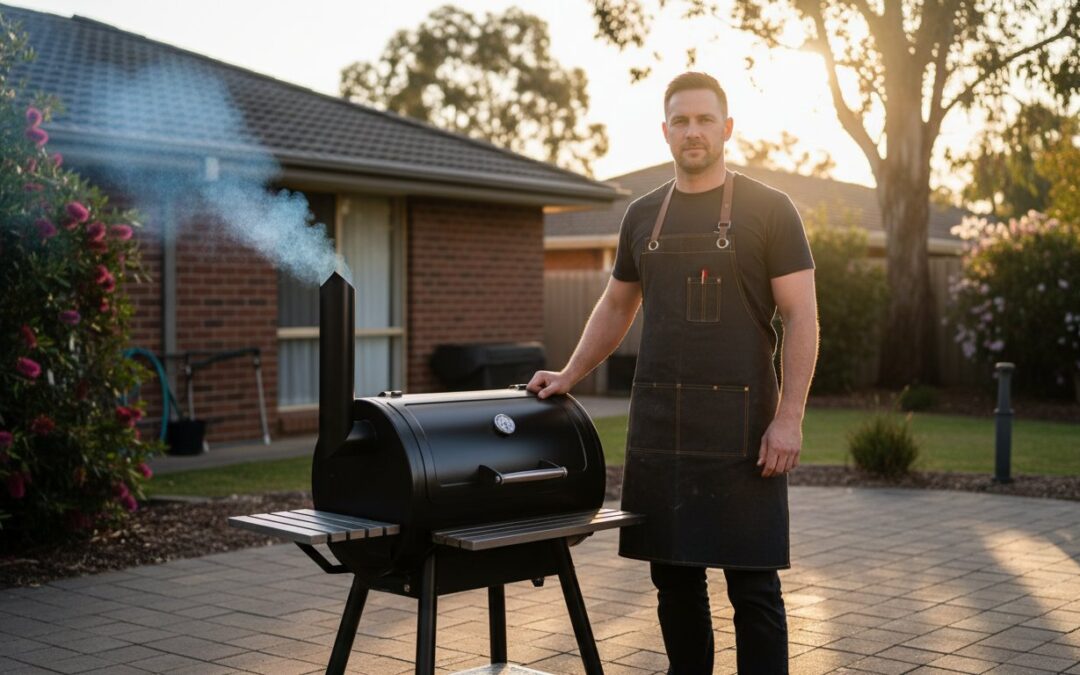
A 10-degree temperature spike for just 20 minutes can turn a premium A$140 wagyu brisket into a tough, dry disappointment. It’s the most common hurdle for Australian backyard cooks who want to move beyond basic grilling and produce competition-quality meat. You already know that low and slow is the secret to world-class BBQ, but nobody wants to spend 12 hours straight staring at a thermometer or fighting with vent settings. Mastering how to maintain 225°f in a smoker is about control, not luck.
We’ll show you how to manage your airflow and fuel layers to hold a rock-steady temperature for the entire duration of your cook. You’re going to learn the precise relationship between intake vents and exhaust dampers so you can finally achieve that elusive thin blue smoke. This guide covers the exact steps to set your fire and walk away with total confidence. We’ve tested these methods across offset, kettle, and bullet smokers to ensure your next long burn is a stress-free success. Get ready to stop babysitting your rig and start producing professional results every single time.
Key Takeaways
- Understand why 225°F (approx. 107°C) is the essential equilibrium for rendering fat and breaking down collagen for perfectly tender results.
- Learn why using premium, chemical-free natural hardwood fuel is critical for preventing unpredictable temperature spikes and ensuring a stable burn.
- Master the “Fire Triangle” and intake vent management to discover exactly how to maintain 225°f in a smoker with total precision.
- Adapt your fire management for the Australian climate, ensuring high ambient temperatures and wind don’t compromise your smoker’s baseline.
- Deploy advanced fire-building techniques like the Minion and Snake methods to achieve a rock-steady, low-intensity burn for hours on end.
The Magic of 225°F: Why Low and Slow is the BBQ Gold Standard
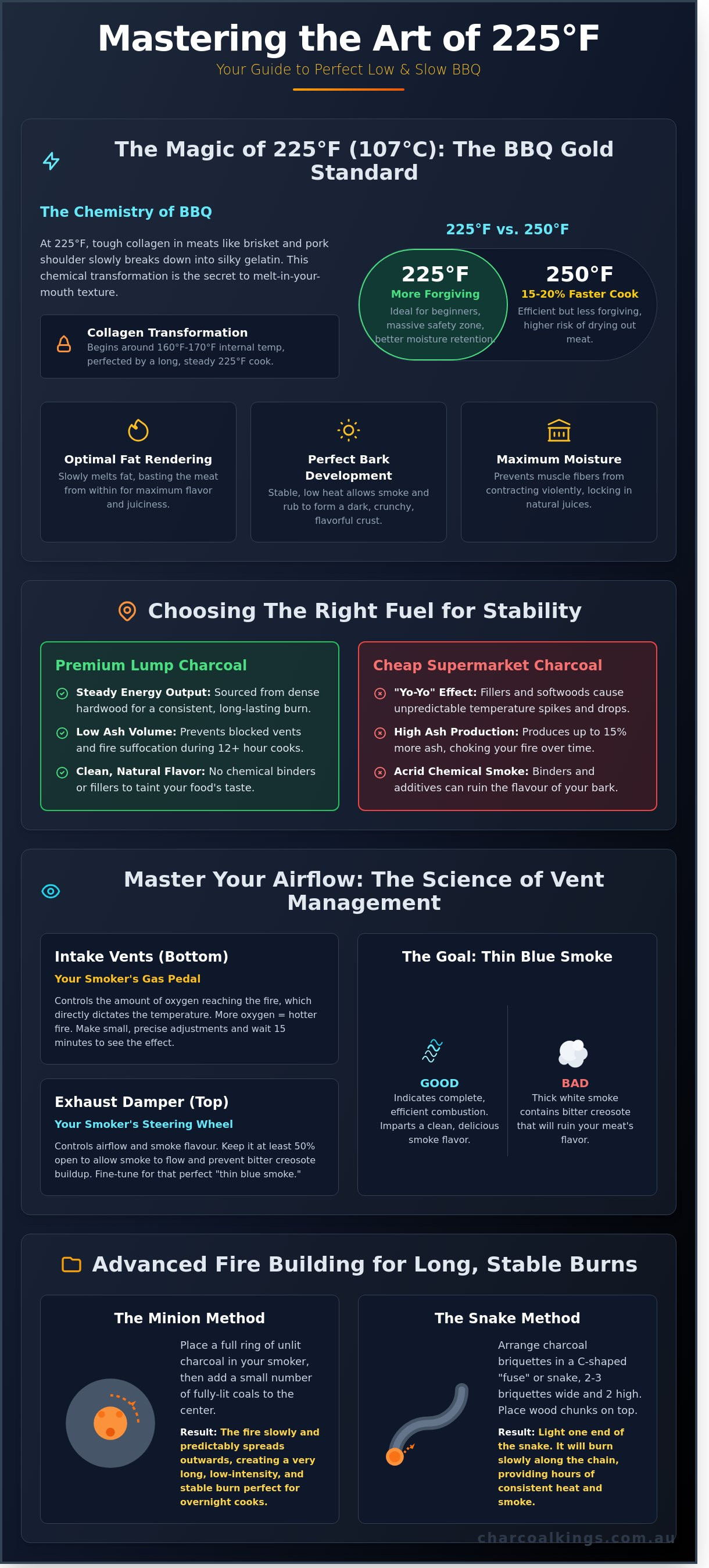
225°F (approximately 107°C) isn’t just a random number; it’s the equilibrium point for authentic barbecue. At this temperature, you’re balancing heat energy with time. High heat cooks meat quickly but causes muscle fibres to contract violently. This tension forces out the juices, leaving you with a tough, dry product that no amount of sauce can save. Low and slow is a philosophy that respects the protein and rewards patience.
The primary goal for any pitmaster is a clean, efficient burn. You’re looking for “thin blue smoke,” which indicates complete combustion of your premium hardwood or charcoal. Thick, billowing white smoke carries bitter creosote that ruins the flavour profile. Knowing how to maintain 225°f in a smoker ensures your fuel burns hot enough to be clean but cool enough to let the meat transform over a 12 to 16 hour cook. It’s the difference between a backyard hobbyist and a true king of the grill.
Collagen vs. Heat: The Chemistry of BBQ
Tough cuts like brisket, beef ribs, or pork shoulder are packed with collagen. This connective tissue is practically inedible if cooked fast. At 107°C, a chemical transformation occurs. Collagen slowly breaks down into gelatin, which provides that silky, melt-in-your-mouth texture. This process begins in earnest when the meat’s internal temperature hits the 160°F to 170°F (71°C to 77°C) range. The thermal sweet spot is the point where moisture retention meets fat rendering to produce a succulent result. Using 225°F provides a massive safety zone for beginners. It’s hard to accidentally overcook a shoulder at this temp, giving you the freedom to focus on fire management.
225°F vs. 250°F: Does it Really Matter?
Experienced pitmasters often debate the merits of 225°F versus 250°F (121°C). Cooking at 250°F can reduce your total cook time by about 15% to 20%. While this is efficient for commercial kitchens, 225°F is significantly more forgiving for long-haul cooks at home. It allows for a more gradual “stall,” the period where evaporative cooling stops the meat’s internal temperature from rising. Mastering how to maintain 225°f in a smoker provides the stability needed to push through this phase without scorching the exterior bark. Consistency matters more than the specific digit on the dial. A steady 225°F will always beat a smoker that swings wildly between 200°F and 300°F.
- Fat Rendering: Slow melting ensures the fat bastes the meat from the inside.
- Bark Development: Stable temps allow the rub and smoke to form a dark, crunchy crust.
- Moisture: Lower temps prevent the “squeeze” effect on muscle fibres.
Choosing the Right Fuel for Temperature Stability
Cheap supermarket charcoal is often a mix of softwoods, sawdust, and chemical binders. These fillers ignite at different rates, causing a “yo-yo” effect where your thermometer swings between 200°F and 250°F every twenty minutes. This instability makes learning how to maintain 225°f in a smoker a frustrating experience. High-quality fuel relies on wood density. Charcoal Kings’ premium hardwood lump is sourced from dense species that provide a steady energy output. It’s carbonised to remove impurities, leaving you with a fuel source that burns clean and stays consistent for the duration of your cook.
Lump Charcoal: The Pitmaster’s Choice
Professional pitmasters choose lump charcoal for its superior responsiveness. It allows you to control the fire through oxygen management alone. A significant benefit for long cooks is the low ash volume. Standard supermarket briquettes can produce 15% more ash than premium lump. This waste accumulates in the firebox, blocking the lower vents and suffocating the fire after 6 or 8 hours. Using natural hardwood ensures that even during a 14-hour pork shoulder cook, your airflow remains unobstructed. It also eliminates the risk of acrid, chemical smoke tainting the flavour of the bark during those critical early hours of smoke absorption.
Briquettes and Binchotan for Consistency
For those who value a predictable burn, high-quality natural briquettes provide a uniform shape and size. However, the secret to professional-grade stability is adding Binchotan charcoal to your fuel bed. This high-carbon fuel is the densest charcoal available. While it takes longer to light, it provides a steady, infrared heat that lasts for up to 8 hours. Mixing Binchotan with your standard lump creates a thermal core that resists temperature drops when you open the smoker lid. This combination is the most reliable method to maintain 225°f in a smoker throughout a cold Australian winter night. It provides the longevity required for heavy cuts like brisket without the need for constant refuelling.
Ready to upgrade your fuel game? Check out the premium charcoal range at Charcoal Kings and get your next cook started right. Get Sizzlin’!
Master Your Airflow: The Science of Vent Management
Managing a fire isn’t guesswork; it’s physics. Every pit operates on the “Fire Triangle” which consists of fuel, heat, and oxygen. Since you’re using premium natural hardwood charcoal for your fuel, oxygen becomes the only variable you can actively manipulate during the cook. Mastering how to maintain 225°f in a smoker requires you to balance the air entering the firebox with the air exiting the chimney. If the balance is off, you’ll either extinguish the fire or spike the temperature into a sear zone.
Think of your intake vents as the gas pedal. These bottom vents dictate the fire’s intensity by controlling how much oxygen the coals consume. Your exhaust vent acts as the draft, pulling that heat and smoke across your meat. If you choke the intake, the fire dies. If you choke the exhaust, you create a stagnant, bitter environment that ruins expensive cuts of brisket or pork shoulder. Learning the mechanics of how to maintain 225°f in a smoker is what separates a backyard griller from a true pitmaster.
Patience is your most valuable tool. Follow the 15-minute rule: after every vent adjustment, wait at least 15 minutes before touching them again. Steel and ceramic retain heat differently. If you adjust the vents every two minutes, you’ll end up “chasing the needle” and swinging between 200°F and 300°F all day. Let the temperature settle before deciding your next move.
Setting Your Intake Vents
- Step 1: Start with all vents 100% open. This provides maximum oxygen to establish a clean-burning fire and heat up the smoker’s walls quickly.
- Step 2: Monitor your thermometer closely. Start closing the intake vents when the temperature hits 200°F. This 25-degree lead time prevents the thermal mass from overshooting your target.
- Step 3: Fine-tune the intake to a “pencil-width” opening. This restricted airflow is usually enough to sustain a steady 225°F when using high-quality Australian lump charcoal.
The Role of the Exhaust Vent
The exhaust vent should remain 50% to 100% open throughout the entire cook. Its primary job is to create a vacuum effect, known as a draft, which pulls fresh oxygen over the coals. If you close this vent to trap heat, you also trap “stale smoke” inside the cooking chamber.
Stale smoke produces creosote, a thick, black soot that leaves a medicinal, bitter taste on your food. Keeping the exhaust open ensures that only the cleanest blue smoke touches your meat. If the temperature is climbing too high, always adjust the intake vent first. Only use the exhaust as a last resort for minor 5-degree tweaks. Proper ventilation is the secret to that authentic, clean timber flavour that Charcoal Kings customers expect. Get the airflow right, and the fire will do the hard work for you.
The Australian Factor: Managing Temps in Harsh Climates
In Australia, the environment dictates your cook as much as your fuel choice. If you are smoking in Adelaide during a 40°C heatwave or facing the heavy humidity of Queensland, your baseline temperature shifts. A black offset smoker sitting in direct Australian sun can reach internal temperatures of 65°C (150°F) before you even strike a match. This reduced delta means your fire needs to be smaller and more controlled to avoid overshooting your target. Learning how to maintain 225°f in a smoker requires constant awareness of these external forces.
Wind is the most aggressive enemy of temperature stability. A 20km/h gust can pull heat through your vents or strip it from the steel surface of your pit. Position your smoker so the firebox intake is shielded from direct wind. If you use a thin-walled offset, a A$50 welding blanket from a local hardware store provides the insulation needed to stop the wind from crashing your temps. Consistency is about controlling the air, not just the fire.
Smoking in Heat and Wind
Direct sunlight adds significant radiant heat to your smoker. In Queensland, this often forces pitmasters to use less fuel to prevent the pit from running too hot. Conversely, wind creates a vacuum effect that can make your fire burn through charcoal 30% faster than usual. Keep your intake vents partially shielded. Using premium, high-density lump charcoal ensures a more predictable burn even when the weather turns.
The Power of the Water Pan
A water pan is your best tool for temperature regulation. It acts as a thermal heat sink, absorbing excess energy and releasing it slowly. This prevents the rapid spikes that ruin a brisket. Water boils at 100°C (212°F), which creates a natural ceiling that helps you understand how to maintain 225°f in a smoker without constant vent adjustments.
- Humidity: Moisture helps smoke particles stick to the meat, improving bark formation.
- Thermal Mass: A full water pan prevents the pit temperature from dropping rapidly when you add new fuel.
- The Sand Alternative: For easier cleanup, fill the pan with clean sand. It holds heat for longer periods, providing a massive amount of thermal mass that keeps the pit steady.
The “Lid Peeking” trap is the fastest way to ruin a timeline. Every time you lift the lid to check your progress, you lose heat and moisture. This adds roughly 15 minutes to your total cook time for every look. Trust your probes and keep the chamber sealed. Professional results come from leaving the meat alone and letting the thermal mass do the work.
Ready to master your next cook? Buy premium natural hardwood charcoal to ensure your fuel is as reliable as your technique.
Advanced Fire Building: The Minion and Snake Methods
Maintaining a steady temperature starts with fuel management. If you dump a full chimney of white-hot coals into your pit, you’ve already lost the battle. Too much heat at the start makes it nearly impossible to figure out how to maintain 225°F in a smoker. You need a slow-fuse effect where fuel ignites gradually over several hours. Mastering the art of barbecuing with charcoal requires understanding how to limit the amount of fuel burning at any single time. This controlled burn is the secret to professional results.
Executing the Snake Method
The Snake Method is the standard for Weber Kettles and round grills common in Australian backyards. It creates a domino effect that provides consistent heat for 8 to 12 hours without intervention.
- Lay your briquettes or lump charcoal in a semi-circle around the outer edge of the charcoal grate.
- Stack them two wide and two high for a thick, reliable “snake” that won’t extinguish halfway through.
- Place premium hardwood smoking chunks every 10 to 15 centimetres along the first half of the chain for a clean smoke profile.
- Light exactly 3 to 5 coals in a chimney starter. Once ashed over, place them at the very start of the snake.
This setup ensures only a small section of charcoal burns at once. It prevents the temperature from spiking and keeps your pit locked at that 107°C (225°F) sweet spot. It’s the most reliable way to handle long cooks on a smaller footprint.
The Minion Method for Long Cooks
For drum smokers and vertical cabinets, the Minion Method is the superior choice. It relies on a large reservoir of fuel to power through 12 to 18-hour cooks like brisket or pork shoulder without a single top-up. This method is the professional’s choice for overnight sessions.
- Fill your fire basket with unlit premium lump charcoal. High-density hardwood charcoal is best because it leaves less ash to choke the fire.
- Create a small crater or “well” in the centre of the unlit fuel.
- Drop 10 to 12 lit coals into the crater to start the slow outward burn.
The fire will slowly spread from the centre. Because you’re only burning a few pieces of charcoal at a time, the oxygen levels remain manageable. This is the most efficient way to learn how to maintain 225°F in a smoker when you can’t be at the vents every twenty minutes. Using high-quality, chemical-free fuel ensures that as the new coals ignite, they don’t produce the acrid, “dirty” smoke associated with cheap alternatives. Get your vents set early, and this method will hold steady while you sleep. Get sizzlin’!
Take Control of Your Pit and Perfect the Burn
Mastering the art of the low and slow cook requires more than just patience. It demands precise airflow control and a reliable fire-building strategy like the Snake Method to ensure your smoker stays steady for up to 12 hours. Learning how to maintain 225°F in a smoker is a fundamental skill that separates backyard hobbyists from seasoned pitmasters. When Australian temperatures climb or coastal winds hit 20km/h; your choice of fuel becomes your most important tool.
You need a heat source that burns clean without the bitter taste of additives. Charcoal Kings provides the same 100% natural, chemical-free hardwood charcoal used by Australia’s top competition BBQ teams. We ship our premium grades to retail and wholesale customers nationwide; ensuring you get a consistent, high-performance burn every time you light the pit. Don’t settle for inferior fuel that chokes your vents with heavy ash. High-quality hardwood is the only way to achieve that thin blue smoke for professional results.
Get Sizzlin’ with Australia’s Premium Hardwood Charcoal!
Grab your thermometer, trust your vents, and get ready to serve the best brisket your neighborhood has ever tasted.
Frequently Asked Questions
Why does my smoker temperature keep rising even when vents are closed?
Air leaks are the primary reason your temperature climbs despite closed vents. Even a 2mm gap in your smoker’s door or lid seal allows enough oxygen to enter and fuel the fire. Check your gaskets for wear or damage, as a tight seal is mandatory for heat control. If your seals are intact, you likely started with too many lit coals for a low and slow cook.
For a standard 57cm kettle or bullet smoker, don’t start with more than 10 to 12 lit briquettes. Using too much ignited fuel at the beginning makes it nearly impossible to pull the temperature back down once it passes 250°F. Precision starts with fuel management.
Can I maintain 225°F using only wood instead of charcoal?
You can maintain 225°F using only wood, but it requires constant attention and an offset smoker. Wood burns faster and more intensely than premium natural hardwood charcoal. You’ll need to add a small, pre-heated wood split every 45 to 60 minutes to keep the fire consistent without creating dirty black smoke.
Most Australian pitmasters prefer using a base of long-burning charcoal briquettes for stability. They then add hardwood chunks for flavour. This hybrid method is much easier for beginners than managing a pure wood fire for a 12 hour cook.
How often should I add more charcoal to my smoker?
Using the Minion Method with 5kg of premium hardwood charcoal, you shouldn’t need to add fuel for 8 to 12 hours. This setup allows the fire to slowly consume unlit coals over time. If you’re using a basic charcoal arrangement, expect to add a handful of unlit coals every 90 minutes to keep the heat steady.
Always monitor your fuel levels when the internal temperature drops by 5 degrees. Don’t wait until the fire is almost out to replenish your basket. Adding fuel early ensures the new coals ignite without a massive temperature dip.
What is the best type of smoker for maintaining a steady 225°F?
Ceramic kamados and insulated cabinet smokers are the most efficient tools for learning how to maintain 225°f in a smoker. Their thick, heavy walls retain heat better than thin steel units, meaning they use 40% less fuel. A quality kamado can hold 107°C (225°F) for over 15 hours on a single load of lump charcoal.
While offset smokers are iconic, they require more frequent adjustments and fuel additions. If you want a “set and forget” experience, an insulated vertical smoker is the professional choice for long brisket sessions.
Does the weather really affect my smoker’s internal temperature?
External conditions change your burn rate significantly. A 15km/h wind can pull heat directly through the metal walls of your smoker, forcing you to open intake vents wider to compensate. On a 5°C winter morning in Melbourne, your smoker will consume 25% more charcoal than it would on a 30°C day in Brisbane.
Rain is also a major factor. Water evaporating off the surface of your smoker acts as a heat sink, rapidly dropping the internal temp. Always try to position your rig in a sheltered area to maintain a consistent environment.
Is it better to stay at 225°F or 250°F for a beef brisket?
Staying at 225°F is the traditional gold standard for rendering fat in a 6kg brisket. At this temperature, a full packer brisket takes roughly 1.5 to 2 hours per kilo to reach tenderness. It’s a patient process that results in maximum moisture retention and a deep smoke ring.
Cooking at 250°F is a popular “hot and fast” alternative that reduces total cook time by about 2 hours. While 250°F is acceptable, 225°F provides a larger margin for error. Use high-quality natural charcoal to ensure the smoke stays clean regardless of which temperature you choose.
What should I do if my smoker temperature drops and won’t come back up?
Check for ash buildup blocking your bottom vents immediately. A 3cm layer of ash can choke the airflow and kill your fire even if you have plenty of fuel left. If the vents are clear and the temp is still falling, add 10 to 15 fully lit coals from a chimney starter to jumpstart the heat.
Understanding how to maintain 225°f in a smoker involves reacting quickly when the temp hits 210°F. Don’t just open the vents and wait. If the coals are smothered in ash, give the charcoal grate a gentle shake to clear the debris and restore oxygen flow.
How do I know if my smoker thermometer is accurate?
Test your thermometer probe in a glass of crushed ice and a little water; it should read 0°C. For the high end, check it in boiling water, which should register 100°C at sea level. Most built-in lid thermometers are inaccurate by 15 to 20 degrees because they’re positioned too far from the cooking grate.
Invest in a digital dual-probe thermometer to track the exact temperature where the meat sits. Professional units have a variance of less than 0.5 degrees, giving you the precision needed for perfect low and slow results every time.