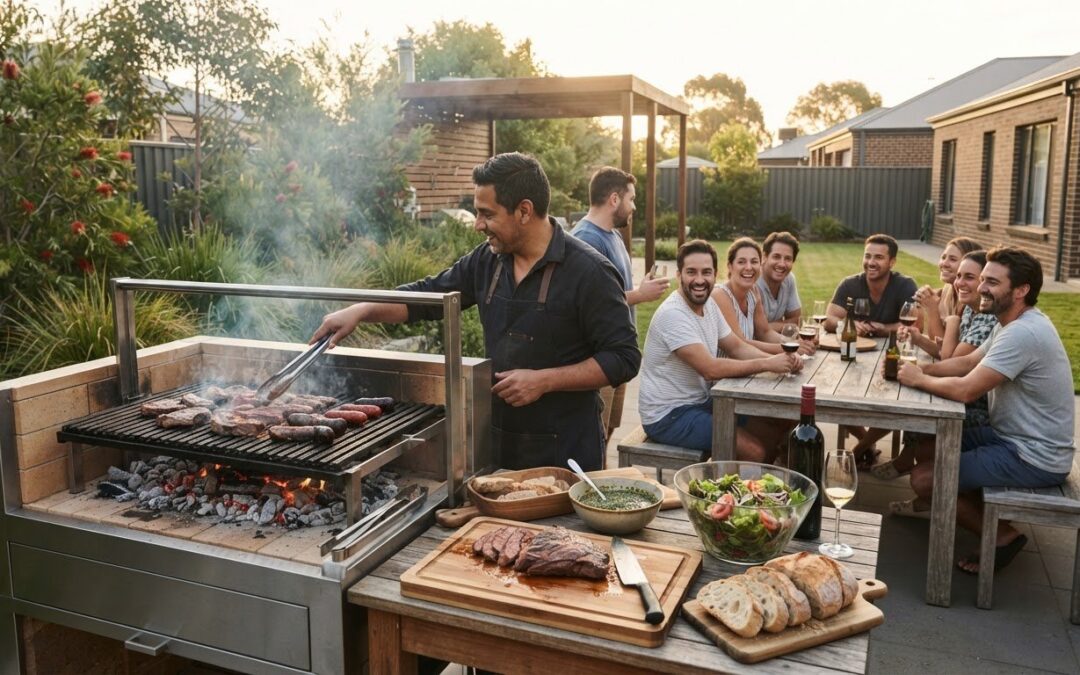
What makes an asado feel relaxed is often less about juggling the grill and more about giving the fire time to settle. Planning how to host an argentine asado in your backyard can feel daunting when you’re choosing cuts, managing different cooking times and working out when to serve. Start by building a steady bed of embers, then let the food and conversation unfold at an unhurried pace.
This guide covers how to plan the fire, choose a practical mix of sausages and meat cuts, and serve food in stages so you’re not trying to bring everything to the table at once. You’ll also find preparation tips, ideas for useful accompaniments and basic fire-safety checks, including checking local restrictions before lighting. Allow around 45 to 60 minutes for the fire to settle before cooking, then expect the meal to continue over several hours. With a clear plan, you can spend less time coordinating dishes and more time with your guests.
Key Takeaways
- Think of an asado as a shared meal around fire-cooked food, with room to adapt the menu to your gathering.
- Prepare the cooking area and build a steady bed of embers before food goes on the grill.
- Plan a flexible menu and serving order so longer-cooking foods and quicker bites fit comfortably into the meal.
- Use a simple hosting timeline to prepare the backyard, welcome guests and serve without rushing.
- Match fuel and tools to your grill, menu and experience when planning how to host an argentine asado in your backyard.
What Makes an Argentine Asado a Different Kind of Backyard Barbecue?
An Argentine asado is a meal and social gathering centred on food cooked over fire and shared at an unhurried pace. It brings together the cooking, the person tending the fire and the people gathered to eat. The word refers both to the way food is grilled and to the meal built around it. For a concise overview of the tradition, see Argentine asado.
Rather than aiming to serve everything at once, an asado makes room for food to come off the grill in stages. Regional customs and family habits differ, so no single menu defines every authentic gathering. The common thread is hospitality: tend the fire, offer food as it’s ready and let conversation set the pace.
Watch this asado tutorial for a glimpse of the cooking and gathering in practice:
What does asado mean in Argentine food culture?
The asador is the person responsible for tending the fire and cooking. Their role is practical, but it also helps shape the gathering: they keep an eye on the food while guests talk, share a drink or enjoy what’s already been served. You don’t need to copy a particular family’s customs. When learning how to host an argentine asado in your backyard, focus on welcoming people into the process rather than treating dinner like a race.
What equipment do you need to host one at home?
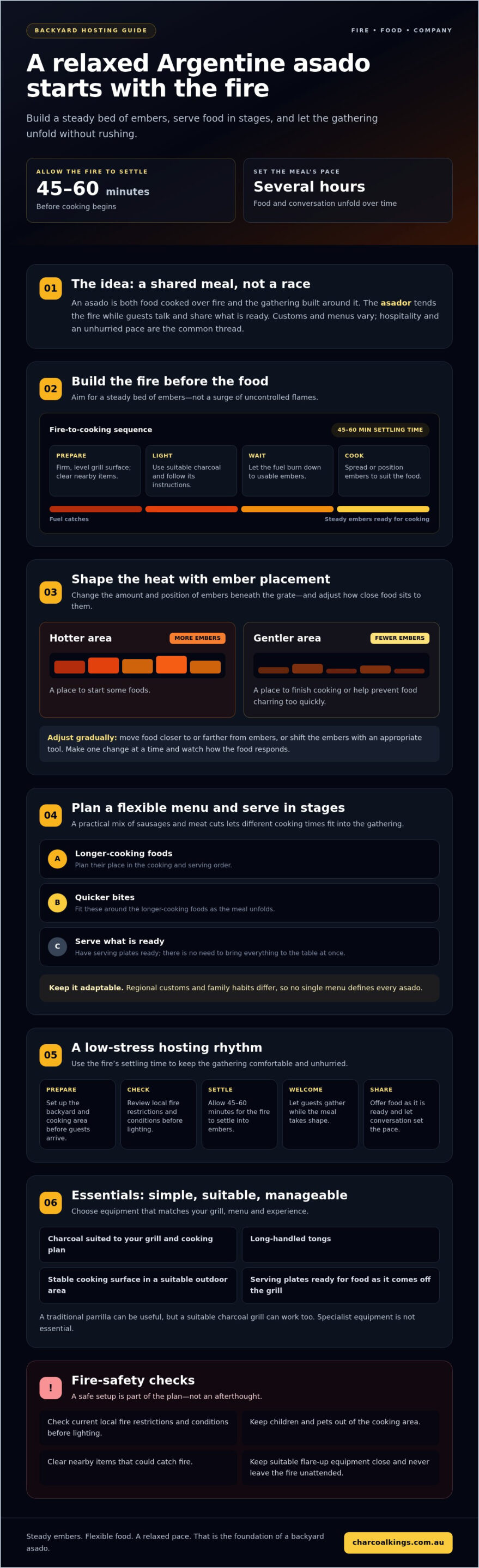
A traditional parrilla, a grill with a grate for cooking over fire, can be useful, but specialist equipment isn’t essential. A suitable charcoal grill can work too. Begin with the essentials:
- Charcoal suited to your grill and cooking plan
- Long-handled tongs for handling food safely
- A stable cooking surface in a suitable outdoor area
- Serving plates ready for food as it comes off the grill
Choose equipment you can manage confidently, rather than buying gear just to imitate a particular setup. If you’re comparing grill types and features for Australian conditions, consult this Australian BBQ buying guide.
How to Build and Manage the Fire for an Argentine Asado
An asado fire is ready for cooking when it gives you a steady bed of embers, not a surge of uncontrolled flames. This takes patience, but makes the heat easier to manage. You can adjust the cooking intensity by changing how much fuel sits beneath the grate and how close the food is to the embers.
Plan the fire as part of the gathering, not as a last-minute task. The Buenos Aires City Tourism guide describes asado as an Argentine ritual, with the fire and meal unfolding at a relaxed pace. For a backyard gathering, prepare the cooking area before guests arrive and allow the fuel time to become usable embers.
How do you prepare the charcoal and cooking area?
Set the grill on a firm, level surface. Clear away nearby items that could catch fire, and keep children and pets out of the cooking area. Before lighting, check current local fire restrictions and conditions. Requirements can vary by location and may change with the weather.
Choose charcoal suited to your grill and follow the manufacturer’s instructions for the fuel quantity and lighting method. Keep suitable equipment close by to manage an unexpected flare-up, and never leave the fire unattended. If you’re comparing fuel types or want a grounding in charcoal basics, read the complete charcoal guide.
How can you control heat with embers?
Once the charcoal has burned down to embers, spread them under the cooking area. An even layer creates a consistent zone for foods that cook at a similar pace. For more flexibility, leave more embers on one side and fewer on the other. This gives you a hotter area to start some foods and a gentler area to finish cooking or help prevent food from charring too quickly.
Ember-based heat control means adjusting cooking intensity by changing the amount and position of embers beneath the food. You can fine-tune the heat by moving food closer to or farther from the embers, or shifting embers with an appropriate tool. Make one adjustment at a time and watch how the food responds.
For anyone learning how to host an argentine asado in your backyard, follow the sequence: prepare the area, light the charcoal as directed, wait for the embers, then begin cooking. Charcoal Kings’ fuel and BBQ accessories are options to consider. Choose what suits your grill and plan rather than treating any particular setup as essential.
What to Cook at an Asado and How to Pace the Menu
A good asado menu is built around the grill, but it doesn’t need to follow a fixed formula. Choose a few foods that suit your guests, cooking space and available time. Beef and chorizo are familiar choices; provoleta, bread and vegetables offer alternatives or additions. Ask about dietary needs beforehand, then plan suitable options and keep them separate during preparation and cooking.
Which foods make a practical asado menu?
Start with foods that need more time or a gentler stretch over the heat. Add quicker-cooking items as grill space and embers allow. Chimichurri, made with herbs, garlic, oil and other seasonings, makes a fresh accompaniment. Serve it separately so guests can add it to taste. Prepare bread, a simple salad and other sides before the fire is ready, leaving you free to focus on the grill.
Use this flexible sequence as a guide, not a rule. Adjust it to the cuts and ingredients you choose, the heat available and what your guests enjoy.
| Menu role | Approximate cooking order | Serving approach |
|---|---|---|
| Longer-cooking beef cuts | Start first | Serve when ready, in manageable portions |
| Chorizo and other quicker-cooking items | Add as grill space allows | Offer as an early batch or alongside the main food |
| Provoleta, bread or vegetables | Cook when the heat and space suit them | Serve promptly while warm |
| Salad and chimichurri | Prepare ahead; no grill time needed | Set out as sides and condiments |
In what order should you cook and serve the food?
Let cooking time and grill space determine the sequence. Begin with items that need longer, then use hotter or cooler areas for smaller, faster-cooking foods. Avoid crowding the grate. Cooking in batches gives each item room and lets guests eat as food is ready, instead of waiting for the whole menu to finish at once.
Cooking in stages keeps the grill manageable and the meal moving. Set out serving plates and sides in advance, then bring each batch to the table while it’s at its best. This rhythm helps you stay present with your guests rather than trying to coordinate every dish for one exact serving moment.
When planning how to host an argentine asado in your backyard, make the menu support the gathering, not complicate it. A considered mix of grill-cooked favourites, prepared sides and options that suit your guests is plenty.
How to Prepare the Backyard and Host Guests Without Rushing
A successful asado doesn’t require specialist equipment or expert-level grilling. A suitable grill, a manageable menu and a clear plan are enough to make the gathering feel welcoming. Set up the space before lighting the fire, then cook and serve in stages.
Before choosing the day, check current local fire restrictions, council guidance and weather conditions. Wind, dry conditions or a fire restriction can make outdoor cooking unsuitable. Have a covered or indoor alternative ready, but never use a charcoal grill indoors or in an enclosed area.
How can you prepare the space before guests arrive?
Arrange seating and a separate serving space, then set out water, plates and essential cooking tools. Keep the grill stable and supervised, and position it according to the manufacturer’s instructions. Clear combustible materials from the active cooking area. Children and pets should stay well away from the fire, with a responsible adult keeping the boundary clear.
A simple timeline helps keep the preparation in sequence:
- Before lighting: Check conditions, prepare sides and sauces, arrange seating, and gather your tools.
- Before guests arrive: Set up the grill and light the charcoal according to its instructions, allowing time for it to become ready for cooking.
- As guests arrive: Welcome everyone, explain that food will come out gradually, and keep the fire area clear.
- During cooking: Focus on the grill and serve each batch as it’s ready.
- As the meal continues: Refill sides and plates, and make room for conversation between servings.
How do you make the meal feel relaxed and communal?
Set expectations early. Let guests know they won’t all sit down to a fully finished menu at once. Prepare salad, bread and sauces ahead so you can concentrate on cooking instead of stepping away to assemble every side. Invite guests to gather, talk and share what’s ready, while keeping the grill clear and accessible to the person cooking.
That balance is central to how to host an argentine asado in your backyard: prepare enough to feel in control, then leave space for the gathering to unfold naturally. Choose fuel and equipment that suit your grill and cooking plan. Explore charcoal and BBQ essentials as you prepare for your next backyard cook-up.
Bring Your Backyard Asado Together with the Right Fuel and Tools
A relaxed asado follows a clear sequence: plan the menu, prepare the space, build a bed of embers, cook in stages and share the food as it’s ready. The equipment supports that plan, but it doesn’t need to be elaborate. Choose tools you know how to use, and be ready to adapt if the fire or cooking pace changes.
Fuel is one part of the setup, not the cooking method itself. Hardwood lump charcoal and charcoal briquettes are fuel categories; the grill design, amount of fuel, ember arrangement and position of the food all affect how you cook. Charcoal Kings supplies hardwood lump charcoal and other BBQ products, including grills, smokers and accessories. These are options to consider, not requirements for an asado.
How do you choose charcoal for your cooking setup?
Start with your grill’s instructions. Check which fuel types it supports, how much of the cooking area you’ll use and whether your menu calls for a shorter cook or several stages. Match the fuel to your equipment and experience. If you’re new to charcoal, keep the setup simple and practise managing the fire before hosting a larger gathering.
For a practical introduction to fuel and charcoal cooking, read this guide to barbecuing with charcoal. Use it alongside your grill instructions, since equipment varies and one setup may not suit every cooking plan.
What should you remember on the day?
Before lighting, check local fire guidance and conditions, then make sure your cooking tools are ready and the grill is stable. Start early enough for the fire to settle into embers before food goes on. Stay with the fire while it’s active, keep children, pets and combustible items away, and have suitable equipment close by for managing the fire safely. If conditions make outdoor cooking unsuitable, use your backup plan instead.
A final check can help keep the day on track:
- Menu and serving plates are ready.
- Fuel suits the grill and cooking plan.
- Tools and a clear cooking area are prepared.
- Local restrictions and weather conditions have been checked.
- Food will be cooked and served in manageable stages.
That’s the practical foundation for how to host an argentine asado in your backyard: plan thoughtfully, manage the fire with care and make the meal about sharing, not perfect timing. If you’re still weighing up your charcoal approach, the linked beginner’s guide is a useful next read.
Set the Fire, Share the Meal
A memorable backyard asado doesn’t depend on a perfect menu or specialist gear. It comes together through a few steady choices: prepare the space, build a controlled bed of embers, and cook food in stages so guests can share it as it’s ready. Match the fuel and tools to your grill, menu and experience, then leave time for conversation around the meal.
That’s the practical heart of how to host an argentine asado in your backyard. Check local fire guidance before lighting, keep the cooking area safe, and give the fire time to settle. Choose food that suits your guests and let the gathering find its own rhythm.
Charcoal Kings is an Australian-based charcoal and BBQ supplier, with hardwood lump charcoal, grills, smokers and BBQ accessories to help you prepare your setup. Explore the range to find options that suit your plans, then bring your guests together for a relaxed cook-up. Explore Charcoal Kings charcoal and BBQ supplies.
Frequently Asked Questions
What is an Argentine asado?
An Argentine asado is both a way of cooking food over a fire and a social meal centred on sharing it. The person tending the fire and grill, often called the asador, manages the cooking while guests gather, talk and eat as dishes are ready. Customs and menus vary between families and regions. The defining idea isn’t one fixed set of foods, but a communal, unhurried gathering built around fire-cooked food.
What food do you serve at an Argentine asado?
An asado menu can include beef, chorizo and other foods suited to the grill, with sides such as bread, salad and chimichurri. Provoleta is another option. There’s no single required menu, so consider your guests’ dietary needs and the cooking space. Prepare sides and sauces ahead, then cook foods in stages according to how long they need on the grill. Serve chimichurri separately so guests can add it to taste.
How do you cook an asado in a backyard?
To cook a backyard asado, prepare a safe outdoor cooking area, light charcoal according to your grill’s instructions and wait until it forms a steady bed of embers. Arrange the embers to create hotter and cooler areas, then cook foods in stages according to their cooking needs and the space available. Stay with the fire, keep children, pets and combustible items away, and serve each batch as it’s ready.
How long should you allow to prepare an asado?
Allow about 45 to 60 minutes for the fire to build and the wood or charcoal to burn down to hot embers before cooking. The meal itself is leisurely and can continue over several hours, with food served gradually. Add time beforehand to prepare sides, set out plates and tools, and check local fire guidance and weather. Starting early gives the fire time to settle and helps you welcome guests without rushing.
Can you host an Argentine asado without a parrilla?
Yes. A parrilla, a grill with a grate designed for cooking over fire, is useful but not essential for a backyard asado. A suitable charcoal grill can also work. Choose equipment you can manage confidently, follow its instructions and arrange the embers to suit the cooking area. The spirit of the gathering comes from cooking over a controlled fire, serving food in stages and sharing the meal, not owning specialist equipment.
What charcoal is suitable for an Argentine asado?
Choose charcoal that’s compatible with your grill and appropriate for your menu and cooking plan. Hardwood lump charcoal and charcoal briquettes are common fuel categories, but the right fit depends on the grill’s instructions, the cooking area and how you intend to manage the fire. If you’re new to charcoal, keep the setup straightforward and learn how your grill responds. Don’t assume every fuel type is suitable for every grill.
Is it safe to have a charcoal BBQ in an Australian backyard?
A charcoal BBQ can be used safely in a backyard when the equipment is used as directed and local conditions allow it. Before lighting, check current fire restrictions, weather conditions and guidance from your local council or fire authority, as requirements vary by area. Use the grill outdoors on a stable surface, keep it supervised, and move children, pets and combustible materials away from the active fire. Don’t cook with charcoal indoors or in an enclosed space.