
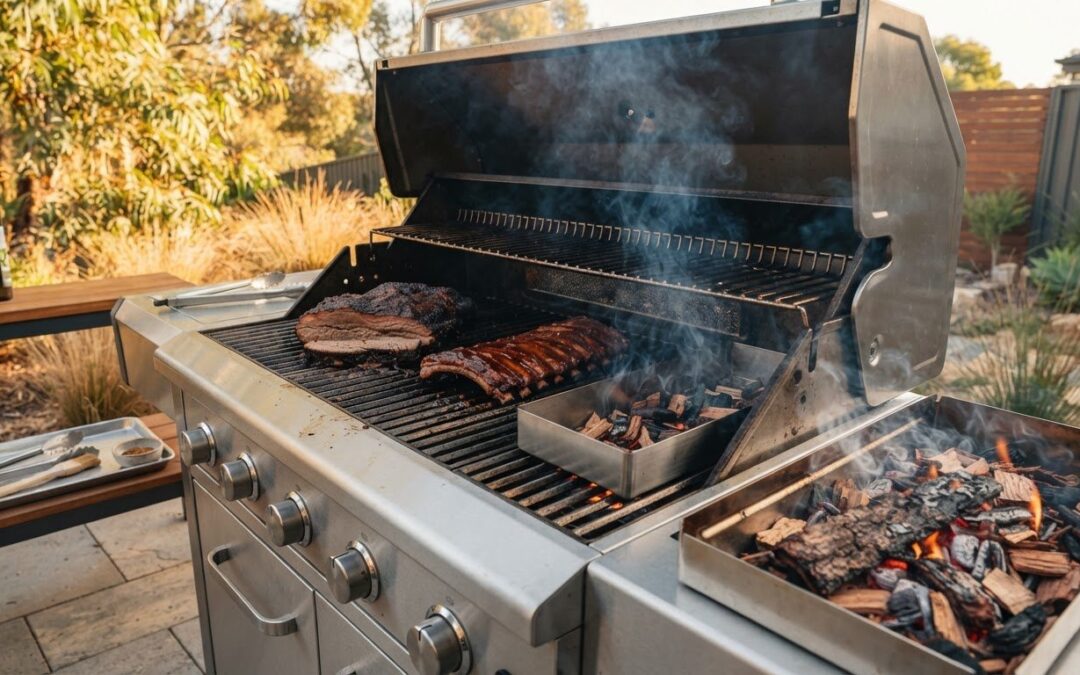
Gas delivers heat, but real hardwood fuel delivers flavour. If your weekend cooks taste like they came out of a kitchen oven rather than a genuine pit, you are not alone. Clean-burning gas offers convenience, but it lacks the organic compounds needed to build real barbecue crust. Mastering how to get smokey flavour on a gas grill requires decoupling your heat source from your smoke production.
Most backyard cooks battle flared-up wood chips that coat meat in bitter soot, or they watch burner heat bleed away during low-and-slow sessions. You don’t need a specialised offset smoker to solve this. With the right technique, you can easily coax a distinct smoke ring and authentic wood-fired taste out of your existing setup without damaging your burners.
This guide breaks down the mechanics of managing two-zone indirect temperatures, deploying smoker boxes and DIY foil packets, and choosing pure hardwood smoking woods for clean, dependable flavour every cook.
Key Takeaways
- Clean gas combustion lacks organic phenolic compounds, making external hardwood fuel essential for developing genuine barbecue bark and flavour.
- Discover how to get smokey flavour on a gas grill using heavy-duty stainless steel smoker boxes or DIY foil packets to prevent wood flare-ups.
- Master two-zone indirect heat setups to protect low-and-slow meats from direct heat while keeping smoke generators active over direct flames.
- Ditch the soaking myth to avoid bitter, white water-vapour steam and achieve pure, aromatic smoke from dry, chemical-free hardwood.
- Identify the airflow and thermal limits of gas hoods, and understand how natural solid fuels bridge the gap to competition-grade barbecue.
The Science of Smoke: Why Gas Barbecues Lack Wood-Fired Flavour
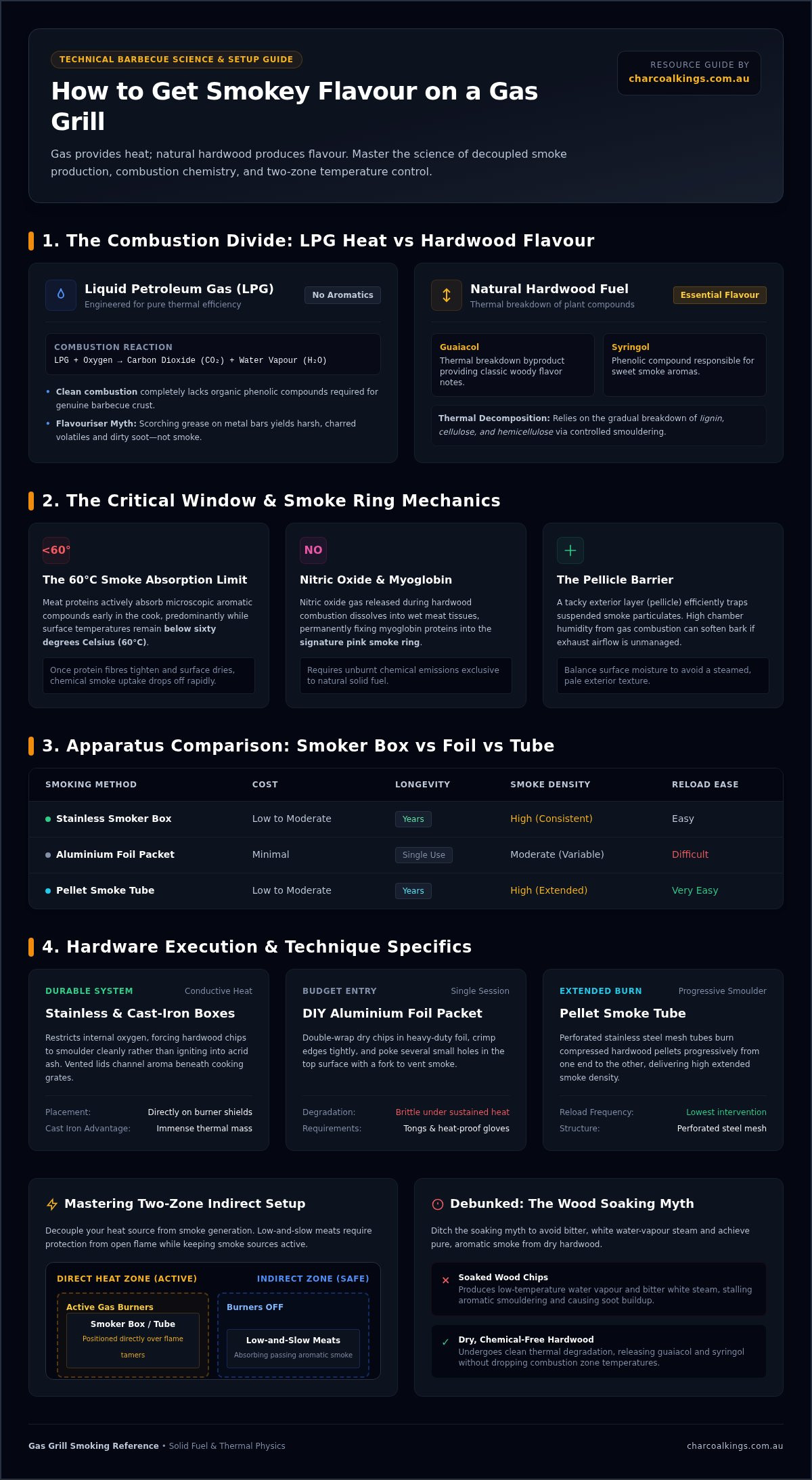
Real barbecue flavour is not an accident of heat. It is the condensation of vapourised phenolic compounds onto the surface of food. Liquid petroleum gas (LPG) burns exceptionally clean, reacting with oxygen to produce almost exclusively carbon dioxide and water vapour. Many grill manufacturers claim their metal flavouriser bars deliver authentic taste by incinerating fallen drippings. In reality, scorching grease yields harsh, charred volatiles, not the balanced profile of burning hardwood. Understanding this distinction is essential when learning how to get smokey flavour on a gas grill.
The process of smoking relies on the thermal decomposition of wood components, primarily lignin, cellulose, and hemicellulose. Meat proteins actively absorb these microscopic aromatic compounds early in the cook, predominantly while surface temperatures remain below sixty degrees Celsius. Once protein fibres tighten and the exterior dries out, chemical smoke uptake drops off rapidly. Setting up your smoke source early is therefore critical.
Combustion Byproducts: LPG vs Natural Hardwood
Gas combustion is engineered for thermal efficiency, generating pure heat without trace aromatics. Natural hardwood undergoes incomplete thermal degradation, breaking down into guaiacol, which supplies classic woody notes, and syringol, which creates sweet smoke aromas. Unseasoned fats dripping onto hot burner shields cannot synthesize these plant-based compounds. They produce dirty soot rather than culinary smoke. To replicate authentic pit barbecue, clean-burning solid hardwood must smoulder alongside your gas heat source.
The Role of Surface Moisture and the Smoke Ring
Wood smoke chemistry directly dictates visual and textural success. Nitric oxide gas released during hardwood combustion dissolves into wet meat tissues, fixing myoglobin proteins into the signature pink smoke ring. Achieving this requires a tacky exterior layer, known as a pellicle, which traps suspended smoke particulates efficiently. Gas burners flood the chamber with combustion water vapour. Without proper exhaust airflow, this ambient humidity softens the meat surface into a pale, steamed texture rather than setting a crisp, mahogany bark. Mastering how to get smokey flavour on a gas grill requires managing this moisture balance continuously.
Comparing Methods to Smoke on a Gas Grill: Smoker Box vs Foil
Choosing the right smoking apparatus dictates temperature stability and flavour quality. Knowing how to get smokey flavour on a gas grill comes down to how effectively you isolate wood from raw burner flames. Direct contact causes open combustion, whereas controlled airflow yields steady smouldering. Examining the science of smokiness confirms that balanced wood vaporisation requires indirect conductive heat rather than erratic open fire.
| Method | Cost | Longevity | Smoke Density | Reload Ease |
|---|---|---|---|---|
| Stainless Smoker Box | Low to Moderate | Years | High (Consistent) | Easy |
| Aluminium Foil Packet | Minimal | Single Use | Moderate (Variable) | Difficult |
| Pellet Smoke Tube | Low to Moderate | Years | High (Extended) | Very Easy |
Dedicated Stainless Steel and Cast-Iron Smoker Boxes
Heavy-gauge stainless steel and cast-iron boxes provide exceptional flame isolation. By restricting internal oxygen, they force hardwood chips to smoulder cleanly instead of igniting into acrid ash. Vented lids channel concentrated aroma beneath the grates, while placement directly above burner shields maximises heat conduction. Cast iron offers immense thermal mass, buffering temperature dips during long cooks. Investing in durable BBQ accessories like a solid steel box eliminates the waste of disposable alternatives.
The Aluminium Foil Packet Technique
Foil packets offer a practical starting point with zero specialised hardware. Double-wrap dry wood chips in heavy-duty aluminium foil, crimp the edges tightly, and poke several small holes in the top surface with a fork to vent smoke. While accessible, foil packets degrade quickly under sustained burner heat. Swapping spent packets during a four-hour cooking session requires tongs, heat-proof gloves, and patience to avoid tearing brittle aluminium across your flame tamers.
Pellet Smoke Tubes and Charcoal Trays
Perforated stainless steel mesh tubes burn compressed hardwood pellets progressively from one end to the other. They deliver up to four hours of continuous, thin blue smoke without reloading. For maximum depth, hybrid drop-in charcoal trays replace factory flavouriser bars entirely, allowing real lump charcoal to ignite over gas burners. Both systems represent the most efficient way to solve how to get smokey flavour on a gas grill during extended cooks.
How to Smoke Meat on a Gas Barbecue Step-by-Step
Transitioning from basic grilling to genuine smoking requires precision. Executing a proven operating procedure guarantees consistent heat and clean aromatics throughout long cooks. Here is your five-step standard operating workflow:
- Position the smoke hardware: Seat your loaded smoker box or foil pouch directly on the metal flavouriser bars over your designated ignition burner.
- Initiate combustion: Fire the primary burner to high with the hood shut to trigger active smouldering.
- Dial in the cooking zone: Once thin blue smoke emerges, drop that active burner to low and verify the indirect side remains completely unlit.
- Load the cooking chamber: Position your meat onto the unlit side of the grates, inserting digital probes to track ambient and internal temperatures.
- Hold thermal stability: Maintain lid closure, monitoring smoke flow and replacing hardwood packets quickly as output fades.
Learning how to get smokey flavour on a gas grill succeeds or fails on burner control. Many barbecue manufacturers outline alternative configurations for how to smoke on a gas grill, but direct-heat separation remains non-negotiable for tender barbecue.
Establishing Two-Zone Indirect Heat on Gas
Light a single burner on one side of your firebox, leaving the adjacent middle and opposite burners completely off. This creates distinct direct and indirect zones. Adjust the solitary active burner until ambient cooking grates on the cooler side stabilise between one hundred ten and one thirty degrees Celsius. Place your meat exclusively over the cold burners. This prevents direct radiant flames from scorching bottom fat caps while convective heat circulates smoke evenly across the meat.
Igniting and Regulating Your Smoking Wood
Place your filled smoker box directly atop the primary burner’s heat shield before turning on the gas. Never balance wood packets directly onto bare burner ports, as dripping wood resins clog ignition jets and cause dangerous flare-ups. Fire the burner to maximum until wood chips char and release steady wisps of aromatic smoke. Immediately throttle the burner dial down to low. This drop sustains steady smouldering without igniting an open internal flame that creates bitter soot.
Managing Airflow and Lid Discipline
Resist opening the hood during the first three hours. Frequent lifting dumps thermal energy and purges the delicate smoke concentration needed to penetrate raw proteins. Factory gas barbecues feature large rear perimeter exhaust vents engineered to evacuate combustion gases safely. Keep these exhaust ports clear of obstructions so convective air currents draw continuous wood smoke smoothly past your meat. For a detailed breakdown of equipment airflow and burner layouts, explore The Ultimate BBQ Buying Guide to match your cooking style with the right frame.
Selecting the Right Smoking Woods and Managing Smoke Quality
Fuel chemistry defines your final taste. When solving how to get smokey flavour on a gas grill, timber selection and combustion efficiency determine whether you produce mouth-watering barbecue or ruin dinner with bitter residue. You must match the density of your wood smoke to the protein on the grate, avoiding chemical-treated offcuts or artificial aromas at all costs.
Hardwood Flavour Pairings for Beef, Pork, and Poultry
Different wood species release distinct aromatic compounds based on their internal resin and oil profiles. Australian hardwoods and traditional species provide exceptional versatility:
- Ironbark and Hickory: Dense timbers producing robust, pungent smoke profiles. Best suited for heavy beef cuts like brisket, short ribs, and chuck roast.
- Apple and Cherry: Mild fruitwoods that supply subtle sweetness and impart rich mahogany colouring to pork shoulders, ribs, and bacon.
- Pecan and Peach: Smooth, nutty aromas that enhance poultry, game birds, and seafood without masking delicate natural juices.
The Soaking Wood Myth Debunked
Submerging wood chips in water prior to cooking is an outdated myth that harms flavour. Dense hardwoods possess tight cellular structures that resist water penetration; a thirty-minute soak only wets the outermost millimetre. Placing wet chips over gas burners forces the wood to boil off surface liquid first. This creates dense, dirty steam that cools your cook chamber, delays smouldering, and leaves meat tasting sour. Always feed your smoker vessels with bone-dry, all-natural hardwood to ignite aromatic combustion immediately.
Diagnosing Clean Blue Smoke vs Acrid White Creosote
Smoke visual density signals its chemical purity. Heavy, billowing white plumes indicate oxygen-starved, incomplete combustion. This thick vapour deposits bitter creosote soot onto food, numbing the palate and ruining bark. Aim instead for faint, translucent blue smoke drifting steadily from the grill vents. Thin blue smoke proves the wood is smouldering cleanly at optimal temperatures, delivering aromatic syringol and guaiacol directly into your meat. If exhaust smoke becomes thick and pungent, increase smoker box ventilation or dial back burner output slightly.
Ready to upgrade your cook? Secure 100% pure, chemical-free smoking woods directly from Charcoal Kings to unlock authentic flavour on your gas setup today.
Upgrading from Gas: Bridging the Gap to Authentic Solid Fuel
Smoker boxes and pellet tubes solve the initial challenge of how to get smokey flavour on a gas grill, but enclosed gas cookers still face physical constraints. Gas burners inevitably vent high levels of moisture, and burner lids leak draft air rapidly. When you want darker bark, heavier smoke penetration, and intense radiant heat, transitioning toward authentic solid fuels is the logical progression.
Overcoming Gas Burner Limitations with Solid Fuel
LPG combustion produces water vapour as an unavoidable byproduct. This ambient moisture prevents exterior fat caps from dehydrating quickly enough to form a rugged, crunchy bark. In contrast, burning solid hardwood fuels delivers bone-dry radiant heat. This intense infrared energy caramelises surface rubs and renders intramuscular fat without boiling the meat. Review Charcoal: The Ultimate Guide to Fuelling Your BBQ to understand the combustion science behind solid fuels and high-heat cooking.
Introducing Charcoal Techniques to Your Outdoor Kitchen
You don’t have to discard your gas barbecue to experience solid fuel performance. Drop-in cast-iron or heavy stainless charcoal trays sit over gas burners, allowing you to ignite genuine lump charcoal using your existing gas jets before turning the gas off completely. This hybrid method pairs weeknight speed with weekend barbecue quality. When you are ready to expand your repertoire further, adding a dedicated charcoal pit or offset smoker gives you complete control over draft velocity and fuel combustion. Study our breakdown on Mastering the Art of Barbecuing with Charcoal to build confidence with airflow and ember management.
Sourcing Premium Hardwood Smoking Fuels in Australia
Fuel quality directly dictates smoke quality. Commercial supermarket briquettes frequently contain mineral fillers, chemical binders, and petroleum ignition agents that impart acrid chemical fumes to your food. True wood-fired flavour requires all-natural fuels free from additives. Sustainably sourced Australian hardwood lump charcoal burns hot, clean, and long, providing a neutral, searing ember bed. Pairing natural lump charcoal with pure smoking woods gives you complete command over culinary smoke profiles. While modifying your barbecue teaches you how to get smokey flavour on a gas grill, stepping up to 100% natural solid fuel unlocks true competition-grade barbecue.
Take Control of Your Backyard Smoke Flavour
Mastering how to get smokey flavour on a gas grill comes down to thermal control and fuel discipline. Isolating your hardwood inside heavy-duty smoker boxes protects it from direct burner flames. Calibrating a two-zone indirect setup allows meat to absorb aromatic phenolic compounds before exterior surfaces seal. Ditching the soaking bucket keeps your cook chamber free from sour steam, guaranteeing clean, thin blue smoke across the grates.
When you want deeper bark and authentic pit character, fuel purity matters most. Charcoal Kings is the trusted Australian specialist for serious pitmasters and home cooks, supplying 100% natural chemical-free hardwood products. Benefit from nationwide delivery direct from dedicated warehouse stockists right to your door. Upgrade your barbecue setup with premium natural fuels at Charcoal Kings and start delivering authentic wood-fired taste on your next cook.
Frequently Asked Questions
Can you use real wood chunks in a gas barbecue?
Yes, you can use hardwood chunks, provided you place them inside a heavy-duty smoker box or directly onto your flavouriser bars. Chunks smoulder longer than chips, making them ideal for long cooks like brisket. Never place bare chunks directly against open burner tubes. Chunks require indirect conductive heat to smoulder steadily without igniting into open flames, which protects your burners and maintains clean smoke.
Why should you never soak wood chips before smoking on gas?
Soaking wood chips creates acrid steam instead of culinary smoke. Dense hardwoods absorb minimal moisture during brief soaking, leaving water sitting purely on the exterior. When placed over a gas burner, that moisture lowers grill temperatures and stalls combustion. The resulting steam deposits a sour, bitter flavour onto food rather than the sweet aromatic compounds generated by smouldering bone-dry hardwood chips.
How long does a foil packet of wood chips last on a gas grill?
A standard foil packet containing two cups of dry wood chips typically lasts between thirty and forty-five minutes. Airflow volume and burner heat settings dictate this burn rate. Once the packet stops emitting thin blue smoke, you must replace it to sustain flavour. Preparing multiple pouches before cooking is essential when mastering how to get smokey flavour on a gas grill across longer sessions.
Can you get an authentic smoke ring when cooking on a gas barbecue?
Yes, you can produce a distinct smoke ring on a gas grill by introducing clean hardwood smoke early in the cook. The pink ring forms when nitric oxide from burning hardwood binds with myoglobin in cool meat. Place cold meat straight from the fridge onto indirect grates. Clean wood smoke circulating before internal meat temperatures pass sixty degrees Celsius creates the signature chemical ring.
Is it safe to put lump charcoal directly on gas burners?
No, you should never place lump charcoal directly onto bare gas burners or flavouriser bars. Burning charcoal generates intense radiant heat that warps standard gas burner tubes and corrodes gas jets with ash fallout. If you want solid-fuel performance, use an approved drop-in cast-iron charcoal tray designed to shield internal burner hardware while letting you ignite coals safely with gas heat.
What is the best temperature for smoking meat on a gas grill?
The optimal temperature range for smoking meat on a gas grill is between one hundred ten and one thirty degrees Celsius. Maintaining this low ambient heat allows tough collagen fibres to render slowly without drying out the protein. Use a digital probe thermometer at grate level to monitor cooking chamber heat, adjusting a single active burner dial to hold thermal stability across the indirect zone.
How do I prevent my wood chips from catching fire on gas burners?
You prevent wood chips from catching fire by starving them of excess oxygen. Never expose loose wood directly to open gas flames. Pack dry chips tightly inside a stainless steel smoker box or tightly crimped heavy-duty foil packet with minimal top puncture holes. This restricted environment ensures wood smoulders into aromatic vapour, representing the safest method for how to get smokey flavour on a gas grill without soot.