
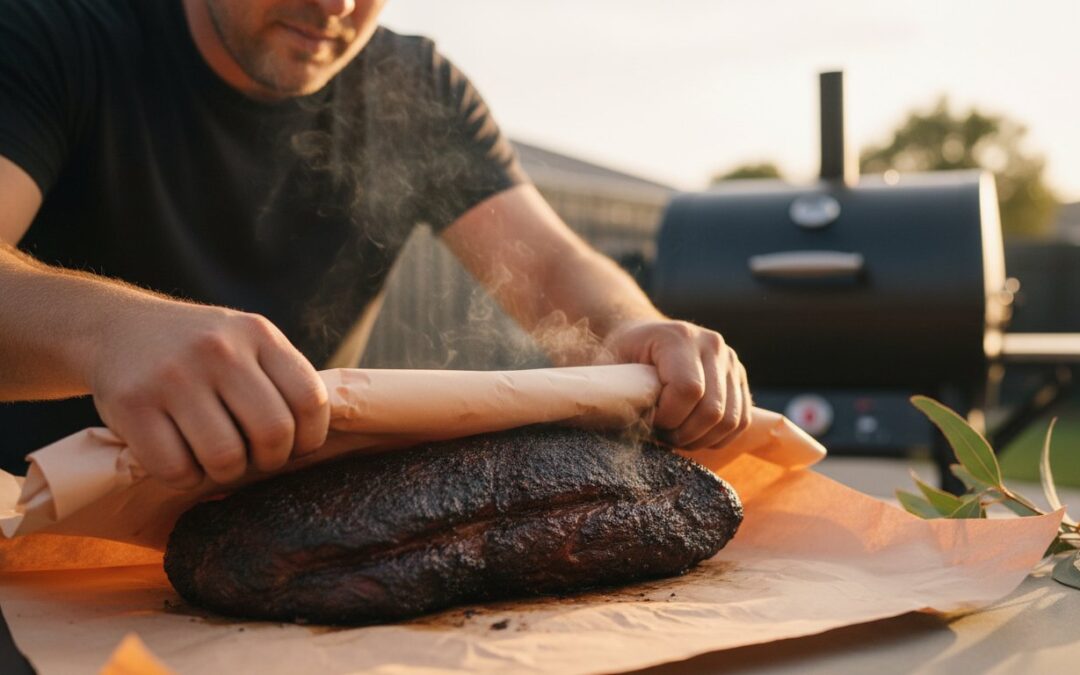
Your fire isn’t dying and your thermometer isn’t broken; you’ve simply hit the most misunderstood phase of low and slow cooking. Every pitmaster knows the anxiety of watching a premium A$140 brisket sit at 71 degrees Celsius for four hours while the dinner deadline approaches. It’s a frustrating hurdle that leads many to panic, but fixing a stalled brisket is actually a matter of physics rather than luck. You want that perfect bark and a jiggly, tender finish, not a dry slab of meat that’s three hours late to the table.
We agree that nothing kills the mood of a backyard session faster than a temperature gauge that won’t budge. This guide will teach you the exact science of evaporative cooling and the professional techniques required to power through the plateau without sacrificing flavor. We’re breaking down the pros and cons of the Texas Crutch versus butcher paper and providing a step-by-step timeline to ensure your cook stays on track. Let’s get sizzlin’ and turn that stubborn cut into a masterpiece.
Key Takeaways
- Understand the science of evaporative cooling to differentiate between a natural meat stall and a temperature dip caused by declining pit temperatures.
- Compare the pros and cons of the Texas Crutch, the Foil Boat, and the Naked Cook for fixing a stalled brisket while preserving a world-class bark.
- Learn why using premium natural hardwood charcoal is essential for maintaining the steady, high-intensity heat required to push through the stall efficiently.
- Master the professional “probe tender” test and target the 95°C to 98°C internal temperature window for a perfect, competition-grade finish.
Understanding the Brisket Stall: The Science of Evaporative Cooling
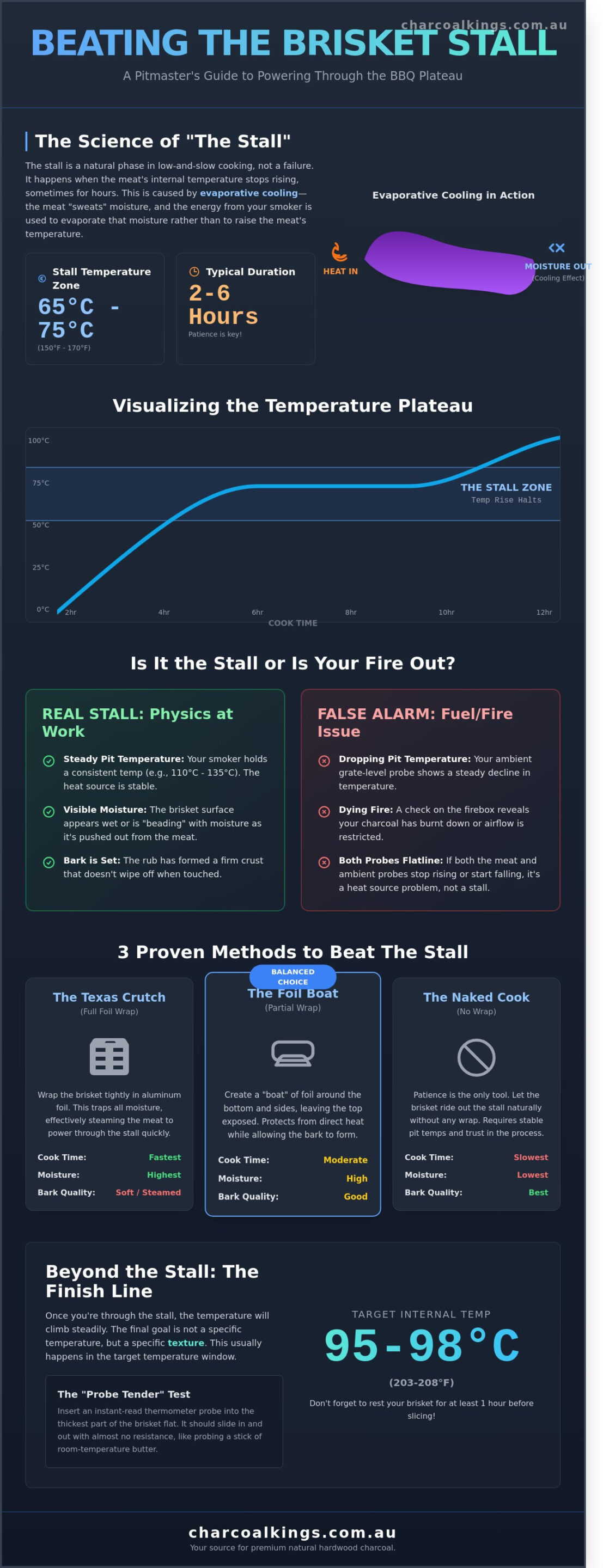
Every pitmaster hits a wall around the five or six hour mark. You’ve prepared your premium beef, lit your natural hardwood charcoal, and maintained a steady temperature. Suddenly, the internal temperature of the meat flatlines between 65°C and 75°C (150°F to 170°F). This plateau is known as the “stall.” It isn’t a failure of your smoker or your technique. It’s a sign of a successful cook. The stall happens when the rate of moisture evaporation from the meat’s surface perfectly balances the rate of heat absorption from your charcoal.
Think of it as the “Meat Sweats.” As the protein fibres tighten, they push moisture to the surface. This moisture evaporates into the air, cooling the meat down just like sweat cools a human body. You can’t force your way through this with more heat alone. Understanding this process is the first step toward fixing a stalled brisket and achieving that competition-grade bark.
To better understand this concept, watch this helpful video:
Why Does the Temperature Stop Rising?
The stall is driven by the physics of latent heat of evaporation. Energy that would normally raise the meat’s temperature is instead consumed by the phase change of water turning into steam. A larger surface area or higher moisture content means more evaporation and a longer plateau. Fixing a stalled brisket requires patience while this moisture works its way out. The stall is a thermal equilibrium state that can last up to 6 hours.
The Role of Humidity in Your Smoker
Humidity levels inside your cook chamber dictate how long the stall lasts. Using a water pan adds moisture to the air. This prevents the meat from drying out, but it also slows down evaporation. A humid environment prolongs the stall because the air is already saturated. You face a trade-off between a moist end product and a faster cook time. High airflow helps moisture escape the chamber faster. This speeds up the cook but can result in a drier exterior. Balance your airflow to ensure your bark develops without stalling your brisket for half a day. Get Sizzlin’!
Identifying the Stall: Is Your Brisket Stuck or Is Your Fire Out?
Fixing a stalled brisket requires a correct diagnosis before you reach for the foil. Most pitmasters hit a wall when the internal meat temperature reaches the 65°C to 71°C range. At this point, moisture moves to the surface and evaporates, cooling the meat as quickly as the pit can heat it. This is a physical stall, a natural part of the rendering process. However, you must differentiate this from a fuel stall. If your charcoal has burnt down or your airflow is restricted, your internal temps will flatline because the heat source is dying. You aren’t fighting thermodynamics; you’re just running out of puff.
Dual-probe thermometers are mandatory for this stage. One probe stays in the thickest part of the flat, while the other monitors the ambient temperature at the grate level. If your ambient temp drops by even 5 degrees, the internal progress will stop. Don’t bother probing for tenderness yet. During the stall, the connective tissue is still tough and the fat hasn’t fully broken down. Probing for “butter-like” feel at 70°C is a waste of time and lets valuable heat out of the lid.
The Temperature Plateau Checklist
- Verify Pit Stability: Ensure your smoker is holding steady between 107°C and 135°C. If you’re running lower than 107°C, you won’t have enough energy to overcome the evaporative cooling.
- Visual Sweat: Look through the probe port or a glass door. A brisket in a physical stall will have visible moisture “beading” on the surface.
- Fat Transformation: Inspect the fat cap. It should no longer be bright white. You’re looking for a translucent, yellowish tint which indicates the render has begun.
- Bark Colour: The rub should be set. If you touch the surface and the spice comes off on your finger, the bark isn’t ready for the next phase.
Using Ambient Probes for Diagnosis
A 5-degree fluctuation in pit temperature can mimic a stall on your internal meat probe. This is why monitoring the air around the meat is critical. If your ambient probe shows a downward trend, check your firebox immediately. Active combustion requires consistent airflow through the chimney. If the smoke has turned heavy and grey, your oxygen flow is likely choked. To ensure you’re using the right fuel to maintain these temps, refer to Charcoal: The Ultimate Guide to Fuelling Your BBQ for firebox management tips.
Once you’ve confirmed the fire is hot and the meat is sweating, you’ve officially identified a physical stall. Now you can decide whether to wait it out or use a wrap technique. Using premium hardwood charcoal ensures your heat remains stable enough to push through without constant vent adjustments. Get sizzlin’ and keep that airflow moving.
Proven Methods for Fixing a Stalled Brisket: Wrapping vs. Riding It Out
Most pitmasters reach a crossroads when the internal temperature hits 74°C (165°F). This is the standard trigger point for fixing a stalled brisket. You must choose between speed and texture. A common myth suggests wrapping turns premium beef into pot roast. This only happens if you add excessive liquid or wrap before the bark has properly set. When you time it right, wrapping preserves moisture while the internal temperature climbs through the danger zone.
Your choice depends on your deadline and your preference for bark. Wrapping can shave up to three hours off a cook. Riding it out requires patience and a steady fuel source. If you’re using premium natural hardwood charcoal, you have the consistent heat needed to make either choice work. Get Sizzlin’ with these three proven techniques.
The Texas Crutch: Butcher Paper vs. Aluminium Foil
Aluminium foil is the ultimate speed hack. It creates a sealed steam environment that can finish a brisket 25 percent faster than an unwrapped cook. The trade-off is a softer, wetter bark. Peach butcher paper is the professional standard. It’s breathable, allowing some moisture to escape so your bark stays crunchy while the meat stays tender. Follow these steps for a tight wrap:
- Lay out two overlapping sheets of heavy-duty paper or foil.
- Place the brisket off-centre on the sheets.
- Fold the edges tightly to eliminate all air pockets.
- Ensure the wrap is flush against the meat to prevent internal steaming.
The Foil Boat Method: The Best of Both Worlds
The foil boat involves wrapping only the bottom and sides of the meat, leaving the top exposed. This technique is a game-changer for offset smokers where heat often hits the bottom of the cook chamber first. It protects the lean flat from drying out while the fat cap on top continues to render and crisp. You’ll get better bark than a full wrap and better moisture retention than a naked cook. It’s the go-to method for many competitive teams in Australia.
The Naked Cook: Pushing Through with Heat
If you want a dark, mahogany bark, don’t wrap at all. To succeed, you’ll need to increase your pit temperature to 140°C (285°F) once the stall begins. This extra energy helps moisture evaporate faster so the temperature can start rising again. This method works best on high-humidity days or for smaller briskets under 5kg. The risk of a dry finish is higher, so use high-quality lump charcoal to maintain a steady, clean heat source without the chemical fluctuations of cheap briquettes. Fixing a stalled brisket this way requires the most skill but offers the highest reward for bark lovers.
Fuel Consistency: How Premium Charcoal Prevents False Stalls
Many pitmasters struggle with fixing a stalled brisket only to realize the meat isn’t the problem. Low-quality briquettes filled with sawdust and chemical binders often create “false stalls.” These occur when the fuel source fails to maintain a steady temperature, causing a dip in the pit. When your ambient temp drops, the evaporative cooling on the brisket’s surface wins the battle, and your internal temperature flatlines prematurely. Using Hardwood Lump Charcoal ensures your heat source remains constant, eliminating these frustrating thermal fluctuations.
Clean-burning fuel is vital during the 12 to 16 hour cook times required for a full packer brisket. Poor fuel produces thick, bitter creosote during the long hours of the stall. This heavy smoke sticks to the moisture on the meat’s surface, ruining the bark. Premium natural charcoal burns clean, allowing you to focus on the cook rather than fighting air vents every 20 minutes.
Why Australian Hardwood Lump is Superior for Brisket
Australian species like Gidgee and Ironbark are among the densest hardwoods in the world. This density translates directly to energy output and longevity. While softwoods or cheap imports burn out in 90 minutes, Gidgee provides a consistent, high-intensity burn that holds steady when the brisket hits the critical 165°F mark. High-carbon charcoal produces more radiant heat, which helps penetrate the meat during evaporation. This consistent energy flow is a secret weapon for fixing a stalled brisket because it provides the “push” needed to move past the sweat phase without spiking the pit temperature to 150°C.
Firebox Management During the Stall
The “Low and Slow” trap often leads to a fire that is too small to overcome the cooling effect of a 6kg piece of meat. If your fuel bed is too thin, the stall can last indefinitely. For offset smokers, ash management is the priority. Excessive ash blocks the intake vents, starving the fire of oxygen and dropping your temps. Use these strategies for better stability:
- Pre-heat your fuel: Place new logs or lumps on top of the firebox to warm up before adding them. This prevents temperature shocks that occur when cold fuel hits the bed.
- Use larger lumps: For the mid-cook transition, select larger pieces of charcoal to ensure a steady 4 to 6 hour burn without frequent interference.
- Clear the grate: Use a poker to keep the underside of your fire clear of ash every 2 hours to maintain airflow.
Consistency is the hallmark of a professional cook. Don’t let inferior fuel ruin a premium cut of beef. You need a fire that works as hard as you do.
Beyond the Stall: Finishing and Resting for the Perfect Bark
Successfully fixing a stalled brisket is only half the battle. Once you have pushed through the evaporative cooling phase, you are on the home stretch toward the finish line. Most pitmasters target a final internal temperature between 95°C and 98°C. However, relying solely on a digital thermometer is a rookie mistake. Temperature is a reliable guide, but it only tells about 90% of the story. The final 10% is determined by the physical breakdown of collagen and connective tissue, which happens on its own schedule.
Your goal is a brisket that offers zero resistance. If you pull the meat too early, it will be tough and chewy. If you wait too long, it will crumble like pot roast. Achieving a competition-grade slice requires patience and a keen eye for physical cues. After the hours spent fixing a stalled brisket, don’t rush these final steps. The bark should be dark, set, and slightly tacky to the touch before you even consider moving to the resting phase.
The Probe Tenderness Test
The “probe tender” test is the gold standard for professional pitmasters. Insert your temperature probe or a skewer into the thickest part of the flat. It should feel like you are sliding a needle into room-temperature butter. If there is any “grab” or resistance, the connective tissue hasn’t fully rendered. Keep cooking.
- Check the Flat: Always test the flat for tenderness. The point contains significantly more intramuscular fat and will always feel soft before the leaner flat is ready.
- The Jiggle Test: Pick up the brisket (with heat-resistant gloves) and give it a slight shake. The entire slab should jiggle like a tray of jelly. This visual cue confirms that the fats have liquefied.
- Consistency: Test 3 to 4 different spots. If the center is soft but the edges are tight, give it another 15 minutes.
The Long Rest: The Secret to Juicy Brisket
Resting is not optional. When the meat is hot, the moisture is under pressure and will pour out the moment you slice it. A proper rest allows the muscle fibres to relax and reabsorb those rendered fats and juices. Start by venting the brisket. Open the foil or butcher paper for 10 minutes to let the steam escape. This stops the carryover cooking process and prevents your bark from turning into mush.
Once vented, re-wrap the meat and place it in an insulated cooler, commonly known in Australia as an Esky. This “faux Cambro” method keeps the meat in the safe zone above 60°C for several hours. Aim for a minimum rest of 2 hours. Many professionals prefer a 4 to 6 hour rest for maximum tenderness. This duration ensures the moisture balance is perfect. When you finally slice against the grain, the meat should hold its own weight but pull apart with the slightest tug. Your hard work in the pit is finally ready for the plate.
Master Your Next Pit Session
Mastering the brisket stall is the difference between a dry dinner and a competition-grade result. You’ve learned that evaporative cooling is a predictable physical process, not a sign of failure. Whether you choose the Texas Crutch or decide to ride it out, maintaining a steady pit temperature is non-negotiable. Many pitmasters struggle with fixing a stalled brisket because they use inferior fuel that creates massive temperature swings. Consistent heat is the key to a perfect bark and reaching that target 95 degree Celsius internal temperature.
Professional results require professional fuel. Charcoal Kings provides 100% Natural Hardwood with no chemicals or fillers. It’s the same high-performance charcoal used by top-tier Australian competition BBQ teams to win trophies across the country. Don’t let cheap briquettes or chemical-laden fuels ruin a 12-hour cook. You need a clean burn that lasts as long as your meat stays on the grate.
Get Sizzlin’ with Australia’s Best Hardwood Lump Charcoal
Frequently Asked Questions
How long does a brisket stall usually last?
A brisket stall typically lasts between 2 and 6 hours depending on the weight of the meat and the humidity levels inside your smoker. This plateau occurs when the moisture on the surface of the beef evaporates at the same rate the heat enters the muscle. For a standard 6kg brisket, expect the internal temperature to sit between 65°C and 75°C for at least 4 hours before it begins to rise again.
Can I skip the stall by starting at a higher temperature?
You cannot skip the stall entirely because evaporative cooling is a physical certainty in a smoker environment. Starting your cook at 150°C might shorten the duration of the plateau, but it often results in a dry exterior and uneven fat rendering. Maintaining a steady 107°C to 121°C ensures the connective tissues break down properly before you focus on fixing a stalled brisket with a wrap.
Why did my brisket stall at a lower temperature than 165°F?
Briskets often stall as low as 60°C if your smoker has high airflow or the external environment is particularly dry. The stall begins the moment surface moisture evaporation equals the heat energy being absorbed by the meat. In many Australian regions with low humidity, this process starts earlier. If your pit temperature fluctuates below 105°C, the meat will struggle to overcome this cooling effect at these lower internal stages.
Does every brisket go through a stall?
Nearly every brisket experiences a stall unless you cook it in a high-pressure environment or a completely sealed electric oven. Scientific data from thermodynamics experts shows that 100% of meat samples cooked in traditional offset or charcoal smokers undergo some form of evaporative cooling. While the duration varies based on the 15% to 20% water content of the muscle, the temperature plateau is a standard part of the process.
Is it better to wrap in foil or butcher paper to fix a stall?
Aluminium foil is the most efficient tool for fixing a stalled brisket because it creates a 100% airtight seal that stops evaporation instantly. This method, often called the Texas Crutch, can reduce your total cook time by 3 hours. You should use pink butcher paper if you want to maintain a crunchy bark. It allows some steam to escape while still trapping enough heat to push through the plateau effectively.
What happens if I don’t wrap my brisket during the stall?
Leaving a brisket unwrapped extends the cooking process by up to 5 hours and produces a much thicker, darker bark. The meat continues to lose moisture through evaporation until the surface dries out enough for the internal temperature to climb again. This “naked” method requires burning more premium hardwood charcoal to maintain consistent pit temperatures for the full 12 to 16 hour duration of the cook.
Will spraying/spritzing my brisket make the stall last longer?
Spritzing your brisket with water or juice adds surface moisture which directly extends the duration of the stall. Each heavy spray can add 15 to 20 minutes to your total cook time by facilitating more evaporative cooling. While it helps build a smoke ring and prevents edges from burning, you should limit spritzing to once every 45 minutes to avoid a 7 hour plateau that exhausts your fuel supply.
Should I increase the smoker temperature when the stall happens?
Increasing your smoker temperature to 135°C is an effective way to power through the stall without using a wrap. This extra heat energy overcomes the cooling effect of evaporation more quickly than a standard low and slow setting. Most professional pitmasters wait until the internal temperature hits 74°C before bumping the heat. This ensures you have already achieved a quality bark and deep smoke penetration from your natural lump charcoal. Get Sizzlin’!