Most backyard cooks treat their grill vents like a suggestion, but a true pitmaster knows they are the precision throttle of a high-performance engine. It’s a common frustration to watch a premium cut of meat suffer because the heat spiked while you stepped away for a minute. You want the confidence that comes with a steady, predictable fire that holds for eight hours without constant babysitting or chemical taints that ruin the natural flavour of your meat. Mastering how to control temperature in a charcoal grill is the single most important skill that separates a hobbyist from a seasoned expert.
This guide provides the definitive blueprint for heat management using premium Australian hardwood. You’ll learn how to use your vents as a literal temperature dial to achieve perfectly seared steaks and tender, low-and-slow briskets. We will cover the mechanics of oxygen flow, the importance of fuel purity, and the exact setups required to maintain a rock-solid cooking environment. Stop fighting your equipment and start commanding it to deliver professional results every time you light the coals.
Key Takeaways
- Identify why oxygen is the primary accelerator for your fire and how high-purity fuel ensures a clean, predictable burn.
- Select the right fuel type by matching the burn profile of hardwood lump charcoal or briquettes to your specific cooking style.
- Learn how to control temperature in a charcoal grill by using the “Quarter-Inch Rule” for precise intake and exhaust vent adjustments.
- Build a two-zone thermal architecture to provide a safe zone for low-and-slow cooking and high-heat searing.
- Adapt your heat management techniques to handle the unique challenges of the Australian climate, including wind and extreme ambient heat.
The Fundamentals of Heat: How Oxygen and Fuel Purity Interact
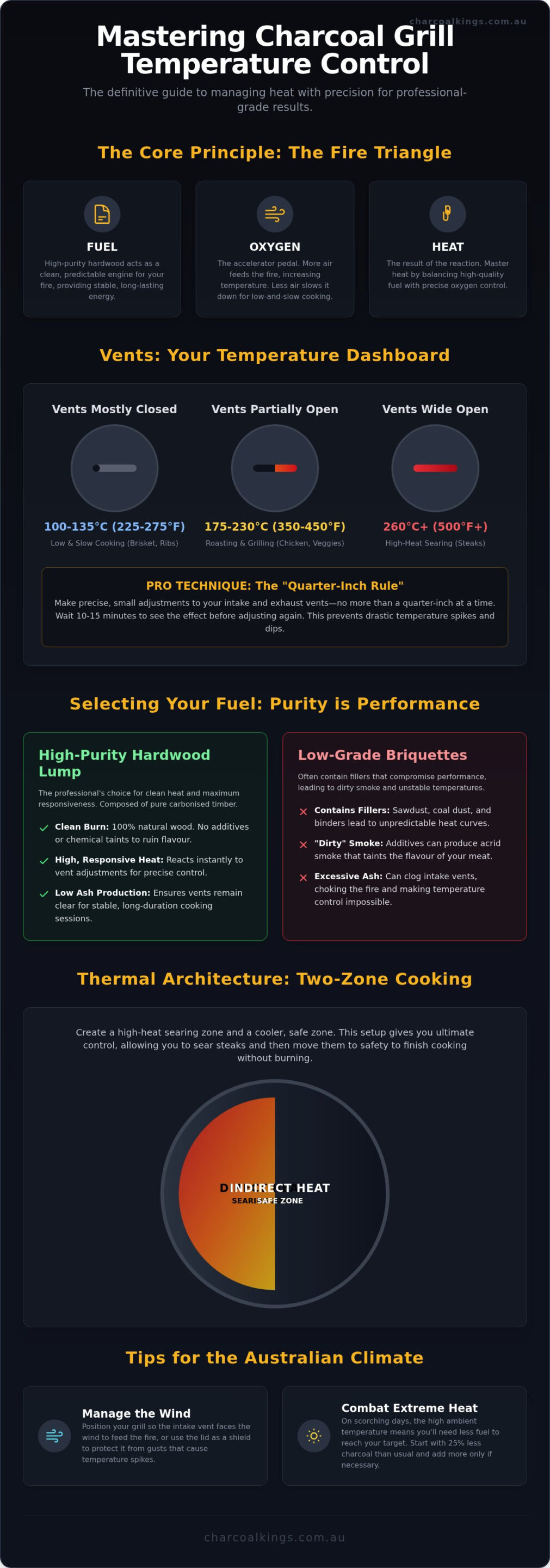
Mastering your fire starts with the fire triangle: fuel, oxygen, and heat. These three elements must exist in a delicate balance to maintain a steady cooking environment. If you want to learn how to control temperature in a charcoal grill, you must first understand that you aren’t just burning wood; you’re managing a chemical reaction. When these elements are in sync, you get predictable heat. When they aren’t, you face the frustration of temperature spikes and extinguished coals.
Oxygen acts as the accelerator pedal for your grill. The more air you allow into the firebox, the faster the fuel burns and the higher the temperature climbs. Different types of charcoal grills, from kettles to offset smokers, use various venting configurations to manage this flow, but the physics remain the same. Restricting oxygen chokes the fire, slowing the combustion process for low-and-slow sessions. Opening the vents wide provides the oxygen surge needed for high-heat searing.
The fuel quality serves as the engine of your grill. High-performance BBQ requires high-performance fuel. Low-grade charcoal often produces “dirty” smoke filled with acrid chemical taints. This is usually the result of additives that interfere with the purity of the burn. Using 100% natural Australian hardwood ensures that the only thing seasoning your meat is clean, organic heat and the natural essence of the timber.
The Chemistry of Combustion: Why Purity Matters
Many supermarket briquettes are packed with fillers like sawdust, cornstarch, and even coal dust. These additives don’t burn at the same rate as carbon, leading to unpredictable heat curves and excessive ash production. This ash can physically block your intake vents, making it nearly impossible to maintain a steady temperature over long periods. Professional-grade hardwood lump charcoal is different. It’s composed of nearly pure carbon, providing a clean and consistent energy source. Pyrolysis ensures that premium charcoal has already shed its volatile gases to provide a stable, high-energy burn. This purity allows for a linear temperature response when you adjust your vents.
The Impact of Infrared Heat on Flavour
Heat management involves two distinct types of energy: convective and infrared. Convective heat is the hot air circulating around the meat, which is vital for even cooking. Infrared heat is the radiant energy emitted directly from the glowing embers. High-purity charcoal is essential for the Maillard reaction and perfect searing, as it produces the intense infrared energy required to caramelise proteins without the interference of chemical soot. A dense bed of hardwood coals also has a high specific heat capacity. This means the coal bed acts as a thermal battery, resisting rapid temperature fluctuations when you open the lid to spritz or check your meat.
Selecting Your Fuel: Lump Charcoal vs. Briquettes for Temperature Stability
Choosing the right fuel is the foundation of heat management. If you want to master how to control temperature in a charcoal grill, you must choose a fuel source that matches your intended cook time and heat intensity. High-performance BBQ relies on predictable energy release. Using low-grade fuel with hidden fillers makes temperature stability impossible because additives burn at different rates than the carbon. This creates a jagged heat profile where temperatures spike and dip without any change to your vent settings.
Visual signs of quality are obvious before you strike a match. Premium hardwood lump should be large, dense, and free from excessive dust. It shouldn’t smell like chemicals when it’s in the bag. Purity is the standard because additives don’t just ruin the flavour; they create unpredictable hot spots. When you see large, heavy pieces of timber, you know you have the density required for a long, stable burn. This clean heat allows you to focus on your vents rather than fighting an inconsistent fire.
Hardwood Lump Charcoal: High Heat and Responsiveness
Lump charcoal is the purist’s choice. It consists of whole pieces of timber that have been carbonised. Because it’s 100% natural, it reacts almost instantly to vent adjustments. This makes it the superior choice for high-heat applications like searing steaks or traditional Binchotan charcoal grilling. While it burns faster than compressed fuels, the intensity is unmatched. It provides the clean, high-energy output needed for shorter, high-impact sessions. It is the fuel of choice for pitmasters who want total, immediate control over their fire.
Charcoal Briquettes: The “Cruise Control” of BBQ
For long cooks, briquettes offer a level of consistency that lump cannot match. Their uniform shape and density mean they burn at a steady, predictable rate for hours. This is the “cruise control” for your smoker. You must avoid brands that use petroleum-based binders. Clean briquettes use natural starch to hold their shape, ensuring your low-and-slow brisket isn’t tainted by chemical aromas. When you need to hold 110°C for half a day, the steady surface area of a briquette pile is your best ally. They provide a flat heat curve that requires minimal intervention.
Visit our Holden Hill showroom to see the difference in density for yourself, or secure your supply of professional-grade charcoal online to ensure your next cook remains rock-solid from start to finish.
Mastering the Vents: Your Dashboard for Temperature Control
Think of your grill vents as the precision dashboard of a high-performance engine. They dictate exactly how much oxygen reaches your fuel and how quickly heat exits the cooking chamber. Understanding how to control temperature in a charcoal grill requires mastering the interplay between the intake and exhaust dampers. Small movements lead to significant changes. The “Quarter-Inch Rule” is the standard for pitmasters: never move your vents more than 6 millimetres at a time. After making an adjustment, wait 10 to 15 minutes for the temperature to stabilise before touching them again. Patience prevents the “yo-yo” effect where you constantly chase a target temperature you’ve already overshot.
Purity remains the priority during the startup phase. Never use lighter fluid to ignite your coals. The chemical additives in accelerants leave a permanent residue on your grill and create unpredictable heat spikes that make temperature management impossible. Stick to chimney starters and natural firelighters to maintain a clean environment. Additionally, don’t rely solely on the factory dome thermometer. These are often positioned far from the grate and can be off by as much as 20°C. Use a high-quality digital probe at grate level to get a true reading of the heat surrounding your meat.
The Intake Vent: Controlling the Intensity
The bottom vent is your primary throttle. It regulates the volume of oxygen entering the firebox to feed the coals. To hit your target temperature, follow these steps:
- Startup: Keep the intake fully open to provide maximum oxygen for ignition.
- Approach: As your temperature gets within 15°C of your goal, close the intake to its halfway point.
- Maintenance: Fine-tune with the Quarter-Inch Rule to lock in your heat.
The intake also serves as your emergency brake. If you have a runaway fire, closing the bottom vent completely chokes the oxygen supply and forces the temperature down. Be mindful of ash buildup during long cooks. If your fire is dying despite open vents, use a rake to clear the ash grate. Heavy ash accumulation physically blocks oxygen flow and is the most common reason for a failing fire.
The Exhaust Vent: Managing Smoke and Fine-Tuning
The top vent acts as the chimney. It creates a vacuum effect that pulls fresh air through the intake and over the coals. While some guides suggest leaving it open at all times, professional pitmasters use it to control smoke density and heat retention. Closing the exhaust slightly increases the pressure inside the grill, which can help distribute heat more evenly during a low-and-slow session. A thin, translucent blue haze indicates the “Sweet Blue Smoke” state for perfect barbecuing, showing that your high-purity hardwood is burning efficiently and cleanly.
Thermal Architecture: Two-Zone Cooking and Charcoal Arrangement
Vents provide the oxygen, but coal arrangement determines the thermal footprint inside the chamber. If you want to master how to control temperature in a charcoal grill, you must understand thermal architecture. This refers to the physical layout of your fuel bed. Your chosen BBQ grill type dictates how heat is retained and reflected. For example, a ceramic kamado retains heat more efficiently than a thin steel kettle; this means your coal arrangement needs to be more conservative to avoid overshooting your target.
Physical distance from the fire is your most reliable temperature regulator. By moving the fuel to specific areas of the grate, you create different temperature environments within the same unit. This allows you to manage multiple types of meat simultaneously or transition a single cut through different stages of cooking. This strategic placement is what separates a basic cookout from a professional-grade barbecue session.
Direct vs. Indirect Heat Zones
The two-zone setup is the most versatile configuration for any pitmaster. You pile your charcoal on one side of the grill to create a direct heat zone for searing. The other side remains empty, serving as an indirect safe zone where meat can roast slowly without the risk of flare-ups. This layout allows you to move meat between zones to prevent overcooking. If a steak is charring too fast, you simply slide it to the indirect side. Using water pans in the indirect zone acts as a thermal heat sink. The water absorbs energy and releases steam, which stabilises the internal temperature and keeps the cooking environment humid.
The Snake Method for Low-and-Slow Smoking
Maintaining a steady 110°C for over 12 hours requires a strategic fuel arrangement. The Snake Method is the gold standard for kettle grills. You arrange your briquettes in a semi-circle around the outer edge of the charcoal grate, typically two wide and two high. By lighting only one end of this chain, the fire travels slowly from one briquette to the next. This provides a consistent, low-level heat source that can last an entire day without you ever needing to open the lid. It is the most predictable way to manage a long-duration cook.
For those operating a heavy-duty offset smoker, the goal is to maintain a small, intense coal bed in the firebox. You then feed this bed with clean-burning hardwood to produce the necessary convective heat. This physical separation between the fire and the cooking chamber is the ultimate temperature regulator. It ensures your meat is bathed in clean smoke rather than scorched by direct radiation.
Master your thermal architecture with the right tools. Visit us in Holden Hill for face-to-face pitmaster advice or buy premium Australian charcoal to ensure your next two-zone cook is a success.
Professional Tips for Grilling in the Australian Climate
Ambient conditions in Australia present unique challenges for heat management. A 40°C summer day in Adelaide or Perth changes the physics of your cook. When the surrounding air is already scorching, your grill requires significantly less oxygen to maintain its heat. You’ll find that mastering how to control temperature in a charcoal grill during a heatwave means being much more aggressive with your vent closures. If you use the same settings in February that you used in July, your fire will likely run 20°C hotter than intended. High ambient heat acts as a head start for your fuel, so stay vigilant with your digital probes.
Wind is a relentless variable that acts as the silent killer of consistent BBQ. It creates high-pressure zones that force oxygen into your intake vents, regardless of where you’ve set the dampers. This can lead to rapid, uncontrollable temperature spikes that ruin expensive cuts of meat. Always position your grill in a sheltered area or use a dedicated windbreak to keep the airflow predictable. If the wind is gusting, you may need to close your intake vents almost entirely to compensate for the forced air entering the firebox.
Fire safety is non-negotiable in the Australian landscape. During fire season, always check for Total Fire Bans in your region before lighting up. Ensure your grill is on a non-combustible surface like stone or concrete, and keep a water source nearby. Once your cook is finished, wait at least 48 hours before disposing of ash in a metal bin. Australian hardwood charcoal is exceptionally dense and can hold internal heat for much longer than you’d expect, even when the exterior appears grey and cold.
The Charcoal Kings Purity Advantage
Our commitment to purity isn’t just about flavour; it’s about engineering a better burn. Low-quality fuels with chemical binders produce a heavy, suffocating ash that settles over your coals and chokes your intake vents. Our “No Additives” hardwood lump charcoal burns down to a fine, minimal residue. This ensures your airflow remains unobstructed for the duration of a long, low-and-slow session. Visit our Holden Hill showroom for expert advice tailored to your specific hardware. Whether you’re running a ceramic kamado or a heavy-duty offset smoker, our team provides the technical knowledge needed to handle local conditions.
Troubleshooting a Dying Fire
If your temperature starts to plummet despite open vents, you’re likely facing ash buildup or fuel exhaustion. Use the “Ash Shake” technique by gently tapping the charcoal grate with a poker to dislodge the grey outer layer from your coals. This instantly exposes the glowing carbon core to fresh oxygen. If you need to add fuel mid-cook, never dump cold, unlit charcoal directly onto a dying fire. This causes a massive temperature drop and produces acrid, “dirty” smoke. Instead, pre-light a small amount of charcoal in a chimney starter and add the glowing embers to the existing bed. This maintains your thermal momentum without compromising the meat.
Shop our range of premium Australian hardwood charcoal today.
Take Command of Your Next Cook
Mastering heat management is the definitive step toward professional-grade barbecue. By treating your vents as a precision dashboard and your coal arrangement as a thermal engine, you eliminate the guesswork that ruins expensive cuts of meat. You’ve learned that oxygen flow dictates intensity and that the Quarter-Inch Rule prevents the frustration of runaway fires. Understanding how to control temperature in a charcoal grill isn’t just a hobbyist skill; it’s the mark of a craftsman who respects the fire and the fuel.
Purity is the foundation of every successful pitmaster’s toolkit. We supply Australia’s top restaurants and pitmasters with 100% Natural Hardwood that contains no additives, ensuring your food is never tainted by chemical fillers. For those seeking specific guidance, our Holden Hill, SA team provides expert advice tailored to your hardware. Consistent, clean heat is within your reach once you stop fighting your equipment and start using the right tools for the job.
Don’t settle for unpredictable results or “dirty” smoke. Shop Premium Australian Hardwood Charcoal at Charcoal Kings and experience the difference that professional-grade fuel makes. Light the fire with confidence.
Frequently Asked Questions
How much charcoal do I need for a standard 2-hour BBQ session?
You generally need between 2kg and 3kg of premium hardwood lump charcoal for a two-hour grilling session at moderate temperatures. If you are using briquettes, a single large chimney starter filled to the brim is usually sufficient for a standard kettle grill. Factors like ambient temperature and wind will affect consumption. Always start with a slightly larger fuel bed than you think you need to ensure consistent heat throughout the cook.
Can I reuse charcoal that hasn’t completely burned away?
You can absolutely reuse charcoal that remains after your cook is finished. Once you have extinguished the fire by closing all vents, the leftover carbon stays intact for future use. Before your next session, shake the charcoal grate to remove the fine ash layer from the old pieces. Add a fresh layer of new charcoal on top to ensure you maintain total authority over how to control temperature in a charcoal grill.
What is the difference between BBQ charcoal and the coal used for home heating?
BBQ charcoal is produced through the carbonisation of organic wood, whereas heating coal is a mineral fossil fuel mined from the earth. You must never use heating coal for cooking as it contains high levels of sulphur and toxic impurities that will ruin your food and pose health risks. High-purity Australian hardwood charcoal is engineered specifically for food safety and provides a clean, predictable burn profile that fossil fuels cannot replicate.
Why does my charcoal grill keep losing heat after an hour?
Heat loss is usually caused by excessive ash buildup blocking the intake vents or an insufficient initial fuel load. If the bottom vents are clogged, oxygen cannot reach the fire, causing the temperature to plummet regardless of your damper settings. Use a poker to clear the ash grate and ensure you are using high-density hardwood lump. Poor-quality fuels with fillers produce more ash, which creates a physical barrier to consistent airflow.
How long does it take for charcoal to be ready for cooking?
It typically takes 15 to 20 minutes for charcoal to reach the ideal cooking stage. You know it’s ready when the coals are mostly covered in a thin layer of grey ash and the black exterior is no longer visible. If you are using a chimney starter, wait until you see flames licking out from the top and the top-most pieces begin to ash over. Rushing this process leads to uneven heat and acrid smoke.
Is it better to leave the lid on or off when controlling temperature?
You should keep the lid on whenever you are not actively moving meat or clearing ash. A closed lid creates a controlled convection environment and allows your vents to function as the primary throttle for the fire. Leaving the lid off provides an unrestricted supply of oxygen, which causes the charcoal to burn at its maximum intensity. For precise results, use the lid to trap heat and force air through the dampers.
Does the type of wood in the charcoal affect how hot it burns?
The density and species of the wood significantly impact the heat output and longevity of the burn. Heavy Australian hardwoods like Mallee or Gidgee produce a much more intense heat and a longer-lasting coal bed than softer woods. This density is a key factor in how to control temperature in a charcoal grill, as it provides a stable thermal base. High-density fuels resist rapid fluctuations, making it easier to lock in a specific temperature.
How do I safely extinguish a charcoal grill to save fuel for next time?
Safely extinguishing your grill requires you to cut off the oxygen supply completely by closing both the intake and exhaust vents. Ensure the lid is seated tightly to prevent any air leaks that could keep the embers glowing. It usually takes several hours for the coals to cool down enough for safe handling. Never use water to douse the coals, as the resulting steam can cause severe burns and potentially crack ceramic grill components.