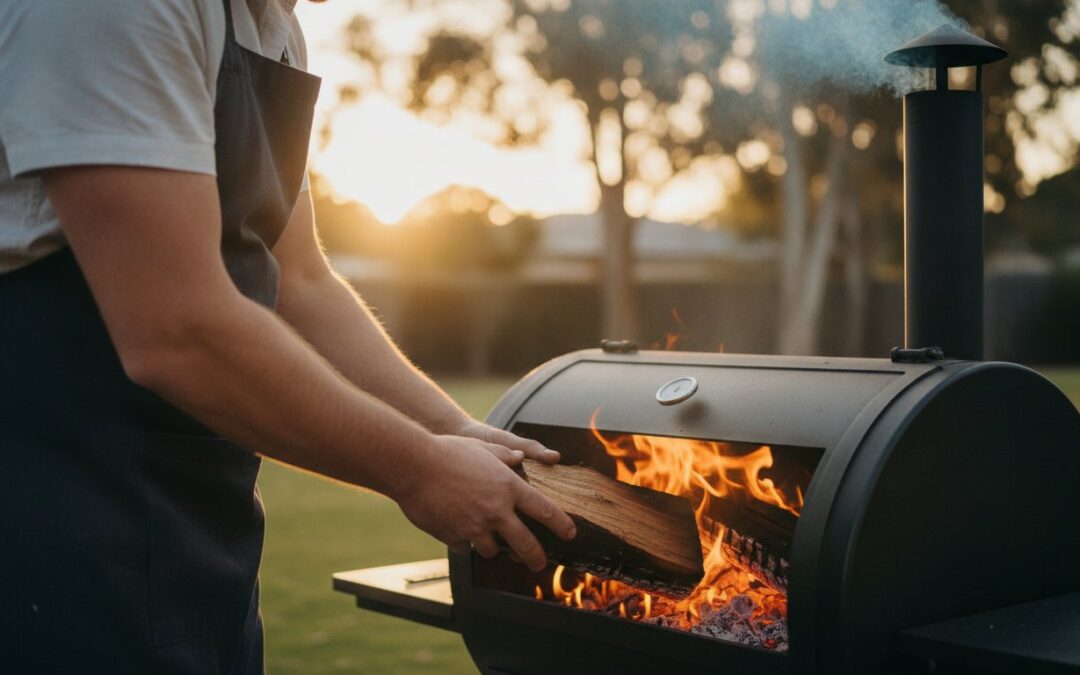
Adding fuel to your firebox is a high-stakes thermal transition, not just a simple refill. Treating it like a casual campfire chore is the quickest way to smother your coals and coat your meat in bitter, acrid soot. Finding the best way to add more fuel to a smoker is the defining skill that separates a backyard hobbyist from a seasoned pitmaster. Success requires maintaining a precise balance of oxygen and heat to ensure your meat only ever encounters thin, blue smoke.
Most pitmasters have felt the sting of a massive temperature drop or the panic of seeing thick white smoke billow from the vents. It is a common frustration that ruins good meat and wastes quality hardwood. This guide will help you master the art of fuel management to maintain rock-solid temperatures and clean smoke for the duration of your cook. We will examine the essential techniques for pre-heating your logs and managing your coal bed to keep your smoker locked between 225 and 250°F with maximum fuel efficiency.
Key Takeaways
- Master the pre-heating technique to prevent thermal shock and ensure immediate combustion when adding new fuel to the firebox.
- Discover the best way to add more fuel to a smoker by monitoring pit temperatures and refueling before the coal bed loses its core heat.
- Learn to maintain thin blue smoke by avoiding the common pitfalls of overloading the firebox and choking essential airflow.
- Adapt your fuel management strategy to your specific equipment, using vent controls to stabilize temperatures during transitions.
- Utilize 100% natural hardwood lump charcoal for superior heat density and a cleaner, more efficient burn compared to additive-filled alternatives.
The Science of Clean Smoke: Why Fuel Management Matters
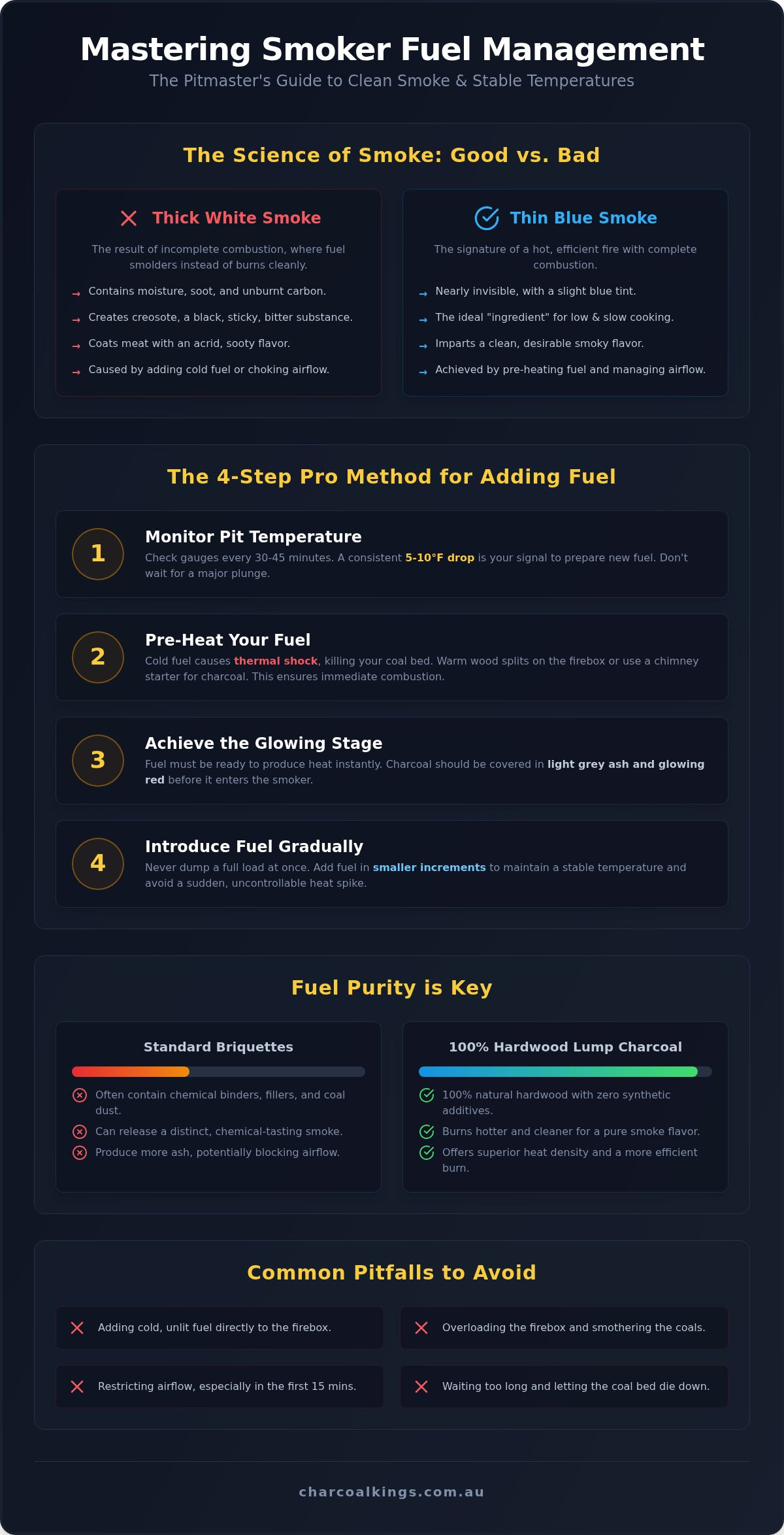
Achieving the perfect bark and tender texture depends entirely on the quality of your fire. In the world of low and slow cooking, smoke is an ingredient. If that ingredient is bitter or heavy, the entire cook is compromised. Understanding the process of smoking requires a grasp of combustion chemistry. Clean blue smoke is nearly invisible with a slight blue tint. It indicates a hot, efficient fire that is fully consuming the fuel. Billowing white smoke is the opposite. It consists of moisture, soot, and unburnt carbon that creates a thick, waxy coating on your meat.
The best way to add more fuel to a smoker is to manage the thermal transition without causing a stall. Adding cold fuel to a hot firebox causes thermal shock. The existing coal bed must expend energy to heat the new fuel to its ignition point. During this time, the firebox temperature drops and the fire begins to smoulder. This transition releases volatile organic compounds (VOCs) that are naturally present in unlit wood and charcoal. Your goal is to maintain a rolling fire where the heat is high enough to ignite new fuel instantly, rather than a restarting fire that struggles to climb back to temperature.
Understanding Creosote and Bitter Flavour
Incomplete combustion leads to the production of creosote. This black, sticky substance is the primary cause of bitter, acrid BBQ. When you add new fuel, the first 15 minutes are the most dangerous for your meat. This is the window where the fuel is off-gassing but not yet fully combusting. If your airflow is restricted during this phase, these gases cannot escape. They condense on the cool surface of the meat, creating a flavour that no amount of sauce can fix. You must ensure maximum oxygen flow during this period to clear out initial VOCs and help the new fuel reach ignition temperature quickly.
The Impact of Fuel Purity on Smoke Quality
The purity of your fuel dictates the cleanliness of your smoke. Cheap briquettes often contain chemical binders, fillers, and coal dust. These additives release a distinct, chemical-tasting smoke when they are first lit, which is particularly noticeable during mid-cook refills. Switching to premium Hardwood Lump Charcoal provides a significant advantage. This fuel is 100% natural and contains no synthetic additives. It burns hotter and cleaner, allowing for a seamless transition when you need to top up your firebox. Clean smoke is the result of fuel reaching its secondary combustion stage where all impurities have been burnt away.
The Pre-Heating Method: The Pro Strategy for Adding Fuel
The best way to add more fuel to a smoker involves a proactive system rather than a reactive one. Waiting for your pit temperature to plummet before reaching for the charcoal bag guarantees a stall. Professional fuel management relies on the pre-heating method. This strategy ensures that every piece of fuel introduced to the firebox is ready for immediate combustion. By removing the thermal barrier of cold fuel, you maintain the rolling fire necessary for consistent results. It is the difference between a controlled burn and a desperate struggle to regain heat.
Follow this four-step process for a seamless fuel transition:
- Monitor Pit Temperature: Check your gauges every 30 to 45 minutes. If you see a consistent 5 to 10 degree drop, start preparing your next batch of fuel immediately.
- Pre-Heat Your Batch: Cold charcoal or wood absorbs heat from the firebox before it ignites. Warming your fuel reduces this energy drain and prevents the fire from dipping.
- Achieve the Glowing Stage: Use a charcoal chimney to bring fuel to a high temperature. Your charcoal should be covered in a light grey ash and glowing red before it ever enters the smoker.
- Introduce Gradually: Never dump a full chimney of fuel into the firebox at once. Add it in smaller increments to avoid a sudden, uncontrollable temperature spike that can singe your meat.
Pre-Heating Wood Splits on the Firebox
Place your next wood split on top of the firebox or inside the warming rack. This process evaporates internal moisture and brings the wood closer to its flashpoint. The Science Of Wood & Smoke dictates that warm wood ignites faster, producing clean blue smoke almost instantly. Avoid placing wood directly on the firebox if the paint is not rated for high heat. Always use tongs to manage these splits. Once the wood is hot to the touch, it is ready to be moved inside to sustain your fire.
The Chimney Starter Technique for Charcoal
Adding raw, unlit charcoal directly to a low fire is a rookie mistake. It chokes the remaining embers and produces thick, bitter smoke. Instead, use a chimney starter to prepare your premium hardwood lump charcoal. Time your chimney start so the coals are ready just as your pit temperature begins to dip. When dumping the lit coals, do it gently. Stirring up a cloud of ash can settle on your meat and ruin the texture of the bark. This method ensures your firebox remains a high-performance heat source throughout the entire duration of the cook.
Smoker-Specific Techniques: Offset vs. Kettle vs. Bullet
Every smoker design handles airflow and thermal mass differently. Consequently, the best way to add more fuel to a smoker varies significantly depending on your equipment. Whether you are running a massive offset or a compact kettle, the goal remains the same: introduce fuel without disrupting the cooking environment. You must minimize “lid-open” time to preserve the convection currents that cook your meat evenly. Every second the lid is up, heat escapes and the cooking process stalls. Before opening the firebox or lid, open your vents fully to provide the oxygen surge required for the new fuel to ignite instantly.
Choosing the right fuel size is also critical. Large hardwood logs are ideal for the high-volume fireboxes of offset smokers. Conversely, smaller hardwood lump charcoal pieces are better for the tighter grates of kettle and bullet smokers. Using the wrong size can either choke your airflow or burn through your fuel bed too quickly, leading to inconsistent temperatures and a frustrated pitmaster.
Fueling an Offset Smoker
Managing an offset smoker is an active process that requires constant attention to the coal bed. When it is time to add fuel, use a fire poker to push the spent, grey coals to one side. This exposes the hottest part of the grate for your new wood split. Use the “log cabin” method by stacking two splits parallel and two more on top to create a square. This structure allows maximum oxygen to reach the center of the fire for a clean, hot burn. For a more concentrated heat spike, the “tepee” method works well to revive a dying fire. You can find more detail on mastering the art of barbecuing with charcoal and wood in our dedicated guide.
The Minion Method for Kettle and Bullet Smokers
Kettle and bullet smokers benefit from set-and-forget techniques like the Minion Method. This involves filling the charcoal basket with unlit hardwood lump and placing a few lit coals on top. The fire slowly works its way down, providing a steady burn for several hours. For Weber Kettles, the “snake method” is an excellent extension. Arrange your charcoal in a semi-circle around the edge of the grate, lighting only one end to create a slow-burning fuse. If your bullet smoker runs low, use the side access door to add pre-lit coals. Avoid lifting the middle section of the smoker; doing so causes a massive loss of heat and moisture that can add hours to your cook time.
Troubleshooting Common Fuel Management Pitfalls
Even with a solid plan, external variables like wind or humidity can disrupt your fire. The best way to add more fuel to a smoker involves being prepared to correct errors before they ruin your meat. Proactive troubleshooting prevents a minor temperature dip from becoming a total cook failure. Avoid these common mistakes to keep your pit running at peak performance and your smoke quality consistent.
The Point of No Return: Waiting until your fire is nearly out is a critical error. Once the core temperature of the coal bed drops below a certain threshold, new fuel won’t ignite properly. It will merely sit and smoulder, releasing bitter gases that taint the flavour of the meat. If you miss the window, don’t attempt to nurse a dead fire with unlit wood. You must use a chimney starter to re-introduce lit fuel immediately to jump-start the heat.
Choking the Airflow: Overloading the firebox is just as dangerous as letting it die. Fire requires a specific ratio of oxygen to fuel. Packing the firebox too tightly prevents air from reaching the center of the pile. This creates a smothered fire that produces heavy white smoke and inconsistent heat. Always maintain clear space around your fuel to allow for proper convection and airflow.
Using Unseasoned Wood: If your wood splits are sizzling or bubbling at the ends, they’re too wet. This moisture forces the fire to work harder to evaporate water rather than producing heat. The result is a temperature stall and acrid smoke. Always use kiln-dried or well-seasoned hardwoods to ensure a clean, efficient burn throughout the entire process.
What to Do if You Get Bad Smoke
If you see thick, billowing white smoke after adding fuel, you must act instantly. Open the cooking chamber lid to let the bad smoke escape. Don’t allow it to settle on the meat. This is an emergency tactic to prevent creosote build-up. Next, open your intake dampers fully. Increasing the oxygen supply helps the new fuel reach the ignition stage faster. If a specific log refuses to catch after five minutes and continues to smoulder, remove it from the firebox entirely. It’s better to lose a bit of fuel than to ruin a premium cut of meat.
Managing Ash Build-up
Excessive ash is a silent fire killer. It settles on the bottom of the firebox and blocks the intake vents, starving the fire of oxygen. Clearing the grate is often the best way to add more fuel to a smoker without choking the fire, as it ensures oxygen can reach the new fuel immediately. During a long cook, you may need to clear ash mid-way through. Use a fire tool to gently scrape ash into a collection tray. Do this slowly to avoid creating an ash cloud that could drift onto your brisket. Using high-quality hardwood lump significantly reduces this problem. Premium fuel is refined for purity and produces far less waste than standard briquettes. For consistent heat and minimal cleanup, shop our professional-grade charcoal range today.
The Charcoal Kings Advantage: Why Fuel Purity is Key
The best way to add more fuel to a smoker is to start with a product that burns clean from the first spark. Cheap fuels loaded with binders and fillers create a chemical spike every time you top up your firebox. This ruins the hard work you put into your rub and prep. We provide 100% natural hardwood lump charcoal because purity is the foundation of professional-grade BBQ. Our charcoal contains no synthetic additives; this ensures your meat only absorbs the natural essence of the wood rather than industrial byproducts.
Premium fuel also offers superior heat density. This means you spend less time opening the firebox and more time maintaining a rock-solid temperature range. High-quality lump charcoal burns longer and more efficiently than standard supermarket options. By reducing the frequency of refills, you minimize the risk of temperature fluctuations and smoke contamination. We are committed to supplying the highest standard of BBQ fuel across Australia to help pitmasters achieve consistent, world-class results every time they light the pit.
Premium Smoking Woods for Layered Flavour
Selecting the right smoking wood is essential for building complex flavour profiles. Ironbark provides a heavy, traditional smoke, while fruitwoods like apple or cherry offer a sweeter, milder finish. All our smoking woods are seasoned to the correct moisture content for instant ignition. This prevents the smouldering phase that leads to bitter creosote. You should pair Ironbark with beef brisket for a bold bark, or use plum wood with pork ribs to enhance their natural sweetness. Proper seasoning ensures that when you add wood to your hot coal bed, it catches immediately without the dreaded white smoke stall.
The Reliability of Binchotan for Consistent Heat
For those seeking the ultimate in temperature stability, Binchotan charcoal is the professional choice. This Japanese white charcoal is famous for its incredible longevity and steady infrared heat. Using Binchotan as a base layer in your smoker keeps the pit stable for over 6 hours without needing a refill. It produces almost no smoke or odour, allowing your chosen smoking wood to take centre stage. Purity in fuel directly correlates to the stability of your pit temperature. This consistency allows you to focus on the meat rather than constantly fighting with the firebox vents.
Master Your Fire for Superior Results
Mastering fuel management is the final step in becoming a true pitmaster. You now understand that the best way to add more fuel to a smoker is a proactive process involving pre-heated logs and a maintained coal bed. By avoiding the introduction of cold fuel and managing your airflow correctly, you ensure your meat never encounters bitter creosote or frustrating temperature stalls. Consistency in your cook depends entirely on the purity of your heat source.
Professional results require professional fuel. Charcoal Kings provides 100% natural hardwood lump with no chemical additives. Our fuel offers significantly longer burn times than standard supermarket brands; this is why our products are trusted by Australian BBQ professionals across the country. High-quality fuel ensures that the only thing you taste is the natural flavour of the meat and wood.
Upgrade your next cook with Charcoal Kings Premium Hardwood Lump and experience the difference that pure performance makes. It is time to lock in those rock-solid temperatures and deliver the perfect bark. Keep the fire rolling.
Frequently Asked Questions
Can I add unlit charcoal directly to my smoker?
Adding unlit charcoal directly to an active firebox is generally a mistake. Unlit fuel must off-gas before it combusts, which releases thick, bitter smoke that ruins the flavour of your meat. You should always use a chimney starter to bring your charcoal to a glowing, ash-covered state before introducing it to the firebox. This ensures immediate heat and maintains the quality of your smoke.
How often should I be adding more wood to my offset smoker?
Most offset smokers require a new wood split every 45 to 60 minutes. This frequency depends on the size of your firebox and the thickness of your logs. You should monitor the strength of your coal bed rather than relying solely on a timer. When the flames begin to subside and the pit temperature starts to dip, it is time to add your next pre-heated split.
Why does my smoker produce thick white smoke when I add a new log?
Thick white smoke indicates incomplete combustion. This happens when a new log is too cold or contains too much moisture to ignite instantly. The log smoulders as it struggles to reach its flashpoint, releasing soot and VOCs. Pre-heating your wood on top of the firebox removes this moisture and allows the wood to catch fire immediately upon contact with the coals.
Should I open the dampers all the way when adding new fuel?
You must open your intake dampers fully when introducing new fuel. This oxygen surge is necessary to help the new charcoal or wood ignite rapidly. Once the new fuel is burning cleanly and the pit temperature stabilizes, you can adjust the dampers back to your target setting. Restricting airflow during a fuel transition is a primary cause of bitter, dirty smoke.
Does the temperature of the fuel itself matter before adding it?
The temperature of your fuel is a critical factor in fire management. Cold fuel acts as a heat sink, absorbing energy from the coal bed and causing a significant temperature drop in the cooking chamber. Pre-heating your wood splits or charcoal ensures they are close to their ignition point. This minimizes thermal shock and keeps your pit locked at your target temperature.
How do I add fuel to a smoker without losing all my heat?
The best way to add more fuel to a smoker without losing heat is to minimize the time the firebox or lid remains open. Have your pre-lit charcoal or warm wood splits ready to go before you reach for the handle. Work with speed and precision to ensure the firebox is closed within seconds. This preserves the convection environment and prevents the internal temperature from plummeting.
What is the best type of charcoal for a 12-hour brisket smoke?
Premium Hardwood Lump Charcoal is the superior choice for long brisket cooks. It provides higher heat density and produces significantly less ash than standard supermarket briquettes. This purity ensures a cleaner burn and fewer refills over a 12-hour window. For maximum stability, many professionals use a base of Binchotan charcoal to maintain a consistent heat floor for the duration of the cook.
Is it better to add more charcoal or more wood splits during the cook?
You should use charcoal to maintain your core heat and wood splits to manage your flavour profile. If your coal bed is becoming shallow, add a chimney of lit hardwood lump charcoal to rebuild the foundation. If your heat is stable but you need to sustain the smoke, add a seasoned wood split. Balancing these two fuel types is the best way to add more fuel to a smoker while maintaining total control.