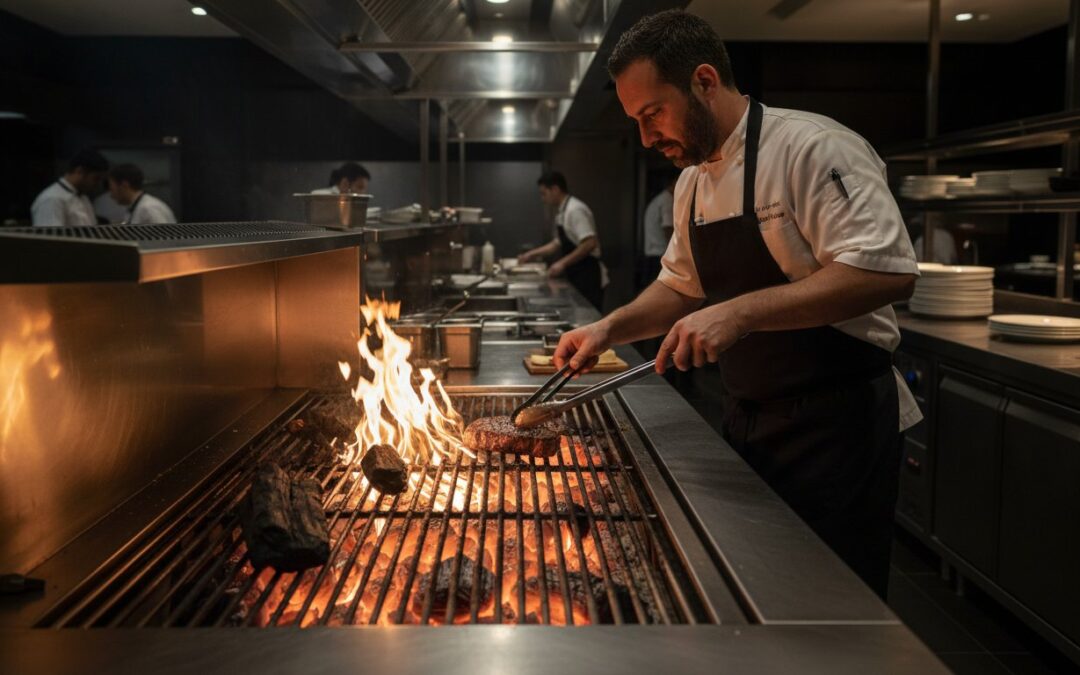
A single service disruption due to poor fuel quality can cost a high-volume kitchen over A$1,500 in wasted produce and lost covers. You know that inconsistent heat levels and excessive ash don’t just ruin your cook times. They clog expensive grills and trigger ventilation alarms at the worst possible moments. It’s a frustration no head chef should deal with during a Saturday night rush.
Sourcing reliable food service charcoal melbourne is about more than just finding a supplier; it’s about securing the operational backbone of your kitchen. We promise to show you how to source 100% natural, chemical-free hardwood charcoal that guarantees a consistent 4 hour burn time and that signature woodfire flavour profile. You’ll learn how to streamline your bulk delivery schedules to ensure you never run dry when the orders pile up.
This guide covers everything from identifying high-density fuel to managing your kitchen’s overheads through superior burn efficiency. Get ready to upgrade your grill game and keep your service running hot.
Key Takeaways
- Learn why Melbourne’s elite kitchens are shifting to species-specific, food-grade hardwood to ensure pure flavour profile and a chemical-free cooking environment.
- Identify the ideal fuel for your specific venue, whether you need high-volume heat for a rotisserie or the intense, smokeless infrared heat of Binchotan for a Japanese hibachi.
- Discover the professional framework for evaluating wholesale food service charcoal melbourne, focusing on density and screening to avoid paying for moisture and unusable dust.
- Master operational best practices for safe bulk storage and efficient ash management to ensure your kitchen meets safety standards and maintains peak performance.
- Access the strategic advantages of direct-to-venue wholesale pricing to secure 100% natural, premium fuel without the unnecessary retail markup.
The Evolution of Melbourne’s Food Service Charcoal Standards
Melbourne’s hospitality sector has undergone a massive shift in quality standards over the last decade. Professional kitchens have moved away from generic, chemical-filled briquettes toward species-specific hardwoods. This transition is driven by a sophisticated dining public that demands authentic “low and slow” and woodfire flavours. Selecting the right food service charcoal melbourne is now as critical as sourcing the protein itself.
Understanding charcoal production methods is essential for any head chef managing a live-fire pit. Modern carbonisation ensures the wood is stripped of impurities, leaving only the energy-dense carbon required for a consistent burn. This process eliminates the acrid, chemical smells associated with lower-grade fuels that often ruin delicate ingredients.
To better understand how charcoal impacts the final product in a professional setting, watch this video on Melbourne’s iconic charcoal chicken scene:
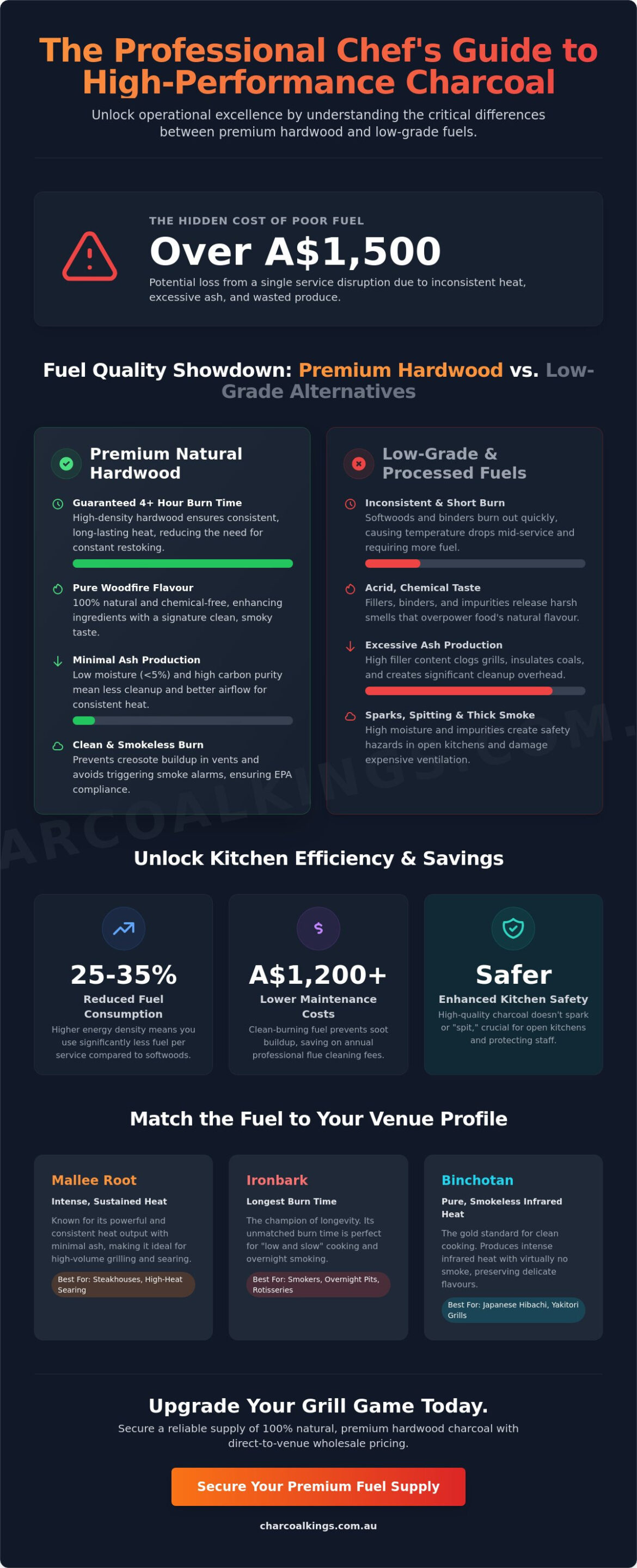
The economic reality of high-quality fuel is also changing kitchen budgets. While premium hardwood has a higher upfront cost, it reduces total fuel consumption by approximately 25% to 35% compared to softwoods or processed beads. It also cuts down on labour costs. Staff don’t need to restoke the grill every hour, allowing them to focus on food prep and service efficiency during peak periods. Using premium food service charcoal melbourne ensures that the fuel enhances the ingredient rather than masking it with acrid smoke.
Why Natural Hardwood Beats Processed Alternatives
The science of heat in a commercial kitchen comes down to energy density. Australian hardwoods like Mallee Root and Ironbark are significantly denser than the softwoods used in imported products. This density translates to a longer, more stable burn that can withstand the rigours of a 12-hour service.
- Mallee Root: Known for its intense, sustained heat and minimal ash production.
- Ironbark: Offers the longest burn time of any Australian timber, perfect for overnight smoking.
- Commercial Durability: Unlike “heat beads” which rely on starch binders, natural charcoal won’t crumble or lose heat mid-service.
Lump Charcoal is the gold standard for high-heat searing and flavour.
The ‘Clean Burn’ Requirement in Urban Kitchens
Melbourne’s local councils and EPA Victoria have tightened regulations regarding smoke and particulate matter in high-density areas. Using properly carbonised charcoal is the most effective way to stay compliant. When moisture content is kept below 5%, the fuel produces almost no visible smoke once ignited.
- Reduced Maintenance: Clean-burning fuel prevents the heavy buildup of creosote and soot in expensive exhaust systems, potentially saving A$1,200 or more in annual flue cleaning fees.
- Kitchen Safety: High-quality charcoal doesn’t spark or “spit” like wet or uncarbonised wood, making it safer for open-plan kitchens where diners sit close to the pass.
- Carbon Purity: Low-grade fuels contain fillers that leave thick layers of ash, insulating the coals and killing the temperature during service.
Matching Charcoal Types to Your Melbourne Venue Profile
Every professional kitchen has a unique energy requirement. A high-volume charcoal chicken shop in the suburbs requires a different heat profile than a boutique CBD Izakaya. Selecting the right food service charcoal melbourne depends entirely on your equipment and your menu’s flavor goals. The wrong fuel choice leads to inconsistent cook times, excessive ash, or unwanted smoke that overpowers delicate ingredients.
Charcoal chicken shops are the workhorses of the industry. These venues often run rotisseries for 10 to 12 hours daily. They need a consistent, mid-range heat that won’t flare up and burn the poultry skin. Standard hardwood charcoal is the standard here. It provides the reliable 200°C to 250°C temperatures needed to cook dozens of birds simultaneously while keeping the meat succulent. It’s about endurance and cost-efficiency over a long shift.
Woodfire steakhouses and venues using Mibrasa or Josper ovens require something more aggressive. Ironbark and Red Gum are the preferred choices for these high-heat environments. These dense Australian hardwoods are capable of reaching surface temperatures exceeding 400°C. This intense heat is vital for the Maillard reaction, creating that signature crust on premium beef. Ironbark offers a clean, neutral heat, while Red Gum provides a distinct aromatic profile that is synonymous with Victorian woodfire cooking.
For catering operations and food trucks, portability and ignition speed are the priorities. These chefs need fuel that reaches cooking temperature in under 20 minutes but still holds enough thermal mass to last through a 4 hour service window. High-quality lump charcoal is usually the best fit for these mobile setups.
Binchotan: The Elite Choice for High-End Grilling
Binchotan, or Japanese white charcoal, is the gold standard for precision grilling. It’s produced by firing hardwood at temperatures above 1,000°C before rapidly cooling it with a mixture of sand and ash. This creates a product that is almost pure carbon. Melbourne’s premium Izakayas use Binchotan because it emits far-infrared heat. This heat penetrates the food deeply without scorching the surface. It’s virtually smokeless and odourless, which is essential for preserving the clean flavours of sashimi-grade seafood. For a technical deep dive, read our Binchotan Charcoal: The Ultimate Guide to Japanese White Charcoal.
Lump Charcoal vs. Briquettes in a Professional Setting
The debate between lump and briquettes comes down to control. Lump charcoal consists of irregular pieces of natural wood. It lights quickly and hits high peaks, making it perfect for searing. Briquettes are compressed and uniform, offering a steady, predictable burn that can last 4 to 5 hours. Many chefs now use a hybrid method. They build a base with briquettes for longevity and top it with lump charcoal for a boost of heat and natural aroma during peak service. You can explore these differences further in Charcoal: The Ultimate Guide to Fuelling Your BBQ. If you need to refine your fuel mix, you can browse our professional range to find the right match for your grill.
The Quality Framework: How to Evaluate Wholesale Charcoal
Buying fuel for a commercial kitchen isn’t the same as picking up a bag for a weekend backyard grill. Performance in a high-volume environment depends on technical specifications that impact your bottom line. Don’t judge a bag by its weight alone. Water is heavy, and high moisture levels are a common trap. If a 20kg bag contains 15% moisture, you’re paying for 3kg of steam that will actually hinder your ignition speed and temperature ceiling.
Screening and sizing are equally critical. Premium food service charcoal melbourne suppliers provide uniform lump sizes, typically between 40mm and 150mm. Bags filled with “fines” and dust (pieces under 20mm) are a liability. This dust settles at the bottom of your grill or rotisserie, choking the air vents and preventing oxygen from reaching the fuel. This leads to cold spots and uneven cooking across the grate. High-quality charcoal should be carbonised fully. Under-burnt wood, identifiable by a brown tint or heavy weight, produces acrid, bitter smoke that ruins the profile of delicate proteins.
Consistency is the foundation of any professional kitchen SOP. If your fuel source varies in heat output by even 10% between batches, your head chef can’t standardise cook times. You need a product that burns at a predictable rate every single service.
Testing Your Supply: The 15-Minute Kitchen Audit
You can verify the quality of a new shipment with three simple tests before it hits the line:
- The Clink Test: Tap two pieces of lump charcoal together. High-quality, well-carbonised hardwood should produce a metallic, glass-like “clink” rather than a dull thud.
- The Spark Test: Watch the charcoal during ignition. Excessive popping and sparking indicate high moisture or trapped gasses, which can be a safety hazard in open kitchens.
- Ash-to-Fuel Ratio: Monitor your tray after service. Premium hardwoods should leave behind less than 3% ash by volume. High ash production means more frequent cleaning and restricted airflow mid-service.
Sourcing for Flavour: The Hardwood Species Guide
The species of wood determines the heat profile and the aromatic finish of your dishes. When selecting food service charcoal melbourne, consider these Australian staples:
- Mallee Root: The workhorse of the Melbourne dining scene. It offers a steady, reliable heat and a neutral smoke profile that doesn’t overpower the ingredients.
- Gidgee and Ironbark: These are among the densest woods in the world. They’re essential for heavy protein searing, capable of reaching temperatures exceeding 1000°C while maintaining a long, slow burn.
- Fruitwoods: Species like cherry or apple are often used in blends. They provide a subtle sweetness that’s perfect for poultry, pork, and seafood.
Reliable performance starts with the right raw materials. Choosing a fuel based on these metrics ensures your kitchen stays hot, your smoke stays clean, and your costs stay controlled. Get sizzlin’ with fuel that actually works as hard as your team does.
Operational Excellence: Storage, Safety, and Ash Management
Running a high-volume kitchen requires more than just culinary skill. It demands operational discipline. To maximize your investment in food service charcoal Melbourne venues must prioritize dry storage. Moisture ruins the density of premium hardwood. This leads to poor ignition and excessive smoke during service. Store your bulk bags on pallets off the floor. Keep them at least 3 meters away from open flames or pilot lights. Charcoal is porous and absorbs humidity quickly, so a dedicated dry store is the best way to maintain burn consistency.
Ash management is a daily safety requirement. A single 20kg bag of lump charcoal produces enough residual heat to ignite a plastic bin hours after service ends. Use galvanized steel buckets for all ash collection. Allow the waste to cool for a full 24 hours before disposal. High-quality fuel also protects your infrastructure. Low-ash charcoal reduces the particulate load on your HVAC system. This can add 12 to 18 months to the lifespan of expensive filtration units compared to using low-grade, high-filler briquettes.
Staff safety is paramount when handling bulk orders. Most premium bags weigh between 15kg and 20kg. Implement a mandatory ‘two-person lift’ policy for any bag moved above waist height. This simple rule prevents common back injuries and keeps your kitchen team on the line rather than on medical leave. Using trolleys for the “last yard” from the delivery dock to the store room is a standard requirement for modern OHS compliance.
Bulk Ordering & Logistics for Melbourne Venues
Melbourne’s hospitality scene moves fast. You need to calculate your ‘Burn Rate’ by tracking usage over a 14-day period. This prevents emergency shortages during peak festival seasons or long weekends. Pallet-sized orders of 40 to 50 bags significantly reduce your cost-per-kilo. For CBD venues, we coordinate deliveries to navigate tight laneways like those found off Flinders Lane or Little Bourke Street during specific off-peak windows. This ensures your food service charcoal melbourne supply arrives without blocking traffic or incurring council fines.
Fire Safety and Compliance
Compliance is a non-negotiable part of professional grilling. Invite your local fire marshal to inspect your indoor solid fuel setup. They ensure your extraction system meets Australian Standard AS 1668.1. Avoid chemical fire starters. These taint the natural flavor of the meat and cause unpredictable flare-ups. Stick to natural, wax-based or wood-wool starters. For more on the fundamentals, read our guide on Mastering the Art of Barbecuing with Charcoal for safety basics.
Ready to upgrade your kitchen’s efficiency? Order your premium bulk charcoal today.
Why Charcoal Kings is the Preferred Partner for Melbourne Food Service
Consistency is the backbone of any successful commercial kitchen. Melbourne chefs demand fuel that performs exactly the same way at 10 PM as it did at 11 AM. Charcoal Kings supplies 100% natural, chemical-free hardwood fuels designed for high-volume environments. We don’t use fillers or binders. Our products ensure your food service charcoal melbourne supply produces steady heat and minimal ash, protecting the integrity of your ingredients and the longevity of your equipment.
Working with us means cutting out the middleman. We offer direct-to-venue wholesale pricing, removing the standard retail markup that eats into your margins. Our logistics network is built for reliability. Whether you’re running a boutique smokehouse in Fitzroy or a large-scale grill in the CBD, our national delivery system keeps your inventory stocked. Your kitchen won’t go cold on a busy Friday night. We provide a diverse range of products to suit every culinary application:
- Lump Charcoal: High-heat natural hardwood for searing and traditional grilling.
- Premium Binchotan: Long-burning, smoke-free fuel for yakitori and high-end robata grills.
- Smoking Woods: Seasoned Ironbark, Fruitwoods, and Hickory for authentic flavour profiles.
- Briquettes: Uniform shapes for consistent temperature control over long shifts.
Beyond Fuel: A Complete BBQ Hardware Solution
A professional setup requires more than just high-quality coal. We source commercial-grade smokers and grills that stand up to the rigours of daily service. If you’re designing a new kitchen or upgrading your current line, we provide expert consultation for venue fit-outs and fuel transitions. Choosing the right equipment is a critical investment. For a deeper look at hardware selection, check out our Ultimate BBQ Buying Guide to find the perfect match for your cooking style.
Become a Charcoal King: Wholesale Opportunities
We understand that restaurant storage is often limited. That’s why we offer customised delivery schedules tailored to your peak times. You get the fuel you need, exactly when you need it. Our wholesale partners also gain access to exclusive rubs, sauces, and accessories to help elevate your menu and streamline prep. We’re more than a supplier; we’re your partner in the pit. Contact our Melbourne hospitality specialists for a bulk quote today and join the ranks of the elite. Get Sizzlin’!
Elevate Your Melbourne Kitchen with Professional Grade Fuel
Your venue’s performance depends on the fuel in your pit. Since our inception, we’ve supplied premium natural hardwood to the city’s top kitchens, ensuring every sear is backed by consistent heat. Whether you require the intense, clean burn of Binchotan for a yakitori bar or the rugged reliability of Mallee Root for a traditional grill, your choice defines the final plate. We provide 100% organic fuel with zero chemicals or fillers. This allows the natural flavours of your ingredients to lead without interference. Selecting the right food service charcoal melbourne provider means choosing operational excellence and ash management that keeps your kitchen running at peak efficiency during a busy Saturday service. Stop settling for inconsistent heat and excess smoke that compromises your craft. It’s time to partner with the experts who understand the demands of a high-volume professional kitchen. You deserve a fuel partner that’s as serious about the fire as you are about the food.
Request a Wholesale Quote for Your Melbourne Venue
Get Sizzlin’!
Frequently Asked Questions
What is the best charcoal for a charcoal chicken shop in Melbourne?
Mallee Root charcoal is the gold standard for charcoal chicken shops across Melbourne due to its intense heat and long burn time. It provides the consistent 300 degree Celsius temperatures needed for high volume rotisserie cooking. Many local shops prefer Mallee because it’s a native Australian hardwood that produces a distinct, traditional smokiness without overpowering the meat. It’s reliable, easy to light, and stays hot.
How much charcoal does a busy restaurant typically use per week?
A high volume restaurant typically consumes between 400kg and 1,000kg of fuel every seven days. This equates to roughly 20 to 50 of our 20kg bulk bags depending on the grill size and service hours. For a 60 seat venue operating six days a week, daily consumption often hits 70kg to maintain a consistent ember bed for 10 hours of service. Proper storage is vital to manage this inventory.
Is it cheaper to buy charcoal in bulk or smaller bags for food service?
Buying in bulk pallets reduces your per-kilogram cost by approximately 15% to 25% compared to individual bag purchases. For food service charcoal melbourne operations, we recommend ordering by the tonne to maximize freight efficiency and secure wholesale rates. Larger 20kg bags also minimize packaging waste and labor time spent opening multiple smaller units during a busy dinner rush. It’s the most cost effective way to run a commercial pit.
Does the type of charcoal affect the insurance for my Melbourne restaurant?
Your choice of fuel impacts insurance premiums because high spark woods increase fire risk in commercial kitchens. Most Australian insurers require compliance with AS 1668.2 for kitchen exhaust systems when using solid fuels. Using premium, low spark hardwoods like Gidgee helps maintain a safer environment. Always disclose your specific fuel type to your provider to ensure your 2024 policy coverage remains valid. This transparency prevents claim denials later.
What is the difference between Gidgee and Mallee Root for commercial use?
Gidgee is a denser hardwood from Queensland that burns hotter and longer than Mallee Root, often lasting 4 to 5 hours. Mallee Root is a Victorian staple known for its quick ignition and classic aroma profile. While Gidgee offers higher energy density and less ash, Mallee is frequently chosen for its availability and lower price point per bag in the local Melbourne market. Most chefs mix them for balance.
How can I reduce the amount of smoke my charcoal grill produces?
Switch to a high quality, fully carbonized lump charcoal to eliminate the thick white smoke caused by uncarbonized wood pieces. Smoke levels drop significantly when you use fuel with a carbon content above 80%. Ensure your storage area is bone dry, as moisture in the charcoal creates steam and acrid smoke. Regular cleaning of your extraction filters also prevents grease fires and improves airflow. It’s about fuel purity.
Can I use Binchotan in a standard offset smoker?
Binchotan is not suitable for offset smokers because it requires high airflow and direct contact to maintain its heat. This white charcoal is designed for Konro or Hibachi grills where it emits infrared heat for 4 to 6 hours. Using it in an offset smoker is inefficient and expensive. Stick to ironbark or fruitwoods for low and slow smoking to get the best flavor profile. Binchotan’s unique properties are wasted in smokers.
Do you offer delivery to the Melbourne CBD and surrounding suburbs?
We provide daily delivery services across the Melbourne CBD and all surrounding metropolitan suburbs within a 50km radius. Our fleet handles everything from single pallet drops to multi tonne food service charcoal melbourne orders for major hospitality groups. Orders placed before 10 am are typically processed for next day delivery to ensure your kitchen never runs out of fuel during peak periods. We’re built for the fast pace of Melbourne’s food scene.