
Submerging your bird in a bucket of salt water might be the very thing standing between you and the perfect BBQ. When weighing up a dry brine vs wet brine for turkey, the traditional choice often leads to the most disappointing results. You want a bird that’s dripping with juice, but most pitmasters struggle with the trade-off between moist meat and that elusive, golden crunch. With specialty free-range turkeys costing up to $20.00 per kilogram at Australian butchers in 2026, you can’t afford to ruin a premium bird with poor technique.
We understand the frustration of carving into dry breast meat or fighting with rubbery skin that refuses to crisp. This guide will help you master the science of moisture management to ensure your next turkey is the juiciest bird you’ve ever served. We’ll examine how each method impacts your smoker’s performance and your available fridge space. You’ll learn a simple, repeatable process to achieve professional results every time you fire up the charcoal and settle in for a long smoke.
Key Takeaways
- Understand the science of protein denaturation and how salt prevents your turkey from drying out on the smoker.
- Evaluate dry brine vs wet brine for turkey based on your goals for skin texture, flavour intensity, and available prep space.
- Use the dry brine method to achieve a golden, crackling skin that wet brining simply cannot match.
- Simplify your preparation by removing the need for massive buckets and messy saltwater solutions.
- Pair your brining technique with high-quality Hardwood Lump Charcoal for a clean, professional finish without chemical additives.
The Science of Brining: Why Your Turkey Needs Salt
Brining isn’t just a kitchen trick. It is a fundamental shift in the protein structure of your bird. When you apply salt, you start a process called denaturation. This chemical reaction untangles the tightly coiled muscle proteins, allowing them to relax. Relaxed proteins form a matrix that traps water molecules. Without this, those same fibres would contract during the cook, squeezing out every drop of moisture. Turkey is a notoriously lean bird. It lacks the intramuscular fat found in beef or pork, making it the most critical candidate for a proper brine. Deciding on a dry brine vs wet brine for turkey is the first step toward a professional BBQ result.
Choosing between the two methods depends on your specific goals for the final cook. Both techniques rely on The Science of Brining to ensure the meat stays succulent. While the delivery method changes, the ultimate goal remains the same: preventing the meat from turning into dry, unpalatable rope. Understanding how salt interacts with the cells will help you master the dry brine vs wet brine for turkey debate and choose the right tool for your smoker.
To better understand this concept, watch this helpful video:
Osmosis vs. Diffusion: How the Magic Happens
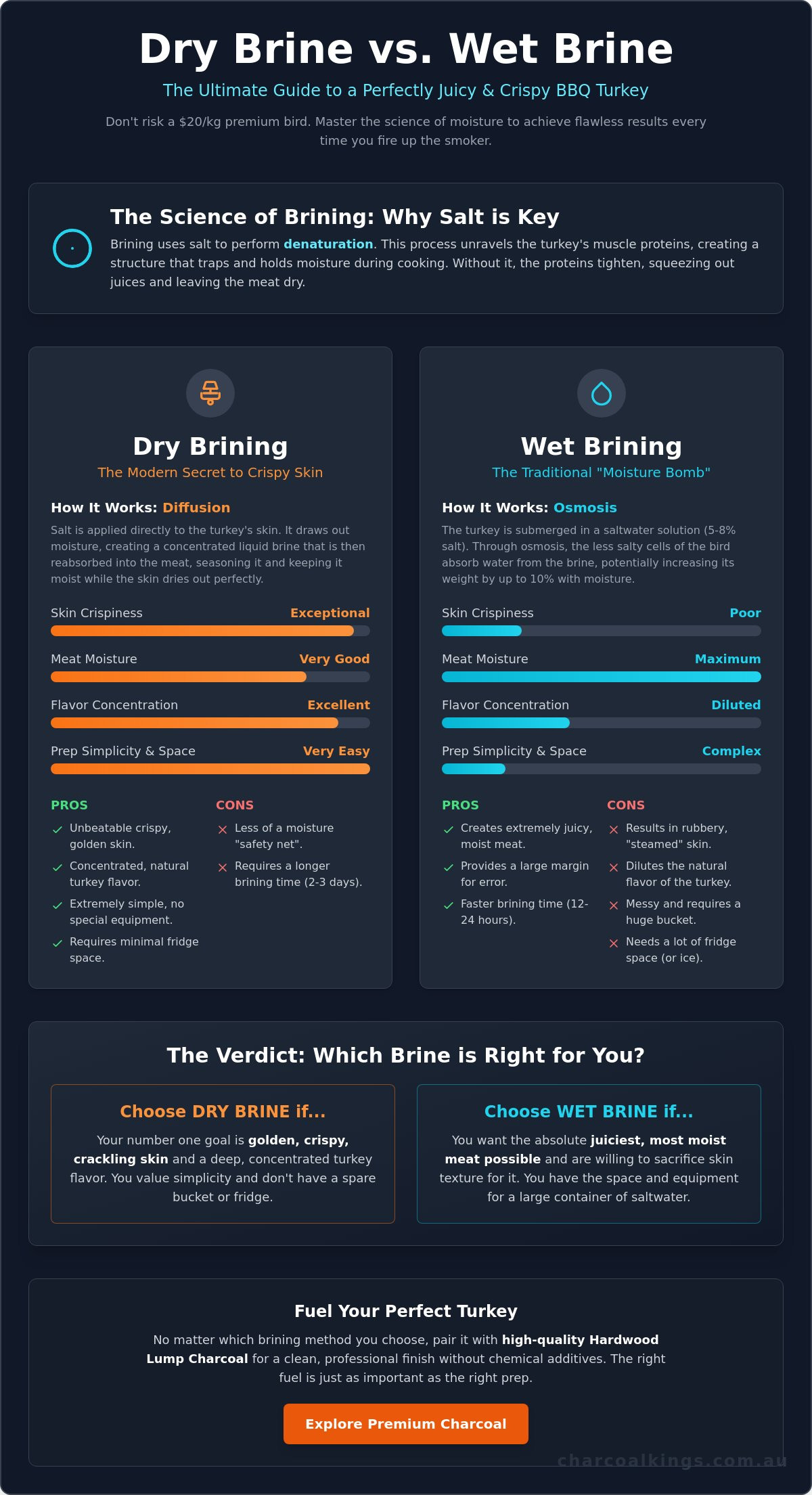
Osmosis is the primary engine behind wet brining. It involves the movement of water across cell membranes to equalise salt levels. If you submerge a bird in a solution with a 5% to 8% salt concentration, the water moves into the cells to balance the environment. Dry brining uses diffusion. The salt draws moisture out of the turkey, dissolves into a concentrated liquid on the skin, and then slowly migrates back into the meat. Denaturation is the structural change in proteins caused by salt. This process ensures that once the moisture is inside, it stays there even as the bird reaches its target internal temperature.
The Role of Seasoning and Aromatics
Don’t expect your herb-heavy brine to flavour the centre of the breast. Most aromatic molecules are too large to pass through the cell walls. Salt is the only seasoning that penetrates deep into the tissue. It acts as a delivery vehicle for water-soluble compounds, but its main role is functional rather than flavour-focused. Surface seasoning provides the immediate punch, while the brine handles the internal moisture. Focus your efforts on getting the salt ratio right. Save the expensive aromatics for your rubs and sauces where they can interact with the smoke and heat of the charcoal.
Wet Brining: The Traditional “Moisture Bomb” Method
Wet brining is the heavy-duty approach to moisture retention. It involves submerging your bird entirely in a saltwater solution for a set duration. When comparing dry brine vs wet brine for turkey, the wet method is often called the “moisture bomb.” The science of how brining works shows that the meat can absorb up to 10% of its weight in water. This creates a massive safety net for high-heat cooking. However, there is a clear trade-off. While the bird stays juicy, the extra water can dilute the natural turkey flavour. Additionally, the skin becomes saturated. This often leads to a “steamed” texture rather than the crisp, golden finish most pitmasters want.
This method requires serious logistics. You need a large food-grade bucket and significant fridge space. A 6kg turkey needs roughly 8 to 10 litres of brine to stay fully submerged. If your fridge is full, you’ll need a high-quality cooler bag and a constant supply of ice to maintain safe temperatures. Don’t use standard household buckets that aren’t rated for food, as chemicals can leach into the brine solution.
Creating the Perfect Wet Brine Ratio
Precision is everything for a successful soak. A standard ratio is 60 grams of sea salt per litre of water. Always dissolve your salt in a small amount of boiling water first to create a concentrated brine. Add your aromatics like black peppercorns, bay leaves, and citrus peel during this stage to release their oils. Chill the solution completely with cold water before the turkey goes in. Adding a warm bird to warm water is a recipe for bacterial growth. If you want to enhance the flavour profile after the soak, consider browsing our range of quality BBQ rubs to apply before hitting the smoker.
The “Spongy Meat” Trap: Timing Your Brine
Don’t leave the bird in the bath too long. Over-brining leads to a “ham-like” texture that feels rubbery and processed. For a whole 6kg turkey, 12 to 24 hours is the limit. A smaller turkey crown only needs 6 to 8 hours. Safety is non-negotiable. The brine must stay below 4°C at all times. Use a digital thermometer to check the liquid temperature every few hours if you aren’t using a fridge. If the temperature climbs above this threshold, the risk of spoilage increases rapidly. Once the time is up, remove the bird and pat it bone-dry before cooking.
Dry Brining: The Modern Secret to Crispy Skin
Dry brining is the preferred method for pitmasters who prioritise texture and concentrated flavour. Unlike the wet method, which can leave the skin soft and the meat slightly diluted, dry brining focuses on surface dehydration and deep-tissue seasoning. When you evaluate dry brine vs wet brine for turkey, the dry approach wins on every metric related to the final “crunch.” By rubbing salt directly onto and under the skin, you trigger a process that seasons the meat from the inside out while preparing the exterior for the high heat of the smoker. This is the foundation of the authentic Aussie BBQ style, where a golden, crackling skin is just as important as the juicy meat beneath it.
One of the most significant advantages of dry brining is the formation of a pellicle. This is a thin, tacky layer that develops on the surface of the meat as it air-dries. A well-formed pellicle is essential because it acts as a magnet for smoke particles. When you use high-quality Hardwood Lump Charcoal, you want that clean, smoky profile to adhere properly to the bird. A wet, dripping turkey from a water bath will often repel smoke or develop a patchy, grey appearance. Dry brining ensures a deep, mahogany finish and a rich, traditional turkey taste that hasn’t been watered down by litres of liquid.
The 24-Hour Air-Dry Technique
Achieving the perfect result requires patience and the right environment. Follow these steps for a professional finish:
- Apply a generous layer of salt or a salt-based rub over the entire bird, ensuring you get plenty under the skin of the breast.
- Place the turkey on a wire rack over a baking sheet to allow air to circulate around the entire bird.
- Leave it in the fridge, completely uncovered, for 12 to 24 hours.
- Never cover the bird with plastic wrap; this traps moisture and prevents the skin from dehydrating.
During this time, the salt draws moisture out of the meat. This moisture dissolves the salt into a concentrated brine, which the muscle fibres then reabsorb. This process seasons the bird deeply while leaving the skin paper-thin and ready to crisp.
Choosing the Right Rubs and Cures
The quality of your salt matters. Standard table salt is too fine and often contains anti-caking agents that can leave a chemical aftertaste or interfere with the skin’s texture. Use a high-quality kosher salt or specialized Rubs, Sauces & Cures that are designed for long cooks. Professional-grade rubs provide a balanced salt-to-sugar ratio, which aids in caramelisation without burning. Avoid products with excessive fillers. Purity is the goal here. A clean rub ensures the natural flavour of the turkey remains the star of the show while the salt does the heavy lifting of moisture management.
Dry Brine vs Wet Brine: Which Should You Choose?
Choosing between a dry brine vs wet brine for turkey often comes down to the logistics of your kitchen and the heat profile of your smoker. If you are planning an Aussie Christmas cook, you are likely battling 30°C+ ambient temperatures and a fridge already crammed with prawns and beer. Finding room for a 20-litre bucket of saltwater is often impossible. This is where the dry brine becomes the practical winner. It requires zero extra space beyond the footprint of the bird itself. It fits easily on a standard fridge shelf, allowing you to keep the rest of your festive supplies chilled and safe.
Texture and flavour intensity also diverge sharply between the two methods. A wet brine acts as a foolproof moisture buffer. This makes it ideal for high-heat roasting where the risk of overcooking is high. However, if you are committing to a low-and-slow session in an offset smoker, the dry brine is superior. It produces a concentrated, natural poultry flavour that isn’t diluted by excess water. To ensure your cook stays on track regardless of the method, equip yourself with professional BBQ accessories for precision temperature control.
The Comparison Framework
Use this checklist to decide which path to take before you start your prep:
- Skin Quality: If you want crackling-style skin, choose a dry brine. Wet brining often results in soft, rubbery skin that requires high heat to fix.
- Moisture Safety Net: If you are a beginner worried about dry meat, wet brining provides a 10% moisture boost that protects against temperature spikes.
- Lead Time: Dry brining needs at least 24 hours for the salt to penetrate deeply. Wet brining can be effective in as little as 8 to 12 hours.
- Cleanup: Dry brining is significantly cleaner. You avoid the risk of splashing raw-turkey-infused saltwater around your kitchen, which reduces the risk of cross-contamination.
Temperature Management and the Stall
Brined meat behaves differently once it hits the grill. As the internal temperature reaches approximately 70°C, you will encounter the stall. This is where the temperature stops rising as moisture evaporates from the surface, cooling the bird. Wet-brined turkeys often experience a much longer stall because they have more water to lose. This evaporative cooling can add significant time to your cook. A reliable meat thermometer is more important than a timer because it provides the only definitive data on when the bird is safe to pull. Relying on time alone is a gamble that usually ends in dry breast meat or undercooked joints. Maintain a clean, consistent fire to push through the stall efficiently.
The Charcoal Kings Method: Fueling the Perfect Turkey
The choice of fuel is the final variable in the dry brine vs wet brine for turkey equation. You can spend 24 hours perfecting a dry brine, but if you use low-grade fuel with chemical binders, you will ruin the bird. Turkey meat is delicate. It acts as a sponge for whatever is burning in your firebox. Using Hardwood Lump Charcoal ensures a clean-burning foundation. This purity allows the natural flavours of the meat and your chosen brine to remain the focal point without the interference of artificial aftertastes.
Premium fuel provides more than just flavour. It offers the heat control necessary to capitalise on your brining efforts. Whether you’ve opted for the moisture-heavy wet brine or the skin-focused dry brine, your charcoal must provide steady, radiant energy. A flickering, inconsistent fire will lead to uneven cooking and a grey, unappealing skin. Maintain a clean fire to ensure the internal temperature rises steadily while the exterior develops its final texture.
The Clean Heat Advantage
Cheap briquettes often contain additives and fillers that produce acrid smoke. This is particularly problematic for a brined bird, where the salt has already opened the protein structure, making it more receptive to environmental flavours. Premium lump charcoal provides the consistent, high-intensity radiant heat required to render the fat and crisp up dry-brined skin. For those new to managing a charcoal fire, our Mastering the Art of Barbecuing with Charcoal guide offers the technical foundation needed for precision fire management.
Pairing Wood Smoke with Your Brine
Layering flavour with specific Smoking Woods is where you define the final profile. Fruitwoods like Apple or Cherry are the gold standard for poultry. Cherrywood, in particular, reacts with the surface of the meat to produce a deep, mahogany colour that looks professional on any platter. This visual appeal is especially pronounced on a dry-brined turkey where the skin is already primed for colour development.
Remember the “Less is More” rule. Poultry absorbs smoke significantly faster than beef or pork. Over-smoking will turn the skin bitter and mask the work you did during the dry brine vs wet brine for turkey selection process. Two or three chunks of wood are usually sufficient for a whole bird. Once the cook is complete, a 30-minute rest is non-negotiable. Carry-over cooking will raise the internal temperature by several degrees while the bird sits. This resting period allows the muscle fibres to reabsorb the juices, ensuring they stay in the meat rather than running out on the carving board. Get the fuel right, and the rest will follow.
Ready Your Pit for the Ultimate Turkey
Mastering the dry brine vs wet brine for turkey debate allows you to control the final outcome of your cook with scientific precision. You now understand that wet brining provides a massive moisture safety net, while dry brining delivers the superior skin texture required for authentic Aussie BBQ. Both methods rely on the same chemical principles to keep lean poultry from drying out during a long smoke. However, even the most perfect brine cannot overcome the limitations of poor-quality fuel. The final success of your cook depends entirely on the purity and consistency of your heat source.
Professional results require expert-grade BBQ fuel with no additives or chemical fillers. Charcoal Kings provides the clean-burning foundation used by professional pitmasters across SA. Our products ensure that your turkey remains the star of the show without the interference of acrid smoke or artificial aftertastes. We offer Australia-wide shipping to ensure you have the right materials for your next festive cook. Upgrade your next cook with Charcoal Kings Premium Hardwood Lump Charcoal. Fire up the smoker and prepare to serve the juiciest bird your guests have ever tasted.
Frequently Asked Questions
Do I need to rinse the turkey after dry brining?
No, you should never rinse a turkey after dry brining. Rinsing reintroduces moisture to the skin, which undoes the dehydration process required for a crispy finish. The salt has already been absorbed into the meat, so there is no excess to wash away. Simply pat the surface with a paper towel to remove any stray moisture before applying your final rub or placing the bird on the smoker.
Can I use a frozen turkey for wet brining?
You can use a frozen turkey, but it must be completely thawed before you begin the brining process. Submerging a frozen bird prevents the salt and aromatics from penetrating the muscle fibres effectively. Thaw your turkey in the fridge for approximately 24 hours for every 2kg of weight. Once the meat is fully defrosted, you can proceed with the 12 to 24-hour soak to ensure maximum moisture retention.
Is it possible to over-brine a turkey?
Yes, over-brining is a common mistake that ruins the texture of the meat. If you leave a bird in a wet brine for more than 24 hours, the muscle proteins break down too much, resulting in a spongy, ham-like consistency. Dry brines are more forgiving, but even then, 48 hours is the practical limit. Stick to the recommended timeframes based on the bird’s weight to maintain a natural, firm poultry texture.
What is the best salt to use for a turkey brine?
Coarse kosher salt or high-quality sea salt is the best choice for both methods. These varieties lack the anti-caking agents and iodine found in standard table salt, which can leave a metallic aftertaste. When evaluating a dry brine vs wet brine for turkey, the grain size matters. Coarse crystals are easier to distribute evenly over the skin. Always avoid fine table salt, as its high density makes it very easy to over-salt the meat.
Can I brine a turkey that is already “pre-basted” or “enhanced”?
You should not brine a turkey that has been pre-basted, injected, or enhanced by the manufacturer. These birds are already treated with a sodium solution that can account for up to 15% of their total weight. Adding a dry or wet brine to an enhanced bird will result in meat that is aggressively salty and inedible. Check the label for terms like “added salt” or “sodium phosphate” before you start your prep.
How much fridge space do I actually need for a wet brine?
You need enough vertical and horizontal space to fit a 20-litre food-grade bucket. This usually requires removing at least two shelves from a standard fridge. If you are struggling with space during a busy festive period, the dry brine vs wet brine for turkey choice becomes simple. A dry-brined bird only takes up its own footprint on a single shelf. This makes it the far more practical option for most Australian households during summer.
Do I still need to baste my turkey if I have brined it?
Basting is unnecessary and counterproductive for a brined turkey. The salt has already locked moisture into the muscle fibres, so the meat won’t dry out from the inside. Opening the smoker door to baste every 30 minutes only causes temperature fluctuations and prevents the skin from becoming crisp. Trust the brining process and the consistent heat of your charcoal to do the work without the need for extra liquid or intervention.
Can I use the brine liquid to make gravy?
Never use the leftover liquid from a wet brine to make gravy. This solution is contaminated with raw poultry juices and contains far too much salt for a balanced sauce. It is a food safety hazard and will produce an unpalatable, salty mess. If you want a rich gravy, use the natural drippings collected in the roasting pan. Just remember to taste the drippings first, as they will already contain salt from the brining process.